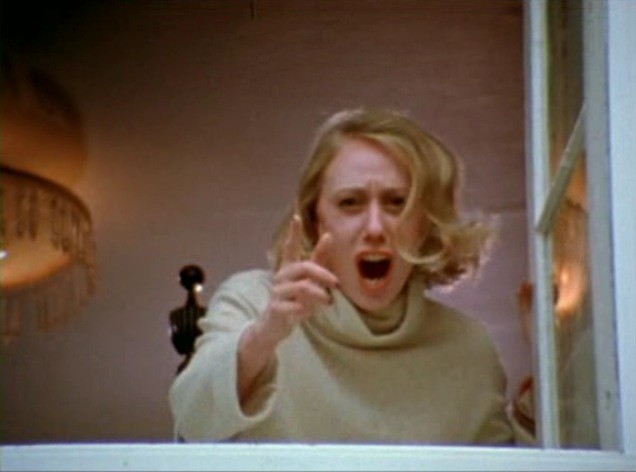
Peggy Gravel’s quaint suburban life is about to go to hell in John Waters’s DESPERATE LIVING
DESPERATE LIVING (John Waters, 1977)
Film Society of Lincoln Center, Walter Reade Theater
165 West 65th St. between Eighth Ave. & Broadway
Sunday, September 7, 6:30
Series runs September 5-14
212-875-5050
www.filmlinc.com
 A turning point in his career, John Waters’s Desperate Living is an off-the-charts bizarre, fetishistic fairy tale, the ultimate suburban nightmare. Mink Stole stars as Peggy Gravel, a wealthy housewife suffering yet another of her mental breakdowns. In the heat of the moment, she and the family maid, four-hundred-pound Grizelda Brown (Jean Hill), kill Peggy’s mild-mannered husband, Bosley (George Stover), and the two women end up finding refuge in one of the weirdest towns ever put on celluloid, Mortville, where MGM’s The Wizard of Oz and Babes in Toyland meet Russ Meyer’s Faster, Pussycat! Kill! Kill! (with some Kenneth Anger, Jack Smith, and Douglas Sirk thrown into the mix as well). “I ain’t your maid anymore, bitch! I’m your sister in crime!” Grizelda declares. Peggy and Grizelda move into the “guest house” of manly Mole McHenry (Susan Lowe) and her blonde bombshell lover, Muffy St. Jacques (Liz Renay). Mortville is run as a kind of fascist state by the cruel and unusual despot Queen Carlotta (Edith Massey), an evil shrew who enjoys being serviced by her men-in-leather attendants, issues psychotic proclamations, and is determined that her daughter, Princess Coo-Coo (Mary Vivian Pearce), stop dating her garbage-man boyfriend, Herbert (George Figgs). (Wait, Mortville has a sanitation department?) Camp and trash combine like nuclear fission as things get only crazier from there, devolving into gorgeous low-budget madness and completely over-the-top ridiculousness, a mélange of sex, violence, and impossible-to-describe lunacy that Waters himself claimed was a movie “for fucked-up children.”
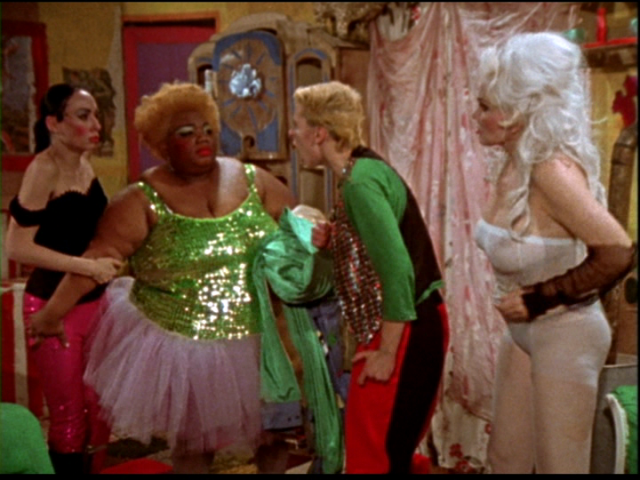
John Waters’s DESPERATE LIVING is a celebration of camp and trash, an extremely adult and bizarre fairy tale
The opening scenes of Peggy’s meltdown are utterly hysterical. When a neighbor hits a baseball through her bedroom window and offers to pay for it with his allowance, she screams, “How about my life? Do you get enough allowance to pay for that? I know you were trying to kill me! What’s the matter with the courts? Do they allow this lawlessness and malicious destruction of property to run rampant? I hate the Supreme Court! Oh, God. God. God. Go home to your mother! Doesn’t she ever watch you? Tell her this isn’t some communist day-care center! Tell your mother I hate her! Tell your mother I hate you!” The sets and costumes are deranged — and perhaps influenced Pee-wee’s Playhouse — the relatively spare score is fun, and the acting is, well, appropriate. The first half of the film is better than the second half, but it’s still a delight to watch Waters, who wrote, directed, and produced the film, which was shot in a kind of lurid Technicolor by Charles Ruggero, take on authority figures (beware of Sheriff Shitface), gender identity, class structure, hero worship, beauty, race, crime, nudity, and, of course, at its very heart, love and romance. Desperate Living is screening September 7 at 6:30 as part of the spectacularly titled Film Society of Lincoln Center series “Fifty Years of John Waters: How Much Can You Take?” The series runs September 5-14 and features all of Baltimore’s favorite son’s shorts and full-length movies, from Polyester and Pink Flamingos to Serial Mom and Hairspray, in addition to “Movies I’m Jealous I Didn’t Make,” eight films that Waters says are “extreme, astoundingly perverse, darkly funny, and, most importantly, supremely surprising films that turn me green with envy,” including David Cronenberg’s Crash, Mai Zetterling’s Night Games, William Friedkin’s Killer Joe, and George P. Cosmatos’s Of Unknown Origin.
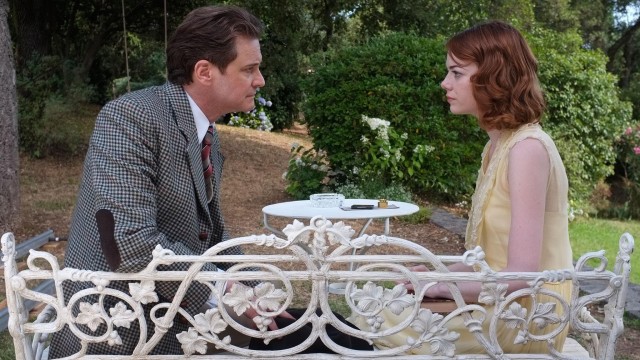
 For his follow-up to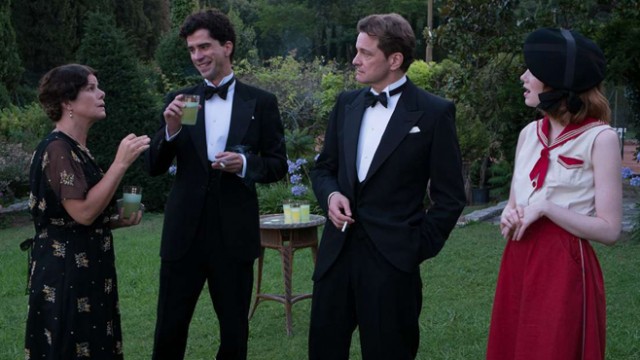



 At the beginning of Eric Merola’s Second Opinion: Laetrile at Sloan-Kettering, a 1970s news reporter says, “Dr. Robert Good, president of the Sloan Kettering Institute, one of the world’s biggest and richest cancer research centers, said Laetrile does not prevent cancer, nor cure cancer, nor stop cancer from spreading.” For the next seventy-five minutes, Ralph W. Moss, PhD, the public affairs science writer for the Memorial Sloan Kettering Cancer Center from 1974 to 1977, talks about what lay behind that statement and the furor that followed. He tells the captivating story of what went on behind the scenes as Laetrile, a form of amygdalin used in tumor treatment, was coveted by cancer patients but demonized by the medical establishment. The controversy over the drug, which was eventually banned in America, forced patients to go to Mexico in search of the palliative care medicine while the FDA, the National Cancer Institute, and several high-profile MSK doctors considered it to be quackery. MSK’s own top researcher, Dr. Kanematsu Sugiura, had exciting success treating mice with the drug, hopeful that the positive effects would be proven in humans as well. But when Dr. Good, MSK vice presidents Dr. Lloyd J. Old and Dr. Chester Stock, and MSKCC president Dr. Lewis Thomas decided that Laetrile was not the future of cancer treatment, despite what some of them had previously stated in public, Moss was confused and distressed. Others were as well; the documentary reveals that the political dimension of the debate eventually brought even the ultra-right-wing John Birch Society into the fray. Moss eventually became a whistleblower, writing numerous books on the subject, including The Cancer Industry, Cancer Therapy: The Independent Consumer’s Guide to Non-Toxic Treatment & Prevention, and the brand-new Doctored Results: The Suppression of Laetrile at Sloan-Kettering Institute for Cancer Research, which spurred the documentary.
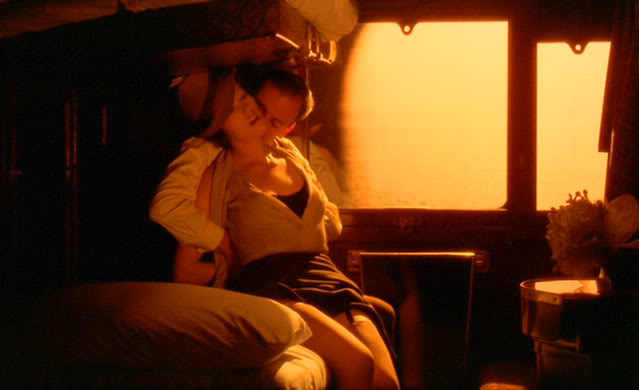
 Based on the novel by Alberto Moravia, Bernardo Bertolucci’s gorgeous masterpiece, The Conformist, is a political thriller about paranoia, pedophilia, and trying to find one’s place in a changing world, and you can now experience it in all its glory in a new digital restoration at Film Forum. Jean-Louis Trintignant (And God Created Woman, Z, My Night at Maud’s) stars as Marcello Clerici, a troubled man who suffered childhood traumas and is now attempting to join the fascist secret police. To prove his dedication to the movement, he is ordered to assassinate one of his former professors, the radical Luca Quadri (Enzo Tarascio), who is living in France. He falls for Quadri’s much younger wife, Anna (Dominique Sanda), who takes an intriguing liking to Clerici’s wife, Giulia (Stefania Sandrelli), while Manganiello (Gastone Moschin) keeps a close watch on him, making sure he will carry out his assignment. The Conformist, made just after The Spider’s Stragagem and followed by Last Tango in Paris, captures one man’s desperate need to belong, to become a part of Mussolini’s fascist society and feel normal at the expense of his real inner feelings and beliefs. An atheist, he goes to church to confess because Giulia demands it. A bureaucrat, he is not a cold-blooded killer, but he will murder a part of his past in order to be accepted by the fascists (as well as Bertolucci’s own past, as he makes a sly reference to his former mentor, Jean-Luc Godard, by using the French auteur’s phone number and address for Quadri’s). Production designer Ferdinando Scarfiotti and cinematographer Vittorio Storaro bathe the film in lush Art Deco colors as Bertolucci moves the story, told in flashbacks, through a series of set pieces that include an erotic dance by Anna and Giulia, a Kafkaesque visit to a government ministry, and a stunning use of black and white and light and shadow as Marcello and Giulia discuss their impending marriage. The Conformist is a multilayered psychological examination of a complex figure living in complex times, as much about the 1930s as the 1970s, as the youth of the Western world sought personal, political, and sexual freedom.