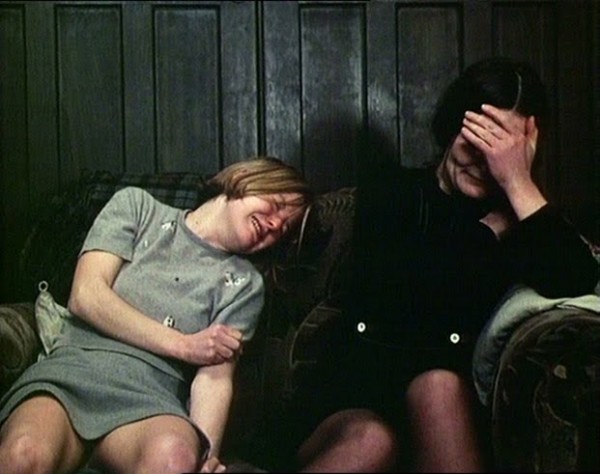
A pair of sisters contemplate their miserable lives in Mike Leigh’s first film, BLEAK MOMENTS
BLEAK MOMENTS (LOVING MOMENTS) (Mike Leigh, 1971)
Film Society of Lincoln Center, Walter Reade Theater
165 West 65th St. between Eighth Ave. & Broadway
Monday, September 22, 6:30
Series runs September 19-25
212-875-5050
www.filmlinc.com
 British master filmmaker Mike Leigh’s feature debut, 1971’s Bleak Moments, is just that, a series of grim scenes involving five main characters who are not exactly the most scintillating of conversationalists. But slowly, the dark, dreary opening evolves into a wickedly funny black comedy about different sorts of relationships (familial, sexual, professional), comprising episodes that help define the film’s alternate title, Loving Moments. It would be hard for Sylvia (Anne Raitt) to live a more boring life. A typist at an accounting firm, she spends most of her free time at home taking care of her sister, Hilda (Sarah Stephenson), who suffers from a kind of autism. Hilda works with Pat (Joolia Cappleman), a strange bird obsessed with movies, Maltesers, and Hilda. Meanwhile, teacher Peter (Eric Allan), who seems terrified of people, shows interest, if you can call it that, in all three women. And Norman (Mike Bradwell), a wannabe singer-songwriter, has moved into Sylvia’s garage, where he plays music that intrigues Hilda. Over a short period of time, the three women and two men sit around, go for walks, eat, drink, and, mostly, say very little to one another, their tentativeness palpable, each one terribly frightened in his or her own way of what life has to offer, of connecting. But Leigh isn’t making fun of them; instead, Bleak Moments is a lovingly drawn story of real life, where people don’t always know exactly what to say or do or how to react in various situations.
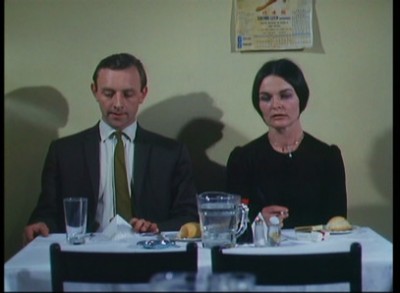
Peter (Eric Allan) and Sylvia (Anne Raitt) go on a date to remember in BLEAK MOMENTS
Originally mounted as a stage production, Bleak Moments transitioned to the big screen with the financial help of Albert Finney. As became his trademark, Leigh, who would go on to make such highly regarded fare as High Hopes, Life Is Sweet, Naked, Secrets & Lies, Topsy-Turvy, and Happy-Go-Lucky, had the actors first embody the roles in rehearsals and preparation, giving the film a believability despite the absurdity of it all. The overwhelming despair and hesitation demonstrated by the characters becomes painfully funny, especially when Peter takes Sylvia to a Chinese restaurant and, afterward, she tries to ply him with sherry. (Might the man who stares at them in the restaurant be a forerunner of the man who mocks Rupert Pupkin in the diner in The King of Comedy?) In January 2013, Leigh discussed Bleak Moments with the Guardian, at first comparing it to watching paint dry and acknowledging that some people thought it was “the most boring film in the world” while also explaining, “From this distance, I cautiously feel I’m allowed to feel a touch of paternal pride in my young self. With such brief life experience, did I really invent this painful, tragic-comic tale of a beautiful but suppressed young woman, tied to her elder, mentally challenged sister? I guess I’m astonished at the maturity and sophistication of my achievement, not to mention its pathos and irony. . . . I’ve tried to vary my films considerably, but I would have to admit that Bleak Moments remains, in some ways, the mother of all Mike Leigh films. And I’m very proud of it.” As well he should be.
Bleak Moments is screening September 22 at 6:30 as part of the Film Society of Lincoln Center series “NYFF Opening Acts,” a collection of early films by eleven directors showing new works at this year’s New York Film Festival, including Abel Ferrara’s Body Snatchers, Mia Hansen-Løve’s All Is Forgiven, Olivier Assayas’s Cold Water, and Alain Resnais’s Love Unto Death.
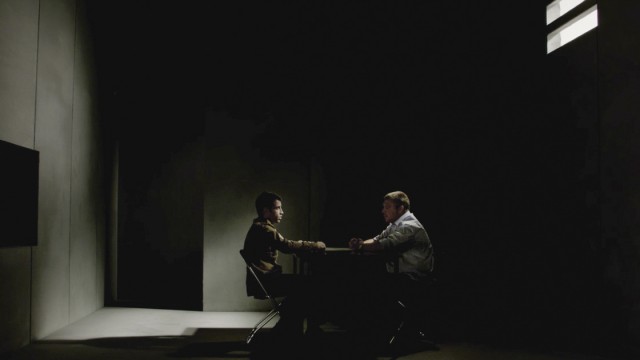
 The subject of The Green Prince seems like a plotline stolen from an episode of Homeland or a John le Carré thriller, except in this case it’s all very real. Nadav Schirman’s documentary follows what one would expect to be an impossible mission: Gonen Ben Yitzhak, an experienced handler for the Shin Bet, Israeli’s secret police, attempts to “recruit” Mosab Hassan Yousef, the son of one of Hamas’s founders. Writer, director, and producer Schirman, who focused on a Mossad agent in The Champagne Spy and the family of Carlos the Jackal in In the Dark Room, somehow persuaded Gonen and Mosab to go on camera and share the details of their compelling story. Gonen tries to convince Mosab to turn on his friends and relatives, Hamas, and everything he believes in and start working undercover for Shin Bet. But when Gonen grasps an unexpected moment of opportunity, breaking rules he had always followed previously, leading to his Shin Bet bosses thinking he’s compromised the plan, his move actually ends up bringing Mosab and him closer together, beginning what might even be termed a legitimate friendship. The Green Prince is set up like an intricate game of cat and mouse, built around trust, lies, and the search for the truth. Even though the two men and the filmmakers know how it all ends up, they keep viewers on the edge of their seats as wild episodes are described in detail and raw emotions are revealed, supplemented with archival footage, news reports, and staged re-creations — which feel rather unnecessary. The movie, based on Mosab’s book, Son of Hamas: A Gripping Account of Terror, Betrayal, Political Intrigue, and Unthinkable Choices, is rather static, mostly cutting between Gonen and Mosab talking to the camera, but it is one helluva story — which, by the way, is being turned into a feature film as well. It’s also not just about Israelis vs. Palestinians, Jews vs. Muslims, the Shin Bet vs. Hamas but about family and the hope of a lasting peace.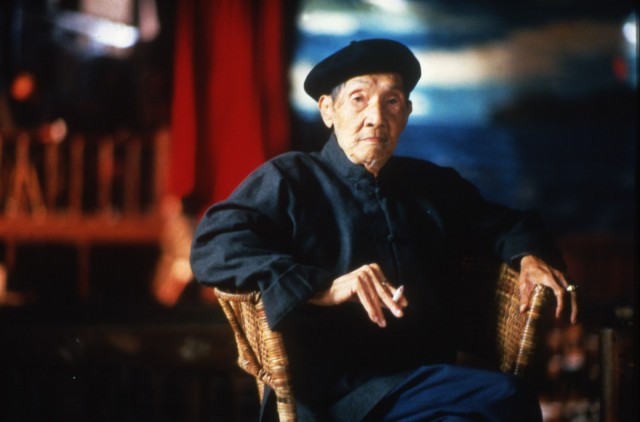
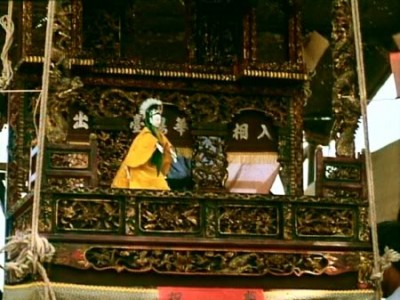
 Taiwanese New Wave auteur Hou Hsiao-hsien’s masterpiece, The Puppetmaster, is a beautifully poetic exploration of the art of storytelling. The second film of his history trilogy, coming between 1989’s A City of Sadness and 1995’s Good Men, Good Women, the 1993 work employs three unique methods as it traces the life and career of puppeteer Li Tien-lu from 1909 to 1945, during the Japanese occupation of Taiwan. Episodes from Li’s life are re-created, beginning even before his birth, as his father sacrifices his family name and takes his wife’s instead at the request of her clan, with the modern-day Li adding voice-over narration. (The film is based on Li’s memoirs.) Hou also uses Peking opera, theater, and puppet shows to demonstrate Li’s skill and to place the film in artistic and historical context. And the eighty-four-year-old Li, who had already been in three of Hou’s films, appears onscreen several times, right on the set, adding an intimate, personal touch to the proceedings. Hou and cinematographer Mark Lee Ping-Bin often let the camera remain still for long periods of time, allowing viewers to decide where to look and what to focus on, as if they were watching a live performance. The film features stunning art direction by Chang Hung and Lu Ming-jin and a lovely traditional score by Chen Ming-chang; the stellar cast includes Lin Chung and Lim Giong as Li, Tsai Chen-nan as his father, Yang Li-yin as his stepmother, Liou Hung as his grandfather, Bai Ming Hwa as his grandmother, and Vicky Wei as Lei Tzu.