Chang Chen and Shu Qi fall in love in three different decades in Hou Hsiao-hsien’s THREE TIMES
THREE TIMES (Hou Hsiao-hsien, 2005)
Museum of the Moving Image
35th Ave. at 36th St., Astoria
Sunday, September 14, free with museum admission, 7:00
Series runs September 12 – October 17
718-777-6800
www.movingimage.us
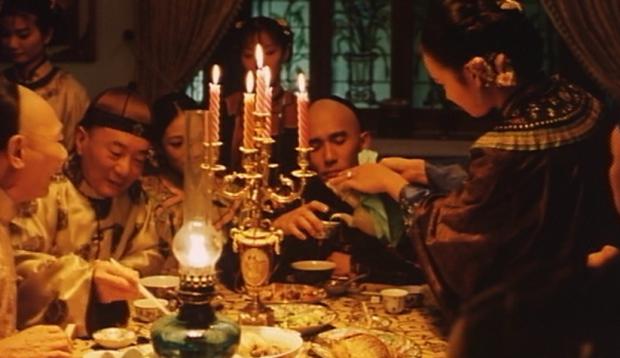
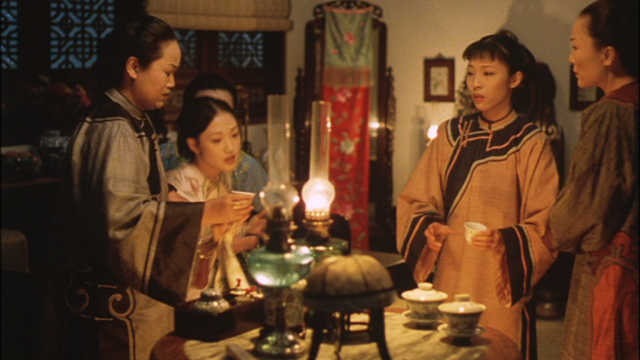
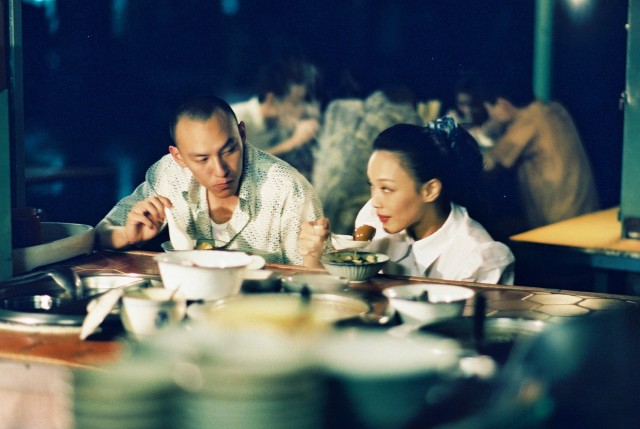
 Hou Hsiao-hsien’s gorgeous Three Times is an evocative, poetic trilogy of tales about life and love in Taiwan, all starring the mesmerizing Shu Qi (Hou’s Millennium Mambo) and the stalwart Chang Chen (Wong Kar-wai’s 2046 and Happy Together). In A Time for Love, set in 1966 and featuring a repeated soft-rock soundtrack, Chen, about to leave for military service, meets May, a pool-hall girl, and promises to write to her even though they have only just met and barely said a word to each other. When he gets a furlough, he goes to the pool hall only to find that she’s on the move, so with Zen-like cool he tries to track her down. A Time for Freedom, a silent film with interstitial dialogue and period music, takes place in an elegant brothel in 1911, where Mr. Chang regularly visits a beautiful courtesan. But while she dreams of him buying out her contract and marrying her, he seems intent on helping out another couple instead. Hou concludes the trilogy with A Time for Youth, set in fast-paced modern-day Taipei, as Jing, an epileptic singer, and Zhen, a motorcycle-riding photographer, embark on a passionate, nearly wordless affair that has serious consequences for their significant others. Three Times is a rare treat for cineastes, a poetic, intelligent, though overly long study of relationships between men and women in a changing Taiwan over the last hundred years, focusing on character, time and place, and the art of filmmaking itself. Three Times is screening September 14 at 7:00 as part of the Museum of the Moving Image series “Also like Life: The Films of Hou Hsiao-hsien” and will be introduced by Amy Taubin.
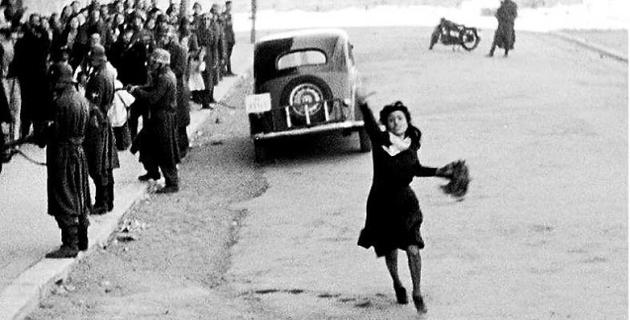
 One of six films to be awarded the Grand Prix at the inaugural Cannes Film Festival in 1946, Roberto Rossellini’s Rome Open City is an antiwar masterpiece, the first of three works that together form his War Trilogy, along with Paisan and Germany Year Zero. Begun in January 1945 with Italy still under German occupation, Rome Open City melds neorealism with melodrama in telling the story of a small, tight-knit community secretly battling the Nazis. The leader of the local Italian resistance is Giorgio Manfredi (Marcello Pagliero), an engineer sending messages and money through courier Don Pietro (Aldo Fabrizi), a priest who is generally left alone by the Nazis and the Italian police. Giorgio hides away in his friend Francesco’s (Francesco Grandjacquet) apartment as Francesco prepares to marry Pina (Anna Magnani), a pregnant widow raising a son, Marcello (Vito Annicchiarico), who is part of a gang of young kids also fighting in the resistance and causing a surprising amount of trouble. Meanwhile, Giorgio’s former flame, cabaret performer Marina Mari (Maria Michi), is cozying up to Ingrid (Giovanna Galletti), a suspicious woman with ties to the Nazis, who are led by the relentless Major Bergmann (Harry Feist). With events coming to a head, faith is questioned, and betrayals set in motion violence, torture, and killings that brutally characterize the many horrors of war. Written by Sergio Amidei and Federico Fellini, Rome Open City is a remarkable example of guerrilla filmmaking, with Rossellini and cinematographer Ubaldo Arata shooting on the streets of Rome using whatever dupe negatives they could get their hands on. The mix of professional and nonprofessional actors lends a stark reality to the proceedings. “Above all, the concept was to give an honest account, to show things as they were,” Rossellini explained in a 1963 intro to the film, a staggering achievement that seems to only get better with age. Rome Open City is screening September 12-25 in a new 35mm restoration at Film Forum.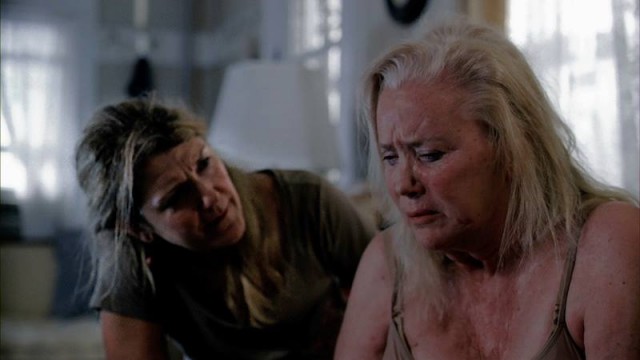
 Inspired by her mother’s aging and another family member’s struggle with Alzheimer’s disease, Sharon Greytak’s Archaeology of a Woman examines the complex relationship between Kate (Tony winner Victoria Clark), a New York City chef, and her mother, Margaret (Oscar nominee Sally Kirkland), a fiercely independent woman who is suffering the beginning stages of dementia. As the film opens, Margaret cannot find her car in a parking lot and reaches out to the police for help. Disoriented, she calls Kate, who is in the midst of passionate sex with her boyfriend (Alex Emanuel). Soon Kate is shuttling back and forth on Metro-North between Manhattan and her mother’s suburban home as Margaret continues having episodes that often turn destructive, to both herself and others. Although she keeps getting more and more forgetful and unsettled, one memory keeps haunting her, something that happened thirty years before and has risen up again to threaten her. Kirkland (Anna, Cold Feet) does all she can with the juicy role, baring her heart and soul — and septuagenarian body — but Greytak’s choppy direction and hole-filled script let the talented Method actor and teacher down. The subplots don’t meld into the main storyline, instead lingering outside as annoying diversions, including scenes with a young police officer (Karl Geary) who takes a liking to Kate, and an older cop, Sergeant Calder (James Murtaugh), who is caught between speculating about Margaret’s past and wanting to be part of her future. Greytak (The Love Lesson, Hearing Voices) never achieves a flow in the film, which plays out like a series of disjointed moments that don’t come together, as if she had too much to say but not enough time to say it all, unfortunately choosing melodrama over nuance. Archaeology of a Woman opens September 12 at the Village East; Greytak and Kirland will participate in Q&As following the 7:00 screening on Friday night (moderated by Michael Musto) and the 4:25 shows on Saturday and Sunday.

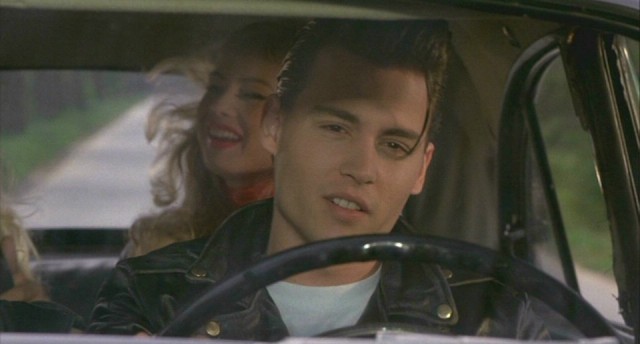
 It’s the drapes versus the squares as Grease and Rebel without a Cause meet West Side Story and Jailhouse Rock in one of trash king John Waters’s most accessible films, the romantic musical comedy Cry-Baby. Waters snatched 21 Jump Street heartthrob Johnny Depp right off the covers of teen magazines for his first starring role in a feature film, with Depp playing high school heartthrob and leather-jacketed bad boy Wade “Cry-Baby” Walker, leader of the rough-and-tough drapes, who also include his pregnant sister, Pepper (Ricki Lake), the trampy Wanda Woodward (porn star Traci Lords), Mona “Hatchet-Face” Malnorowski (Kim McGuire), and Milton Hackett (Darren E. Burrows). Lenora Frigid (Kim Webb) is desperate to go out with Cry-Baby, who earned his nickname because of the solitary tear that can trickle from one of his eyes, but he has his sights set on square queen Allison Vernon-Williams (Amy Locane), whose grandmother (Polly Bergen) runs a charm school and is disgusted by the juvenile delinquents. She much prefers Allison stay true to nerd king Baldwin (Stephen Mailer) than hang out with the dregs of society. But Allison and Cry-Baby’s love just might be meant to be. Writer-director Waters wonderfully evokes 1950s teen flicks with fast cars, the pangs of first love, and a delicious soundtrack of old and new tunes as Cry-Baby and Baldwin fight it out onstage in song instead of with knives or other weapons. (James Intveld sings Depp’s part, while Rachel Sweet does Allison’s.) Waters has also assembled a cast of parents to end all casts of parents: Troy Donahue and Mink Stole are Mr. and Mrs. Malnorowski, Joe Dallesandro and Joey Heatherton are Mr. and Mrs. Hackett, David Nelson and Patricia Hearst are Mr. and Mrs. Woodward, and Iggy Pop and Susan Tyrell are Mr. and Mrs. Rickettes. The story doesn’t always hold together, but Depp easily gets things back on track with his damn fine looks — er, charismatic performance. And yes, that prison guard is indeed Willem Dafoe. Cry-Baby, which was turned into a Broadway musical that earned four Tony nominations but had a very short run at the Marquis Theatre, is screening September 13 at 3:00 and September 14 at 8:00 as part of the spectacularly titled Film Society of Lincoln Center series “Fifty Years of John Waters: How Much Can You Take?” The series runs through September 14 and features all of Baltimore’s favorite son’s shorts and full-length works in addition to “Movies I’m Jealous I Didn’t Make,” eight films that Waters says are “extreme, astoundingly perverse, darkly funny, and, most importantly, supremely surprising films that turn me green with envy.