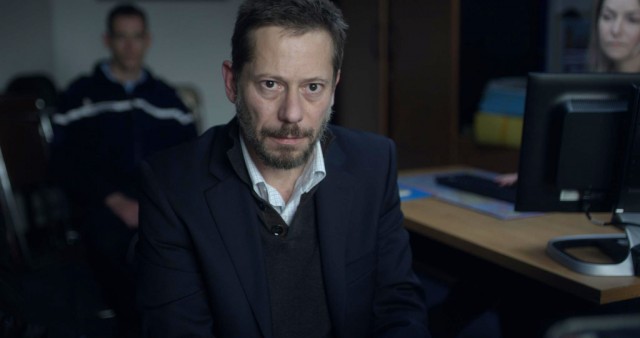
Mathieu Amalric stars as a husband and father in deep trouble in film he also directed and cowrote
THE BLUE ROOM (LA CHAMBRE BLEUE) (Mathieu Amalric, 2014)
Film Society of Lincoln Center
Monday, September 29, Alice Tully Hall, 9:00 pm
Tuesday, September 30, Francesca Beale Theater, 9:00 pm
Festival runs September 26 – October 12
212-875-5050
www.filmlinc.com
www.lachambrebleue-lefilm.com
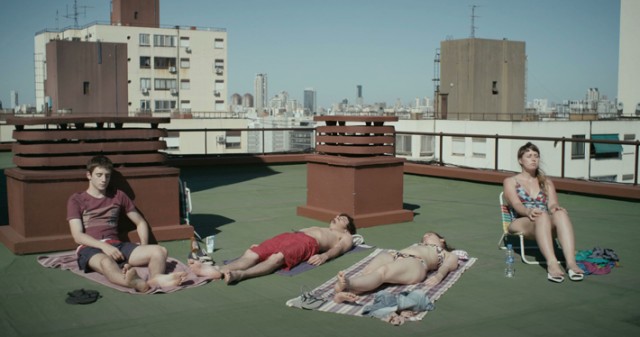
 Real-life partners Mathieu Amalric and Stéphanie Cléau strip Georges Simenon’s short 1955 novel The Blue Room to its bare essentials — and we do mean bare — in their intimate, claustrophobic modern noir adaptation, which makes its North American premiere at the New York Film Festival September 29 and 30. In addition to being one of the world’s most talented actors, starring in such films as Kings and Queen, The Diving Bell and the Butterfly, A Christmas Tale, and Venus in Fur, Amalric has directed several previous works, including On Tour, which earned him the Best Director prize at Cannes. In The Blue Room, Amalric plays Julien Gahyde, a successful agriculture equipment salesman whose passionate affair with a local pharmacist’s wife, Esther Despierre (Cléau, who cowrote the script with Amalric), appears to have ended in murder. The film opens with Grégoire Hetzel’s lush, sweeping music as the camera makes its way to a blue hotel room where Julien and Esther have just made love offscreen. “Did I hurt you?” she asks. “No,” he responds. “You’re angry,” she says. “No,” he repeats as she laughs and a drop of blood falls on a creamy white sheet. Only then do we see the naked, sweaty couple, whose lurid tale has been succinctly revealed by this highly stylized, beautifully orchestrated scene. Next we hear Julien being interrogated by a magistrate (Laurent Poitrenaux) about a suspicious death, and soon we see Julien in handcuffs in the police station. We don’t know exactly what crime he has been accused of, nor do we know the victim — it could be Julien’s wife, Delphine (Léa Drucker), Esther’s husband, Nicolas (Olivier Mauvezin), or maybe even Esther herself. But as director Amalric, cinematographer Christophe Beaucarne, and editor François Gedigier cut between the past and the present, the details slowly unfold — although that doesn’t mean they ever become completely clear.
Amalric fills The Blue Room with bold splashes of color amid all the darkness and muted skin tones, from the red towel that signals Julien and Esther’s illicit rendezvous to Delphine’s blue bikini to the strikingly red hair of Nicolas’s mother (Véronique Alain) and the shiny green and yellow John Deere equipment he sells. Amalric and Cléau trim so much out of the original story that it too often feels overly cold and calculating, the manipulation too clear and obvious. The nudity also lacks subtlety; Amalric and Cléau might be comfortable with each other sans clothing, but it seems to be a bit of an obsession with Amalric the director. Nonetheless, The Blue Room, shot in the old-fashioned aspect ratio of 1:33 and running a mere seventy-six minutes, is a gripping yarn, a lurid tale of sex and murder, pain and passion, and femmes fatale, told from the point of view of a relatively quiet, reserved man who never thought his world could just fall apart like it does. With such plot elements as adultery and murder and even the presence of a young daughter (Mona Jaffart), the story cannot fail to call to mind French author Gustave Flaubert’s classic novel of provincial France and misplaced passion, Madame Bovary, but the near-echoes never become too loud, merely adding a somewhat puzzling flavor to the film, like a dream half remembered. Amalric will participate in a Q&A following the September 29 screening at 9:00 at Alice Tully Hall; in addition, he will sit down for a free HBO Directors Dialogue that same day at 6:00 in the Walter Reade Theater, where he’s sure to discuss such influences as Alfred Hitchcock, François Truffaut, Claude Chabrol, Otto Preminger, and Fritz Lang.
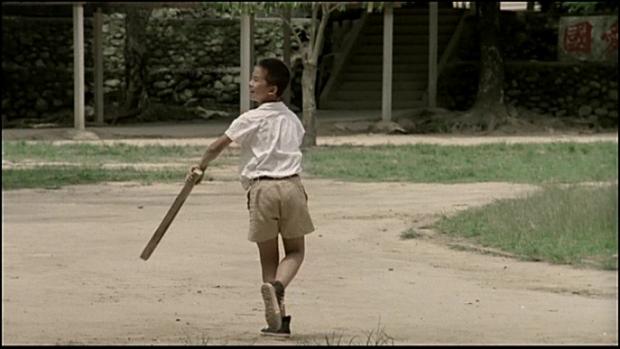
 Hou Hsiao-hsien’s Taiwanese New Wave masterpiece, A Time to Live, a Time to Die, is a bittersweet, nostalgic look back at his childhood, after his father’s government job moves the family from Mainland China just as the Cultural Revolution is taking effect. The semiautobiographical film is seen through the eyes of young Ah-ha (You Anshun) as his father (Tien Feng) suffers ill health, his older brother gets harassed by a local gang, his mother (Mei Fang) tries to maintain the household, and his grandmother (Tang Ju-yun) keeps getting lost, being brought back by rickshaw drivers who demand ever-larger payments. The family lives in a Japanese-style home that is beautifully photographed by cinematographer Mark Lee Ping-bing, with Hou favoring long shots with limited camera movement, calmly shifting from scene to scene as Ah-ha grows up into a teenager (Hsiao Ai) and discovers a whole new set of problems and reality. The middle film in Hou’s coming-of-age trilogy (in between 1984’s A Summer at Grandpa’s and 1986’s Dust in the Wind), A Time to Live is a deeply personal, intimate, unforgettable story of life, death, and the bonds of family. The film is screening October 3 at 7:00 as part of the Museum of the Moving Image series “Also like Life,” which continues through October 17 with such other Hou works as Daughter of the Nile, Dust in the Wind, The Sandwich Man, and A City of Sadness as well as such related films as Chen Kun-hou’s Growing Up and Jia Zhangke’s I Wish I Knew.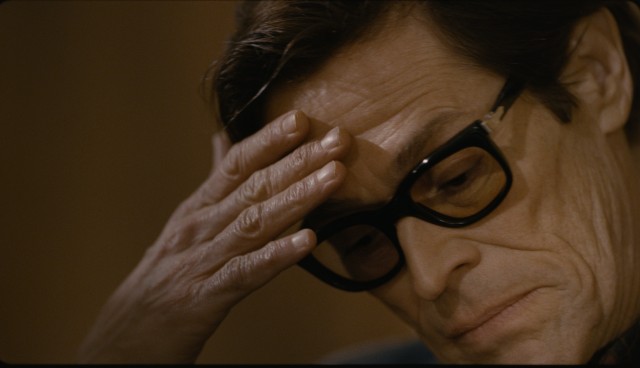
 Director Abel Ferrara packs a whole lot into controversial Italian writer and filmmaker Pier Paolo Pasolini’s last day on earth in the multinational coproduction Pasolini. Unfortunately, it all ends up a rather confusing jumble, with Ferrara (Bad Lieutenant, The Addiction) and screenwriter Maurizio Braucci (Gomorrah, Black Souls) squeezing too much into too little. Willem Dafoe stars as Pasolini on November 2, 1975, as the director is interviewed by a journalist, reads the newspaper on the couch, sits down at his typewriter to work on his novel Petrolio, edits what would be his final film (Salò, or the 120 Days of Sodom), and goes cruising to pick up a young stud. Ferrara adds enactments of scenes from the never-realized Porno-Teo-Kolossal, with Pasolini’s real-life lover, Ninetto Davoli, playing the fictional character Epifanio. (Davoli was supposed to play the younger Nunzio in the hallucinatory tale, about a search for faith and the messiah. Davoli is played by Riccardo Scamarcio in Ferrara’s film.) Ferrara never really delves into the internal makeup of Pasolini (The Gospel According to Matthew, Teorema), an openly gay outspoken social and political activist, poet, Marxist, Christian, and documentarian, instead using brief episodes that only touch the surface, as if Dafoe is playing a character based on Pasolini rather than the complex man who was indeed Pasolini. But Ferrara does get very specific about Pasolini’s mysterious, brutal death. Pasolini is screening October 2, 3, and 12 at the 52nd New York Film Festival.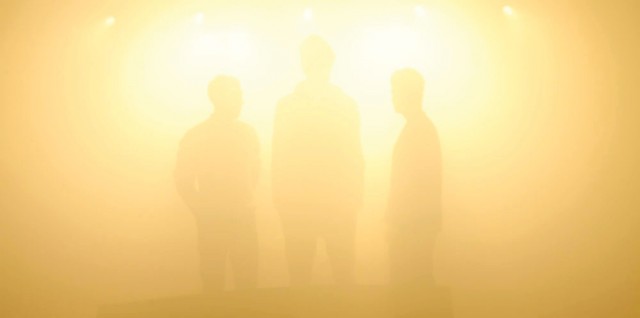
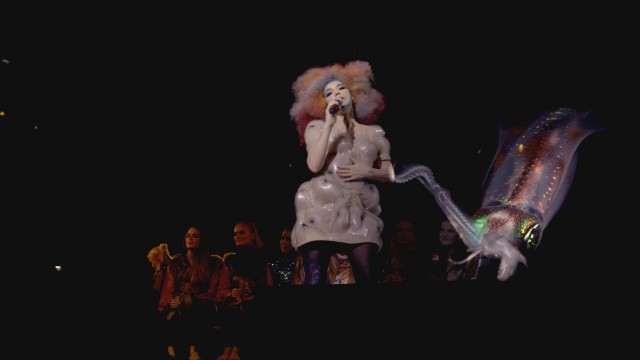
 “Welcome to Biophilia, the love for nature in all her manifestations, from the tiniest organism to the greatest red giant floating in the farthest realm of the universe. . . . In Biophilia, you will experience how the three come together: nature, music, technology. Listen, learn, and create. . . . We are on the brink of a revolution that will reunite humans with nature through new technological innovations. Until we get there, prepare, explore Biophilia.” So announces British naturalist Sir David Attenborough at the beginning of Björk: Biophilia Live, Nick Fenton and Peter Strickland’s lovely film of Icelandic musician Björk’s final show of her Biophilia tour, a more-than-two-year journey in which she presented a dazzling multimedia concert experience based on her 2011 album and genre-redefining interactive app. Filmed at the Alexandra Palace in London, the cutting-edge in-the-round show features Björk performing such complex songs as “Thunderbolt,” “Moon,” “Crystalline,” and “Virus” from the hit record, accompanied by the twenty-woman Icelandic chorus Graduale Nobili and a group of visually dramatic instruments built and/or adapted specifically for her, including a pendulum-swinging gravity harp, the percussive hang, a gameleste, and a Tesla coil. In addition, most songs have related animation that ranges from the far reaches of space to deep inside the human body. Fenton, a longtime documentary editor, and Strickland, the writer-director of such fiction films as Berberian Sound Studio and Katalin Varga, often splash the animation on the front of the screen, immersing the viewer in a vast array of shapes, colors, and scientific imagery, like a turned-around Joshua Light Show. But even amid all the gadgetry and computers, Björk is the real star, ever charming in a wild wig and futuristic costume as she sings in her engaging accent and unique voice, enchanting the audience for more than ninety minutes as she brings together nature, music, and technology in a whole new way. We saw the show when it came to