Caecilia Tripp’s “Music for (prepared) Bicycles” rides into Brooklyn Museum in multiple forms for First Saturdays program
Brooklyn Museum
200 Eastern Parkway at Washington St.
Saturday, October 4, free, 5:00 – 11:00
212-864-5400
www.brooklynmuseum.org
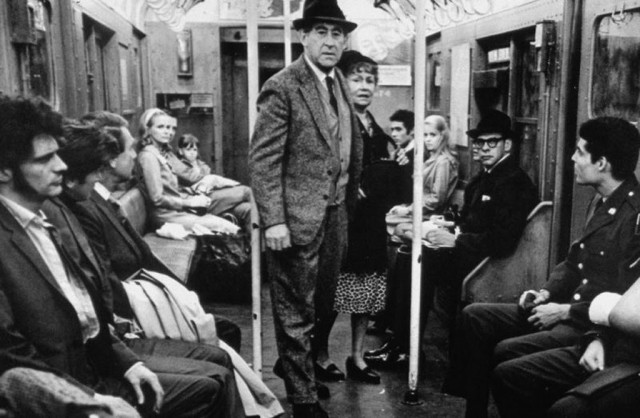
After taking September off for the annual Labor Day weekend West Indian American Day Carnival celebration, the Brooklyn Museum’s First Saturday program in October will have a decidedly Latin feel. ¡Viva Brooklyn! will feature live music by Arturo O’Farrill’s Afro Latin Jazz Orchestra and youth orchestra Fat Afro Latin Jazz Cats, La Mecánica Popular, and Los Rakas; the dance performance Bailes de Ida y Vuelta by Flamenco Vivo Carlota Santana; rumba and salsa lessons with Global Rhythms; an art workshop inspired by Mayan textile design; pop-up gallery talks in English and Spanish highlighting works by Latino artists; a screening of William Caballero’s How You Doin’ Boy? Voicemails from Gran’pa, followed by a talk about Puerto Rican American cultural influences; a screening of Caecilia Tripp’s Music for (prepared) Bicycles (after John Cage & Marcel Duchamp) Score Two, along with the participatory project Music for (prepared) Bicycles, in which Tripp and visitors will create a drawing of a musical score from a sonic bicycle; an interactive mural by Don Rmix in collaboration with Brooklyn Street Art; and “Pimp My Piragua,” in which Crossing Brooklyn artist Miguel Luciano will serve shaved ice from his custom-made tricycle. In addition, you can check out such exhibitions as “Revolution! Works from the Black Arts Movement,” “Killer Heels: The Art of the High-Heeled Shoe,” and “Chicago in L.A.: Judy Chicago’s Early Works, 1963–74.”
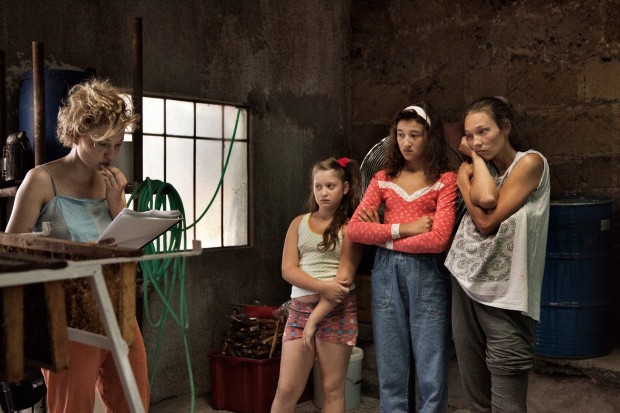
 Winner of the Grand Prix at the Cannes Film Festival, Alice Rohrwacher’s The Wonders is a sweet little gem of a movie, focusing on a German-Italian family that finds itself at a critical crossroads. Set in Rohrwacher’s (Corpo celeste) hometown in the countryside between Umbria-Lazio and Tuscany, the film follows the travails of a beekeeping family led by the gangly Wolfgang (Sam Louwyck), a grumpy ne’er-do-well from one of the Germanic countries who is trying to live some kind of back-to-the-land life away from authorities in an undeveloped backwater. His allegiance to old-fashioned tradition includes overworking his four young daughters while his wife, Angelica (Alba Rohrwacher, the director’s older sister), keeps at a distance and live-in friend Cocò (Sabine Timoteo) keeps stirring up the pot. At the center of it all is twelve-year-old Gelsomina (first-time actress Maria Alexandra Lungu, who was discovered in a catechism class), an exceptional beekeeper who wants her father to allow the family to participate in a television contest, Countryside Wonders, that could earn them much-needed money. But her father prefers taking care of things himself — though not very well, particularly when he acquires a camel for no apparent reason. Suspicious of the government and contemporary society, Wolfgang likes living in relative isolation; inviting strangers into their world could reveal the illegal working conditions, not to mention abuse of child labor laws. But Gelsomina is determined to improve their existence, starting with the competition, which is hosted by the beguiling, fairy-tale-like Milly Catena (Monica Bellucci in a marvelous white head piece, partially poking fun at her own sex-symbol image).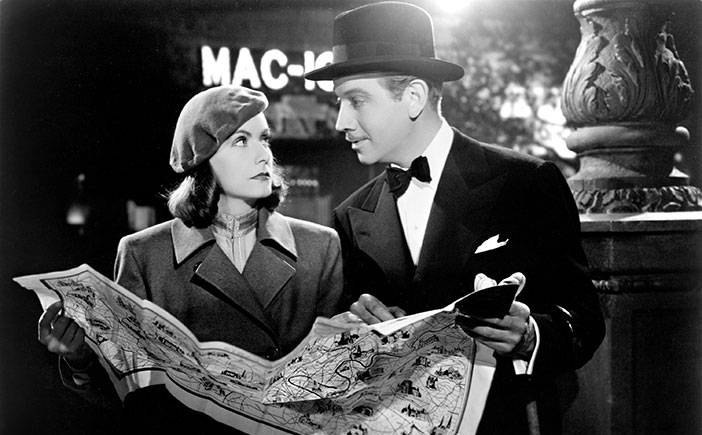
 Greta Garbo laughs — and says she doesn’t want to be alone — in Ernst Lubitsch’s magnificent pre-Cold War comedy Ninotchka, which is being shown October 3-5 in a DCP projection as part of the IFC Center Weekend Classics series “1939 — Hollywood’s Golden Year.” In her next-to-last film, Garbo is sensational as Nina Ivanovna “Ninotchka” Yakushova, a Russian envoy sent to Paris to clean up a mess left by three comrade stooges, Iranov (Sig Ruman), Buljanov (Felix Bressart), and Kopalsky (Alexander Granach). The hapless trio from the Russian Trade Board had been sent to France to sell jewelry previously owned by the Grand Duchess Swana (Ina Claire) and now in the possession of the government following the 1917 Russian Revolution. But the duchess’s lover, Count Léon d’Algout (Melvyn Douglas), gets wind of the plan and attempts to break up the deal while also introducing the three men to the many decadent pleasures of a free, capitalist society. Then in waltzes the stern, by-the-book Ninotchka, who wants to set the Russian men straight, as well as Léon. “As basic material, you may not be bad,” she tells him atop the Eiffel Tower, “but you are the unfortunate product of a doomed culture.” At first, Ninotchka speaks robotically, spouting the company line, but she loosens up considerably once Léon shows her what communism has been depriving her of, yet it’s difficult for her to turn her back on the cause, leading to numerous hysterical conversations — the razor-sharp script was written by Charles Brackett, Walter Reisch, and Billy Wilder, based on a story by Melchior Lengyel — that serve as both a battle of the sexes and social commentary on the Russian and French ways of life. “I’ve heard of the arrogant male in capitalistic society. It is having a superior earning power that makes you that way,” Ninotchka tells Léon shortly after meeting him on a Paris street. “A Russian! I love Russians! Comrade, I’ve been fascinated by your Five-Year Plan for the last fifteen years,” Léon responds, to which Ninotchka tersely replies, “Your type will soon be extinct.” Nominated for four Academy Awards, including Best Picture, Best Actress, Best Original Story, and Best Screenplay, Ninotchka is one of the most delightful romantic comedies ever made, filled with little surprises every step of the way (including a serious cameo by Bela Lugosi), serving up a blueprint that has been followed by so many films for three-quarters of a century ever since. The IFC Center series celebrating Hollywood’s most spectacular year continues through November 9 with such other splendid fare as Wuthering Heights, The Wizard of Oz, and Gone with the Wind.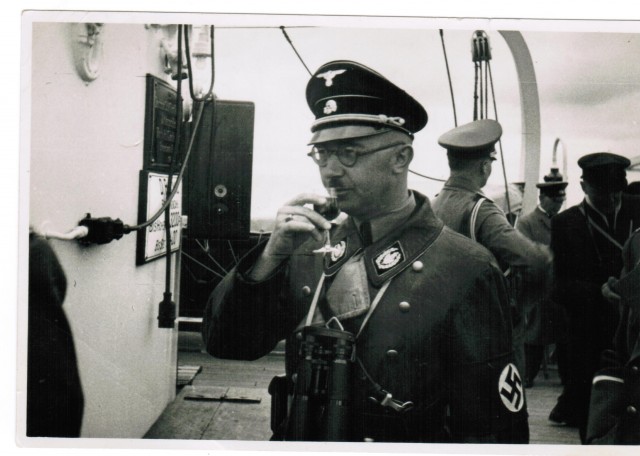
 Vanessa Lapa’s chilling feature documentary debut, The Decent One, reveals that there wasn’t a whole lot that was decent about Heinrich Himmler, the SS chief who was the architect of the Final Solution. In 2006, Lapa’s father purchased a collection of Himmler’s diaries, letters, documents, and photographs that had initially been discovered in his home by U.S. soldiers in May 1945. The treasure trove forms the narration for Lapa’s film, as actors read from many of the items in chronological order while home movies, still images, and rare archival footage of Himmler and the rise of the SS are shown onscreen. The film includes letters, postcards, and diaries from Himmler; his parents; his wife, Marga; his mistress, Hedwig Potthast; his beloved daughter, “Püppi”; his foster son, Gerhard von Ahé; and others, in which the Gestapo head discusses love and romance, racial purity, motherhood, duty and honor, order and obedience, the Jewish question, homosexuality, and subhumans, troubling views he developed from a young age. “People don’t like me,” he writes after not being accepted into a fraternal group at college. Looking for purpose in his life, he explains, “You start to think, if only there was a war again. If only I could put my life on the line. Fight! It would be a pleasure.” He was also fully aware of the brutality of the Nazi regime. “I can predict the horrors of the future,” he notes in 1927.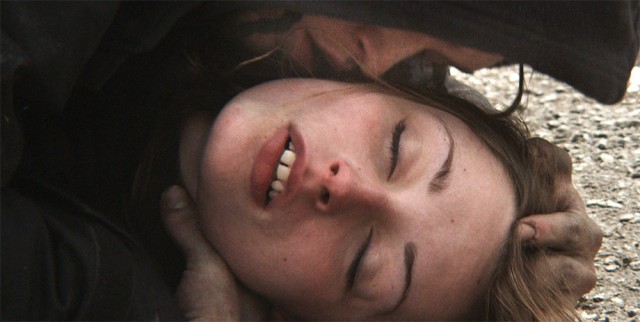
 Josh and Benny Safdie’s Heaven Knows What is a harrowing tale about addiction and obsession, but it turns out that its back story is much more compelling than what shows up onscreen. Josh was researching a film about the Diamond District when he came upon Arielle Holmes, a nineteen-year-old temp assistant. He was determined to find out more about her and shortly discovered that she was a homeless junkie with a wild, unpredictable druggie boyfriend, Ilya. Josh and Benny, who had previous collaborated on such indie features as The Pleasure of Being Robbed and Daddy Longlegs and the documentary Lenny Cooke, commissioned Holmes to write her story, and she quickly delivered 150 pages that ultimately inspired the film, in which Holmes plays Harley, a young heroin addict living on the streets of New York City, spanging money (begging for spare change) for her next fix while in a combative relationship with Ilya (Caleb Landry Jones). Harley has done something to alienate Ilya, and she says she will kill herself to prove her love and devotion. He tells her to go ahead and do it, so she slits one of her wrists and is rushed to the hospital. That sets the stage for the rest of the lurid and sordid narrative, as Haley bounces between the cruel Ilya and her drug dealer, the far more easygoing and mellow Mike (real-life street legend Buddy Duress in his acting debut); she is also followed around by Skully (rapper Necro), who wants to save her from herself but is clearly in no position to do so.