
Zhao Tao wanders through modern-day China in Jia Zhang-ke’s elegiac documentary
I WISH I KNEW (Jia Zhang-ke, 2010)
Museum of the Moving Image
35th Ave. at 36th St., Astoria
Friday, October 17, $12, 7:00
Series runs through October 17
718-777-6800
www.movingimage.us
 Throughout his professional career, which began with the 1997 underground hit Pickpocket, Sixth Generation Chinese writer-director Jia Zhang-ke has shuttled easily between documentaries (Useless, 24 City) and narrative features (The World, Still Life) — and it’s not always obvious which is which, as his steady, poetic style is built on subtlety, slow rhythms, and an innate sense of realism (and he freely mixes fantasy and reality as well). His 2010 documentary, the Cannes Film Festival Un Certain Regard selection I Wish I Knew, adds elements of fiction to its compelling examination of the intimately personal side effects that resulted from the Chinese civil war and Cultural Revolution, as many people left Shanghai for Taipei and Hong Kong. Jia and interviewer Lin Xudong meet with elderly men and women who tell tragic stories of family and friends being murdered and executed by the government; an especially poignant scene is set at a community gathering where senior citizens dance to Dick Haymes’s version of the old standard “I Wish I Knew”; one of the interviewees sings into the camera, “I wish I knew someone like you could love me / I wish I knew you place no one above me / Did I mistake this for a real romance? / I wish I knew, but only you can answer,” which could be as much about a personal relationship as the revolution itself. Jia also talks with several filmmakers and actresses, from Hou Hsiao-hsien and Wang Toon to Huang Baomei, Rebecca Pan, and Wei Wei, illustrating how Shanghai has been depicted on film with clips from such movies as Hou’s Flowers of Shanghai, Xie Jin’s Huang Baomie, Wang’s Red Persimmon, Lou Ye’s Suzhou River, Wang Bing’s To Liberate Shanghai, Wong Kar-wai’s Days of Being Wild, and Michelangelo Antonioni’s Cina.
As the nearly two-hour documentary reaches its conclusion, they interview younger people, including bestselling writer, blogger, and race-car champion Han Han, who don’t share the same conflicted memories of communism and the Cultural Revolution, instead praising an evolving modern-day capitalistic Shanghai that has brought them vast wealth, with no interest in the past of Deng Xiaoping, Mao Zedong, and Chiang Kai-shek. Throughout the film, Jia’s onscreen muse, Zhao Tao, who has appeared in six of his previous works, walks through contemporary Shanghai, pausing as she languidly looks out over the ever-changing city, where intensely poor neighborhoods are being torn down right around the corner from massive construction projects. Commissioned for the 2010 World Expo held in Shanghai, I Wish I Knew might not have been quite what the expo folk expected, but then again, they did give carte blanche to Jia, who never takes the easy way out, creating yet another complex, confusing, and controversial cinematic experience. I Wish I Knew is screening October 17 at 7:00, concluding the outstanding Museum of the Moving Image series “Also like Life: The Films of Hou Hsiao-hsien.”
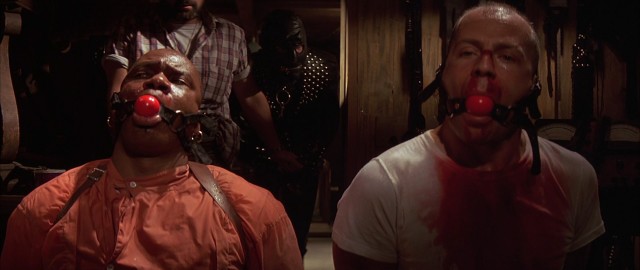
 Dinner and a movie — two things that go together like, well, Abbott and Costello, Batman and Robin, yin and yang, Bogie and Bacall, politics and corruption, football and head injuries. However, among the films that might not especially elicit thoughts of a fancy meal is Quentin Tarantino’s Oscar-nominated 1994 masterpiece, Pulp Fiction, a violent bloodbath that involves brains being blasted all over the inside of a car, a Mexican stand-off in a huge coffee shop, blasphemy, and serious discussions about foot massages and the Big Mac. (“Hamburgers: the cornerstone of any nutritious breakfast,” Jules points out.) On October 14 & 15, Nitehawk Cinema will be hosting its latest Film Feast, two evenings of Pulp Fiction screenings paired with a gourmet meal with dishes that evoke scenes from the all-star flick, which features John Travolta, Samuel L. Jackson, Uma Thurman, Harvey Keitel, Tim Roth, Amanda Plummer, Ving Rhames, Eric Stoltz, Rosanna Arquette, Christopher Walken, and Bruce Willis, mostly as you have never seen them before. The twentieth-anniversary screenings will begin with the “One Minute They’re Having a Denver Omelette,” consisting of pancetta, peppadew peppers, Cabot clothbound cheddar, chives, and toasted sourdough, paired with a Honey Bunny cocktail (juniper-and-hop-infused Absolut, pear and thyme honey syrup, fresh lemon, and Prosecco). Next up is “This Is a Tasty Burger!,” with grilled pineapple, jack cheese, chipotle aioli, and shoestring fries, accompanied by a Tasty Beverage (Absolut Citron and homespun cherry limeade), followed by “Jack Rabbit Slims” (coke-and-vanilla-marinated skirt steak and a Fox Force Five Herb salad) with a $5 Shake (whiskey-barrel-aged Absolut and dark chocolate milkshake). The food and drink keep coming with “Papa Tomato, Mama Tomato, Baby Tomato” (beefsteak tomato, goat cheese, sundried tomato stuffing, and green tomato catchup) and a Comfortable Silence, and then dessert: “Toaster Pastry” (cinnamon-and-sugar-dusted puff pastry and maple royale icing), Potbelly Punch (fresh SoCal fruit punch with Absolut Mandarin), “This Some Serious Gourmet Shit” (coffee panna cotta and white chocolate foam), and Some Serious Gourmet Shit (bacon-infused Absolut, house-made maple Irish Cream, and espresso). Fortunately, the chefs have skipped other obvious choices. “Hey, sewer rat may taste like pumpkin pie, but I’d never know ’cause I wouldn’t eat the filthy motherfucker,” Jules says. “Pigs sleep and root in shit. That’s a filthy animal. I ain’t eatin’ nothing that ain’t got sense enough to disregard its own feces.” Vincent replies, “How about a dog? Dog eats its own feces,” to which Jules responds, “I don’t eat dog either.” Don’t be scared off by talk like that or if the website says both nights are already sold out; we have it on good authority that more spaces will open up on Monday. Bon appetit!
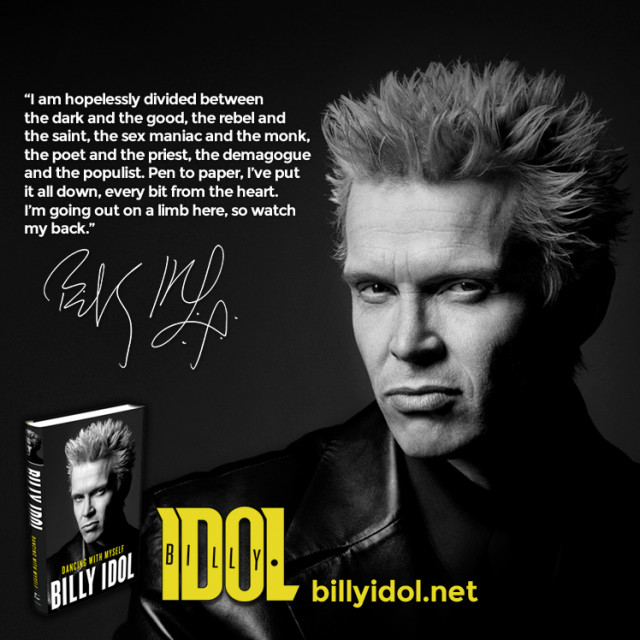
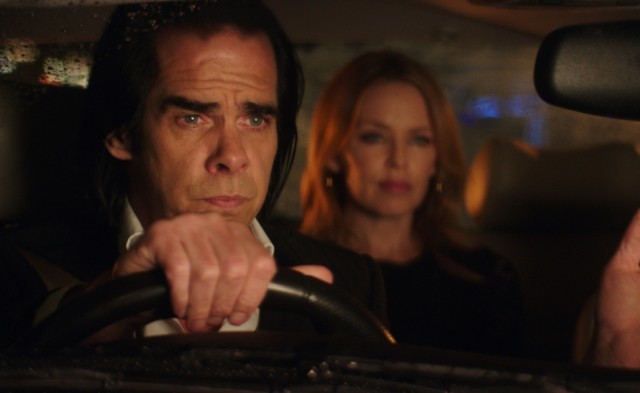
 The film 20,000 Days on Earth might sound like a 1950s low-budget sci-fi cult classic you’ve never seen, but actually it’s an unusual and vastly inventive document of the life and times of Australian rocker, poet, novelist, film composer, screenwriter, and all-around bon vivant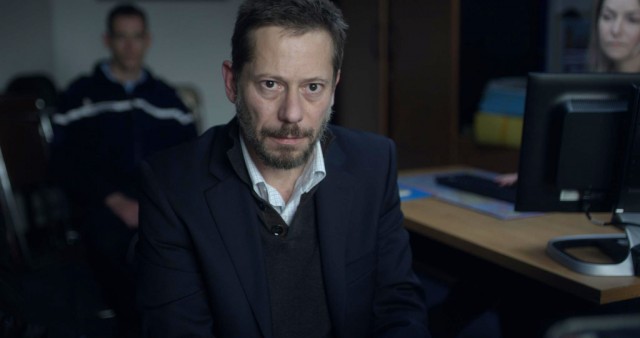
 Real-life partners Mathieu Amalric and Stéphanie Cléau strip Georges Simenon’s short 1955 novel The Blue Room to its bare essentials — and we do mean bare — in their intimate, claustrophobic modern noir adaptation, which made its North American premiere at the New York Film Festival last week. In addition to being one of the world’s most talented actors, starring in such films as Kings and Queen, The Diving Bell and the Butterfly, A Christmas Tale, and