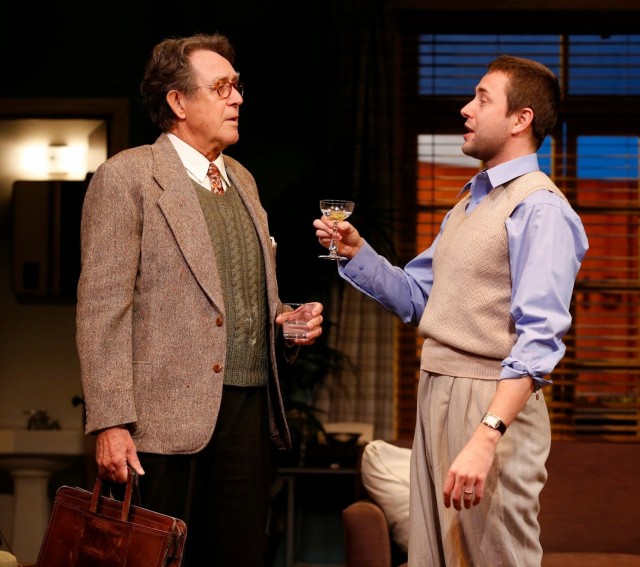
Raymond Chandler (Larry Pine) and Billy Wilder (Vincent Kartheiser) get down to work on DOUBLE INDEMNITY in BILLY & RAY (photo by Carol Rosegg)
Vineyard Theatre
108 East 15th St. at Irving Pl.
Tuesday – Sunday through November 23, $79-$100
212-353-0303
www.vineyardtheatre.org
During his more-than-half-century career in show business, writer, director, producer, and actor Garry Marshall has been behind some of the oddest, most beloved couplings on television, including Mork & Mindy, Laverne and Shirley, Me and the Chimp (well, maybe not so beloved, but certainly odd), and, well, The Odd Couple. Now the Bronx-born director of such films as The Flamingo Kid, Pretty Woman, and Beaches is back in New York with the sitcom-y Hollywood-set show Billy & Ray, about the tense, difficult collaboration between bombastic Viennese writer-director Billy Wilder (Mad Men’s Vincent Kartheiser) and hardboiled-detective author Raymond Chandler (Casa Valentina’s Larry Pine). Having broken up with his previous writing partner, Charlie Brackett, with whom he wrote Ninotchka, Hold Back the Dawn, and Ball of Fire, each of which was nominated for a screenplay Oscar, Wilder decides to go with the little-known Chandler, who turns out to be a mild-mannered, soft-spoken married professorial type who doesn’t like Wilder’s cursing, shouting, drinking, and womanizing but sneaks sips of whiskey while claiming to be a teetotaler. The two eventually dive into James M. Cain’s novel, which Chandler calls “creaky, melodramatic nonsense,” attempting to get the lurid story about lust, greed, and murder past Joseph Breen and the ridiculously stringent Motion Picture Production Code. Ambitious young producer Joseph Sistrom (Drew Gehling) tries to navigate the murky waters with the code office and the studio while Wilder’s dedicated assistant, Helen Hernandez (Sophie von Haselberg), does whatever’s necessary to keep it all from falling apart.
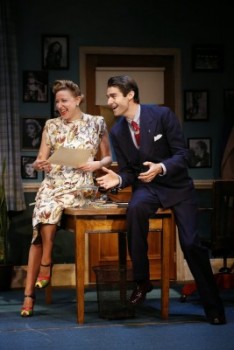
Helen Hernandez (Sophie von Haselberg) and Joseph Sistrom (Drew Gehling) try to keep Chandler and Wilder together in BILLY & RAY (photo by Carol Rosegg)
Although not quite the screwball comedy Marshall and playwright Mike Bencivenga (Single Bullet Theory, Happy Hour) want it to be, Billy & Ray is an engaging behind-the-scenes look at the creation of one of the greatest works in film noir history, a seminal, genre-redefining movie whose overall effect and influence had repercussions throughout Hollywood and the world. Pine is gentle and calm as Chandler, a henpecked writer initially in it just to make a buck, while a miscast Kartheiser overplays the unpredictable, iconoclastic Wilder, who fights the system despite being part of it. Gehling (On a Clear Day You Can See Forever, Jersey Boys) and von Haselberg, in her New York theater debut, offer solid support, playing their parts with an energizing gusto that serves as a much-needed break from the conflicts between the two protagonists. (If von Haselberg reminds you of Bette Midler, that’s no surprise, because she’s the daughter of the Divine Miss M; her only film appearance came as a five-year-old in Marshall’s Frankie and Johnny.) Charlie Corcoran’s set is so charming and welcoming, it’s worth checking out the model in the downstairs lobby, near some archival photographs of stills from deleted scenes from the film. (The Vineyard has also re-created part of the office with a typewriter, suitcase, and other related ephemera.) Though not nearly as taut and literate as James Lapine’s Tony-nominated Act One, the recent Broadway play about the first collaboration between Moss Hart and George S. Kaufman, Billy & Ray is a treat especially for fans of Double Indemnity, as the play reveals what went into some of the key moments of the classic noir. However, after Chandler and Wilder discuss changing the ending of the movie by cutting a scene, the play concludes with a wholly unnecessary coda that is a disturbing departure from the trusting relationship that had been built between the actors and the audience and will hopefully wind up on the cutting-room floor.
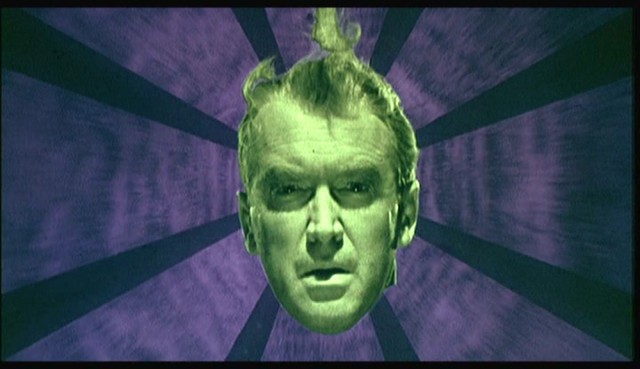
 Alfred Hitchcock was perhaps never so fetishistic as in his 1958 psychological thriller, Vertigo. Based on Boileau-Narcejac’s 1954 novel, D’entre les morts, the film delves deep into the nature of fear and obsession. Jimmy Stewart stars as John “Scottie” Ferguson, a police detective who retires after his acrophobia leads to the death of a fellow cop. An old college classmate, wealthy businessman Gavin Elster (Tom Holmore), asks Scottie to look into his wife’s odd behavior; Elster believes that Madeleine (Kim Novak) is being inhabited by the spirit of Carlotta Valdes, her great-grandmother, a woman who committed suicide in her mid-twenties, the same age that Madeleine is now. Scottie follows Madeleine as she goes to Carlotta’s grave, visits a portrait of her in a local museum, and jumps into San Francisco Bay. Scottie rescues her, brings her to his house, and starts falling in love with her. But on a visit to Mission San Juan Bautista, tragedy strikes when Scottie can’t get to the top of the tower because of his vertigo. After a stint in a sanatorium, he wanders the streets of San Francisco where he and Madeleine had fallen in love, as if hoping to see a ghost — and when he indeed finds a woman who reminds him of Madeleine, a young woman named Judy Barton (Novak), he can’t help but try to turn her into his lost love, with tragedy waiting in the wings once again.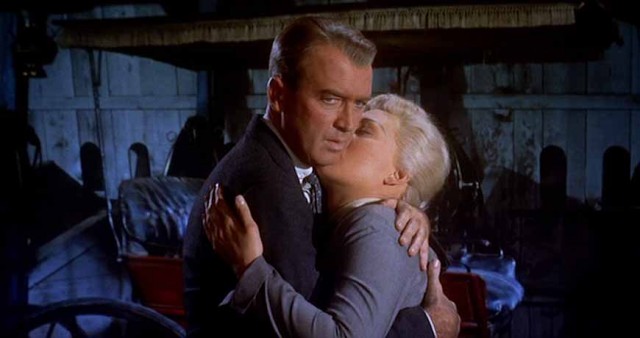
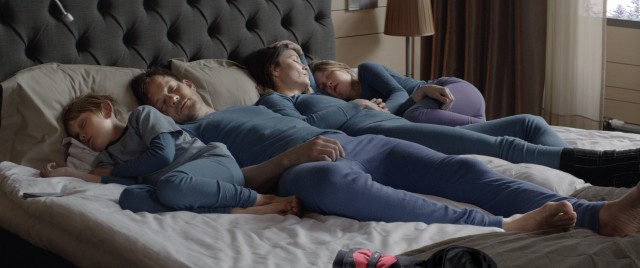
 Ruben Östlund’s Force Majeure is one of the best films you’ll ever hear. Not that Fredrik Wenzel’s photography of a lovely Savoie ski resort and Ola Fløttum’s bold, classical-based score aren’t stunning in their own right, but Kjetil Mørk, Rune Van Deurs, and Jesper Miller’s sound design makes every boot crunching on the snow, every buzzing electric toothbrush, every ski lift going up a mountain, every explosion setting off a controlled avalanche a character unto itself, heightening the tension (and black comedy) of this dark satire about a family dealing with a crisis. On the first day of their five-day French Alps vacation, workaholic Tomas (Johannes Bah Kuhnke) and his wife, Ebba (Lisa Loven Kongsli), are enjoying lunch on an outdoor veranda with their small children, Harry (Vincent Wettergren) and Vera (Clara Wettergren), when a potential tragedy comes barreling at them, but in the heat of the moment, while Ebba instantly seeks to protect the kids, Tomas runs for his life, leaving his family behind. After the event, which was not as bad as anticipated, the relationship among the four of them has forever changed, especially because Tomas will not own up to what happened. Even Harry and Vera (who are brother and sister in real life) know something went wrong that afternoon and are now terrified that their parents will divorce. But with Tomas unwilling to talk about his flight response, Ebba starts sharing the story with other couples, including their hirsute friend Mats (Kristofer Hivju) and his young girlfriend, Fanni (Fanni Metelius), who are soon arguing in private about what they would do in a similar situation.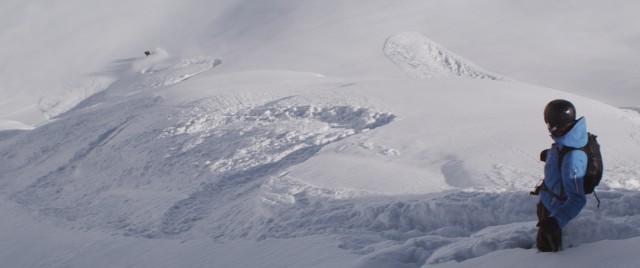
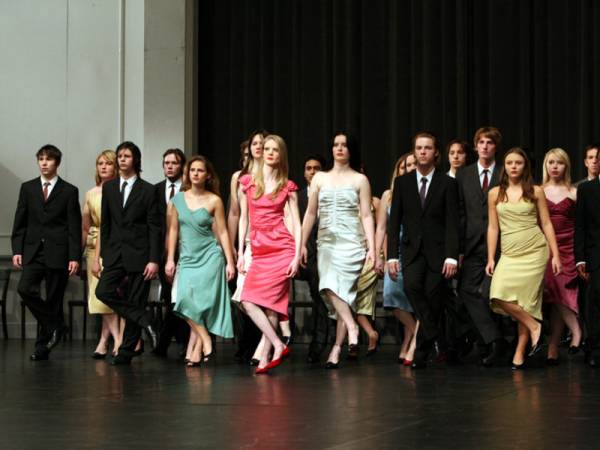
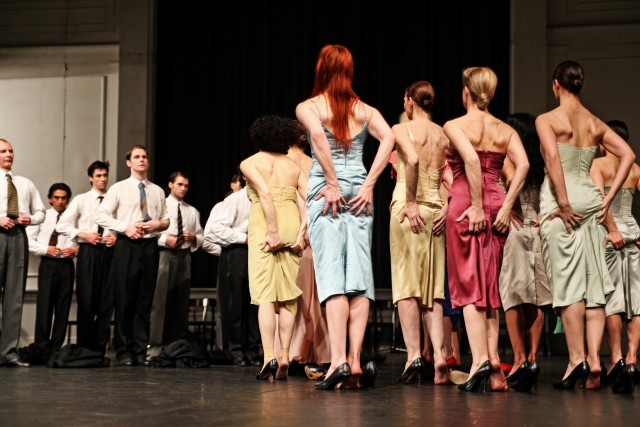
 From 1973 until her death in 2009, legendary dancer and choreographer Pina Bausch ran Tanztheater Wuppertal, the German company that changed the face of dance theater forever with such seminal productions as Rite of Spring, Café Müller, Danzón, Masurca Fogo, and so many others, many of which had their U.S. premieres at BAM. In 1978 she staged Kontakthof, collaborating with Rolf Borzik, Marion Cito, and Hans Pop, set to music by Juan Llossas, Charlie Chaplin, Anton Karas, Sibelius, and other composers. In 2000, she revisited the piece with a cast of senior citizens, and eight years later she turned the roles over to a group of Wuppertal high schoolers, most of whom had never heard of her and had never danced before. Director Anne Linsel and cinematographer Rainer Hoffmann follow the development of this very different production in Dancing Dreams, speaking with the eager, nervous participants, who talk openly and honestly about their hopes and desires, as well as with rehearsal directors Jo-Ann Endicott and Bénédicte Billet, who do not treat the teens with kid gloves but instead are trying to get them to reach deep inside of themselves and hold nothing back. When Bausch shows up to choose the final cast, telling the teenagers that she doesn’t bite, the tension mounts. Dancing Dreams is an intimate look at the creative process, about dedication and determination and what it takes to be an artist. It suffers at times from feeling too much like a reality television show, mixing American Idol and So You Think You Can Dance with the fictional Glee, but it also offers a last glimpse at Bausch, whose final interview is captured in the film. “You might think I’ve had enough of Kontakhtof,” she says at one point. “But every time it’s a new thing.” Dancing Dreams is screening October 27 at 7:30 in conjunction with the current production of