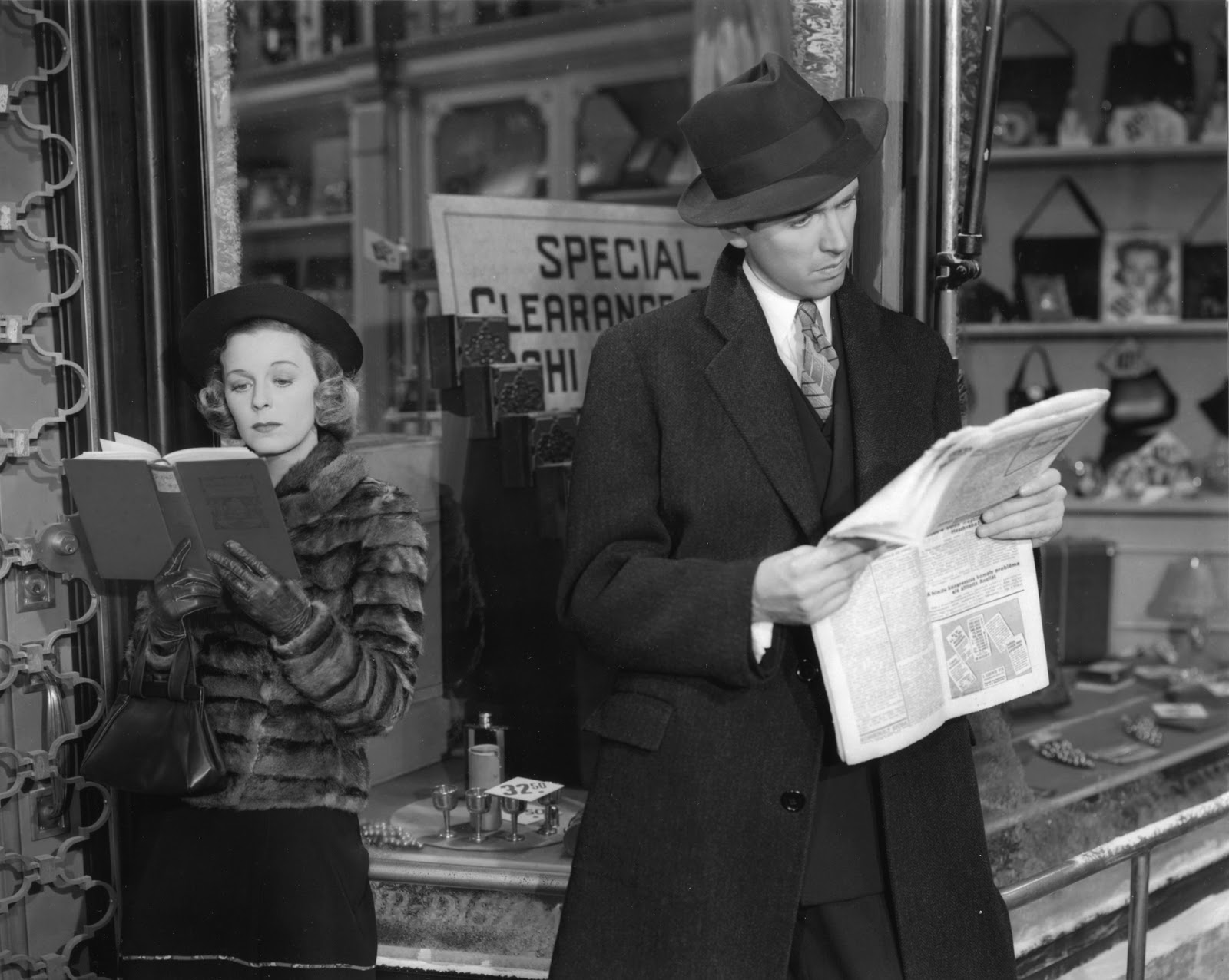
Klara Novak (Margaret Sullavan) and Alfred Kralik (James Stewart) have little time for each other in Ernst Lubitsch’s THE SHOP AROUND THE CORNER
THE SHOP AROUND THE CORNER (Ernst Lubitsch, 1940)
Film Forum
209 West Houston St.
December 25-31
212-727-8110
www.filmforum.org
 Jimmy Stewart’s most famous Christmas movie might be It’s a Wonderful Life, but that doesn’t mean it’s his best. That distinction belongs to the 1940 Ernst Lubitsch black-and-white romantic comedy The Shop Around the Corner, which is having a special holiday run December 25-31 at Film Forum. Stewart stars as Alfred Kralik, a serious-minded longtime clerk at the Budapest gift shop Matuschek & Co., serving as the right-hand man to owner Hugo Matuschek (The Wizard of Oz’s Frank Morgan), who relies on his star employee’s honesty and expertise. Also working at the store is Pirovitch (Felix Bressart), a timid family man who hides every time Mr. Matuschek asks for an opinion; the shy Flora Kaczek (Sara Haden); the brash, ambitious delivery boy Pepi Katona (William Tracy); and the self-involved would-be bon vivant Ferencz Vadas (Joseph Schildkraut). When Klara Novak (Margaret Sullavan) shows up looking for a job, Kralik tries to quickly dismiss her, but she ends up charming Mr. Matuschek and getting hired. She and Kralik, her direct superior, bicker constantly, each one hoping that a romantic pen pal will make their dreary lives much brighter, especially as Christmas approaches. But little do they know the love letters that they are so carefully crafting are actually to each other, their secretive literary relationship a far cry from their actual daily one.
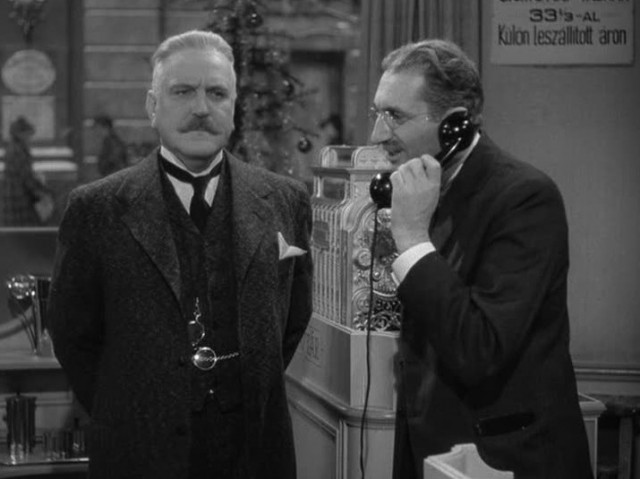
Mr. Matuschek (Frank Morgan) and Pirovitch (Felix Bressart) prepare for Christmas in THE SHOP AROUND THE CORNER
The Shop Around the Corner is based on Miklós László’s 1937 play, Parfumerie, and it very much has a claustrophobic feel, as events occur primarily in the small store. Stewart and Sullavan channel some of that Cary Grant / Irene Dunne magic as they go about their private and professional business, even if they don’t even make attempts at Hungarian accents. (Neither does Morgan, who gives one of his finest performances.) “There might be a lot we don’t know about each other. You know, people seldom go to the trouble of scratching the surface of things to find the inner truth,” Mr. Kralik says to Miss Novak, who replies, “Well, I really wouldn’t care to scratch your surface, Mr. Kralik, because I know exactly what I’d find. Instead of a heart, a handbag. Instead of a soul, a suitcase. And instead of an intellect, a cigarette lighter . . . which doesn’t work.” The central object in the shop is a cigarette box that plays the Eastern European folk song “Ochi Tchornya” every time it is opened; while Mr. Kralik thinks that smokers will tire of hearing the same tune over and over, Miss Novak convinces a customer that it is a candy box and that the repetition of the song will turn her away from opening the box again and again to eat more; meanwhile, Mr. Matuschek just wants to sell the darn things, delineating the three characters’ approach to life in general. Written by Samson Raphaelson, who adapted other plays and novels for Lubitsch, including The Smiling Lieutenant, Trouble in Paradise, and Heaven Can Wait, The Shop Around the Corner is a sweetly innocent film with just the right amount of edginess, a fun frolic through human nature and love, a fanciful confection set in the rococo interior of a shop selling little luxuries in a now-lost Hungary between the world wars. The story was also turned into the 1949 musical In the Good Old Summertime with Van Johnson and Judy Garland (Johnson also appeared in a 1945 radio version with Phyllis Thaxter) and Nora Ephron’s popular 1998 romantic comedy You’ve Got Mail, starring Tom Hanks and Meg Ryan, the latter playing a woman who runs a New York City bookstore called the Shop Around the Corner. (On New Year’s Eve, Film Forum will be pouring free champagne for the 7:00 and 9:15 shows.)
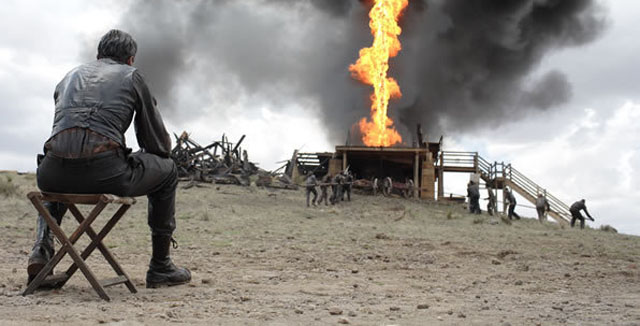
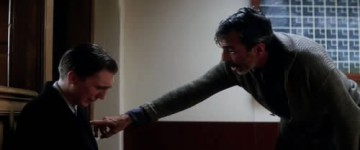

 Barcelona’s La Sagrada Familia is perhaps the most spectacular long-running architectural work-in-progress in the world, and arguably the most beautiful and inspiring. Construction began on the cathedral, which sits in the center of the cosmopolitan city, in March 1882, under diocesan architect Francisco del Paula del Villar, but a young man named Antoni Gaudí took over at the end of 1883 and spent the next forty-three years designing and building the expiatory church, incorporating a unique mix of styles as well as a whole new architectural philosophy. Swiss filmmaker Stefan Haupt (Elisabeth Kübler-Ross: Facing Death, The Circle) takes viewers behind the scenes of this ongoing project in the dry but elegant documentary Sagrada: The Mystery of Creation. Haupt delves into the history of the grand building and looks into its future as he speaks with chief architect Jordi Bonet, sculptors Etsuro Sotoo and Josep Subirachs, stained-glass artist Joan Vila-Grau, priest Lluís Bonet, religious studies professor Raimon Panikkar, and others about the house of worship, most of them singing the praises of the proud Catalan Gaudí, who also built such dazzling structures in his home region as Casa Batlló, Park Güell, and La Pedrera. “We owe it to him to finish this temple and show the world his genius,” foreman Jaume Torreguitart says. The film features extended sections in which cinematographer Patrick Lindenmaier lovingly shoots the inside and outside of the basilica, lingering over the intricate beauty of the myriad details, from the Nativity and Passion Facades to the spires, nave, apse, transept vaults, and Gaudí’s own crypt. La Sagrada occasionally feels like a clever way to raise money to continue work on the project, as it was made with the full support of the Sagrada Família Foundation, which needs funds to finally finish the ornate structure, and the narration (spoken by Hanspeter Müller-Drossaart) lacks the poetry of the visuals. But even as beautiful as the visuals are, it’s still difficult to capture, in words and pictures, the captivating essence of La Sagrada Familia, which overwhelmed me when I visited it a few years ago. The Film Society of Lincoln Center is screening Sagrada: The Mystery of Creation from December 19 to January 1; as a bonus, they are also showing Hiroshi Teshigahara’s 1984 documentary, Antoni Gaudí, December 19-25.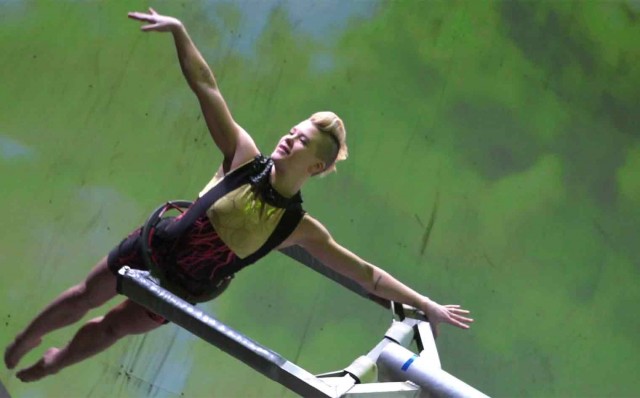
 Over the last several years, New Yorkers have gotten the chance to see Elizabeth Streb’s Extreme Action Company perform such dazzling works as
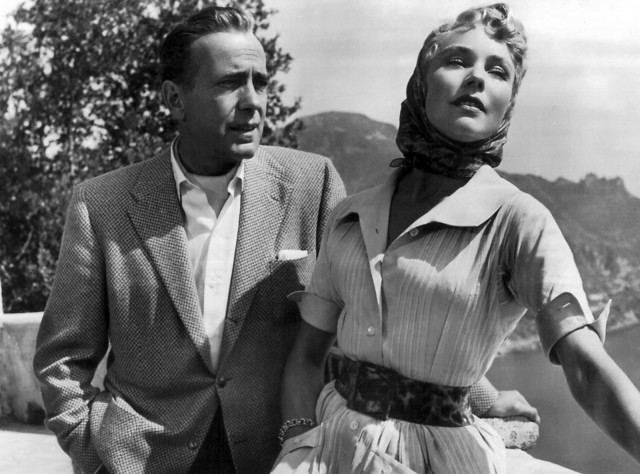
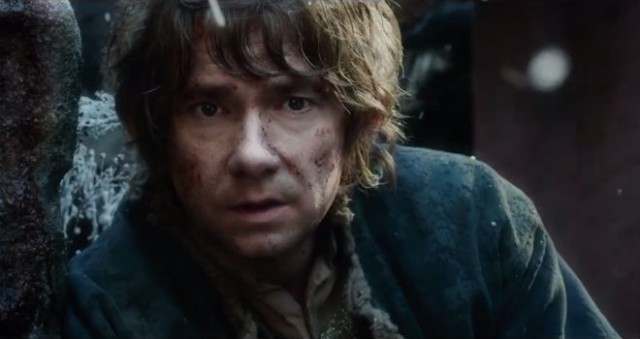
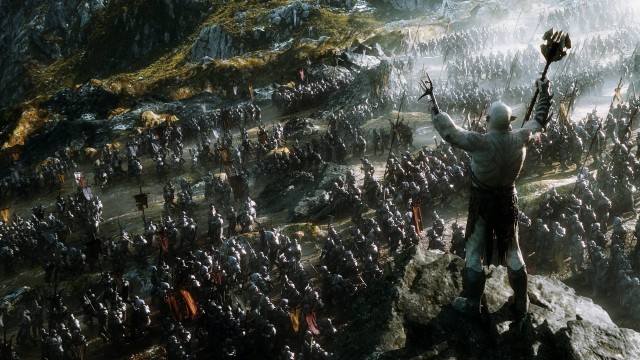
 Peter Jackson’s sixteen-year adventure through J. R. R. Tolkien’s Middle-earth comes to its inevitable conclusion with The Hobbit: The Battle of the Five Armies, the third film in the prequel trilogy that began with An Unexpected Journey and The Desolation of Smaug. The story picks up as the enormous fire-breathing flying dragon Smaug (voiced by Benedict Cumberbatch) is laying waste to the island of Lake-town as the thirteen Dwarves of Erebor watch from the Lonely Mountain. But soon after the brave Bard (Luke Evans) dispatches the evil beast in spectacular fashion, the Men of the Lake, the Orcs, the Elves, and the Goblins all descend on Erebor seeking either refuge, revenge, or the massive amount of gold that fills the abandoned castle. However, Dwarves king Thorin Oakenshield II (Richard Armitage) has been overcome with dragon-sickness, an unbounded greed that has him protecting every single piece of the vast treasure, refusing to share it with anyone but his thirteen cohorts as he searches for the powerful Arkenstone that Bilbo Baggins (Martin Freeman) is hiding. Meanwhile, Gandalf the Grey (Ian McKellen), Galadriel (Cate Blanchett), Elrond (Hugo Weaving), and Saruman (Christopher Lee) take on Sauron the Necromancer (voiced by Cumberbatch); the Elf Tauriel (Evangeline Lilly) and the Dwarf Kíli (Aidan Turner) explore their forbidden love; and a stream of frightening creatures join the fray. Also along for this final ride is Legolas (Orlando Bloom), his father, Thranduil (Lee Pace), Thorin’s cousin Dáin (Billy Connolly), the brutal, scimitar-armed Azog the Defiler (Manu Bennett) and his brutal son, Bolg (John Tui), and the pompous, greedy Master of Lake-town (Stephen Fry).