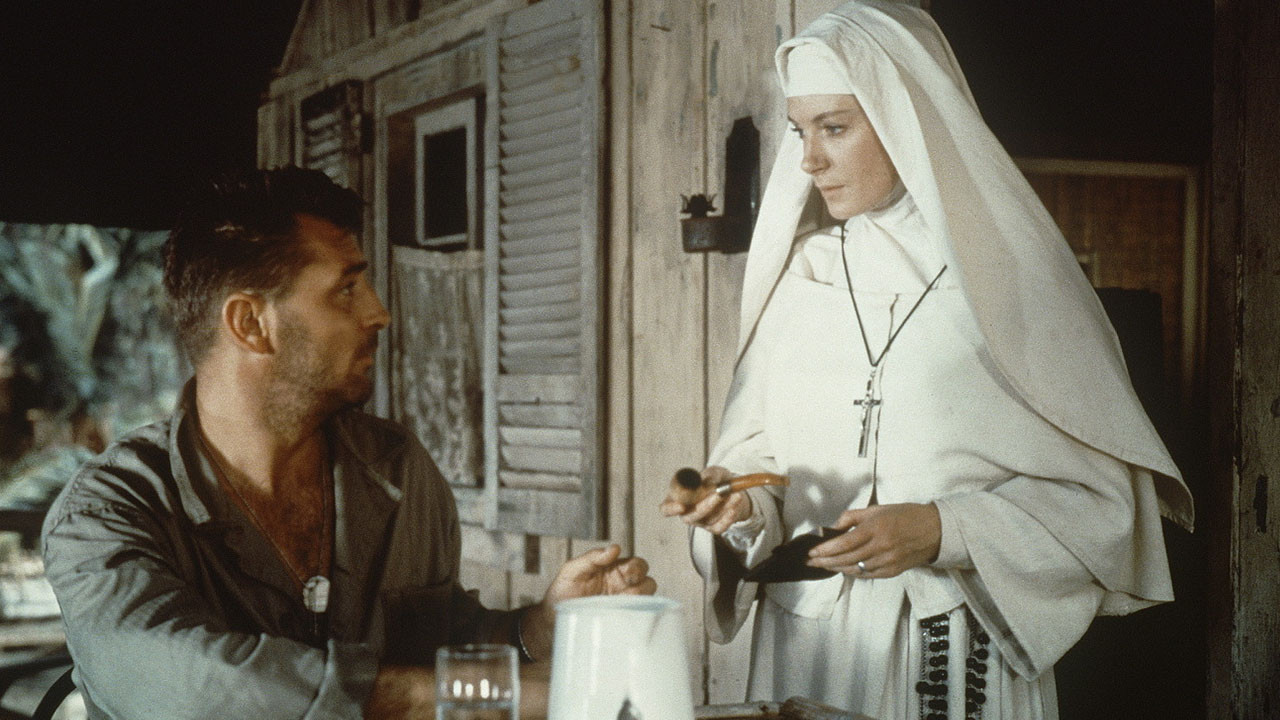
A marine corporal (Robert Mitchum) and a Catholic novitiate (Deborah Kerr) are stuck on a deserted island in John Huston’s HEAVEN KNOWS, MR. ALLISON
HEAVEN KNOWS, MR. ALLISON (John Huston, 1957)
Film Society of Lincoln Center, Walter Reade Theater
165 West 65th St. between Eighth Ave. & Broadway
Tuesday, December 30, 3:45, and Saturday, January 3, 3:45
Festival runs December 19 – January 11
212-875-5050
www.filmlinc.com
 In 1944, a marine corporal (Robert Mitchum) washes up on an island that has only one other occupant: a Catholic novitiate (Deborah Kerr) preparing to take her final vows, stranded there because of the war and the death of an aged priest. When the Japanese first bomb the island, then occupy it, the rugged Mr. Allison and the demure Sister Angela are forced to hide out together in a cave as they face both starvation and enemy capture. Adapted by director John Huston and John Lee Mahin (No Time for Sergeants, Show Boat) from Charles Shaw’s 1952 novel, Heaven Knows, Mr. Allison is a charming character study, a different kind of love story that develops within a lush, gripping Cinemascope WWII drama. Connecticut native Mitchum (Out of the Past, The Night of the Hunter), who is often shown bare-chested, and Glasgow-born Kerr (From Here to Eternity, Separate Tables), mostly hidden within her white habit (which stays remarkably clean through most of the film), are at their best as they reveal details of lives that are more similar than they initially imagine. (Kerr was nominated for an Oscar for the film, one of her six Best Actress nods, earning an honorary Academy Award in 1994, while Mitchum’s lone nomination was for Best Supporting Actor in 1945’s The Story of G.I. Joe.)
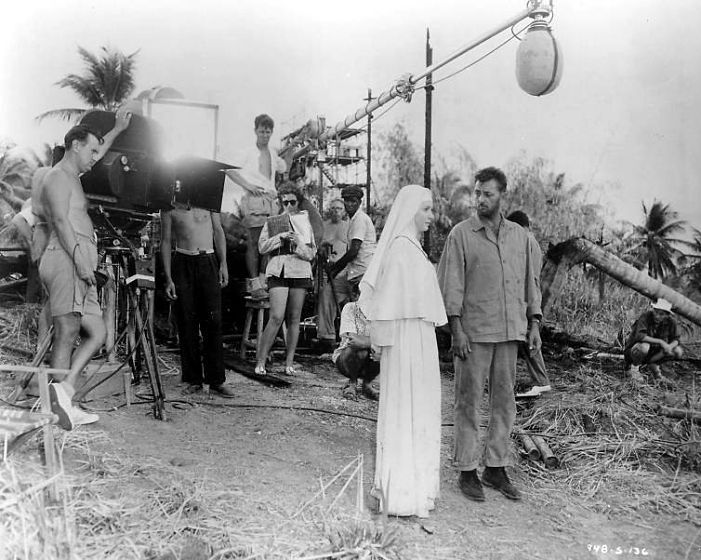
Deborah Kerr, Robert Mitchum, and crew members on the set of HEAVEN KNOWS, MR. ALLISON on the island of Tobago
Huston draws numerous parallels between the institutions they have dedicated themselves to, the military and the church, each involving a strict set of rules and behavior, along with specific uniforms. But while Mr. Allison puts his belief in himself and his fellow marines, Sister Angela relies on a higher authority. Mitchum and Kerr, who evoke Humphrey Bogart’s resilient Mr. Allnut and Katharine Hepburn’s prim Rose Sayer in Huston’s The African Queen, went on to make three more films together, The Sundowners (another Oscar nod for Kerr) and The Grass Is Greener in 1960 and the 1985 British TV movie Reunion at Fairborough. Heaven Knows, Mr. Allison is screening December 30 and January 3 as part of the Film Society of Lincoln Center series “Let There Be Light: The Films of John Huston,” which runs through January 11 and consists of forty films directed by the master, from Across the Pacific and The Barbarian and the Geisha to Fat City and In This Our Life, from The Kremlin Letter and The Life and Times of Judge Roy Bean to Moulin Rouge and The List of Adrian Messenger, in addition to a handful of other works he either appeared in (Tentacles!) or that demonstrate his lasting influence (There Will Be Blood).


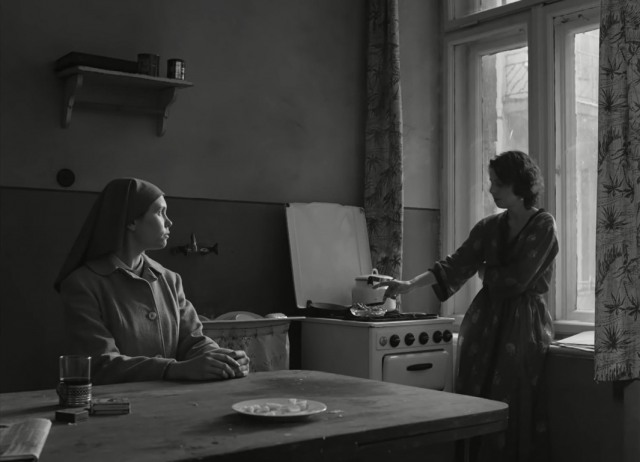
 Paweł Pawlikowski’s Ida is one of the most gorgeously photographed, beautifully told films of the young century. The international festival favorite and shortlisted Foreign Language Oscar contender is set in Poland in 1962, as eighteen-year-old novitiate Anna (Agata Trzebuchowska) is preparing to become a nun and dedicate her life to Christ. But the Mother Superior (Halina Skoczyńska) tells Anna, an orphan who was raised in the convent, that she actually has a living relative, an aunt whom she should visit before taking her vows. So Anna sets off by herself to see her aunt Wanda (Agata Kulesza), a drinking, smoking, sexually promiscuous, and deeply bitter woman who explains to Ida that her real name is Ida Lebenstein and that she is in fact Jewish — and then reveals what happened to her family. Soon Ida, Wanda, and hitchhiking jazz saxophonist Dawid Ogrodnik are on their way to discovering some unsettling truths about the past.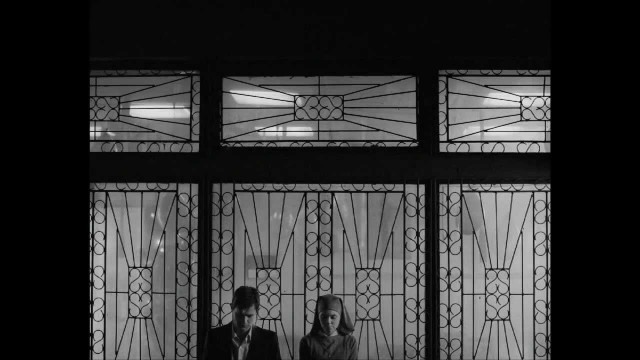
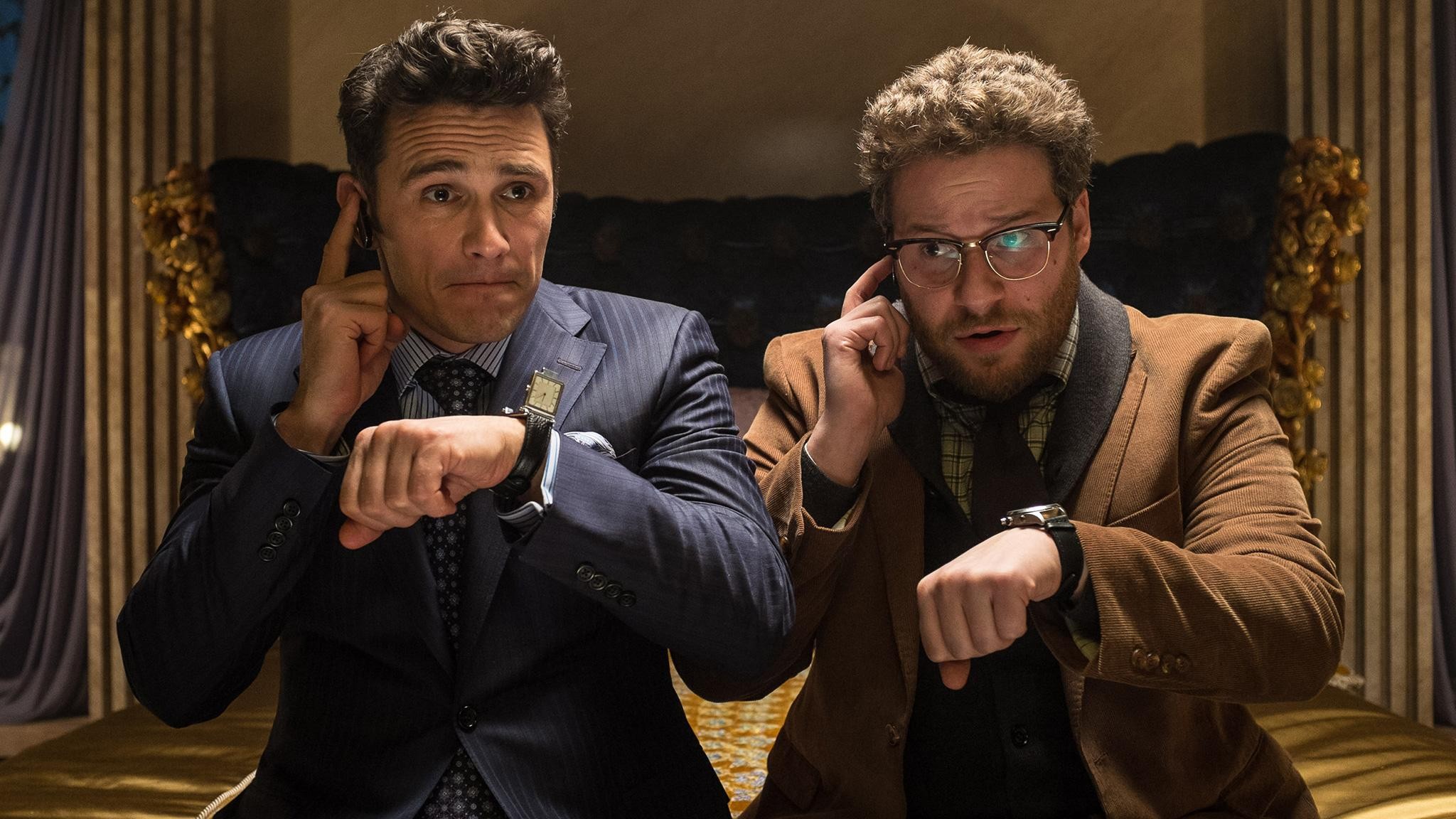
 The most infamous film of 2014 was released in theaters on Christmas after all, following the embarrassing hacking of Sony’s servers and George Clooney and the president sharing their opinions about violent threats from North Korea over a movie — and a stupid movie, at that. But as it turns out, The Interview is stupid fun, even if it does lose its way amid the bizarre absurdity of its final scenes. James Franco — we’re sorry, but we still can’t get enough of him — stars as superbly sycophantic celebrity talk show host Dave Skylark, who just happens to be one of reclusive North Korean Supreme Leader Kim Jong-un’s (Randall Park) personal favorites. So Skylark’s best friend and producer, Aaron Rapoport (Rogen), sets up a live interview with Kim, agreeing to the leader’s rigidly controlled set of conditions delivered by his gorgeous security chief, Sook (Diana Bang). When the CIA hears about the interview, they send agent Lacey (Lizzy Caplan) to convince Skylark and Rapoport that they must assassinate Kim for the good of the world. But their best-laid plans go awry when Kim charms Skylark as they embark on a brief bromance that threatens the bromance that already exists between Dave and Aaron. Codirected by Rogen and Goldberg, whose collaborations have also included Superbad, Pineapple Express, This Is the End, and other hits and misses, and written by first-time screenwriter Dan Sterling (The Office, King of the Hill), The Interview is, for the most part, a very funny, extremely juvenile comedy that never misses a chance to make a butt joke. With a little bit of Stripes here, a splash of Spies Like Us there, it follows in the tradition of crazy lowbrow military comedies that eventually go off the deep end but contain more than their fair share of laugh-out-loud silliness. Franco and Rogen, who have been working together since the days of the great Freaks and Geeks, are so much fun to watch as a duo that things don’t completely fall apart even when the script lets them down. Oh, and meanwhile, Eminem comes out of the closet, Rob Lowe reveals a frightening secret, and other celebrities show up as themselves in this bromantic comedy that nearly started WWIII.

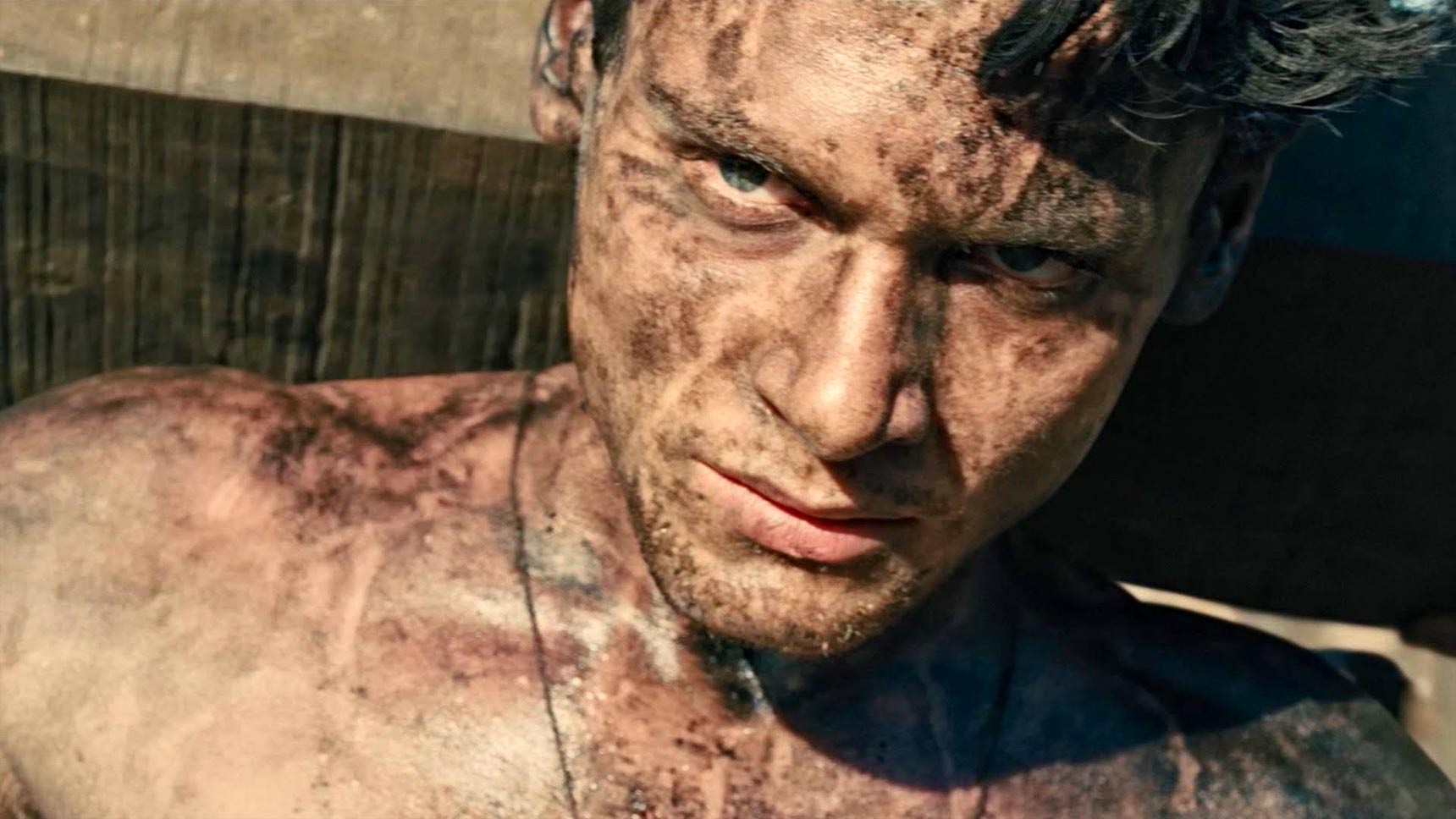
 Unbroken, Angelina Jolie’s second film as director (following In the Land of Blood and Honey), attempts to set itself apart from other real-life dramas right from the start; while other movies claim to be “based on a true story” or “inspired by actual events,” Unbroken boldly, and very clearly, declares itself to be “a true story.” The old-fashioned WWII movie tells the story of Louis “Louie” Zamperini, a troubled kid (first C. J. Valleroy, then Jack O’Connell) who drinks, smokes, and gets in trouble with the law until his life turns around when his brother, Pete (first John D’Leo, then Alex Russell), helps train him to become an Olympic runner. But duty calls, and Louie enlists in the air force. His plane is shot down over the Pacific Ocean, leaving him, Russell “Phil” Phillips (Anna Karenina’s Domhnall Gleeson), and Francis “Mac” McNamara (American Horror Story’s Finn Wittrock) adrift on a pair of life rafts, surrounded by sharks. Later, Zamperini is captured and taken to a POW camp run by the sadistic Mutsuhiro “the Bird” Watanabe (Japanese rock star Miyavi), who decides to make the Olympian his personal punching bag, brutalizing him every chance he gets, daring him to give up, but Zamperini isn’t about to give him the satisfaction.