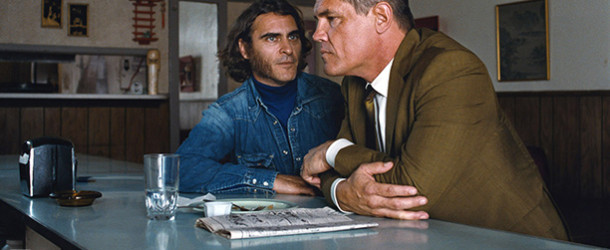
Three different versions of neo-noir masterpiece TOUCH OF EVIL will be shown as part of Orson Welles centennial celebration at Film Forum
TOUCH OF EVIL (Orson Welles, 1958)
Film Forum
209 West Houston St.
Pre-release preview version: Wednesday, January, January 14, 12:30, 2:40, 4:50, 7:00, 10:00
Theatrical release version: Thursday, January 29, 7:00 & 9:00
Reconstruction version: Sunday, February 1, 1:10, 3:20, 8:00, and Monday, February 2, 12:30, 2:40, 4:50, 9:45
Series continues through February 3
212-727-8110
www.filmforum.org
 They don’t come much bigger than Orson Welles in his dark potboiler Touch of Evil, as he nearly bursts through the frame as spectacularly dastardly police captain Hank Quinlan. A deliciously devious corrupt lawman, Quinlan is an enormous drunk who has no trouble breaking the rules to get his man. Charlton Heston took a lot of criticism playing Mike Vargas, a Mexican drug enforcement agent newly married to beautiful blonde Susan (Janet Leigh), who soon finds herself menaced by a dangerous gang as a weak-kneed, pre-McCloud Dennis Weaver looks the other way. The film famously opens with a remarkable crane shot that goes on for more than three minutes, setting the stage like no other establishing shot in the history of cinema. And the final scene with Marlene Dietrich as sultry hooker Tana is a lulu as well, highlighted by one of the great all-time movie lines. What goes on in between is a lurid tale of murder and revenge filled with unexpected twists and turns, featuring appearances by such Welles regulars as Joseph Cotten, Akim Tamiroff, Joseph Calleia, and Ray Collins. There was a lot of hype surrounding the film in 1998 when it was restored to match Welles’s original desires, but the final product lives up to its billing. As part of its “Orson Welles 100” festival, honoring the centennial of the always controversial auteur’s birth, Film Forum is screening three different versions of this deeply affecting noir masterpiece: the 108-minute pre-release version on January 14 (with the 7:00 show introduced by Welles historian Joseph McBride), the 93-minute original theatrical edition on January 29, and the 111-minute reconstruction on February 1-2. The Welles festival continues through February 3 with such double features as The Lady from Shanghai and The Third Man, Compulsion and The Long, Hot Summer, and Jane Eyre and Tomorrow Is Forever, multiple versions of Macbeth, and two evenings of Wellesiana rarities hosted by series consultant McBride, author of What Ever Happened to Orson Welles? A Portrait of an Independent Career.
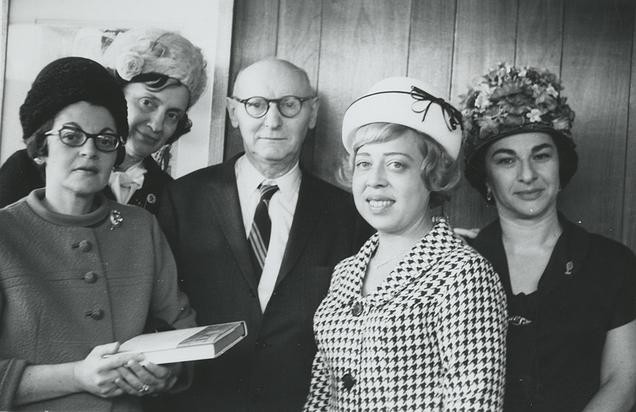
 Who ever thought that little old Yiddish mensch Isaac Bashevis Singer was such a horndog? Asaf Galay and Shaul Betser begin The Muses of Bashevis Singer, their light and playful documentary, with the following quote from the Nobel Prize-winning author: “In my younger days I used to dream about a harem full of women. Lately I’m dreaming of a harem full of translators. If those translators could be women in addition, this would be paradise on earth.” Well, it seems that Singer, who was born in Poland in 1902, emigrated to the United States in 1935, and died in Florida in 1991 at the age of eighty-eight, found that paradise, as Galay and Betser meet with a series of women who were among many hand-picked by Singer, the man who nearly singlehandedly preserved Yiddish literature in the twentieth century, to serve as his translators, and not necessarily because of their language skills. “There were certain women who were more than just translators to him. It happened quite often,” says his Swedish publisher, Dorothea Bromberg, who also talks about Alma, Singer’s wife of more than fifty years. “He loved her, I’m sure, in his own way,” she adds. “She was very jealous of him, and she was completely right.” Galay and Betser meet with translators Eve Fridman, Evelyn Torton Beck, Dvorah Telushkin, Marie-Pierre Bay, Duba Leibell, and Dr. Bilha Rubenstein as well as Singer biographers Florence Noiville and Janet Hadda, his granddaughters Hazel Karr and Merav Chen-Zamir, Yentl the Yeshiva Boy playwright Leah Napolin, and his longtime secretary and proofreader, Doba Gerber, who share intimate, surprising tales about the author of such books as The Family Moskat, The Magician of Lublin, Shosha, and Enemies, a Love Story and such short stories as “Gimpel the Fool,” “A Friend of Kafka,” and “Zlateh the Goat.”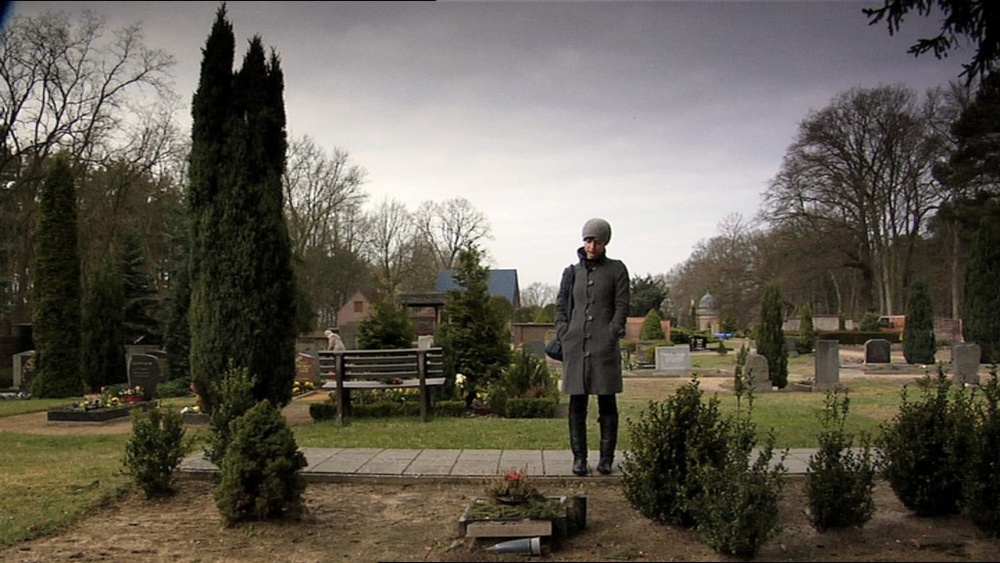
 Named Best Documentary at the 2013 Haifa International Film Festival, Yael Reuveny’s Farewell, Herr Schwarz offers a unique look at the Holocaust and its continuing effects on her and her family through three generations. “We were raised to reject the Diaspora,” the Israeli-born, Berlin-based writer and director says near the beginning of her first feature-length film. “I was supposed to be ‘the new Jew’ but somehow I ended up living in Germany, in the land I wasn’t allowed to set foot in. I wasn’t allowed to be here because of my grandmother’s story. But still, her story, which haunted my childhood, eventually made me build my home here.” And a haunting story it is, filled with intrigue, mystery, and powerful emotions. Sensitively shot by cinematographer Andreas Kohler and featuring an elegiac score by Volker “Hauschka” Bertelmann, the film explores what happened between Reuveny’s grandmother, Michla Schwarz, and Michla’s beloved brother, Feiv’ke. During the war, Feiv’ke was sent to the Schleiben concentration camp in Germany, where Michla thought he perished. Yet Reuveny discovers that her great-uncle actually survived the Holocaust but remained in the same town he had been held in, changing his first name to Peter, marrying a non-Jewish German woman whose brother was a Nazi, and starting a family.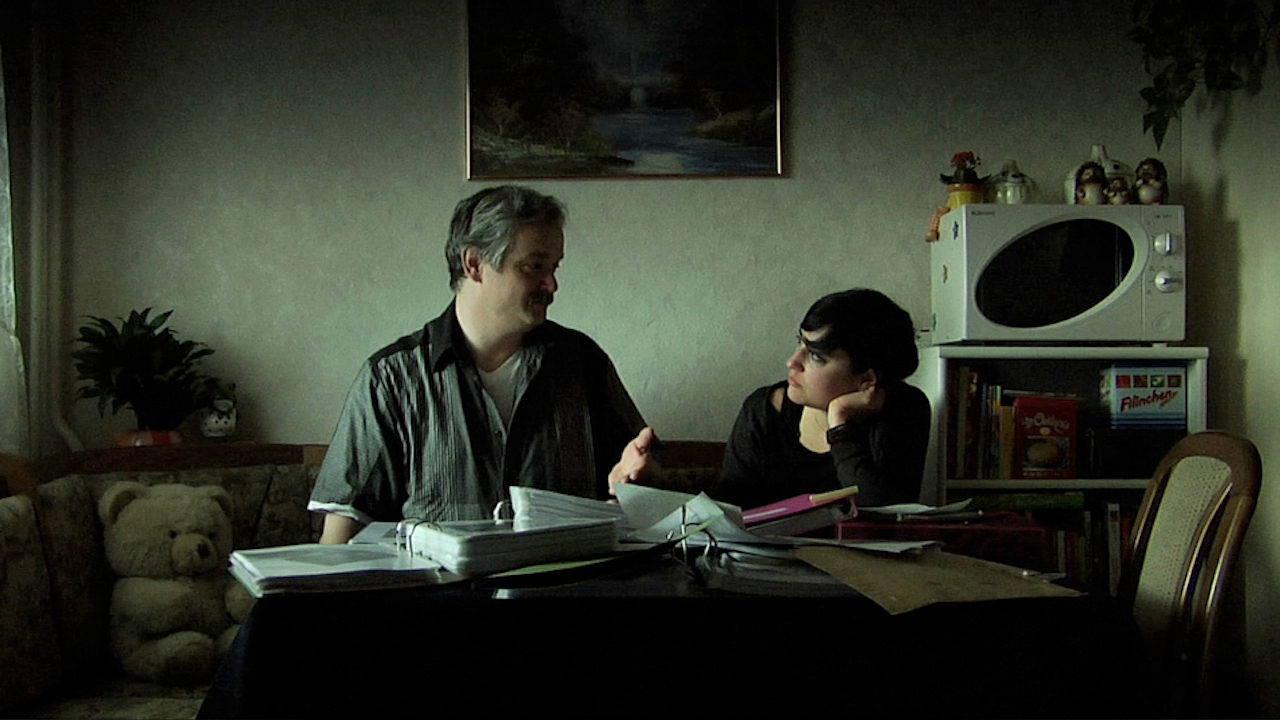

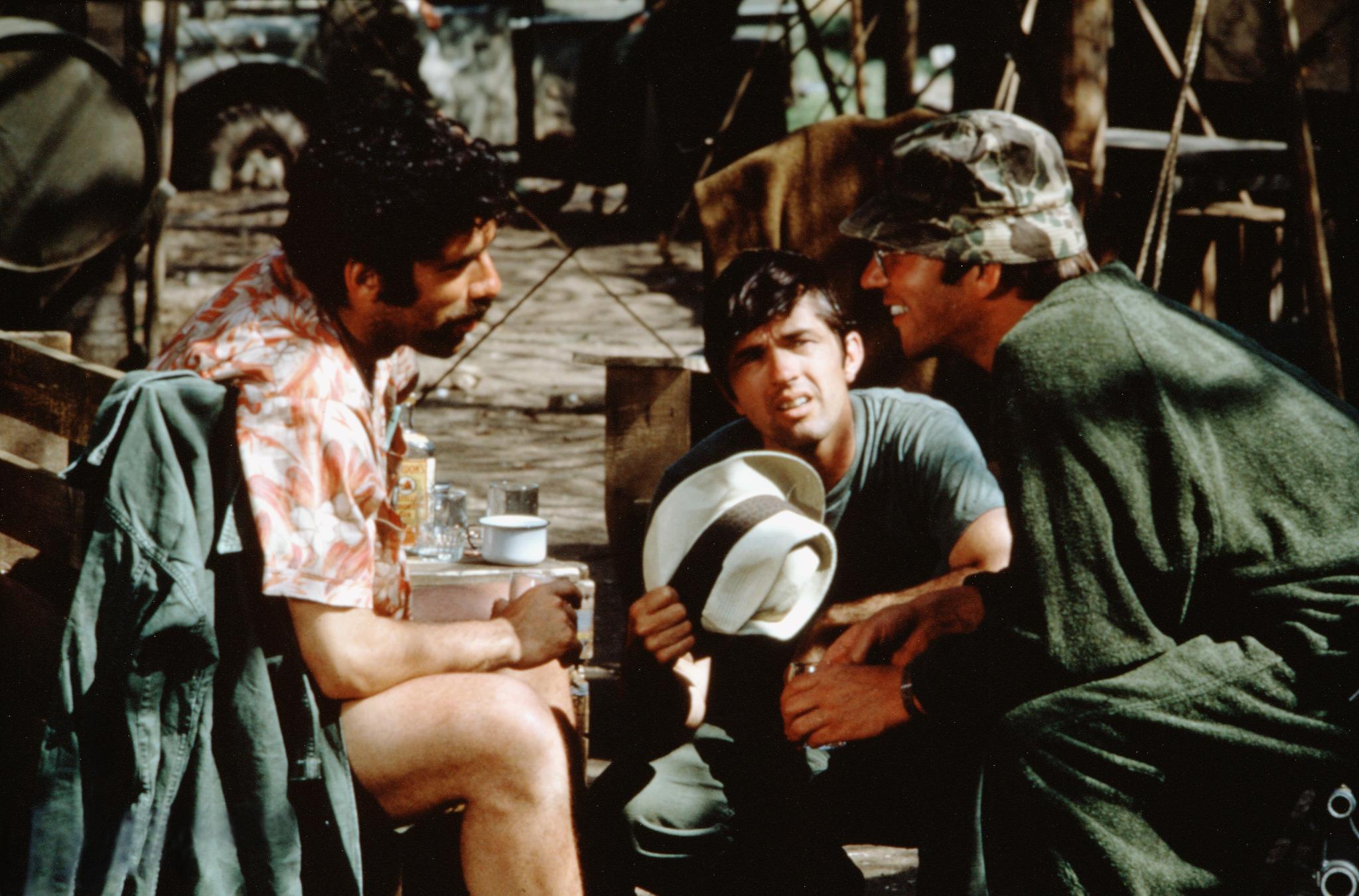
 Ostensibly set during the Korean War but actually about the controversial battle that was raging in Vietnam, Robert Altman’s MASH is one of the most subversive, and funniest, antiwar films ever to come from a Hollywood studio. Adapted by Hollywood Ten blacklisted writer Ring Lardner Jr. from Richard Hooker’s bookMASH: A Novel about Three Army Doctors, the film focuses on a different kind of hero: the doctors and nurses at a Mobile Surgical Army Hospital not far from the front lines. These brave men and women don’t go around with guns, grenades, and helmets; instead, they equip themselves with surgical masks, clamps, and scalpels, fighting to save the lives of those who risked theirs on the battlefield. Instead of celebrating killing, they celebrate survival, and celebrate they do, led by Capts. Benjamin Franklin “Hawkeye” Pierce (Donald Sutherland) and John Francis Xavier “Trapper John” McIntyre (Elliott Gould), who have their own way with wine, women, and song. Joined by Capt. Augustus Bedford “Duke” Forrest (Tom Skerritt), they ridicule Majs. Margaret “Hot Lips” Houlihan (Sally Kellerman) and Frank Burns (Robert Duvall), regularly embarrass Father John Patrick “Dago Red” Mulcahy (René Auberjonois), flirt endlessly with Lt. Maria “Dish” Schneider (Jo Ann Pflug) and her nursing staff, and generally wreak havoc that their commanding officer, Lt. Col. Henry Blake (Roger Bowen), will usually let them get away with, as long as they don’t interrupt his fishing outings. Hawkeye, Duke, and Trapper drink from a homemade still, take bets on whether Hot Lips’ carpet matches the drapes, play golf, and make fun of the military and religion every chance they get, especially during a mock funeral for Capt. Walter Koskiusko Waldowski (John Schuck), the dentist known as “Painless,” who has decided to commit suicide. The wacky cast of characters also includes Gary Burghoff as Cpl. Radar O’Reilly, Altman regular Michael Murphy as Capt. Ezekiel Bradbury “Me Lay” Marston IV, Bud Cort as Pvt. Lorenzo Boone, G. Wood as Brig. Gen. Charlie Hammond, and Kim Atwood as Ho-Jon. But Hawkeye and Trapper also happen to be outstanding doctors who take their oath very seriously, even when operating on an injured enemy. Their brazen disregard for authority of all kinds and the rule of military law is a knowing slap in the face to governments around the world, who so often send their young men and women off to war for highly questionable reasons.