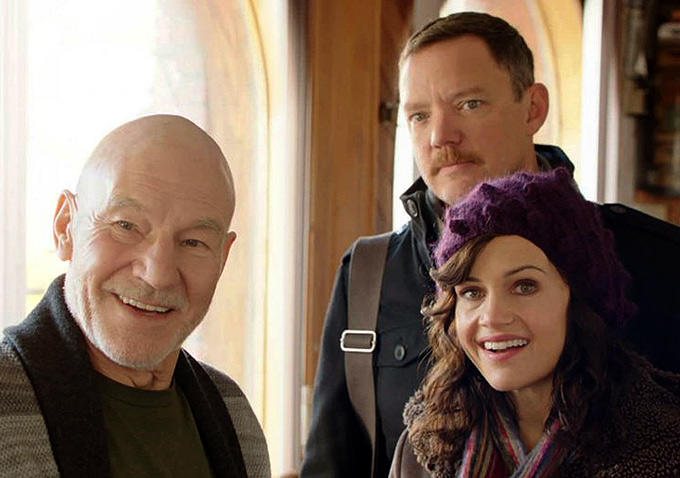
Patrick Stewart, Matthew Lillard, and Carla Gugino star in Stephen Belber’s MATCH
MATCH (Stephen Belber, 2014)
IFC Center
323 Sixth Ave. at West Third St.
Through January 20
212-924-7771
www.ifccenter.com
In 2001, Stephen Belber turned his 2000 play, Tape, into a feature film starring Ethan Hawke and Uma Thurman, directed by Richard Linklater. He has now adapted his 2004 Broadway debut, Match, into a feature film starring Sir Patrick Stewart, Carla Gugino, and Matthew Lillard. The beautifully told story takes place in New York City, where married couple Lisa (Gugino) and Mike (Lillard) are interviewing dance teacher and choreographer Tobi Powell (Stewart) purportedly for her thesis, but their ulterior motives bring the three of them together in uncomfortable, unexpected ways, dredging up a long-buried past. Belber’s second film as writer and director — in 2009 he made Management, a romantic comedy with Jennifer Aniston, Steve Zahn, and Woody Harrelson — is an intimate, involving tale about family and the choices we make, led by superb performances by Stewart and Gugino, who are magical together. Belber discussed the film and other aspects of his career with twi-ny shortly after it opened at the IFC Center.
twi-ny: Nearly fifteen years ago, you adapted your play Tape into a film, directed by Richard Linklater, who just won a Golden Globe for Boyhood. Now you’ve adapted your 2004 play, Match, into a film. How did the transference of the two plays onto the big screen differ? Why did you choose to direct this time around?
Stephen Belber: Up to the point when I adapted Tape, I’d written exactly one screenplay, and so I basically just put the text into final draft. (In fact, I didn’t even do that; someone else did; I’m not even sure final draft was around then) Rick Linklater and I briefly talked about breaking it out of the motel but decided it would diffuse the necessary claustrophobic feel. When I adapted Match, I’d just finished directing my first film and so I was able to approach the whole thing more globally, knowing more of what it takes to make a film, yet I also specifically wanted to reduce the scope of my next project to almost pure character interaction; I was less interested in more classic film “splendor.” That said, I did try to open up the screenplay a bit, but only when it felt justified and organic; otherwise I just doubled-down on my actors, who I was more than confident were strong enough to convey the “cinematic landscape” of emotion that I was going for. I think the reason I decided to direct was due to my memory of having watched Tape amidst a crowd at Sundance in 2001 and thinking to myself, “There is a thirst for this kind of small, ‘emotional thriller’ movie” — and wanting to try that for myself.
twi-ny: When it debuted on Broadway, Match starred Frank Langella, Ray Liotta, and Jane Adams. How did you approach casting for the film version?
Stephen Belber: Frank was attached to play the role of Tobi for a while, but when we finally found the financing, he was unavailable for our time window, so the fortune of then being able to find Patrick was immense. I couldn’t have been happier. I also knew that I wanted the movie to be different from the play. I wanted it to be more of an even three-hander; I wanted the role of Lisa to be almost the strongest of the three, in terms of her ability to force these two semi-blinded individuals together. I’d long known and admired Carla for her dominant stage work in New York, so she was an early choice of mine. Matthew I knew less well, but when I met him and perceived his rare mix of strength and vulnerability, as well as the simply excellent person that he is, I knew I’d found the type of actor I love to work with.
twi-ny: The film depicts the deep bond between Tobi and New York, echoing the bond that has clearly developed between Patrick and the city. When he and Carla go up to his Inwood rooftop, I immediately thought of the video that went viral a few summers ago of Stewart and his soon-to-be wife, Sunny Ozell, goofing around on their Brooklyn rooftop. Can you talk about that connection, and its importance to the film? You were born in DC; what are some of your favorite things about New York?
Stephen Belber: Well, to begin with, I do love New York City, but specifically, when I discovered the uniqueness and beauty of Inwood, it was one of those moments when New York reveals itself to you in a lovely and unexpected way. (Granted, the roof scene is technically Washington Heights and we shot the rest of the film in Crown Heights.) But more so, the character of Tobi, perhaps not unlike Patrick, has decamped to New York relatively late in life — and fallen in love with its excitement and ever-present vivacity. Funnily enough, my father recently moved back to NYC after forty years in DC, and he now goes on incessantly about how great a place it is to be old, and not just because of all the food delivery services. There’s something about the constant life of the city that surrounds you, ambushes and assaults you, but undeniably keeps you in the present; it fills you with a sense of aliveness, awareness, and acute feeling. It’s very different than Phoenix.
twi-ny: Stewart’s character is inspired by dancer, choreographer, and longtime Juilliard ballet teacher Alphonse Poulin, who attended the opening night of the play on Broadway. Has he seen the film? What has been his reaction to your exploration of at least part of his life, first onstage, then in the movies?
Stephen Belber: Alphy has been incredibly supportive of this entire project. I think the play made him happy, and yet it was a broader comedy than the film; it had a heightened, almost farcical reality, theatrically speaking, and I think that I, as the writer, consequently short-changed some of the complexity and humanity of the Tobi character. On film, heightened reality tends to be harder to pull off; the intimacy of a film close-up almost insists on a naturalism and dramatic “realness,” in which farce doesn’t fly. At the same time, I’d become aware of wanting a more dramatic and grounded version of this character and this story.
twi-ny: You are a Juilliard grad yourself, and the play begins at the beautiful Glorya Kaufman Dance Studio there. What was your Juilliard experience like? How has it helped shape your career?
Stephen Belber: My two years as a writer at Juilliard were vital and extremely happy ones. It’s the first time I truly took myself seriously as a writer. I feel at home there to this day. (Even if everyone else looks at me like an odd guy peering into piano rehearsal rooms.)
twi-ny: On February 6, Matthew Shepard Is a Friend of Mine is being released in theaters, in conjunction with the twenty-fifth anniversary of the passage of the Hate Crime Statistics Act, which was modified in 2009 by the Matthew Shepard & James Byrd, Jr., Hate Crimes Prevention Act. You examined the murder of Matthew Shepard in The Laramie Project Cycle, which played at BAM two years ago. What kind of progress, if any, do you think has been made in America in regard to hate crimes?
Stephen Belber: Not enough. Certainly there’s progress, legislatively as well as in a national “moral” sense. Yet there are hundreds of thousands of Americans who continue to misunderstand why these laws are important. This, to me, implies a lack of ability to put one’s self in another person’s shoes, to truly feel what it is to be “other” in this country. We are still coming up way short in that regard.
twi-ny: Do you have any plans to bring any of your other plays to the big screen?
Stephen Belber: Myself and Matthew Lillard are discussing a screen adaptation of my 2008 play, Fault Lines. Matt would direct. I would love this to happen.

 In Italian director Gillo Pontecorvo’s gripping neo-Realist war thriller The Battle of Algiers, a reporter asks French paratroop commander Lt. Col. Mathieu (Jean Martin), who has been sent to the Casbah to derail the Algerian insurgency, about an article Jean-Paul Sartre had just written for a Paris paper. “Why are the Sartres always born on the other side?” Mathieu says. “Then you like Sartre?” the reporter responds. “No, but I like him even less as a foe,” Mathieu coolly answers. In 1961, French existentialist Sartre wrote in the
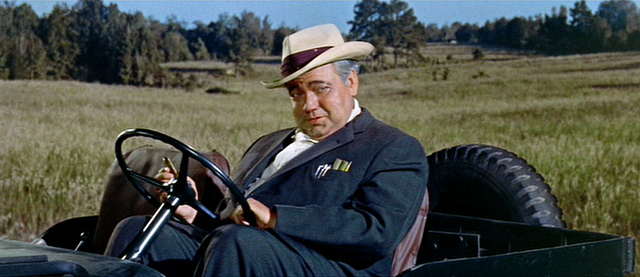
 Upon first look, it might seem that there is little in common between two of the movies Film Forum is screening together in its ambitious and exhaustive “Orson Welles 100” series other than the involvement of Mr. Welles himself. But it turns out that the double feature is somewhat of a genius pairing of two 1950s pictures that echo each other in more ways than one. In order to finance his career as a director (and pay off tax debts), Welles acted in numerous films, from the sublime (A Man for All Seasons, The Third Man, both of which are part of this month-long tribute to the centennial of his birth) to the ridiculous (Casino Royale, Butterfly, both of which are not). Between 1958 and 1961, he appeared in or narrated nearly a dozen and a half films; two of the best, Martin Ritt’s The Long, Hot Summer and Richard Fleischer’s Compulsion, are playing Film Forum on January 20. In both, the big, blustery Welles, his sweat practically dripping off the screen, takes center stage though primarily a supporting character. Welles claimed that he hated making The Long, Hot Summer, a fiery Tennessee Williams-like melodrama based on several works by William Faulkner, although clearly inspired by Cat on a Hot Tin Roof. Welles plays Will Varner, a wealthy plantation magnate who essentially owns a small southern town. He is grooming his son, Jody (Anthony Franciosa), to take over his empire, but when ambitious drifter and rumored barn burner Ben Quick (Paul Newman, who played Brick in Cat the same year) shows up looking for work, Will decides to set him against Jody, with the winner capturing the spoils, which in the case of Quick might also include Will’s young but already spinsterish daughter, Clara (Joanne Woodward, who married Newman during production). Shot in blazing CinemaScope, the film, which also stars Angela Lansbury as Will’s girlfriend, Lee Remick as Jody’s shopping-loving wife, and Richard Anderson as Clara’s momma’s boy beau, boils over with sexual energy that lives up to the original trailer’s declaration that “nothing — but nothing! — will be withheld!” The Long, Hot Summer earned no Oscar nominations and was not a box-office hit, but Newman became an international superstar by being named Best Actor at the Cannes Film Festival, while the film was in competition for the Palme d’Or.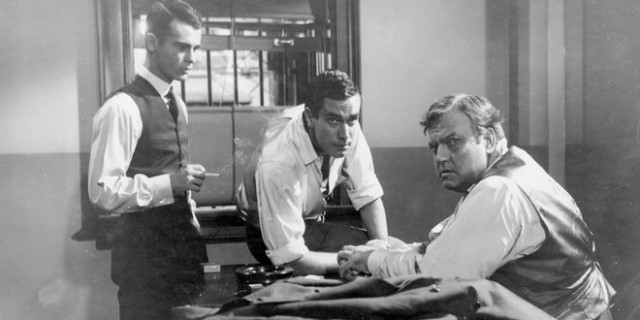


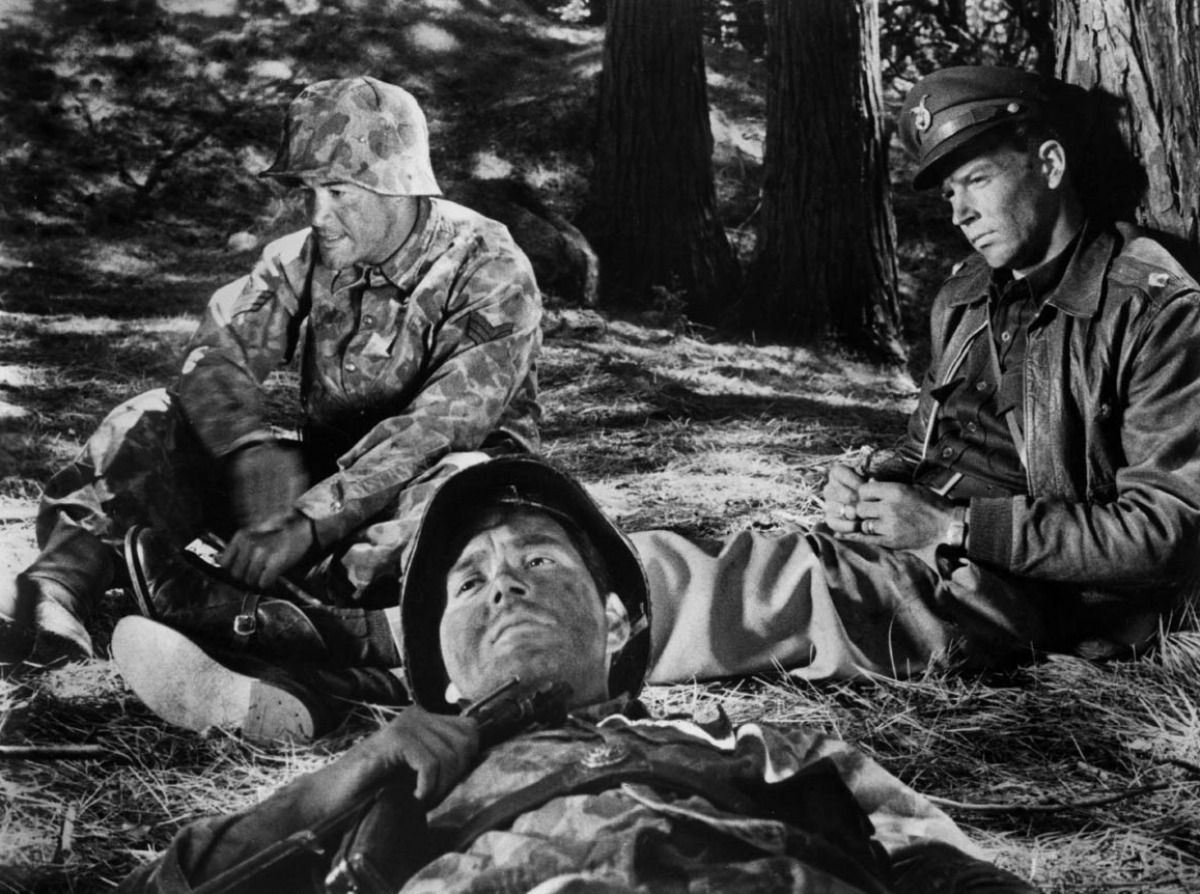
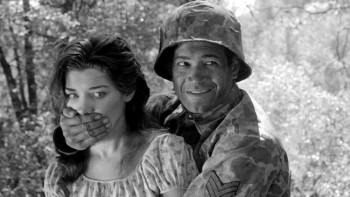
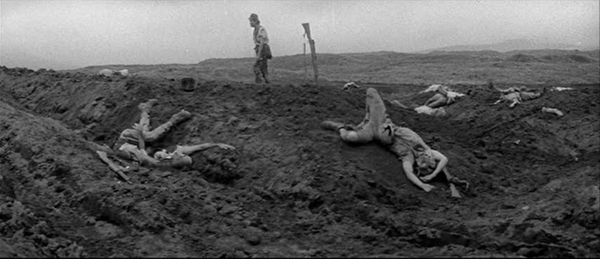
 Fear and Desire, Stanley Kubrick’s seldom-seen 1953 psychological war drama and his first full-length film, made when he was just twenty-four, is a curious tale about four soldiers (Steve Coit, Kenneth Harp, Paul Mazursky, and Frank Silvera) trapped six miles behind enemy lines. When they are spotted by a local woman (Virginia Leith), they decide to capture her and tie her up, but leaving Sidney (Mazursky) behind to keep an eye on her turns out to be a bad idea. Meanwhile, they discover a nearby house that has been occupied by the enemy, and they argue over whether to attack or retreat. Written by Howard Sackler, who was a high school classmate of Kubrick’s in the Bronx and would later win the Pulitzer Prize for The Great White Hope, and directed, edited, and photographed by the man who would go on to make such powerful, influential war epics as Paths of Glory, Full Metal Jacket, and Dr. Strangelove or: How I Learned to Stop Worrying and Love the Bomb, Fear and Desire features stilted dialogue, much of which is spoken off-camera and feels like it was dubbed in later. Many of the cuts are jumpy and much of the framing amateurish. Kubrick was ultimately disappointed with the film and wanted it pulled from circulation; instead it was preserved by Eastman House in 1989 and restored twenty years later, which was good news for film lovers, as it is fascinating to watch Kubrick learning as the film continues. His exploration of the psyche of the American soldier is the heart and soul of this compelling black-and-white war drama that is worth seeing for more than just historical reasons.