Documentary looks into the life and career of Menahem Golan and Yoram Globus
THE GO-GO BOYS: THE INSIDE STORY OF CANNON FILMS (Hilla Medalia, 2014)
Film Society of Lincoln Center, Walter Reade Theater
165 West 65th St. between Eighth Ave. & Broadway
Thursday, January 29, 1:00 & 6:15
Festival runs through January 29
212-875-5050
www.filmlinc.com
www.facebook.com
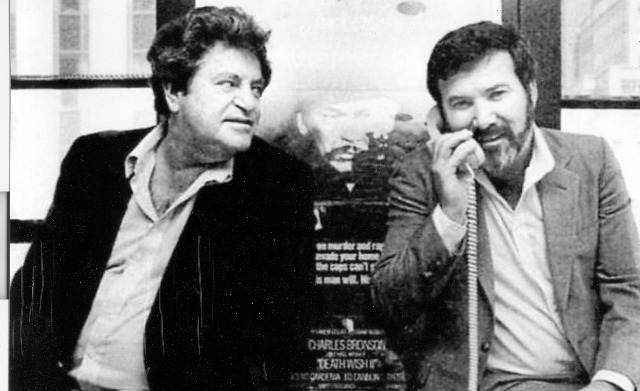
 At the beginning of The Go-Go Boys: The Inside Story of Cannon Films, director Hilla Medalia asks Menahem Golan, “How do you become a filmmaker?” He answers, “Don’t do anything else.” For most of his life, that is exactly what Golan did. He started out making movies as a kid, then went into business with his cousin, Yoram Globus. The Israeli dynamic duo formed quite a pair, Golan the outgoing, bombastic, viciously driven writer, director, and producer, Globus the behind-the-scenes moneyman and dealmaker. The Go-Go Boys documents their careers as they first succeed in Israel with such movies as Eldorado and Sallah Shabati, the latter starring Topol and earning an Oscar nomination for Best Foreign Language Film, then setting off to take over Hollywood, where in 1979 they bought Cannon Films, specializing in the rapid-fire release of low-budget schlock and exploitation pictures. All told, Golan and Globus made more than two hundred films, from Death Wish II with Charles Bronson and American Ninja with Michael Dudikoff to Missing in Action and The Delta Force with Chuck Norris and New Year’s Evil with Roz Kelly, from King Solomon’s Mines with Richard Chamberlain and Sharon Stone and The Last American Virgin to John Cassavetes’s Love Streams and John Derek’s Bolero with Bo Derek. Golan and Globus are perhaps most well known for their biggest failures: The Apple, considered one of the worst films ever made; Over the Top, in which they overspent and overreached with Sylvester Stallone in a misguided mess about arm wrestling; and Superman IV: The Quest for Peace, which led to their ultimate downfall.
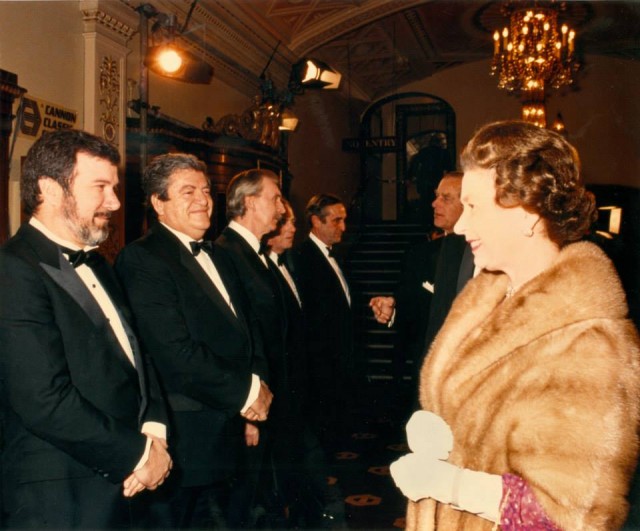
Israeli cousins Menahem Golan and Yoram Globus sought to become the kings of Hollywood — and did for a while
Both Golan and Globus sit down for new interviews with Medalia, who also speaks with Joel Silberg, whose Breakin’ firmly established the duo as real players; Israeli actors Yehuda Barkan (Lupo Goes to New York) and Yehoram Gaon (Kazablan), who share funny vignettes about working with them; director Boaz Davidson (Lemon Popsicle), who says, “They were the Israeli Hollywood”; director Andrei Konchalovsky and actor Jon Voight, who made Runaway Train, which tallied three Oscar nominations; Jean-Claude Van Damme (Bloodsport), who talks about crying in front of Golan while trying to get a job; and writer-director Eli Roth, who discusses the influence of their work on him. Medalia also meets with members of Golan and Globus’s family, as their wives and children relate stories about the pair’s utter dedication to cinema, often at the expense of being around. But as Globus’s son Ram says, “They completed one another. It was a train that couldn’t be stopped.” The film is a bit of a rehashed mishmash; even at a mere eighty-five minutes, it is overloaded with old interviews and entertainment segments; although it’s fun seeing some of Ed Bradley’s 60 Minutes report on how Golan and Globus took over the Cannes Film Festival — where, appropriately enough, The Go-Go Boys premiered, in May 2014 — far too much of the TV program is shown. The documentary also doesn’t delve quite deep enough into how really bad so many of their pictures were, giving their stunning low quality relatively short shrift. When Medalia says to Golan, who passed away last summer at the age of eighty-five, “I want to hear about the failures,” he responds quite defiantly, “There were none.” The Go-Go Boys is screening at the New York Jewish Film Festival on January 29 at 1:00 and 6:15 at the Walter Reade Theater; the twenty-fourth annual festival continues through that night with screenings and special events at the Film Society of Lincoln Center and the Jewish Museum.
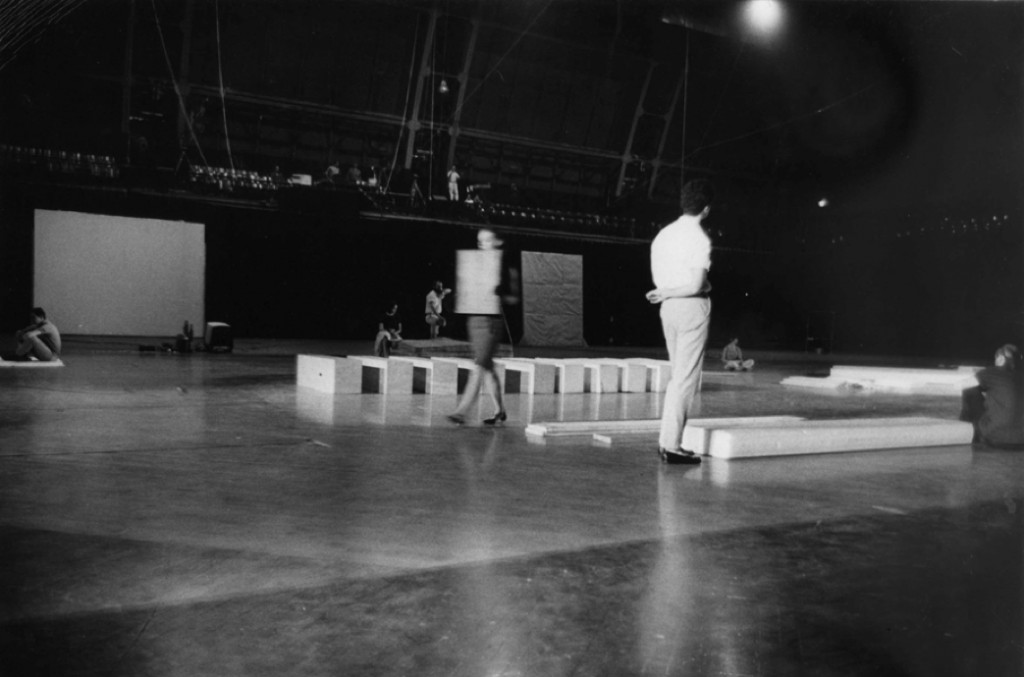
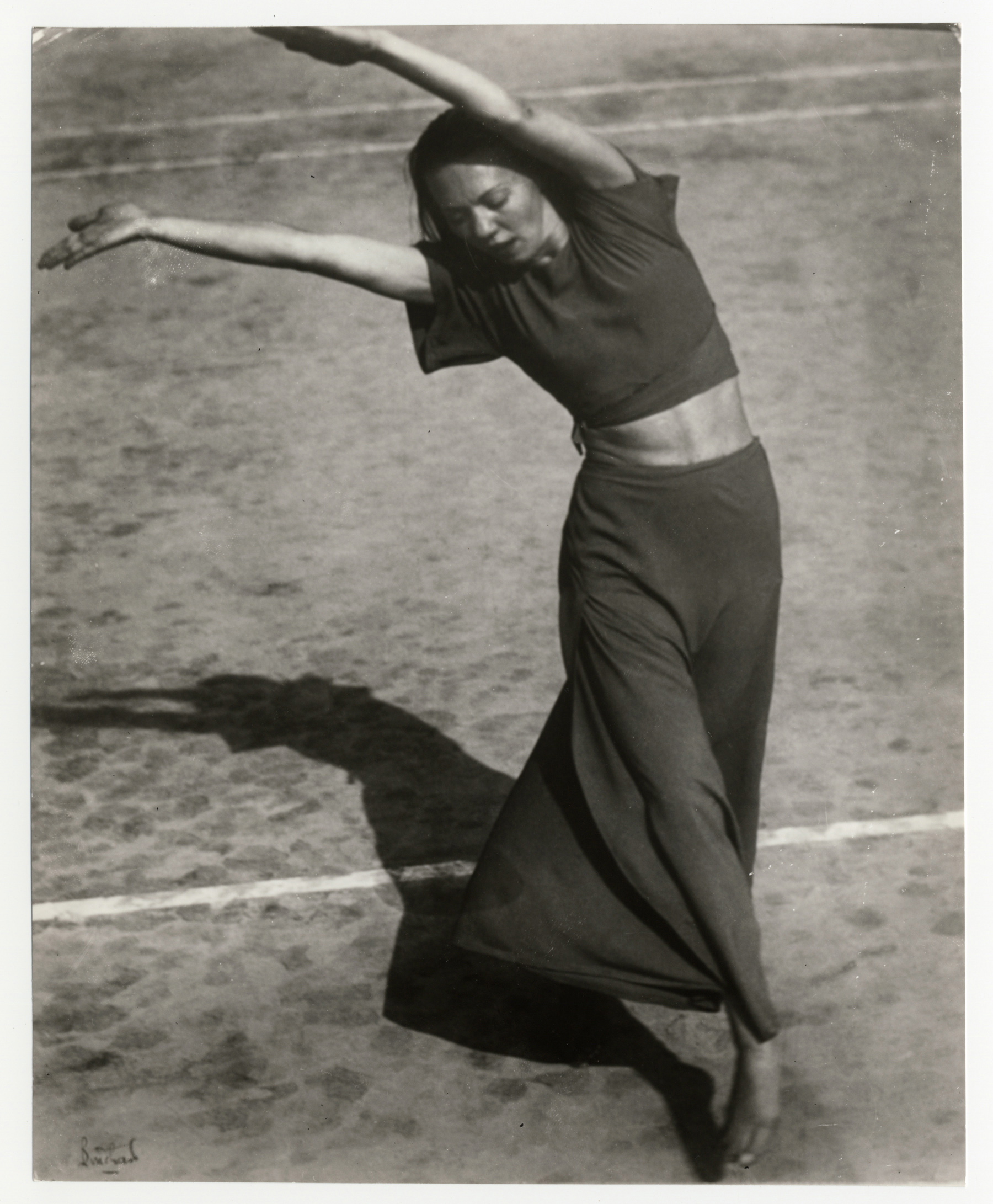
 Greg Vander Veer’s Miss Hill: Making Dance Matter is a charming celebration of a woman who had a tremendous impact on the development of modern dance but is still little known outside her tight-knit circle. Born in 1900 in a small town in Bible Belt Ohio, Martha Hill danced with Martha Graham before concentrating on teaching the art form, which as a child she was told was sinful, at Bennington and NYU. But she created her legacy as the first director of dance at Juilliard, where she taught from 1951 to 1985, balancing instruction in both modern dance and classical ballet. Vander Veer (Keep Dancing) and coordinating producer Vernon Scott, who graduated from Juilliard in 1985 and is currently president of the board of directors of the Martha Hill Dance Fund, combine wonderful archival footage of Hill as both a dancer and a teacher, along with old clips of many of her students, including Pina Bausch, Lar Lubovitch, Bessie Schönberg, Hanya Holm, José Limón, and Doris Humphrey, as well as fellow teacher Antony Tudor; there are also new interviews with Paul Taylor, Martha Clarke, Francis Patrelle, Robert Battle, Ohad Naharin, Dennis Nahat, H. T. Chen, and others. “She’s created the dancers of the twenty-first century,” says former Boston Ballet artistic director Bruce Marks. One of the most fascinating parts of the eighty-minute documentary is Hill’s fight to preserve Juilliard’s dance program during the building of Lincoln Center, which pitted her against George Balanchine’s School of American Ballet, the New York City Ballet, and Lincoln Kirstein. Miss Hill displays its subject with clarity, smartly exploring her understanding that dance is more than just language and movement. “Modern dance is not a system, it is a point of view,” Hill explains. Meanwhile, Patrelle gets right to the heart of the matter: “She was dance. She defined it.” A lovely treat for dance fans, Miss Hill opens January 23, at the Quad, with Vander Veer and Scott participating in Q&As following the 7:00 shows Friday and Saturday and the 4:30 shows Saturday and Sunday.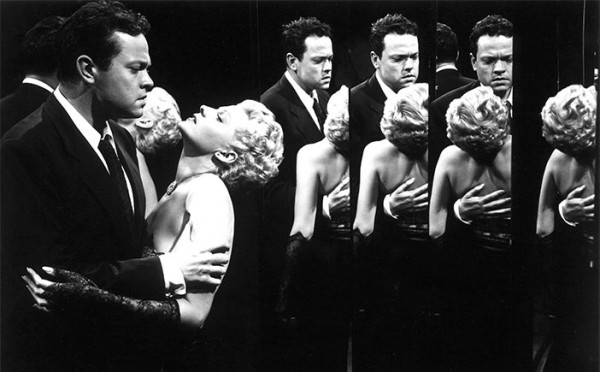
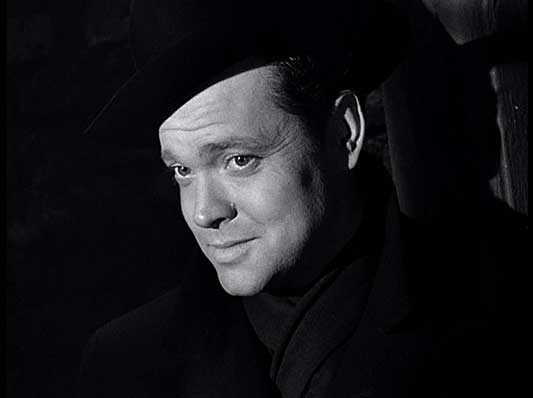
 Carol Reed’s thriller is quite simply the most entertaining film you’re ever likely to see, the best Orson Welles film not directed by the man who gave us Citizen Kane and The Magnificent Ambersons. Set in a divided post-WWII Vienna amid a thriving black market, The Third Man is heavy in atmosphere, untrustworthy characters, and sly humor, with a marvelous zither score by Anton Karas. Joseph Cotten stars as Holly Martins, an American writer of Western paperbacks who has come to Vienna to see his old friend Harry Lime (Welles), but he seems to have shown up a little late. While trying to find out what happened to Harry, Martins falls for Harry’s lover, Anna (Alida Valli); is told to get out of town by Major Calloway (Trevor Howard) and Sergeant Paine (Bernard “M” Lee); meets a stream of Harry’s more interesting, mysterious friends, including Baron Kurtz (Ernst Deutsch) and Popescu (Siegfried Breuer); and is talked into giving a lecture to a literary club by old Mr. Crabbin (Wilfrid Hyde-White). Every scene is a finely honed work of art, filled with long shadows, echoing footsteps, dripping water, and unforgettable dialogue about cuckoo clocks and other strangeness. SPOILER: The shot in which Lime is first revealed, standing in a doorway, a cat brushing by his feet, his tongue firmly in cheek as he lets go a miraculous, knowing smile, is one of the greatest single moments in the history of cinema. “Orson Welles 100” continues through February 3 with such other gems as Othello, Macbeth, Chimes at Midnight, and A Man for All Seasons as well as such rarities as It’s All True and Too Much Johnsons.