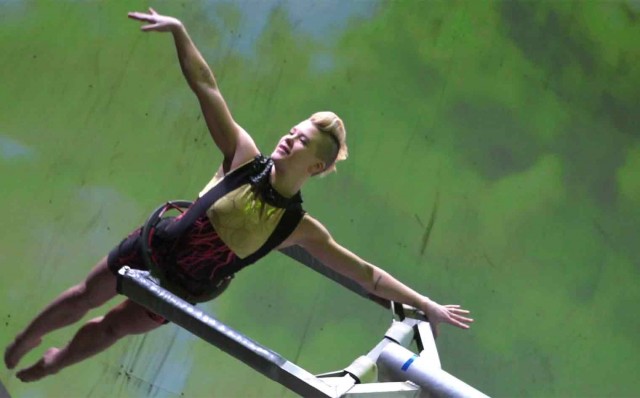
Documentary reveals how Elizabeth Streb and her Extreme Action Company (including Jackie Carlson, seen here) take dance to a whole new level
BORN TO FLY: ELIZABETH STREB vs. GRAVITY (Catherine Gund, 2014)
Film Society of Lincoln Center, Walter Reade Theater
165 West 65th St. between Eighth Ave. & Broadway
Sunday, February 1, 3:20
Festival runs January 30 – February 3
212-875-5050
www.filmlinc.com
www.borntoflymovie.com
 Over the last several years, New Yorkers have gotten the chance to see Elizabeth Streb’s Extreme Action Company perform such dazzling works as Ascension at Gansevoort Plaza, Kiss the Air! at the Park Avenue Armory, and Human Fountain at World Financial Center Plaza as her team of gymnast-dancer-acrobats risk their physical well-being in daring feats of strength, stamina, durability, and grace. In addition, Streb herself walked down the outside wall of the Whitney as part of a tribute to one of her mentors, Trisha Brown. Now Catherine Gund takes viewers behind the scenes in the exhilarating documentary Born to Fly: Elizabeth Streb vs. Gravity, going deep into the mind of the endlessly inventive and adventurous extreme action architect and the courage and fearlessness of her company. Gund follows Streb as she discusses her childhood, her dance studies, the formation of STREB in 1985, and her carefully thought out views on space, line, and movement as her work stretches the limits of what the human body can do. “I think my original belief and desire is to see a human being fly,” Streb says near the beginning of the film, which includes archival footage of early performances, family photos, and a warm scene in which the Rochester-born Streb and her partner, Laura Flanders, host a dinner party in their apartment, cooking for Bill T. Jones, Bjorn Amelan, Anne Bogart, Catharine Stimpson, and A. M. Homes. Gund also speaks with current and past members of the talented, ever-enthusiastic company — associate artistic director Fabio Tavares, Sarah Callan, Jackie Carlson, Leonardo Giron, Felix Hess, Samantha Jakus, Cassandre Joseph, John Kasten, and Daniel Rysak — who talk about their dedication to Streb’s vision while using such words as “challenge,” “velocity,” “endurance,” “magic,” “invincibility,” and “risk” to describe what they do and how they feel about it.
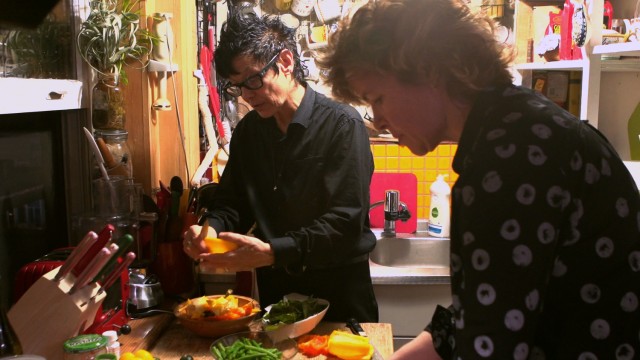
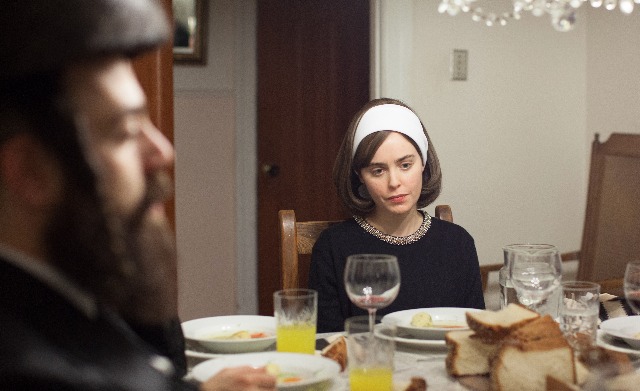
Elizabeth Streb and her partner, Laura Flanders, prepare for a dinner party in new documentary
Gund focuses on the latter, as virtually every one of Streb’s pieces is fraught with the possibility of serious injury, as evidenced by their titles alone: Fly, Impact, Rebound, Breakthru, and Ricochet, not to mention the use of such materials as spinning I-beams, plastic barricades, dangling harnesses, and a rotating metal ladder. “I have to be able to ask someone to do that and be okay about it. Those aren’t easy requests,” Streb explains. “Knowing where you are is how you survive the work,” adds former STREB dancer Hope Clark. Gund goes with Streb to her doctor, where the choreographer describes what happened to her gnarled feet, and also meets with former dancer DeeAnn Nelson Burton, who had to retire after breaking her back. The film concludes with an inside look at STREB’s spectacular “One Extraordinary Day,” a series of hair-raising site-specific events staged for the 2012 London Olympics at such locations as the Millennium Bridge, the London Eye, and the sphere-shaped city hall, photographed by documentary legend Albert Maysles. In her Kickstarter campaign, Gund (Motherland Afghanistan, A Touch of Greatness) said, “Action architect Elizabeth Streb has reinvented the language of movement. [Born to Fly] will rewrite the language of documentary.” That’s a bold declaration, but the film does have a lot of the same spirit that Streb displays in her awe-inspiring work. Born to Fly is screening with Benjamin Epps’s 2014 short, Angsters, on February 1 at 3:20 at the Walter Reade Theater as part of the Film Society of Lincoln Center’s annual “Dance on Camera” series and will be followed by a Q&A with Gund and Streb. The festival runs January 30 – February 3 and includes such other movement-related works as Meredith Monk’s Girlchild Diary, followed by a Q&A with Monk and cast member Lanny Harrison; Kenneth Elvebakk’s Ballet Boys, set at the Norwegian Ballet School; Louis Wallecan’s Dancing Is Living: Benjamin Millepied, followed by a Q&A with the director; the U.S. premiere of Don Kent and Christian Dumais-Lvowski’s Jiri Kylian: Forgotten Memories; Isaki Lacuesta’s Perpetual Motion: The History of Dance in Catalonia, followed by a Q&A with choreographer Cesc Gelabert; and a handful of free events as well.
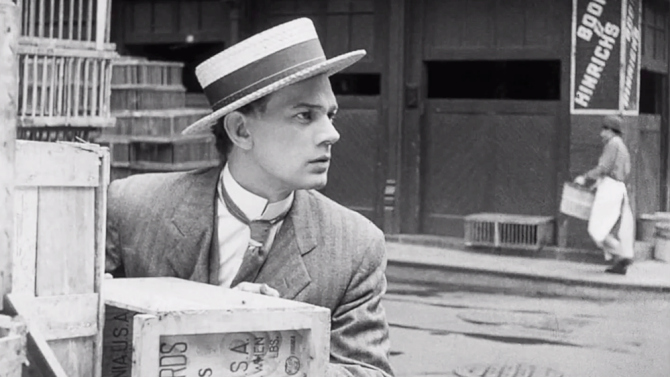
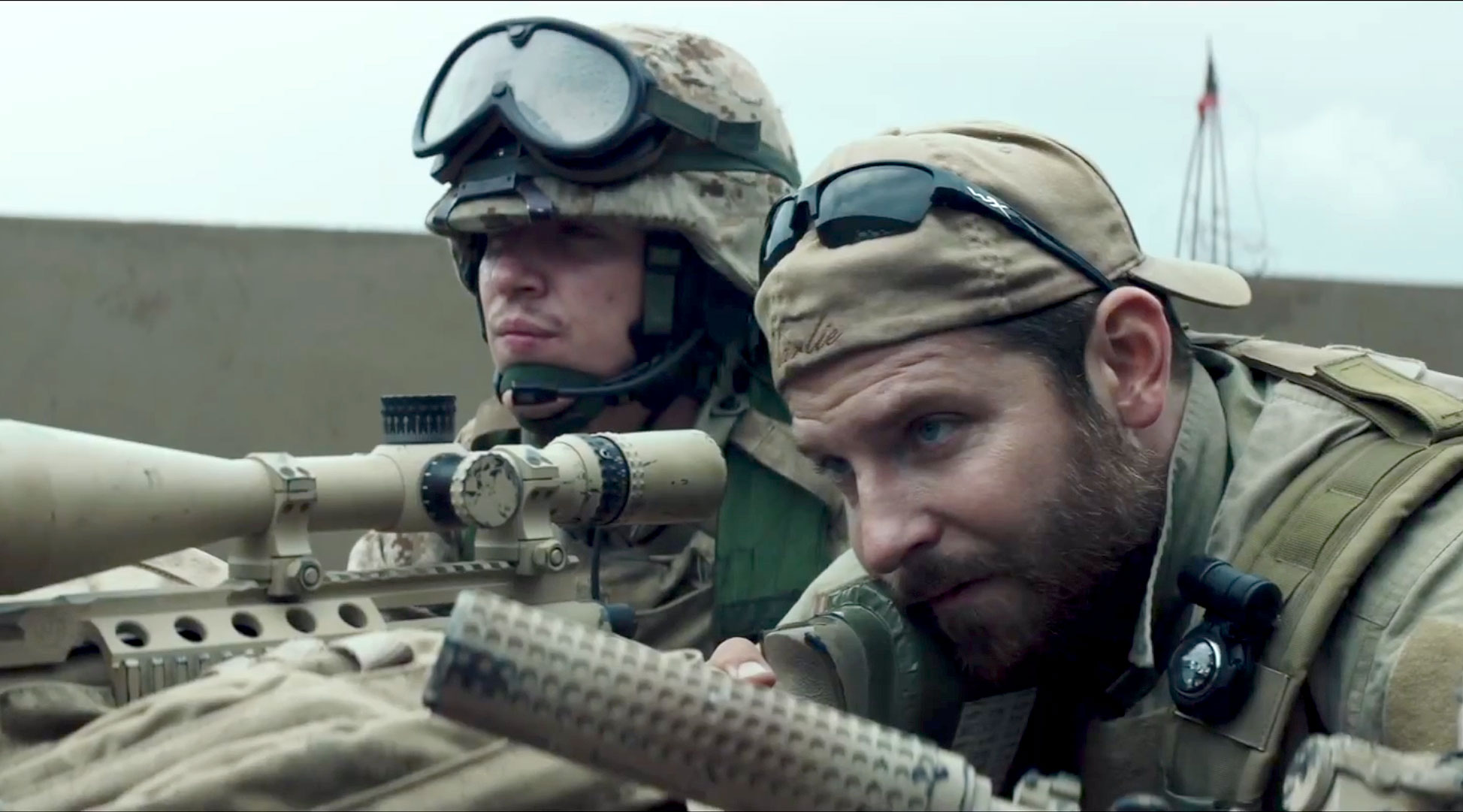
 Three dozen years ago, I remember being blown away by Alan Parker’s Midnight Express, the supposedly true story of Billy Hayes, a New York City native busted for smuggling hash into Turkey in 1970 who ended up escaping from prison five years later. Although the film was based on Hayes’s book, it took liberties with the truth, turning Hayes into a heroic figure and inventing nonexistent characters; Hayes was particularly disappointed with the depiction of the Turkish people in the film. “My problem with the movie is there are no good Turks in it,” he said years later, pointing out that in reality he had made several good Turkish friends. “All the Turks in Midnight Express are bad. . . . It’s all very one-dimensional.” In 2004, screenwriter Oliver Stone apologized for his embellishments. “It’s true I overdramatized the script,” Stone said in Istanbul. “For years, I heard that Turkish people were angry with me, and I didn’t feel safe there.” Filmmakers are always given a certain amount of poetic license, but when does it become too much? The Midnight Express scenario ran through my mind shortly after seeing American Sniper, Clint Eastwood’s Oscar-nominated film about Chris Kyle, based on the Navy SEAL’s memoir about his multiple tours overseas, American Sniper: The Autobiography of the Most Lethal Sniper in U.S. Military History. It’s a tense, expertly made thriller about a sharpshooter who is compelled by the events of 9/11 to join the military and defend his country and democracy. Bradley Cooper is mesmerizing as Kyle, making viewers watch him as closely as he watches his targets. Cooper, who has been nominated for an Oscar three years in a row now, following nods for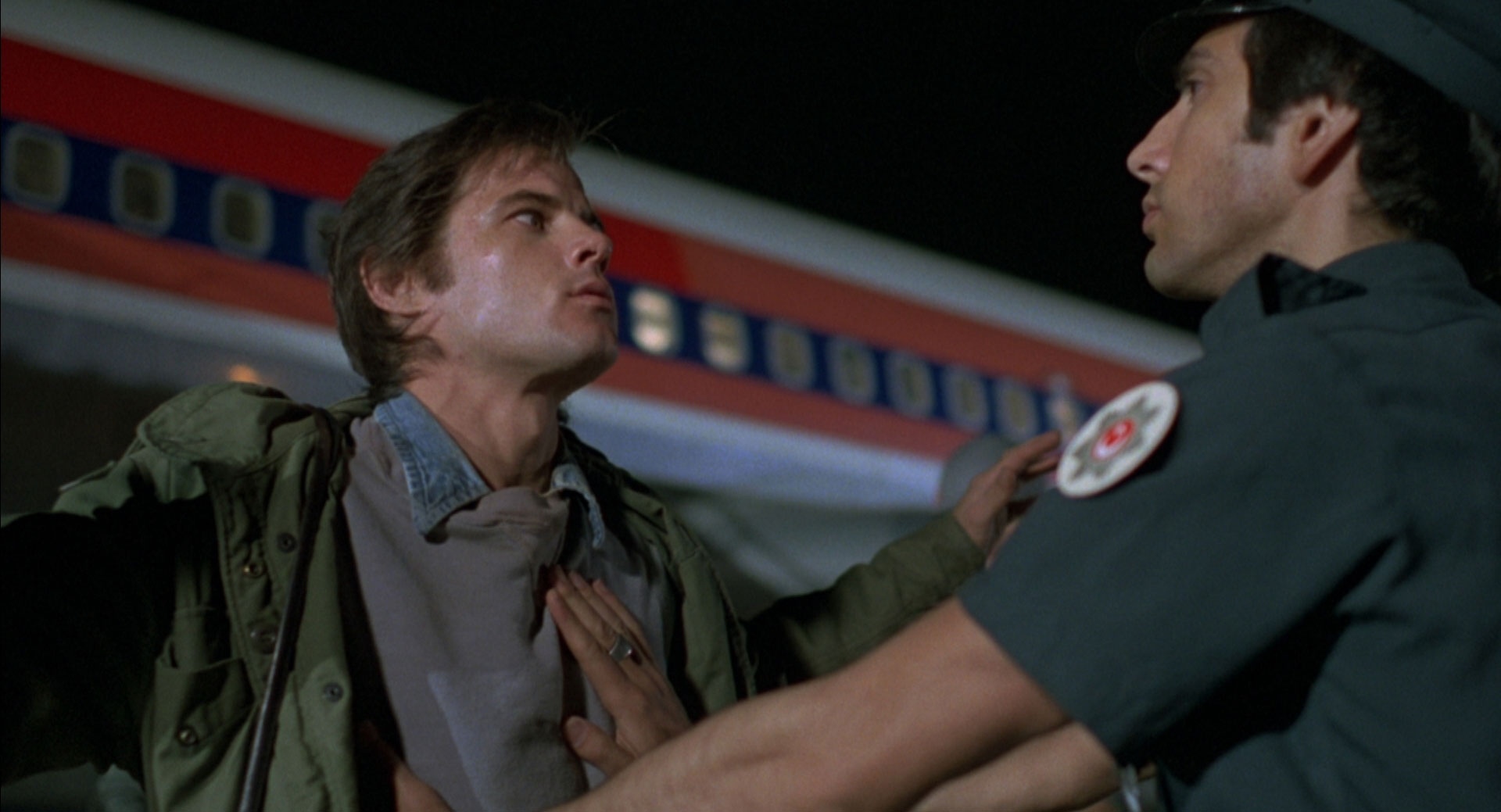
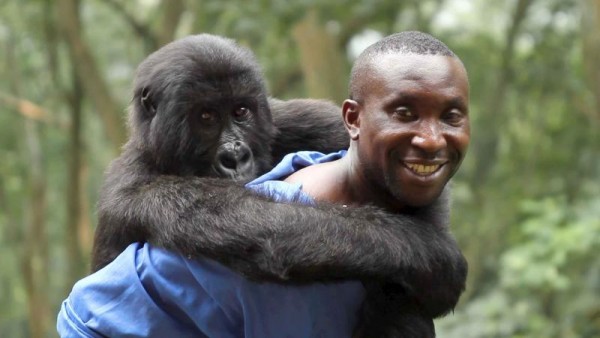
 Nominated for an Oscar for Best Documentary, Orlando von Einsiedel’s gripping Virunga is back on the big screen, in a return engagement at Cinema Village. In his debut feature, von Einsiedel, who previously made short documentaries about skateboarders in Kabul, young women knitting in Nigeria, and illegal fishing in Sierra Leone, originally set out to make a heartwarming story about a group of rangers caring for the mountain gorillas and natural environment of Virunga National Park in the eastern Congo. But as the civil war ramped up, he found himself in the middle of a fierce life-and-death struggle involving the criminal exploitation of the UNESCO world heritage site. As the London-based SOCO International moves in to prepare to drill for oil illegally, von Einsiedel starts following the money, uncovering a series of payoffs being tracked by French journalist Melanie Gouby. Meanwhile, ranger Andre Bauma cares for orphan mountain gorillas Ndeze, Nkadasi, Maisha, and Koboko, protecting them and other animals from poachers who want to sell their body parts — or kill them outright so the government won’t need to preserve the park just to save any wildlife.