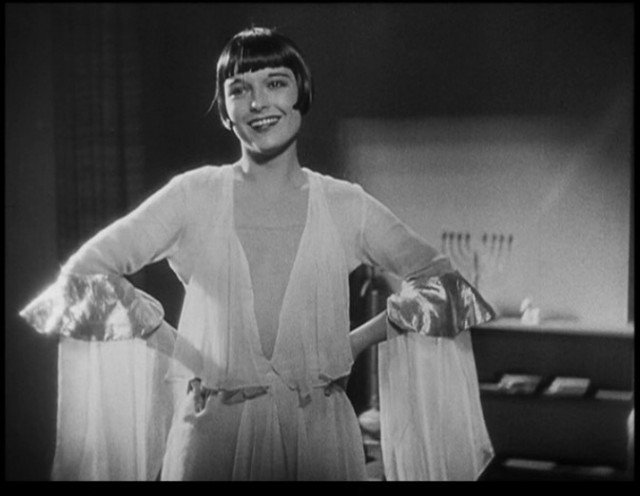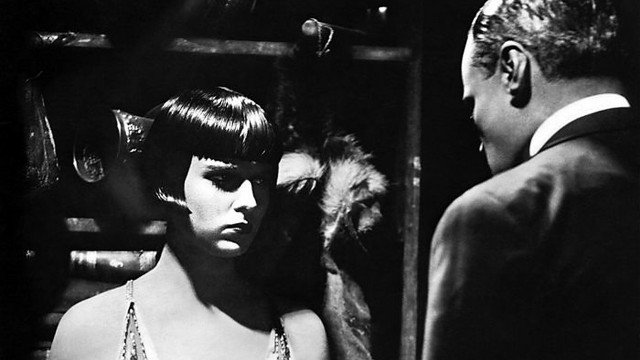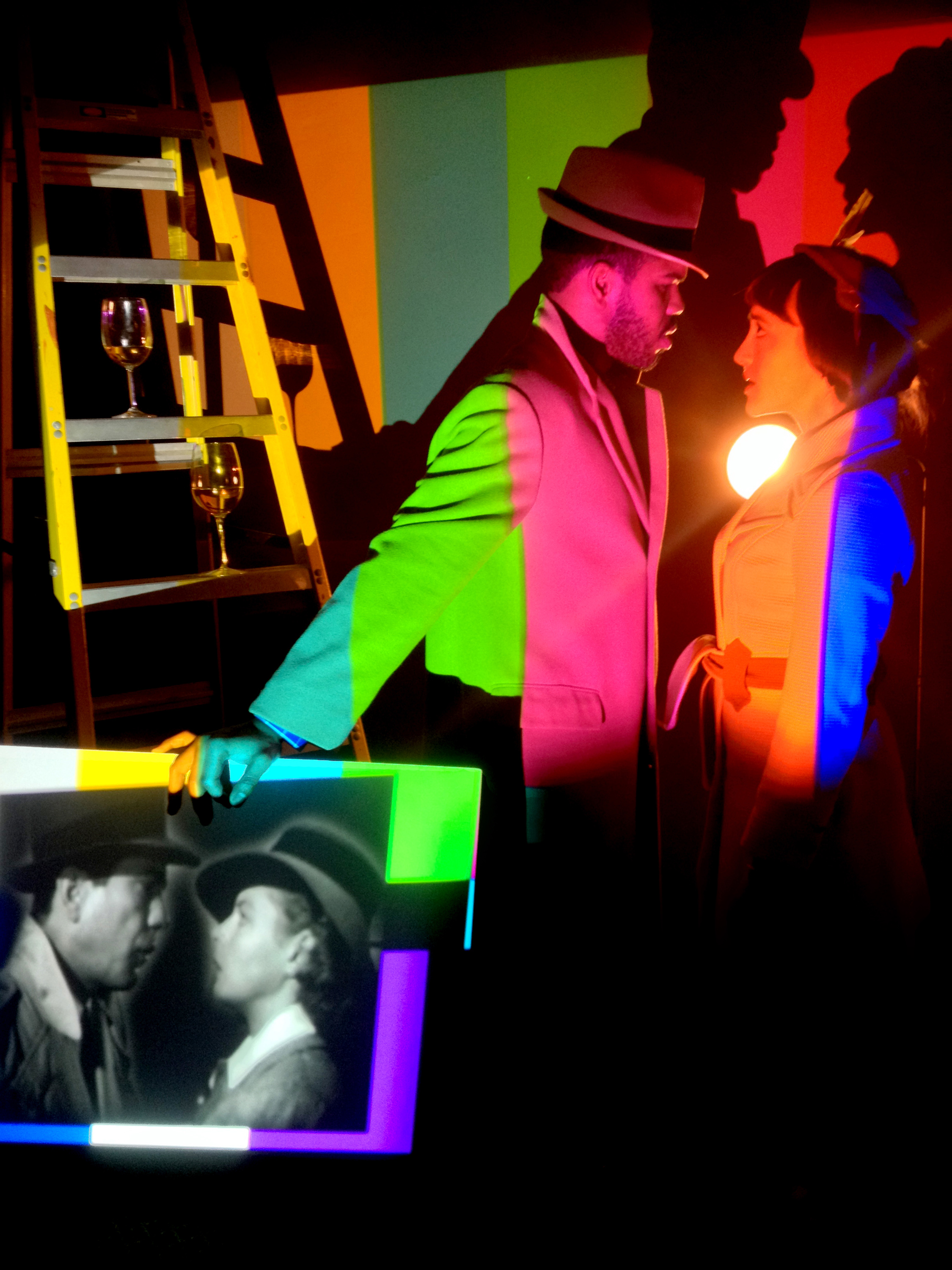
Sara and Reid Farrington go behind the scenes of the making of a classic in CASABLANCABOX (photo by Sara and Reid Farrington)
HERE
145 Sixth Ave. at Dominick St.
March 4-14, $15
212-352-3101
www.here.org
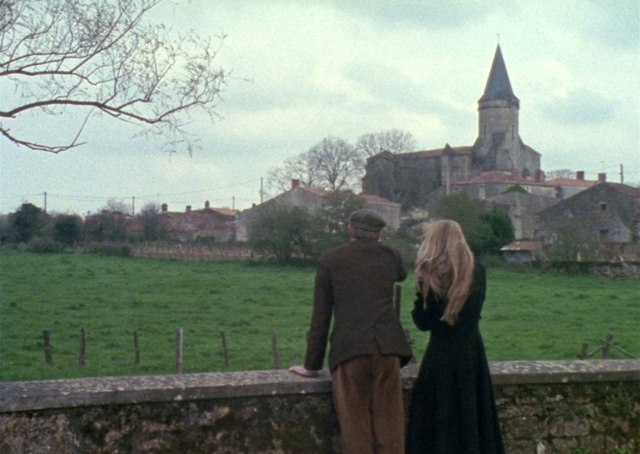
HERE’s annual winter performance festival, now in its fourteenth year, highlights cutting-edge works-in-progress from a wide-ranging group of artists who are either current or former participants in the HERE Artist Residency Program (HARP), which commissions hybrid presentations in order “to not only grow innovative artistic work, but also [to] give artists the awareness and skills — in areas such as audience relations, budgeting, grantwriting, and touring — they need to continue to grow their careers.” This year features a dozen multidisciplinary workshop performances, beginning March 4-5 with sound designer Christina Campanella and composer Jim Dawson’s Lighthouse 40° N, 73° W, a continuous geographic audio installation in which the audience listens in on headphones to a twenty-five-minute loop, and Sara and Reid Farrington’s CasablancaBox, in which the husband-and-wife duo combine live actors and film clips that go behind the scenes of the making of the 1942 movie; Farrington has previously reimagined such films as The Passion of Joan of Arc, Rope, and multiple versions of A Christmas Carol in his unique, mesmerizing style. On March 6-7 at 7:00, Paul Pinto’s Thomas Paine in Violence explores the American patriot during the last days of his life and the start of his afterlife, with music performed by vocalist Joan La Barbara and the ensemble Ne(x)tworks. On March 7-8 at 8:30, Sean Donovan and Sebastián Calderón Bentin turn to Alain Renais’s Last Year at Marienbad and Luis Buñuel’s The Exterminating Angel for Abbadon, in which a social gathering delves into the nature of class structure; Abbadon is on a shared bill with Amanda Szeglowski/cakeface’s Stairway to Stardom, a piece of dance theater that takes its inspiration from the public access amateur talent television show of the same name.
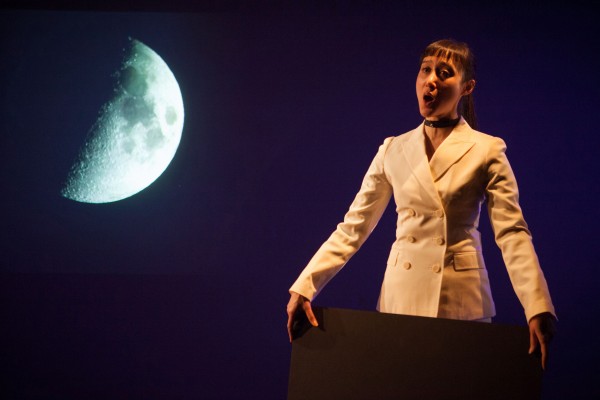
Hai-Ting Chinn’s SCIENCE FAIR takes viewers on a multimedia operatic journey (photo by Benjamin Heller)
On March 9-10, you can see a double feature of Hai-Ting Chinn’s multimedia opera, Science Fair, with music by Matthew Schickele and live piano by Erika Switzer, and The Emperor and the Queen’s Parisian Weekend, with music by Kamala Sankaram and a libretto by Pete McCabe, directed by HERE cofounder Tim Maner. March 10-11 pairs Matt Marks and Paul Peers’s Mata Hari, an opera-theater piece about the last days of the renowned WWI spy, with Nick Brooke’s Psychic Driving, which immerses the audience in surveillance and CIA brainwashing. From March 12 to 14, Jessica Scott’s Ship of Fools uses music, puppets, and movement to examine particular women throughout history while looking at who is in control of the future; it’s on a shared bill with Robin Frohardt’s Fitzcardboardaldo, a cinematic cardboard tribute to Werner Herzog’s Fitzcarraldo, along with The Corrugation of Dreams, an homage to Les Blank’s Burden of Dreams, about the making of the Herzog film. CULTUREMART concludes March 13-14 with HERE artistic director Kristin Marting and Robert Lyons’s Idiot, an exploration of Dostoevsky protagonist Prince Myshkin using text, video, and dance. The festival also includes a trio of post-performance talks, “Continue the Conversation,” with “Soundscapes” on March 6 after the 7:00 Lighthouse show, “Variants of Video Integration” on March 8 following the 8:30 show, and “Playing with Operatic Form” on March 10 after the 8:30 show. Tickets for all productions are $15 except for Lighthouse 40° N, 73° W, for which admission is $5; a $60 OFF-OFFten Club membership allows you to see all shows for $5 each and also comes with four tickets to be used anytime during the season in addition to four glasses of wine from the café.
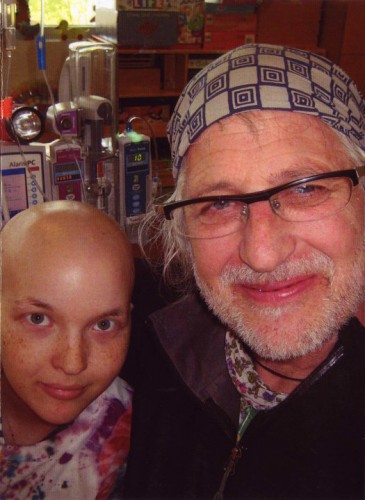
 An unsettling feeling of creepiness hovers over Farewell to Hollywood, the controversial documentary codirected by filmmaker Henry Corra and teenager Regina Diane “Reggie” Nicholson, who wanted to complete one full-length work before she died of cancer. Corra, whose mentor was David Maysles — when he was twenty-two, Corra saw Grey Gardens, then went to New York and asked the Maysles brothers for a job and was hired on the spot — met Nicholson at a film festival in 2010 and was so taken by her story, he decided to collaborate with her on her dream project. Corra and Nicholson spent most of the next twenty-one months together, compiling more than four hundred hours of footage as Reggie had tests done, got into a nasty battle with her parents, and watched films that inspired her, including Apocalypse Now, The Graduate, 2001: A Space Odyssey, and, most importantly, Pulp Fiction; Reggie was particularly obsessed with Uma Thurman’s character in Quentin Tarantino’s 1994 Oscar-nominated flick. But as is his style in such previous films as George, Jack and The Disappearance of McKinley Nolan, Corra inserts himself into the story, in this case becoming Reggie’s primary caretaker as the cancer begins to ravage her body and she insists on keeping the camera running. It’s all part of what Corra calls “living cinema,” becoming involved in the lives of his subjects, not merely being an objective viewer, and it’s clear that at least some of Reggie’s often ugly battle with her parents is a result of her relationship with Corra. Although it is not sexual in any way, Corra does admit to loving Reggie, and vice versa, something that Reggie’s father finds inappropriate and leads to Corra’s banishment from the Nicholson home twice, which means he’s unable to film Reggie for extended periods of time. Much has been argued about whether Corra overstepped the ethical bounds of documentary filmmaking — he staunchly defends his approach, claiming he’s making art, not mere entertainment, and he doesn’t even like the word “documentary” — but there’s something chilling in this comment he made to Indiewire in an
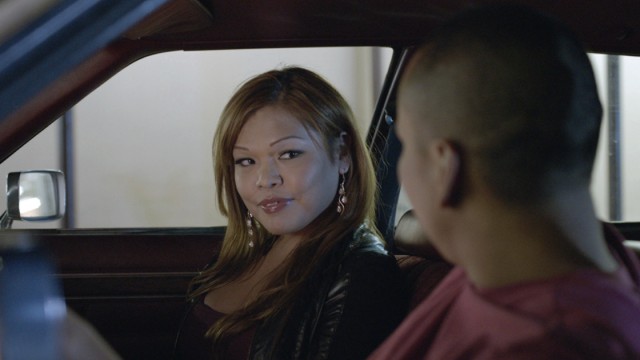
 Award-winning film festival favorite Drunktown’s Finest is a refreshingly original look inside life on a Navajo reservation in New Mexico. “They say this land isn’t a place to live; it’s a place to leave. Then why do people stay?” asks Nizhoni Smiles (MorningStar Angeline) at the beginning of writer-director Sydney Freeland’s debut feature, which opens with a shot of a town that could be any town. The story follows three teenagers trying to improve their lot by getting off the reservation. Sick Boy (Jeremiah Bitsui), who is about to have a child with Angela Maryboy (Elizabeth Frances), is trying to stay out of trouble the weekend before joining the army. Felixia (Carmen Moore) is a transsexual model attempting to jump-start her career by appearing in a Women of the Navajo calendar. And Nizhoni decides to track down her birth family before leaving to go to college in Michigan. The lives of the three protagonists intersect in unexpected ways as outside forces — and questionable decisions — complicate their chosen paths.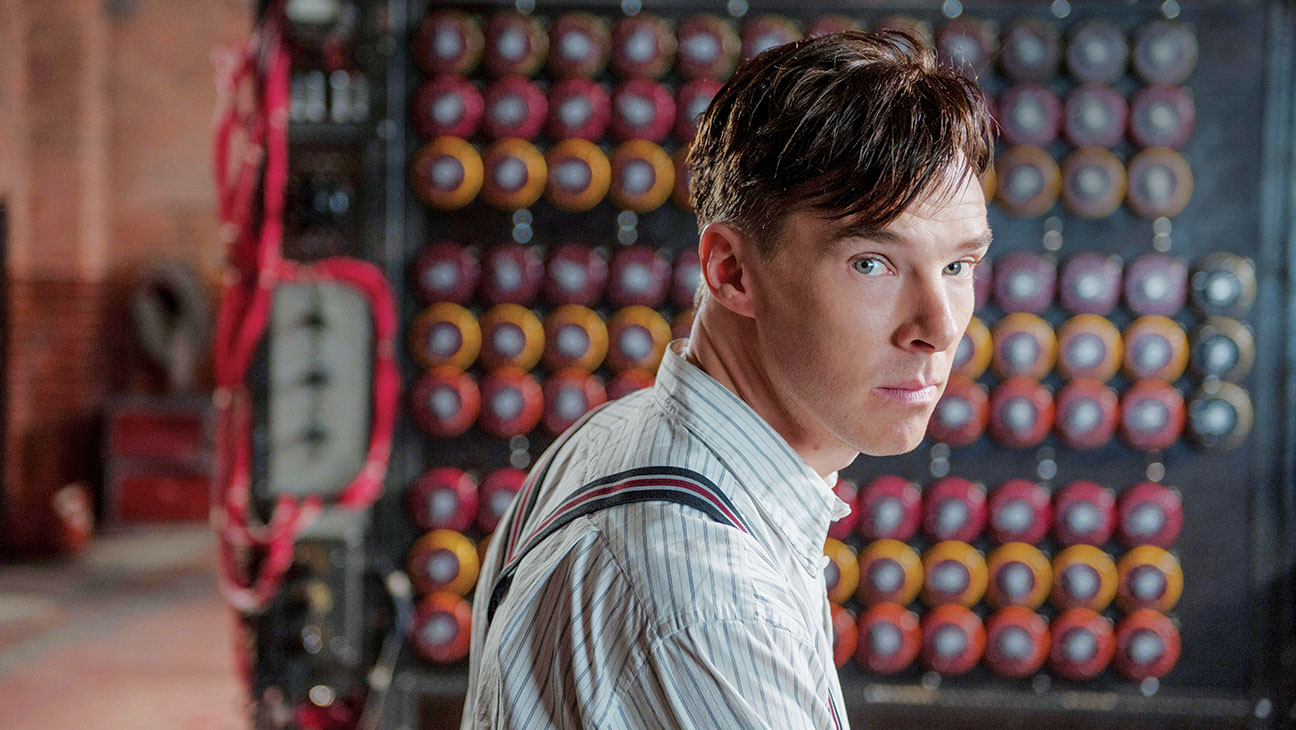

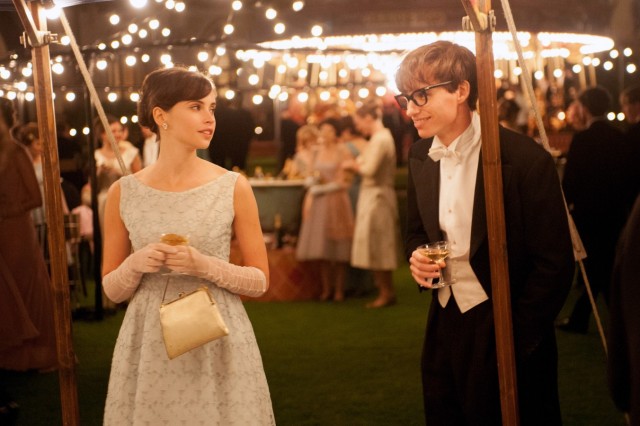
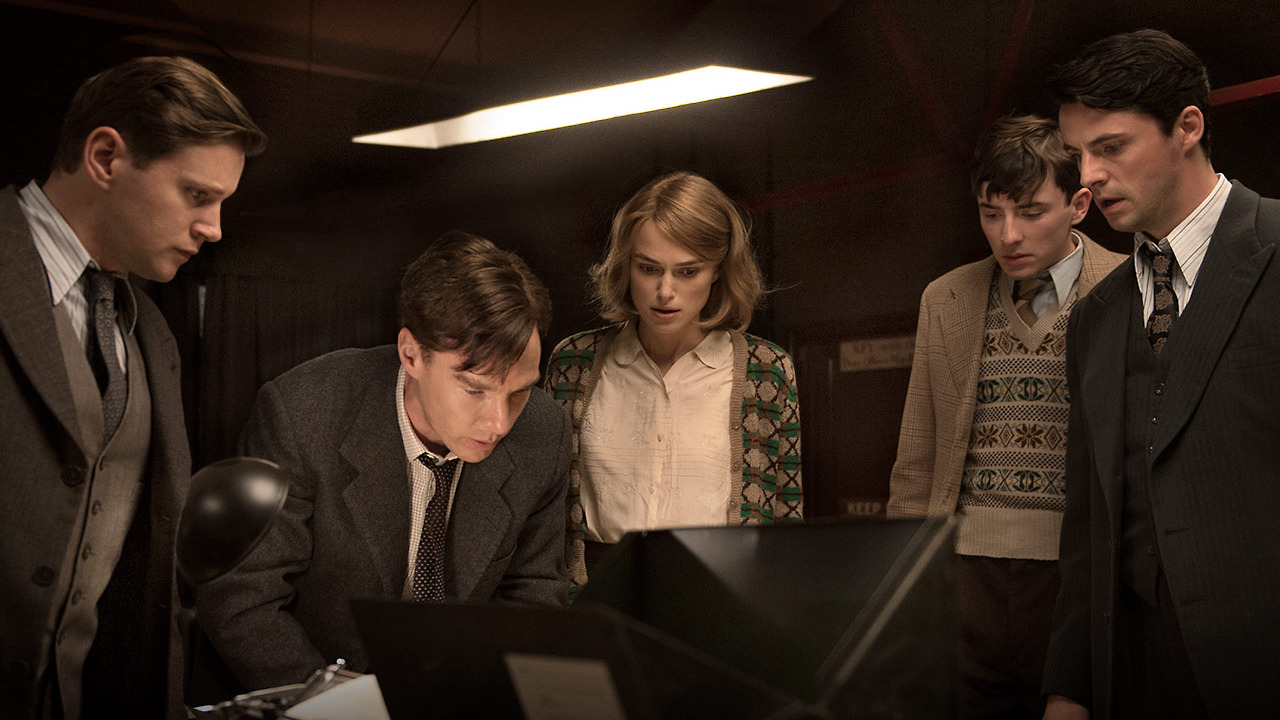
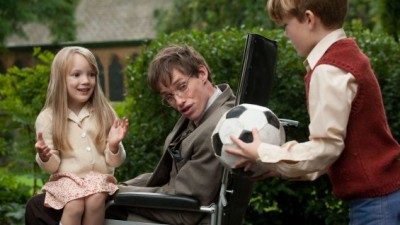
 This year’s heated Oscar race features a pair of fact-based British films about two of the most intelligent and important men of the last hundred years, but their life stories couldn’t be more different. The Theory of Everything follows Oxford-born theoretical physicist and cosmologist Stephen Hawking (Eddie Redmayne) as he falls in love with linguist Jane Wilde (Felicity Jones) and is stricken with motor neuron disease while at Cambridge; at the age of twenty-one he is given two years to live, but more than fifty years later he is still alive and vibrant at seventy-three, celebrated far and wide as the smartest human being on the planet. On the other hand, The Imitation Game is about London-born mathematician Alan Turing (Benedict Cumberbatch), who died in shame and obscurity in 1954 at the age of forty-one; it would be more than fifty years before his remarkable work for the British government during WWII would be revealed to the public. In both films, the protagonist is on a scientific quest; in The Imitation Game, Turing is trying to break the seemingly unbreakable code of the Nazis’ Enigma machine, while Hawking is after nothing less than a single mathematical equation that can explain the vast universe. Both films were based on recent books, The Imitation Game on Andrew Hodges’s Alan Turing: The Enigma, and The Theory of Everything on Travelling to Infinity: My Life with Stephen by Jane Hawking. Both films feature extensive scenes filmed on location where some of the action originally took place, The Imitation Game in Bletchley Park and The Theory of Everything at Cambridge.