this week in film and television

WIM WENDERS: PARIS, TEXAS

PARIS, TEXAS

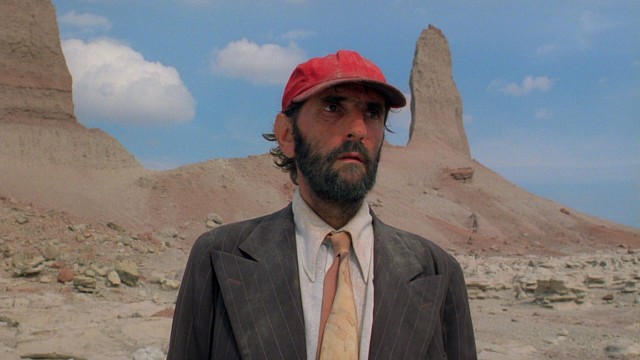
Harry Dean Stanton gives a staggering performance as a lost soul in PARIS, TEXAS

PARIS, TEXAS (Wim Wenders, 1984)
MoMA Film, Museum of Modern Art
11 West 53rd St. between Fifth & Sixth Aves.
Monday, March 2, 3:45, and Wednesday, March 11, 6:15
Series runs March 2-17
Tickets: $12, in person only, may be applied to museum admission within thirty days, same-day screenings free with museum admission, available at Film and Media Desk beginning at 9:30 am
212-708-9400
www.moma.org

Winner of both the Palme d’Or and the Critics Prize at the 1984 Cannes Film Festival, Wim Wenders’s Paris, Texas is a stirring and provocative road movie about the dissolution of the American family and the death of the American dream. Written by Sam Shepard and adapted by L. M. Kit Carson, the two-and-a-half-hour film opens with a haggard man (Harry Dean Stanton) wandering through a vast, deserted landscape. A close-up of him in his red hat, seen against blue skies and white clouds, evokes the American flag. (Later shots show him looking up at a flag flapping in the breeze, as well as a graffiti depiction of the Statue of Liberty.) After he collapses in a bar in the middle of nowhere, he is soon discovered to be Travis Henderson, a husband and father who has been missing for four years. His brother, Walt (Dean Stockwell), a successful L.A. billboard designer, comes to take him home, but Travis, remaining silent, keeps walking away. He eventually reveals that he is trying to get to Paris, Texas, where he has purchased a plot of land in the desert, but he avoids discussing his past and why he walked out on his wife, Jane (Nastassja Kinski), and son, Hunter (Hunter Carson, the son of L. M. Kit Carson and Karen Black), who is being raised by Walt and his wife, Anne (Aurore Clément). An odd man who is afraid of flying, has a penchant for arranging shoes, and falls asleep at key moments, Travis sets out with Hunter to find Jane and make something out of his lost life.
PARIS, TEXAS

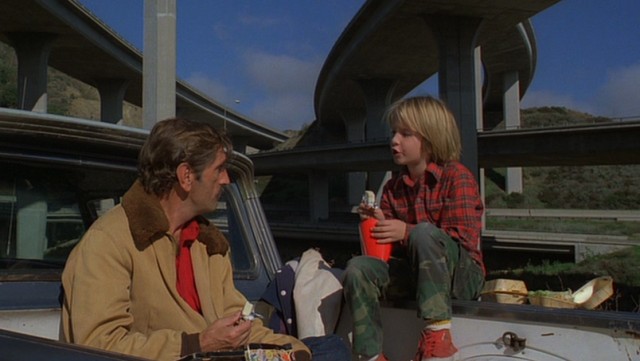
Travis (Harry Dean Stanton) and Hunter (Hunter Carson) bond while searching for Jane in Wim Wenders road movie

Longtime character actor Stanton (Repo Man, Wise Blood) is brilliant as Travis, his long, craggy face and sad, puppy-dog eyes conveying his troubled soul and buried emotions, his slow, careful gait awash in loneliness and desperation. The scenes between Travis and Jane are a master class in acting and storytelling; Stanton and Kinski (Tess, Cat People) will break your heart over and over again as they face the hardest of truths. Wenders and regular cinematographer Robby Müller use a one-way mirror to absolutely stunning effect in these scenes about what is hidden and what is revealed in a relationship. Wenders had previously made the Road Movie Trilogy of Alice in the Cities, The Wrong Move, and Kings of the Road, which also dealt with difficult family issues, but Paris, Texas takes things to another level. Ry Cooder’s gorgeous slide-guitar soundtrack is like a requiem for the American dream, now a wasteland of emptiness. (Cooder would later make Buena Vista Social Club with Wenders. Another interesting connection is that Wenders’s assistant director was Allison Anders, who would go on to write and direct the indie hit Gas Food Lodging.) A uniquely told family drama, Paris, Texas is rich with deft touches and subtle details, all encapsulated in the final shot. (Don’t miss what it says on that highway billboard.) Paris, Texas is screening in a new digital restoration at MoMA on March 2 at 3:45 and March 11 at 6:15 as part of a two-plus-week Wenders retrospective in advance of the release of his latest film, the Oscar-nominated documentary The Salt of the Earth; the director will be on hand to introduce the March 2 screening. The series continues through March 17 with such other Wenders works as The American Friend, Wings of Desire, Until the End of the World, Tokyo-Ga, The Goalie’s Anxiety at the Penalty Kick, and other well-known gems and rare early shorts, with Wenders at the museum for Q&As and introductions at all screenings through March 7.
MAPS TO THE STARS

MAPS TO THE STARS

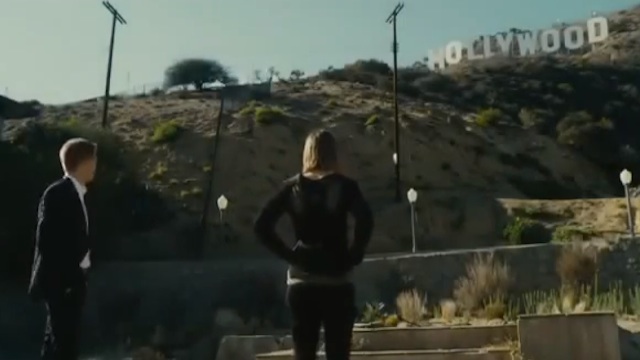
Jerome Fontana (Robert Pattinson) and Agatha Weiss (Mia Wasikowska) look to the Hollywood hills in MAPS TO THE STARS

MAPS TO THE STARS (David Cronenberg, 2014)
Opens Friday, February 27
www.focusfeatures.com

Canadian filmmaker David Cronenberg and American novelist and screenwriter Bruce Wagner, a match made in Hollywood Babylon, paint a savage portrait of celebrity culture in the absolutely incendiary and off-the-charts satire Maps to the Stars. The darkly funny comic drama centers on Agatha Weiss (Mia Wasikowska), a young woman who returns to Hollywood after having been put away for a long time for a dangerous deed, her face and body marked by burns. Befriending limo driver Jerome Fontana (Robert Pattinson), who is an aspiring actor and writer, Agatha gets a job working for disgruntled actress Havana Segrand (Julianne Moore), who is desperate to star in the remake of Stolen Moments, playing the role that made her mother, Clarice Taggart (Sarah Gadon), famous, but Havana fears that according to Hollywood she is much too old. Havana undergoes regular intense physical and psychological therapy to deal with her mommy issues with television healer Stafford Weiss (John Cusack), Agatha’s father, who has banished his daughter from ever contacting the family again. Meanwhile, Agatha’s younger brother, thirteen-year-old child star Benjie Weiss (Evan Bird), is a Bieberesque character fresh out of rehab who is negotiating the sequel to his massive hit, Bad Babysitter, with his very serious stage mom, Cristina (Olivia Williams). Slowly but surely, everyone’s lives intersect in a riot of fame and misfortune, drugs and guns, ghosts and incest.

Julianne Moore

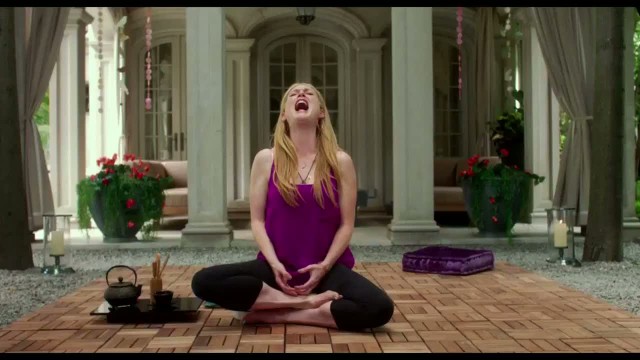
Havana Segrand (Julianne Moore) screams for success in dazzling collaboration between David Cronenberg and Bruce Wagner

Cronenberg, who has made such previous cult favorites as Scanners, The Fly, Naked Lunch, and A History of Violence, and the L.A.-based Wagner, author of such stinging novels as I’ll Let You Go, Still Holding, The Empty Chair, and I’m Losing You, which he also turned into a film, leave nothing and no one unscathed in this thoroughly brutal depiction of Hollywood as a haunted La La Land of dreams and nightmares, both literally and figuratively. Rising star Wasikowska (Alice in Wonderland, In Treatment, Jane Eyre) is superb as Agatha, her inner and outer scars revealing more and more of themselves as she reinserts herself into the life of her crazy family, with Cusack channeling a bit of Nicolas Cage as the overprotective patriarch, a self-help guru who could use a little help himself. Moore was named Best Actress at Cannes for her harrowing portrayal of an actress teetering on the edge of reality. Shooting for the first time ever in the United States, Cronenberg captures the sights and smells of Los Angeles and its environs; most of the film was shot in Canada, however, but Cronenberg kept Wagner, a former Hollywood limo driver himself, close by, trying to attain as much authenticity as possible. Twilight hunk Pattinson, who spent all of Cronenberg’s previous movie, Cosmopolis, in the back of a limo, gets in the driver’s seat here, playing an alternate, reimagined version of Wagner. The severely screwed-up Weiss family serves as a microcosm for Hollywood’s own severely screwed-up dysfunction, as Cronenberg melds the ridiculous with the sublime, the tragic with the comic, the bizarre with the, well, more bizarre, creating a modern-day fairy-tale mashup of Shakespeare and Williams, Sunset Boulevard and Less than Zero, a caustic, cautionary tale of the price you pay for getting what you wish for.

EASTERN BOYS

EASTERN BOYS

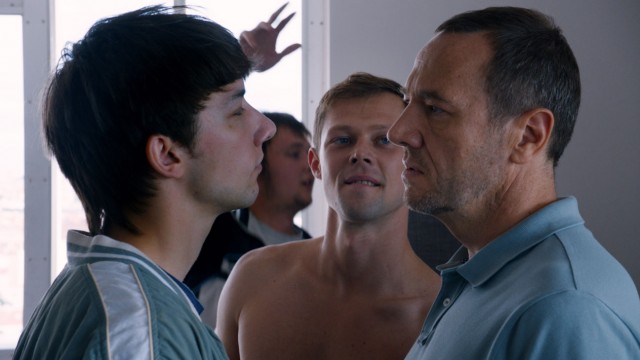
Marek (Paul Kirill Emelyanov), Boss (Danil Vorobyev), and Daniel (Oliver Rabourdin) get involved in a dangerous game in EASTERN BOYS

EASTERN BOYS (Robin Campillo, 2013)
Film Society of Lincoln Center, Howard Gilman Theater, Elinor Bunin Munroe Film Center
144 West 65th St. between Eighth Ave. & Broadway
February 27 – March 5
212-875-5050
www.filmlinc.com

Robin Campillo takes a genuinely compassionate look at immigration, home invasion, and sexual obsession in the compelling, always surprising Eastern Boys. Seeking out companionship, middle-aged Daniel (Olivier Rabourdin) spots young Marek (Kirill Emelyanov) and cruises him at the Gare du Nord station in Paris. They set up a paid rendezvous at Daniel’s apartment for the next day, but Marek’s arrival is preceded by that of his primarily male friends from Eastern Europe, illegal immigrants who begin taking things from Daniel’s place as they dance and drink; it’s a heartbreaking party scene, with Daniel not knowing how to react, an implicit if not overt threat to his physical well-being hovering over the thick atmosphere. But when Marek eventually does show up, Daniel is desperate for his attention, still determined to be alone with him, an attraction that has dangerous consequences.

Employing a cinéma vérité style, writer, director, and editor Campillo, whose previous, debut feature was 2004’s Les Revenants and has written several films with Laurent Cantet, including The Class and Heading South, tells the intimate story of Daniel and Marek’s complicated relationship with grace and subtlety as they both balance fear with desire, knowing that the unpredictable and violent Boss (Danil Vorobyev), the leader of the gang, is lurking around them. The opening scene has a documentary, neo-Realist quality, but it’s all fiction, the characters portrayed by actors. Campillo divides the film into four chapters based on location and thematic elements, with the home invasion set in his own apartment so he could feel like he himself was being invaded while making it. Nominated for three César Awards (Best Picture, Best Director, and Emelyanov as Most Promising Actor) Eastern Boys goes from a dark romance to a gripping thriller in the final section, but Campillo never reverts to purely good and evil characters, and he provides no straightforward answers, especially in the open-ended finale, while raising important questions about society. It’s a deeply affecting film, one that seeps into your system, an often uncomfortable experience that mirrors Daniel’s fascination with Marek; you’ll squirm in your seat, but you won’t be able to turn away.

BLACK & WHITE ’SCOPE: AMERICAN CINEMA

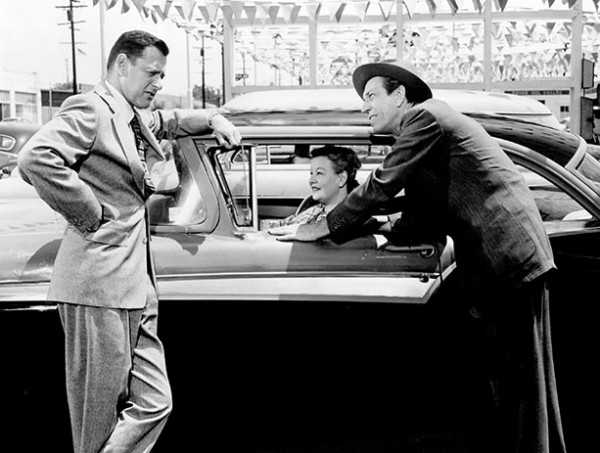
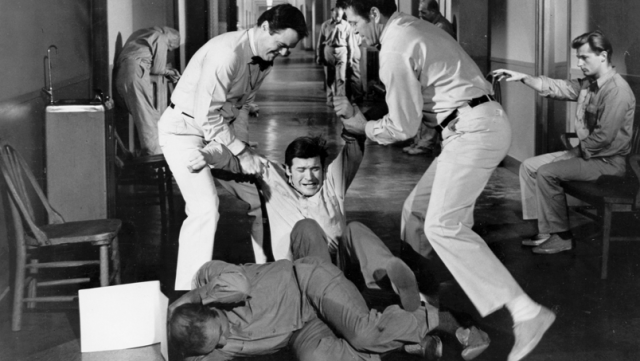
Tony Randall stars as a used car salesman in 1957 Martin Ritt black-and-white CinemaScope tale

Tony Randall plays a used car salesman in 1957 Martin Ritt black-and-white CinemaScope tale

Who: Directors Billy Wilder, Woody Allen, Martin Ritt, Otto Preminger, Fred Zinnemann, Robert Wise, Samuel Fuller, and others
What: “Black & White ’Scope: American Cinema”
Where: BAMcinématek, BAM Rose Cinemas, 30 Lafayette Ave. between Ashland Pl. & St. Felix St., 718-636-4100
When: February 27 – March 19
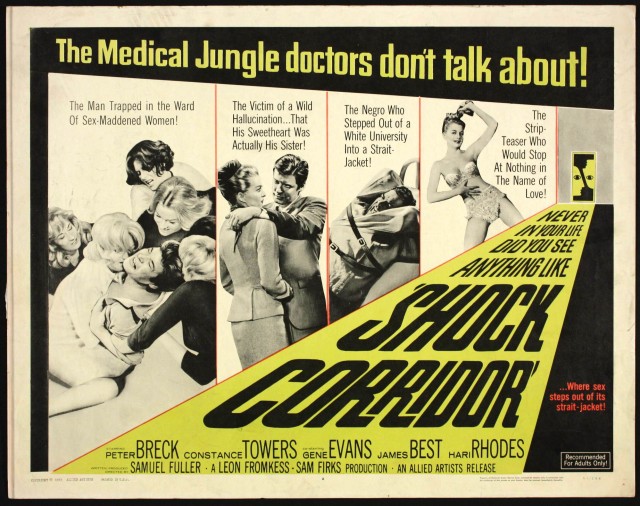
Why: BAMcinématek is presenting twenty-one CinemaScope films shot in glorious black-and-white by such master cinematographers as Gordon Willis, James Wong Howe, Eugen Schüfftan, and Conrad Hall, from such classics as The Apartment, Manhattan, The Hustler, In Cold Blood, The Elephant Man, The Longest Day, and The Three Faces of Eve to such lesser-known fare as The Victors, Forty Guns, China Gate, No Down Payment — featuring Tony Randall as a used car salesman — and the unforgettable (for all the wrong reasons) Rashomom remake The Outrage, starring Paul Newman, Laurence Harvey, Claire Bloom, Edward G. Robinson, and William Shatner.

CULTUREMART 2015

(photo by Sara and Reid Farrington)

Sara and Reid Farrington go behind the scenes of the making of a classic in CASABLANCABOX (photo by Sara and Reid Farrington)

HERE
145 Sixth Ave. at Dominick St.
March 4-14, $15
212-352-3101
www.here.org

HERE’s annual winter performance festival, now in its fourteenth year, highlights cutting-edge works-in-progress from a wide-ranging group of artists who are either current or former participants in the HERE Artist Residency Program (HARP), which commissions hybrid presentations in order “to not only grow innovative artistic work, but also [to] give artists the awareness and skills — in areas such as audience relations, budgeting, grantwriting, and touring — they need to continue to grow their careers.” This year features a dozen multidisciplinary workshop performances, beginning March 4-5 with sound designer Christina Campanella and composer Jim Dawson’s Lighthouse 40° N, 73° W, a continuous geographic audio installation in which the audience listens in on headphones to a twenty-five-minute loop, and Sara and Reid Farrington’s CasablancaBox, in which the husband-and-wife duo combine live actors and film clips that go behind the scenes of the making of the 1942 movie; Farrington has previously reimagined such films as The Passion of Joan of Arc, Rope, and multiple versions of A Christmas Carol in his unique, mesmerizing style. On March 6-7 at 7:00, Paul Pinto’s Thomas Paine in Violence explores the American patriot during the last days of his life and the start of his afterlife, with music performed by vocalist Joan La Barbara and the ensemble Ne(x)tworks. On March 7-8 at 8:30, Sean Donovan and Sebastián Calderón Bentin turn to Alain Renais’s Last Year at Marienbad and Luis Buñuel’s The Exterminating Angel for Abbadon, in which a social gathering delves into the nature of class structure; Abbadon is on a shared bill with Amanda Szeglowski/cakeface’s Stairway to Stardom, a piece of dance theater that takes its inspiration from the public access amateur talent television show of the same name.

Hai-Ting Chinn’s SCIENCE FAIR takes viewers on a multimedia operatic journey (photo by Benjamin Heller)

Hai-Ting Chinn’s SCIENCE FAIR takes viewers on a multimedia operatic journey (photo by Benjamin Heller)

On March 9-10, you can see a double feature of Hai-Ting Chinn’s multimedia opera, Science Fair, with music by Matthew Schickele and live piano by Erika Switzer, and The Emperor and the Queen’s Parisian Weekend, with music by Kamala Sankaram and a libretto by Pete McCabe, directed by HERE cofounder Tim Maner. March 10-11 pairs Matt Marks and Paul Peers’s Mata Hari, an opera-theater piece about the last days of the renowned WWI spy, with Nick Brooke’s Psychic Driving, which immerses the audience in surveillance and CIA brainwashing. From March 12 to 14, Jessica Scott’s Ship of Fools uses music, puppets, and movement to examine particular women throughout history while looking at who is in control of the future; it’s on a shared bill with Robin Frohardt’s Fitzcardboardaldo, a cinematic cardboard tribute to Werner Herzog’s Fitzcarraldo, along with The Corrugation of Dreams, an homage to Les Blank’s Burden of Dreams, about the making of the Herzog film. CULTUREMART concludes March 13-14 with HERE artistic director Kristin Marting and Robert Lyons’s Idiot, an exploration of Dostoevsky protagonist Prince Myshkin using text, video, and dance. The festival also includes a trio of post-performance talks, “Continue the Conversation,” with “Soundscapes” on March 6 after the 7:00 Lighthouse show, “Variants of Video Integration” on March 8 following the 8:30 show, and “Playing with Operatic Form” on March 10 after the 8:30 show. Tickets for all productions are $15 except for Lighthouse 40° N, 73° W, for which admission is $5; a $60 OFF-OFFten Club membership allows you to see all shows for $5 each and also comes with four tickets to be used anytime during the season in addition to four glasses of wine from the café.

FAREWELL TO HOLLYWOOD: THE LIFE AND DEATH OF REGGIE NICHOLSON

Reggie Nicholson and Henry Corra codirected documentary about Reggie’s valiant battle with cancer, FAREWELL TO HOLLWYOOD

Reggie Nicholson and Henry Corra codirected documentary about Reggie’s inspirational battle with cancer

FAREWELL TO HOLLYWOOD: THE LIFE AND DEATH OF REGGIE NICHOLSON (Henry Corra & Reggie Nicholson, 2015)
Cinema Village
22 East 12th St. between University Pl. & Fifth Ave.
Opens Wednesday, February 25
212-924-3363
www.farewelltohollywood.com
www.cinemavillage.com

An unsettling feeling of creepiness hovers over Farewell to Hollywood, the controversial documentary codirected by filmmaker Henry Corra and teenager Regina Diane “Reggie” Nicholson, who wanted to complete one full-length work before she died of cancer. Corra, whose mentor was David Maysles — when he was twenty-two, Corra saw Grey Gardens, then went to New York and asked the Maysles brothers for a job and was hired on the spot — met Nicholson at a film festival in 2010 and was so taken by her story, he decided to collaborate with her on her dream project. Corra and Nicholson spent most of the next twenty-one months together, compiling more than four hundred hours of footage as Reggie had tests done, got into a nasty battle with her parents, and watched films that inspired her, including Apocalypse Now, The Graduate, 2001: A Space Odyssey, and, most importantly, Pulp Fiction; Reggie was particularly obsessed with Uma Thurman’s character in Quentin Tarantino’s 1994 Oscar-nominated flick. But as is his style in such previous films as George, Jack and The Disappearance of McKinley Nolan, Corra inserts himself into the story, in this case becoming Reggie’s primary caretaker as the cancer begins to ravage her body and she insists on keeping the camera running. It’s all part of what Corra calls “living cinema,” becoming involved in the lives of his subjects, not merely being an objective viewer, and it’s clear that at least some of Reggie’s often ugly battle with her parents is a result of her relationship with Corra. Although it is not sexual in any way, Corra does admit to loving Reggie, and vice versa, something that Reggie’s father finds inappropriate and leads to Corra’s banishment from the Nicholson home twice, which means he’s unable to film Reggie for extended periods of time. Much has been argued about whether Corra overstepped the ethical bounds of documentary filmmaking — he staunchly defends his approach, claiming he’s making art, not mere entertainment, and he doesn’t even like the word “documentary” — but there’s something chilling in this comment he made to Indiewire in an October 2014 interview: “I cared about [Reggie] so much and I knew she was going to die that in many ways I was no different than the mother. That’s the thing most people don’t pick up on, that me and the mother are very similar in this movie.”

There is no denying that Farewell to Hollywood depicts Reggie, who made the short Glimpse of Horizon in 2010, as a brave, bold teen who looks death square in the face and is determined to get as much out of life as she possibly can in the limited time she has. The camera loves her like it’s a member of her family. There are poignant, powerful moments throughout the film, which was produced by Lance Armstrong and his Livestrong foundation, involving Reggie, Corra, and the Nicholsons, but it’s hard not to think that Corra is responsible for much of that drama. He has cited such influences as Truman Capote’s In Cold Blood, in which the author becomes part of the story of two mass murderers; Cindy Sherman, a wildly successful photographer who has built a career out of taking pictures of herself in a multitude of costumes and situations that blur the lines between fiction and nonfiction; and David and Albert Maysles, who allowed themselves to be seen and heard in their documentaries. Corra was also likely impacted by the loss of his brother, Tom, a musician who died of cancer in 1998 at the age of forty-four. Corra has professed to be a character-based storyteller, and there are certainly well-defined, fascinating characters in Farewell to Hollywood, but since one of them is him, and his involvement appears to have had a direct impact on the life of the Nicholson family, something seems seriously amiss here. Corra, who is in his fifties, might not be manipulating the action on purpose — he clearly cares deeply about Reggie — but even the film’s U.S. theatrical release date feels like it’s all part of a master plan: Farewell to Hollywood opens on February 25 (at Cinema Village in New York City), which just happens to be Reggie’s birthday; had she lived, she would have been twenty-two.

CHARLES LAUGHTON

Charles Laughton series at Film Forum actually deserves a big thumbs-up

Charles Laughton series at Film Forum actually deserves a big thumbs-up

Who: Charles Laughton
What: Three-week retrospective
Where: Film Forum, 209 West Houston St., 212-727-8110
When: Daily through February 26
Why: We might have learned just a little too much about English stage and screen actor and director Charles Laughton from Scotty Bowers’s 2012 tell all, Full Service: My Adventures in Hollywood and the Secret Sex Lives of the Stars, so it’s probably best to keep what we know about Laughton to his legendary career, which is being celebrated at Film Forum with a wide-ranging retrospective through February 26. The series continues Monday night with E. A. Dupont’s 1929 silent Piccadilly (with live piano accompaniment by Steve Sterner), in which Laughton has a cameo as a nightclub diner, followed on Tuesday by Lewis Milestone’s Arch of Triumph, with Charles Boyer and Ingrid Bergman, and a double feature of Henry Koster’s romantic comedy It Started with Eve and Richard Wallace’s theater-set Because of Him. Wednesday pairs Robert Z. Leonard’s crime film The Bribe, which stars Laughton and Robert Taylor, Ava Gardner, and Vincent Price, with Burgess Meredith’s The Man on the Eiffel Tower, in which Laughton plays George Simenon’s Inspector Maigret. The festival concludes on Thursday with Laughton as Nero in Cecil B. DeMille’s 1932 epic The Sign of the Cross, as South Carolina senator Seabright Cooley in Otto Preminger’s Advise and Consent, Laughton’s last film, and his lone solo directorial effort, the gripping thriller The Night of the Hunter.