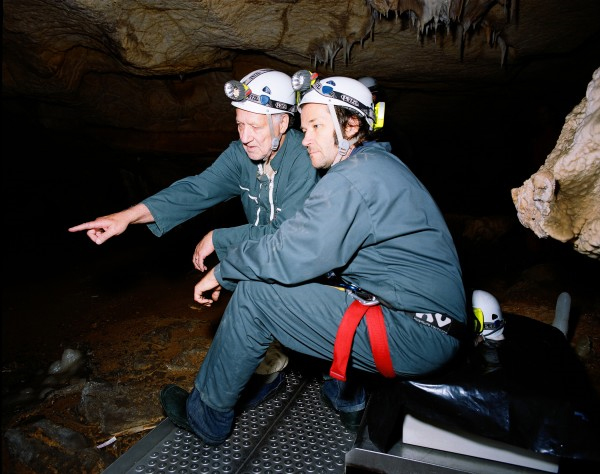
Werner Herzog goes spelunking in 3D for 2010 documentary, CAVE OF FORGOTTEN DREAMS
CAVE OF FORGOTTEN DREAMS (Werner Herzog, 2010)
BAMcinématek, BAM Rose Cinemas
30 Lafayette Ave. between Ashland Pl. & St. Felix St.
Sunday, May 3, 4:00 & 8:30
Series runs May 1-17
718-636-4100
www.bam.org
www.wernerherzog.com
 An adventurer as much as a filmmaker, German director Werner Herzog has headed into the Amazon in Fitzcarraldo (1982), burning Kuwaiti oil fields in Lessons of Darkness (1992), and Antarctica in Encounters at the End of the World (2008). In his 2010 documentary, Cave of Forgotten Dreams, he goes where few have ever gone before. In December 1994, speleologists Jean-Marie Chauvet, Éliette Brunel, and Christian Hillaire discovered the Chauvet-Pont-d’Arc Cave in France, a vast series of chambers filled with remarkable paintings and engravings as well as animal bones, including the skulls of the extinct cave bear. The works were painted onto and carved into the walls, not limited to flat surfaces but around formations that jut out into the cavern. Dating back more than thirty thousand years, they are the oldest cave paintings ever found, well preserved through crystallization over the centuries and now by the intense and careful protection of the French government. Only a handful of scientists have been given access to the cave, until last spring, when Herzog, who has been entranced by cave paintings since he was twelve years old, was allowed to bring in a shoestring crew using specially devised equipment to film the space over the course of six four-hour sessions. The four-person crew — including Herzog manning the lights and his longtime cinematographer, Peter Zeitlinger, behind the 3D camera — were not allowed to touch anything and had to stay on a narrow metal walkway that winds through the cave. They were accompanied by a team of specialists on the rare public journey: handprint expert Dominique Baffier, cave bear researcher Michel Philippe, the husband and wife team of Gilles Tosello and Carole Fritz, who map out the social connection between art and archaeology, Jean Clottes, the former director of the Chauvet Cave Research Project, and current director Jean-Michel Geneste.
In true Herzog style, he also speaks with a master perfumer and two prehistoric flute archaeologists. Herzog’s decision to use 3D — for what he says will be the only time in his career — was a stroke of genius, allowing viewers to feel like they’re walking through the cave with him, nearly able to reach out and touch the remarkable drawings, engravings, and skeletons. Herzog’s narration does get too dreamy at times, veering off on philosophical tangents before he adds a cool but silly coda, but, as always, he adds plenty of his trademark humor and charm too. Cave of Forgotten Dreams is screening May 3 at 4:00 & 8:30 with Ikuo Nakamura’s 2014 eleven-minute short, Aurora Borealis, as part of the BAMcinématek series “3D in the 21st Century,” consisting of nineteen programs of single films and double features, all shot in 3D. The festival also includes Alfonso Cuarón’s Gravity with Trisha Baga’s Other Gravity, Jon M. Chu’s Justin Bieber: Never Say Never with Nadia Ranocchi and David Zamagni’s Joule, Jeff Tremaine’s Jackass 3D with Ben Coonley’s 3D Trick Pony, Alexandre Aja’s Piranha 3D with Yoshi Sodeoka’s Psychedelic Death Vomit (Slight Return), and Jean-Luc Godard’s Goodbye to Language with Kerry Laitala’s Chromatic Frenzy.
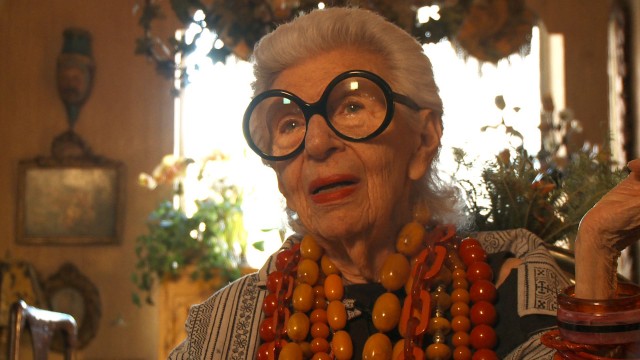
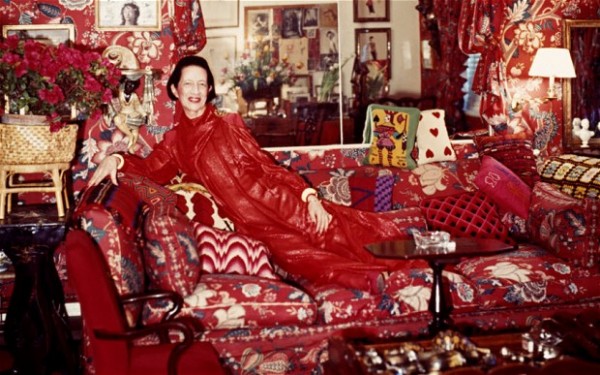
 “I like individuality,” self-described “geriatric starlet” and nonagenarian fashion doyenne Iris Apfel says at the beginning of octogenarian Albert Maysles’s penultimate film, Iris. “It’s so lost these days. There’s so much sameness. Everything is homogenized. I hate it. Whatever.” Iris celebrates that individuality, not only Apfel’s, who at ninety-three is still active in the fashion world, but Maysles’s, who passed away in March at the age of eighty-eight, leaving behind a legendary legacy that changed the face of documentary cinema, including such classics as Salesman, Grey Gardens, and Gimme Shelter. Throughout the film, Apfel speaks directly to Maysles, who ends up on camera several times, breaking that once-impenetrable fourth wall that he, his brother, David, and their partner, Charlotte Zwerin, helped tear down years ago. Maysles spent four years filming the Queens-born Apfel as she shared her lovely story, growing from an interior designer and textile-business owner to a world-renowned fashion collector, tastemaker, and rule breaker, accompanied all along the way by her husband of more than sixty-six years, Carl. Maysles shows Iris, in her trademark enormous circular-framed glasses and unique, colorful ensembles that mix designer clothing with a healthy dose of inexpensive accessories, as she bargains at a cheap local store, advises women at a special Loehmann’s event, prepares for her 2005 show at the Metropolitan Museum of Art’s Costume Institute, hawks her jewelry line on the Home Shopping Network, works on a window display at Bergdorf Goodman, and talks fashion with Martha Stewart, Tavi Gevinson, and others. Maysles interviews such designers as Alexis Bittar, Duro Olowu, Naeem Khan, and Dries van Noten, Met curator Harold Koda, Architectural Digest editor in chief Margaret Russell, and J. Crew head Jenna Lyons, who have only the most kind and generous things to say about the always positive Apfel, who has a genuine love of life. “It’s better to be happy than well dressed,” she tells friend and photographer Bruce Weber.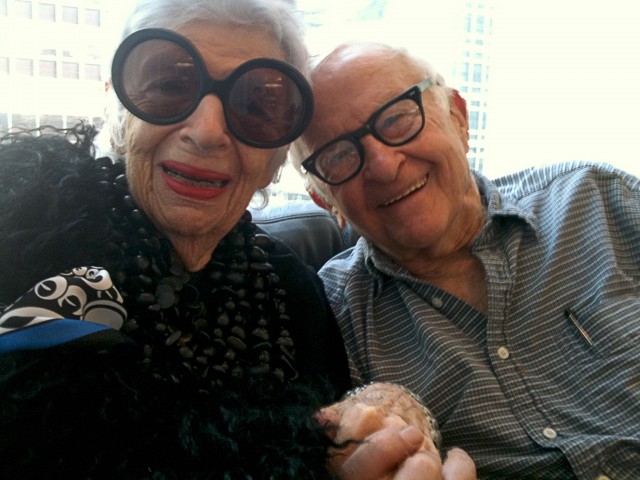
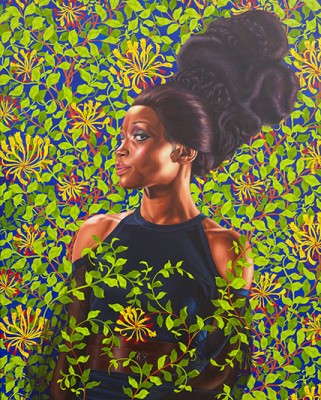
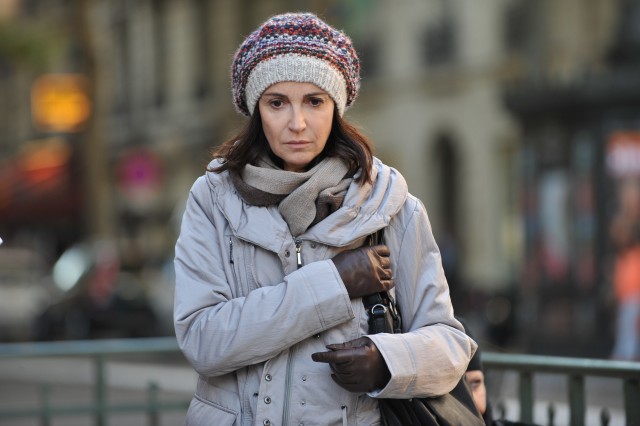
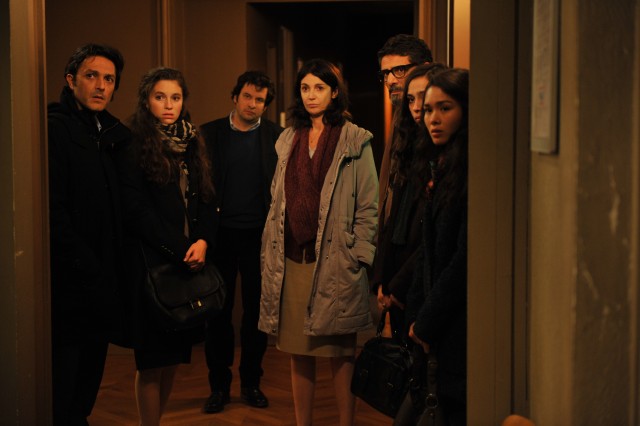
 (T)error is a great name for a horror movie, but even though it turns out that Lyric R. Cabral and David Felix Sutcliffe’s debut is not part of that genre, there still is plenty scary about it. Winner of the U.S. Documentary Special Jury Award for Break Out First Feature at Sundance, (T)error is a surprising look inside one aspect of the FBI’s counterterrorism program. Shortly after Saeed “Shariff” Torres, a friend and neighbor of filmmaker and photojournalist Cabral’s, suddenly disappeared, he contacted her, eventually letting her inside his secret career as a longtime FBI informant. A Muslim and former Black Panther revolutionary, the sixty-three-year-old school kitchen employee and father of a young son goes on camera as he takes on what he claims will be his final assignment, cozying up to a Pittsburgh man named Khalifa Ali Al-Akili, previously known as James Marvin Thomas Jr., who the FBI thinks might be involved in terrorist plots. It’s not exactly the most thrilling game of cat and mouse; Cabral and codirector Sutcliffe (Adama) follow Shariff as he goes about a lot of mundane business, arguing over how much money the FBI gave him, text-messaging back and forth with agents and his prey, examining Facebook pages, and Skyping with his son, whose face is blurred for protection. And Sharrif is not quite the kind of well-trained operative you read about in books or see in action-packed movies, making one wonder just what the FBI is thinking — and how it’s spending our money — especially after a major twist occurs about halfway through the film, turning everything around and inside out, providing a new vantage point that makes the whole sting operation even more bizarre and surreal. But it’s all too real, and rather frightening in its own very strange way. (T)error is screening April 21, 23, and 24 at the Tribeca Film Festival, with the filmmakers participating in Q&As after all three shows.