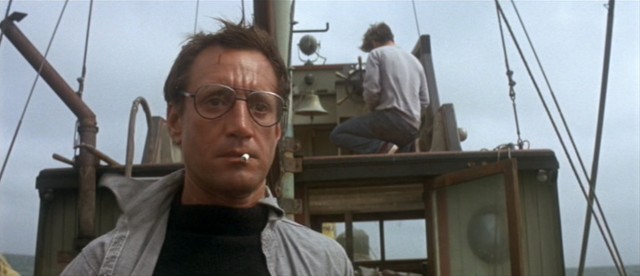
Roy Scheider cant believe JAWS is coming back for another summer
There’s nothing quite like catching a free movie in the summer in New York City, lying on a blanket in a park, gathering on an aircraft carrier, or huddling in an air-conditioned theater. The season’s free festivals are slowly being announced, with more to come. Below are the day-by-day listings of favorites as well as lesser-known festivals, including the Intrepid Summer Movie Series, Syfy Movies with a View, SummerScreen, Lincoln Center Out of Doors, Films on the Green, SummerStage, RiverFlicks, Celebrate Brooklyn!, Coney Island Flicks on the Beach, the Central Park Conservancy Film Festival, Roosevelt Island’s Outdoor Summer Movie Series, Passport Thursdays at the Queens Museum, the Urban Drive-In at Abrons Arts Center, Red Hook Flicks at Valentino Pier, and other movies in the parks. Keep watching this page as more festivals are announced. (Films without exact start times generally begin around sunset.)
Friday, May 15
Movie Night: Annie (Will Gluck, 2014), Victor Hanson Recreation Center, Rochdale Park
Friday, May 22
Summer Movie Series: Top Gun (Tony Scott, 1986), introduced by Scott D. Altman, the Intrepid Sea, Air & Space Museum
Friday, May 29
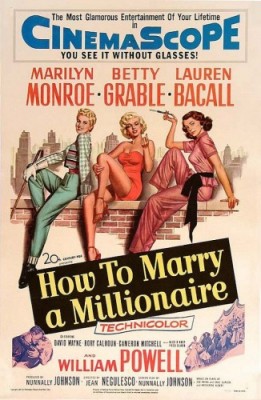
Films on the Green: . . . And God Created Woman (Roger Vadim, 1956), Central Park, 79th St. & Fifth Ave.
Movie Night: Space Jam (Joe Pytka, 1996), Frederick B Judge Playground
Tuesday, June 2
FAB Flicks: Soul Power (Jeff Levy-Hinte, 2008), Putnam Triangle Plaza
Thursday, June 4
Rooftop Films: Sundance Film Festival Shorts, with Palm Rot (Ryan Gillis), The Face of Ukraine (Kitty Green), Papa Machete (Jonathan David Kane), Mynarski Death Plummet (Matthew Rankin), Volta (Stella Kyriakopoulos), Pop-Up Porno: m4m (Stephen Dunn), Mulignans (Shaka King), Myrna the Monster (Ian Samuels), and Storm Hits Jacket (Paul Cabon), MetroTech Commons, live music by Balancer at 8:30, screening at 9:00
Friday, June 5
Films on the Green: Caramel (Nadine Labaki, 2008), Washington Square Park
Free Summer Movies: The Lego Movie (Chris Miller & Phil Lord, 2014), Crocheron Park
Sunday, June 7
SummerStage: BattleFest League Dancers and screening of Flex Is Kings (Michael Beach Nichols & Deidre Schoo, 2013), Red Hook Park, 7:00
Tuesday, June 9
FAB Flicks: Dave Chappelle’s Block Party (Michel Gondry, 2006), Putnam Triangle Plaza
Thursday, June 11
Summer on the Hudson Picture Show: Hyde Park on Hudson (Roger Michell, 2012), Riverside Park, 72nd Track and Lawn
Friday, June 12
Films on the Green: Pépé le Moko (Julien Duvivier, 1937), Washington Square Park
Movie Night: Frozen (Jennifer Lee & Chris Buck, 2013), MacNeil Park
Monday, June 15
Outdoor Movie Night: Jaws (Steven Spielberg, 1975), Touchdown of the 103rd St. Footbridge, Randall’s Island Park
Tuesday, June 16
FAB Flicks: Shake! Otis at Monterey (D. A. Pennebaker & Chris Hegedus, 1987) and Jimi Plays Monterey (D. A. Pennebaker & Chris Hegedus, 1986), Putnam Triangle Plaza
Friday, June 19
Films on the Green: Priceless (Pierre Salvadori, 2008), Tompkins Square Park
Sunday, June 21
SummerStage: The Bullitts + DJ Spinna, with screening of They Die By Dawn (Jeymes Samuel, 2013), Herbert Von King Park, 7:00
Monday, June 22
Bryant Park Summer Film Festival: Ghostbusters (Ivan Reitman, 1984), Bryant Park
Friday, June 26
Films on the Green: Zarafa (Rémi Bezançon & Jean-Christophe Lie, 2012), Tompkins Square Park
Monday, June 29
Bryant Park Summer Film Festival: The Killers (Richard Siodmark, 1946), Bryant Park Lawn
Tuesday, June 30
Summer Movie Night: Despicable Me 2 (Pierre Coffin & Chris Renaud, 2013), Curtis “50 Cent” Jackson Community Garden
Wednesday, July 1
Summer on the Hudson Picture Show: Jurassic Park (Steven Spielberg, 1993), Pier 1, Riverside Park South
Outdoor Cinema: Don’t Look Back (D. A. Pennebaker, 1967), with a prescreening performance by Pam Reyes and Guests, Socrates Sculpture Park
Friday, July 3
Free Summer Movies: The Young Girls of Rochefort (Jacques Démy, 1967), Castle Clinton, Battery Park
Monday, July 6
Bryant Park Summer Film Festival: The Poseidon Adventure (Ronald Neame, 1972), Bryant Park Lawn
Coney Island Flicks on the Beach: The Terminator (James Cameron, 1984), West Tenth St.
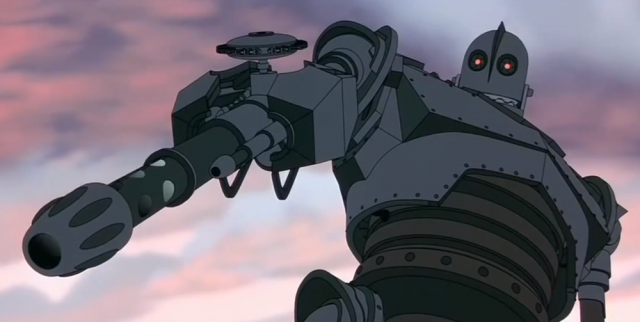
The Iron Giant rules the Rockaways on July 7
Tuesday, July 7
Movie Nights in the Rockaways: The Iron Giant (Brad Bird, 1999), Beach 17th St. & Seagirt Blvd.
Red Hook Flicks: Jurassic Park (Steven Spielberg, 1993), Valentino Pier
Wednesday, July 8
SummerScreen: Clueless (Amy Heckerling, 1995), McCarren Park
Outdoor Cinema: Live-in Maid (Jorge Gaggero, 2005), with a prescreening performance by the Adam Tully Trio, Socrates Sculpture Park
Hudson RiverFlicks, Big Hit Wednesdays: The Imitation Game (Morten Tyldum, 2014), Pier 63, Hudson River Park, Chelsea Piers
Summer on the Hudson Picture Show: Edward Scissorhands (Tim Burton, 1990), Pier 1, Riverside Park South
Thursday, July 9
Summer Movie Series: October Sky (Joe Johnston, 1999), introduced by Kayla Rajsky, the Intrepid sea, Air & Space Museum
Urban Drive-In: His People (Edward Sloman, 1925), Abrons Arts Center
SyFy Movies with a View: High Noon (Fred Zinnemann, 1952), Pier 1, Brooklyn Bridge Park
Summer on the Hudson Picture Show: Pride & Prejudice (Joe Wright, 2005), Riverside Park, 72nd Track and Lawn
Friday, July 10
Films on the Green: Goha (Jacques Baratier, 1958), Riverside Park, Pier I at 70th St.
Hudson RiverFlicks, Family Fridays: SpongeBob: Sponge Out of Water (Paul Tibbitt, 2015), Pier 46, Hudson River Park, Greenwich Village
Sunday, July 12
SummerStage: Gerardo Contino y Los Habaneros and screening of Celia: The Queen (Joe Cardona & Mario de Varona, 2008), St. Mary’s Park, 7:00
Monday, July 13
Outdoor Movie Night: Back to the Future Part II (Robert Zemeckis, 2989), Touchdown of the 103rd St. Footbridge, Randall’s Island Park
Bryant Park Summer Film Festival: I’m No Angel (Wesley Ruggles, 1933), Bryant Park Lawn
Coney Island Flicks on the Beach: The Grand Budapest Hotel (Wes Anderson, 2014), West Tenth St.
Tuesday, July 14
Summer Movie Night: All Dogs Go to Heaven (Don Bluth, Gary Goldman, & Dan Kuenster, 1989), 103rd St. Community Garden
Rooftop Films @ Bronx Terminal Market: The Lego Movie (Chris Miller & Phil Lord, 2014), Bronx Terminal Market
Red Hook Flicks: Coming to America (John Landis, 1988), Valentino Pier
Wednesday, July 15
SummerScreen: Wet Hot American Summer (David Wain, 2001), McCarren Park
Summer on the Hudson Picture Show: The Natural (Barry Levinson, 1984), Pier 1, Riverside Park South
Hudson RiverFlicks, Big Hit Wednesdays: Neighbors (Nicholas Stoller, 2014), Pier 63, Hudson River Park, Chelsea Piers
POSTPONED UNTIL AUGUST 26: Outdoor Cinema: Gainsbourg: A Heroic Life (Joann Sfar, 2010), with a prescreening performance by Ginkgoa, Socrates Sculpture Park
Thursday, July 16
Passport Thursdays – Caribbean: Braata Folk Singers, Pan! Our Music Odyssey (Jérôme Guiot, 2014), Queens Museum
Summer Movie Series: Moon (Duncan Jones, 2009), introduced by Dr. Charles Marmar, the Intrepid Sea, Air & Space Museum
Urban Drive-In: The Naked City (Jules Dassin, 1948), Abrons Arts Center
SyFy Movies with a View: Sharknado 2 (Anthony C. Ferrante, 2014), Pier 1, Brooklyn Bridge Park
Friday, July 17
Films on the Green: Queen to Play (Caroline Bottaro, 2011), Riverside Park, Pier I at 70th St.
Celebrate Brooklyn! The Son of the Sheik (George Fitzmaurice, 1926) with live score by Alloy Orchestra, and Ghost Train Orchestra, Prospect Park Bandshell, 7:30
Hudson RiverFlicks, Family Fridays: The BoxTrolls (Graham Annable & Anthony Stacchi, 2014), Pier 46, Hudson River Park, Greenwich Village
Sunday, July 19
SummerStage: Pete Rock and screening of Time Is Illmatic (One9, 2014), Queensbridge Park, 7:00
Monday, July 20
Bryant Park Summer Film Festival: Badlands (Terrence Malick, 1973), Bryant Park Lawn
Coney Island Flicks on the Beach: The Goonies (Richard Donner, 1985), West Tenth St.
Tuesday, July 21
Summer Movie Night: The Rescuers Down Under (Mike Gabriel & Hendel Butoy, 1997), Westervelt Community Garden
Red Hook Flicks: Fantastic Mr. Fox (Wes Anderson, 2009), Valentino Pier
Wednesday, July 22
SummerScreen: Dirty Dancing (Emile Ardolino, 1987), McCarren Park
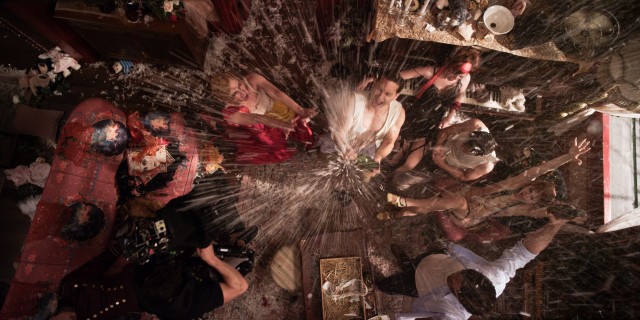
The Great Gatsby brings the party to Riverside Park on July 22
Summer on the Hudson Picture Show: The Great Gatsby (Baz Luhrmann, 2013), Pier 1, Riverside Park South
Hudson RiverFlicks, Big Hit Wednesdays: Selma (Ana DuVernay, 2014), Pier 63, Hudson River Park, Chelsea Piers
Outdoor Cinema: Iron Crows (Bong-nam Park, 2009), with a prescreening performance by Bangladeafy, Socrates Sculpture Park
Thursday, July 23
Passport Thursdays – Taiwan: Taiwanese Music Ensemble of New York, Zone Pro Site: The Moveable Feast (Zung Pou Si, 2013), Queens Museum
Summer Movie Series: Close Encounters of the Third Kind (Steven Spielberg, 1977), introduced by Dr. Steve B. Howell, the Intrepid Sea, Air & Space Museum
Urban Drive-In: Hester Street (Joan Micklin Silver, 1975), Abrons Arts Center
SyFy Movies with a View: Attack the Block (Joe Cornish, 2011), Pier 1, Brooklyn Bridge Park
Friday, July 24
Films on the Green: La Dérive (Paula Delsol, 1964), Transmitter Park
Hudson RiverFlicks, Family Fridays: Pee Wee’s Big Adventure (Tim Burton, 1985), Pier 46, Hudson River Park, Greenwich Village
Saturday, July 25
Roosevelt Island’s Outdoor Summer Movie Series: The Wiz (Sidney Lumet, 1978), Firefighters Field
Monday, July 27
Summer of Music: Ziggy Stardust and the Spiders from Mars (D. A. Pennebaker, 1973), introduced by D. A. Pennebaker, preceded by Night of 1000 Bowies’ Dance Party and Look-a-Like Contest with DJ Cosmo Baker, Reel Harlem: The Historic Harlem Parks Film Festival, Morningside Park
Bryant Park Summer Film Festival: Footloose (Herbert Ross, 1984), Bryant Park Lawn
Coney Island Flicks on the Beach: Indiana Jones and the Temple of Doom (Steven Spielberg, 1984), West Tenth St.
Tuesday, July 28
Summer Movie Night: How to Train Your Dragon 2 (Dean DeBlois, 2014), Swindler Cove, Sherman Creek
Red Hook Flicks: Trouble in Little China (John Carpenter, 1986), Valentino Pier
Wednesday, July 29
SummerScreen: Dazed and Confused (Richard Linklater, 1993), McCarren Park
Summer on the Hudson Picture Show: Beasts of the Southern Wild (Behn Zeitlin, 2012), Pier 1, Riverside Park South
Hudson RiverFlicks, Big Hit Wednesdays: St. Vincent (Theodore Melfi, 2014), Pier 63, Hudson River Park, Chelsea Piers
Outdoor Cinema: Kings of the Wind & Electric Queens (Gaspard Kuentz & Cédric Dupire, 2015), with a prescreening performance, Socrates Sculpture Park
Thursday, July 30
Passport Thursdays – India: Parul Shah Dance Company, Haider (Vishal Bhardwaj, 2014), Queens Museum
Rooftop Films at Brookfield Place: Animation Block Party, with Almost There (Julia Glassman), Meanwhile (Stephen McNally), Beach Flags (Sarah Saidan), Aubade (Mauro Carraro), Little Doorman (Matt Marblo), Stella Nova (Ted Wiggin), Positronic (Ryan Mauskopf), Itch (Su-An Ng), Harvey Beaks (C. H. Greenblatt), and sneak peaks from Dreamworks TV, 230 Vesey St., live music at 7:30, films at 8:45
Summer Movie Series: Wall-E (Andrew Stanton, 2008), the Intrepid Sea, Air & Space Museum
CANCELED DUE TO WEATHER: Urban Drive-In: Crossing Delancey (Joan Micklin Silver, 1988), Abrons Arts Center
SyFy Movies with a View: Clue (Jonathan Lynn, 1985), Pier 1, Brooklyn Bridge Park
Friday, July 31
Films on the Green: La Collectionneuse (Eric Rohmer, 1967), Transmitter Park
Hudson RiverFlicks, Family Fridays: Annie (Will Gluck, 2014), Pier 46, Hudson River Park, Greenwich Village
Rooftop Films at Brookfield Place: Racing Extinction (Louie Psihoyos, 2015), 230 Vesey St., live music at 7:30, films at 8:45
Lincoln Center Out of Doors — “Silent” Movie: Rocky Horror Picture Show (Jim Sharman, 1975), Damrosch Park Bandshell, 11:45
Saturday, August 1
Lincoln Center Out of Doors: A Celebration of the Life of Geoffrey Holder, with the panel discussion “The Life and Work of Geoffrey Holder” and screening of documentary Carmen and Geoffrey (Nick Doob, 2005) and rare archival footage, Elinor Bunin Munroe Film Center, 1:00
Rooftop Films at Brookfield Place: Stop Making Sense (Jonathan Demme, 1999), 230 Vesey St., live music at 7:30, films at 8:45
Monday, August 3
Bryant Park Summer Film Festival: Marathon Man (John Schlesinger, 1976), Bryant Park Lawn
Coney Island Flicks on the Beach: Big Hero 6 (Chris Williams, 2014), West Tenth St.
Tuesday, August 4
Movie Nights in the Rockaways: Back to the Future Part II (Robert Zemeckis, 1989), Beach 17th St. & Seagirt Blvd.
Red Hook Flicks: When We Were Kings (Leon Gast, 1996), Valentino Pier
Nitehawk Presents BuzzFeed Throwback Theater: Twentieth anniversary screening of Mallrats (Kevin Smith, 1995), preceded by a DJ set by Steve Reynolds and a Q&A with Smith and costar Jason Mewes, 50 Kent, Brooklyn
Wednesday, August 5
Outdoor Cinema — Cold Conflicts: Swedish Short Films, with I Turn to You (Victor Lindgren, 2015), Bath House (Niki Lindroth von Bahr, 2014), and Pussy Have the Power (Lovisa Sirén, 2014), with a prescreening performance, Socrates Sculpture Park
Free Movies in the Park: Big Hero 6 (Chris Williams, 2014), Flushing Meadows Corona Park
SummerScreen: Jurassic Park (Steven Spielberg 1993), McCarren Park
Summer on the Hudson Picture Show: Moonrise Kingdom (Wes Anderson, 2012), Pier 1, Riverside Park South
Hudson RiverFlicks, Big Hit Wednesdays: The Hunger Games: Mockingjay Part 1 (Francis Lawrence, 2014), Pier 63, Hudson River Park, Chelsea Piers
Thursday, August 6
Passport Thursdays – Colombia: M.A.K.U. Sound System, Mateo (Maria Gamboa, 2014), Queens Museum
SyFy Movies with a View: Friday (F. Gary Gray, 1995), Brooklyn Bridge Park
Friday, August 7
Hudson RiverFlicks, Family Fridays: Jumanji (Joe Johnston, 1995), Pier 46, Hudson River Park, Greenwich Village
Saturday, August 8
Roosevelt Island’s Outdoor Summer Movie Series: Cat on a Hot Tin Roof (Richard Brooks, 1958), Firefighters Field
Monday, August 10
Bryant Park Summer Film Festival: Desk Set (Walter Lang, 1957), Bryant Park Lawn
Roosevelt Island’s Outdoor Summer Movie Series: A Streetcar Named Desire (Elia Kazaon, 1951), Firefighters Field
Coney Island Flicks on the Beach: Mrs. Doubtfire (Chris Columbus, 1993), West Tenth St.
Tuesday, August 11
Summer Movie Night: Flight of the Navigator (Randal Kleiser, 1986) 103rd St. Community Garden
Rooftop Films @ Bronx Terminal Market: Big Hero 6 (Chris Williams, 2014), Bronx Terminal Market
Red Hook Flicks: High Fidelity (Stephen Frears, 2000), Valentino Pier
Wednesday, August 12
Outdoor Cinema: Wadjda (Haifaa al-Monsour, 2012) and Me and My Moulton (Torill Kove, 2014), with a prescreening performance by Nashaz with Shelley Thomas, Socrates Sculpture Park
SummerScreen: Audience Pick, McCarren Park
Summer on the Hudson Picture Show: Dr. Seuss’ The Lorax (Chris Renaud &Kyle Balda, 2012), Pier 1, Riverside Park South
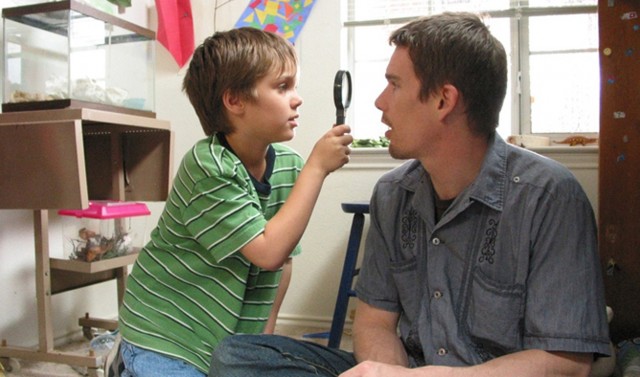
A young boy grows up before our eyes in BOYHOOD
Hudson RiverFlicks, Big Hit Wednesdays: Boyhood (Richard Linklater, 2014), Pier 63, Hudson River Park, Chelsea Piers
Thursday, August 13
Passport Thursdays – South Korea: Korean Traditional Music & Dance Center, Miss Granny (Hwang Dong-hyuk, 2014), Queens Museum
Summer on the Hudson Picture Show Extension: The Fantastic Mr. Fox (Wes Anderson, 2009), Riverside Park, 72nd Track and Lawn
SyFy Movies with a View: Dr. Strangelove or: How I Learned to Stop Worrying and Love the Bomb (Stanley Kubrick, 1964), Pier 1, Brooklyn Bridge Park
Friday, August 14
Hudson RiverFlicks, Family Fridays: Paddington (Paul King, 2015), Pier 46, Hudson River Park, Greenwich Village
Monday, August 17
Outdoor Movie Night: Frozen (Jennifer Lee & Chris Buck, 2013), Touchdown of the 103rd St. Footbridge, Randall’s Island Park
Bryant Park Summer Film Festival: Chinatown (Roman Polanski, 1974), Bryant Park Lawn
Coney Island Flicks on the Beach: Guardians of the Galaxy (James Gunnn, 2014), West Tenth St.
Tuesday, August 18
Summer Movie Night: An American Tail (Don Bluth, 1986), Westervelt Community Garden
Red Hook Flicks: The Incredibles (Brad Bird, 2004), Valentino Pier
Wednesday, August 19
Outdoor Cinema: Alice (Jan Svankmajer, 1988), with a prescreening performance by Xeon and Oaklander, Socrates Sculpture Park
Free Movies in the Park: Guardians of the Galaxy (James Gunn, 2014), Flushing Meadows Corona Park
Hudson RiverFlicks, Big Hit Wednesdays: Interstellar (Christopher Nolan, 2014), Pier 63, Hudson River Park, Chelsea Piers
Thursday, August 20
Passport Thursdays – South Africa: Azanian People’s Movement, Felix (Roberta Durrant, 2013), Queens Museum
SyFy Movies with a View: Dazed and Confused (Richard Linklater, 1993), Brooklyn Bridge Park
Friday, August 21
Hudson RiverFlicks, Family Fridays: Hook (Steven Spielberg, 1991), Pier 46, Hudson River Park, Greenwich Village
Monday, August 24
Bryant Park Summer Film Festival: Back to the Future (Robert Zemeckis, 1985), Bryant Park Lawn
Coney Island Flicks on the Beach: film TBA, West Tenth St.
Tuesday, August 25
Central Park Conservancy Film Festival: Fame (Alan Parker, 1980), Sheep Meadow and the 72nd St. Cross Drive, beginning with a DJ at 6:30
Roosevelt Island’s Outdoor Summer Movie Series: Singin’ in the Rain (Stanley Donen & Gene Kelly, 1952), Firefighters Field
Summer Movie Night: E.T. The Extra-Terrestrial (Steven Spielberg, 1982), Swindler Cove, Sherman Creek
Red Hook Flicks Neighborhood Choice: The Bad News Bears (Michael Ritchie, 1976), Valentino Pier
Wednesday, August 26
Central Park Conservancy Film Festival: The Blues Brothers (John Landis, 1980), Sheep Meadow and the 72nd St. Cross Drive, beginning with a DJ at 6:30
Outdoor Cinema: Gainsbourg: A Heroic Life (Joann Sfar, 2010), with a prescreening performance by Ginkgoa, Socrates Sculpture Park
Free Summer Movies: Big Hero 6 (Chris Williams, 2014), Highland Park
Thursday, August 27
Central Park Conservancy Film Festival: Airplane! (Jim Abrahams, Jerry Zucker & David Zucker, 1980), Sheep Meadow and the 72nd St. Cross Drive, beginning with a DJ at 6:30
SyFy Movies with a View: Die Hard (John McTiernan, 1988), Brooklyn Bridge Park
Friday August 28
Central Park Conservancy Film Festival: Raging Bull (Martin Scorsese, 1980), Sheep Meadow and the 72nd St. Cross Drive, beginning with a DJ at 6:30
Saturday, August 29
Central Park Conservancy Film Festival: Superman II (Richard Donner & Richard Lester, 1980), Sheep Meadow and the 72nd St. Cross Drive, beginning with a DJ at 6:30
Tuesday, September 1
Red Hook Flicks: Goodfellas (Martin Scorsese, 1990), Valentino Pier
Wednesday, September 2
Free Summer Movies: Big Hero 6 (Chris Williams, 2014), George Seuffert Bandshell, Forest Park
Thursday, September 10
Films on the Green: The Rabbi’s Cat (Joann Sfar & Antoine Delesvaux, 2012), Columbia University at 116th St.
 At the beginning of Know How, graffiti-style words announce, over shots of the Manhattan skyline at night, “We are a group of foster care youth. We came together to change our lives and communities. We wrote and performed a musical based on our lives. We adapted our musical into this film.” Now, before you stop reading this because you figure this will be a self-serving, melodramatic vanity project made by a bunch of kids extolling a social cause, you need to understand something: Know How is a gripping little gem, a smart portrayal of the based-on-fact real-life problems experienced by underserved minority youth in New York’s foster-care system. The film, written (with the five main actors) and directed by Juan Carlos Piñeiro Escoriaza (Second Skin), follows Addie (Niquana Clark), Marie (Ebonee Simpson), Megan (Claribelle Pagan), Eva (Gabrielle Garcia), and Austin (Gilbert Howard) as they deal with sexual abuse, crime, drugs and alcohol, bullying, death, treatment centers, education, and the Administration for Children’s Services. They have battles with parents, grandparents, teachers, administrators, police, and lovers, facing turning points that will change their futures forever, from choosing to steal to trying to get into college. Made in conjunction with the Possibility Project, which “empowers teenagers to create a better world,” Know How is billed as a musical, but it’s really a gritty drama with hip-hop songs performed by the cast, which also includes Joshua Elijah Adams as Juice, Deshawn Brown as Trey, Michael Kareem Dew as James, Ainsley Brownie Henry as Desi, and Lee Jimenez as Kayla. Know How opens May 15 at Cinema Village, with producer Paul Griffin and various cast members participating in Q&As following the 3:00 and 7:00 shows on Friday and the 7:00 screening on Saturday.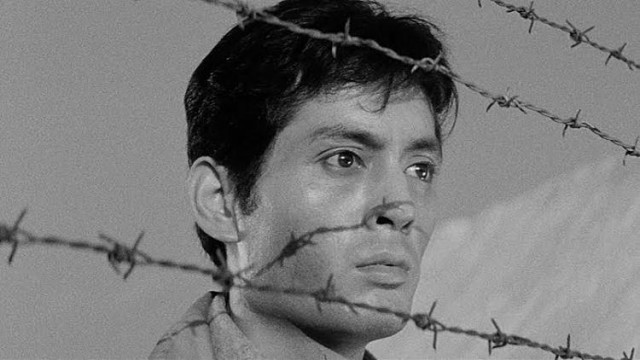
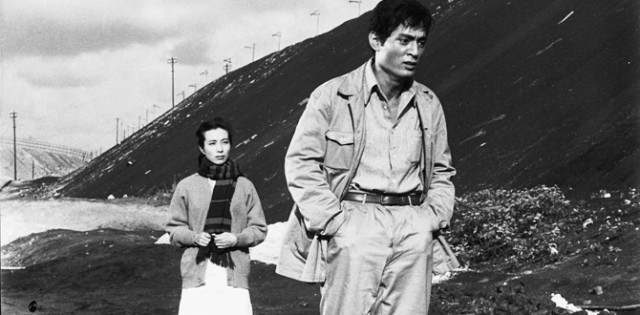
 Masako Kobayashi’s ten-hour epic, The Human Condition, based on a popular novel by Jumpei Gomikawa, is one of the most stunning achievements ever captured on film, and you can catch it all this weekend at the Museum of the Moving Image. Shot over the course of three years, the film follows one man’s harrowing struggle to never give up his humanity as he is dragged deeper and deeper into the morass of WWII. Tatsuya Nakadai is remarkable as Kaji, a man who believes in common decency, personal discipline, and, above all else, that humanity will always triumph. In the first part, No Greater Love, the steadfastly practical Kaji is hesitant to marry his sweetheart, Michiko (Michiyo Aratama), for fear that he will be called to serve in the Japanese army and might not come back to her alive. But when his detailed plan to treat workers fairly is accepted by the government, he is made labor supervisor of a mine in far-off Southern Manchuria, where hundreds of Chinese prisoners are brought in as well — and regularly starved, beaten, and, on occasion, brutally killed in cold blood. Kaji’s methods, which have close ties to communism, leading many to refer to him as a “Red,” anger both sides — the Japanese want to treat the workers like animals, and the Chinese prisoners don’t trust that he has their welfare in mind. A series of escape attempts threatens the stability of the labor camp and comes between Kaji and Michiko, whose undying love is echoed in the yearning, unfulfilled desire between a Korean prisoner and a Japanese prostitute. Broken promises, lies, and betrayal reach a tense conclusion that sets the stage for the second part of Kobayashi’s masterpiece.