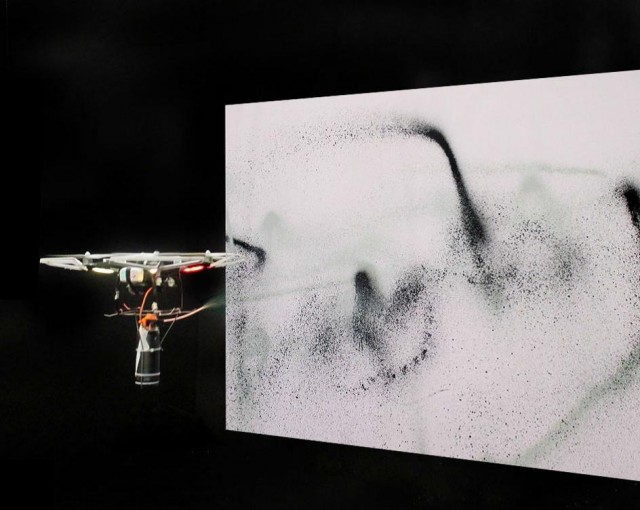
Drone painting is part of three-day Ideas City festival on the Lower East Side
NEW YORK CITY FESTIVAL FOR THE FUTURE
New Museum of Contemporary Art, the Aula, Sara D. Roosevelt Park, the Cooper Union, and other Lower East Side locations
May 28-30, free – $50
www.ideas-city.org
In his 1972 novel Invisible Cities, Cuban-born Italian journalist and author Italo Calvino wrote, “Cities, like dreams, are made of desires and fears, even if the thread of their discourse is secret, their rules are absurd, their perspectives deceitful, and everything conceals something else.” That quote is the inspiration for this year’s Ideas City festival, three days of panel discussions, debates, lectures, interactive art projects, music and theater, and other special presentations about the future of New York and other cosmopolitan areas. Founded by the New Museum, the festival begins on May 28 with an all-day ticketed conference, but most everything else is free, with many events requiring advance registration. On Friday, “A Performative Conference in Nine Acts” ($20) consists of nine performances at the Aula on Mulberry St. by such artists as Jordi Enrich Jorba, Penny Arcade, and Danny Hoch, while Saturday’s Street Program features outdoor projects in and around Sara D. Roosevelt Park. Below are only some of the highlights of what should be an intriguing and fascinating look at civic responsibility and how you can make a difference.
Thursday, May 28
Ideas City Conference, with screening by Rivane Neuenschwander, welcome address by Lisa Phillips and Joseph Grima, “Seeing through the Noise” keynote by Lawrence Lessig, “Hope and Unrest in the Invisible City” panel discussion with Jonathas de Andrade, Rosanne Haggerty, Yto Barrada, Micah White, and moderator Jonathan Bowles, “Make No Little Plans: Towards a Plausible Utopia” conversation with Bjarke Ingels and Kim Stanley Robinson, screening of Joshua Frankel’s Mannahatta: Studies for an Opera about Robert Moses and Jane Jacobs, “Make No Little Plans: Policy and the Invisible City” conversation with Rohit Aggarwala and Connie Hedegaard, “Full Disclosure and the Morality of Information” panel discussion with Trevor Paglen, Christopher Soghoian, Jillian C. York, and moderator Gabriella Coleman, screening of OpenStreetMap’s 2008, a Year of Edits, “Maps for the Invisible City” panel discussion with Steve Coast, William Rankin, and moderator Laura Kurgan, screening of Adam Magyar’s Stainless, 42 Street, introduction by Richard Flood, and “Finding the Invisible City” mayoral panel discussion with Annise Parker, Carmen Yulín Cruz, Svante Myrick, and moderator Kurt Andersen, Great Hall, the Cooper Union, 7 East Seventh St., free – $50, 9:30 am – 7:30 pm
ETH Zurich, Block Research Group, and others: Pop-Up Workshop + Gallery, ETH Zurich Future Garden and Pavilion, 34 East First St., 11:00 am – 6:00 pm
ETH Zurich Alumni — New York Chapter: The Invisible Feedback Loop: Architects, Infrastructure, and Public Space, ETH Zurich Future Garden and Pavilion, First Street Garden, 6:30
NEW INC and Deep Lab: Drone Painting Performance, 231 Bowery, 8:00
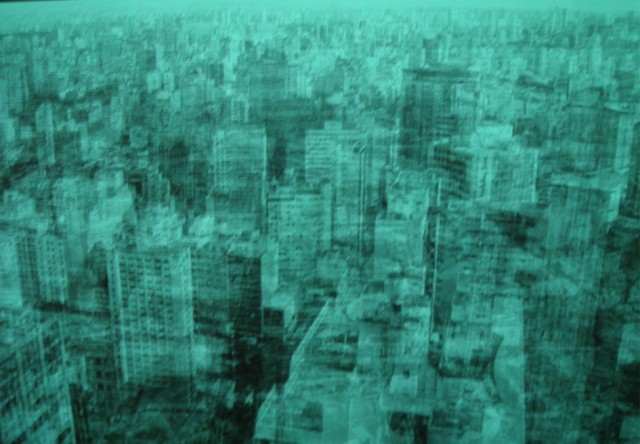
Social Innovation in the Data Age: Inventing a Truly Smart City takes place May 29 in the First Street Garden
Friday, May 29
PareUp, miLES, and others — Wasted Food x Wasted Space: A Morning Dialogue over Breakfast, ETH Zurich Future Garden and Pavilion, First Street Garden, yoga at 8:00, roundtable dialogues at 9:00
Swiss Think Tank W.I.R.E., SAVIDA, and others — Social Innovation in the Data Age: Inventing a Truly Smart City, ETH Zurich Future Garden and Pavilion, First Street Garden, 12 noon
Jordi Enrich Jorba: Nomadic Place, A Performative Conference in Nine Acts, the Aula, 268 Mulberry St., 7:30
NEW INC and Deep Lab: EMA Performance, 231 Bowery, 8:00
Urban Word, Ministry of Endangered Language, and others — The POEMobile: Quechua Poetry & Projections, with Doris Loayza, Inti Jimbo, and Inkarayku, Mulberry St. between Houston & Prince Sts., 8:00 pm – 12 midnight
United States Department of Arts and Culture — People’s State of the Union: “2015 Poetic Address to the Nation,” A Performative Conference in Nine Acts, the Aula, 268 Mulberry St., 8:10
Penny Arcade: Longing Lasts Longer, A Performative Conference in Nine Acts, the Aula, 268 Mulberry St., 8:40
Danny Hoch: Excerpt from Taking Over, A Performative Conference in Nine Acts, the Aula, 268 Mulberry St., 10:45
Sharifa Rhodes-Pitts, Michael Henry Adams, and others: Last Dance, A Performative Conference in Nine Acts, the Aula, 268 Mulberry St., 11:00 pm
Ursula Scherrer with Brian Chase and Kato Hideki: afloat, A Performative Conference in Nine Acts, the Aula, 268 Mulberry St., 11:59 pm – 3:00 am
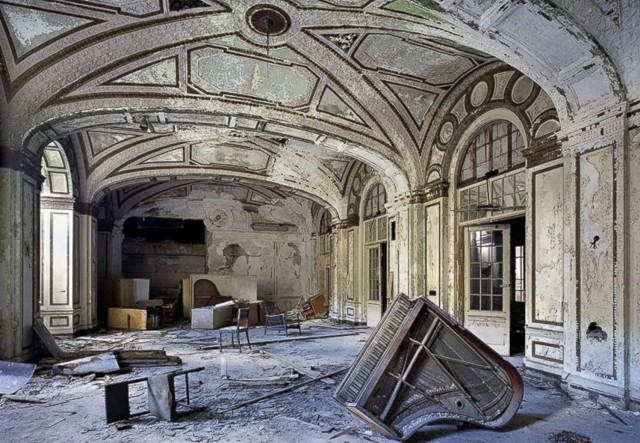
Abrons Arts Center invites visitors to “re-create an item, a feeling, or an idea they have lost in the city” (photo by Yves Marchand and Romain Meffre)
Saturday, May 30
Abrons Arts Center: The City of the Lost and Found, Street Program, Sara D. Roosevelt Park, 12 noon – 3:00 pm
Art in Odd Places: Recall, Street Program, Sara D. Roosevelt Park, 12 noon – 6:00 pm
Arte Institute, Albanian Institute New York: Surface Markers and I will play your soul, Street Program, Sara D. Roosevelt Park, 12 noon – 6:00 pm
Center for Urban Pedagogy (CUP): Sewer in a Suitcase, Street Program, Bowery between Houston & Stanton Sts., 12 noon – 6:00 pm
Circus for Construction, Austin + Mergold: The Wall Inside, Street Program, Sara D. Roosevelt Park, 12 noon – 6:00 pm
Davidson Rafailidis: “MirrorMirror,” Street Program, Sara D. Roosevelt Park at Stanton St., 12 noon – 6:00 pm
Emily Johnson/Catalyst: Conjuring Future Joy, Street Program, Bowery between Stanton & Rivington Sts., 12 noon – 6:00 pm
Hester Street Fair: Ideas City Food Court, with Brooklyn Soda Works, Doughnut Plant, Khao Man Gai NY, Luke’s Lobster, Meat Hook Sandwich, Mindful Juice, Oddfellows Ice Cream, Petee’s Pies, Red Star Sandwich Shop, and
Roberta’s, 12 noon – 6:00 pm
US Department of Arts and Culture, Endangered Language Alliance, and others: Ministry of Endangered Language, Street Program, Stanton St. & Bowery, 12 noon – 6:00 pm
Wojciech Gilewicz, Artists Alliance Inc. — RRRC: Reduce, Reuse, Recycle, Compost, Street Program, multiple locations, 12 noon – 6:00 pm
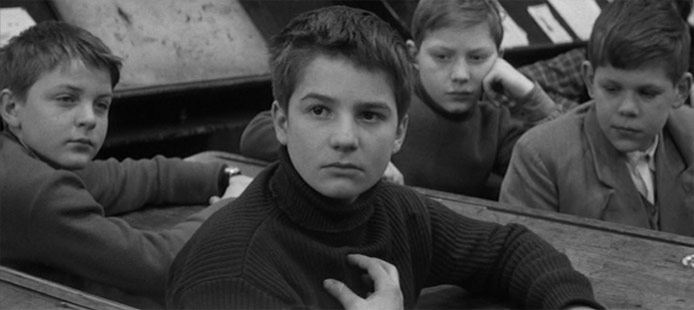
 “They won’t be happy you’re missing school like this,” a man tells fourteen-year-old Jean-Pierre Léaud as he’s auditioning for the part of Antoine Doinel in François Truffaut’s The 400 Blows. “It doesn’t matter, as long as I’m happy,” Léaud responds. The French New Wave classic marked the first of five films, including one short, in which Léaud played the iconic character, as audiences around the world followed his search for happiness. In The 400 Blows, Doinel is a tough twelve-year-old kid who loves Balzac, has never seen the ocean, and is always getting into trouble with his parents, who treat him more like a problem than a son. He is clearly very smart, but he does poorly in school, where he is harassed by his teacher, whom they call Sourpuss (Guy Decomble). One day when he decides to play hooky, he catches his mother (Claire Maurier) kissing another man, and instead of telling his father (Albert Rémy), he runs away from home, moving in with his friend René (Patrick Auffay), setting off a series of events that lead to a whole lot more trouble and an unforgettable final shot. The 400 Blows is one of the most intelligent films ever made about adolescence, a tender, honest portrayal of a mischievous kid who just wants to be understood. Léaud gives a wonderfully nuanced performance that makes Antoine a uniquely believable and sympathetic character even when he is making some very bad choices. The bittersweet autobiographical paean to childhood rebellion is also about escape of all kinds, beginning and ending with Henri Decaë’s camera racing away alongside Jean Constantin’s glorious score. The Adventures of Antoine Doinel series continued with 1962’s Antoine and Colette, 1968’s Stolen Kisses, 1970’s Bed and Board, and 1979’s Love on the Run, as the world grew up with Antoine, and Truffaut alter-ego Léaud.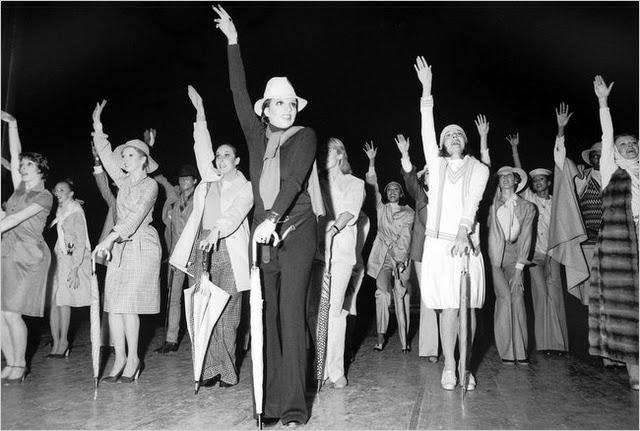
 The French Institute Alliance Française’s CinéSalon series “Haute Couture on Film,” part of the larger “Fashion at FIAF” festival, comes to a fitting close with Deborah Riley Draper’s fab 2012 doc, Versailles ’73: American Runway Revolution. In June 1919, Germany and the Allies signed a peace treaty at the palace of Versailles in France, where Louis XIV and his family lived until they had to flee in 1789. Nearly two hundred years later, the historic Château de Versailles was in disrepair, and American fashion doyenne Eleanor Lambert decided to do something about it, creating a high-society fundraiser featuring presentations by five French designers and five American designers. Deborah Riley Draper captures all of the backstage intrigue and surprising results in her debut full-length film, speaking with many of those who were on hand for what turned out to be an eye-opening, game-changing haute couture competition. “There are moments in history that change the course of history,” says Versailles ’73 model Alva Chinn. “That was a moment in history that changed the course of fashion history.” Among those sharing their perspectives on the Battle of Versailles, which pitted Yves Saint Laurent, Christian Dior, Hubert de Givenchy, Pierre Cardin, and Emanuel Ungaro against Anne Klein, Stephen Burrows, Bill Blass, Oscar de la Renta, and Halston, are Met Costume Institute curator-in-charge Harold Koda, Chambre Syndicale de la Haute Couture president Didier Grumbach, American actor and Halston assistant Dennis Christopher (Breaking Away), Château de Versailles chief curator Beatrix Saule, public relations executive and former Lambert assistant John Tiffany, Versailles ’73 patron Simone Levitt, former Halston assistant and Bill Blass executive Tom Fallon, photographer Charles Tracy, designer Burrows, and, most fabulously, participating models China Machado, Barbara Jackson, Charleen Dash, Pat Cleveland, Karen Bjornsen, Norma Jean Darden, Nancy North, Marisa Berenson, Bethann Hardison, Carla LaMonte, and Billie Blair, who are utterly delightful as they detail the fascinating goings-on.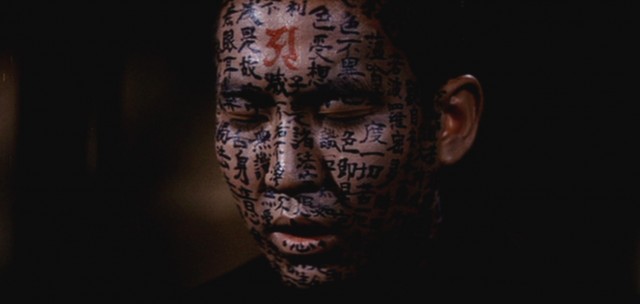
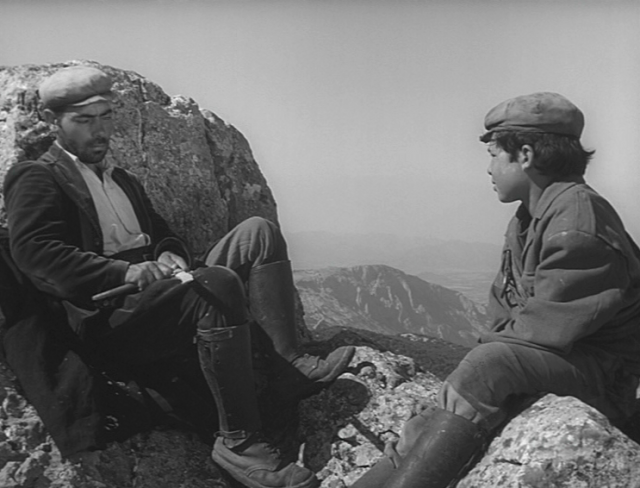
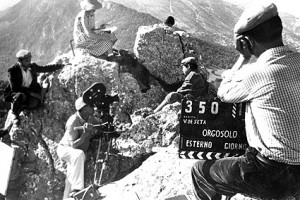
 “The souls of these men are still primitive. What is right according to their law is not right according to that of the modern world,” an unseen narrator explains at the beginning of Vittorio De Seta’s sadly overlooked debut feature, Banditi a Orgosolo, about shepherds scraping to get by in a vast mountainous region of Sardinia. In the black-and-white post-neorealist film, Michele (Michele Cossu) and his young brother, Peppeddu (Peppeddu Cuccu), tend to their flock of sheep, for which Michele still owes money. After a trio of former shepherds turned bandits shows up, Michele is visited by the police; not wanting to get involved, he lies to the carbinieri, insisting he has not seen anyone else. A firefight ensues between the police and the bandits, leaving one cop dead, and Michele and Peppeddu are on the lam, hunted by the police while desperately trying to hold on to their flock as they make their way through what Michele refers to as “bad places.” Winner of the New Cinema Award at the 1961 Venice Film Festival, Banditi a Orgosolo is a dark, bleak tale, shot by De Seta in nearly infinite gradations of black and white, Valentino Bucchi’s ominous score lurking in the background. Cossu, a nonprofessional actor from the region, portrays Michele with a stark earnestness and a clear understanding of the futility of his character’s situation. A former documentarian, De Seta (The Uninvited, Lettere dal Sahara), who wrote the screenplay with Vera Gherarducci, doesn’t make any epic proclamations about society’s ills, instead letting the story about changing times and abject poverty in Sardinia unfold at an often agonizing snail’s pace. The shepherds and their small villages, representative of the old ways, are being left behind, even as the state takes the place of centuries-old oppressors, doing what it can to keep them down and destitute.