this week in film and television

UHF FILM FEAST

UHF

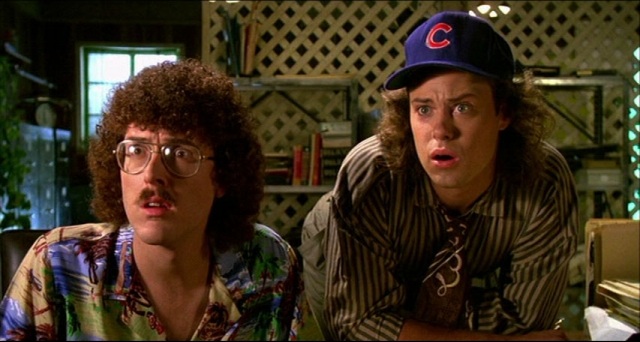
“Weird Al” Yankovic can’t believe special menu that is accompanying screening of cult classic at Nitehawk

UHF (Jay Levey, 1989)
Nitehawk Cinema
136 Metropolitan Ave. between Berry St. & Wythe Ave.
Tuesday, June 2, $75, 7:15
718-384-3980
www.nitehawkcinema.com

“Aw, what’s wrong, Bobbo?” George Newman (“Weird Al” Yankovic) says to Bobbo the Clown (David Bowe) in UHF. “I bet I know! You’re hungry, aren’t you? Have I got just the thing for you!” While George offers Bobbo what he thinks are “the mouth-watering, lip-smacking taste” of Mrs. Hackenberger’s Butter Cookies but in actuality are Yappy’s Dog Treats, Brooklyn’s Nitehawk Cinema will be serving up something a little more palatable when it screens the 1989 cult classic on June 2 in its ongoing Film Feasts series. As you watch Weird Al spoof such flicks as Raiders of the Lost Ark, Conan the Barbarian, and Rambo and low-budget kids’ television shows with the help of Michael Richards, Victoria Jackson, Kevin McCarthy, Emo Philips, Dr. Demento, Gedde Watanabe, David Proval, Billy Barty, and Fran Drescher, you can enjoy a seven-course menu with special drinks that features “Waiters of the Lost Ark” (Big Edna burger and Twinkie Wiener sandwich), “Philo’s Chemistry Set” (Prickly Pear Limoncello shot), “Mr. Butterfingers’ Red Face” (finger sandwich), “What’s it gonna be, Weaver?” (Wheel of Fish ceviche), “Good Watermelon” (Avua Cachaça, fresh watermelon), “Cuz They’re Real Fishy” (Margherita pizza with white anchovies), and “Fifth Blood Part 1” (bahn mi). Channel 62 never tasted so good.

HEAVEN KNOWS WHAT

HEAVEN KNOWS WHAT

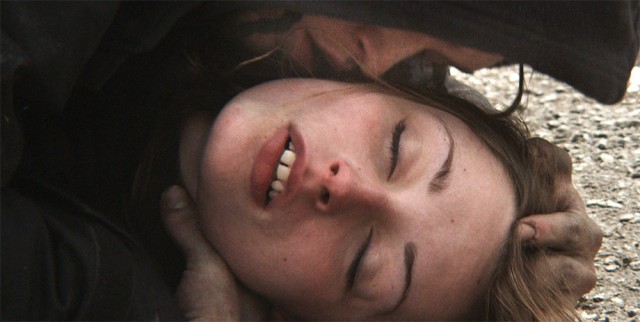
Arielle Holmes plays a fictionalized version of herself in the Safdie brothers’ HEAVEN KNOWS WHAT

HEAVEN KNOWS WHAT (Josh & Benny Safdie, 2014)
Landmark Sunshine Cinema
143 East Houston St. between First & Second Aves.
Opens Friday, May 29
212-330-8182
radiustwc.com
www.landmarktheatres.com

Josh and Benny Safdie’s Heaven Knows What is a harrowing tale about addiction and obsession, but it turns out that its back story is much more compelling than what shows up onscreen. Josh was researching a film about the Diamond District when he came upon Arielle Holmes, a nineteen-year-old temp assistant. He was determined to find out more about her and shortly discovered that she was a homeless junkie with a wild, unpredictable druggie boyfriend, Ilya. Josh and Benny, who had previous collaborated on such indie features as The Pleasure of Being Robbed and Daddy Longlegs and the documentary Lenny Cooke, commissioned Holmes to write her story, and she quickly delivered 150 pages that ultimately inspired the film, in which Holmes plays Harley, a young heroin addict living on the streets of New York City, spanging money (begging for spare change) for her next fix while in a combative relationship with Ilya (Caleb Landry Jones). Harley has done something to alienate Ilya, and she says she will kill herself to prove her love and devotion. He tells her to go ahead and do it, so she slits one of her wrists and is rushed to the hospital. That sets the stage for the rest of the lurid and sordid narrative, as Haley bounces between the cruel Ilya and her drug dealer, the far more easygoing and mellow Mike (real-life street legend Buddy Duress in his acting debut); she is also followed around by Skully (rapper Necro), who wants to save her from herself but is clearly in no position to do so.
Working with cowriter and coeditor Ronald Bronstein (Daddy Longlegs, Frownland) and cinematographer Sean Price Williams (Beetle Queen Conquers Tokyo, Frownland), writer-director Josh and editor-director Benny immerse the viewer in this squalid subculture, as the characters, played by a mix of professional actors and real street kids, are trapped in their dirty little world, almost like a death sentence. Williams uses a tripod and long lenses that give the feel of a handheld camera while keeping a distance, which combine with Isao Tomita’s electronic versions of Debussy to create an operatic quality, but there’s no escaping a story that has been told before, and better. The Safdies were influenced by the HBO documentary Life of Crime, Andrzej Żuławski’s 1984 Possession, and Martin Wise’s 1984 Streetwise, but Heaven Knows What most closely resembles Jerry Schatzberg’s far superior 1971 classic, The Panic in Needle Park, even taking place in some of the same locations. In fact, Josh asked Schatzberg for his blessing in making Heaven Knows What, which doesn’t really cover any new ground in the genre. Holmes does an admirable job playing a version of herself, and a virtually unrecognizable Jones (X-Men: First Class, Queen and Country) throws himself into the part of Ilya with a frightening abandon, but it all ends up more like Heaven: So What. Heaven Knows What opens May 29 at the Landmark Sunshine; the Safdie brothers will participate in a Q&A with Cat Marnell following the 7:30 screening on Friday and a Q&A with Lena Dunham after the 7:30 show on Saturday, and Dunham will stick around to introduce Saturday’s 10:00 screening as well.

SAN ANDREAS

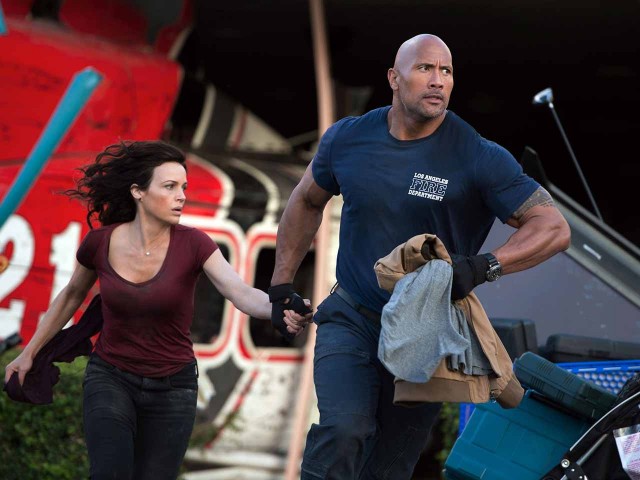
Carla Gugino and Dwayne Johnson

Emma (Carla Gugino) and Ray (Dwayne Johnson) search for their daughter in SAN ANDREAS

SAN ANDREAS (Brad Peyton, 2015)
Opens Thursday, May 28
www.sanandreasmovie.com

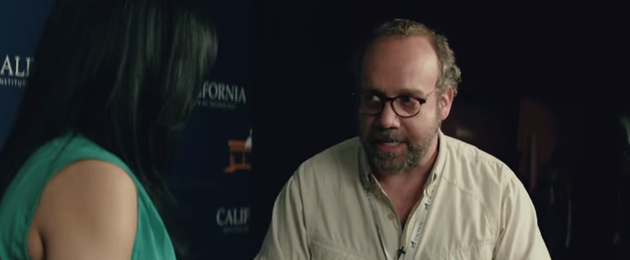
“The fault, dear Brutus, is not in our stars,” Cassius says in Julius Caesar, and indeed, San Andreas is not the fault of its stars, Dwayne “the Rock” Johnson and Carla Gugino, who try their best in this disaster of a disaster movie. Johnson is Ray Gaines, a Los Angeles Fire Department search-and-rescue chopper pilot going through a divorce with his wife, Emma (Gugino), who is shacking up with her new beau, ridiculously wealthy architecture mogul Daniel Riddick (Ioan Gruffudd). Ray and Emma clearly still care for each other, but they have been torn apart by the tragic loss of one of their daughters; they are both very close with their remaining daughter, Blake (Alexandra Daddario), who is about to head off for college in Northern California. But an earthquake in Nevada that destroys the Hoover Dam triggers further destruction in Los Angeles and San Francisco, and Ray is soon commandeering vehicle after vehicle to save his family. Meanwhile, Caltech seismologist Dr. Lawrence Hayes (Paul Giamatti) is tracking the quakes, putting his new theory to work to predict where and when the next rift will happen, and how devastating it will be, desperate to get his message to the public via an investigative journalist (Archie Panjabi) before it’s too late.

Oscar winner Paul Giamatti stars as a seismologist in disaster epic

Oscar winner Paul Giamatti stars as a seismologist in disaster epic

Director Brad Peyton, who previously teamed up with producer Beau Flynn and Johnson on Journey 2: The Mysterious Island, borrows elements from such disaster flicks as Airport, Tidal Wave, Titanic, The Towering Inferno, The Day After Tomorrow, The Poseidon Adventure, and, of course, Earthquake, but not even Sensurround could have helped the absurd plot twists that threaten to set new records on the ludicrosity scale, at times evoking the Kentucky Fried Movie spoof That’s Armageddon. (The often mind-numbing screenplay is by Carlton Cuse, who cocreated Lost and is currently behind such other television series as The Strain and The Returned.) Destruction of all kinds runs rampant throughout San Andreas, but death is barely acknowledged, which does a disservice to some of the real-life tragedies the film evokes, including Hurricane Katrina, the Fukushima disaster, and 9/11. Perhaps we have become inured to such horrific events, as Peyton gets so caught up in special effects — buildings collapsing, fiery explosions, giant floods, in 3D! — that he discounts the human aspect, except for his protagonists (which also include Hugo Johnstone-Burt and Art Parkinson as British brothers helping Blake), who are apparently immune to most of what is going on around them. There are plenty of unintentional moments of laughter — although it is funny that Ray’s rival for Emma’s affections is named Riddick, the name of the character portrayed by Vin Diesel, Johnson’s fellow bald action star — but through it all, the eminently likable Johnson and Gugino are actually steadfast and strong, turning in solid performances among all the maddening mayhem. And Sia’s version of the Mamas and the Papas’ “California Dreamin’” over the closing credits is pretty cool, too. But I still miss Sensurround.

TITANUS — A FAMILY CHRONICLE OF ITALIAN CINEMA: LE AMICHE

LE AMICHE

Michelangelo Antonioni’s LE AMICHE will screen May 29 & 31 at Titanus festival at Lincoln Center

LE AMICHE (Michelangelo Antonioni, 1955)
Film Society of Lincoln Center, Walter Reade Theater, Francesca Beale Theater
144/165 West 65th St. between Eighth Ave. & Broadway
Friday, May 29, 4:15, and Sunday, May 31, 9:00
Festival runs May 22-31
212-875-5050
www.filmlinc.com

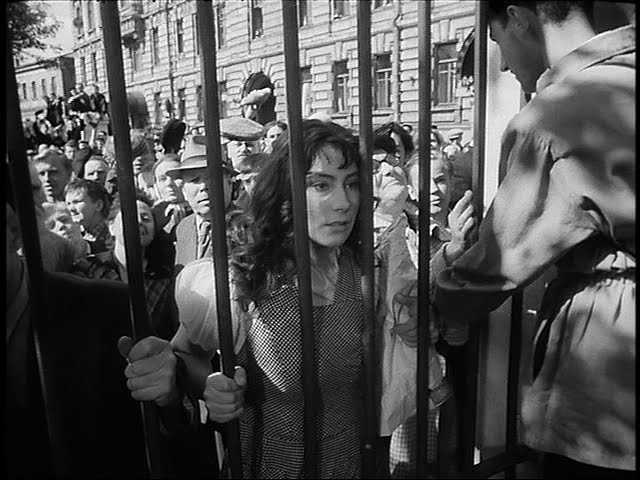
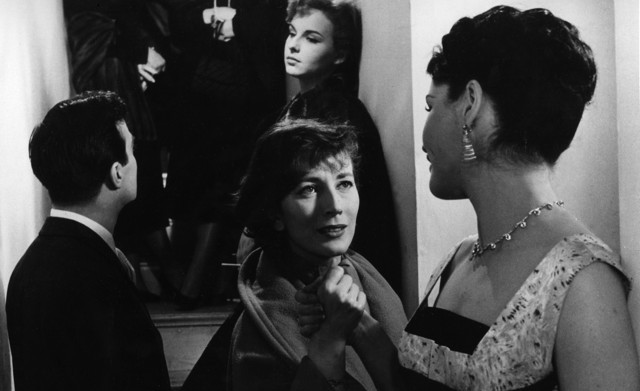
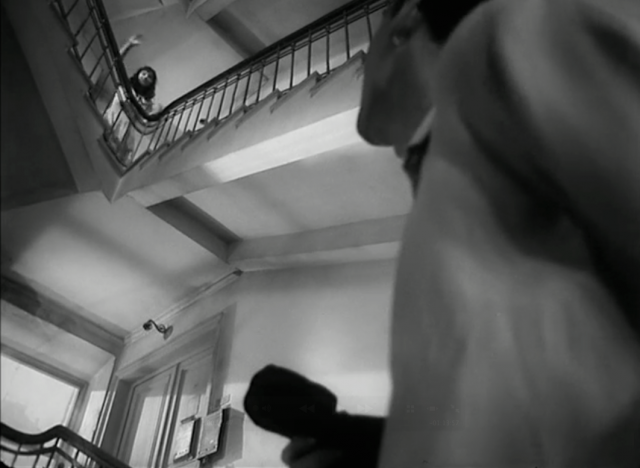
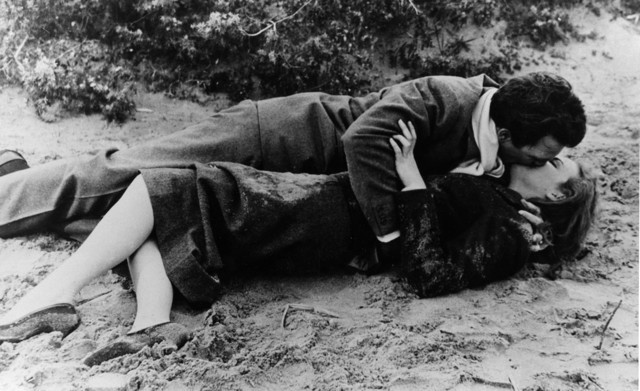
Winner of the Silver Lion at the 1955 Venice Film Festival, Michelangelo Antonioni’s sublimely marvelous Le Amiche follows the life and loves of a group of oh-so-fabulous catty, chatty, and ultra-fashionable Italian women and the men they keep around for adornment. Returning to her native Turin after having lived in Rome for many years, Clelia (Eleonora Rossi Drago) discovers that the young woman in the hotel room next to hers, Rosetta (Madeleine Fischer), has attempted suicide, thrusting Clelia into the middle of a collection of self-centered girlfriends who make the shenanigans of George Cukor’s The Women look like child’s play. The leader of the vain, vapid vamps is Momina (Yvonne Furneaux), who carefully orchestrates situations to her liking, particularly when it comes to her husband and her various, ever-changing companions, primarily architect Cesare (Franco Fabrizi). As Rosetta falls for painter Lorenzo (Gabriele Ferzetti), who is married to ceramicist Nene (Valentina Cortese), Clelia considers a relationship with Cesare’s assistant, Carlo (Ettore Manni), and the flighty Mariella (Anna Maria Pancani) considers just about anyone. Based on the novella Tra Donne Sole (“Among Only Women”) by Cesare Pavese, Le Amiche is one of Antonioni’s best, and least well known, films, an intoxicating and thoroughly entertaining precursor to his early 1960s trilogy, L’Avventura, La Notte, and L’Eclisse. Skewering the not-very-discreet “charm” of the Italian bourgeoisie, Antonioni mixes razor-sharp dialogue with scenes of wonderful ennui, all shot in glorious black and white by Gianni Di Venanzo.

LE AMICHE

LE AMICHE explores world of catty, chatty, ultra-fashionable women in Turin

Recently restored in 35mm, Le Amiche is a newly rediscovered treasure from one of cinema’s most iconoclastic auteurs. It is screening on May 29 at 4:15 and May 31 at 9:00 in the Film Society of Lincoln Center series “Titanus: A Family Chronicle of Italian Cinema,” a ten-day, twenty-three-film retrospective honoring the Italian production company founded by Gustavo Lombardo in 1904 and later run by his son, Goffredo, and grandson, Guido, that remained active until 1964 (although it continues to occasionally release work). The festival displays the wide range of Titanus’s output, including Dario Argento’s The Bird with Crystal Plumage, Camillo Mastrocinque’s Little Girls and High Finance, Raffaello Matarazzo’s The White Angel, Elio Petri’s Numbered Days, Federico Fellini’s The Swindle, Giorgio Bianchi’s Cronaca Nera, and Dino Risi’s The Sign of Venus, but not Luchino Visconti’s The Leopard; the tremendous cost of filming Giuseppe di Lampedusa’s epochal novel played a major role in the company’s downward fortune.

BLACK & WHITE ’SCOPE — INTERNATIONAL CINEMA: THE 400 BLOWS

Antoine Doinel (Jean-Pierre Léaud) can’t seem to stay away from trouble in François Truffaut’s autobiographical Nouvelle Vague classic THE 400 BLOWS

THE 400 BLOWS (LES QUATRE CENTS COUPS) (François Truffaut, 1959)
BAMcinématek, BAM Rose Cinemas
30 Lafayette Ave. between Ashland Pl. & St. Felix St.
Friday, May 29, 2:00, 4:30, 7:00 & 9:30
Series runs May 29 – June 16
718-636-4100
www.bam.org

“They won’t be happy you’re missing school like this,” a man tells fourteen-year-old Jean-Pierre Léaud as he’s auditioning for the part of Antoine Doinel in François Truffaut’s The 400 Blows. “It doesn’t matter, as long as I’m happy,” Léaud responds. The French New Wave classic marked the first of five films, including one short, in which Léaud played the iconic character, as audiences around the world followed his search for happiness. In The 400 Blows, Doinel is a tough twelve-year-old kid who loves Balzac, has never seen the ocean, and is always getting into trouble with his parents, who treat him more like a problem than a son. He is clearly very smart, but he does poorly in school, where he is harassed by his teacher, whom they call Sourpuss (Guy Decomble). One day when he decides to play hooky, he catches his mother (Claire Maurier) kissing another man, and instead of telling his father (Albert Rémy), he runs away from home, moving in with his friend René (Patrick Auffay), setting off a series of events that lead to a whole lot more trouble and an unforgettable final shot. The 400 Blows is one of the most intelligent films ever made about adolescence, a tender, honest portrayal of a mischievous kid who just wants to be understood. Léaud gives a wonderfully nuanced performance that makes Antoine a uniquely believable and sympathetic character even when he is making some very bad choices. The bittersweet autobiographical paean to childhood rebellion is also about escape of all kinds, beginning and ending with Henri Decaë’s camera racing away alongside Jean Constantin’s glorious score. The Adventures of Antoine Doinel series continued with 1962’s Antoine and Colette, 1968’s Stolen Kisses, 1970’s Bed and Board, and 1979’s Love on the Run, as the world grew up with Antoine, and Truffaut alter-ego Léaud.

Nominated for a Best Original Screenplay Oscar and earning Truffaut Best Director honors at Cannes, The 400 Blows is screening in Brooklyn on May 29, kicking off the BAMcinématek series “Black & White ’Scope: International Cinema,” an eighteen-day, twenty-eight-film festival featuring 1950s and ’60s black-and-white films shot in CinemaScope. The series includes such other Truffaut classics as Shoot the Piano Player and Jules and Jim in addition to five films by Akira Kurosawa, Alain Resnais’s Last Year at Marienbad, Kon Ichikawa’s Fires on the Plain, Federico Fellini’s La Dolce Vita, Andrei Tarkovsky’s Andrei Rublev, Joseph Losey’s The Damned, and Masahiro Shinoda’s Pale Flower, a veritable master’s level course in cinema studies.

IDEAS CITY: THE INVISIBLE CITY

Drone painting is part of three-day Ideas City festival on the Lower East Side

Drone painting is part of three-day Ideas City festival on the Lower East Side

NEW YORK CITY FESTIVAL FOR THE FUTURE
New Museum of Contemporary Art, the Aula, Sara D. Roosevelt Park, the Cooper Union, and other Lower East Side locations
May 28-30, free – $50
www.ideas-city.org

In his 1972 novel Invisible Cities, Cuban-born Italian journalist and author Italo Calvino wrote, “Cities, like dreams, are made of desires and fears, even if the thread of their discourse is secret, their rules are absurd, their perspectives deceitful, and everything conceals something else.” That quote is the inspiration for this year’s Ideas City festival, three days of panel discussions, debates, lectures, interactive art projects, music and theater, and other special presentations about the future of New York and other cosmopolitan areas. Founded by the New Museum, the festival begins on May 28 with an all-day ticketed conference, but most everything else is free, with many events requiring advance registration. On Friday, “A Performative Conference in Nine Acts” ($20) consists of nine performances at the Aula on Mulberry St. by such artists as Jordi Enrich Jorba, Penny Arcade, and Danny Hoch, while Saturday’s Street Program features outdoor projects in and around Sara D. Roosevelt Park. Below are only some of the highlights of what should be an intriguing and fascinating look at civic responsibility and how you can make a difference.

Thursday, May 28
Ideas City Conference, with screening by Rivane Neuenschwander, welcome address by Lisa Phillips and Joseph Grima, “Seeing through the Noise” keynote by Lawrence Lessig, “Hope and Unrest in the Invisible City” panel discussion with Jonathas de Andrade, Rosanne Haggerty, Yto Barrada, Micah White, and moderator Jonathan Bowles, “Make No Little Plans: Towards a Plausible Utopia” conversation with Bjarke Ingels and Kim Stanley Robinson, screening of Joshua Frankel’s Mannahatta: Studies for an Opera about Robert Moses and Jane Jacobs, “Make No Little Plans: Policy and the Invisible City” conversation with Rohit Aggarwala and Connie Hedegaard, “Full Disclosure and the Morality of Information” panel discussion with Trevor Paglen, Christopher Soghoian, Jillian C. York, and moderator Gabriella Coleman, screening of OpenStreetMap’s 2008, a Year of Edits, “Maps for the Invisible City” panel discussion with Steve Coast, William Rankin, and moderator Laura Kurgan, screening of Adam Magyar’s Stainless, 42 Street, introduction by Richard Flood, and “Finding the Invisible City” mayoral panel discussion with Annise Parker, Carmen Yulín Cruz, Svante Myrick, and moderator Kurt Andersen, Great Hall, the Cooper Union, 7 East Seventh St., free – $50, 9:30 am – 7:30 pm

ETH Zurich, Block Research Group, and others: Pop-Up Workshop + Gallery, ETH Zurich Future Garden and Pavilion, 34 East First St., 11:00 am – 6:00 pm

ETH Zurich Alumni — New York Chapter: The Invisible Feedback Loop: Architects, Infrastructure, and Public Space, ETH Zurich Future Garden and Pavilion, First Street Garden, 6:30

NEW INC and Deep Lab: Drone Painting Performance, 231 Bowery, 8:00

Social Innovation in the Data Age: Inventing a Truly Smart City takes place May 29 in the First Street Garden

Social Innovation in the Data Age: Inventing a Truly Smart City takes place May 29 in the First Street Garden

Friday, May 29
PareUp, miLES, and others — Wasted Food x Wasted Space: A Morning Dialogue over Breakfast, ETH Zurich Future Garden and Pavilion, First Street Garden, yoga at 8:00, roundtable dialogues at 9:00

Swiss Think Tank W.I.R.E., SAVIDA, and others — Social Innovation in the Data Age: Inventing a Truly Smart City, ETH Zurich Future Garden and Pavilion, First Street Garden, 12 noon

Jordi Enrich Jorba: Nomadic Place, A Performative Conference in Nine Acts, the Aula, 268 Mulberry St., 7:30

NEW INC and Deep Lab: EMA Performance, 231 Bowery, 8:00

Urban Word, Ministry of Endangered Language, and others — The POEMobile: Quechua Poetry & Projections, with Doris Loayza, Inti Jimbo, and Inkarayku, Mulberry St. between Houston & Prince Sts., 8:00 pm – 12 midnight

United States Department of Arts and Culture — People’s State of the Union: “2015 Poetic Address to the Nation,” A Performative Conference in Nine Acts, the Aula, 268 Mulberry St., 8:10

Penny Arcade: Longing Lasts Longer, A Performative Conference in Nine Acts, the Aula, 268 Mulberry St., 8:40

Danny Hoch: Excerpt from Taking Over, A Performative Conference in Nine Acts, the Aula, 268 Mulberry St., 10:45

Sharifa Rhodes-Pitts, Michael Henry Adams, and others: Last Dance, A Performative Conference in Nine Acts, the Aula, 268 Mulberry St., 11:00 pm

Ursula Scherrer with Brian Chase and Kato Hideki: afloat, A Performative Conference in Nine Acts, the Aula, 268 Mulberry St., 11:59 pm – 3:00 am

Abrons Arts Center invites The City of the Lost and Found (photo by Yves Marchand and Romain Meffre)

Abrons Arts Center invites visitors to “re-create an item, a feeling, or an idea they have lost in the city” (photo by Yves Marchand and Romain Meffre)

Saturday, May 30
Abrons Arts Center: The City of the Lost and Found, Street Program, Sara D. Roosevelt Park, 12 noon – 3:00 pm

Art in Odd Places: Recall, Street Program, Sara D. Roosevelt Park, 12 noon – 6:00 pm

Arte Institute, Albanian Institute New York: Surface Markers and I will play your soul, Street Program, Sara D. Roosevelt Park, 12 noon – 6:00 pm

Center for Urban Pedagogy (CUP): Sewer in a Suitcase, Street Program, Bowery between Houston & Stanton Sts., 12 noon – 6:00 pm

Circus for Construction, Austin + Mergold: The Wall Inside, Street Program, Sara D. Roosevelt Park, 12 noon – 6:00 pm

Davidson Rafailidis: “MirrorMirror,” Street Program, Sara D. Roosevelt Park at Stanton St., 12 noon – 6:00 pm

Emily Johnson/Catalyst: Conjuring Future Joy, Street Program, Bowery between Stanton & Rivington Sts., 12 noon – 6:00 pm

Hester Street Fair: Ideas City Food Court, with Brooklyn Soda Works, Doughnut Plant, Khao Man Gai NY, Luke’s Lobster, Meat Hook Sandwich, Mindful Juice, Oddfellows Ice Cream, Petee’s Pies, Red Star Sandwich Shop, and
Roberta’s, 12 noon – 6:00 pm

US Department of Arts and Culture, Endangered Language Alliance, and others: Ministry of Endangered Language, Street Program, Stanton St. & Bowery, 12 noon – 6:00 pm

Wojciech Gilewicz, Artists Alliance Inc. — RRRC: Reduce, Reuse, Recycle, Compost, Street Program, multiple locations, 12 noon – 6:00 pm

HAUTE COUTURE ON FILM — VERSAILLES ’73: AMERICAN RUNWAY REVOLUTION

Liza Minnelli

Liza Minnelli was among the participants when the Americans battled the French at the Palace of Versailles in 1973

CinéSalon: VERSAILLES ’73: AMERICAN RUNWAY REVOLUTION (Deborah Riley Draper, 2012)
French Institute Alliance Française, Florence Gould Hall
55 East 59th St. between Madison & Park Aves.
Tuesday, May 26, $13, 4:00 & 7:30
212-355-6100
www.fiaf.org
www.versailles73movie.com

The French Institute Alliance Française’s CinéSalon series “Haute Couture on Film,” part of the larger “Fashion at FIAF” festival, comes to a fitting close with Deborah Riley Draper’s fab 2012 doc, Versailles ’73: American Runway Revolution. In June 1919, Germany and the Allies signed a peace treaty at the palace of Versailles in France, where Louis XIV and his family lived until they had to flee in 1789. Nearly two hundred years later, the historic Château de Versailles was in disrepair, and American fashion doyenne Eleanor Lambert decided to do something about it, creating a high-society fundraiser featuring presentations by five French designers and five American designers. Deborah Riley Draper captures all of the backstage intrigue and surprising results in her debut full-length film, speaking with many of those who were on hand for what turned out to be an eye-opening, game-changing haute couture competition. “There are moments in history that change the course of history,” says Versailles ’73 model Alva Chinn. “That was a moment in history that changed the course of fashion history.” Among those sharing their perspectives on the Battle of Versailles, which pitted Yves Saint Laurent, Christian Dior, Hubert de Givenchy, Pierre Cardin, and Emanuel Ungaro against Anne Klein, Stephen Burrows, Bill Blass, Oscar de la Renta, and Halston, are Met Costume Institute curator-in-charge Harold Koda, Chambre Syndicale de la Haute Couture president Didier Grumbach, American actor and Halston assistant Dennis Christopher (Breaking Away), Château de Versailles chief curator Beatrix Saule, public relations executive and former Lambert assistant John Tiffany, Versailles ’73 patron Simone Levitt, former Halston assistant and Bill Blass executive Tom Fallon, photographer Charles Tracy, designer Burrows, and, most fabulously, participating models China Machado, Barbara Jackson, Charleen Dash, Pat Cleveland, Karen Bjornsen, Norma Jean Darden, Nancy North, Marisa Berenson, Bethann Hardison, Carla LaMonte, and Billie Blair, who are utterly delightful as they detail the fascinating goings-on.

The competition not only shed new light on American design and runway presentation but on the style and verve of black models, who brought a new energy to the world of international fashion. Narrated by King of Vintage Cameron Silver, the film features photographs and silent color footage from the event; it’s too bad that better material isn’t available from this seminal moment in twentieth-century haute couture, when the underdog Americans brought their A-game once again to the French. Versailles ’73: American Runway Revolution is being shown May 26 at 4:00 & 7:30; both screenings will be followed by a wine reception, and Macy’s fashion director Nicole Fischelis will introduce the later show.