Kei Morikawa’s engaging MAKEUP ROOM goes behind the scenes of a porn shoot
FESTIVAL OF NEW JAPANESE FILM: MAKEUP ROOM (MEIKU RUMU) (Kei Morikawa, 2015)
Japan Society
333 East 47th St. at First Ave.
Friday, July 10, $13, 8:45
Series runs July 9-19
212-715-1258
www.japansociety.org
 Former porn director Kei Morikawa’s Makeup Room is a charming love letter to the industry for which he purportedly made more than one thousand films. Originally written for the stage, the highly theatrical tale takes place in one darkly lit room over the course of several hours, as five actresses, including adult video veterans, get their makeup done, change wardrobe, eat, study the script, and talk about work and life in between scenes of the film they are making, Deep Heat, which is being shot off-camera in the same building, “an epic porn on a tiny budget.” Aki Morita stars as Kyoko, an experienced makeup artist who serves as a kind of den mother to Sugar Sato (Mariko Sumiyoshi), Kirisaki (Kanami Osako) Masami Ayase (Beni Ito), Masako (Nanami Kawakami), and Matsuko (Lily Kuribayashi), who all bring their own issues to the engaging dramedy, from worrying about how their newly done nails will affect a lesbian scene to discussing how their boyfriends and family react to their chosen career. None of them fit it into the stereotype of abused, drug-addicted, desperate women who have turned to porn because they have run out of options; to them, it is just a job, like any other. And Makeup Room never gets lewd or mundane; in fact, in many ways it could be about any five women who will be working together, except this group tends to take their clothes off and shower much more often and ask questions like “Why is she a star and me only a fetish actress?”

MAKEUP ROOM is a charming sleeper of a film set in the Japanese adult video industry
The men in the film are mere props, assistants getting lunch, managers bringing in their clients, the director who doesn’t seem to care much about the details. The only time Morikawa shows a man who is actually acting in the porn film they are making, he is a goofy dude with no sex appeal whatsoever. Cinematographer Shinji Kugimiya and Morikawa do a wonderful job of navigating the dark room, which doesn’t feel claustrophobic even though the camera never leaves it. The film deftly avoids becoming overly stagey or confining as it unfolds in what seems like real time. The acting, particularly on the part of the five women playing the porn actresses and Morita (Sharing, Shinobido), is uniformly excellent, especially Kawakami, who is a whirlwind of catty energy. Ostensibly Morikawa’s mainstream feature debut — and inspired by actual events — it’s a sweet and lovable little sleeper with its own unique sex appeal. Winner of the Grand Prix in the Fantastic Off-Theater Competition at the Yubari International Fantastic Film Festival, Makeup Room is having its world premiere July 10 at 8:45 at Japan Society’s annual Japan Cuts Festival of New Japanese Film, which runs July 9-19 and includes such other works as Hirobumi Watanabe’s And the Mud Ship Sails Away, Hiroshi Ando’s Undulant Fever, Lisa Takeba’s Haruko’s Paranormal Laboratory, and the closing-night selection, the international premiere of Juichiro Yamasaki’s Sanchu Uprising: Voices at Dawn.
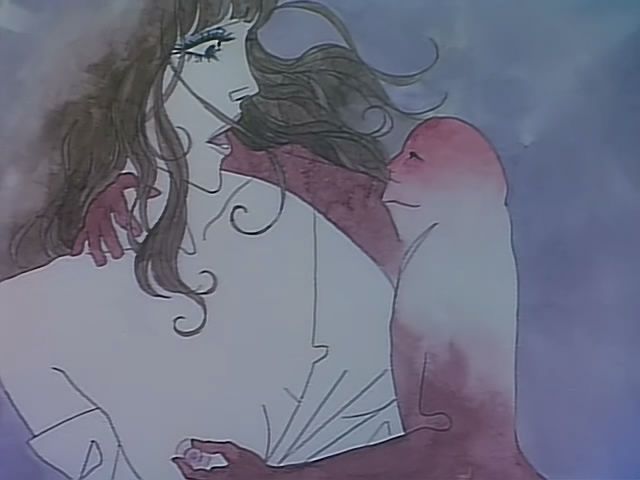
 The third film in Mushi Production’s adult Animerama trilogy, following A Thousand & One Nights and Cleopatra, a pair of collaborations between manga godfather Osamu Tezuka and Eiichi Yamamoto, Belladonna of Sadness is a gorgeously made grown-up fairy tale, a deeply moving erotic story about love and power, loyalty and revenge. Based on Jules Michelet 1862 book Satanism and Witchcraft, also known as La Sorcière, the film follows the misfortunes of Jeanne (voiced by Aiko Nagayama) and Jean (Katsutaka Ito), a couple “drunk on happiness” who present their marriage to the local lord (Masaya Takahashi), a harsh ruler — his evil elegantly expressed by his skeletal head. When Jean and Jeanne are unable to pay the absurdly high tax demanded by the lord, his evil wife (Shigaku Shimegi) decides that the lord and his court will have their way with the virgin Jeanne, then return the spent woman to Jean. Jeanne is raped by the lord in a harrowing, psychedelic, blood-soaked sequence and comes back home with an overwhelming melancholy. As Jean tries to deal with the horrible situation, Jeanne is visited by a small, red, phallus-shaped spirit (Tatsuya Nakadai) who claims to be part of her. “Your soul was screaming, ‘I want power. Someone help me,’” the strange creature says. But every time Jean and Jeanne start to put their life back together, terrible things happen to them, and it gets worse when the town believes that she might be in league with the devil.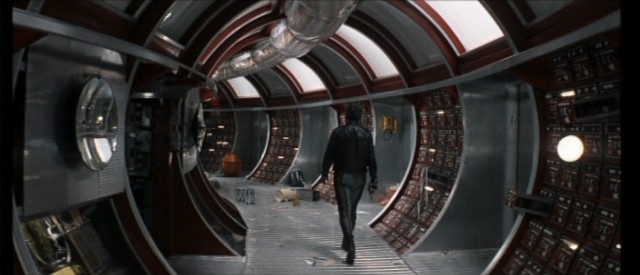



 Writer-director Brad Bird won Oscars for his animated features The Incredibles (2004) and Ratatatouille (2007), but the Simpsons veteran first made his mark with the charming 1999 sci-fi cartoon The Iron Giant. Based on the 1968 book The Iron Man by Ted Hughes, the animated film is set during the Cold War, with the general populace and the military fearful of a nuclear attack by the Soviet Union. So when rumors that a fifty-foot-tall iron giant (voiced by Vin Diesel) has fallen from the sky, the government wants to destroy it, but it is being hidden by young Hogarth Hughes (Eli Marienthal), who has saved its life. Hogarth keeps his new best friend a secret from his mother (Jennifer Aniston) and federal agent Kent Mansley (Christopher McDonald) with the help of the town beatnik, Dean McCoppin (Harry Connick Jr.), who takes a liking to Hogarth’s mom. The screenplay, written by Tim McCanlies (Secondhand Lions), plays with various genre clichés just enough to avoid being clichéd itself, instead making The Iron Giant a delightful, nearly flawless twist on the E.T. mythos, mixed in with a little Androcles & the Lion, The Day the Earth Stood Still, and even Frankenstein and King Kong. The film, which also features the voices of Cloris Leachman (Mrs. Tensedge), John Mahoney (General Rogard), and M. Emmet Walsh (Earl Stutz), is a treat for children and adults. Bird, meanwhile, has graduated to live action; his next movies were Mission: Impossible — Ghost Protocol, starring Tom Cruise, Jeremy Renner, and Simon Pegg, and Tomorrowland, with George Clooney and Hugh Laurie. The Iron Giant is screening for free on July 7 at dusk as part of the Movie Nights in the Rockaways series in O’Donohue Park, which continues August 4 with Robert Zemeckis’s Back to the Future 2. (For a day-by-day list of free summer movies throughout New York City, go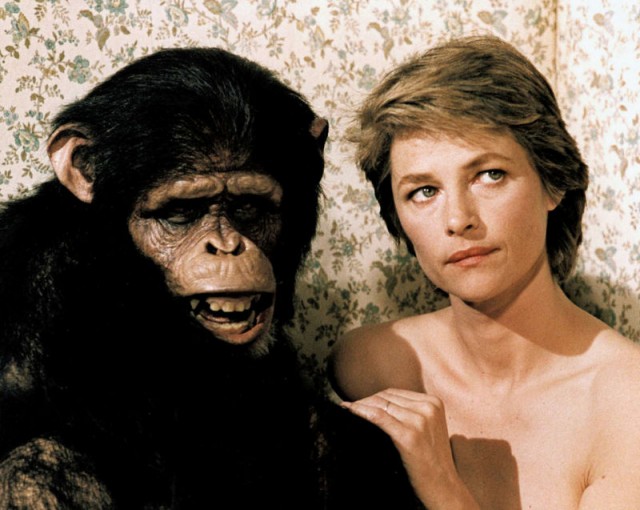
 It’s rather hard to tell how much Japanese auteur Nagisa Ôshima is monkeying around with his very strange 1986 movie, Max, Mon Amour, a love story between an intelligent, beautiful woman and a chimpanzee. The director of such powerful films as Cruel Story of Youth; Merry Christmas, Mr. Lawrence; Taboo; and In the Realm of the Senses seems to have lost his own senses with this surprisingly straightforward, tame tale of bestiality, a collaboration with master cinematographer Raoul Coutard, who shot seminal works by Truffaut and Godard; screenwriter Jean-Claude Carrière, who has written or cowritten nearly ninety films by such directors as Pierre Étaix (who plays the detective in Max), Luis Buñuel, Volker Schlöndorff, Philippe Garrel, and Miloš Forman; and special effects and makeup artist extraordinaire Rick Baker, the mastermind behind the 1976 King Kong, the Michael Jackson video Thriller, Ratboy, Hellboy, and An American Werewolf in London, among many others. Evoking Bedtime for Bonzo and Ed more than Planet of the Apes and Gorillas in the Mist, Max, Mon Amour is about a well-to-do English family living in Paris whose lives undergo a rather radical change when husband Peter Jones (Anthony Higgins) catches his elegant wife, Margaret (Charlotte Rampling), in bed with a chimp. Margaret insists that she and the chimp, Max, are madly in love and somehow convinces Peter to let her bring the sensitive yet dangerous beast home, which confuses their son, Nelson (Christopher Hovik), and causes their maid, Maria (Victoria Abril), to break out in ugly rashes. Peter, a diplomat, works for the queen of England, so as he prepares for a royal visit to Paris, he also has to deal with this new addition to his ever-more-dysfunctional family.