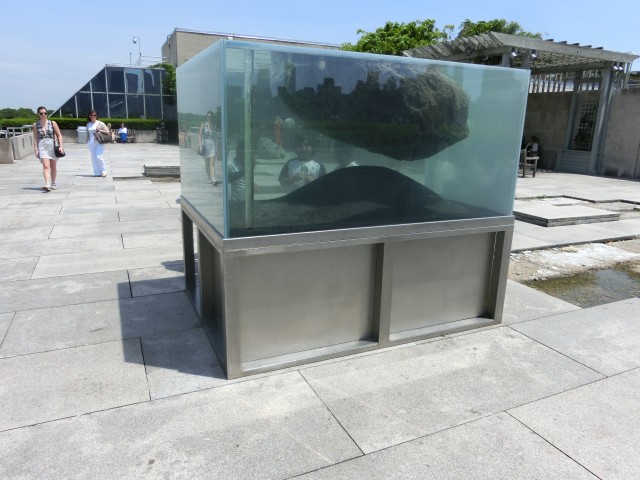
Pierre Huyghe’s Met Garden Rooftop Commission melds magic and science, ecology and archaeology (photo by twi-ny/mdr)
PIERRE HUYGHE: THE ROOF GARDEN COMMISSION
Metropolitan Museum of Art, Iris and B. Gerald Cantor Roof Garden
1000 Fifth Ave. at 82nd St.
Daily through November 1, recommended admission $12-$25
212-535-7710
www.metmuseum.org
rooftop slideshow
Native Parisian Pierre Huyghe is having quite a summer, with installations and films on view at both MoMA and the Met. Through November 1, his site-specific Roof Garden Commission at the latter will slowly devolve, affecting the surrounding cement slabs and dirt underneath it. A curious aquarium that seems to leak water, the piece resembles an architectural dig of sorts, an intervention on the popular Met roof that offers spectacular vistas and in past years has featured works by Jeff Koons, Ellsworth Kelly, Roxy Paine, and Dan Graham. Inside the aquarium, the 2002 Hugo Boss Prize winner has placed a large boulder of Manhattan schist that somehow is floating (perhaps referencing Koons’s basketballs?) along with some living lamprey and tadpole shrimp. Meanwhile, creatures are turning up in the mini-swamps that spring up amid the dirt and water around the central fixture as the paving stones are upended because of the evolving damage. (The water is not actually leaking from the fish tank but dripping separately.) Huyghe also works in some additional magic into his science-and-art environment; the aquarium occasionally clouds up so visitors can temporarily not see inside it. The ecological, archaeological work feels right at home amid the views of Central Park; as Huyghe notes in the small exhibition catalog, “Walking through Central Park, you realize that all events there — the stone, the frozen lake, the plane overhead, the maintenance worker — are equally necessary. The important thing is not necessarily the big event. There is an ecology in the broadest sense of the word; different states of life, each element playing a role — even sometimes antagonistically.”
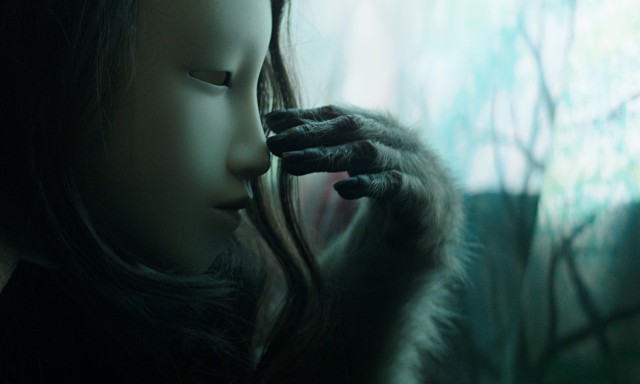
Pierre Huyghe, video still, HUMAN MASK, 2014 (photo courtesy of the artist, Hauser & Wirth, London, and Anna Lena Films, Paris)
UNTITLED (HUMAN MASK) (Pierre Huyghe, 2014)
Metropolitan Museum of Art, Gallery 916
1000 Fifth Ave. at 82nd St.
Daily through August 9, recommended admission $12-$25
www.metmuseum.org
Inside the Met, in Gallery 916, Huyghe’s intriguing nineteen-minute Untitled (Human Mask) is screening through August 9. The 2014 film follows what appears to at first to be a young girl as she wanders through an abandoned restaurant in Japan. However, the star is in fact a macaque monkey in a wig and a smooth, expressionless Noh-like white mask, inspired by the YouTube clip “Fuku-chan Monkey in wig, mask, works Restaurant!” Huyghe, who has worked with animals in masks before, shot the film in Fukushima shortly after the 2011 earthquake and tsunami. The monkey, one of the actual waitresses from the Kayabuki sake house in the viral video, makes her way through the restaurant as if wandering in a postapocalyptic landscape, evoking evolution and what humanity hath wrought on the earth. Despite the mask covering her face, she appears filled with emotion as she looks out the window and dreams of a green forest. It’s an eerie, affecting film that serves as a fascinating companion piece to Huyghe’s rooftop installation. On July 24, MetFridays — Conversation with an Educator will delve deeper into the work in an interactive dialogue with museum education assistant Marianna Siciliano.
![Pierre Huyghe. Untilled (Liegender Frauenakt) [Reclining female nude]. 2012. Concrete with beehive structure, wax, and live bee colony; figure: 29 1/2 x 57 1/16 x 17 11/16" (75 x 145 x 45 cm), base: 11 13/16 x 57 1/16 x 21 5/8" (30 x 145 x 55 cm), beehive dimensions variable. The Museum of Modern Art, New York. Purchase. © 2015 Pierre Huyghe](https://twi-ny.com/wp-content/uploads/2015/07/pierre-huyghe-untilled-e1436760945406.jpg)
Pierre Huyghe, “Untilled (Liegender Frauenakt) [Reclining female nude],” concrete with beehive structure, wax, and live bee colony, 2012 (The Museum of Modern Art, New York. Purchase. © 2015 Pierre Huyghe)
PIERRE HUYGHE: “UNTILLED (LIEGENDER FRAUENAKT)”
Museum of Modern Art
The Abby Aldrich Rockefeller Sculpture Garden
11 West 53rd St. between Fifth & Sixth Aves.
Through August 15, $25 (including admission to galleries and film screenings)
212-708-9400
www.moma.org
Meanwhile, over at MoMA, another outdoor sculpture incorporating living creatures and an indoor film by Huyghe are being highlighted. MoMA is unveiling its recent acquisition, Huyghe’s 2012 “Untilled (Liegender Frauenakt),” through August 15 in the Sculpture Garden, a reclining female nude whose head is a live bee colony. The work references classical Greek statuary (although it was actually cast from a bronze by Max Weber) as well as such concepts as the hive mentality and the controversy over the importance of the survival of the bees in relation to the future of the planet. The Italian honeybees have been overseen by Manhattan beekeeper Andrew Cote since April, and they’ve been getting busy under a shady tree in the garden. Cote and MoMA expect the colony to reach as many as 75,000 bees at its densest point, meaning they might provide a little extra buzz to the upcoming Summergarden: New Music for New York concerts in the Sculpture Garden on July 19 & 26.
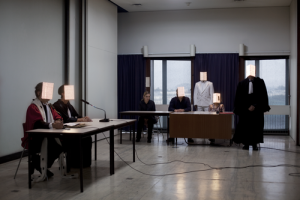
Pierre Huyghe’s 2009–10 THE HOST AND THE CLOUD will be shown at MoMA July 14 & 16 (photo courtesy the artist and Marian Goodman Gallery, New York)
MOMA PRESENTS: PIERRE HUYGHE’S THE HOST AND THE CLOUD
MoMA Film, Museum of Modern Art
The Lewis B. and Dorothy Cullman Education and Research Building
4 West 54th St. between Fifth & Sixth Aves.
Tuesday, July 14, and Thursday, July 16, 7:00
Tickets: $12, in person only, may be applied to museum admission within thirty days, same-day screenings free with museum admission, available at Film and Media Desk and online beginning at 9:30 am
212-708-9400
www.moma.org
The very welcome Huyghe infestation continues with two screenings of his rather cerebral 2009–10 film, The Host and the Cloud, on July 14 and 16 at 7:00 in the research and education building. The two-hour depiction of a controlled experiment is set in the abandoned Musée National des Arts et Traditions Populaires, focusing on the Day of the Dead, Valentine’s Day, and May Day, as different forms of entertainment, ritual, and political actions are performed over the course of one year by characters wearing LED masks. As always, Huyghe melds fiction and reality as he explores ethnographic representation. The official description notes, “Navigating through history within the museum, a group of people is exposed to influence, live situations that appear accidentally, simultaneously, or without any sense of order in the building. Nothing that takes place is staged. People can imitate, repeat, or transform these situations endlessly to variable intensity.” The July 14 show will be introduced by MoMA curators Stuart Comer (Department of Media and Performance Art) and Laura Hoptman (Department of Painting and Sculpture), while the July 16 screening will be introduced by Artist’s Institute director and curator Jenny Jaskey.
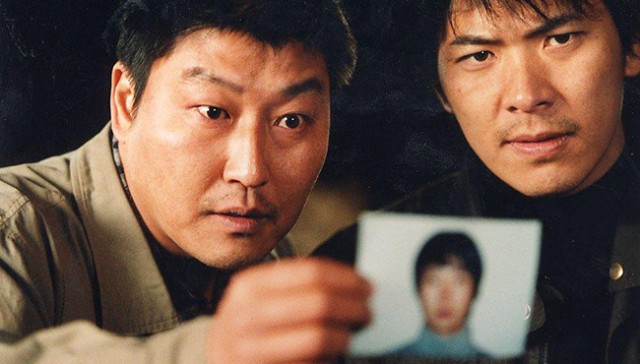
 Inspired by actual events, Bong Joon-ho’s Memories of Murder is a psychological thriller set in a rural South Korean town. With a serial killer on the loose, Seoul sends experienced inspector Suh (Kim Sang-kyung) to help with the case, which is being bungled by local detectives Park (Song Kang-ho) and Cho (Kim Roe-ha), who consistently tamper with evidence, bring in the wrong suspects, and torture them in both brutal and ridiculously funny ways. But as the frustration level builds and more victims are found, even Suh starts considering throwing away the book and doing whatever is necessary to catch the killer. Bong’s first major success, earning multiple awards at film festivals around the world, Memories of Murder is a well-paced police procedural that contains just enough surprises to overcome a few too many genre clichés. The film is beautifully shot by Kim Hyung-gu, from wide-open landscapes to a busy, crowded factory. But the film is dominated by Song’s (The Host, Snowpiercer) big, round face, a physical and emotional wonder whether he’s goofing around with a prisoner or dead-set on catching a criminal. Winner of numerous international film festival awards, Memories of Murder is screening July 18 & 25 as part of Film Forum’s “True Crime” series, which continues through August 5 with such other ripped-from-the-headlines favorites as Sidney Lumet’s Serpico and Dog Day Afternoon, Franceso Rosi’s The Mattei Affair, Fritz Lang’s M, and double features of Alfred Hitchcock’s Rope and Tom Kalin’s Swoon and Robert Wise’s The Body Snatcher and I Want to Live!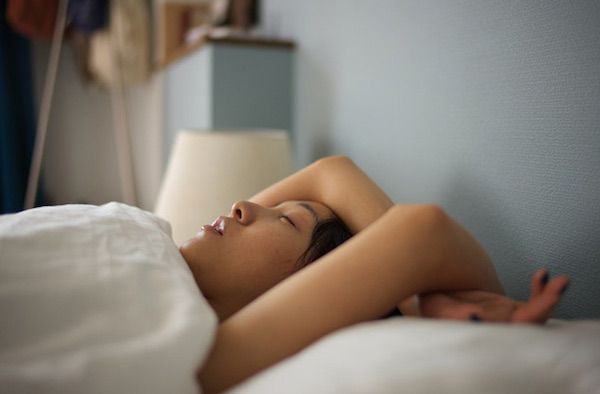
 Shingo Wakagi’s Asleep is a quiet gem of a film, a poignant drama about three women’s relationship with beds and sleep. Sakura Ando stars as Terako, a young woman who is sleeping most of her life away. The only time she wakes up and gets out of bed is when her married lover, the somewhat older Mr. Iwanaga (Arata Iura), calls her to make a date. Terako’s best friend and former roommate, Shiori (Mitsuki Tanimura), recently committed suicide shortly after complaining about the difficulties of her job as a soineya, providing companionship — but not sex — by lying in bed with strangers who do not want to sleep alone. And Terako soon discovers that Iwanaga’s wife is languishing in a hospital bed in a deep coma. As Terako cares more and more for Iwanaga, she finds it harder and harder to get out from under the covers, trying to hide from a life surrounded by loneliness and death.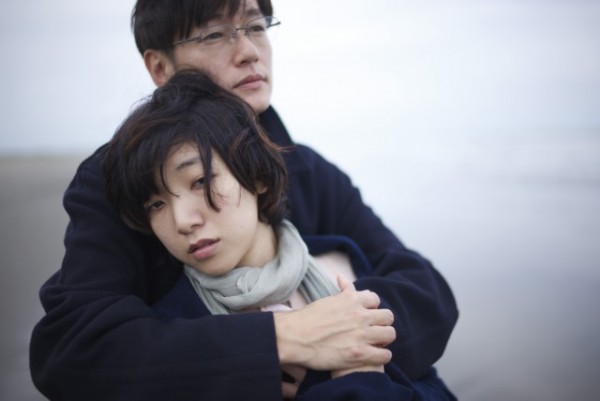
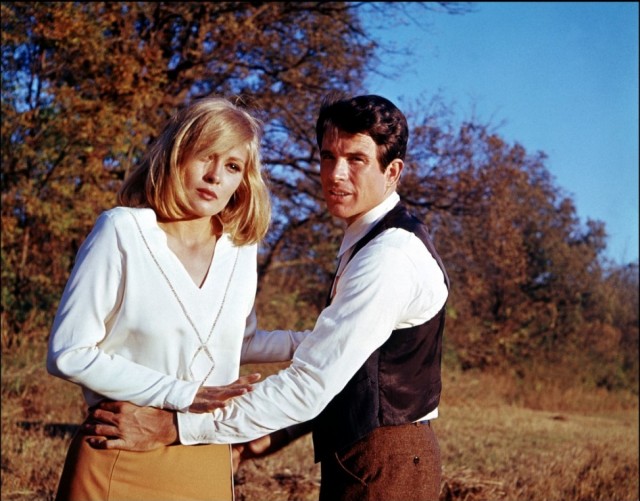
 Arthur Penn changed the course of Hollywood — and world cinema — in 1967 with Bonnie and Clyde, a film previously offered to such Nouvelle Vague luminaries as François Truffaut and Jean-Luc Godard. Cowritten by David Newman (Superman I-III) and Robert Benton (Kramer vs. Kramer), the film mythologizes the true story of depression-era bank robbers Clyde Barrow and Bonnie Parker, played magnificently by Warren Beatty and Faye Dunaway. At its heart, Bonnie and Clyde is a passionate yet unusual love story, filled with close-ups of the gorgeous Dunaway, who is first seen naked, running to her bedroom window confident and carefree, more a modern 1960s woman than a poor 1930s small-town waitress. Meanwhile, Barrow might know how to shoot a gun, but he’s a dud in bed; “I ain’t much of a lover boy,” he tells Bonnie early on, so their passion plays out in fast-moving car chases and shootouts rather than under the covers (while also playing off of Beatty’s already well-deserved reputation as a ladies’ man). They pick up an accomplice in gas-station attendant C. W. Moss (Michael J. Pollard) and are soon joined by Clyde’s brother, Buck (Gene Hackman), and his wife, Blanche (Oscar winner Estelle Parsons), and continue their rampage as heroic, happy-go-lucky hold-up artists, leading up to one of the most influential and controversial endings ever put on celluloid, an unforgettable finale of violent and poetic beauty. Penn (Little Big Man, Target), editor Dede Allen (The Hustler, Serpico), and Oscar-winning cinematographer Burnett Guffey (All the King’s Men, Birdman of Alcatraz) redefined the gangster picture with their creative use of slow motion, long takes, and crowded shots, defying Hollywood conventions in favor of unique and innovative storytelling devices, allowing the film to work on multiple levels. Nominated for ten Academy Awards, Bonnie and Clyde is screening July 17 & 18 as part of Film Forum’s “True Crime” series, which continues through August 5 with such other ripped-from-the-headlines favorites as Peter Jackson’s Heavenly Creatures, Terrence Malick’s Badlands, Leonard Kastle’s The Honeymoon Killers, and double features of John Milius’s Dillinger and Don Siegel’s Escape from Alcatraz and Richard Fleischer’s 10 Rillington Place and The Boston Strangler.
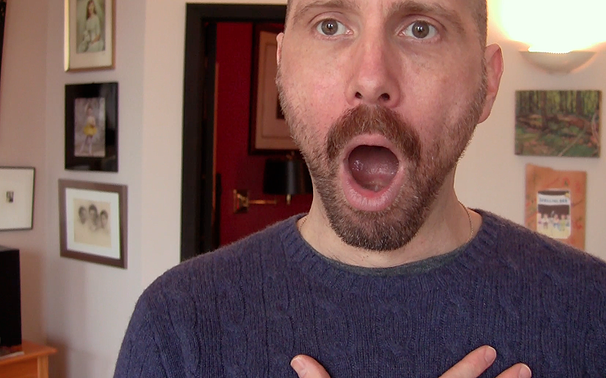
 About ten minutes into journalist David Thorpe’s absolutely charming yet emotionally bittersweet Do I Sound Gay?, he is at dinner with his best friends, Alberto and Sam, and the three are discussing the title question. It’s a fascinating conversation that is worth detailing extensively here. “I have the impression that you think it sounds bad,” Alberto says about David’s voice. “I interpret David’s feelings about this, and the feelings around this whole project, as bad. He has negative feelings about his voice, about the perception that it creates.” “And you don’t feel that at all yourself?” Sam asks. Alberto responds, “I have sort of a generic self-loathing that is created around my gayness. . . . . But I don’t think I can say it’s the only thing, or the main thing.” Finally, David chimes in, explaining, “I think I feel out of sync with my voice, and, at least it seems to me, that it’s anxiety about sounding too gay, so, okay, let’s see what it’s like to not sound gay, and maybe I’ll feel more in sync and maybe I’ll have some idea what my voice should sound like.” Alberto then gets to the heart of the matter, inquiring, “But you could also argue, why don’t you just accept how you sound?” And Alberto sums it all up: “We have never talked about this idea until you brought it up. I don’t know anybody else that I’ve talked to about it either. So I think there is this thing, obviously, that we all are aware of that hasn’t been spoken of. Maybe this is the elephant in the room.” David spends the rest of the film exploring the elephant in the room, meeting with speech therapists who examine his voice and teach him how to change it; talking to such out-of-the-closet gay icons as Dan Savage, Tim Gunn, Margaret Cho, David Sedaris, Don Lemon, and George Takei, who delve into their own gayness and how their voice is part of that; introducing us to a boy who was beaten up at school at a very young age because of his voice; and interviewing gay people on the street, who share their thoughts on whether they, or he, do or don’t sound gay, and whether that matters. Sedaris, whose short story “Go Carolina” served as inspiration for Thorpe, tells him, “I’m embarrassed to say this, but sometimes somebody will say, ‘I didn’t know you were gay.’ It’s like, Why does that make me feel good. I hate myself for thinking that. It’s very disturbing. I thought I was beyond that. What’s the problem if somebody assumes that I’m gay when I open my mouth? Why do I have a problem with that?”