Joe Strummer documentary is part of Julien Temple sidebar at “Sound + Vision” series at Lincoln Center
I WAS THERE: THE MUSIC DOCS OF JULIEN TEMPLE — JOE STRUMMER: THE FUTURE IS UNWRITTEN (Julien Temple, 2007)
Film Society of Lincoln Center, Walter Reade Theater
165 West 65th St. between Eighth Ave. & Broadway
Saturday, August 1, 3:30
Festival runs July 29 – August 7
212-875-5050
www.filmlinc.com
www.joestrummerthemovie.com
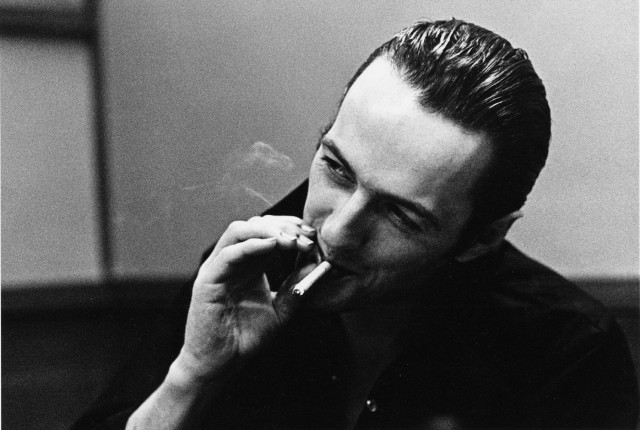
 Director Julien Temple, who has made two outstanding documentaries about the Sex Pistols (The Great Rock and Roll Swindle and The Filth and the Fury), turns his camera on Joe Strummer of the British punk group the Clash in The Future Is Unwritten. Temple collects remarkable home movies of Strummer, from his early days as young John Mellor, a career diplomat’s son, through his time as the leader of one of the most famous and controversial bands in the world and his death at the age of fifty from a congenital heart defect. Strummer’s friends and family gather around a campfire in Brooklyn’s Empire St.-Fulton Ferry Park and talk about Strummer’s life and career, sharing keen insight in a format that the musician loved; his campfire get-togethers came to be known as Strummerville, a place for people to assemble and discuss life, art, and anything else that came to mind. Temple adds lots of footage of the Clash in action, as well as clips from Strummer’s earlier band, the 101ers, made up of squatters fighting the power, and his last band, the Mescaleros. Temple also brings some of Strummer’s drawings to life, animating them in humorous ways. Strummer essentially narrates the film himself, as Temple includes audio excerpts from Strummer’s “Last Call” radio show and interviews he gave over the years. Temple, a close friend of Strummer’s, paints a fascinating portrait of the complex man, featuring stories from the likes of Bono, Johnny Depp, Flea, Mele Mel, Courtney Love Cobain, Martin Scorsese, Steve Jones, John Cusack, Matt Dillon, Steve Buscemi, Damien Hirst, Roland Gift, Don Letts, Mick Jones, and many others. And there’s lots of music as well, of course, including several versions of “White Riot.” The Future Is Unwritten is screening August 1 at 3:30 in the “I Was There: The Music Docs of Julien Temple” sidebar of Lincoln Center’s annual “Sound + Vision” series, which also includes The Filth and the Fury, The Clash: New Year’s Day ’77, Dave Davies: Kinkdom Come, Ray Davies: Imaginary Man, Glastonbury, Never Mind the Baubles: Christmas with the Sex Pistols, and The Liberty of Norton Folgate, with Temple on hand for various introductions and Q&As.
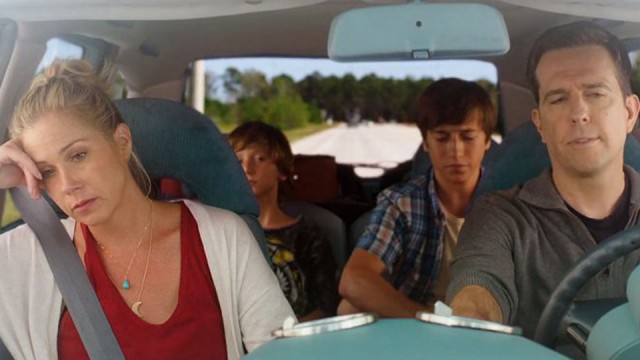
 John Francis Daley and Jonathan Goldstein’s Vacation is one of the most vile, insipid, insulting, mean-spirited, and offensive films ever made, the Human Centipede of comedies. This next-generation sequel to the first four theatrical movies in the popular series — which began in 1983 with National Lampoon’s Vacation and continued as the Griswold clan, featuring Chevy Chase as luckless dad Clark and Beverly D’Angelo as his sexy wife, Ellen, visited Europe and Vegas and celebrated Christmas as only they can — is an unmitigated disaster, a thoroughly repulsive trip through the dregs of nasty humor. Russ “Rusty” Griswold (Ed Helms), originally played by Anthony Michael Hall, is now all grown up and married to Debbie (Christina Applegate), who dreams of going to Paris. But Russ has a better idea — a drive cross-country with their children, the sensitive James (Skyler Gisondo) and the younger Kevin (Steele Stebbins), a cruel little asshole who bullies his older brother relentlessly, to visit Walley World, the ultimate destination of the first film. Russ rents a ridiculous blue Tartan Prancer, the “Honda of Albania,” and off they go on a series of absurd, disgraceful and, most unfortunately, unfunny adventures involving a steer, Debbie’s old sorority, a hot woman (fashion model Hannah Davis) in a red car, white-water rafting with a just-jilted guide (Charlie Day), hapless border guards (Tim Heidecker, Nick Kroll, Kaitlin Olson, and Michael Peña) at the Four Corners Monument, and Russ’s sister Audrey’s (Leslie Mann) very well hung conservative husband (Chris Hemsworth). I have to admit that I did laugh out loud three times, but those extremely brief respites do not make up for the rest of this abhorrent and repugnant monstrosity. Even cameos by Chase and D’Angelo ring false and fall completely flat. There was a sweet, playful charm to the original, written by John Hughes and directed by Harold Ramis and featuring the great Imogene Coca as Aunt Edna and Randy Quaid and Miriam Flynn as Ellen’s in-bred cousins, but there is nothing the least bit appealing about this ill-conceived sequel, written and directed by Goldstein and former Freaks & Geeks star Daley, who have previously cowritten Horrible Bosses, The Incredible Burt Wonderstone, and Cloudy with a Chance of Meatballs 2. At one point, the Griswolds take a break in what turns out to be a basin filled with raw sewage; Vacation will make you feel like you’ve just spent one hundred minutes in that rancid pond.
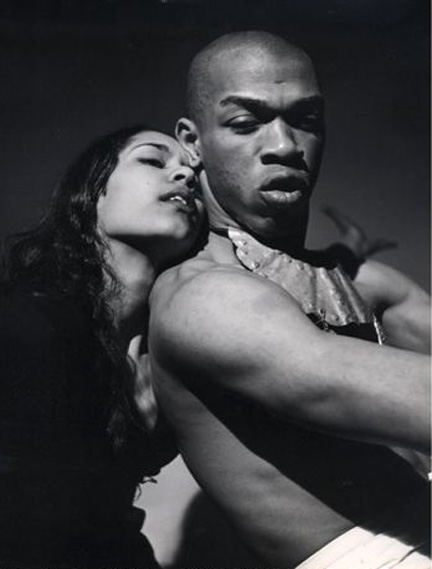
 Carmen & Geoffrey is an endearing look at Carmen de Lavallade and Geoffrey Holder’s lifelong love affair with dance — and each other. The New Orleans-born de Lavallade studied with Lester Horton and went to high school with Alvin Ailey, whom she brought to his first dance class. Best known as a pitchman for 7UP (the “uncola”) and playing the intriguing Baron Samedi in Live and Let Die, Trinidadian Holder was a larger-than-life gentle giant who was a dancer, choreographer, composer, costume designer, actor, stage director, writer, photographer, painter, and just about anything else he wanted to be. The two met when they both were cast in Truman Capote and Harold Arlen’s Broadway show House of Flowers in 1954, with Holder instantly falling in love with de Lavallade; they remained together until Holder’s death this past October at the age of eighty-four. Directors Linda Atkinson and Nick Doob combine amazing archival footage — of Eartha Kitt, Josephine Baker, Ulysses Dove, de Lavallade dancing with Ailey, and other splendid moments — with contemporary rehearsal scenes, dance performances, and interviews with such stalwarts as dance critic Jennifer Dunning, former Alvin Ailey artistic director Judith Jamison, and choreographer Joe Layton (watch out for his eyebrows), along with family members and Gus Solomons jr, who still works with de Lavallade, and Dudley Williams, who just died last month. The film was made on an extremely low budget, and it shows, but it is filled with such glorious footage that you’ll get over that quickly. Carmen & Geoffrey, along with additional rare archival footage, is screening August 1 as part of the free Lincoln Center Out of Doors program “A Celebration of the Life of Geoffrey Holder” and will be preceded by the panel discussion “The Life and Work of Geoffrey Holder” with Doob and Atkinson, moderated by Leo Holder, Geoffrey and de Lavallade’s son. Fans should also check out the new exhibition