this week in film and television

BASTILLE DAY ON 60th STREET 2015

(photo copyright Sasha Arutyunova, 2014)

Can-Can dancers are part of the fun at annual Bastille Day festivities on 60th St. (photo copyright Sasha Arutyunova, 2014)

60th St. between Fifth & Lexington Aves.
Sunday, July 12, free, 12 noon – 5:00 pm
www.bastilledaynyc.com

On July 14, 1789, a Parisian mob stormed the Bastille prison, a symbolic victory that kicked off the French Revolution and the establishment of the Declaration of the Rights of Man and of the Citizen. Ever since, July 14 has been a national holiday celebrating liberté, égalité, and fraternité. In New York City, the Bastille Day festivities are set for Sunday, July 12, along Sixtieth St., where the French Institute Alliance Française hosts its annual daylong party of food, music, dance, and other special activities. There will be a Wine, Cheese, Cocktails, and Beer Tasting in FIAF’s Tinker Auditorium from 12 noon to 4:30 ($25), as well as luxurious ninety-minute Champagne & Chocolate Tastings in Le Skyroom at 12:30 and 3:00 ($65) featuring delights from Moët & Chandon, Veuve Clicquot, Ruinart, La Caravelle, Piper-Heidsieck, Pommery, Chocolat Moderne, Neuhaus, Valrhona, and Le Cirque. The annual raffle ($5 per ticket) can win you such prizes as trips to France and New Orleans, concert tickets, beauty treatments and gift baskets, and more. Food and drink will be available from Bar Bordeaux, Financier, Barraca, Rotisserie Georgette, the Crepe Café, François Payard, Épicerie Boulud, Mille-feuille, Ponty Bistro, Maison de l’Éclair, Macaron Parlour, le Souk, and others. Among those taking the stage will be DJ Ol’ Stark (12 noon), Can-Can dancers (12:45 & 1:30), Benjamin Swax (1:00), Ginkgoa (2:00), the Hungry March Band (3:15), and the Arpège Choir of the Saint-Joseph de Cluny School in Martinique (4:00). The festivities also include a fencing demonstration by the Sheridan Fencing Academy, free half-hour French language workshops for beginners as well as advanced experts, the annual Citroën Car Show, and family-friendly film screenings in Florence Gould Hall, with shorts by Michel Ocelot and studios in Poitou-Charentes and the 2013 feature film Minuscule, Valley of the Lost Ants by Hélène Giraud and Thomas Szabo. So there will be plenty of opportunities to immerse yourself in French culture at this always entertaining block party.

JAPAN CUTS 2015: MAKEUP ROOM

Kei Morikawa’s MAKEUP ROOM goes behind the scenes of a porn shoot

Kei Morikawa’s engaging MAKEUP ROOM goes behind the scenes of a porn shoot

FESTIVAL OF NEW JAPANESE FILM: MAKEUP ROOM (MEIKU RUMU) (Kei Morikawa, 2015)
Japan Society
333 East 47th St. at First Ave.
Friday, July 10, $13, 8:45
Series runs July 9-19
212-715-1258
www.japansociety.org

Former porn director Kei Morikawa’s Makeup Room is a charming love letter to the industry for which he purportedly made more than one thousand films. Originally written for the stage, the highly theatrical tale takes place in one darkly lit room over the course of several hours, as five actresses, including adult video veterans, get their makeup done, change wardrobe, eat, study the script, and talk about work and life in between scenes of the film they are making, Deep Heat, which is being shot off-camera in the same building, “an epic porn on a tiny budget.” Aki Morita stars as Kyoko, an experienced makeup artist who serves as a kind of den mother to Sugar Sato (Mariko Sumiyoshi), Kirisaki (Kanami Osako) Masami Ayase (Beni Ito), Masako (Nanami Kawakami), and Matsuko (Lily Kuribayashi), who all bring their own issues to the engaging dramedy, from worrying about how their newly done nails will affect a lesbian scene to discussing how their boyfriends and family react to their chosen career. None of them fit it into the stereotype of abused, drug-addicted, desperate women who have turned to porn because they have run out of options; to them, it is just a job, like any other. And Makeup Room never gets lewd or mundane; in fact, in many ways it could be about any five women who will be working together, except this group tends to take their clothes off and shower much more often and ask questions like “Why is she a star and me only a fetish actress?”

MAKEUP ROOM

MAKEUP ROOM is a charming sleeper of a film set in the Japanese adult video industry

The men in the film are mere props, assistants getting lunch, managers bringing in their clients, the director who doesn’t seem to care much about the details. The only time Morikawa shows a man who is actually acting in the porn film they are making, he is a goofy dude with no sex appeal whatsoever. Cinematographer Shinji Kugimiya and Morikawa do a wonderful job of navigating the dark room, which doesn’t feel claustrophobic even though the camera never leaves it. The film deftly avoids becoming overly stagey or confining as it unfolds in what seems like real time. The acting, particularly on the part of the five women playing the porn actresses and Morita (Sharing, Shinobido), is uniformly excellent, especially Kawakami, who is a whirlwind of catty energy. Ostensibly Morikawa’s mainstream feature debut — and inspired by actual events — it’s a sweet and lovable little sleeper with its own unique sex appeal. Winner of the Grand Prix in the Fantastic Off-Theater Competition at the Yubari International Fantastic Film Festival, Makeup Room is having its world premiere July 10 at 8:45 at Japan Society’s annual Japan Cuts Festival of New Japanese Film, which runs July 9-19 and includes such other works as Hirobumi Watanabe’s And the Mud Ship Sails Away, Hiroshi Ando’s Undulant Fever, Lisa Takeba’s Haruko’s Paranormal Laboratory, and the closing-night selection, the international premiere of Juichiro Yamasaki’s Sanchu Uprising: Voices at Dawn.

JAPAN CUTS 2015: BELLADONNA OF SADNESS

BELLADONNA OF SADNESS

BELLADONNA OF SADNESS is a spectacular adult fairy tale about sex and power

FESTIVAL OF NEW JAPANESE FILM: BELLADONNA OF SADNESS (KANASHIMI NO BELLADONNA) (Eiichi Yamamoto, 1973)
Japan Society
333 East 47th St. at First Ave.
Friday, July 10, $13, 10:30
Series runs July 9-19
212-715-1258
www.japansociety.org

The third film in Mushi Production’s adult Animerama trilogy, following A Thousand & One Nights and Cleopatra, a pair of collaborations between manga godfather Osamu Tezuka and Eiichi Yamamoto, Belladonna of Sadness is a gorgeously made grown-up fairy tale, a deeply moving erotic story about love and power, loyalty and revenge. Based on Jules Michelet 1862 book Satanism and Witchcraft, also known as La Sorcière, the film follows the misfortunes of Jeanne (voiced by Aiko Nagayama) and Jean (Katsutaka Ito), a couple “drunk on happiness” who present their marriage to the local lord (Masaya Takahashi), a harsh ruler — his evil elegantly expressed by his skeletal head. When Jean and Jeanne are unable to pay the absurdly high tax demanded by the lord, his evil wife (Shigaku Shimegi) decides that the lord and his court will have their way with the virgin Jeanne, then return the spent woman to Jean. Jeanne is raped by the lord in a harrowing, psychedelic, blood-soaked sequence and comes back home with an overwhelming melancholy. As Jean tries to deal with the horrible situation, Jeanne is visited by a small, red, phallus-shaped spirit (Tatsuya Nakadai) who claims to be part of her. “Your soul was screaming, ‘I want power. Someone help me,’” the strange creature says. But every time Jean and Jeanne start to put their life back together, terrible things happen to them, and it gets worse when the town believes that she might be in league with the devil.

Belladonna of Sadness is a beautifully rendered film, awash in lush watercolors by Fukai Kuni that evoke the work of Gustav Klimt and Aubrey Beardsley, as well as Ralph Bakshi and the Beatles’ Yellow Submarine, as it ranges from still scenes like comic-book panels to moving images that include dreamlike shimmering, flowing blood, a sleeping Jeanne being lifted skyward into darkness, and a naked, desperate Jeanne falling down a snowy mountain. Yamamoto often lets the camera linger over emotional scenes before exploding into a trippy wonderland. The film is narrated by Chinatsu Nakayama, who also sings several songs, with music by Masahiko Satō. “I don’t want to forget anger and hate!” a distraught yet determined Jeanne declares at one point, surrounded by swirling colors and flora and fauna. It’s an empowering moment, and frightening as well. Fairy tales are supposed to have happy endings, but Belladonna of Sadness takes you to surprising places you never expected to go. The film is screening July 10 at 10:30 in a brand-new 4K restoration in the “Classics: Rediscoveries & Restorations” section of Japan Society’s annual Japan Cuts Festival of New Japanese Film, which runs July 9-19 and includes such other works as the opening-night selection, the North American premiere of Yuri Irie’s HIBI ROCK: Puke Afro and the Pop Star, which will be followed by a Q&A with the director and a party; Daishi Matsunaga’s Pieta in the Toilet, which was inspired by the last page of Tezuka’s diary; a 4K restoration of Nagisa Oshima’s Cruel Story of Youth; and the hotly anticipated world premiere of Takeshi Watanabe’s Neko Samurai 2: A Tropical Adventure.

ANDREI TARKOVSKY, SCULPTING IN TIME: SOLARIS

Reality gets twisted up in outer space in Andrei Tarkovsky’s SOLARIS

Reality gets twisted up in outer space in Andrei Tarkovsky’s SOLARIS

SOLARIS (Andrei Tarkovsky, 1972)
Museum of Arts & Design
2 Columbus Circle at 58th St. & Eighth Ave.
Friday, July 10, $10, 7:00
Series continues Friday nights through August 28
212-299-7777
madmuseum.org

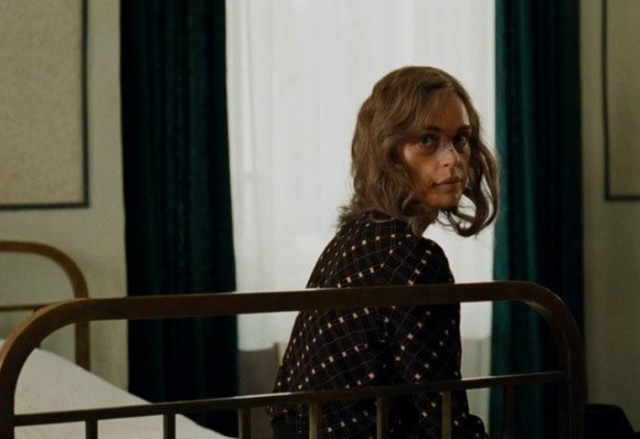
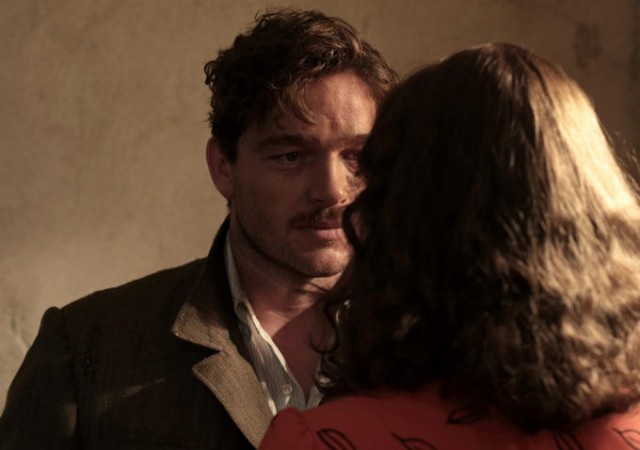
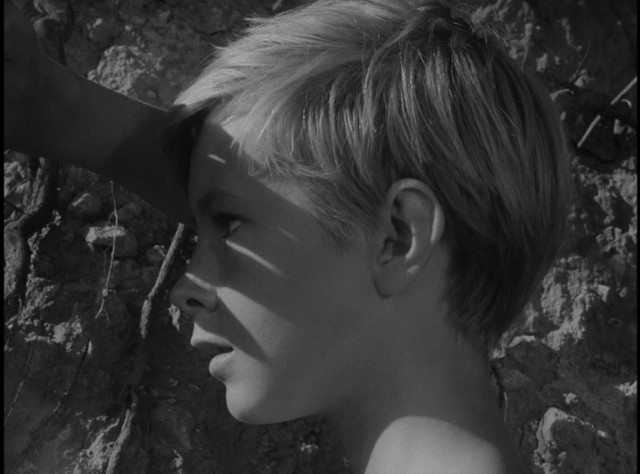
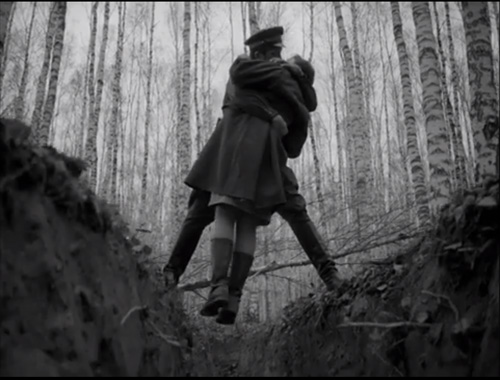
In Andrei Tarkovsky’s Solaris, the Russian 2001: A Space Odyssey, Natalya Bondarchuk and Donatus Banionis star as a different kind of couple caught up in something very strange that is going on in outer space, unexplainable to both the characters in the film and the people in the audience. Banionis plays Dr. Kris Kelvin, a psychologist who is sent to the Solaris space station to decide whether to put an end to the solaristics project that Burton (Vladislav Dvorzhetsky) complicated twenty years before. What he discovers is one death, two possibly insane men, and his supposedly dead wife (Bondarchuk). Ambiguity reigns supreme in this gorgeously shot (in color and black-and-white by cinematographer Vadim Yusov) and scored (by Eduard Artemyev) film that, while technically science fiction, is really about the human conscience, another gem from master Russian director Tarkovsky. See it whether or not you checked out Steven Soderbergh’s underrated remake with George Clooney and Natascha McElhone. Based on Stanislaw Lem’s novel, Solaris, which won the Grand Prix at the Cannes Film Festival, kicks off the Museum of Arts & Design film series “Andrei Tarkovsky, Sculpting in Time,” which runs Friday nights from July 10 through August 28 and includes all seven of Tarkovsky’s masterpieces (Solaris, Stalker, Ivan’s Childhood, Andrei Rublev, The Mirror, Nostalghia, The Sacrifice) before concluding with the behind-the-scenes documentary Directed by Andrei Tarkovsky. Tarkovsky, who died in 1986 at the age of fifty-four, was a superior craftsman whose cinematic oeuvre is filled with poetry and wonder, mystery and self-examination, exploring life and death, the past, the present, and the future, incorporating mesmerizing sound and visuals in telling complex stories like one else before or since.

GOD LOVES THE FIGHTER

GOD LOVES THE FIGHTER

Old friends Stone (Abdi Waithe) and Charlie (Muhammad Muwakil) are on different paths in GOD LOVES THE FIGHTER

GOD LOVES THE FIGHTER (Damian Marcano, 2013)
Available on DVD and VOD July 7
www.godlovesthefighter.com

If you missed Damian Marcano’s gripping God Loves the Fighter when it played the Urbanworld Film Festival last September and BAMcinématek’s Caribbean Film Series in April, you can now catch this realistic, unflinching portrait of street life in the capital of Trinidad & Tobago on DVD and VOD. Following in the tradition of such classic tales as Perry Henzell’s The Harder They Come, Fernando Meirelles’s City of God, and Gavin Hood’s Tsotsi, God Loves the Fighter is set in Port of Spain, which angry narrator King Curtis (Freetown Collective’s Lou Lyons) calls “blood city” and “gun town” and where Charlie Ward (Freetown Collective’s Muhammad Muwakil) is trying to make a better life for himself despite being dealt a bad hand. Desperate for money, Charlie hooks up with childhood friend Daniel (Abdi Waithe), now known as Stone, a powerful local gangster doing the dirty work for drug-dealing pimp Putao Singh (Darren Cheewah), a vicious, heavily tattooed man who walks around in nothing but flip-flops and ridiculously tight black Jockey shorts. Charlie seeks advice from his mentor and father figure, Mr. Odrick (Albert Laveau), a wise old man who has lost four sons to the violence on the streets. Meanwhile, smart young kid Chicken (Zion Henry) represents the future of the city, but he is brutalized by his mother (Penelope Spencer), who demands that he does whatever is necessary to bring home food for her, forgoing an education and instead meeting up with the wrong people. The multiple story lines all come together when Dinah (Jamie Lee Phillips), one of Putao’s prostitutes, decides that she’s not going to let what happened to her happen to his newest recruit, the young Nina (Tyker Phillips).

GOD LOVES THE FIGHTER

Characters dream of finding a way out in GOD LOVES THE FIGHTER

God Loves the Fighter is alive with the rhythms of Port of Spain, the sounds and colors, beautifully shot and edited by Marcano, who incorporates slow motion, jump cuts, and sometimes dizzying handheld camerawork to capture the dark mood on the streets, the lack of hope that is pervasive in this society. Marcano also cowrote the screenplay with executive producer Alexa Bailey, but most of the dialogue is improvised based on the script; the subtitles don’t always match what the characters are actually saying, which is far more poetic and natural. The evocative soundtrack, which is a character unto itself, consists of music by Freetown Collective and Q Major that furthers the emotional power and overarching moods. The title of the film, which has been a hit at festivals around the world but has not had a U.S. theatrical release, comes from a quote by Muwakil: “I believe that as much as God loves the prayerful penitent so too must he love the persistent, up against all odds death coming endlessly in waves but never go under, God loves the fighter.” Those words embody the provocative spirit of Marcano’s feature debut, a compelling work about his hometown, a place that leads King Curtis to ask, “So what’s in a name when a name is worthless? I sleep on the streets, but I’m still a king.”

MOVIE NIGHTS IN THE ROCKAWAYS: THE IRON GIANT

Hogarth Hughes makes a big new friend in 1950s Cold War throwback THE IRON GIANT

THE IRON GIANT (Brad Bird, 1999)
O’Donohue Park
Beach 17th St. & Seagirt Blvd., Rockaway, Queens
Tuesday, July 7, free, 8:00
www.nycgovparks.org

Writer-director Brad Bird won Oscars for his animated features The Incredibles (2004) and Ratatatouille (2007), but the Simpsons veteran first made his mark with the charming 1999 sci-fi cartoon The Iron Giant. Based on the 1968 book The Iron Man by Ted Hughes, the animated film is set during the Cold War, with the general populace and the military fearful of a nuclear attack by the Soviet Union. So when rumors that a fifty-foot-tall iron giant (voiced by Vin Diesel) has fallen from the sky, the government wants to destroy it, but it is being hidden by young Hogarth Hughes (Eli Marienthal), who has saved its life. Hogarth keeps his new best friend a secret from his mother (Jennifer Aniston) and federal agent Kent Mansley (Christopher McDonald) with the help of the town beatnik, Dean McCoppin (Harry Connick Jr.), who takes a liking to Hogarth’s mom. The screenplay, written by Tim McCanlies (Secondhand Lions), plays with various genre clichés just enough to avoid being clichéd itself, instead making The Iron Giant a delightful, nearly flawless twist on the E.T. mythos, mixed in with a little Androcles & the Lion, The Day the Earth Stood Still, and even Frankenstein and King Kong. The film, which also features the voices of Cloris Leachman (Mrs. Tensedge), John Mahoney (General Rogard), and M. Emmet Walsh (Earl Stutz), is a treat for children and adults. Bird, meanwhile, has graduated to live action; his next movies were Mission: Impossible — Ghost Protocol, starring Tom Cruise, Jeremy Renner, and Simon Pegg, and Tomorrowland, with George Clooney and Hugh Laurie. The Iron Giant is screening for free on July 7 at dusk as part of the Movie Nights in the Rockaways series in O’Donohue Park, which continues August 4 with Robert Zemeckis’s Back to the Future 2. (For a day-by-day list of free summer movies throughout New York City, go here.)

JEAN-CLAUDE CARRIERE — WRITING THE IMPOSSIBLE: MAX, MON AMOUR

MAX, MON AMOUR

Married mother Margaret Jones (Charlotte Rampling) is madly in love with a monkey in Nagisa Ôshima’s surprisingly tame MAX, MON AMOUR

CinéSalon: MAX, MON AMOUR (Nagisa Ôshima, 1986)
French Institute Alliance Française, Florence Gould Hall
55 East 59th St. between Madison & Park Aves.
Tuesday, July 7, $13, 4:00 & 7:30
Series continues Tuesdays through July 28
212-355-6100
fiaf.org

It’s rather hard to tell how much Japanese auteur Nagisa Ôshima is monkeying around with his very strange 1986 movie, Max, Mon Amour, a love story between an intelligent, beautiful woman and a chimpanzee. The director of such powerful films as Cruel Story of Youth; Merry Christmas, Mr. Lawrence; Taboo; and In the Realm of the Senses seems to have lost his own senses with this surprisingly straightforward, tame tale of bestiality, a collaboration with master cinematographer Raoul Coutard, who shot seminal works by Truffaut and Godard; screenwriter Jean-Claude Carrière, who has written or cowritten nearly ninety films by such directors as Pierre Étaix (who plays the detective in Max), Luis Buñuel, Volker Schlöndorff, Philippe Garrel, and Miloš Forman; and special effects and makeup artist extraordinaire Rick Baker, the mastermind behind the 1976 King Kong, the Michael Jackson video Thriller, Ratboy, Hellboy, and An American Werewolf in London, among many others. Evoking Bedtime for Bonzo and Ed more than Planet of the Apes and Gorillas in the Mist, Max, Mon Amour is about a well-to-do English family living in Paris whose lives undergo a rather radical change when husband Peter Jones (Anthony Higgins) catches his elegant wife, Margaret (Charlotte Rampling), in bed with a chimp. Margaret insists that she and the chimp, Max, are madly in love and somehow convinces Peter to let her bring the sensitive yet dangerous beast home, which confuses their son, Nelson (Christopher Hovik), and causes their maid, Maria (Victoria Abril), to break out in ugly rashes. Peter, a diplomat, works for the queen of England, so as he prepares for a royal visit to Paris, he also has to deal with this new addition to his ever-more-dysfunctional family.

Throughout the film, it’s almost impossible to figure out when Ôshima is being serious, when he is being ironic, when he is trying to make a metaphorical point about evolution, or when he is commenting on the state of contemporary aristocratic European society. When Margaret puts on a fur coat, is that a reference to her hypocrisy? Is her affair with a zoo animal being directly compared to Peter’s dalliance with his assistant Camille (Diana Quick)? Even better, is Ôshima relating Max to Her Royal Highness? We are all mammals, after all. Or are Ôshima and Carrière merely riffing on Buñuel’s 1972 surrealist classic The Discreet Charm of the Bourgeoisie, which Carrière cowrote? Perhaps Max, Mon Amour is about all of that, or maybe none of it, as Ôshima lays it all out very plainly, as if it is not a completely crazy thing that a woman can have an affair with a chimp and have him become part of the family. Regardless, the film is just plain silly, although it looks pretty great, particularly Rampling wearing gorgeous outfits and a Princess Di do and Quick in hysterically hideous haute couture gone terribly wrong. Meanwhile, Michel Portal’s score mines Laurie Anderson territory. You can decide for yourself whether Max, Mon Amour is a misunderstood masterpiece or an absurd piece of trifle when it is shown on July 7 in the French Institute Alliance Française’s CinéSalon series “Jean-Claude Carrière: Writing the Impossible.” (The 7:30 show will be introduced by Japan Society film programmer Kazu Watanabe, who will attempt to shed more light on this, and both the 4:00 and 7:30 shows will be followed by a wine reception.) The two-month festival consists of a wide range of films written by two-time Oscar winner Carrière, who, at eighty-three, is still hard at work. The series continues through July 28 with such other Carrière collaborations as Andrzej Wajda’s Danton, Louis Malle’s May Fools, and Jonathan Glazer’s Birth.