this week in film and television

THE ART OF THE SCORE: FILM WEEK AT THE PHILHARMONIC

Avery Fisher Hall
10 Lincoln Square, Broadway at 64th St.
September 18-21, $45-$155
nyphil.org/artofthescore

The New York Philharmonic’s annual “Art of the Score” presentation this year focuses on that master thespian, method actor extraordinaire Marlon Brando. The Nebraska-born Brando became an immediate star right out of the gates with such early films as The Men, A Streetcar Named Desire, Viva Zapata!, Julius Caesar, and The Wild One, but it was his 1954 triumph, On the Waterfront, that established him as one of the all-time greats even though it was only his sixth picture. For this year’s “Film Week,” New York Philharmonic artistic advisor Alec Baldwin has selected the two Brando classics for which Mr. Mumbles won the Oscar for Best Actor. On September 18, David Newman will conduct Leonard Bernstein’s score for Elia Kazan’s On the Waterfront, often considered one of the greatest Hollywood films ever made, with TCM’s Robert Osborne serving as host. On September 19 and 21, Justin Freer will conduct Nino Rota’s score for what many consider the absolute greatest film ever made, Francis Ford Coppola’s The Godfather, with Paul Sorvino as the special guest the first night.

YOKO ONO: ONE WOMAN SHOW, 1960-1971

Yoko Ono’s “To See the Sky” offers visitors the chance to commune one-on-one with the heavens (photo by twi-ny/mdr)

Yoko Ono’s “To See the Sky” offers visitors the chance to commune one-on-one with the heavens (photo by twi-ny/mdr)

Museum of Modern Art
The International Council of the Museum of Modern Art Exhibition Gallery, sixth floor
11 West 53rd St. between Fifth & Sixth Aves.
Through September 7, $25 (including audio program and film screenings)
212-708-9400
www.moma.org

In December 1971, Yoko Ono staged an unofficial one-woman show at MoMA, which she called the “Museum of Modern [F]art,” in which she supposedly released a glass jar full of flies into the sculpture garden, scattering art everywhere, even though a sign inside noted, “This Is Not Here.” Ono now has an honest-to-goodness solo show at MoMA, an involving and affecting retrospective of her conceptual work from 1960 through 1971, and although it’s titled “One Woman Show,” it’s about as participatory as these things can get. Visitors are invited to walk right on “Painting to Be Stepped On,” although many people still opt to carefully tiptoe around it; play a game of chess in the sculpture garden on “White Chess Set,” in which all of the pieces are white; slip under a black sheet and perform on a small stage for “Bag Piece”; make physical contact with others in “Touch Poem for a Group of People,” although the room was empty the several times I passed by; climb a rickety spiral staircase in “To See the Sky” and privately commune with the outside world via a skylight at the top; and choose to carry out any of the myriad instructions that comprise Ono’s storied Grapefruit book, though not necessarily right on the premises. However, you should not do what John Lennon did when he first met Ono in 1966 and take a bite out of the green apple that sits on a transparent pedestal at the opening of the exhibit. “Ono’s art has uncovered not only often concealed aspects of the act of engaging with an artwork (revealing, for instance, the central role the viewer plays in its creation) but also the ways in which cultural, social, and political life influence and affect each other,” explains MoMA curator-at-large Klaus Biesenbach in his catalog essay, “Absence and Presence in Yoko Ono’s Work,” continuing, “Looking back on her conceptual 1971 exhibition at the Museum of Modern Art, we see that she knew long ago that her groundbreaking practice warranted a solo exhibition there. Forty-four years later, that show is finally a reality, with the same radicality and presence it had when she first imagined it.”

Yoko Ono’s “Half-a-Room” slices domesticity in half (photo by twi-ny/mdr)

Yoko Ono’s “Half-a-Room” slices domesticity in half (photo by twi-ny/mdr)

The MoMA exhibition also includes such other Ono works as “Cut Piece,” a film by Albert and David Maysles of her sitting calmly as audience members cut off parts of her outfit; “A Box of Smile,” small boxes in a wall that provide pleasant surprises; “Film No. 4,” an onscreen procession of derrières; a room of paraphernalia and music she made with the Plastic Ono Band; “Fly,” which follows flies making their way across a woman’s naked body; footage of political demonstrations she and Lennon led, including “Bed-In”; and other drawings, sculptures, films, posters, invitations, and installations. There’s more in the exhibition catalog, which contains a number of essays and letters written by Ono in the section entitled “Yoko’s Voice”; in November 2014’s “Don’t Stop Me!” she writes, “Let me be free. Let me be me! Don’t make me old, with your thinking and words about how I should be. You don’t have to come to my shows. I am giving tremendous energy with my voice, because that is me. Get my energy or shut up.” She might have been referring specifically to her live musical performances, but the admonition relates to this early-career retrospective as well. Many people come to Ono and her work with a preconceived notion of who she is and what she does, often negative; “Yoko Ono: One Woman Show, 1960-1971” reveals her to be a much misunderstood artist who actually has a lot to say about the state of humanity, nearly universally positive, still seeking to attain world peace. And what’s wrong with that? (The final week of the show will feature the Gallery Sessions programs “Yoko Ono: From Grapefruit to Green Apple” on August 31 at 1:30 and September 2-3 at 11:30, “Yoko Ono: One Woman Show, 1960-1971” on September 5 at 1:30, and “Make Your Own Yoko Ono Piece” on September 6 at 11:30, and museumgoers can sit down and play on Ono’s “White Chess Set” in the sculpture garden on Tuesday, Wednesday, Friday, and Saturday from 1:00 to 4:00.)

INGRID BERGMAN: A CENTENNIAL CELEBRATION

Ingrid Bergman makes sure everything is just right in her final film, AUTUMN SONATA

Ingrid Bergman makes sure everything is just right in her final film, AUTUMN SONATA

MoMA Film, Museum of Modern Art
11 West 53rd St. between Fifth & Sixth Aves.
August 29 – September 10
Tickets: $12, in person only, may be applied to museum admission within thirty days, same-day screenings free with museum admission, available at Film and Media Desk beginning at 9:30 am
212-708-9400
www.moma.org

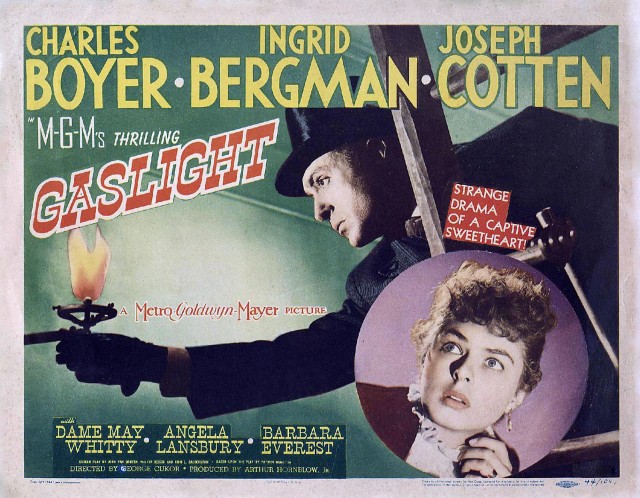
MoMA kicks off its two-week Ingrid Bergman retrospective on August 29, the hundredth anniversary of the birth of one of cinema’s most genuine movie stars, by showing her most famous work, Casablanca, along with her theatrical grand finale, Ingmar Bergman’s Autumn Sonata, introduced by two of her children, Pia Lindström and Isabella Rossellini. As it turned out, she died on her birthday at the age of sixty-seven, so it’s also the thirty-third anniversary of her death in 1982 from breast cancer. The fourteen-film survey, several of which were specially chosen by Lindström, Isabella Rossellini, and Ingrid’s other daughter, Ingrid Rossellini, includes such other classic favorites as Gaslight, Notorious, Intermezzo, Dr. Jekyll and Mr. Hyde, and The Bells of St. Mary’s as well as such lesser-known fare as Fear, Paris Does Strange Things, Stromboli, and the short comedy We, the Women: Ingrid Bergman. Each of the three daughters will be back at MoMA individually to introduce select screenings August 30-31 and September 1 and 8-9.

WIM WENDERS: PORTRAITS ALONG THE ROAD

Wim Wenders

Extensive Wim Wenders retrospective at the IFC Center will feature numerous appearances by the eclectic auteur

IFC Center
323 Sixth Ave. at West Third St.
August 28 – September 24
212-924-7771
www.ifccenter.com
www.wim-wenders.com

One of the most eclectic, iconoclastic auteurs in the history of cinema, German author, director, and photographer Wim Wenders has built an impressive film resume over the last forty-five years, from music and dance documentaries to road movies and postapocalyptic tales, from mysteries and fantasies to gripping emotional dramas and a Hawthorne adaptation. The IFC Center is celebrating his career with a wide-ranging four-week series featuring dozens of his full-length and short films, from 1972’s The Goalie’s Anxiety at the Penalty Kick to a sneak preview of his newest work, Every Thing Will Be Fine, including the New York City premiere of Palermo Shooting and the world premiere of the 4K restoration of The State of Things. Wenders will be at the IFC Center for Q&As following select screenings of The American Friend, Buena Vista Social Club, Kings of the Road, Pina, Tokyo-Ga, Paris, Texas, and other films; in addition, Wenders, who just turned seventy, will sign copies of his latest photography book, Wim Wenders: Written in the West, Revisited, after the Q&A following the 7:20 screening of Palermo Shooting on September 2, and he will participate in the special discussion “Liquid Space: A Conversation on 3D” on September 6.

ANDREI TARKOVSKY, SCULPTING IN TIME: DIRECTED BY ANDREI TARKOVSKY

Documentary

Documentary follows Andrei Tarkovsky making THE SACRIFICE and getting philosophical about art, film, and time

DIRECTED BY ANDREI TARKOVSKY (Michal Leszczylowski, 1988)
Museum of Arts & Design
2 Columbus Circle at 58th St. & Eighth Ave.
Friday, August 28, $10, 7:00
Series continues Friday nights through August 28
212-299-7777
madmuseum.org

After seven consecutive Friday nights presenting all seven of Soviet auteur Andrei Tarkovsky’s feature-length films (Solaris, Stalker, Ivan’s Childhood, Andrei Rublev, The Mirror, Nostalghia, and The Sacrifice, each one a masterpiece in its own right), the Museum of Arts & Design — it’s affectionately known as MAD for a reason — is concluding its “Andrei Tarkovsky, Sculpting in Time” series on August 28 with the 1988 documentary Directed by Andrei Tarkovsky. During the shooting of what would be Tarkovsky’s last film, The Sacrifice, coeditor Michal Leszczylowski kept his own camera going, filming Tarkovsky as he collaborated with cinematographer Sven Nykvist, production designer Anna Asp, star Erland Josephson, and others, carefully orchestrating each shot, anxious about the lighting, the angles, the position of a table. Yes, that is the job of all directors, but Tarkovsky takes it to whole ’nother level, sometimes worried about the slightest hair flip, then barely concerned about a specific piece of dialogue. It is fascinating watching him in action, working with a translator to sift through the Russian, English, and Swedish being spoken on the set. The Sacrifice is about a man who is willing to suddenly give up everything to save himself; it looks like there’s not much that Tarkovsky wouldn’t sacrifice to make sure his film is perfect. Leszczylowski supplements the behind-the-scenes footage with stories from Tarkovsky’s wife, assistant director Larisa Tarkovskaya (Larisa Kizilova), as well as narration by Brian Cox, reading from Tarkovsky’s book Sculpting in Time, his poetic defense of cinema as art melding beautifully with images of the great director creating some of the most artistic cinema ever put on celluloid.

THE METROPOLITAN OPERA: SUMMER HD FESTIVAL

Free summer festival screens recent Met performances outside in HD (photo by Richard Termine/Metropolitan Opera)

Free summer festival screens recent Met performances outside in HD (photo by Richard Termine/Metropolitan Opera)

Lincoln Center, Josie Robertson Plaza
Columbus Ave. at 63rd St.
August 28 – September 7, free, starting time between 7:30 and 8:00
212-769-7028
www.metopera.org

Catching an opera at the Met can be a tough ticket, but you’ll have no such worry at the fabled institution’s annual Summer HD Festival, ten days of free screenings of works that graced the opera house’s stage between 2007 and 2015, now shown outside by the fountain in Josie Robertson Plaza. The series kicks off August 28 with a bonus film, Robert Wise’s West Side Story, much of which was filmed in the pre-Lincoln Center neighborhood. There will be 3,100 first-come, first-served seats available each night, featuring such “The Met: Live in HD” presentations as Bizet’s Carmen, conducted by Yannick Nézet-Séguin and starring Elīna Garanča and Roberto Alagna; Verdi’s Macbeth, with Anna Netrebko as Lady Macbeth and Željko Lučić as her ill-fated husband; Puccini’s Il Trittico, a triple bill directed by Jack O’Brien and conducted by James Levine; and Mozart’s Don Giovanni, directed by Michael Grandage and conducted by Fabio Luisi.

ARMY OF SHADOWS

Lino Ventura

Lino Ventura is leading a seemingly impossible mission in ARMY OF SHADOWS

L’ARMÉE DES OMBRES (ARMY OF SHADOWS) (Jean-Pierre Melville, 1969)
Film Forum
209 West Houston St.
August 26 – September 1
212-727-8110
filmforum.org

Based on the novel by Joseph Kessel (Belle de Jour), Jean-Pierre Melville’s 1969 WWII drama Army of Shadows got its first theatrical release in America in 2006, in a restored 35mm print supervised by the film’s cinematographer, Pierre Lhomme, who shot it in a beautiful blue-gray palette. The film centers on a small group of French resistance fighters, including shadowy leader Luc Jardie (Paul Meurisse), the smart and determined Mathilde (Simone Signoret), the nervous Jean-François (Jean-Pierre Cassel), the steady and dependable Felix (Paul Crauchet), the stocky Le Bison (Christian Barbier), the well-named Le Masque (Claude Mann), and the unflappable and practical Gerbier (Lino Ventura). Although Melville, who was a resistance fighter as well, wants the film to be his personal masterpiece, he is too close to the material, leaving large gaps in the narrative and giving too much time to scenes that don’t deserve them. He took offense at the idea that he portrayed the group of fighters as gangsters, yet what shows up on the screen is often more film noir than war movie. However, there are some glorious sections of Army of Shadows, including Gerbier’s escape from a Vichy camp, the execution of a traitor to the cause, and a tense Mission: Impossible–like (the TV series, not the Tom Cruise vehicles) attempt to free the imprisoned Felix. But most of all there is Ventura, who gives an amazingly subtle performance that makes the overly long film (nearly two and a half hours) worth seeing all by itself. Army of Shadows is once again back at Film Forum for a special one-week return engagement August 26 – September 1.