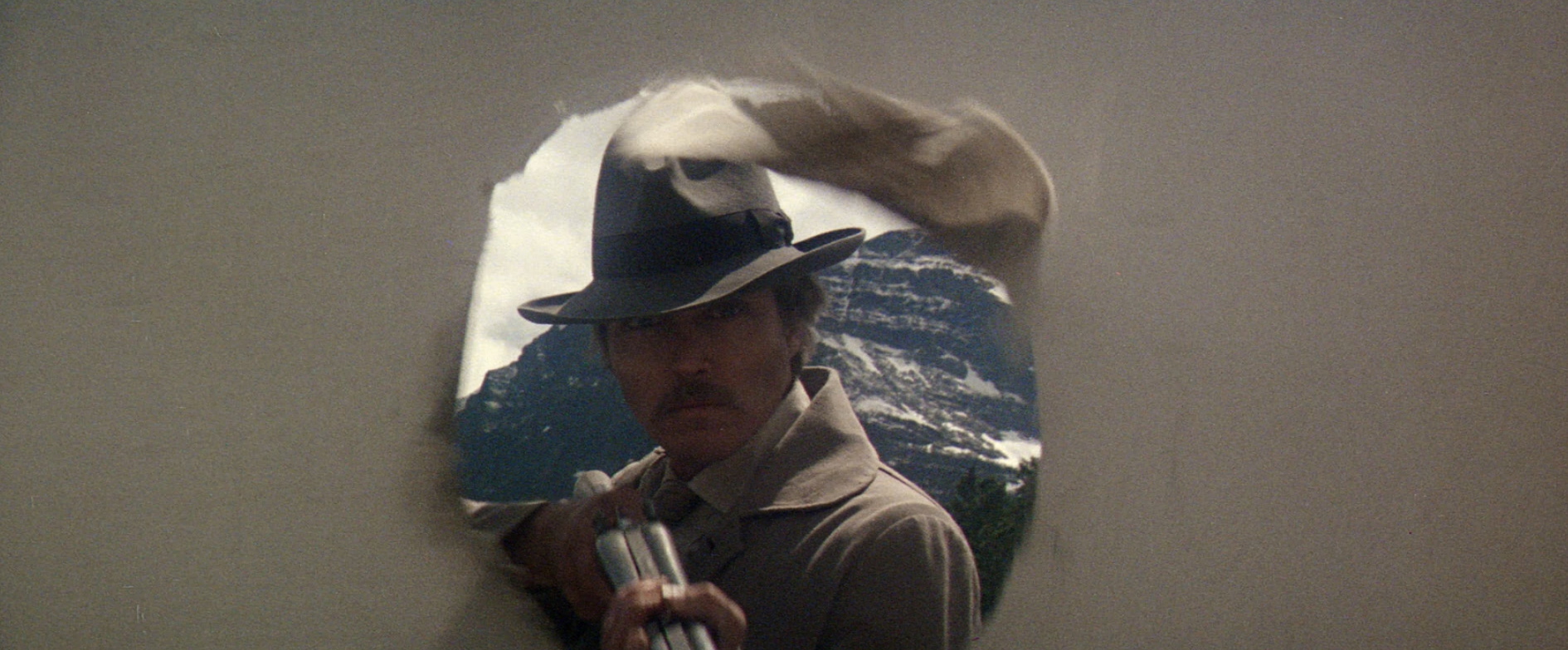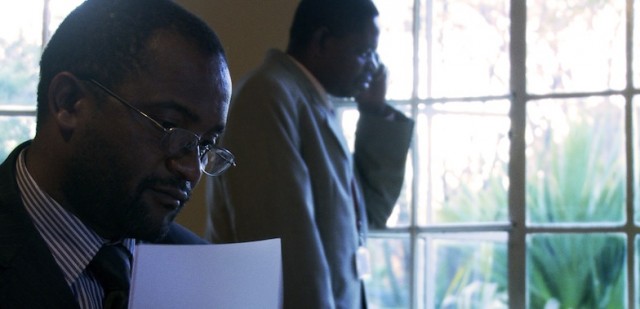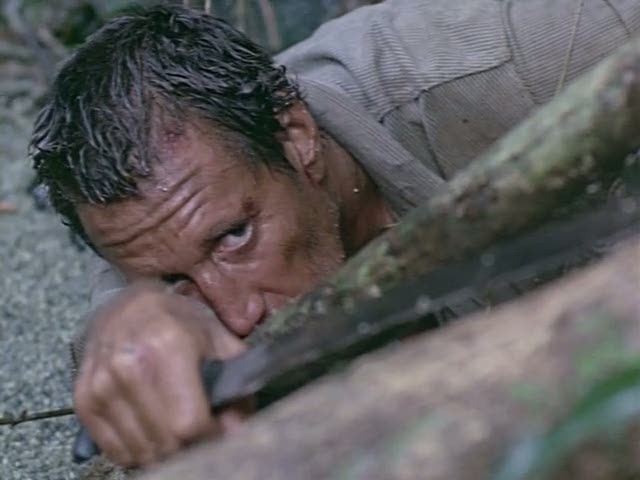
Roy Scheider goes on an existential voyage of the soul in William Friedkin’s SORCERER
SORCERER (William Friedkin, 1977)
BAMcinématek, BAM Rose Cinemas
30 Lafayette Ave. between Ashland Pl. & St. Felix St.
Saturday, November 28, 2:00, 4:30, 9:50
Series runs November 20-29
718-636-4100
www.bam.org
 In the mid-1970s, Chicago-born director William Friedkin was riding high, earning an Oscar for The French Connection and another nomination for The Exorcist, two huge critical and box-office successes. For his next film, he decided to reimagine a seminal work that had had a profound influence on him, Henri-Georges Clouzot’s haunting 1953 suspense thriller, The Wages of Fear. “It turned out to be the most difficult, frustrating, and dangerous film I’ve ever made, and it took a toll on my health as well as my reputation,” Friedkin wrote in his 2013 memoir, The Friedkin Connection. Friedkin’s adaptation of Clouzut’s classic, itself based on a novel by Georges Arnaud, follows four unlikable men — a thief (Roy Scheider), a hit man (Francisco Rabal), an embezzler (Bruno Cremer), and a terrorist (Amidou) — hiding out under fake identities in a depressed, nowhere village in South America. When a nearby oil well catches fire, the company needs four men to drive two rickety trucks more than two hundred miles over treacherous terrain to deliver cases of rotting, highly unstable dynamite that will be used to blow the whole thing up and put out the fire. Oil man Corlette (Ramon Bieri) is sending two trucks — dubbed “Lazaro” and “Sorcerer” — because he thinks only one, if any, will make it through. The journey includes a harrowing twelve-minute scene as the men try to navigate a dilapidated rope bridge in a rainstorm as well as a psychedelic trip through a fantastical landscape (shot in the Bisti Badlands in New Mexico).
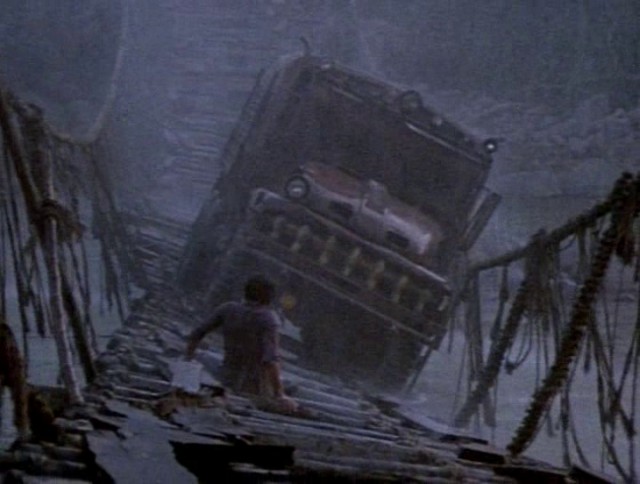
Harrowing bridge crossing is one of the most suspenseful scenes ever caught on film
What began as a dream project — Friedkin was pretty much given carte blanche by the studio, and he initially had his ideal cast lined up, consisting of Steve McQueen, Marcello Mastroianni, Lino Ventura, and Amidou — quickly turned into a nightmare as the cast changed, location problems flared up, a cinematographer had to be fired because of improper lighting, a narc forced Friedkin to get rid of some drug-using crew members, “Marvin the Torch” had to be called in to help with an explosion, and malaria ran rampant, as did the budget. When the film was finally released in June 1977, it got lost in all the Star Wars hoopla, resulting in a critical and box-office failure that shattered Friedkin, whose next three films were The Brink’s Job, Cruising, and Deal of the Century. But Friedkin has always stood behind Sorcerer: “I had persevered to make a film that I would want to see,” he wrote in his memoir, “a relentless existential voyage that would become my legacy.” After fighting for the rights to the film, he supervised a digital restoration that confirms the film as a towering achievement, a gripping, intense work of suspense that digs deep into the soul. Scheider, who was nominated for a Best Supporting Actor Oscar for The French Connection and then was extremely upset when Friedkin refused to cast him as Father Damien in The Exorcist, gives an extraordinary performance as Jackie Scanlon, a New Jersey Irish gang member now going by the name Juan Dominguez, ready to do whatever it takes to get out of the hell he is in. Friedkin and editor Bud Smith cut the film to match Tangerine Dream’s electronic score — the German group wrote the music to the script, without seeing a single frame of the finished product — creating a stinging pace that never lets up. The digital restoration, which premiered at the Venice International Film Festival, reestablishes Friedkin’s Sorcerer legacy, as critics and audiences reevaluate it as a remarkable triumph after all these years. The title is still terrible and the final scene highly questionable, but Sorcerer is an unforgettable, powerfully realistic work of magic. It’s screening on November 28 in the BAMcinématek series “Turkeys for Thanksgiving,” which runs November 20-29 and consists of fourteen films that were considered disasters when they were first released but might actually be gems in retrospect. Then again, they might still be bombs, so you might have a (wish)bone to pick with some of the selections, which include Elaine May’s Ishtar, Steven Spielberg’s 1941, Paul Verhoeven’s Showgirls, Charlie Chaplin’s Monsieur Verdoux, Francis Ford Coppola’s Heaven’s Gate, and, most surprisingly, The Wizard of Oz.
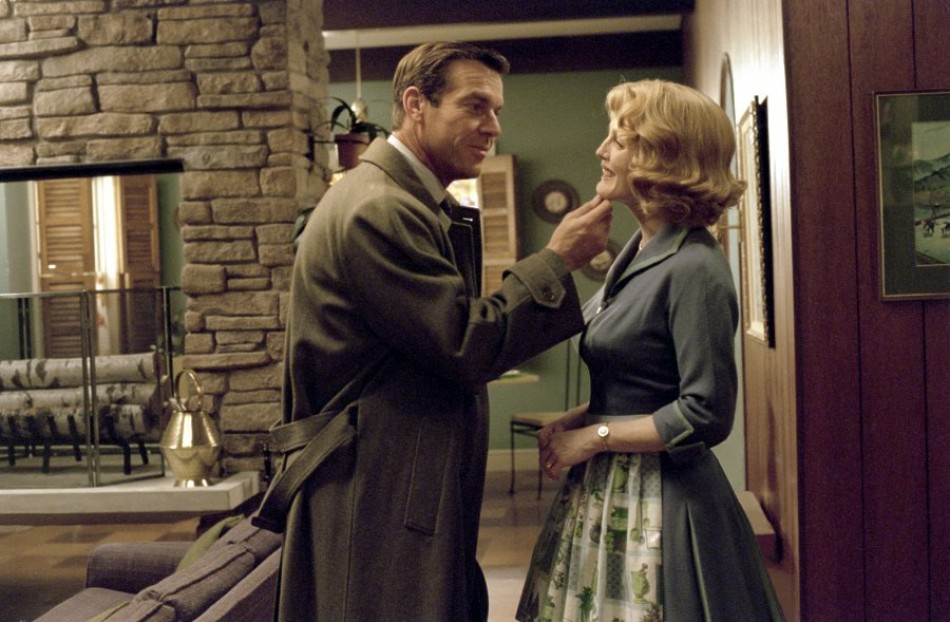
 Douglas Sirk and Thomas Mann would be proud. In Todd Haynes’s wonderfully retro Far from Heaven, Oscar-nominated Julianne Moore is amazing as 1950s housewife Cathy Whitaker, who thinks she has the perfect idyllic suburban life — until she discovers that her husband (Dennis Quaid) has a secret that dare not speak its name. Mr. & Mrs. Magnatech they are not after all. When she starts getting all chummy with the black gardener (Dennis Haysbert), people start talking, of course. Part Imitation of Life and All That Heaven Allows, part Death in Venice, and oh-so-original, Haynes’s awesome achievement will have you believing you’re watching a film made in the 1950s, propelled by Elmer Bernstein’s excellent music, Edward Lachman’s remarkable photography, and Mark Friedberg’s terrific production design. Far from Heaven is screening at the Walter Reade Theater on November 27 at 2:00 and November 29 at 6:30 in the Film Society of Lincoln Center series “Todd Haynes: The Other Side of Dreams,” with DP Lachman on hand for a Q&A following the latter show. The series, being held in conjunction with the release of Haynes’s latest film, Carol, continues through November 29 with Haynes pairing his films with works that directly influenced him, bringing together thematically (but not as double features) Safe and Douglas Sirk’s Imitation of Life, his Mildred Pierce miniseries and Alan J. Pakula’s Klute, Poison and Rainer Werner Fassbender’s Fox and His Friends, Velvet Goldmine and Nicolas Roeg’s Performance, and Far from Heaven and Max Ophüls’s The Reckless Moment, among other duos.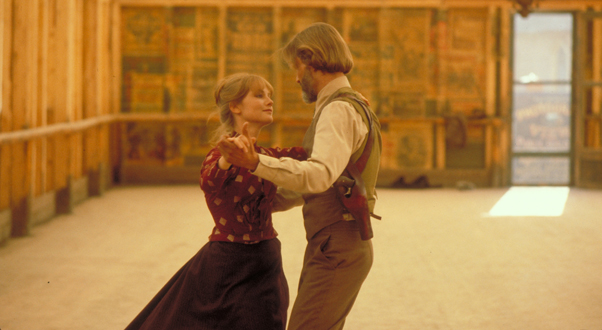
 When I was a kid in school, one of the first movies I ever reviewed was Heaven’s Gate, Michael Cimino’s brazenly overbudget famous Hollywood disaster. Incensed that professional film critics were obsessed with the meta surrounding the making of the epic Western instead of simply taking it for what it was, I was determined to treat it like any other movie, forgetting about all the behind-the-scenes gossip and tales of financial gluttony. And what I found back then was that it was a noble failure, a bold exercise in genre that had its share of strong moments but ultimately fell apart, leaving me dissatisfied and disappointed but glad I had seen it; I did not want my three-plus hours back. In fact, I probably would have checked out the rumored five-hour version if it had been shown, hoping it would fill in the many gaps that plagued the official theatrical release. More than thirty years later, Cimino’s follow-up to his Oscar-winning sophomore effort, The Deer Hunter, has returned in a 216-minute digital restoration supervised by Cimino, and it does indeed shed new light on the unfairly ridiculed work, which is still, after all this time, a noble failure. Inspired by the 1882 Johnson County War in Wyoming, the film stars Kris Kristofferson as Jim Averill, a Harvard-educated lawman hired by a group of immigrants, called “citizens,” whose livelihood — and lives — are being threatened by a wealthy cattlemen’s association run by the elitist Frank Canton (Sam Waterston). The association has come up with a kill list of 125 citizens, offering fifty dollars for each murder, a plan that has been authorized all the way up to the president of the United States. Leading the way for the cattlemen is hired killer Nate Champion (Christopher Walken), who has a particularly fierce aversion to the foreign-speaking immigrants. With a major battle on the horizon, Averill and Champion also fight for the love of the same woman, the luminous Ella Watson (Isabelle Huppert), a successful madam who soon finds herself in the middle of the controversy.