Matteo Garrone’s Italian gangster epic looks at Camorra crime syndicate in Naples
GOMORRA (GOMORRAH) (Matteo Garrone, 2008)
MoMA Film, Museum of Modern Art
11 West 53rd St. between Fifth & Sixth Aves.
Sunday, December 6, 3:30, and Tuesday, December 15, 7:00
Series runs December 4-18
Tickets: $12, may be applied to museum admission within thirty days
212-708-9400 www.moma.org www.ifcfilms.com
Winner of the Grand Prix at the 2008 Cannes Film Festival, Gomorra is a violent, intimate look at the modern-day Camorra crime syndicate in Naples and Caserta. Based on the nonfiction novel by investigative journalist Roberto Saviano — who has been living under police protection since the fall of 2006 — Matteo Garrone’s epic follows five distinct yet interrelated stories set around a dilapidated concrete-block housing project, a sort of Godfather meets The Sopranos filtered through Italian Neo-realism. Pasquale (Salvatore Cantalupo) is a tailor who considers sharing his secrets with a Chinese sweatshop to make some much-needed extra cash. Roberto (Carmine Paternoster) is having second thoughts training under Franco (The Great Beauty’s Toni Servillo), who runs a toxic waste dumping business. Don Ciro (Gianfelice Imparato) has to deal with a delicate, difficult situation when Maria’s (Italian singing star Maria Nazionale) young son joins the secessionists, a rival gang. Marco (Marco Macor) and Ciro (Ciro Petrone) are loose cannons who keep messing with the wrong people. And Totò (Salvatore Abruzzese) is a thirteen-year-old boy who is helping out the Camorra against his mother’s wishes — and is soon faced with a life-changing decision. Beautifully shot by Marco Onorato and featuring a cast of primarily nonprofessional actors, Gomorra is a deeply involving crime drama, all the more frightening because it’s based on real, current situations. Gomorra is screening December 6 & 15 as part of the MoMA series “Italian Film, 21st-Century Style: A Tribute to Rai Cinema,” which kicks off with Garrone’s latest, Il Racconto dei racconti (Tale of Tales). The two-week retrospective consists of ten films from the last fifteen years released by the Italian studio, including Ermanno Olmi’s Il Mestiere delle armi (The Profession of Arms), Gianni Amelio’s Le Chiavi di casa (The Keys to the House), Emanuele Crialese’s Terraferma, and Alice Rohrwacher’s Le Meraviglie (The Wonders).
Nanni Moretti’s deeply personal Palme D’Or winner, THE SON’S ROOM, looks at family tragedy
THE SON’S ROOM (LA STANZA DEL FIGLIO) (Nanni Moretti, 2001)
MoMA Film, Museum of Modern Art
11 West 53rd St. between Fifth & Sixth Aves.
Saturday, December 5, and Thursday, December 17, 4:00
Series runs December 4-18
Tickets: $12, may be applied to museum admission within thirty days
212-708-9400 www.moma.org
Winner of the Palme D’Or at the 2001 Cannes Film Festival, The Son’s Room is a moving look at life, love, and loss. Italian writer-director-actor Nanni Moretti stars as Giovanni, a psychiatrist who can’t control the dissolution of his family following a terrible tragedy. Moretti (Caro Diario, Ecce Bombo) has made a heart-wrenching work that will always be compared with Todd Field’s powerful In the Bedroom, which came out the same year. Both films examine family tragedy with honesty and believability, but whereas the family in In the Bedroom considers revenge, the father in The Son’s Room, achingly played by Moretti, can’t get over wrongly blaming himself, while his wife (Laura Morante, who won the Best Actress award at Cannes for the role) seeks solace in her son’s girlfriend (Sofia Vigliar), whom she had not known about. Moretti is a deeply personal filmmaker; at times you will feel like you are watching a documentary, and it will break your heart. The Son’s Room is screening December 5 & 17 as part of the MoMA series “Italian Film, 21st-Century Style: A Tribute to Rai Cinema,” comprising ten films from the last fifteen years released by the Italian studio. Other films in the two-week retrospective are Matteo Garrone’s Il Racconto dei racconti (Tale of Tales) and Gomorra, Marco Bellocchio’s Buongiorno, notte (Good Morning, Night), the Taviani brothers’ Cesare deve morire (Caesar Must Die), and Gianfranco Rosi’s Sacro GRA.
Brooklyn Museum
200 Eastern Parkway at Washington St.
Saturday, December 5, free, 5:00 – 11:00
212-864-5400 www.brooklynmuseum.org
The Brooklyn Museum is honoring the most dramatic, historic, and entertaining part of the world’s greatest borough for the December edition of its monthly free First Saturday program. On the always eclectic bill are live music by Fright Barker and Sons and Raya Brass Band, a theatrical drawing performance by Amour Obscur, sideshow acts curated by Adam Rinn, the issues-oriented BodySpeak by Brown Girls Burlesque, a curator talk and Q&A about the new exhibition “Coney Island: Visions of an American Dreamland, 1861–2008” with Robin Jaffee Frank, a wire workshop where you can make your own Coney Island ride, a book club discussion with Harvey Stein about his photography book Coney Island: 40 Years, 1970–2010, a screening of Sidney Lumet’s The Wiz, and a Visual AIDS screening of Radiant Presence, followed by a discussion with Ted Kerr, Shawn Torres, Rusti Miller-Hill, and Jawanza Williams held in conjunction with World AIDS Day/Day With(out) Art. In addition, the galleries are open late so you can check out such other exhibitions as “Stephen Powers: Coney Island Is Still Dreamland (To a Seagull),” “Forever Coney: Photographs from the Brooklyn Museum Collection,” “Impressionism and the Caribbean: Francisco Oller and His Transatlantic World,” and “KAWS: ALONG THE WAY.”
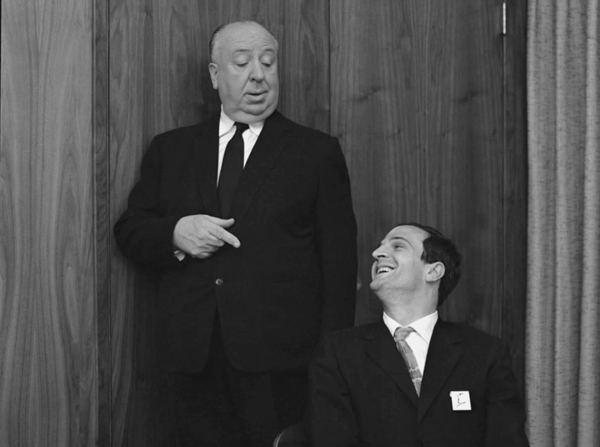
“In 1962, while in New York to present Jules and Jim, I noticed that every journalist asked me the same question: ‘Why do the critics of Cahiers du Cinéma take Hitchcock so seriously? He’s rich and successful, but his movies have no substance,’” French Nouvelle Vague auteur François Truffaut wrote in the preface to the second edition of what he called “the hitchbook,” the seminal film bible Truffaut/Hitchcock. “In the course of an interview during which I praised Rear Window to the skies, an American critic surprised me by commenting, ‘You love Rear Window because, as a stranger to New York, you know nothing about Greenwich Village.’ To this absurd statement, I replied, ‘Rear Window is not about Greenwich Village, it is a film about cinema, and I do know cinema.’” Truffaut was determined to change the prevailing belief that British director Alfred Hitchcock was a maker of studio fluff. “In examining his films,” Truffaut continued, “it was obvious that he had given more thought to the potential of his art than any of his colleagues. It occurred to me that if he would, for the first time, agree to respond seriously to a systematic questionnaire, the resulting document might modify the American critics’ approach to Hitchcock. That is what this book is all about.” The tome compiled a weeklong series of conversations between the thirty-year-old Truffaut and the sixty-three-year-old Hitchcock — the talks began on Hitch’s birthday — in the latter’s Hollywood studio office, with Helen Scott serving as translator. Although the interviews were recorded for audio, no film was shot; instead, Philippe Halsman took still photos. The story of the unique relationship between Truffaut, who as of 1962 had made only The 400 Blows and Shoot the Piano Player (he was in the midst of finalizing Jules and Jim), and Hitchcock, who was preparing his forty-eighth film, The Birds, is told in the splendid documentary Hitchcock/Truffaut, which cleverly reverses the order of their names from the book it’s based on. Writer-director Kent Jones (head of the New York Film Festival), cowriter Serge Toubiana (former editor in chief of Cahiers du Cinéma) and editor Rachel Reichman lovingly combine Halsman’s pictures, audio clips from the original sessions, scenes from many of Hitchcock’s films (and a few of Truffaut’s), close-ups of dozens of pages from the book, rare archival footage, and new interviews with ten directors from around the world who weigh in on what makes Hitchcock’s work so special, so illuminating, so influential.
Sharing their praise are Martin Scorsese, Wes Anderson, David Fincher, Olivier Assayas, Peter Bogdanovich, Arnaud Desplechin, James Gray, Kiyoshi Kurosawa, Richard Linklater, and Paul Schrader, as they shed light on such classic films as Vertigo, Psycho, I Confess, The Wrong Man, Sabotage, Marnie, Rear Window, and others, with detailed shot-by-shot analysis while also praising the importance of “the hitchbook” itself. It all makes for an eye-opening crash course in cinema, and it’s likely to change the way you look and think about motion pictures. “It was a window into the world of cinema that I hadn’t had before, because it was a director simultaneously talking about his own work but doing so in a way that was utterly unpretentious and had no pomposity,” Gray (Little Odessa, Two Lovers) says about the book. “There was starting to be these kind of erudite conversations about the art form, but Truffaut was the first one where you really felt that they were talking about the craft of it,” Schrader (American Gigolo, Mishima) points out. “It’s not just that Truffaut wrote a book about Hitchcock. The book is an essential part of his body of work,” Olivier Assayas (Clouds of Sils Maria, Carlos) explains. “I think it conclusively changed people’s opinions about Hitchcock, and so Hitchcock began to be taken much more seriously,” Bogdanovich (The Last Picture Show, Paper Moon) asserts. And Scorsese (Taxi Driver, Raging Bull) sums up, “It was almost as if somebody had taken a weight off our shoulders and said yes, we can embrace this, we could go.” Of course, the book not only created a critical reassessment of Hitchcock but also helped Truffaut’s budding career. Narrated by Bob Balaban, the film places the work of the two men, who remained good friends until Hitchcock’s death in 1980 at the age of eighty (sadly, Truffaut died four years later at the age of fifty-two), in context of the history of cinema. “Why do these Hitchcock films stand up well? Well, I don’t know the answer,” Hitchcock is heard saying at the beginning of the documentary. By the end of the documentary, you will surely know the answer. Following its recent screening at DOC NYC with Jones and Scorsese present, Hitchcock/Truffaut will be playing at Film Forum December 2-17.
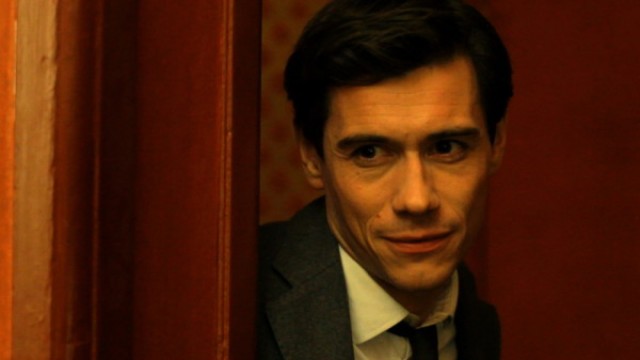
Clindor (Loïc Corbery) is caught in various personal and professional triangles in THE SCREEN ILLUSION
CinéSalon: THE SCREEN ILLUSION (L’ILLUSION COMIQUE) (Mathieu Amalric, 2010)
French Institute Alliance Française, Florence Gould Hall
55 East 59th St. between Madison & Park Aves.
Tuesday, December 1, $14, 7:30
Series continues Tuesdays through December 15
212-355-6100 www.fiaf.org
In 2010, French actor-director Mathieu Amalric was commissioned by la Comédie-Française to make a television version of one of the plays the legendary company had recently staged. The rules were both limiting and freeing: He had to use the same cast, could not add any words to the script (but could make cuts), and had to shoot the film in twelve days without using the theater itself. Amalric had the credentials for such a daunting assignment; he had previously starred in such films as Munich, The Diving Bell and the Butterfly, and Kings and Queen and directed Mange ta soupe and On Tour, in which he also starred and for which he won the Best Director prize at Cannes. He decided to adapt Pierre Corneille’s 1636 play, L’Illusion comique, a melodrama written just as the Baroque style was shifting into the Classical period. The film takes place in and around a hotel in 2011, where concierge/sorcerer/detective Alcandre (Hervé Pierre) is showing surveillance video to Pridamant (Alain Lenglet), who is searching for his long-missing son, Clindor (Loïc Corbery). Clindor is working for video-game executive Matamore (Denis Podalydès); both men, as well as Adraste (Adrien Gamba-Gontard), are vying for the attention of the lovely but cold Isabelle (Suliane Brahim), daughter of corporation head Géronte (Jean-Baptiste Malartre). Meanwhile, Adraste’s coworker, Lyse (Julie Sicard), is desperately in love with Clindor. It all comes to a head one night following a dinner party, when a fierce battle takes place on a rooftop. “When all hope is gone, one has nothing more to fear,” Isabelle says.
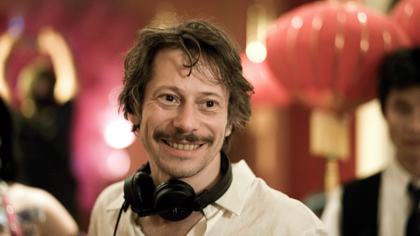
Mathieu Amalric on the set of his Pierre Corneille adaptation for la Comédie-Française
The Screen Illusion is a clever and inventive, if at times confusing and overly farcical, adaptation of Corneille’s tale. The actors recite their lines in verse, which takes a little getting used to. Production designer Hervé Dajon and cinematographer Isabelle Razavet bathes the hotel in deep, lurid greens and reds, echoing the greed, envy, jealousy, and lust that surround the characters. The film is very much about the act of viewing; just as we watch theater and movies, becoming lost in their magic, Pridamant watches his son via CCTV cameras, and Amalric actually brings the camera — and the viewer — inside the recordings as the story unfolds before our eyes as well. “Believe only what you see,” Alcandre warns at the beginning of the film, looking into a mirror and talking to himself as well as the audience, hinting at what is to follow and foreshadowing a surprise twist at the end. Inspired by such works as Jean-Luc Godard’s Détective and Jean-Pierre Melville’s Le Samourai, Amalric, an accomplished stage performer in addition to being a film director and actor, melds all of those elements into The Screen Illusion, a tidy little tale that is more than what it first appears. The Screen Illusion is being shown at 7:30 on December 1 in Florence Gould Hall as part of FIAF’s CinéSalon series “Mathieu Amalric: Renaissance Man” and will be introduced by film critic Nicholas Elliott. The series continues through December 15 with Late September, Early Spring; Fantastic Mr. Fox; and The Diving Bell and the Butterfly.
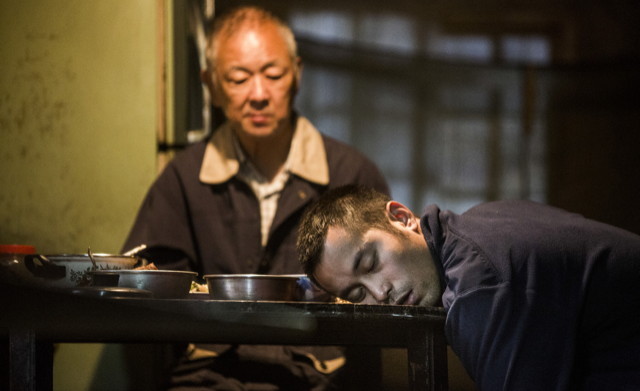
A father (Jimmy Wang) and son (Joseph Chang Hsiao-Chuan) are trapped in a dark mystery that won’t let up in Chung Mong-Hong’s SOUL
SOUL (SHĪ HÚN) (Chung Mong-hong, 2013)
BAMcinématek, BAM Rose Cinemas
30 Lafayette Ave. between Ashland Pl. & St. Felix St.
Monday, November 30, 7:30
Series runs November 30 – December 3
718-636-4100 www.bam.org
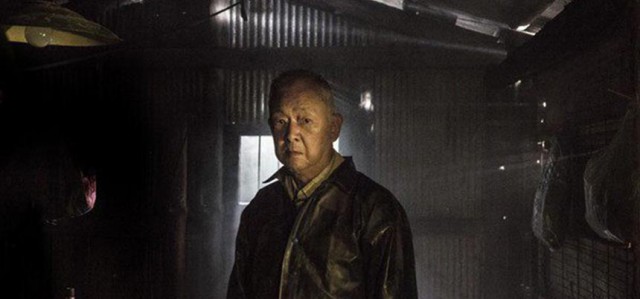
Taiwanese writer-director Chung Mong-Hong’s third feature film, following 2008’s Parking and 2010’s The Fourth Portrait, is an intense, meditatively paced thriller about family and identity. In Soul, wuxia legend Jimmy Wang (aka Jimmy Wong Yu) stars as Wang, a simple, understated old man living in a reclusive house in the mountains. After his chef son, Ah-Chuan (Joseph Chang Hsiao-Chuan), suddenly collapses in the city and is brought back to his childhood home, strange things start occurring, as Ah-Chuan seems different and dead bodies begin to pile up. It turns out that Ah-Chuan’s soul has temporarily left his body, replaced by another, not-quite-so-gentle being, leading to yet more trouble, especially because Wang’s goofy policeman nephew, Little Wu (Vincent Liang), continues to hang around, sensing that something suspicious might be going on. The Taiwanese entry for Best Foreign Language Film for the 2014 Oscars, Soul is a gripping, surreal tale that unfolds with a cool calm that can explode at any moment, and then does. Shaw Brothers veteran Wang, who wrote, directed, and starred in such martial arts classics as The Chinese Boxer and Master of the Flying Guillotine, is sensational as Uncle Wang, playing the role with an assured, self-possessed composure despite the hell the old man finds himself in.
Jimmy Wang gives a carefully measured performance in Taiwanese psychological thriller
Chang (Eternal Summer, Au Revoir Taipei) is a strong counterpart to Wang, combining inner strength with just the right amount of mystery and danger. As in his previous films, which also include the 2011 short Reverberation and the 2006 documentary Doctor, Chung also serves as cinematographer, using the pseudonym Nagao Nakashima, and the gorgeous photography is like a character unto itself, bathing the film in lush earth tones that add yet another level to the lovely perplexity of it all. Soul kicks off BAMcinématek’s four-film retrospective of Chung’s work, screening on November 30 at 7:30, followed by a Q&A with the director. The series continues with Parking on December 1, Doctor on December 2, and The Fourth Portrait on December 3.
Monty Python finds the Holy Grail of comedy in quotable classic romp
MONTY PYTHON AND THE HOLY GRAIL (Terry Gilliam & Terry Jones, 1975)
Videology Bar & Cinema
308 Bedford Ave.
Saturday, November 28, 9:30
718-782-3468 videologybarandcinema.com www.pythonline.com
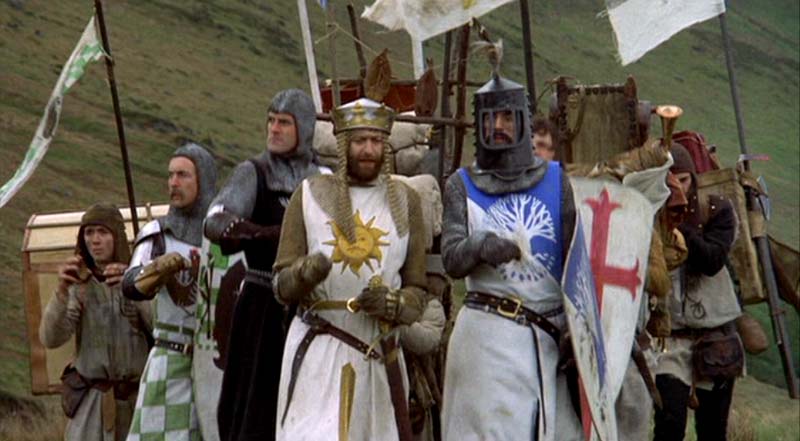
In 1975, a comedy troupe consisting of five Oxford and Cambridge grads and an American animator, the six best known for their absurdist sketches, teamed up to make the most quotable, and perhaps all-time-funniest, film to ever come from across the pond, and you can join in the fun on November 28 as Videology in Williamsburg hosts the Monty Python and the Holy Grail Quote-a-Long. In the relentlessly hysterical film, King Arthur (Graham Chapman) leads his ne’er-do-well Knights of the Round Table — Sir Lancelot the Brave (John Cleese), Sir Robin-the-Not-Quite-So-Brave-as-Sir-Lancelot (Eric Idle), Sir Bedevere the Wise (Terry Jones), and Sir Galahad the Pure (Michael Palin) — on a quest to find the Holy Grail, as ordered by God himself (voice of Chapman, cartoon of cricket legend W. G. Grace). So off they go, visiting strange castles with even stranger knights, answering silly questions to get across a bridge, seeking advice from a mad wizard, battling a cute little killer rabbit, and searching for shrubbery. The wild romp, in which the Pythons never meet a joke too high-brow or low-brow, helped warp the minds of several generations and continues to result in much rejoicing in living rooms and movie theaters around the world.
The Pythons play multiple roles throughout the hysterical romp, with such particularly riotous turns as Cleese as the Black Knight (“It’s just a flesh wound.”), Tim the Enchanter (“So! Brave knights! If you do doubt your courage or your strength, come no further, for death awaits you all with nasty, big, pointy teeth.”), and a French taunter (“Your mother was a hamster and your father smelt of elderberries.”), Gilliam as Patsy (“Camelot!” “It’s only a model.”), the Bridgekeeper (“What . . . is the air-speed velocity of an unladen swallow?”), and the animator (“Ughck!”), Idle as the Dead Collector (“Who’s that then?” “I dunno, must be a king.” “Why?” “He hasn’t go shit all over him.”) and Roger the Shrubber (“Oh, what sad times are these when passing ruffians can say ‘Ni’ at will to old ladies.”), Palin as Dennis (“Oh, king, eh? Very nice. And how’d you get that, eh? By exploiting the workers. By hanging on to outdated imperialist dogma which perpetuates the economic and social differences in our society.”) the chief Knight Who Says “Ni” (“One that looks nice. And not too expensive.”) and Jones as Prince Herbert (“One day, lad, all this will be yours.” “What, the curtains?”). Python regulars Connie Booth and Carol Cleveland appear as well, the former as a witch who is facing being burned at the stake (“She turned me into a newt.” “A newt?” “I got better.”), the latter as twins Zoot and Dingo (“Oh, wicked, bad, naughty, evil Zoot! Oh, she is a bad person, and she must pay the penalty!”). Study up, because you won’t want to be embarrassed while surrounded by Pythonians at Videology who know every single word of this outrageously entertaining classic.
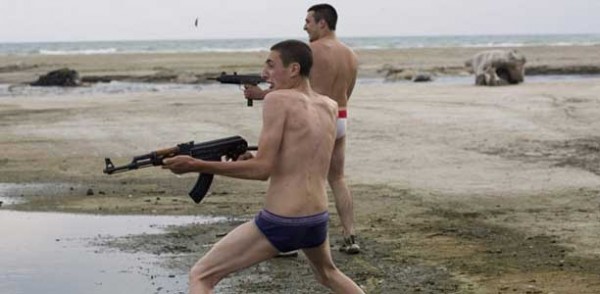
 Winner of the Grand Prix at the 2008 Cannes Film Festival, Gomorra is a violent, intimate look at the modern-day Camorra crime syndicate in Naples and Caserta. Based on the nonfiction novel by investigative journalist Roberto Saviano — who has been living under police protection since the fall of 2006 — Matteo Garrone’s epic follows five distinct yet interrelated stories set around a dilapidated concrete-block housing project, a sort of Godfather meets The Sopranos filtered through Italian Neo-realism. Pasquale (Salvatore Cantalupo) is a tailor who considers sharing his secrets with a Chinese sweatshop to make some much-needed extra cash. Roberto (Carmine Paternoster) is having second thoughts training under Franco (The Great Beauty’s Toni Servillo), who runs a toxic waste dumping business. Don Ciro (Gianfelice Imparato) has to deal with a delicate, difficult situation when Maria’s (Italian singing star Maria Nazionale) young son joins the secessionists, a rival gang. Marco (Marco Macor) and Ciro (Ciro Petrone) are loose cannons who keep messing with the wrong people. And Totò (Salvatore Abruzzese) is a thirteen-year-old boy who is helping out the Camorra against his mother’s wishes — and is soon faced with a life-changing decision. Beautifully shot by Marco Onorato and featuring a cast of primarily nonprofessional actors, Gomorra is a deeply involving crime drama, all the more frightening because it’s based on real, current situations. Gomorra is screening December 6 & 15 as part of the MoMA series “Italian Film, 21st-Century Style: A Tribute to Rai Cinema,” which kicks off with Garrone’s latest, Il Racconto dei racconti (Tale of Tales). The two-week retrospective consists of ten films from the last fifteen years released by the Italian studio, including Ermanno Olmi’s Il Mestiere delle armi (The Profession of Arms), Gianni Amelio’s Le Chiavi di casa (The Keys to the House), Emanuele Crialese’s Terraferma, and Alice Rohrwacher’s Le Meraviglie (The Wonders).
 Winner of the Palme D’Or at the 2001 Cannes Film Festival, The Son’s Room is a moving look at life, love, and loss. Italian writer-director-actor Nanni Moretti stars as Giovanni, a psychiatrist who can’t control the dissolution of his family following a terrible tragedy. Moretti (Caro Diario, Ecce Bombo) has made a heart-wrenching work that will always be compared with Todd Field’s powerful In the Bedroom, which came out the same year. Both films examine family tragedy with honesty and believability, but whereas the family in In the Bedroom considers revenge, the father in The Son’s Room, achingly played by Moretti, can’t get over wrongly blaming himself, while his wife (Laura Morante, who won the Best Actress award at Cannes for the role) seeks solace in her son’s girlfriend (Sofia Vigliar), whom she had not known about. Moretti is a deeply personal filmmaker; at times you will feel like you are watching a documentary, and it will break your heart. The Son’s Room is screening December 5 & 17 as part of the MoMA series “Italian Film, 21st-Century Style: A Tribute to Rai Cinema,” comprising ten films from the last fifteen years released by the Italian studio. Other films in the two-week retrospective are Matteo Garrone’s Il Racconto dei racconti (Tale of Tales) and Gomorra, Marco Bellocchio’s Buongiorno, notte (Good Morning, Night), the Taviani brothers’ Cesare deve morire (Caesar Must Die), and Gianfranco Rosi’s Sacro GRA.
 In 2010, French actor-director Mathieu Amalric was commissioned by la Comédie-Française to make a television version of one of the plays the legendary company had recently staged. The rules were both limiting and freeing: He had to use the same cast, could not add any words to the script (but could make cuts), and had to shoot the film in twelve days without using the theater itself. Amalric had the credentials for such a daunting assignment; he had previously starred in such films as Munich, The Diving Bell and the Butterfly, and Kings and Queen and directed Mange ta soupe and On Tour, in which he also starred and for which he won the Best Director prize at Cannes. He decided to adapt Pierre Corneille’s 1636 play, L’Illusion comique, a melodrama written just as the Baroque style was shifting into the Classical period. The film takes place in and around a hotel in 2011, where concierge/sorcerer/detective Alcandre (Hervé Pierre) is showing surveillance video to Pridamant (Alain Lenglet), who is searching for his long-missing son, Clindor (Loïc Corbery). Clindor is working for video-game executive Matamore (Denis Podalydès); both men, as well as Adraste (Adrien Gamba-Gontard), are vying for the attention of the lovely but cold Isabelle (Suliane Brahim), daughter of corporation head Géronte (Jean-Baptiste Malartre). Meanwhile, Adraste’s coworker, Lyse (Julie Sicard), is desperately in love with Clindor. It all comes to a head one night following a dinner party, when a fierce battle takes place on a rooftop. “When all hope is gone, one has nothing more to fear,” Isabelle says.