Documentary reveals little-known U.S. propaganda efforts during WWII to show rest of world the American way of life
PROJECTIONS OF AMERICA (Peter Miller, 2015) & THE AUTOBIOGRAPHY OF A JEEP (Irving Lerner, 1943)
Film Society of Lincoln Center, Walter Reade Theater
165 West 65th St. between Eighth Ave. & Broadway
Wednesday, January 13, 1:30 & 6:00
Festival runs January 13-26
nyjff.org
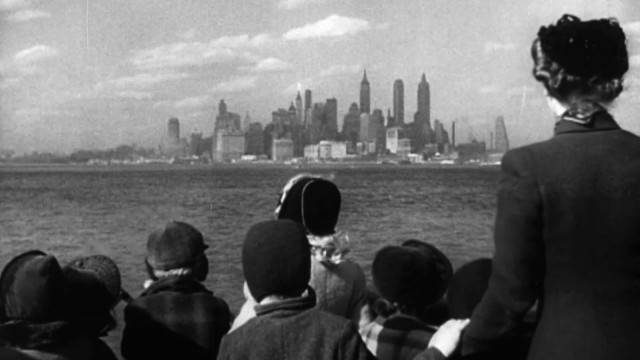
 The twenty-fifth annual New York Jewish Film Festival gets under way January 13 with a look at a little-known part of the U.S. propaganda effort during WWII. In Projections of America, director Peter Miller details how the U.S. Office of War Information used specially made short documentary films to show the rest of the world the positive aspects of the American way of life, particularly as U.S. soldiers helped liberate many cities and countries in Eastern and Western Europe. “The films were idealized versions of what America could be, created by politically engaged filmmakers who, while fighting tyranny abroad, wanted also to fundamentally change America itself,” narrator John Lithgow explains. At the center of it all was Oscar-winning screenwriter Robert Riskin, who had written eight Frank Capra films, including It Happened One Night, Mr. Deeds Goes to Town, and Meet John Doe. Riskin, fellow scribe and chief of production Philip Dunne (How Green Was My Valley, The Ghost and Mrs. Muir), and Pulitzer Prize-winning playwright, screenwriter, and FDR speech writer Robert E. Sherwood (The Petrified Forest, Abe Lincoln in Illinois) enlisted such directors and producers as John Houseman and Josef von Sternberg and such stars as Ingrid Bergman in making such short propaganda films as Swedes in America, Cowboys, Steel Town, The Valley of the Tennessee, and Watchtower over America, which people flocked to in Europe, North Africa, and even Germany. “It all came together as the greatest collection of filmmakers working toward one common goal that we will ever see,” notes film historian Cecile Starr.
Miller also interviews historians Ian Scott, Marja Roholl, and Stéphane Lamache, film critic Kenneth Turan, screenwriter David Rintels, and assistant film editor Aram Boyajian in addition to Normandy residents Michel Ollivier and Margit Cohn Siebner, Cummington resident Bill Streeter, French Resistance fighter Paul Le Goupil, Berlin resident Klaus Riemer, and German projectionist Heinz Meder. “We wanted to know: How did the Americans live?” Riemer remembers. In addition, Miller speaks with Riskin’s daughters Victoria and Susan and son Robert Jr., who talk about their father and mother, King Kong actress Fay Wray, with cherished memories. Projections of America is not only about the power of the movies but is also very much a love story between Riskin, a Jewish American from the Lower East Side, and the Canadian-born Wray, who appeared in some one hundred Hollywood films.
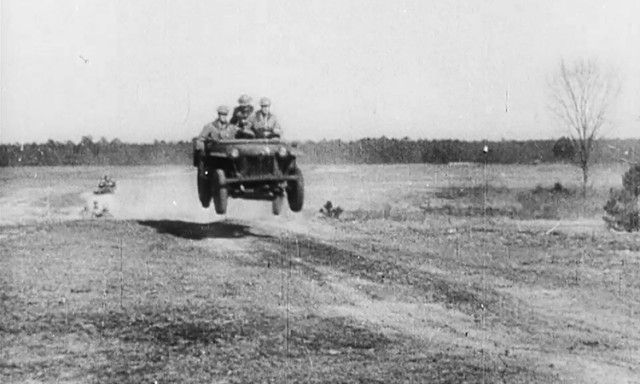
AUTOBIOGRAPHY OF A JEEP uses the general purpose military vehicle as propaganda in short film
Projections of America features telling clips from many of these thought-to-be-lost shorts, including Arturo Toscanini, which was made to combat the evils of Fascism with footage of the great Italian conductor working in the West; The Cummington Story, about a small town that suddenly gets an influx of war refugees; and The Autobiography of a “Jeep,” which is being shown at the Jewish Film Festival along with Projections of America. The extremely popular nine-minute short anthropomorphizes the military vehicle, which got its name because of its “general purpose,” through first-person narration that equates it with the American soldier, except that it is 60-horsepower strong, 2200 pounds, 11 feet long, 5 feet wide, and 3 feet high. Among those photographed riding in a Jeep are Franklin D. Roosevelt, Laurel and Hardy, King George VI, Douglas MacArthur, and the Queen Mother as it hypes the future of the United States. Together, Projections of America and The Autobiography of a “Jeep” shed light on a fascinating aspect of what the country believed itself to be and what its hopes and dreams were for the future. The two films are screening on January 13 at 1:30 and 6:00 at the Walter Reade Theater and will be followed by Q&As with Miller; the festival, a joint project of the Film Society of Lincoln Center and the Jewish Museum, celebrates its silver anniversary with a slate of old and new gems, continuing through January 26 with such other films as Yared Zeleke’s Lamb, Amos Gitai’s Rabin, the Last Day, Andrzej Wajda’s Holy Week, Marianne Lambert’s I Don’t Belong Anywhere: The Cinema of Chantal Akerman, and Todd Solondz’s Welcome to the Dollhouse as well as panel discussions and a master class with Alan Berliner.
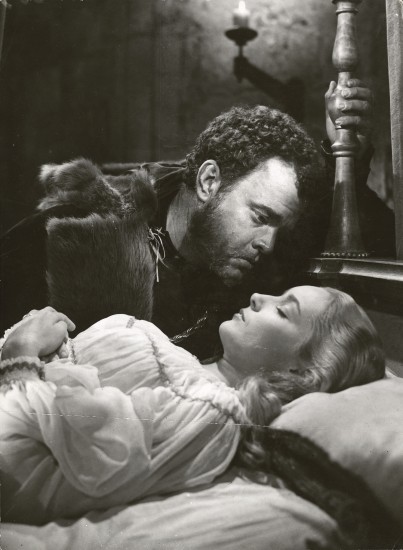
 Film Forum follows up its two-week presentation of the restored version of Orson Welles’s spectacular Shakespearean adaptation,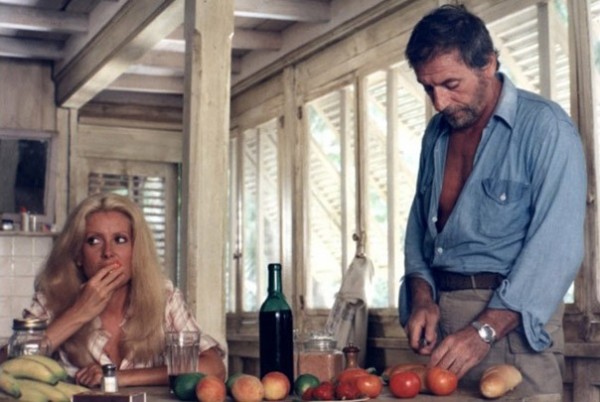
 The spectacularly gorgeous Catherine Deneuve and the ruggedly handsome Yves Montand play it for outrageous laughs in Jean-Paul Rappeneau’s screwball romantic comedy, Le Sauvage, aka Lovers Like Us. Deneuve is mesmerizing as Nelly, an unpredictable woman who lives by her wits, as if she is a feral child raised by wolves. She acts out instantly on her id, without concerning herself with the consequences and effects on other people. She is engaged to marry Vittorio (Luigi Vannucchi), a hot-blooded Italian who is none too happy when she bolts in the middle of the night. In need of money, Nelly goes to the nightclub where she worked for a year without getting paid, demanding her salary, but when slick manager Alex Fox (Tony Roberts) refuses to give her a dime, she takes off with his prized possession, Henri de Toulouse-Lautrec’s “La Goulue at the Moulin Rouge.” She tries to sell the painting to the stranger in the hotel room next to hers, Martin (Montand), but when Vittorio wrongly assumes he is his fiancée’s lover, Martin gets caught up in the middle of some crazy silliness as well as legitimate danger. Soon Martin and Nelly are living on a deserted island, she on the run from Vittorio, he hiding from his mysterious past.

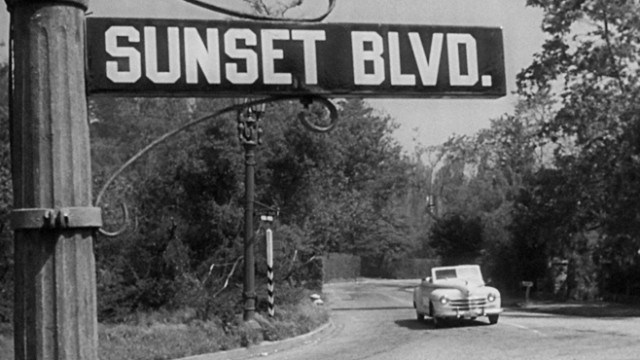
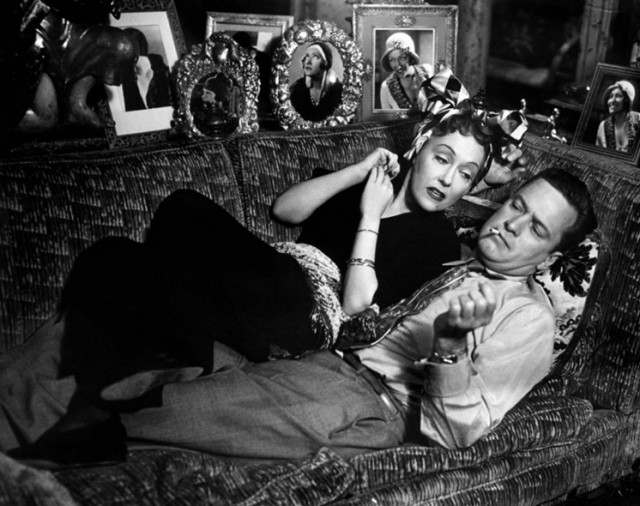
 “You’re Norma Desmond. You used to be in silent pictures. You used to be big,” handsome young screenwriter Joe Gillis (William Holden) remarks to an older woman in Billy Wilder’s Sunset Boulevard. “I am big. It’s the pictures that got small,” the former star (Gloria Swanson) famously replies. It doesn’t get much bigger than Sunset Boulevard, one of the grandest Hollywood movies ever made about Hollywood. The wickedly entertaining film noir begins in a swimming pool, where Gillis is a floating corpse, seen from below. He then posthumously narrates through flashback precisely what landed him there. On the run from a couple of guys trying to repossess his car, the broke Gillis ends up at a seemingly abandoned mansion, only to find out that it is home to Desmond and her dedicated servant, Max Von Mayerling (Erich von Stroheim). They initially mistake Gillis for the undertaker who is coming to perform a funeral service and burial for Desmond’s pet monkey. (You’ve got to see it to believe it.) When Desmond discovers that Gillis is in fact a screenwriter, she lures him into working with her on her script for a new version of Salome, in which she is determined to play the lead role. “I didn’t know you were planning a comeback,” Gillis says. “I hate that word,” Desmond responds. “It’s a return, a return to the millions of people who have never forgiven me for deserting the screen.” But just as Desmond was unable to make the transition from silent black-and-white films to color and sound pictures, getting Salome off the ground is not going to be as easy as she thinks. Hollywood can be a rather vicious place, after all.