Amos Gitai digs deep behind the assassination of Israeli prime minister Yitzhak Rabin in gripping docudrama
RABIN, THE LAST DAY (Amos Gitai, 2015)
Lincoln Plaza Cinema
1886 Broadway at 63rd St.
January 29 – February 4
212-757-2280
www.lincolnplazacinema.com
www.kinolorber.com
 On November 4, 1995, Israeli prime minister Yitzhak Rabin was assassinated at the conclusion of a major peace rally in Tel Aviv. Israeli auteur Amos Gitai explores what led to, and followed, the tragedy in the tense and gripping Rabin, the Last Day. Gitai and cowriter Marie-José Sanselme combine archival footage of news reports, press conferences, political rallies, and public speeches with extensively researched re-created scenes of the killer, Yigal Amir (Yogev Yefet), loading his gun and, afterward, being interrogated, showing no remorse; of the Shamgar Commission, which conducted hearings to find out what went wrong with security and whether there was some kind of conspiracy; and of a small group of Israelis establishing a tiny settlement in Gaza. The film plays out like a procedural thriller with flashbacks as a radical right-wing rabbi tells his congregation that Rabin, who had signed the Oslo Accords and was negotiating with Yasser Arafat and the PLO about ceding parts of the Gaza Strip and the West Bank to the Palestinians, is subject to the Talmudic concept of din rodef (“the case of the pursuer”), marking the Nobel Peace Prize recipient for death; a psychiatrist (Dalia Shimko) declares that Rabin must be schizophrenic because of the decisions he is making; and a police officer (Gdalya Besser) gives information to a hungry press. Meanwhile, the Shamgar Commission chairman (Yitzhak Hiskiya) and two members (Pini Mittelman and Michael Warshaviak) question Rabin’s driver (Tomer Sisley) and bodyguard (Eldad Prywes), the director of the hospital (Tomer Russo) where Rabin was brought after the shooting, the intelligence officer (Shalom Shmuelov) in charge of security, and others as they attempt to uncover every detail of the horrific event to see if anything could have been done differently — and whether more people than just Amir were involved. However, when the name of GSS agent Avishai Raviv is raised, two commission lawyers (Ronen Keinan and Einat Weizman) suddenly stop the proceedings, declaring that anything relating to the secret operative is classified. Perhaps most frightening is the footage of rallies — led by then-Likud leader and now Israeli prime minister Benjamin Netanyahu — in which participants chant “Death to Rabin!” and hold up signs depicting Rabin dressed as a Nazi and as Arafat.
Gitai, who served in a rescue unit during the Yom Kippur War and has made such other political, often controversial films as Kippur, Kadosh, Kedma, and the Border Trilogy (Promised Land, Free Zone, Disengagement), is not only seeking to uncover the truth of what led to the assassination but is also warning us that something like this can happen again, as all the elements are in place once more, and not only in Israel. It is almost impossible to watch the film without thinking about the growing hate speech in the United States in our national conversation about immigrants, Muslims, refugees, and building walls, all while more and more people, and small militias arm themselves and have less and less respect for the presidency. Gitai and cinematographer Eric Gautier (Into the Wild, The Motorcycle Diaries) move the camera very slowly, zooming in on the characters’ faces as they ask questions and give answers. The steady pace creates a tense atmosphere as scenes fade out to give viewers time to process what they’ve just witnessed. Editors Yuval Orr, Tahel Sofer, and Isabelle Ingold seamlessly weave the archival footage into the re-creations, making it difficult to sometimes know whether we are watching something real or restaged. But Gitai asserts that every single word spoken in the film is “completely factual,” that everything that is said has been taken directly from existing documentation. There is no omniscient third-person narration, no screen text or intertitles stating statistics. And to further the reality behind the film, Leah Rabin, the prime minister’s widow, and Shimon Peres, who was Rabin’s foreign minister in 1995 and won the Nobel Peace Prize along with the prime minister and Arafat (before becoming president of Israel in 2007), both speak with Gitai on camera. Could something like this indeed happen again in a democratic nation? Rabin, the Last Day essentially wonders why it hasn’t already.
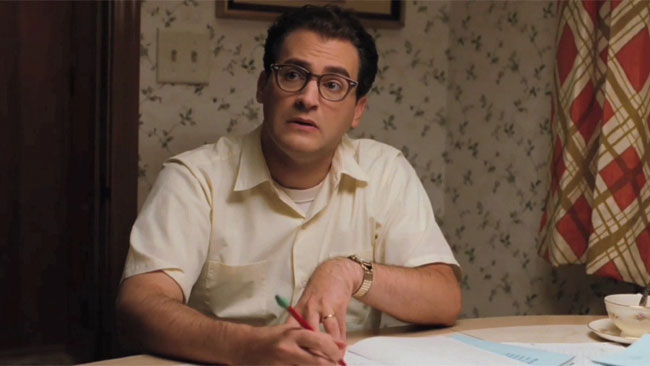
 The Coen brothers take their unique brand of dry, black comedy to a whole new level with A Serious Man. Poor Larry Gopnik (a remarkably even-keeled Michael Stuhlbarg) just keeps getting dumped on: His wife, Judith (Sari Lennick), wants to leave him for, of all people, touchy-feely Sy Ableman (Fred Melamed); his brother, Arthur (Richard Kind), keeps hogging the bathroom so he can drain his cyst; his son, Danny (Aaron Wolf), won’t stop complaining that F-Troop isn’t coming in clearly and is constantly on the run from the school drug dealer (Jon Kaminsky Jr.); his daughter, Sarah (Jessica McManus), wants to get a nose job; one of his students (David Kang) has bribed him for a passing grade; his possible tenure appears to be in jeopardy; and he gets no help at all from a series of funnier and funnier rabbis. But Larry keeps on keepin’ on in the Jewish suburbs of Minnesota in 1967, trying to make a go of it as his woes pile higher and higher. Joel and Ethan Coen have crafted one of their best tales yet, nailing the look and feel of the era, from Hebrew school to Bar Mitzvah practice, from office jobs to parking lots, from the Columbia Record Club to transistor radios, from television antennas to the naked neighbor next door. The Coens get so many things right, you won’t mind the handful of mistakes in the film, and because it’s the Coens, who’s to say at least some of those errors weren’t intentional? A Serious Man is a seriously great film, made by a pair of seriously great filmmakers. And while you don’t have to be Jewish and from Minnesota to fall in love with it, it sure can’t hurt.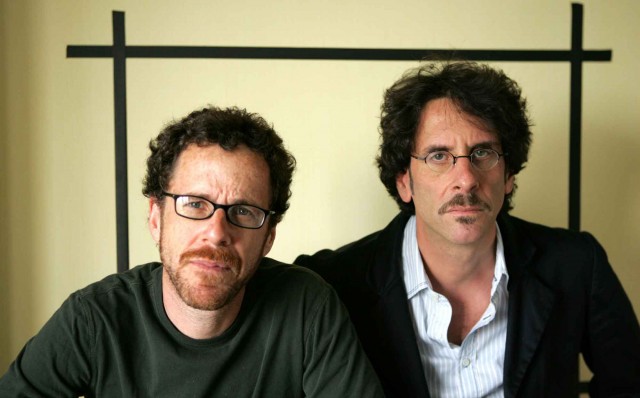
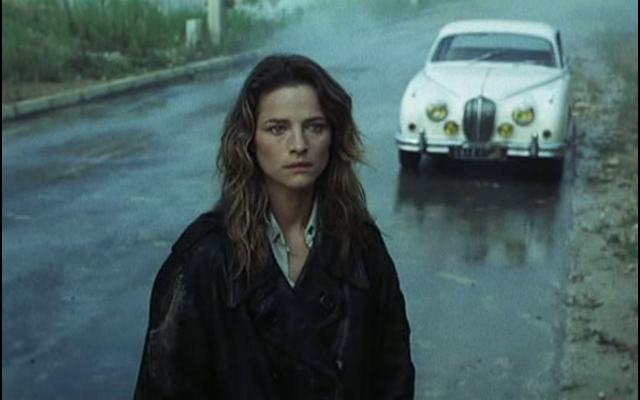
 French stage and opera director Patrice Chéreau made an offbeat choice for his debut film, deciding to adapt British thriller writer James Hadley Chase’s The Flesh of the Orchid, the 1948 sequel to his first novel, 1939’s No Orchids for Miss Blandish, which had been made into a 1948 film by St. John Legh Clowes considered to be one of the worst movies ever. So it’s little surprise that The Flesh of the Orchid is a dark and gloomy, not wholly successful, both tantalizing and frustrating tale of lust and greed. Following up her controversial role in Liliana Cavani’s The Night Porter, the exquisite Charlotte Rampling stars as Claire, a mentally unbalanced heiress who has a penchant for blinding men who attempt to have sex with her. But she takes an odd liking to Louis Delage (Bruno Cremer), a man with financial problems who is on the run after witnessing a murder committed by a pair of cold-blooded killers, brothers Gyula and Joszef Berekian (Hans Christian Blech and François Simon). Meanwhile, Claire’s aunt, the elegant, très chic Madame Wegener (Edwige Feuillère), and her ne’er-do-well son, Arnaud (Rémy Germain), are hot on her trail as well, determined to lock her away again so they can get their hands on the family money.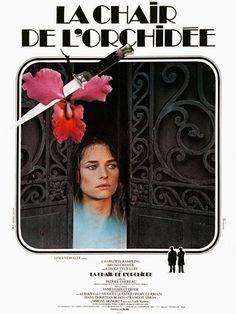
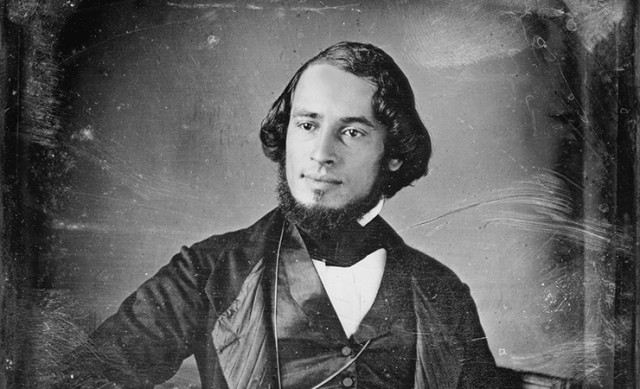
 The extraordinary story of nineteenth-century Jewish-American Renaissance Man Solomon Nunes Carvalho is told in the beautiful documentary Carvalho’s Journey. Born in Charleston, South Carolina, the Jewish cultural center of the U.S. in 1815, Carvalho was a painter, daguerreotypist, inventor, philosopher, husband, father, and practicing Jew. In 1853, Mathew Brady recommended him to explorer John C. Frémont, who was looking for a photographer to document his fifth and final Westward Expedition. So Carvalho brought his bulky equipment and set out to do what no one had done before, take pictures of a vast and treacherous landscape, a journey that would risk the lives of everyone involved as Frémont searched for a railroad route through the Rocky Mountains. Along the way, Carvalho never lost sight of his faith and his deep love for his wife, Sarah Miriam, as evidenced by the detailed, poetic letters he wrote her in addition to his 1857 memoir, Incidents of Travel and Adventure in the Far West. “With few men, religion is a color, a lifeless, abstract notion, but abstraction is not pure religion. Religion must signify itself in our actions in life. Aye, it must embrace the whole sphere of our activities and affections,” Carvalho, voiced by Josh Hamilton in the film, wrote. Historian David Oestreicher explains, “He was very proud of who he was, but at the same time he was a proud American; he saw the promise of America. I believe that he was being a good American by exercising his right to openly belong to his people. I don’t think he saw a conflict there.”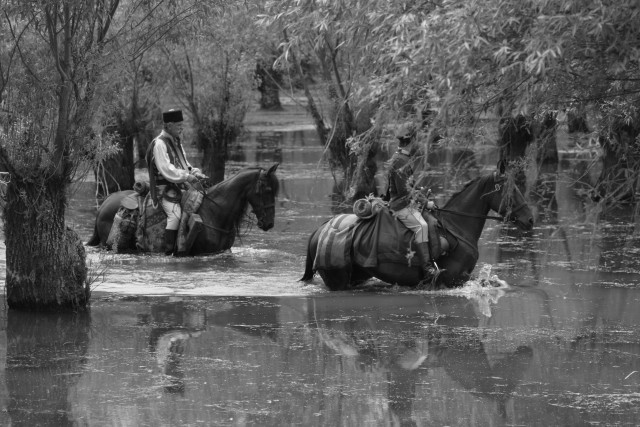
 Romanian director Radu Jude won the Silver Bear as Best Director at the 2015 Berlin International Film Festival for Aferim!, his savagely funny blacker-than-black comic Western about bigotry, infidelity, and frontier justice in 1835 Wallachia. Lawkeeper Costandin (Teodor Corban) and his son, Ionitā (Mihai Comānoiu), are galloping through the local countryside, searching for runaway Gypsy slave Carfin (Cuzin Toma), who Boyar Iordache Cindescu (Alexandru Dabija) has accused of having an affair with his wife, Sultana (Mihaela Sîrbu). The surly Costandin leads the hunt, verbally cutting down everyone he meets, from random old women to abbots to fellow lawmen, with wicked barbs, calling them filthy whores, crows, and other foul names while spouting ridiculous theories about honor and religion; he even batters his son, saying he’s “a waste of bread” and that “if you slap him, he’ll die of grief.” It’s a cruel, cholera-filled time in which even the monks beat the poor, where Costandin regales a priest with the telling riddle, “Lifeless out of life, life out of lifeless,” which the priest thinks refers to the coming doomsday.