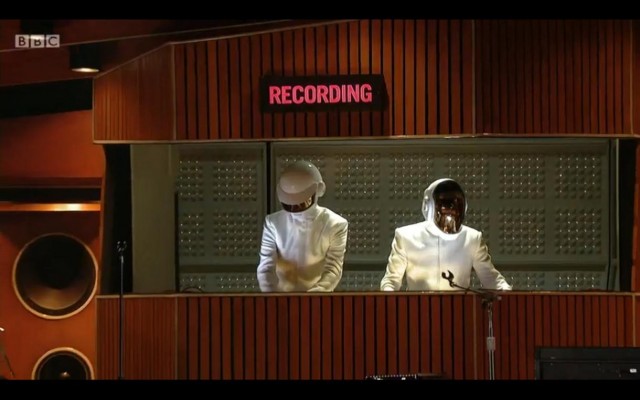
The fascinating history of French EDM pioneers Thomas Bangalter and Guy-Manuel de Homem-Christo is detailed in DAFT PUNK UNCHAINED
DAFT PUNK UNCHAINED (Hervé Martin Delpierre, 2015)
French Institute Alliance Française, Florence Gould Hall
55 East 59th St. between Madison & Park Aves.
Tuesday, March 1, $14, 4:00 & 7:30
Series continues Tuesdays through April 26
212-355-6100
www.fiaf.org
 You might think that the phrase “the French Touch,” which is part of the title of FIAF’s March-April edition of its CinéSalon series, refers to the unique style of such French auteurs as François Truffaut, Jean Renoir, Jean-Luc Godard, Louis Malle, Jean Cocteau, Éric Rohmer, and others whose films are often included in these Tuesday-night festivals. But the term actually describes a group of DJs and bands associated with electronic dance music, or EDM, in France. So it is rather appropriate for the series, “EDM Anthems: French Touch on Film,” to kick off with Daft Punk Unchained, a thumping documentary about the patron saints of that movement, the iconoclastic duo of Thomas Bangalter and Guy-Manuel de Homem-Christo, better known as Daft Punk. Director Hervé Martin Delpierre, who cowrote the film with Marina Rozenman, had his work cut out for him, as he had to make the film without the participation of Daft Punk itself, Bangalter and de Homem-Christo, who have not shown their faces in public this century and rarely give interviews of any kind. But Delpierre gets just about everyone else who has ever worked with them to open up, allowing others to interpret the band’s musical evolution and cultural impact as he traces DP’s career from 1992, when they were in the somewhat more traditional bass-guitar-drum combo Darlin’, to the worldwide sensation of their 2013 album, Random Access Memories, as they melded American disco, German techno, and Manchester industrial into something wholly new. A special focus is placed on their mind-blowing show at Coachella in 2006, which single-handedly changed the future of EDM.
Amid rare photographs of Bangalter and de Homem-Christo without their trademark robot helmets or masks and audio clips of radio interviews, Delpierre speaks with such Daft Punk collaborators as Kanye West, Nile Rodgers, Giorgio Moroder, Pete Tong, Todd Edwards, Pharrell Williams, Skrillex, and Paul (Phantom of the Paradise) Williams, in addition to special effects master Tony Gardner, anime director Leiji Matsumoto, and filmmaker Michel Gondry, who first put DP in helmets. Also sharing insight into what makes the duo so significant are former manager Pedro (Busy P) Winter as well as various journalists, record label heads, and friends. “I just think they’re a unique set of individuals. I have a hard time calling them human, just because musically the robots are something else,” Pharrell, who scored a huge hit with Daft Punk on eventual Grammy favorite “Get Lucky,” says. “I just never experienced working with individuals like them. Everything is so concise. There’s a reason behind everything. Nothing is done by coincidence, by accident or mistake. It’s always with an intention to serve a purpose.” What also serves their purpose is avoiding promotion or publicity that would involve their making an appearance of any kind. Thus, we don’t learn about Bangalter and de Homem-Christo’s private lives, how they work with each other, or what they even look like today. But with everyone stressing how individualistic Daft Punk is, how they insist on doing things their own way no matter what, we wound up rooting for them to keep those helmets on and let the groove-heavy mystery linger on. Daft Punk Unchained is screening at FIAF on March 1 at 4:00 and 7:30; the later show will be followed by a Q&A with Delpierre and DJ Superpoze. In addition, Winter will lead a French Electronic Music Master Class on March 3 with Boston Bun, Superpoze, Jacques, and Julian Starke, and there will be a party celebrating the FIAF series on March 4 at Le Bain with Busy P, Boston Bun, Jacques, and Superpoze. The series continues through April 26 with such other films as Mia Hansen-Løve’s Eden, Nicolas Winding Refn’s Drive, and Céline Sciamma’s Girlhood, which are either set in the club scene or feature EDM-based soundtracks.
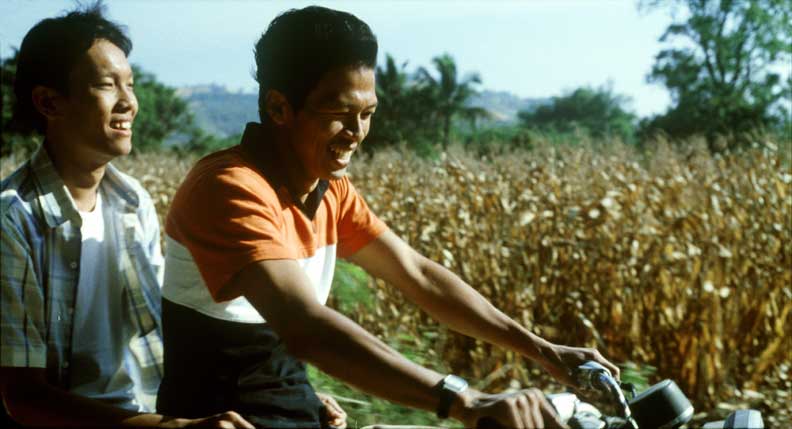
 Thai director Apichatpong Weerasethakul won the Jury Prize at Cannes for Tropical Malady, a beautiful, mystical work that will thoroughly engage you — if you allow it to. Part tender love story between a country boy (Banlop Lomnoi) and a soldier (Dakda Kaewbuadee), part folktale set in the deep forests of Thailand, Tropical Malady is a like a visual poem in which details are not as important as the overall effect, which is intoxicating. The unorthodox film features ghosts, a shape-shifter, unusual characters, and a playful sense of humor that come together to form a subtle meditation on life and love. Weerasethakul once again displays the gentle, captivating narrative technique that lies at the heart of his oeuvre, which also includes such works as Blissfully Yours, Syndromes and a Century, and 2010 Palme d’Or winner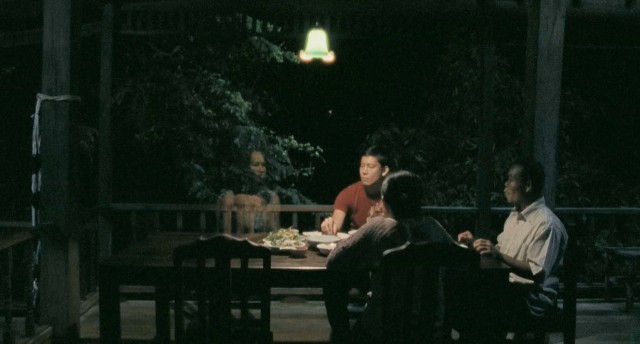
 The IFC Center is celebrating the March 4 theatrical premiere of Apichatpong Weerasethakul’s Mekong Hotel and the U.S. opening of his Cemetery of Splendor with a four-day retrospective of the Thai writer-director’s deeply affecting works. “Mysterious Splendors: The Films of Apichatpong Weerasethakul” runs February 29 through March 3, comprising five older films, followed by the two new ones March 4-10. On February 29 at 9:35 and March 2 at 12 noon and 7:00, you can catch the exquisite 2010 Palme d’Or winner Uncle Boonmee Who Can Recall His Past Lives, an elegiac, personal meditation on memory, transformation, death, and rebirth, a fascinating integration of the human, animal, and spirit worlds. Uncle Boonmee (Thanapat Saisaymar) is dying of kidney failure, being tended to by his Laotian helper, Jaai (Samud Kugasang). Boonmee is joined by his dead wife’s sister, Jen (Jenjira Pongpas), in his house in the middle of the jungle. Boonmee and Jen have nearly impossibly slow conversations that seem to go nowhere, just a couple of very simple people not expecting much excitement out of what’s left of their lives. Even when Boonmee’s long-dead wife, Huay (Natthakarn Aphaiwonk), and his long-missing son, Boonsong (Geerasak Kulhong), now a hairy ghost monkey covered in black fur and with two laserlike red eyes, suddenly show up, Boonmee and Jen pretty much just go with the flow. Weerasethakul maintains the beautifully evocative pace whether Jaai is draining Boonmee’s kidney, the characters discuss Communism, Tong (Sakda Kaewbuadee) questions his monkhood, a princess (Wallapa Mongkolprasert) has sex with a catfish, or they all journey to a cave in search of another of Boonmee’s past lives, framing each section in the context of a different cinematic genre, a lament for the ways movies used to be made and viewed. The film, which was shot in 16mm (but is being shown in 35mm at IFC) and was inspired by a 1983 book called A Man Who Can Recall His Past Lives (as well as some of Weerasethakul’s own family experiences), is part of the Primitive Project, Weerasethakul’s multimedia installation that also includes the short films A Letter to Uncle Boonmee and Phantoms of Nabua and which was displayed at the