Gayle Kirschenbaum delves into her love-hate relationship with her mother in compelling, often agonizing documentary
LOOK AT US NOW, MOTHER! (Gayle Kirschenbaum, 2015)
Village East Cinemas
181-189 Second Ave. at 12th St.
Opens Friday, April 8
212-529-6799
lookatusnowmother.com
www.villageeastcinema.com
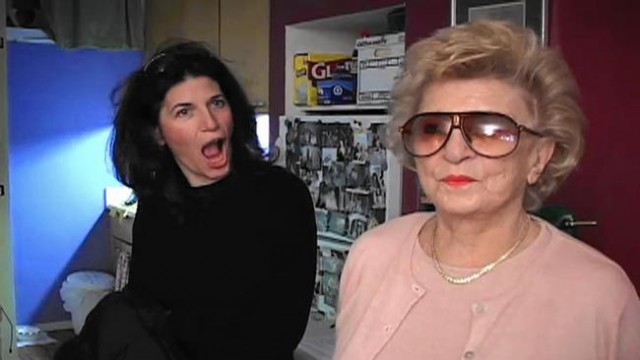
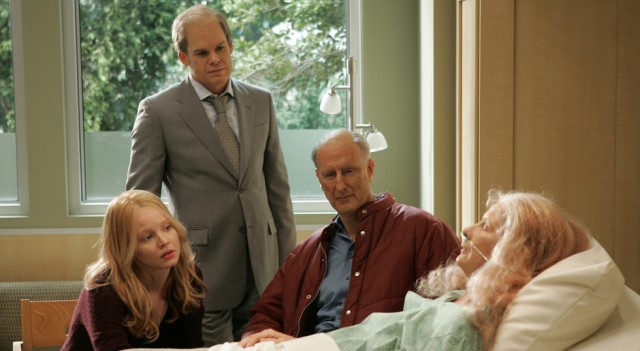
 “Am I ever going to be able to understand, forgive, and cherish my mother, before time runs out?” filmmaker Gayle Kirschenbaum asks at the beginning of her debut feature documentary, Look at Us Now, Mother! In the film, Kirschenbaum, who previously made the cable hit A Dog’s Life: A Dogamentary and the film festival short My Nose, about her mother’s extreme dislike of her daughter’s nose — and which Kirschenbaum is currently attempting to turn into a full feature, The Bigger Version — spends eighty-four minutes detailing her relationship with her mother, Mildred Abramowitz Kirschenbaum, which was more than rocky from the day Gayle was born, when Mildred, who clearly expected and wanted another boy to join her two older sons, got a baby girl instead. Gayle brings together old home movies, travel footage, visits to a pair of therapists and a plastic surgeon, and interviews with her two brothers and her mother’s friends and first cousins to paint a not-too-pretty picture of Mildred, who lives in Boca Raton and has been putting Gayle down and blaming her since the very beginning. In the film, Mildred claims that she has no idea why her daughter is complaining now, although on one therapist visit, she does admit to at least one Mommie Dearest moment. It’s often painful to watch as Gayle, who wrote, directed, and produced the film in addition to editing it with Alex Keipper and shooting it with Steven Gladstone, relives much of the psychological and emotional torture she experienced at the hands of her parents, primarily her mother, who continues to be nasty, rude, uncaring, and disapproving, even if Mildred doesn’t admit it and even if, deep down, she truly loves her daughter. “We are now off to go to see a therapist,” Mildred says at one point. “We’re going to find out what’s wrong with Gayle’s relationship with me.”
The trauma Gayle suffered is palpable throughout the film as her mother never lets up, unwilling to share her feelings or face up to the harm she inflicted on Gayle, who has never married and has no children. Gayle, who goes deep into her family history, merely wants a mother’s love, but there is too often none to be had. In her director’s statement, Kirschenbaum explains, “I never expected to make such a deeply personal film. I had spent most of my career behind the camera telling other people’s stories, but it soon became apparent that the highly charged relationship I had with my mother and its transformation from hate to love was a story I had to tell.” And it’s a story that everyone can relate to, no matter your relationship with your mother — whom you are likely to call as soon as the film is over. Look at Us Now, Mother! is playing April 8-14 at Village East Cinema, with some serious Q&A sessions following many of the screenings throughout the run, including discussions with both Gayle and Mildred Kirschenbaum, therapist Lois Braverman, Rabbi Aaron Raskin, nonviolent communication instructor Dr. Clara Moisello, psychiatrist Dr. Anthony Stern, associate producer Jessica Phillips, filmmaker and teacher Laszlo Santha, and mindfulness and yoga teacher Shoshana Perry.

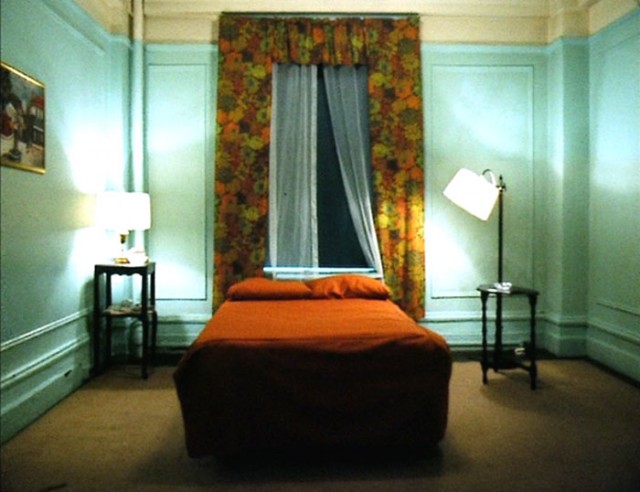
 BAMcinématek continues its month-long tribute to the late Chantal Akerman, which began April 1 with a two-week run of the Belgian auteur’s latest, and last, film,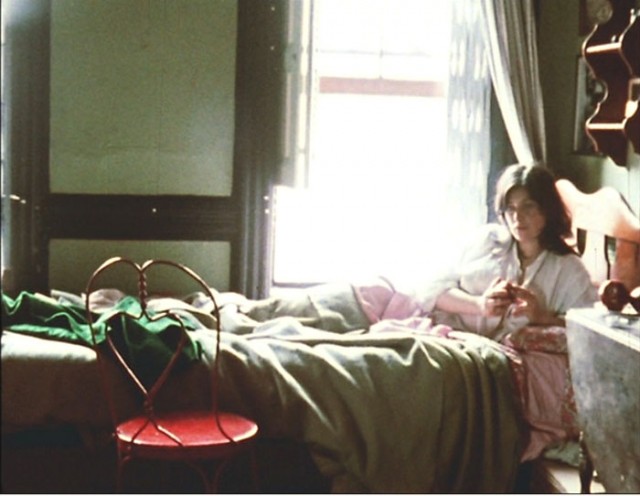

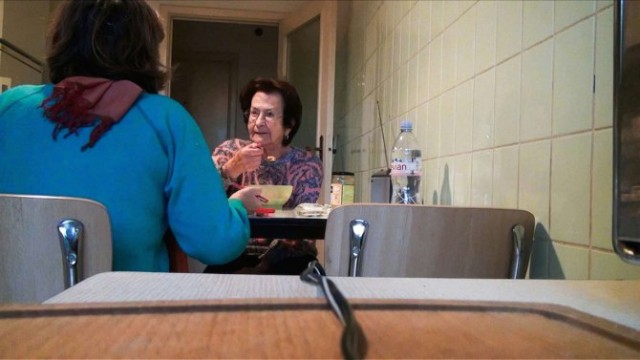
 Chantal Akerman’s No Home Movie was meant to be a kind of public eulogy for her beloved mother, Natalia (Nelly) Akerman, who died in 2014 at the age of eighty-six, shortly after Chantal had completed shooting forty hours of material with her. But it also ended up becoming, in its own way, a public eulogy for the highly influential Belgian auteur herself, as she died on October 5, 2015, at the age of sixty-five, only a few months after the film screened to widespread acclaim at several festivals (except at Locarno, where it was actually booed). Her death was reportedly a suicide, following a deep depression brought on by the loss of her mother. No Home Movie primarily consists of static shots inside Nelly’s Brussels apartment as she goes about her usual business, reading, eating, preparing to go for a walk, and taking naps. Akerman sets down either a handheld camera or a smartphone and lets her mother walk in and out of the frame; Akerman very rarely moves the camera or follows her mother around, instead keeping it near doorways and windows. She’s simply capturing the natural rhythms and pace of an old woman’s life. Occasionally the two sit down together in the kitchen and eat while discussing family history and gossip, Judaism, WWII, and the Nazis. (The elder Akerman was a Holocaust survivor who spent time in Auschwitz.) They also Skype each other as Chantal travels to film festivals and other places. “I want to show there is no distance in the world,” she tells her mother, who Skypes back, “You always have such ideas! Don’t you, sweetheart.” In another exchange, the daughter says, “You think I’m good for nothing!” to which the mother replies, “Not at all! You know all sorts of things others don’t know.”