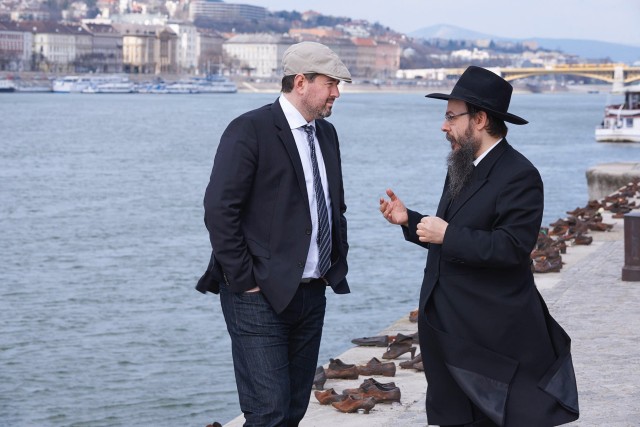
Former Hungarian right-wing leader Csanád Szegedi meets with Rabbi Boruch Oberlander in KEEP QUIET
KEEP QUIET (Joseph Martin & Sam Blair, 2016)
Monday, April 18, Regal Cinemas Battery Park 11-1, 6:30
Tuesday, April 19, Bow Tie Cinemas Chelsea 6, 3:30
Wednesday, April 20, Regal Cinemas Battery Park 11-6, 3:15
keepquietmovie.com
tribecafilm.com
 “When you create a story about yourself that’s based on a lie about who you are and who your family is, sooner or later it’s bound to be revealed,” political journalist Anne Applebaum says at the beginning of Joseph Martin and Sam Blair’s engrossing documentary, Keep Quiet. “Who are we really?” In 2012, Csanád Szegedi was a terrifying young star in Hungary’s far-right Jobbik party, one of the founders of the paramilitary, pro-Nazi, nationalist Hungarian Guard, rising to election to the European Parliament on the strength of a resurgent, virulent anti-Semitism. “I wanted everyone to believe in the world as I saw it,” he says in the film. “Anti-Semitism and discrimination of Jews was a powerful motivation.” But it all came crumbling down when the public heard an audio recording of the young leader’s phone conversation with disgruntled Jobbik party member Zoltán Ambrus, who tells Szegedi that his family is actually Jewish. At first Szegedi refuses to believe it, but soon his maternal grandmother is admitting to him that she is indeed a Holocaust survivor, with a number tattooed on her arm and memories of the camps. Martin (Win a Baby, Scientologists at War) and Blair (Personal Best, Maradona ’86) detail how Szegedi dealt with this dramatic revelation as the conflicted man shares his innermost thoughts, meets with Orthodox Rabbi Boruch Oberlander, and travels to Auschwitz with Holocaust survivor Eva “Bobby” Neumann. He undergoes a radical transformation that not everyone trusts as the film explores who we are, the impact of where we come from, and whether blood trumps all. Keep Quiet is particularly relevant in a world that is experiencing yet another frightening rise in anti-Semitism, especially in Europe. Martin and Blair also delve into Hungary’s history with the Jews, and it’s not a very pleasant one. The film gets to the very heart of the matter, examining the nature of religious hatred in one man who reevaluates everything he believes in when the tables are suddenly turned. Keep Quiet, which features a beautiful score by cellist and composer Philip Sheppard, is screening in the World Documentary Competition at the Tribeca Film Festival on April 18, 19, and 20, with Martin, Blair, Rabbi Oberlander, and Szegedi present on April 18 to discuss the film.
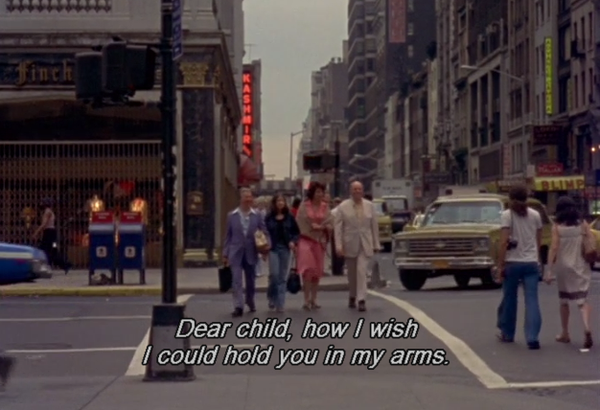
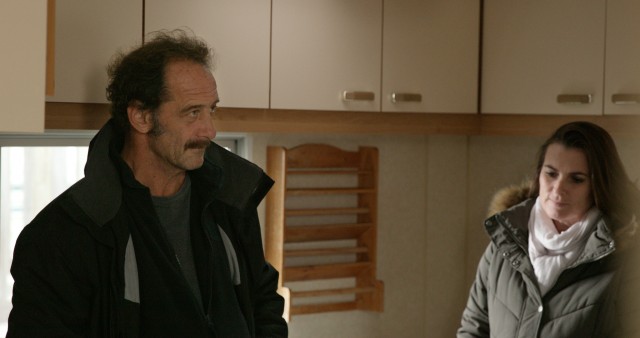
 “The ultimate measure of a man is not where he stands in moments of comfort and convenience, but where he stands at times of challenge and controversy,” the Rev. Dr. Martin Luther King Jr. famously said. In Stéphane Brizé’s The Measure of a Man, Vincent Lindon excels as a husband and father who is trying his best to survive in a changing world, fraught with challenge and controversy, that has seemingly turned its back on him. In an extraordinary performance embodying the calm before a storm that never comes, Lindon plays Thierry Taugourdeau, a working-class man who has been out of a job since the factory where he toiled for more than twenty years closed twenty months ago. He meets with job counselors, takes classes, interviews over Skype, and joins his fellow laid-off colleagues to figure out what to do next, but it is hard for him to have to start over in his fifties while trying to support his wife (Karine De Mirbeck) and take care of a teenage son who has cerebral palsy, played by Matthieu Schaller, who does have the neurological disorder. When Thierry finally does find employment, it’s not exactly a dream job, but he attempts to soldier on even when he is asked to do things that are against his moral and ethical fiber. “We all get to choose,” he says when his fellow former factory workers talk about taking action against the company that laid them off. “In my case, if only for my mental health, I prefer to draw a line and move on. Does that make me a coward?”