A Japanese family can’t escape strange deaths in THE HAPPINESS OF THE KATAKURIS
THE HAPPINESS OF THE KATAKURIS (カタクリ家の幸福) (Takashi Miike, 2001)
Japan Society
333 East 47th St. at First Ave.
Saturday, April 23, 7:00
Festival runs through April 23
212-715-1258
www.japansociety.org
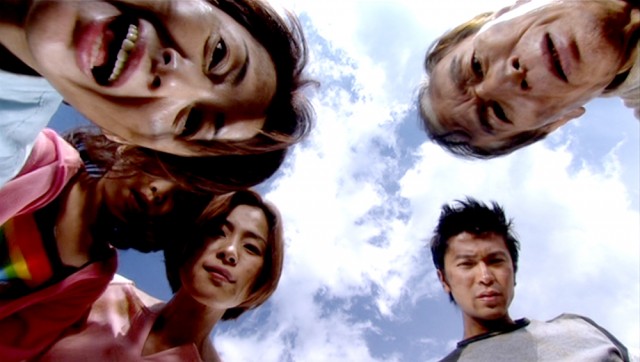
 “Let’s forget any accidents by singing and dancing!” is the cry of the Katakuris, a seemingly cursed family in one of the craziest dark musical comedies you’re ever likely to see. Japanese genre king Takashi Miike, who has made more than 120 films in his twenty-five-year career, outdid himself in 2001’s The Happiness of the Katakuris, an endlessly inventive tale of a disaster-ridden clan that moves to the middle of nowhere to run a country inn, lured by a rumor that a railroad will be built nearby. Masao Katakuri (Kenji Sawada) is a laid-off department-store shoe salesman who has big dreams, supported by his devoted wife and former work colleague, Terue (Keiko Matsuzaka). Their daughter, Shizue (Naomi Nishida), is a divorced single mother who falls for suspicious navy officer Richard Sagawa (Kiyoshiro Imawano), while their son, Masayuki (Shinji Takeda), is a disgraced financier. Masao’s elderly father, Jinpei (Tetsurō Tamba), likes killing birds and playing with the family dog, Pochi. The film is narrated by Terue’s young daughter, Yurie (Tamaki Miyazaki), who is sharing her memories of one very bizarre summer. Desperate for paying customers at the bed and breakfast they have dubbed White Lovers, the family is excited when a guest finally arrives, but alas, he is there only to commit suicide. Afraid that news of his death would ruin any chances of success, the Katakuris decide to cover it up by burying the man and not reporting anything to the police. And when subsequent guests end up dead as well — in bizarre, ridiculous ways — there is no turning back.
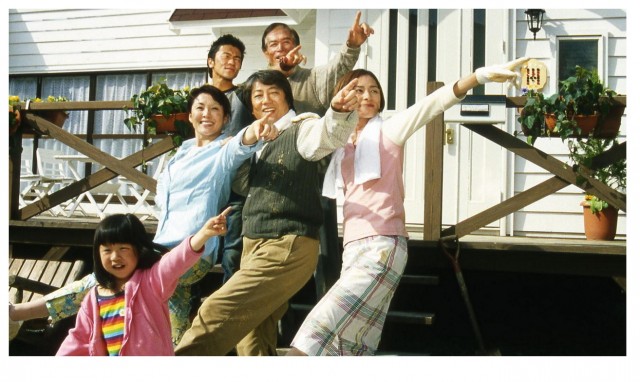
Takashi Miike has a blast with crazy musical
Miike (Ichi The Killer, Audition, Thirteen Assassins) and screenwriter Kikumi Yamagishi (Miike’s Hara-Kiri: Death of a Samurai and Over Your Dead Body) masterfully mix comedy, romance, Claymation, music, murder, and mayhem in this enormously entertaining and highly original movie that is filled with a never-ending bag of surprises. Loosely based on Kim Jee-woon’s The Quiet Family, the film includes an adorably vicious animated angel-winged mini-monster, a quartet of Macbeth-like witch women, and odes to Psycho, The Rocky Horror Picture Show, and The Sound of Music. Each musical set piece, choreographed by Ryohei Kondo of the Condors, is done in a different style, going from bright and funny to dark and sinister, but always with a firm tongue in cheek. There’s lots of red blood, blue skies, and green, green grass as this oddball extended family try to make a better life for themselves, but luck is certainly not on their side. The Happiness of the Katakuris is screening April 23 at 4:00 in Japan Society’s rather eclectic 2016 Globus Film Series “Japan Sings! The Japanese Musical Film,” which concludes at 7:00 with another delightful offbeat musical, Memories of Matsuko.
 Rod Blackhurst’s tense 2013 short film,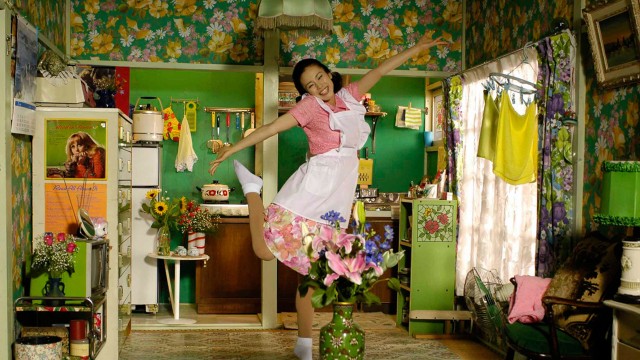
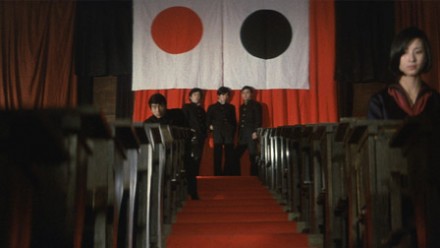
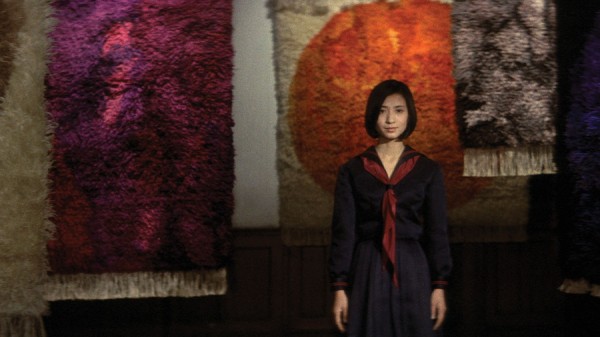
 We called Tetsuya Nakashima’s 2004 hit, Kamikaze Girls, the “otaku version of Jean-Pierre Jeunet’s Amelie,” referring to it as “fresh,” “frenetic,” “fast-paced,” and “very funny.” His feature-length follow-up, the stunningly gorgeous Memories of Matsuko, also recalls Amelie and all those other adjectives, albeit with much more sadness. Miki Nakatani (Ring, Silk) stars as Matsuko, a sweet woman who spent her life just looking to be loved but instead found nothing but heartbreak, deception, and physical and emotional abuse. But Memories of Matsuko, is not a depressing melodrama, even if Nakashima (Confessions, The World of Kanako) incorporates touches of Douglas Sirk every now and again. The film is drenched in glorious Technicolor, often breaking out into bright and cheerful musical numbers straight out of a 1950s fantasy world. As the movie begins, Matsuko has been found murdered, and her long-estranged brother (Akira Emoto) has sent his son, Sho (Eita), who never knew she existed, to clean out her apartment. As Sho goes through the mess she left behind, the film flashes back to critical moments in Matsuko’s life — and he also meets some crazy characters in the present. It’s difficult rooting for the endearing Matsuko knowing what becomes of her, but Nakashima’s remarkable visual style will grab you and never let go. And like Audrey Tatou in Amelie, Nakatani — who won a host of Japanese acting awards for her outstanding performance — is just a marvel to watch. Memories of Matsuko is a fine choice to conclude Japan Society’s rather eclectic 2016 Globus Film Series “Japan Sings! The Japanese Musical Film.” As curator Michael Raine notes, “The ubiquity of music and song in postwar Japanese cinema became an anti-naturalist resource for modernist filmmakers to characterize social groups (Twilight Saloon,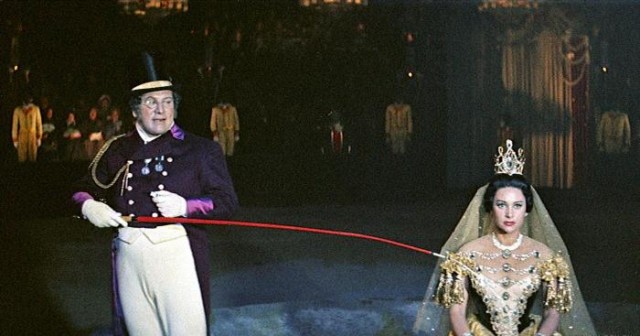
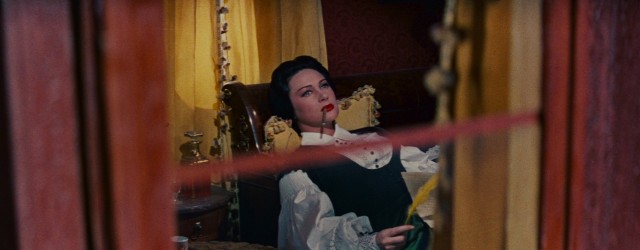
 “And now, the moment you’ve all been waiting for!” announces the monocled, whip-snapping Mammoth Circus ringmaster (Peter Ustinov) as Max Ophüls’s 1955 CinemaScope masterpiece, Lola Montès, begins. “The most sensational act of the century!” he continues, the camera following him in a breathtaking tracking shot as he introduces “a creature a hundred times more wild than any beast in our menagerie! A monster of cruelty . . . with the eyes of an angel!” Then, with much fanfare, Lola Montès (Martine Carol) arrives like a queen — albeit a circus queen — as the ringmaster tells the audience that they (we) are about to witness “the whole truth of the extraordinary life of Lola Montès.” What follows is not necessarily the true tale of the famed courtesan and entertainer who gained more notoriety for her scandalous love affairs and hourglass body than for her abilities as an actress and dancer. Lola’s story is told in a series of flashbacks showing her with Franz Liszt (Will Quadflieg), Lt. Thomas James (Ivan Desny), conductor Claudio Pirotto (Claude Pinoteau), a young student (Oskar Werner), and, most critically, King Ludwig I of Bavaria (a dashing Anton Walbrook). The episodes reveal her to be both loved and reviled as she struggles to succeed in her career, which ends up taking second place to the men in her life. Ophüls barely shows the cigar-loving Lola performing, instead letting the camera slowly dance around her, often depicting her through window frames, screens, and curtains as if she is a caged animal, all leading to a dangerous grand finale.