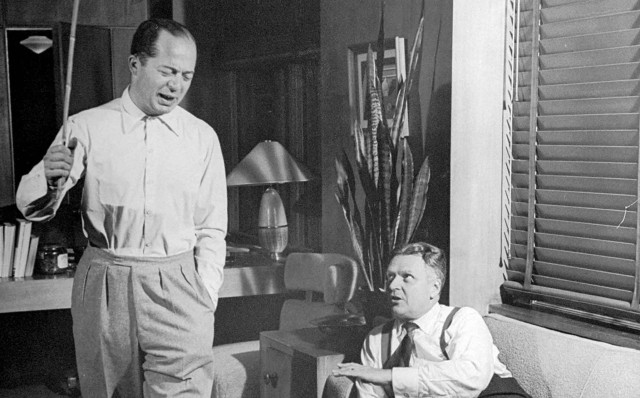
Film Forum will celebrate the collaboration between Billy Wilder and Charles Brackett at two-day academy tribute
SPOTLIGHT ON SCREENWRITING
Film Forum
209 West Houston St.
Sunday, May 15, 5:20 & 7:40, and Monday, May 16, 8:20
212-727-8110
filmforum.org
www.oscars.org
“Profile writers and Hollywood historians — the legitimate few, and a multitude of the mongrels of the species — have, without benefit of [Charles Brackett’s] diaries, created a gray-hued collage of Charlie carelessly pinned and pasted on an indistinct canvas, forever framed by the Billy Wilder legend,” Jim Moore, the grandson and biographer of screenwriter extraordinaire Charlie Brackett, writes in the foreword to Anthony Slide’s “It’s the Pictures That Got Small”: Charles Brackett on Billy Wilder and Hollywood’s Golden Age. Calling Brackett and Wilder’s collaboration an “odd-couple partnership,” Moore adds, “Two more different men you would be hard-pressed to find; two more talented ones, almost impossible to replicate; two more mercurial ones, in one place in time, have not been seen since. . . . Neither man served at the will of the other — Brackett was not Wilder’s secretary, Wilder was not the sole source of their success.” Film Forum is paying tribute to that success on May 15 and 16 with “Hollywood’s Happiest Couple,” showing three inestimable classics written by Brackett and Wilder and directed by Wilder, 1945’s The Lost Weekend and 1950’s Sunset Blvd., both of which won Oscars for screenwriting, and 1939’s Ninotchka, which was nominated for the award but lost out to Gone with the Wind. Moore will give an illustrated talk before all three screenings, which are part of the Academy of Motion Pictures Arts and Sciences series “Spotlight on Screenwriting”; in addition, he will present an academy compilation reel of Wilder and Brackett’s films following The Lost Weekend on Sunday night and Sunset Blvd. on Monday night. The dynamic duo also wrote Bluebeard’s Eighth Wife, Ball of Fire, Five Graves to Cairo, Midnight, What a Life, Hold Back the Dawn, The Major and the Minor, A Foreign Affair, The Emperor Waltz, and Arise My Love. “Worked with Billy Wilder, who paces constantly, has over-extravagant ideas, but is stimulating. He has a kind of humor that sparks with mine,” Brackett wrote in a 1936 diary entry. Together they created quite a stimulating legacy as evidenced by this brief homage.
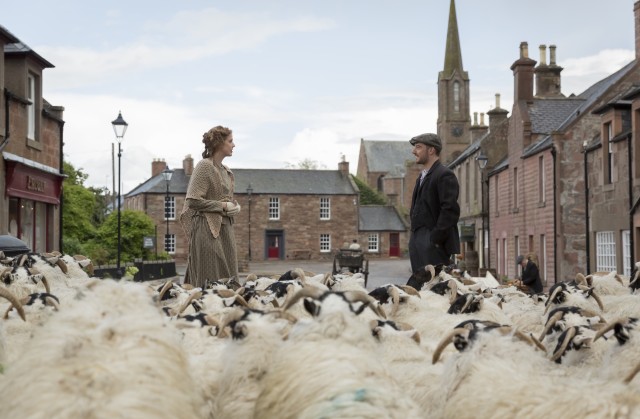
 A golden glow hovers over Sunset Song, Terence Davies’s lush adaptation of Scottish writer Lewis Grassic Gibbon’s seminal 1932 novel about family, land, war, and one young woman’s coming-of-age. Although it has the epic feel of a sweeping historical tale, the film takes place over just a few years in the second decade of the twentieth century, seen through the eyes of Chris Guthrie (Agyness Deyn). Her father, John (Peter Mullan), is a brutish farmer who runs his household with an iron fist. He lashes out, literally and figuratively, at his strapping son, Will (Jack Greenlees), who stands and takes it, choosing not to fight back, and treats his wife, Jean (Daniela Nardini), like a housekeeper and baby-making machine. In one of the most wrenching scenes of the film, John drags Jean, who doesn’t want to have any more children, upstairs to rape her in order to increase the size of their family; Jean’s terrifying screams from the bedroom evolve into shrill cries as she gives birth to twins. Following a horrific tragedy, Chris is forced to give up her education — she was studying to become a teacher — and work on the family farm. Upon meeting fellow farmer Ewan Tavendale (Kevin Guthrie), friendship turns into something more as Scotland gets involved in World War I.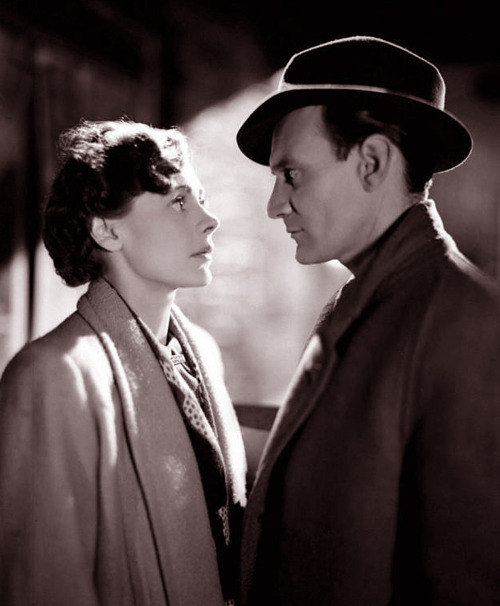
 “Don’t hurry. I’m perfectly happy,” Laura Jesson (Celia Johnson) tells her rather boring husband, Fred (Cyril Raymond), as he returns to his crossword puzzle one night. “How can I possibly say that?” she then thinks to herself. “‘Don’t hurry. I’m perfectly happy.’ If only it were true. Not, I suppose, that anybody’s ever perfectly happy, really. But just to be ordinarily contented, to be at peace. It’s such a little while ago really but it seems an eternity since that train went out of the station, taking him away into the darkness. I was happy then.” In David Lean’s Brief Encounter, one of the greatest romantic films ever made, Laura, a housewife and mother, can’t stop herself from falling for dapper doctor Alec Harvey (Trevor Howard), who is also married. As they explore a potential physical relationship, Laura is wracked with guilt, especially as she keeps bumping into nosy gossip Myrtle Bagot (Joyce Carey). But the two potential lovers are so drawn to each other, filling the holes in each other’s lives, that they consider risking all they have for just one more moment together. Winner of the 1946 Palme d’Or at Cannes, Brief Encounter is told in flashback in Laura’s voice as she goes over every wonderful and terrifying detail in her mind while contemplating whether to spill the beans to the generally oblivious Fred. Written by Noël Coward based on his 1936 one-act play, Still Life, the film features terrifically subtle performances by Johnson and Howard as the daring couple; you can’t help but root for them, despite the possible consequences. Lean, who earned the first of his seven Best Director Oscar nominations for the heartbreaking film, keeps things relatively, well, lean, getting right to the point in less than ninety minutes; he would go on to helm such sprawling epics as The Bridge on the River Kwai, Lawrence of Arabia, Doctor Zhivago, and A Passage to India before his death in 1991 at the age of eighty-three. Brief Encounter is screening May 15 and 16 in Film Forum’s one-week, thirteen-film tribute to the one and only Coward, consisting of movies he wrote, appeared in, or were based on his writing, from such beloved classics as Blithe Spirit, Private Lives, and Cavalcade to such lesser-known fare as The Astonished Heart, Tonight Is Ours, and Boom!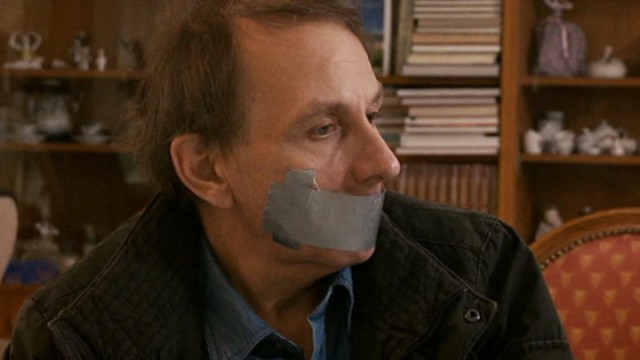
 In 2010, French writer, actor, poet, and filmmaker Michel Houellebecq won the prestigious Prix Goncourt for his novel The Map and the Territory. The controversial Houellebecq — who has been accused of plagiarism, misogyny, and inciting racial hatred — then went missing in 2011, failing to show up for a book tour in Belgium and the Netherlands. As it turns out, the novelist merely forgot about the readings and claims he was unreachable at the time, by either phone or e-mail. But writer-director Guillaume Nicloux tells a far more entertaining story in the absurdist black comedy The Kidnapping of Michel Houellebecq, which imagines that he really was taken hostage and held for a never-specified ransom. Even better, Nicloux got Houellebecq to play himself in the film, spoofing his image as an intellectual recluse. The fictionalized Houellebecq is taken captive by Mathieu (Mathieu Nicourt), Max (Maxime Lefrançois), and Luc (Luc Schwarz), who eventually bring him to a country house owned by elderly couple Ginette (Ginette Suchotzky) and Dede (Andre Suchotzky), where Houellebecq is almost always handcuffed and chained to his bed at night. His kidnappers engage him in literary discussions, talk about bodybuilding, bring him books to read, drink wine and smoke cigarettes with him, and even procure female accompaniment (Marie Bourjala) when he asks for it. The real Houellebecq (Platform; H. P. Lovecraft: Against the World, Against Life) plays his fictionalized self with a deadpan comic turn worthy of Buster Keaton, never letting on whether anything that is happening is even the slightest bit true to who Houellebecq actually is. Nicloux (The Nun, Valley of Love) keeps the audience guessing all the way about the characters and their motives, but don’t expect any simple answers or trite resolutions. The Kidnapping of Michel Houellebecq is screening May 10 at 4:00 and 7:30 in FIAF’s “Creative Encounters” CinéSalon series, with the later show introduced by Albertine Books deputy director Tom Roberge, who has admitted to his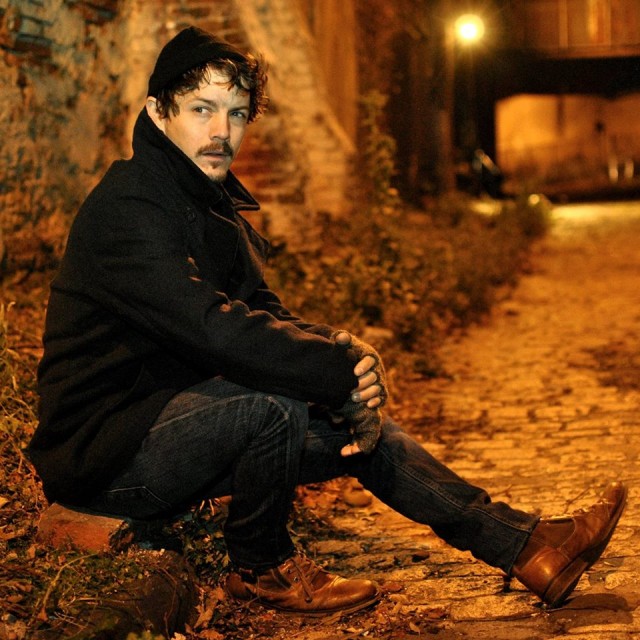
 “Girls ruin everything,” Bob (John Lescault) tells Jim (Zack Ryan) in Joseph Graham’s Beautiful Something, the follow-up to his 2010 film, Strapped. During one long dark night of the soul, several gay men cruise the streets of Philadelphia, looking for love in all the wrong places as their stories intertwine. Poet Brian (Brian Sheppard) seeks out onetime lover Dan (Grant Lancaster), who was the inspiration for his book of poetry, titled Strapped, only to find out he has gone straight. Jim (Zack Ryan) is growing bored with being famous sculptor Drew’s (Colman Domingo) muse and wants something more. The married Chris (David Melissaratos) goes to a gay bar for the first time, unable to resist his urges. Big-time talent agent Bob (John Lescault) trolls the neighborhood in his white stretch limo, searching for very specific accompaniment. And Sergio (Matthew Rios) rides around on his bike, attempting to score in more ways than one. Despite some tender, heartfelt moments, Beautiful Something, which is based on actual events, doesn’t quite hits its mark, as underdeveloped characters keep doing self-destructive things in an unspecified time. Graham wants to invite us into these intimate situations, but we’re kept at a frustrating distance as the individual tales go just slightly awry. Cinematographer Matthew Boyd, who also shot Strapped, gives Beautiful Something a sharp look, but the characters’ aimlessness grows tiresome, even if that is part of the point.