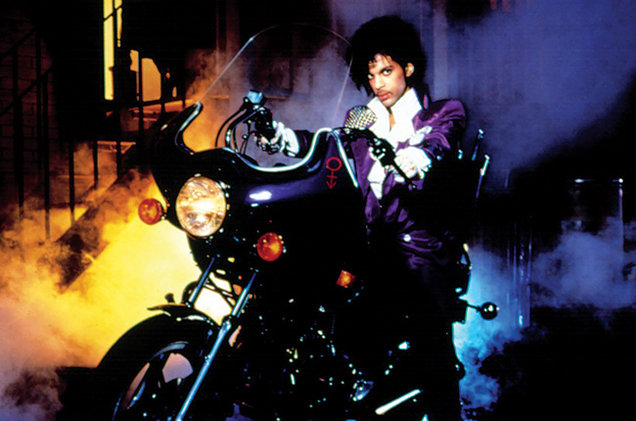
Prince will pull into Brooklyn Bridge Park for free screening of PURPLE RAIN on July 21
There’s nothing quite like catching a free movie in the summer in New York City, lying on a blanket in a park, gathering on an aircraft carrier, or huddling in an air-conditioned theater. Here are the day-by-day listings of favorites as well as lesser-known festivals; keep watching this space as more are announced. So far, you’ll find the following festivals below: the Intrepid Summer Movie Series, Movies with a View in Brooklyn Bridge Park, SummerScreen in McCarren Park, Films on the Green, SummerStage, RiverFlicks in Hudson River Park, Celebrate Brooklyn! in Prospect Park, BAMcinématek’s FAB Flicks at Putnam Triangle Plaza, Alamo Drafthouse’s free series in Fort Greene Park, Rooftop Films (advance RSVP required), the always-packed HBO Bryant Park Summer Film Festival, Outdoor Movie Night in Randall’s Island Park, Outdoor Cinema in Socrates Sculpture Park, Movies Under the Stars in numerous parks, Summer on the Hudson and Hudson RiverFlicks in Hudson River Park, and Movies on the Waterfront in Astoria Park. (Films without exact start times generally begin around sunset.)
Tuesday, May 31
Rooftop Films: The Fits (Anna Rose Holmer, 2016), live music by the Q-Kidz, followed by a Q&A with Holmer, the Elevated Acre, 55 Water St., free with RSVP, 7:30
Movies Under the Stars: Happy Feet (George Miller, 2011), St. Mary’s Park
Wednesday, June 1
Movies Under the Stars: Creed (Ryan Coogler, 2015), Flynn Playground
Thursday, June 2
BAMcinématek: FAB Flicks — ’70s Black Cinema: Mahogany (Berry Gordy, 1975), Putnam Triangle Plaza, 22 Putnam Ave., 8:00
Friday, June 3
Alama Drafthouse Free Outdoor Movie Series: quote-along with Labyrinth (Jim Henson, 1986), Fort Greene Park
Movies Under the Stars: Captain America: The First Avenger (Joe Johnston, 2011), St. Mary’s Park
Arts, Culture & Fun: T-Rex (Drea Cooper & Zackary Canepari, 2016), followed by a Q&A with the producer, Tony Dapolito Recreation Center, 7:00
Tuesday, June 7
Films on the Green — A Summer in Paris: Breathless (Jean-Luc Godard, 1961), preceded by The Red Balloon (Albert Lamorisse, 1957), Cedar Hill, Central Park, 8:30
Thursday, June 9
BAMcinématek: FAB Flicks — ’70s Black Cinema: Cleopatra Jones (Jack Starrett, 1973), Putnam Triangle Plaza, 22 Putnam Ave., 8:00
Friday, June 10
Rooftop Films — Territory: Short Films about Turf Wars, preceded by live music and followed by a Q&A, Firefighter’s Field, Roosevelt Island, 8:00
Alama Drafthouse Free Outdoor Movie Series: Finding Nemo (Andrew Stanton & Lee Unkrich, 2003), Fort Greene Park
Movies Under the Stars: Inside Out (Pete Docter & Ronnie del Carmen, 2015), Crocheron Park
Films on the Green — A Summer in Paris: The Tall Blond Man with One Black Shoe (Yves Robert, 1973), Washington Square Park, 8:30
Saturday, June 11
Rooftop Films: Sundance Short Films, live music by Alice Cohen, MetroTech Commons, 8:00
Wednesday, June 12
Rooftop Films — The Ties That Bind: Short Films about Families, preceded by live music, MetroTech Commons, 8:00
Monday, June 13
SummerStage: screening of Afripedia and music by DJ Hard Hittin’ Harry, Saratoga Park, 7:00
Thursday, June 16
BAMcinématek: FAB Flicks — ’70s Black Cinema: Claudine (John Berry, 1973), Putnam Triangle Plaza, 22 Putnam Ave., 8:00
Friday, June 17
Films on the Green — A Summer in Paris: Air of Paris (Marcel Carné, 1954), Washington Square Park, 8:30
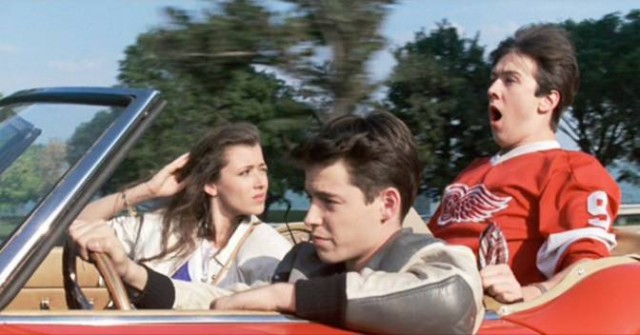
Ferris Bueller takes the day off so he can bring friends to several free outdoor screenings this summer in NYC
Monday, June 20
HBO Bryant Park Summer Film Festival: Ferris Bueller’s Day Off (John Hughes, 1986), Bryant Park Lawn, gates open at 5:00, film at dusk
SummerStage: Screening of In My Father’s House (Ricki Stern & Anne Sundberg, 2015), followed by Q&A with film subject Rhymefest, Saratoga Park, 7:00
Thursday, June 23
BAMcinématek: FAB Flicks — ’70s Black Cinema: Friday Foster (Arthur Marks, 1975), Putnam Triangle Plaza, 22 Putnam Ave., 8:00
Friday, June 24
Films on the Green — A Summer in Paris: Subway (Luc Besson, 1985), Transmitter Park, 8:30
Saturday, June 25
Rooftop Films: Living Stars (Mariano Cohn & Gastón Duprat, 2014), preceded by live music, Solar One, 8:00
Sunday, June 26
SummerStage: DJ Gringo and screening of Queen Nanny: Legendary Maroon Chieftainess (Roy T. Anderson, 2015), Betsy Head Park, 7:00
Outdoor Movie Night: Remember the Titans (Boaz Yakin, 2000), Randall’s Island Connector, Randall’s Island Park, 8:00
Monday, June 27
HBO Bryant Park Summer Film Festival: East of Eden (Elia Kazan, 1955), Bryant Park Lawn, gates open at 5:00, film at dusk
Tuesday, June 28
SummerStage: Lisa Simone and screening of What Happened, Miss Simone? (Liz Garbus, 2015), Herbert Von King Park, 7:00
Wednesday, June 29
SummerStage: Screening of A Ballerina’s Tale (Nelson George, 2015), with Jeremy McQueen’s Black Iris Project and preshow panel discussion, Rumsey Playfield, Central Park, 8:00
Thursday, June 30
BAMcinématek: FAB Flicks — ’70s Black Cinema: Shining Star: A Tribute to Maurice White, with Earth, Wind & Fire in Concert (Michael Schultz, 1981) and Earth, Wind & Fire Live on Soul!, Putnam Triangle Plaza, 22 Putnam Ave., 8:00
Friday, July 1
Films on the Green — A Summer in Paris: The 400 Blows (François Truffaut, 1959), Transmitter Park, 8:30
Monday, July 4
HBO Bryant Park Summer Film Festival: Top Gun (Tony Scott, 1986), Bryant Park Lawn, gates open at 5:00, film at dusk
Wednesday, July 6
SummerScreen: Scream (Wes Craven, 1996), McCarren Park, live music at 6:00, film at dusk
Outdoor Cinema — The River (USA): The African Queen (John Huston, 1951), Socrates Sculpture Park, live performance at 7:00, film screening at sundown
Summer on the Hudson — Pier I Picture Show: The Walk (Robert Zemeckis, 2015), Pier I, Riverside Park South
Hudson RiverFlicks — Big Hit Wednesdays: Mad Max: Fury Road (George Miller, 2015), Pier 63 lawn, Hudson River Park
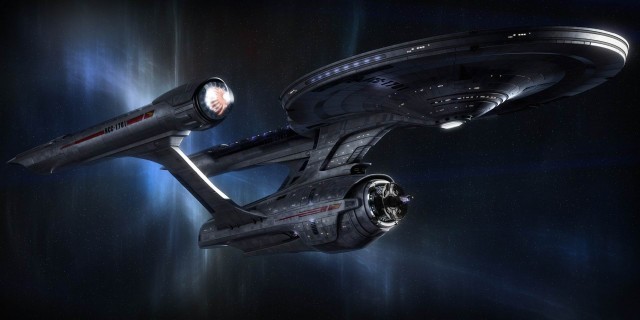
J. J. Abrams’s STAR TREK reboot will land on the Intrepid on July 7
Thursday, July 7
Summer Movie Series: Star Trek (J. J. Abrams, 2009), the Intrepid Sea, Air & Space Museum, gates open at 7:00
Movies with a View: Singin’ in the Rain (Gene Kelly & Stanley Donen, 1952), Pier 1, Brooklyn Bridge Park
Movie Nights in the Rockaways: Grease (Randal Kleiser, 1978), Beach 94th St. off Shorefront Pkwy, 8:00
Friday, July 8
Hudson RiverFlicks — Family Fridays: Minions (Pierre Coffin & Kyle Balda, 2015), Pier 46, Hudson River Park
Films on the Green — A Summer in Paris: April and the Extraordinary World (Christian Desmares & Franck Ekinci, 2016), Riverside Park, Pier I at 70th St., 8:30
Saturday, July 9
Movie Nights in the Rockaways: The Goonies (Richard Donner, 1985), Beach Channel Park, 8:00
Sunday, July 10
SummerStage: DJ Kool Herc, Little Shalimar, and screening of Rubble Kings (Shan Nicholson, 2010), Crotona Park, 7:00
Outdoor Movie Night: Selena (Gregory Nava, 1997),Touchdown of the 103rd Street Footbridge, Randall’s Island Park, 8:00
Monday, July 11
HBO Bryant Park Summer Film Festival: The Palm Beach Story (Preston Sturges, 1942), Bryant Park Lawn, gates open at 5:00, film at dusk
Wednesday, July 13
SummerScreen: Harold and Kumar Go to White Castle (Danny Leiner, 2004), McCarren Park, live music at 6:00, film at dusk
Outdoor Cinema — The River (France): L’Atalante (Jean Vigo, 1934), Socrates Sculpture Park, live performance at 7:00, film screening at sundown
Summer on the Hudson — Pier I Picture Show: Baquiat (Julian Schnabel, 1996), Pier I, Riverside Park South
Hudson RiverFlicks — Big Hit Wednesdays: Jurassic World (Colin Trevorrow, 2015), Pier 63 lawn, Hudson River Park
Thursday, July 14
Summer Movie Series: Star Trek IV (Leonard Nimoy, 1986), the Intrepid Sea, Air & Space Museum, gates open at 7:00
Celebrate Brooklyn! Music & Movies: Triplets of Belleville (Sylvain Chomet, 2003), Jessica Fichot, Prospect Park Bandshell, 8:00
Movies with a View: Harold and Kumar Go to White Castle (Danny Leiner, 2004), Pier 1, Brooklyn Bridge Park
Friday, July 15
Films on the Green — A Summer in Paris: Un Flic (Jean-Pierre Melville, 1972), Riverside Park, Pier I at 70th St., 8:30
Hudson RiverFlicks — Family Fridays: The Peanuts Movie (Steve Martino, 2015), Pier 46, Hudson River Park
Monday, July 18
HBO Bryant Park Summer Film Festival: The Omen (Richard Donner, 1976), Bryant Park Lawn, gates open at 5:00, film at dusk
Wednesday, July 20
SummerScreen: The Fast and the Furious (Rob Cohen 2001), McCarren Park, live music at 6:00, film at dusk
Outdoor Cinema — The River (Iran/UK): Sonita (Rokhsareh Ghaem Maghami, 2015), Socrates Sculpture Park, live performance at 7:00, film screening at sundown
Summer on the Hudson — Pier I Picture Show: Arthur (Steve Gordon, 1981), Pier I, Riverside Park South
Hudson RiverFlicks — Big Hit Wednesdays: Trainwreck (Judd Apatow, 2015), Pier 63 lawn, Hudson River Park
Thursday, July 21
Summer Movie Series: Galaxy Quest (Dean Parisot, 1999), the Intrepid Sea, Air & Space Museum, gates open at 7:00
Hudson RiverFlicks — Sing-Along Special: Grease (Randal Kleiser, 1978), Clinton Cove, Hudson River Park
Movies with a View: Purple Rain (Albert Magnoli, 1994), Pier 1, Brooklyn Bridge Park
Friday, July 22
Hudson RiverFlicks — Family Fridays: Shaun the Sheep (Richard Starzak & Mark Burton, 2015), Pier 46, Hudson River Park
Films on the Green — A Summer in Paris: Cleo from 5 to 7 (Agnès Varda, 1962), Tompkins Square Park, 8:30
Monday, July 25
HBO Bryant Park Summer Film Festival: Three Days of the Condor (Sydney Pollack, 1975), Bryant Park Lawn, gates open at 5:00, film at dusk
Movies on the Waterfront: Big Hero 6 (Don Hall & Chris Williams, 2014), Astoria Park Great Lawn, 8:30
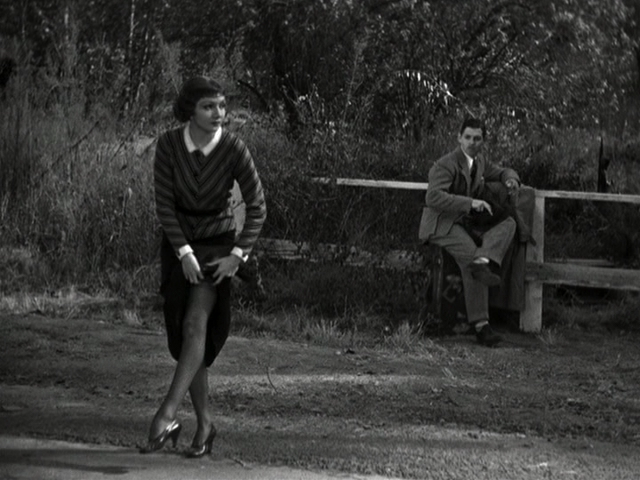
Claudette Colbert has a unique way to get to Brooklyn Bridge Park to see IT HAPPENED ONE NIGHT on July 28
Wednesday, July 27
SummerScreen: 10 Things I Hate About You (Gil Junger, 1999), McCarren Park, live music at 6:00, film at dusk
Outdoor Cinema — The River (Germany/UK): Rivers and Tides (Thomas Riedelsheimer, 2001), Socrates Sculpture Park, live performance at 7:00, film screening at sundown
Summer on the Hudson — Pier I Picture Show: Dog Day Afternoon (Sidney Lumet, 1975), Pier I, Riverside Park South
Hudson RiverFlicks — Big Hit Wednesdays: The Big Short (Adam McKay, 2015), Pier 63 lawn, Hudson River Park
Thursday, July 28
Rooftop Films: Animation Block Party, preceded by live music and followed by a Q&A, Waterfront Plaza at Brookfield Place, 8:00
Movies with a View: It Happened One Night (Frank Capra, 1934), Pier 1, Brooklyn Bridge Park
Friday, July 29
Summer Movie Series: Star Trek II: The Wrath of Khan (Nicholas Meyer, 1982), introduced by Nicholas Meyer, the Intrepid Sea, Air & Space Museum, gates open at 7:00
Movies Across from Golden Pond: Jurassic World (Colin Trevorrow, 2015), Crocheron Park
Hudson RiverFlicks — Family Fridays: Kung Fu Panda 3 (Jennifer Yuh Nelson & Alessandro Carloni, 2016), Pier 46, Hudson River Park
Films on the Green — A Summer in Paris: Boyfriends and Girlfriends (Eric Rohmer, 1987), Tompkins Square Park, 8:30
Saturday, July 30
Rooftop Films: In Pursuit of Silence (Patrick Shen, 2015), preceded by live music and followed by a Q&A with Shen, Waterfront Plaza at Brookfield Place, 8:00
Sunday, July 31
Outdoor Movie Night: The Goonies (Richard Donner, 1985), Touchdown of the 103rd Street Footbridge, Randall’s Island Park, 8:00
Monday, August 1
HBO Bryant Park Summer Film Festival: Harvey (Henry Koster, 1950), Bryant Park Lawn, gates open at 5:00, film at dusk
Movies on the Waterfront: Mary Poppins (Robert Stevenson, 1964), Astoria Park Great Lawn, 8:30
Wednesday, August 3
SummerScreen: The Royal Tenenbaums (Wes Anderson, 2001), McCarren Park, live music at 6:00, film at dusk
Outdoor Cinema — The River (Australia): Girl Asleep (Rosemary Meyers, 2015), Socrates Sculpture Park, live performance at 7:00, film screening at sundown
SummerStage: Screening of Kirikou and the Wild Beasts (Michel Ocelot & Bénédicte Galup, 2005), Orisha’s Journey, DJ Djib Sayo, Clove Lakes Park, 7:00
Summer on the Hudson — Pier I Picture Show: The Royal Tenenbaums (Wes Anderson, 2003), Pier I, Riverside Park South
Hudson RiverFlicks — Big Hit Wednesdays: Creed (Ryan Coogler, 2015), Pier 63 lawn, Hudson River Park
Thursday, August 4
Celebrate Brooklyn! Music & Movies: Run Lola Run (Tom Tykwer, 1999) with U.S. premiere of live score by the Bays, Joan as Police Woman, Benjamin Lazar Davis, Prospect Park Bandshell, 7:30
Movies with a View: American Graffiti (George Lucas, 1973), Pier 1, Brooklyn Bridge Park
Friday, August 5
Summer Movie Series: Big Hero 6 (Don Hall & Chris Williams, 2014), the Intrepid Sea, Air & Space Museum, gates open at 7:00
Movies Across from Golden Pond: Minions (Pierre Coffin & Kyle Balda, 2015), Crocheron Park
Hudson RiverFlicks — Family Fridays: Penguins of Madagascar (Eric Darnell & Simon J. Smith, 2014), Pier 46, Hudson River Park
Sunday, August 7
Movie Nights in the Rockaways: Goosebumps (Rob Letterman, 2015), Beach 17th St. & Seagirt Blvd., 8:00
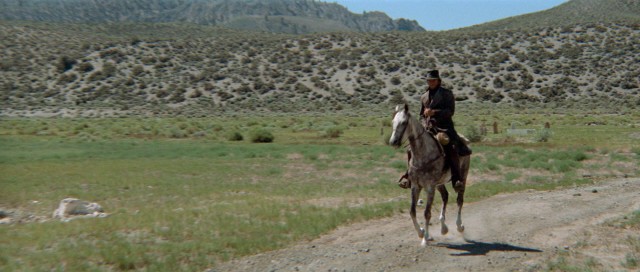
Clint Eastwood is a mysterious man with a plan as he gallops into Bryant Park on August 8 for a screening of HIGH PLAINS DRIFTER
Monday, August 8
HBO Bryant Park Summer Film Festival: High Plains Drifter (Clint Eastwood, 1973), Bryant Park Lawn, gates open at 5:00, film at dusk
Coney Island Flicks on the Beach: Rooftop Shorts, West Tenth St.
Movies on the Waterfront: Minions (Pierre Coffin & Kyle Balda, 2015), Astoria Park Great Lawn, 8:30
Wednesday, August 10
SummerScreen: audience pick, McCarren Park, live music at 6:00, film at dusk
Outdoor Cinema — The River (China): Suzhou River (Lou Ye, 2000), Socrates Sculpture Park, live performance at 7:00, film screening at sundown
Celebrate Brooklyn! Music & Movies: Labyrinth (Jim Henson, 1986), Donny McCaslin Group, Prospect Park Bandshell, 7:30
Summer on the Hudson — Pier I Picture Show: audience vote, Mary and Max (Adam Elliot, 2009) v. Carol (Todd Haynes, 2015) v. The Warriors (Walter Hill, 1979), Pier I, Riverside Park South, 6:30
Hudson RiverFlicks — Big Hit Wednesdays: The Hunger Games: Mockingjay Part 2 (Francis Lawrence, 2015), Pier 63 lawn, Hudson River Park
Thursday, August 11
Movies with a View: Selma (Ava DuVernay, 2014), Pier 1, Brooklyn Bridge Park
Friday, August 12
Summer Movie Series: Star Trek (J. J. Abrams, 2009), the Intrepid Sea, Air & Space Museum, gates open at 7:00
Movies Across from Golden Pond: The Avengers (Joss Whedon, 2012), Crocheron Park
Hudson RiverFlicks — Family Fridays: Goosebumps (Rob Letterman, 2015), Pier 46, Hudson River Park
Saturday, August 13
Movie Nights in the Rockaways: Zootopia (Byron Howard, Rich Moore & Jared Bush, 2016), Broad Channel Park, 8:00
Sunday, August 14
Outdoor Movie Night: The Good Dinosaur (Peter Sohn, 2015), Randall’s Island Connector, Randall’s Island Park, 8:00
Monday, August 15
HBO Bryant Park Summer Film Festival: The Big Chill (Lawrence Kasdan, 1983), Bryant Park Lawn, gates open at 5:00, film at dusk
Coney Island Flicks on the Beach: Purple Rain (Albert Magnoli, 1984), West Tenth St.
Movies on the Waterfront: Ferris Bueller’s Day Off (John Hughes, 1986), Astoria Park Great Lawn, 8:30
Wednesday, August 17
Outdoor Cinema — The River (Germany/Peru): Aguirre, the Wrath of God (Werner Herzog, 1972), Socrates Sculpture Park, live performance at 7:00, film screening at sundown
Summer on the Hudson — Pier I Picture Show: Auntie Mame (Morton DaCosta, 1958), Pier I, Riverside Park South, 6:30
Hudson RiverFlicks — Big Hit Wednesdays: The Martian (Ridley Scott, 2015), Pier 63 lawn, Hudson River Park
Thursday, August 18
Movies with a View: A League of Their Own (Penny Marshall, 1992), Pier 1, Brooklyn Bridge Park
Friday, August 19
Hudson RiverFlicks — Family Fridays: The Princess Bride (Rob Reiner, 1987), Pier 46, Hudson River Park
Monday, August 22
HBO Bryant Park Summer Film Festival: Star Trek II: The Wrath of Khan (Nicholas Meyer, 1982), Bryant Park Lawn, gates open at 5:00, film at dusk
Coney Island Flicks on the Beach: Creed (Ryan Coogler, 2015), West Tenth St.
Central Park Conservancy Film Festival: School of Rock (Richard Linklater, 2003), Marcus Garvey Park
Movies on the Waterfront: Jaws (Steven Spielberg, 1975), Astoria Park Great Lawn, 8:30
Tuesday, August 23
Central Park Conservancy Film Festival: The Last Dragon (Berry Gordy, 1985), Marcus Garvey Park
Wednesday, August 24
Outdoor Cinema — The River (Colombia): Embrace of the Serpent (Ciro Guerra, 2015), Socrates Sculpture Park, live performance at 7:00, film screening at sundown
Central Park Conservancy Film Festival: I Am Legend (Francis Lawrence, 2007), Central Park
Thursday, August 25
Movies with a View: public vote, Pier 1, Brooklyn Bridge Park
Central Park Conservancy Film Festival: Tootsie (Sydney Pollack, 1982), Central Park
Friday, August 26
Central Park Conservancy Film Festival: Desperately Seeking Susan (Susan Seidelman, 1985), Central Park
Saturday, August 27
Movie Nights in the Rockaways: Star Wars: The Force Awakens (J. J. Abrams, 2015), Beach 59th St., 8:00
Sunday, August 28
Outdoor Movie Night: Inside Out (Pete Docter & Ronnie del Carmen, 2015), Randall’s Island Connector, Randall’s Island Park, 8:00
Thursday, September 8
Films on the Green — A Summer in Paris: Girlhood (Céline Sciamma, 2014), Columbia University, 116th St., 7:30
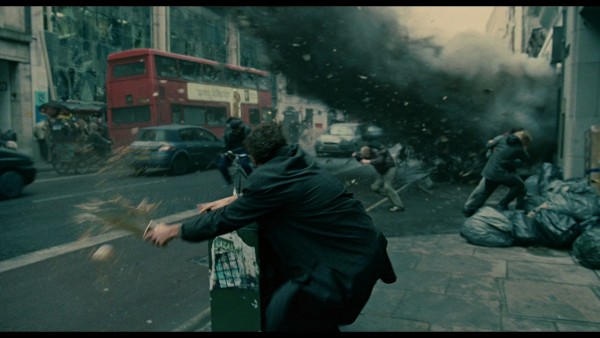
 It’s 2027, and there hasn’t been a baby born in the world in eighteen years. For some unknown reason, women have become infertile, leading to chaos around the globe. Only England perseveres, but it is on the brink of destruction as warring factions prepare for doomsday. Onetime revolutionary Theo (an as-even-keeled-as-ever Clive Owen) has settled down into a mundane life, but he’s thrust back into the middle of things when he is kidnapped by a radical organization run by his ex-wife, Julian (Julianne Moore), and her right-hand man, the hard-edged Luke (Chiwetel Ejiofor). Theo is forced to escort Kee (Claire-Hope Ashitey), a young fugee (refugee), through the danger zone and to the Human Project, a supposed safe haven that might not actually exist. Also staring extinction in the face are Theo’s brother, Nigel (Danny Huston); Theo’s hippie friend, Jasper (a longhaired Michael Caine); and homeland security officer Syd (Peter Mullan). Inspired by the novel by P. D. James, the chilling Children of Men is a violent, prescient, nonstop thrill ride, moviemaking of the highest order, cowritten and directed by Alfonso Cuarón (Y Tu Mamá También, Gravity) and photographed in vibrant filth and muddiness by Emmanuel Lubezki (Birdman, The Tree of Life). Nominated for three Academy Awards (Best Cinematography, Best Film Editing, Best Adapted Screenplay), Children of Men is one of the best of the dystopian science fiction films of the twenty-first century, predicting a future that is not as impossible as one might think. Stay through the credits for a tiny but critical coda. Children of Men is screening May 28 and 29 at 11:30 am as part of the Nitehawk Cinema series “May Brunch and Midnite: The Waste Land,” which also features Shaun of the Dead at 12:20 am Friday and Saturday night.
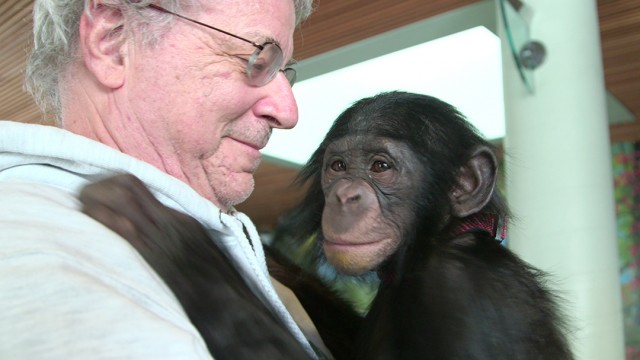
 Award-winning husband-and-wife documentarians D. A. Pennebaker and Chris Hegedus have been collaborating for forty-five years, working on films about such subjects as Bill Clinton’s presidential campaign (The War Room), Carol Burnett (Moon over Broadway), soul music (Only the Strong Survive), pastry chefs (Kings of Pastry), and Elaine Stritch (Elaine Stritch at Liberty). For their latest film, Unlocking the Cage, they spent three years following animal rights lawyer Steven M. Wise, the president and founder of the Nonhuman Rights Project, as he sought to establish “personhood” for several chimpanzees in order to free them from their caged existence and move them to more acceptable animal sanctuaries. Wise and his team, Natalie Prosin and attorneys Elizabeth “Liddy” Stein and Monica Miller, scour the internet searching for chimpanzees to represent as well as sanctuaries where the animals can be released. (The Nonhuman Rights Project focuses on great apes, elephants, and such cetaceans as dolphins and whales because of their autonomy, intelligence, and emotional capacity.) The concept is fascinating, and the film hits its high points when Pennebaker and Hegedus show some of the chimpanzees interacting with humans in compelling ways, watching television or figuring something out on a computer. Unfortunately, far too much of Unlocking the Cage deals with often murky legal discussions and courtroom arguments that drag on and on.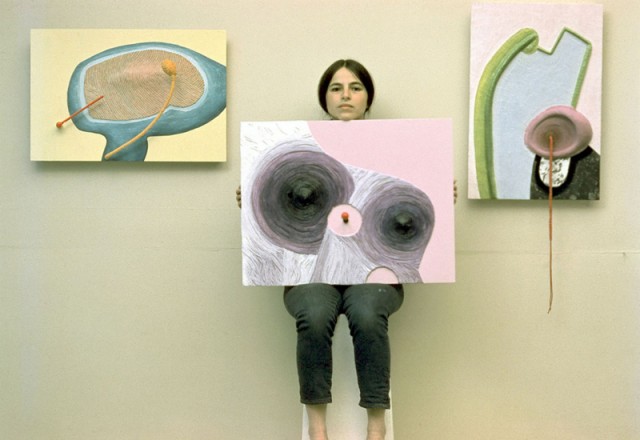
 “All of my stakes are in my work. I have given up in all else. I do feel I am an artist, and one of the best. I do, deeply,” German artist Eva Hesse explains in Eva Hesse, the debut feature by Marcie Begleiter, which is being brought back by popular demand for two screenings per day from May 25 through June 9 at Film Forum, following runs there and at Cinema Village. Begleiter, who has previously written the play Meditations: Eva Hesse and directed the short film Eva Hesse, Walking the Edge, examines Hesse’s too-brief life and career, as she dealt with feelings of alienation and deep loss through her art. “The power of her purpose was more important than what was going on in her life,” fellow artist and friend Rosie Goldman points out. Born in Germany in 1936, Hesse was determined to be an artist from an early age, first turning to drawing and painting, then to sculpture. The film features narration taken from Hesse’s journals, interviews, and letters between her, her main confidant, Sol LeWitt, and her father, William; Eva is voiced by Selma Blair, LeWitt by Patrick Kennedy, and William by Bob Balaban. Begleiter speaks with such contemporaries of Hesse’s as Richard Serra, Carl Andre, Nancy Holt, Dan Graham, Mike Todd, Roberth Mangold, Sylvia Plimack Mangold, and Hesse’s husband, Tom Doyle, who seems a little too trite given how they eventually parted. She also meets with Whitney curator and Hesse scholar Elisabeth Sussman, photographer Barbara Brown, art writer Lucy Lippard, and Hesse’s sister, Helen Hesse Charash, who sheds light on her sibling’s difficult childhood. But at the center of it all is Hesse’s inspiring art, which challenged the status quo as Expressionism shifted into Minimalism. “I will paint against every rule,” Hesse wrote, and she took that approach with all of her creations, including sculptures made of latex, metal, fiberglass, wire, and other industrial materials. The film firmly sets Hesse within the framework of the tumultuous era in which she worked, the 1960s, a time of great social and artistic change, but she still comes off as a lonely woman who could express herself only through her art. It’s both a sad and exhilarating documentary, a paean to the critical role art can play in life.