this week in film and television

BRESSON ON CINEMA: PICKPOCKET

PICKPOCKET

Michel (Martin LaSalle) eyes a potential target in Robert Bresson’s highly influential masterpiece PICKPOCKET

PICKPOCKET (Robert Bresson, 1959)
BAMcinématek, BAM Rose Cinemas
30 Lafayette Ave. between Ashland Pl. & St. Felix St.
Friday, November 4, 5:30, 7:30, 9:30, and Sunday, November 6, 4:30
Series runs November 4-6
718-636-4100
www.bam.org

Robert Bresson’s 1959 Pickpocket is a stylistic marvel, a brilliant examination of a deeply troubled man and his dark obsessions. Evoking Raskolnikov in Dostoevsky’s Crime and Punishment, Martin LaSalle made his cinematic debut as Michel, a ne’er-do-well Parisian who lives in a decrepit apartment, refuses to visit his ailing mother (Dolly Scal), and decides to become a pickpocket. But it’s not necessarily the money he’s after; he hides the cash and watches that he steals in his room, which he is unable to lock from the outside. Instead, his petty thievery seems to give him some kind of psychosexual thrill, although his pleasure can seldom be seen in his staring, beady eyes. As the film opens, Michel is at the racetrack, dipping his fingers into a woman’s purse in an erotically charged moment that is captivating, instantly turning the viewer into voyeur. Of course, film audiences by nature are a kind of peeping Tom, but Bresson makes them complicit in Michel’s actions; although there is virtually nothing to like about the character, who is distant and aloof when not being outright nasty, even to his only friends, Jacques (Pierre Leymarie) and Jeanne (Marika Green), the audience can’t help but breathlessly root for him to succeed as he dangerously dips his hands into men’s pockets on the street and in the Metro. Soon he is being watched by a police inspector (Jean Pélégri), to whom he daringly gives a book about George Barrington, the famed “Prince of Pickpockets,” as well as a stranger (Kassagi) who wants him to join a small cadre of thieves, leading to a gorgeously choreographed scene of the men working in tandem as they pick a bunch of pockets. Through it all, however, Michel remains nonplussed, living a strange, private life, uncomfortable in his own skin. “You’re not in this world,” Jeanne tells him at one point.

Michel (Martin LaSalle) can’t keep his hands to himself in Bresson classic

Michel (Martin LaSalle) can’t keep his hands to himself in Bresson classic, screening November 4 & 6 at BAM

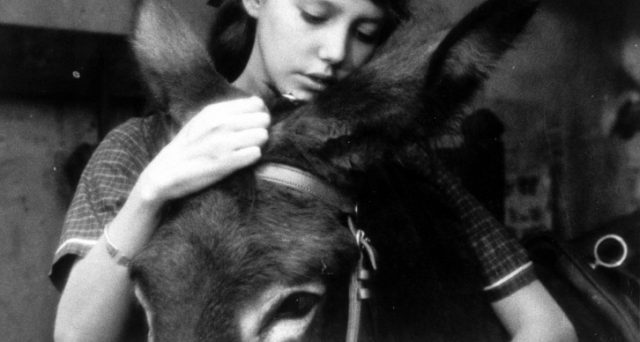
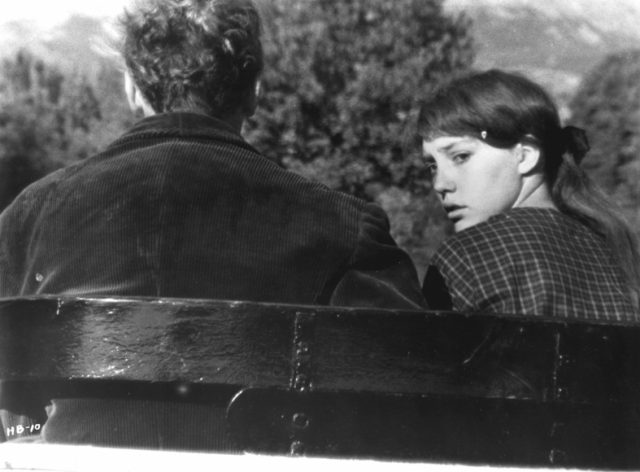
Bresson (Au hasard Balthazar, Diary of a Country Priest) fills Pickpocket with visual clues and repeated symbols that add deep layers to the narrative, particularly an endless array of shots of hands and a parade of doors, many of which are left ajar and/or unlocked in the first half of the film but are increasingly closed as the end approaches. Shot in black-and-white by Léonce-Henri Burel — Bresson wouldn’t make his first color film until 1969’s Un femme doucePickpocket also has elements of film noir that combine with a visual intimacy to create a moody, claustrophobic feeling that hovers over and around Michel and the story. It’s a mesmerizing performance in a mesmerizing film, one of the finest of Bresson’s remarkable, and remarkably influential, career. Pickpocket is screening November 4 and 6 in the BAMcinématek series “Bresson on Bresson,” three days of films by Bresson as well as a handful that share his similar cinematic sensibility, being held in conjunction with the publication of a new translation of Bresson on Bresson: Interviews, 1943-1983. The whirlwind three-day, thirteen-film series also includes Bresson’s Diary of a Country Priest, A Man Escaped, and Mouchette alongside Vittorio De Sica’s Bicycle Thieves, Charlie Chaplin’s Gold Rush and City Lights, Robert J. Flaherty’s Louisiana Story and Man of Aran, Buster Keaton shorts, Sergei M. Eisenstein’s Battleship Potemkin, David Lean’s Brief Encounter, and Jean Cocteau’s The Testament of Orpheus.

DON’T CALL ME SON

DON’T CALL ME SON

Pierre (Naomi Nero) watches his mother get taken away in Anna Muylaert’s DON’T CALL ME SON

DON’T CALL ME SON (MÃE SÓ HÁ UMA) (Anna Muylaert, 2016)
Film Forum
209 West Houston St.
Opens Wednesday, November 2
212-727-8110
filmforum.org
zeitgeistfilms.com

Brazilian writer-director Anna Muylaert once again intricately explores the nature of class, identity, and family in her fifth feature film, the powerful and poignant Don’t Call Me Son. In last year’s award-winning The Second Mother, Muylaert told the story of a live-in housekeeper who was like a surrogate mother to the family she works for, but things change when her estranged teenage daughter comes to stay with her. In Don’t Call Me Son, a family is torn apart when it is discovered that the mother, Arcay (Dani Nefusi), actually stole her children, son Pierre (Naomi Nero) and daughter Jaqueline (Lais Dias), when they were babies, and the kids’ biological parents have been searching desperately for them ever since and have now found them. Pierre is a seventeen-year-old gender-bending bisexual musician who seems relatively comfortable in his own skin, at least for a seventeen-year-old gender-bending bisexual musician, until Arcay is arrested and imprisoned for kidnapping. She might not have been a model mother, but she was his mother, and he is devastated when he is suddenly forced to move in with his biological parents, Glória (also played by Nefusi) and Matheus (Matheus Nachtergaele), who are overjoyed to have him back but were expecting someone a little bit more traditional; however, Pierre’s new younger brother, Joca (Daniel Botelho), appears to be happy he now has such a cool, if tortured, sibling. Meanwhile, Jaqueline is taken away to live with her real parents. As Glória and Matheus persist in calling Pierre by the name they gave him at birth, Felipe, the teen acts out as he tries to figure out who he is and redefine his place in a world that has been turned upside down and inside out.

DON’T CALL ME SON

Jaqueline (Lais Dias) and Pierre’s (Naomi Nero) life together is suddenly thrown into upheaval in poignant Brazilian drama

Based on a true story, Don’t Call Me Son is a sensitive and honest exploration of just what family means, with intimate handheld camerawork by cinematographer Barbara Alvarez, taking viewers inside each character’s mind as it bounces between excitement and frustration. Nero makes an impressive debut as Pierre, lending complexity to a troubled teen that goes beyond the standard generational angst and ennui; his scenes in front of a mirror are simply dazzling. In an ingenious casting move, Muylaert (Collect Call, É Proibido Fumar) has Nefusi play Pierre’s birth mother and the woman who raised him, questioning just what it means to be a mother, which is further complicated because it is not obvious that the actress is performing the two parts, looking completely different in each role. Another star is Diogo Costa’s wardrobe, particularly after Pierre has moved in with his biological parents and decides to test their loyalty. There are too many plot holes and loose ends, but there’s also just the right amount of ambiguity as Muylaert considers the notion of home in clever and subtle ways.

MY FIRST FILM FEST: WHERE THE WILD THINGS ARE

WHERE THE WILD THINGS ARE

Carol (voiced by James Gandolfini) and Max (Max Records) discuss life in Spike Jonze’s inventive live-action version of WHERE THE WILD THINGS ARE

WHERE THE WILD THINGS ARE (Spike Jonze, 2009)
Film Society of Lincoln Center, Walter Reade Theater
165 West 65th St. at Amsterdam Ave.
Sunday, November 6, 9:00
Series runs November 3-8
212-875-5601
www.filmlinc.org

The endlessly inventive Spike Jonze (Being John Malkovich, Adaptation.) has done the seemingly impossible, expanding Maurice Sendak’s classic 1963 children’s book, Where the Wild Things Are, into a fun and fantastical feature-length film. Written by Jonze and Dave Eggers (A Heartbreaking Work of Staggering Genius), the movie uses the ten sentences of the book and Sendak’s magical characters and transforms them into a world of wonder. Acting out after his sister’s friends crush his igloo and his divorced mother (Catherine Keener) ignores him in favor of a new boyfriend (Mark Ruffalo), nine-year-old Max (Max Records) runs away and sails across the ocean, landing on a faraway island where seven giant monsters live. In search of a leader, they name Max king, but he gets more than he bargained for as the ruler of the cynical Judith (voiced by Catherine O’Hara), the dumpy Ira (Forest Whitaker), the independent KW (Lauren Ambrose), the mysterious Bull (Michael Berry Jr.), the sad sack Alexander (Paul Dano), the dependable Douglas (Chris Cooper), and, most importantly, the manic-depressive Carol (James Gandolfini).

WHERE THE WILD THINGS ARE

Max becomes king of the forest in cinematic adaptation of Maurice Sendak’s classic bedtime story

Each character represents a different part of Max, a developing emotion that he must learn to deal with as he grows up. He is immediately drawn to Carol, whom he first sees destroying the group’s small, makeshift homes, echoing Max’s feelings about his own family situation. Max’s relationship with Carol — himself in the midst of a breakup with KW — is the heart of the story, as Carol goes from one extreme to another, at one point bouncing around the forest with sheer glee, then snuggling up with everyone in a warming group sleep, and finally turning into a dangerous ogre. As Jonze has pointed out, Wild Things, which received the full blessing of Sendak, is not necessarily a movie for children but about childhood. It beautifully captures a child’s innate sense of adventure and imagination while also showing that choices come with consequences. Fans of the book will be amazed at how well Jonze depicts the Wild Things themselves, which come alive as if they just jumped right out of the pages of the book; actors (not the voice-over artists) are in the costumes, their faces digitally manipulated by CGI effects, but they feel as real as they did when your mother first read you the enchanting story while tucking you in your bed. Where the Wild Things Are is screening November 6 at 9:00 at the Walter Reade Theater as part of the inaugural Film Society of Lincoln Center series “My First Film Fest,” which consists of thirteen films that form a first film festival for young moviegoers, from Hayao Miyazaki’s My Neighbor Totoro and Nausicaä of the Valley of the Wind to Charlie Chaplin’s Modern Times and Claude Nuridsany and Marie Pérennou’s Microcosmos, in addition to Yared Zeleke’s Lamb, followed by a Q&A with Zeleke; the New York premiere of Émilie Deleuze’s Miss Impossible, followed by a Q&A with Deleuze; the North American premiere of Hubert Viel’s Girls in the Middle Ages; and a sneak preview of Mike Mitchell and Walt Dohrn’s Trolls. Although the intent is to have kids “remember their first film festival,” several of the screenings take place at six o’clock and later, which might not be appropriate for younger children, the intended audience for most of these tales.

POETIC AND POLITICAL — THE CINEMA OF RABAH AMEUR-ZAÏMECHE: ADHEN

Rabah Ameur-Zaïmeche will be at FIAF on November 1 to screen and discuss ADHEN, which he directed, cowrote, and stars in

Rabah Ameur-Zaïmeche will be at FIAF on November 1 to screen and discuss ADHEN, which he directed, cowrote, and stars in

CINÉSALON: ADHEN (DERNIER MAQUIS) (Rabah Ameur-Zaïmeche, 2008)
French Institute Alliance Française, Florence Gould Hall
55 East 59th St. between Madison & Park Aves.
Tuesday, November 1, $13, 4:00 & 7:30
Series continues Tuesdays through December 13
212-355-6100
www.fiaf.org

FIAF celebrates the career of French-Algerian indie writer, director, actor, and producer Rabah Ameur-Zaïmeche in its November-December CinéSalon program “Poetic and Political: The Cinema of Rabah Ameur-Zaïmeche.” The seven-week series will include all five of his films, realistic meditations on immigration, family, history, religion, and rebellion made between 2001 and 2015. The festival begins November 1 with 2008’s gentle and patient slice-of-life drama, Adhen. Christian Milia-Darmezin stars as Titi, a new Muslim convert who works at a small French company that repairs shipping pallets. Titi is teased by some of his fellow workers (Serpentine Kebe, Abel Jafri, Mamadou Koita, Sylvain Roume as Giant, Salim Ameur-Zaïmeche as Bashir) because he is not circumcised, so the not-very-bright Titi takes scissors to himself, landing him in the hospital. Meanwhile, the boss, Mao (Rabah Ameur-Zaïmeche), sets up a mosque for his employees, believing it will be good for morale, although he threatens to cut their bonuses if they don’t attend prayers every Friday. Growing worker unrest over low pay and long hours increases when Mao doesn’t let them participate in the selection of the Iman (Larbi Zekkour) and the mechanics start talking about unionizing.

A muezzin (Serpentine Kebe) calls fellow workers to prayer in ADHEN

A muezzin (Serpentine Kebe) calls fellow workers to prayer in Rabah Ameur-Zaïmeche’s ADHEN

Adhen is beautifully shot by cinematographer Irina Lubtchansky, who lets her camera linger at the end of scenes, moving away from the characters and slowly turning up from the stacks and stacks of red pallets to a lightly cloudy bright blue sky or from a conversation about raises to trees blowing in the wind on the shore of a flowing river. The pallets are piled so high they are like physical barriers to the workers’ success, except when the muezzin (Kebe) climbs to the top and calls everyone to prayer, as if religion is the only answer to their problems. Later, when Giant encounters a trapped animal he thinks is a huge rat, the parallel between the frightened creature and the employees is palpable. Ameur-Zaïmeche, who cowrote the script with Louise Thermes, even gets away with such overt metaphors as a boss named Mao dealing with red pallets that transport commercial goods. He maintains a slow, easygoing pace throughout, regardless of where the emotions of the characters and story lead, from funny and proud to angry and resentful. Winner of the Special Jury Prize at the Dubai International Film Festival, Adhen is screening November 1 at 4:00 and 7:30; the later show will be followed by a Q&A with Ameur-Zaïmeche, moderated by Algerian-born French author and NYU visiting professor Zahia Rahmani. “Poetic and Political: The Cinema of Rabah Ameur-Zaïmeche” continues Tuesday nights through December 13 with Ameur-Zaïmeche’s Wesh Wesh, Back Home (Bled Number One), Smugglers’ Songs, and Story of Judas in addition to an election-night Director’s Choice screening of Stanley Kubrick’s Dr. Strangelove or: How I Learned to Stop Worrying and Love the Bomb, followed by a reception with live election results.

13 CATS: KURONEKO

KURONEKO

A black cat is not happy with the turn of events in Kaneto Shindô’s KURONEKO

KURONEKO (藪の中の黒猫) (Kaneto Shindô, 1968)
BAMcinématek, BAM Rose Cinemas
30 Lafayette Ave. between Ashland Pl. & St. Felix St.
October 28 – November 2
Series continues through November 3
718-636-4100
www.bam.org

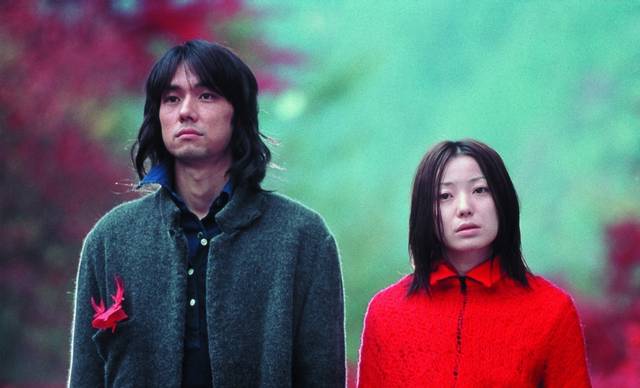
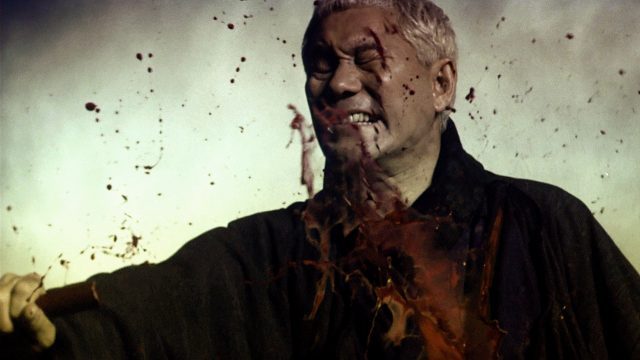
“A cat’s nothing to be afraid of,” a samurai (Rokkô Toura) says in Kaneto Shindô’s 1968 Japanese horror-revenge classic, Kuroneko. Oh, that poor, misguided warrior. He has much to learn about the feline species but not enough time to do it before he suffers a horrible death. In Sengoku-era Japan, a large group of hungry, bedraggled samurai come upon a house at the edge of a bamboo forest. Inside they find Yone (Nobuko Otowa) and her daughter-in-law, Shige (Kiwao Taichi), whose husband, Hachi (Kichiemon Nakamura), is off fighting the war. The men viciously rob, rape, and murder the women, but they leave behind a mewing black cat (“kuroneko”) that is not exactly happy with what just happened. Three years later, the aforementioned samurai is riding his horse on a dark night when he encounters, by the Rajōmon Gate, a young woman positively glowing in the darkness. She says she is frightened and asks if he can accompany her home; he claims he has met her before but can’t quite place her. He agrees to help her, and when they reach her abode he is treated to some tea served by an older woman and some fooling around with the younger one — until the latter creeps on top of him and turns into a menacing animal, biting into his throat and drinking his blood. One by one, the samurai are lured into this trap, until a surprise warrior arrives.

KURONEKO

A bamboo forest leads to a kind of hell for samurai in KURONEKO

Written and directed by Shindô and based on an old folktale, Kuroneko is a tense, spooky film, with a foreboding score by Hikaru Hayashi (Shindô’s The Naked Island and Onibaba) and shot in eerie black-and-white by Kiyomi Kuroda (Shindô’s Mother, Human, and Onibaba). One of the great feminist ghost stories, it’s like the missing sequel to Masaki Kobayashi’s Kwaidan, with elements of Akira Kurosawa’s Hidden Fortress and Rashomon thrown in, along with echoes of flying ninja movies. Memorable images abound: The two women, in ghostly white, float in the air; the camera weaves through the bamboo forest; a gruesome killer is beheaded. The film also features Kei Satō as Raiko, Hideo Kanze as Mikado, and Taiji Tonoyama as a farmer, but Kuroneko belongs to Shindô regular — and his lover and, later, his wife — Otowa, who appeared in nearly two dozen of his films, and Taichi, who also worked with such other directors as Keisuke Kinoshita, Mitsuo Yanagimachi, Yôji Yamada, and Shintarô Katsu before dying in a car accident in 1992 at the age of forty-eight. The two women go about their business with a calm and somewhat placid demeanor until they pounce, like cats luring mice to certain doom. Kuroneko is screening from October 28 to November 2 in the BAMcinématek series “13 Cats,” a baker’s dozen of feline flicks that continues through November 3 with Roger Corman’s The Tomb of Ligeia, John Gilling’s The Shadow of the Cat, Edgar G. Ulmer’s The Black Cat, and both Jacques Tourneur’s and Paul Schrader’s Cat People.

13 CATS

There is something under the bed and everywhere else in JU-ON: THE GRUDGE

There is something scary under the bed — and just about everywhere else — in JU-ON: THE GRUDGE and rest of “13 Cats” series at BAM

JU-ON: THE GRUDGE (Takashi Shimizu, 2002)
BAMcinématek, BAM Rose Cinemas
30 Lafayette Ave. between Ashland Pl. & St. Felix St.
Thursday, October 27, 9:30
718-636-4100
www.bam.org

“Black cats feature in the mythology of many cultures, and superstitions about them are still familiar to most of us in modern times. They are a prime example of the contrariness of many of our superstitious beliefs; some swear they’re lucky, others see them as a sign of certain doom,” Chloe Rodes writes in Black Cats and Evil Eyes: A Book of Old-Fashioned Superstitions. BAMcinématek certainly had the latter in mind when it programmed its Halloween series “13 Cats,” a baker’s dozen of feline horror stories running through November 3 at BAM Rose Cinemas. The frightfest kicked off October 21-23 with the Hayao Miyzazaki favorite Kiki’s Delivery Service and also includes the Nobuhiko Obayashi cult classic Hausu, Roger Corman’s The Tomb of Ligeia, David Lowell Rich’s Eye of the Cat, Kaneto Shindô’s Kuroneko, and both Jacques Tourneur’s and Paul Schrader’s Cat People. On October 27, Takashi Shimizu’s Ju-On: The Grudge will cross movie fans’ path in Brooklyn. After making two Ju-Ons for Japanese video, Shimizu wrote and directed this feature-length haunted-house movie that he later also turned into an American version starring Sarah Michelle Gellar. A terrifying ghost (Takaka Fuji) who emits bizarre sounds keeps killing just about anyone who enters her suburban home, where a husband murdered his wife and their black cat, and their young son went missing. But don’t worry; the white-faced kid (Yuya Ozeki) continually shows up in the strangest of places, as does a very creepy woman. (Don’t look under the sheets.) The more Rika (Megumi Okina) gets involved, the spookier things get. And poor Izumi (Misa Uehara) and Hitomi (Misaki Itô). You’re likely to have trouble falling asleep after watching this truly scary, extremely confusing film, which Shimizu was afraid would be too laughable.

Hayao Miyazaki’s MY NEIGHBOR TOTORO wonderfully captures the joys and fears of being a child

MY NEIGHBOR TOTORO (Hayao Miyazaki, 1988)
BAMcinématek, BAM Rose Cinemas
30 Lafayette Ave. between Ashland Pl. & St. Felix St.
October 28-30
718-636-4100
www.bam.org
www.nausicaa.net

In many ways a precursor to Hayao Miyazaki’s masterpiece, Spirited Away, the magical My Neighbor Totoro is a fantastical trip down the rabbit hole, a wondrous journey through the sheer glee and universal fears of childhood. With their mother, Yasuko (voiced by Lea Salonga), suffering from an extended illness in the hospital, Satsuki (Dakota Fanning) and her younger sister, Mei (Elle Fanning), move to a new house in a rural farming community with their father, anthropology professor Tatsuo Kusakabe (Tim Daly). Kanta (Paul Butcher), a shy boy who lives nearby, tells them the house is haunted, and indeed the two girls come upon a flurry of black soot sprites scurrying about. Mei also soon discovers a family of totoros, supposedly fictional characters from her storybooks, living in the forest, protected by a giant camphor tree. When the girls fear their mother has taken a turn for the worse, Mei runs off on her own, and it is up to Satsuki to find her. Working with art director Kazuo Oga, Miyazaki paints My Neighbor Totoro with rich, glorious skies and lush greenery, honoring the beauty and power of nature both visually as well as in the narrative. The scene in which Satsuki and Mei huddle with Totoro (Frank Welker) at a bus stop in a rainstorm is a treasure. (And just wait till you see Catbus’s glowing eyes.) The movie also celebrates the sense of freedom and adventure that comes with being a child, without helicopter parents and myriad rules suffocating them at home and school. (Note: BAM will be screening the English-language version in the “13 Cats” series.)

BEYOND THE INGÉNUE: ADIEU PHILIPPINE

ADIEU PHILIPPINE

Liliane (Yveline Céry), Juliette (Stefania Sabatini), and Michel (Jean-Claude Aimini) have some wild adventures in ADIEU PHILIPPINE

CINÉSALON: ADIEU PHILIPPINE (Jacques Rozier, 1962)
French Institute Alliance Française, Florence Gould Hall
55 East 59th St. between Madison & Park Aves.
Tuesday, October 25, $14, 4:00 & 7:30
212-355-6100
www.fiaf.org

FIAF’s two-month CinéSalon series “Beyond the Ingénue” comes to a close October 25 with one of the lesser-known French New Wave classics, Jacques Rozier’s shamefully seldom screened Adieu Philippine. Rozier’s first film is a freewheeling adventure as Michel (Jean-Claude Aimini), a young man working in a television studio, cavorts with a pair of eighteen-year-old best friends, Juliette (Stefania Sabatini) and Liliane (Yveline Céry), while waiting to be called up to serve in the Algerian War. Rozier opens the film by taking viewers into the studio, where they are shooting a lively jazz performance by French violinist Maxim Saury and his band, the bouncy rhythm meeting the behind-the-scenes chaos. Pretending to be more important than he really is, Michel invites Juliette and Liliane to come in, and soon the trio is hitting cafés and nightclubs, camping on the beach, and trying to hook up with would-be filmmaker Pachala (Vittorio Caprioli). But what started out as fun gets somewhat more serious as jealousy creeps in and the war intervenes.

ADIEU PHILIPPINE

A trio of young French dreamers fight ennui and prepare for war in Jacques Rozier’s seldom-screened ADIEU PHILIPPINE

Adieu Philippine is an exhilarating tale of teenage freedom, of youth taking advantage of all life has to offer no matter one’s circumstance, fighting off ennui with a mad desire to just have fun. Rozier, who wrote the screenplay with Michèle O’Glor, allowed the cast of mostly nonprofessional actors to improvise and dubbed in dialogue later, resulting in less-than-stellar syncing that took two years in postproduction but thankfully gets lost in all the wild abandon. In his debut feature, cinematographer René Mathelin (Pardon Mon Affaire, The Tall Blond Man with One Black Shoe) shoots guerrilla-style in black-and-white, a kind of cinéma vérité in which passersby and people in the background often look at the camera, wondering what is going on. Adieu Philippine shares a soul and spirit with the early work of such auteurs as Jean-Luc Godard (1960’s Breathless), a friend and supporter of Rozier’s; American-born French photographer and documentarian William Klein (1958’s Who Are You, Polly Maggoo?), and François Truffaut, whose similarly themed Jules et Jim was also released in 1962, but Adieu Philippine has a charm all its own. Rozier, who turns ninety on November 10, would make only a handful of other features, including 1985’s Maine-Ocean and 2001’s Martingale. A new 35mm print of Adieu Philippine is being shown at FIAF on October 25 at 4:00 and 7:30; the later screening will be introduced by New York Review of Books editor Madeleine Schwartz.