this week in film and television

THE WATERMELON WOMAN

THE WATERMELON WOMAN

Cheryl Dunye wrote, directed, edited, and stars in THE WATERMELON WOMAN

THE WATERMELON WOMAN (Cheryl Dunye, 1996)
Metrograph
7 Ludlow St. between Canal & Hester Sts.
Opens Thursday, November 10
212-660-0312
metrograph.com

“The idea came from the real lack of information about the lesbian and film history of African American women. Since it wasn’t happening, I invented it,” Cheryl Dunye says about her 1996 debut, The Watermelon Woman, which has undergone a twentieth-anniversary 2K HD restoration that opens at Metrograph on November 10. In the film, the first feature by a black lesbian, Dunye plays herself, a twenty-five-year-old black lesbian working at a video store with her goofy best friend, Tamara (Valerie Walker). Searching for a topic to make a movie on, Cheryl becomes obsessed with an actress who played a mammy in Plantation Memories and other 1930s films. The actress was listed in the credits as the Watermelon Woman; Cheryl decides to find out more about her, going on a journey in and around her hometown of Philadelphia, discovering more and more about the actress, also known as Fae Richards, and the battle black lesbians had to fight in the early-to-mid-twentieth century. In the meantime, Cheryl begins a relationship with Diana (Guinevere Turner), a privileged white woman who has just moved into the area, mimicking what Cheryl has found out about Richards, who had an affair with white director Martha Page.

THE WATERMELON WOMAN

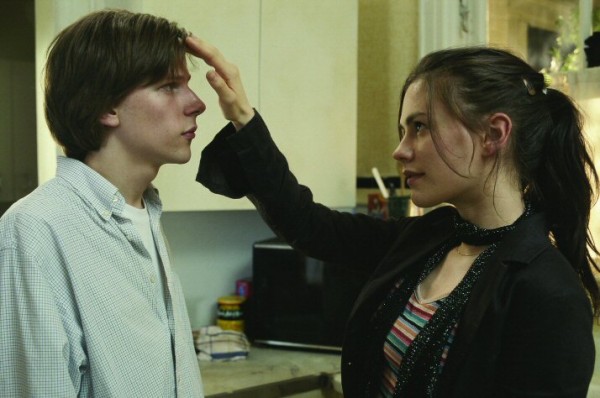
Diana (Guinevere Turner) and Cheryl Dunye (as herself) stars a relationship in THE WATERMELON WOMAN

The Watermelon Woman suffers from amateurish filmmaking techniques (Michelle Crenshaw was the cinematographer, while Dunye served as editor in addition to writer, director, and star), but its central issue is a compelling one, and Dunye is engaging as her onscreen alter ego. Richards (Lisa Marie Bronson) and Page (producer Alexandra Juhasz) are seen only in photographs and archival footage shot by white lesbian artist Zoe Leonard (her photography assistant was Kimberly Peirce, who went on to make Boys Don’t Cry), while Doug McKeown (The Deadly Spawn) directed the scenes from fake movies Plantation Memories and Soul of Deceit. (The photographs became an art project of its own, touring museums around the world.) The film features numerous cameos by writers, musicians, and activists, including Camille Paglia as herself, V. S. Brodie as a karaoke singer, Sarah Schulman as the CLIT archivist, David Rakoff as a librarian, and Toshi Reagon as a street singer. The Watermelon Woman is a heartfelt tribute to black lesbians by a black lesbian who is restoring one woman’s true identity as a microcosm for all black women who have had theirs taken away. The film also became part of an attempt by certain congressmen to defund the National Endowment for the Arts, which supplied a $31,500 grant to Dunye; Michigan Republican Peter Hoekstra, head of the House Education and Workforce Committee’s Subcommittee on Oversight and Investigations, singled the film out as offensive. The Watermelon Woman is also a reminder of what research was like pre-Google, a mere twenty years ago. Dunye has gone on to make such films as Stranger Inside, Black Is Blue, Mommy Is Coming, and My Baby’s Daddy, continuing her exploration of multiracial, gay, and trans culture. The Watermelon Woman opens November 10 at Metrograph; the 7:00 show that night will be introduced by Dunye, who will also take part in a postscreening Q&A. Juhasz will moderate a discussion on 1990s music and fashion with author and activist Jeffrey Marsh and DJ Bill Coleman following the 9:00 show on November 11, and Juhasz will be back for an introduction and Q&A at the 5:15 show on November 15.

DOC NYC: THY FATHER’S CHAIR

THY FATHER’S CHAIR

A cleaning crew has its work cut out for it in Alex Lora and Antonio Tibaldi’s THY FATHER’S CHAIR

THY FATHER’S CHAIR (Alex Lora & Antonio Tibaldi, 2015)
Cinépolis Chelsea
260 West Twenty-Third St. at Eighth Ave.
Sunday, November 13, $16-$18, 5:15
212-691-5519
www.docnyc.net

Directors Antonio Tibaldi and Alex Lora put the viewer right in the middle of twin brothers Abraham and Schrag’s desperately crowded and traumatic situation in the compulsively watchable observational documentary Thy Father’s Chair. After their parents died, the slovenly, unmarried Jewish scholars just plain stopped cleaning up after themselves, allowing newspapers, magazines, food, garbage, kitty litter, and myriad other items to pile up around them. They were not collectors hoarding valuable possessions or personal mementos; they were simply unable to organize anything or throw stuff away in their Brooklyn apartment. Only when their upstairs tenant stopped paying rent in protest, demanding they clean their place — the tenants had to deal not only with bad odors from the brothers’ apartment but with vermin as well — do they seek out assistance, hiring an Israeli man named Hanan of Home Clean Home to come and make their apartment safe and livable again. But it’s no easy task, as Abraham watches Hanan and his hazmat-suited team very carefully, continually trying to talk them out of tossing away certain items HCH insists must go; meanwhile, Schrag just moans on and on as he downs bottles of wine. (One of the only ways to tell the identical twins apart is by the wine stains on Schrag’s white shirt.) “What the hell! Nobody’s helping me,” Abraham cries out. “We are here to help you!” Hanan says. “You’re not going to help me. You’re going to tell me what to do,” Abraham replies. Later, Abraham tells Hanan, “What is it, a punishment?” Hanan responds, “It’s not punishment. I’m trying to help you; you’re not working with me.” Abraham just can’t bear to get rid of what is clearly mostly junk and garbage, including vastly outdated electronic equipment and canned food. The only item that the brothers search for that is indeed worth keeping is their megillah scroll, but that is the exception. Abraham also agonizes over his father’s favorite chair, not wanting Hanan to take it yet debating whether he is even worthy enough to sit in it. “The Torah wants everything to be clean, but unfortunately we veered from it,” he concedes. The brothers actually do understand what is going on, that their hoarding is patently absurd and dangerous, but they are powerless to stop it.

THY FATHER’S CHAIR

Documentary focuses on Brooklyn twin brothers who have serious hoarding problem

Director and cinematographer Tibaldi and director and editor Lora cast no judgment on the two men; the filmmakers work, much like the Maysles brothers did, like flies on the wall, recording the crazy things going on in this railroad apartment in Midwood for eight days. Complicating matters, Tibaldi couldn’t always get the kinds of shots he wanted, as he was physically limited as to where he could stand because of the mounds of filth. There’s no back story; we find out almost nothing about who Abraham and Schrag are and what they have done with their lives, what their hopes and dreams might have been, other than what little they reveal of themselves onscreen, which is dominated by an overwhelming fear of things being taken away from them. There are also no talking heads offering expert opinions or psychological evaluations about the brothers and their situation. Both melancholic and absurdly funny, the twins’ predicament is sort of what would happen if the Beale women of Grey Gardens had mated with Homer Lusk Collyer and Langley Wakeman Collyer, the famous hoarding brothers who died less than two weeks apart in their Harlem brownstone, no longer able to survive their suffocating surroundings. Bjarke Kolerus and Simon Don Eriksen’s gentle music also doesn’t comment on the ridiculousness of it all, instead treating it with understanding. “I feel sorry and sad to see you sad,” Hannan tells Abraham, who replies, “I feel bad about the stuff that’s being thrown out, but it has to be done,” trying to convince himself that it’s all going to be okay. The Father’s Chair, which is dedicated to Chantal Akerman, is screening November 13 at 5:15 at Cinépolis Chelsea, with Lora and Tibaldi participating in a Q&A afterward. DOC NYC runs November 10-17 at IFC Center, the SVA Theatre, and Cinépolis Chelsea, consisting of more than two hundred films, workshops, panel discussions, and other events, the largest nonfiction festival in the world.

DOC NYC: CITY OF JOY

CITY OF JOY

Madeleine Gavin’s CITY OF JOY reveals how a small group of dedicated activists help turn tragedy into empowerment in the Eastern Democratic Republic of Congo

CITY OF JOY (Madeleine Gavin, 2016)
SVA Theatre
333 West 23rd St. between Eighth & Ninth Aves.
Friday, November 11, $16-$18, 7:00
www.docnyc.net
www.impactpartnersfilm.com

Madeleine Gavin’s debut feature, City of Joy, is as heartbreaking as it is uplifting, as shocking as it is life affirming. Ever since the two Congo civil wars of the 1990s, rape has been used as a horrific military tactic in the country; hundreds of thousands of women and children have been and continue to be attacked repeatedly by members of militias who are attempting to gain access to the country’s rich mineral resources, including coltan, tin, tungsten, and gold, which are much sought after by global corporations. In 2007, gynecologist/obstetrician Dr. Denis Mukwege, activist Christine Schuler-Deschryver, and playwright Eve Ensler cofounded the City of Joy, a securely walled and guarded safe space in Bukavu in the Eastern Democratic Republic of Congo where survivors of rape and sexual violence come to get their life back, learning to reclaim control of their bodies and their minds. “My sisters, you will change the suffering you’ve endured into power,” Schuler-Deschryver declared at the official opening in 2011. Elegantly photographed by Taylor Krauss and Lisa Rinzler, highlighting the spectacular beauty of the area and the bright, colorful outfits worn by the women, the film focuses on several of the survivors’ horrific tales and how they are overcoming their fears. Ensler, author of The Vagina Monologues and Necessary Targets, explains, “The magnitude of the stories were beyond anything I had ever heard in my life.” Indeed, the women’s accounts are extremely difficult to listen to, but that’s part of the healing process for everyone. “When all women are free, that’s when you stop talking,” Ensler tells them, encouraging them to say the word “vagina” and to become more familiar with a part of their anatomy they should not fear. “I went to bed with no worries. We were at peace. No reason to be afraid. But one day everything changed, and I ended up in a place I never thought I’d be,” Jane Mukunila says of her brutal torture. Her transition is a centerpiece of the film.

Survivors come together to turn tragedy into hope in CITY OF JOY

Survivors come together to turn tragedy into hope in CITY OF JOY

“City of Joy was established as a center for survivors of rape and gender violence in the DRC,” program manager Mama Bachu Bahati reads from the organization’s mission statement. “The goal is to transform these women into leaders.” Risking their own personal safety, Dr. Mukwege, Schuler-Deschryver, Mama Bachu Bahati, self-defense instructors Duncan Bomba and Winnie Anyango, and others seek to empower these women to build strong new communities as they graduate from the program and reenter the world. “I think this love, this desire to fight for others, even when things for you have been completely destroyed, I believe that is the story of the struggle of the Congolese woman,” says the doctor, who has treated more than forty thousand women at Panzi Hospital. Gavin also edited the film, which boasts an outstanding soundtrack, with a score by Tomandandy and songs by Lokua Kanza, Geoffrey Oryema, and Papa Wemba to more fully immerse viewers in Congolese culture. Exhilarating and terrifying, City of Joy is a brutally honest and intensely important film, one that demands that nations such as the United States take action and put an end to the use of rape as a military weapon. The film is having its world premiere at DOC NYC on November 11 at 7:00 at the SVA Theatre, with Gavin, Ensler, Dr. Mukwege, Mukunila, and Schuler-Deschryver participating in an extended conversation afterward. DOC NYC runs November 10-17 at IFC Center, the SVA Theatre, and Cinépolis Chelsea, consisting of more than two hundred films, workshops, panel discussions, and other events, the largest nonfiction festival in the world.

SHOUTING AT THE SCREEN

DJ Donwill and Wyatt Cenac will be yelling at blaxploitation films at Alamo Drafthouse on November 10 & 17

DJ Donwill and Wyatt Cenac will be yelling at blaxploitation films at Alamo Drafthouse on November 10 & 17

Alamo Drafthouse Downtown Brooklyn
445 Albee Square West
Thursday, November 10 & 17, $15, 9:35
718-513-2547
drafthouse.com

In a 2007 episode of Scrubs, J.D. (Zach Braff) and Chris (Donald Faison) discuss the stereotype of black families yelling at movie screens. Many people don’t want talking of any kind in theaters, while others just go with the flow. Comedian Wyatt Cenac (The Daily Show, Night Train) and comedic MC Donwill have been enjoying the concept at their monthly “Shouting at the Screen” events, which are back in town, taking place at the new Alamo Drafthouse in Brooklyn. On November 10 and 17, Cenac and Donwill will “re-create the magic of Magic Johnson theaters” in a kind of alternative MST3K while watching blaxploitation and black cult films. There will also be trivia questions and drinking games. Be prepared to shout along with everyone else, conventional cinema etiquette be damned.

DOC NYC 2016

The U.S. premiere of Matt Tyrnauer’s CITIZEN JANE: BATTLE FOR THE CITY will open the 2016 DOC NYC festival

The U.S. premiere of Matt Tyrnauer’s CITIZEN JANE: BATTLE FOR THE CITY will open the 2016 DOC NYC festival

DOC NYC
IFC Center, 323 Sixth Ave. at West Third St.
SVA Theatre, 333 West 23rd St. between Eighth & Ninth Aves.
Cinépolis Chelsea, 260 West Twenty-Third St. at Eighth Ave., 212-691-5519
November 10-17, $10-$30 (badges $75-$750)
www.docnyc.net

DOC NYC continues its rapid growth with a wide-ranging schedule for its seventh year, featuring more than two hundred film screenings, workshops, university showcases, panel discussions, master classes, Q&As, and more. The festival of nonfiction film runs November 10-17 at IFC Center, the SVA Theatre, and Cinépolis Chelsea, with tickets ranging from $10 to $30. (Badges are necessary to attend “Short List Day,” “Documentary & Journalism Day,” “Smart Producing Day,” “Pitch Perfect Day,” and “Show Me the Money Day” events.) Among the many highlights are documentaries about David Lynch, Jane Jacobs, John Coltrane, Fred Hersch, Ken Loach, Sharon Jones, Robert Mapplethorpe, L7, and Tony Conrad as well as such topics as gender identity, abortion, religion, human rights, the ivory trade, African American journalism, disabilities, guns, food, and O.J. The impressive list of directors includes Werner Herzog, Barbara Kopple, Stanley Nelson, Katy Grannan, Raoul Peck, Ava DuVernay, Kirk Simon, and Kirsten Johnson. Below is a look at three festival films that have previously played in New York City and have been reviewed on twi-ny. Keep watching for more reviews as the festival approaches and gets under way.

NFL hero Steve Gleason takes a new look at life after being diagnosed with ALS

NFL hero Steve Gleason takes a new look at life after being diagnosed with ALS

GLEASON (Clay Tweel, 2016)
Thursday, November 10, Cinépolis Chelsea, 6:00
Thursday, November 17, Cinépolis Chelsea, 11:45
gleasonmovie.com

“It’s not gonna be easy but it’s gonna be awesome,” Steve Gleason promises his unborn child in the extraordinary documentary Gleason, a heartbreaking yet uplifting tale about dedication, family, and never giving up. On September 26, 2006, scrappy New Orleans safety and special teams stalwart Gleason became an all-time inspirational Saints hero when, on Monday Night Football, he blocked Atlanta Falcon Michael Koenen’s punt less than a minute and a half into the Saints’ first home game in the Superdome following the devastation wrought by Hurricane Katrina the previous summer. The play, which resulted in a touchdown when the ball was recovered by Curtis DeLoatch in the end zone, has been memorialized with a statue titled “Rebirth” in front of the stadium. But Gleason became a different kind of hero five years later when the undrafted free agent was diagnosed with amyotrophic lateral sclerosis (ALS), better known as Lou Gehrig’s disease, a generally fatal neuromuscular disease. Right after that, the Washington State native, who at the age of thirty-four was given three to five years to live, found out that his wife, artist and free spirit Michel Varisco, was pregnant with their first child, a boy. Determined to pass on as much of a legacy as he could to his unborn baby, Gleason began a vlog, a series of deeply personal five-minute videos in which he spoke openly and honestly about how they would never have the traditional father-son relationship but he wanted the boy to know that he was loved and cherished. But that is only the beginning of an incredible story that is poignantly told in Gleason.

Directed and edited by Clay Tweel (Make Believe, Print the Legend), the film features powerful clips from Gleason’s video journal; intimate footage shot by Ty Minton-Small and David Lee, who lived with Gleason, Varisco, and their son, Rivers, for two years; and interviews with family members and friends as Gleason’s physical conditions worsens but his heart and will grow stronger. “People will say, ‘Oh, it’s such a sad, tragic story,’ Gleason explains in the film. “It is sad, and so they’re right, but it’s not all sad. I think there is more in my future than in my past.” Gleason, with Michel’s father, Paul Varisco, form Team Gleason, a grass-roots nonprofit organization dedicated to helping people with ALS have a better quality of life, taking them on adventure vacations and giving them access to cutting-edge technology that increases their ability to communicate as the disease destroys their speech and movement. Among Steve’s famous friends and supporters are Saints quarterback Drew Brees and his wife, Brittany, and Pearl Jam guitarist Mike McCready and singer Eddie Vedder. Steve and Michel hold nothing back, sharing their deepest fears and insecurities while his condition deteriorates. As he tries to get the most out of his limited time with Rivers, Gleason also reexamines his troubled relationship with his father, Mike, a born-again Christian who is often at odds with his son. The real superstar of the film, however, is the brave and courageous Michel, who devotes her life to her husband and son despite increasing difficulties. In a statement about the film, Michel said, “I hope people who need a good laugh or a heavy cry can get that from this film. I hope people who need to be reminded to love their kids or their friends can get that from this movie. I hope people with ALS who want to use this film to show others what their lives really are like can get that from this movie. I hope people who have strained relationships with their parents will want to work on those relationships after they watch this movie. I hope people who have wanted to do something great in life will go ahead and do it after seeing this movie. People have told me that they have gotten all of these things from watching Gleason. And I think that’s pretty awesome.” Gleason, which is not always easy to watch, achieves all that and more, and indeed, that’s pretty awesome. The Sundance hit will be at DOC NYC on November 10 and 17, with Tweel and Michel Varisco participating in a Q&A after the first screening. Tweel will also take part in the panel discussion “Short List Day: Character Studies” on November 11 at 12 noon.

Anthony Weiner

The colorful Anthony Weiner marches in the Gay Pride Parade as he runs for mayor in 2013, a bright future potentially ahead of him

WEINER (Josh Kriegman & Elyse Steinberg, 2016)
Monday, November 14, Cinépolis Chelsea, 3:45
Tuesday, November 15, Cinépolis Chelsea, 9:45
www.ifcfilms.com

Near the end of Weiner, one of the most revealing and entertaining documentaries about a political figure you’re ever likely to see, one of the directors, Josh Kriegman, asks subject extraordinaire Anthony Weiner, “Why have you let me film this?” It’s a great question, and one that can be inquired of Weiner’s wife as well, Huma Abedin, who stands alongside her scandal-ridden husband nearly every step of the way. (Of course, the film was made prior to the most recent scandal, which led to the dissolution of their marriage.) In May 2011, during his seventh term as a fierce, fiery congressman representing parts of Brooklyn and Queens, Weiner was forced to resign in disgrace after it was discovered that he had sent lewd pictures of himself to several women over a public social media account while lying about it as well. Just two years later, the Brooklyn-born Weiner decided to get back in the game, running for mayor of New York City. Kriegman, who was a senior aide to Weiner in 2004-5 and his New York chief of staff in 2005-6, thought the comeback campaign would make a fascinating story, and Weiner agreed, giving him virtually unlimited access to his family and staffers. Initially, everything is going better than expected: Weiner is leading in the polls and getting his message across. But then the sexting scandal rises up again, and it all starts falling apart. Weiner tries hard to fight the good fight, concentrating on communicating his political platform, but the media only wants to ask him and his brave wife about the sexting, even when it is clear that the people of New York City prefer to talk about the issues. “I guess the punch line is true about me. I did the things . . . but I did a lot of other things too,” Weiner acknowledges. Of course, maybe Weiner never really had a fair chance. The movie begins with a telling quote from Marshall McLuhan: “The name of a man is a numbing blow from which he never recovers.”

Anthony Weiner

Yet another texting scandal forces Anthony Weiner to reconsider his options under media scrutiny

PBS and MTV veterans Kriegman and codirector Elyse Steinberg amassed more than four hundred hours of footage for their feature debut, and very rarely does Weiner or Abedin shut them out, even when things appear to hit rock bottom. Kriegman focuses his camera on Weiner, who doesn’t flinch as he considers all his options and, all too often, takes the wrong path, whether it’s getting angry with a patron in a Jewish deli or arguing with Lawrence O’Donnell on a videolink interview. Weiner continually performs self-defeating acts that Abedin, a longtime Hillary Clinton supporter who is now vice chairwoman of the presumptive Democratic presidential nominee’s campaign, gracefully and painfully points out to him, but she sticks with her husband and his campaign to the bitter end. Kriegman and Steinberg show Weiner hanging out at home, walking around barefoot, and playing with son Jordan, who was born in December 2011. But it’s truly heartbreaking when the directors zero in on Abedin’s forlorn face as the scandal grows and grows and the media has a field day with it. Weiner is seamlessly edited by Eli Despres (Blackfish, Red Army), who keeps the tension high even when we know what is coming, as the narrative plays out like a unique kind of political thriller. It’s impossible to take your eyes off the screen, to stop watching Weiner and Abedin as they have to deal with his dirty laundry in public. In addition to allowing Kriegman and Steinberg to follow him everywhere, the usually charismatic Weiner is decidedly dour as he sits down for a candid wraparound interview with the filmmakers. “Shit. This is the worst. This is the worst. Doing a documentary on my scandal,” Weiner opines at one point, displaying a rare moment of genuine regret as opposed to his usual hubris. But the film, which makes no judgments — and which Weiner and Abedin have refused to see so far — is as much about the relationship between media and politics as it is about one specific politician who made some personal mistakes, and it does not bode well for our future. Will Weiner ever be able to stage another comeback? He’s a determined guy, almost to the point of obsession, with a deep desire to help the people of New York City and the country, but then there’s that name, and the photos he posted, and the strange faces that he makes, so a third chance might just be one too many. A most human drama that won the U.S. Grand Jury Documentary Prize at Sundance, the extraordinary Weiner will be shown at DOC NYC on November 14 and 15 at Cinépolis Chelsea. In addition, Kriegman and Steinberg will discuss the making of the film in the special programs “First Time Doc Maker Day: Morning Manifesto” on November 10 at 10:00 am and “Short List Day: Unfolding Stories” on November 11 at 10:30 am. By then we’ll know how much Abedin’s emails found on Weiner’s laptop impacted the 2016 presidential election.

Sharon Jones

Sharon Jones is nervous about returning to the stage after tough cancer battle in Barbara Kopple’s intimate, affecting documentary

MISS SHARON JONES! (Barbara Kopple, 2015)
Wednesday, November 16, Cinépolis Chelsea, 5:00
Thursday, November 17, Cinépolis Chelsea, 9:45
sharonjonesandthedapkings.com

“I feel my day is coming, it’s my time,” soul singer extraordinaire Sharon Jones is shown saying at the beginning of Barbara Kopple’s touching and intimate documentary, Miss Sharon Jones! But that was before the former wedding singer and Rikers Island corrections officer, who was born in 1958 in North Augusta, South Carolina, raised in Brooklyn, and later lived in Queens, was diagnosed in June 2013 with stage two pancreatic cancer. Jones, who has been called the female James Brown — she tells a story in the film about the time she met the Godfather of Soul — allows the Oscar-winning Kopple (Shut Up & Sing, Harlan County, USA) remarkable access as she cuts off her trademark locks and chooses a wig, undergoes painful chemotherapy, is cared for by her close friend and holistic nutritionist Megan Holken, and visits her old stomping grounds in Augusta, Georgia. Jones shares her thoughts about her future, feeling responsible for the financial well-being of her longtime band, the Dap-Kings. “First and foremost, we’re a family,” Daptone Records cofounder and saxophonist Neal Sugarman says. In fact, “family” is a word that pops up often in the film when people describe their relationship with Jones, who has never married and has no children. Among those who talk about Jones, her amazing talent, and her fight with cancer are her oncologist, Dr. James Leonardo; her manager, Alex Kadvan, who is with her every step of the way; her assistant manager Austen Holman, who tries not to break down on camera; Daptone Records cofounder and bassist Gabe Roth; guitarist Binky Griptite, who is up front about his financial troubles while the band is on hiatus; drummer Homer Steinweiss; and Dapettes Starr Duncan Lowe and Saundra Williams.

Sharon Jones

Sharon Jones, the female James Brown, takes the stage in Barbara Kopple’s MISS SHARON JONES!

Jones is a fiery dynamo onstage, pounding the floor in her bare feet, shaking her dreads wildly, a relentless performer in a compact package. (We’ve seen Miss Jones perform numerous times, including with Prince at Madison Square Garden, and Kopple does a masterful job capturing Jones’s infectious passion and energy.) She proves herself to be quite the character offstage as well, an unpredictable force who is at ease lighting up a cigar while fishing in a lake, not embarrassed to admit that her dream is to dance on Ellen with Ellen DeGeneres, and lifted by the power when delivering an awe-inspiring rendition of the Gospel standard “His Eye Is on the Sparrow” in a Queens church. Of course, the film is filled with lots of great music, all originals by Sharon Jones & the Dap-Kings, including “I Learned the Hard Way,” “Get Up and Get Out,” “Longer & Stronger,” “I’ll Still Be True,” and “100 Days, 100 Nights.” As the chemotherapy nears its conclusion, Jones, itching to return to the stage, wonders whether she’ll be strong enough to go back out on tour behind their latest record, the aptly titled Give the People What They Want.After seeing the film, Jones posted on social media, “I never thought I had a story, but Barbara Kopple and her team captured a beautiful one during the most difficult months of my life. They were able to make the difficulty in what I went through mean a lot. You see a part of life I never would have looked at and it was moving for me to be able to see all the people it affected.” Miss Sharon Jones! is indeed a moving, deeply affecting film. It is playing at DOC NYC on November 16 and 17, with Kopple and coproducer David Cassidy participating in Q&As after the screenings. Kopple will also take part in the panel discussion “Short List Day: Character Studies” on November 11 at 12 noon.

SCREEN SLATE PRESENTS — THE MEDIUM IS THE MASSACRE: DEMON SEED

Julie Christie is trapped in a suburban nightmare in Donald Cammell’s DEMON SEED

Julie Christie is trapped in a suburban nightmare in Donald Cammell’s DEMON SEED

DEMON SEED (Donald Cammell, 1977)
Anthology Film Archives
32 Second Ave. at Second St.
Sunday, November 6, 3:00, and Tuesday, November 8, 9:00
Series runs through November 13
212-505-5181
anthologyfilmarchives.org

In his 1964 book, Understanding Media: The Extensions of Man, Marshall McLuhan declared, “In a culture like ours, long accustomed to splitting and dividing all things as a means of control, it is sometimes a bit of a shock to be reminded that, in operational and practical fact, the medium is the message. This is merely to say that the personal and social consequences of any medium — that is, of any extension of ourselves — result from the new scale that is introduced into our affairs by each extension of ourselves, or by any new technology.” Screen Slate and Anthology Film Archives have teamed up on a series that shows that concept at work in a very specific way. Continuing through November 13, “Screen Slate Presents: The Medium Is the Massacre” consists of a dozen horror films and specially chosen shorts that ratchet up the fear factor using cutting-edge technology and new media. Based on the novel by Dean R. Koontz, Donald Cammell’s creepy, claustrophobic 1977 futuristic thriller Demon Seed offers a very different look at motherhood. The film stars a surprisingly game Julie Christie as Susan Harris, a frustrated housewife whose husband, Alex (Fritz Weaver), is the leader of a team that has built a master computer known as Proteus (voiced by Robert Vaughn). When Alex goes off for several months to further Proteus’s already impressive attributes, the supercomputer starts developing a mind of its own, locking Susan in the house and deciding she must give birth to its child.

Cammell, who codirected Performance with Nicolas Roeg, fills Demon Seed with trippy, psychedelic visuals (the fab animated sequence is by Jordan Belson and Bo Gehring with Ron Hays) and cool technological flourishes, along with an electronic score by Ian Underwood and Lee Ritenour supplementing Jerry Fielding’s central musical themes. The film delves into suburban paranoia with Toffler-esque flare and an Orwellian fear of artificial intelligence. The film harkens back to Stanley Kubrick’s 2001: A Space Odyssey and Joseph Sargent’s Colossus: The Forbin Project while influencing such future films as John Badham’s WarGames, which also names its supercomputer “Joshua” and casts Weaver look-alike John Wood as computer creator Dr. Stephen Falken. Demon Seed is screening with Ericka Beckman’s 1999 experimental short Hiatus and Soda_Jerk’s one-minute Undaddy Mainframe on November 6 and 8 at Anthology. “Demon Seed with video effects by Ron Hays was perhaps the first film to integrate video with other special effect film processes,” Denise Gallant wrote in a 1982 issue of American Cinematographer. Programmed by Jon Dieringer of Screen Slate, “The Medium Is the Massacre” continues through November 13 with such other tech-savvy frightfests as David Cronenberg’s Videodrome (Cronenberg was directly influenced by McLuhan, who lectured at the university he attended), John Flynn’s Brainscan, Tobe Hooper’s Poltergeist, and Kiyoshi Kurosawa’s Pulse, each accompanied by at least one related short film. “Whenever the dragon’s teeth of technological change are sown, we reap a whirlwind of violence,” McLuhan also said, in a March 1969 Playboy interview.

PETER AND THE FARM

Peter Dunning reflects back on his hard life in Tony Stone documentary

Peter Dunning reflects back on his hard life in Tony Stone documentary

PETER AND THE FARM (Tony Stone, 2016)
Metrograph
7 Ludlow St. between Canal & Hester Sts.
Opens Friday, November 4
212-660-0312
www.peterandthefarmfilm.com
metrograph.com

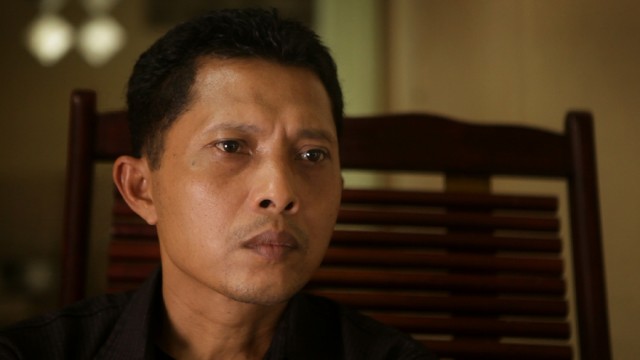
“There’s not a part of this farm that has not been scattered with my sweat, my piss, my blood, my spit, my tears, fingernails, skin, and hair,” Peter Dunning says in Tony Stone’s Peter and the Farm. Dunning and Stone essentially show all that and more in the intimate documentary, holding nothing back, resulting in a film that is often difficult to watch, following a crotchety, suicidal, alcoholic sixty-nine-year-old organic meat farmer with a mangled hand who is estranged from his family and runs his 187-acre Vermont farm seemingly by himself. “I’m living in hell,” he says with cold detachment. Dunning is brutal with his animals, which include cows, sheep, and pigs, or at least it seems brutal to this city boy; Stone shows him shooting, skinning, and beheading one sheep, which caused me to look away from the screen, something I very rarely do. Stone also zooms in on a cow’s butt as it relieves itself of a massive amount of feces, followed by a vet sticking nearly his entire arm inside the animal to check if it is pregnant.

Stone (Severed Ways: The Norse Discovery of America), a New York City native who produced the film with his wife, musician, photographer, and actress Melissa Auf der Maur (the couple previously collaborated on Out of Our Minds and cofounded the multidisciplinary arts space Basilica Hudson), casts no judgment on Dunning, letting him just go about his business mostly on his own; they occasionally speak to each other, Stone an off-camera presence à la Albert Maysles. It’s a fascinating relationship — the two met at a farmers market when Stone was nine years old — made more than a little creepy because Dunning initially wanted Stone to film his suicide. But Peter soldiers on against all the odds, getting up every morning and feeding his flock, riding the John Deere, sharing poignant memories, and lamenting his life, which turned out very different from the way he imagined it. Peter and the Farm, which previously screened at such festivals as True/False in Missouri and New Directors / New Films at MoMA and Lincoln Center, opens November 4 at Metrograph, with Stone participating in a Q&A at the 7:00 show on Friday.