
Herschell Gordon Lewis’s hunger-inducing BLOOD FEAST is considered first splatter film
BLOOD FEAST (Herschell Gordon Lewis, 1963)
Nitehawk Cinema
136 Metropolitan Ave. between Berry St. & Wythe Ave.
Friday, November 25, and Saturday, November 26, 12:20 am
718-384-3980
www.nitehawkcinema.com
 We have a bone to pick with Nitehawk Cinema. One of the Brooklyn movie house’s signature series is “Film Feast,” in which they invite chefs to serve specially created meals for specific films, inspired by what’s happening onscreen; for example, on December 13, Richard Donner’s Scrooged, starring Bill Murray, will be shown with a gourmet menu that includes courses named “The Night the Reindeer Died” and “Buy Me a Goose.” So what is Blood Feast, chopped liver? How could this cult classic, widely considered the first splatter horror movie ever made, not make it into the “Film Feast” series? On November 25 and 26 just past midnight, Nitehawk is presenting a 35mm print of Herschell Gordon Lewis’s low-budget, somewhat tongue-in-cheek (or, as you’ll see, tongue-out-of-cheek) gorefest, which stars Lewis regular Mal Arnold (Scum of the Earth!, the nudie musical Goldilocks and the Three Bares) as Fuad Ramses, the limping owner of an “exotic” food store and catering business. Oh, he’s also a homicidal maniac. When the high-falutin’ Mrs. Dorothy Fremont (Lyn Bolton) asks him to cater a party she is throwing for her daughter, Suzette (Connie Mason of Lewis’s 2000 Maniacs), Ramses, who has been killing and cutting up women, sees it as the opportunity he’s been waiting for, to serve an Egyptian feast for the first time in five thousand years in order to bring the goddess Ishtar, Mother of the Veiled Darkness, back to life. (Yes, Ishtar; we’re not kidding.) Meanwhile, Miami detective Pete Thornton (longtime character actor and writer William Kerwin) and the dimwitted police captain (Scott H. Hall) are on the case — well, sort of, as they’re not exactly the brightest bulbs when it comes to putting two and two together. Nor is Suzette, who offers up this lulu: “I was reading about all those murders, and it sort of takes all the joy out of everything.”
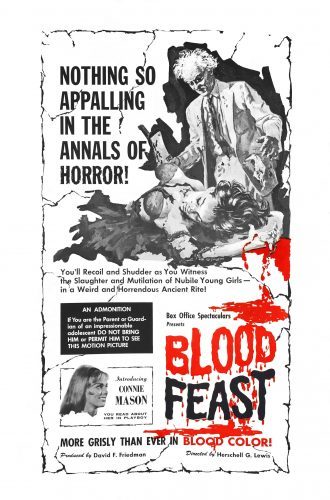
Blood Feast might have historical significance in the slasher genre, but it’s a terrible movie, with embarrassingly bad acting, wooden dialogue by screenwriter (Allison) Louise Downe (Lewis’s She-Devils on Wheels, The Gruesome Twosome, and others), convoluted plot twists, and dense-headed camerawork by Lewis (who also composed the creepy score and is the voice on the radio), who died this past September at the age of ninety after having made approximately three dozen films, including The Gore Gore Girls, Color Me Blood Red, and, in 2002 after a thirty-year hiatus, Blood Feast 2: All U Can Eat, with J. P. Delahoussaye as Fuad Ramses III and John Waters as a reverend. Which brings us back to Nitehawk’s “Film Feast” series and its monstrous decision not to have Blood Feast be an obvious part of it. Hey, so what’s a little cannibalism among friends? “Nitehawk Midnite Screenings” continues in December with such other thrillers as Bob Clark’s Black Christmas, Nicolas Pesce’s The Eyes of My Mother, and Freddie Francis’s 1972 Tales from the Crypt.
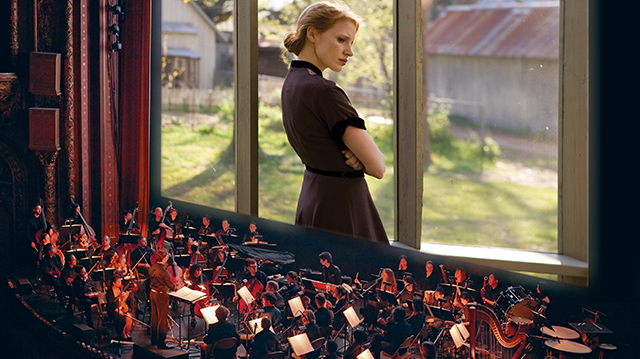
 Iconoclastic writer-director Terrence Malick had made only five feature films in his forty-plus-year career when The Tree of Life came out in 2011, and it might very well be his best. And now you can see it like never before, as the BAM Next Wave Festival presents it in the Howard Gilman Opera House with a live score performed by more than one hundred singers and musicians from New York City’s Wordless Music Orchestra playing works by Mahler, Berlioz, Brahms, Górecki, Mozart, Tavener, Smetana, Couperin, and others, conducted by Ryan McAdams and featuring Robert Fleitz on piano and sopranos Charles Love and Jennifer Zetlan. Following Badlands (1973), Days of Heaven (1978), The Thin Red Line (1998), and The New World (2005), The Tree of Life is an epic masterpiece of massive proportions, a stirring visual journey into the beginning of the universe, the end of the world, and beyond. The unconventional nonlinear narrative essentially tells the story of a middle-class Texas family having a difficult time coming to grips with the death of one of their sons in the military. Malick cuts between long flashbacks of Mr. and Mrs. O’Brien (Brad Pitt and Jessica Chastain) in the 1950s and 1960s, as they meet, marry, and raise their three boys, to the present, when Jack (Sean Penn), their eldest, now a successful architect, is still searching for answers. The sets by production designer Jack Fisk transport viewers from midcentury suburbia to the modern-day big city and a heavenly beach, all gorgeously shot by cinematographer Emmanuel Lubezki. Every frame is so beautiful, it’s as if they filmed the movie only at sunrise and sunset, the Golden Hour, when the light is at its most pure. The Tree of Life is about God and not God, about faith and belief, about evolution and creationism, about religion and the scientific world. The film opens with a quote from the Book of Job: “Where were you when I laid the earth’s foundation . . . while the morning stars sang together and all the sons of God shouted for joy?” Early on, Mrs. O’Brien says in voice-over, “The nuns taught us there are two ways through life: The way of nature, and the way of grace. You have to choose which one to follow.” Malick leaves those questions open, displaying the miracles of life and death and everything in between as perhaps the only response.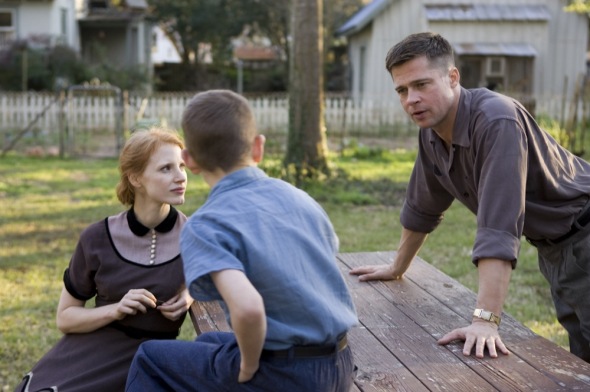
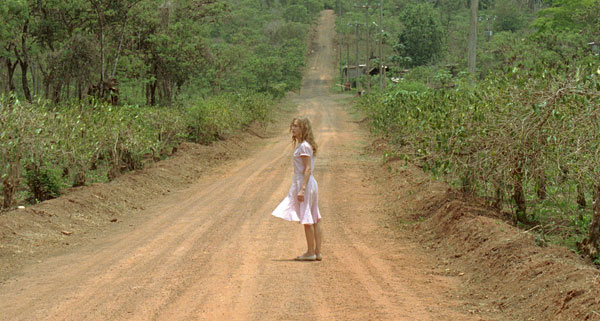
 You will never hear us complaining about too much Isabelle Huppert. The sixty-three-year-old French actress has been all over the place recently, having appeared in no fewer than seven films in 2015–16 in addition to touring the world in Krzysztof Warlikowski’s Phèdre(s), which came to BAM this past September, and appearing with Cate Blanchett in Jean Genet’s The Maids at City Center in 2014. In conjunction with the release of her latest two films, Mia Hansen-Løve’s Things to Come and Paul Verhoeven’s Elle, Metrograph is hosting a seven-movie Huppert retrospective this weekend, with the grand actress on hand on the Lower East Side for a Q&A following Hong Sang-soo’s In Another Country and to introduce Curtis Hanson’s L.A. Confidential. The series also includes Michael Haneke’s The Piano Teacher, Catherine Breillat’s Abuse of Weakness, Hal Hartley’s Amateur, and Ursula Maier’s Hom. as well as Claire Denis’s White Material, which takes place in an unnamed West African nation besieged by a bloody civil war between rebels and the military government. Huppert stars as Maria Vial, who steadfastly refuses to leave her coffee plantation, determined to see the last crop through to fruition. Despite pleas from the French army, which is vacating the country; her ex-husband, André (Christophe Lambert), who is attempting to sell the plantation out from under her; and her workers, whose lives are in danger, Maria is unwilling to give up her home and way of life, apparently blind to what is going on all around her.
 For his feature-length debut, writer-director Juan Reina was all set to make a documentary in Norway about a group of Finnish friends’ daring attempt to break the world record for longest cave dive. But the narrative quickly changed when two of the divers, Jari Huotarinen and Jari Uusimäki, suffered tragic accidents and died, their bodies trapped underwater. Unable to retrieve the bodies because of safety concerns, the authorities closed off the area to any further diving. But the rest of the Finnish team decides that they cannot leave their friends down there and come up with a plan to secretly dive in and bring them back home for proper burials. A kind of mix between a Werner Herzog adventure documentary, a procedural caper film, and a military rescue drama, Diving into the Unknown follows Sami Paakkarinen, Vesa “Vesku” Rantanen, Kai “Kaitsu” Känkänen, Patrik “Patte” Grönqvist, and others as they decide to risk their lives in the waters that killed their fellow divers. “I do everything I can not to die while diving,” Paakkarinen says early on, later adding, “You should never expect that a dive will go well . . . because then it never does.” Grönqvist notes, “It has to be fun. If it’s not fun, there’s no point in doing it.” But during the rescue attempt, he says, “From the outside this might seem foolishly risky. But life in general can be risky. You cannot prepare for everything that could go wrong. You just cannot practice facing a dead friend at one hundred and ten meters.” No matter how many dives they’ve been on together, each new one comes with its own obstacles and dangers; when the men say goodbye to their respective families, they know deep down that they might not return alive. And it’s not just the physical aspects of diving that place them in jeopardy; several discuss the emotional and psychological trauma that could impact their safety, especially when diving to recover two of their closest friends.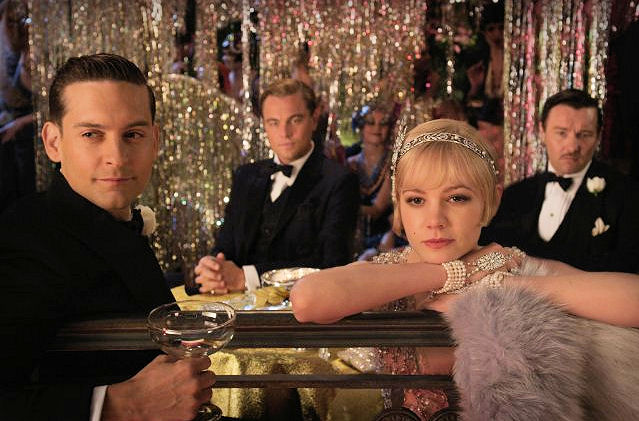
 Baz Luhrmann’s sumptuous version of The Great Gatsby is a dazzling reimagining of F. Scott Fitzgerald’s 1925 novel of old and new money and the American dream. The Australian director and his wife, costume and production designer extraordinaire Catherine Martin, have turned the classic tale into a lush spectacle without losing focus on the main story of life and love during the Roaring Twenties. Leonardo DiCaprio, who played the male lead in Lurhmann’s contemporary take on Romeo + Juliet, is superb as Jay Gatsby, the mystery man previously portrayed by Warner Baxter in 1926, Alan Ladd in 1949, Robert Redford in 1974, and Toby Stephens in 2000, adding a compelling level of vulnerability to the character. Gatsby has built a magnificent palace for himself on Long Island, hosting wild parties that he doesn’t care about; all he truly wants is Daisy (Carey Mulligan), a former love who has married successful businessman Tom Buchanan (Joel Edgerton) and lives in a mansion right across the bay. The villainous Tom is having an affair with the lower-class Myrtle Wilson (Isla Fisher), whose unaware husband, George (Jason Clarke), runs a gas station and garage in the Valley of Ashes. Although a loner, Gatsby befriends his neighbor, Nick Carraway (Tobey Maguire), a young, innocent bond trader who rents a modest home at the base of Gatsby’s enormous estate and whose cousin just happens to be Daisy. As Carraway is sucked into this glamorous, debauched society, which also includes wild and elegant golf champion Jordan Baker (Elizabeth Debicki), he is forced to reexamine his own hopes and dreams as he tries to find his place in the world.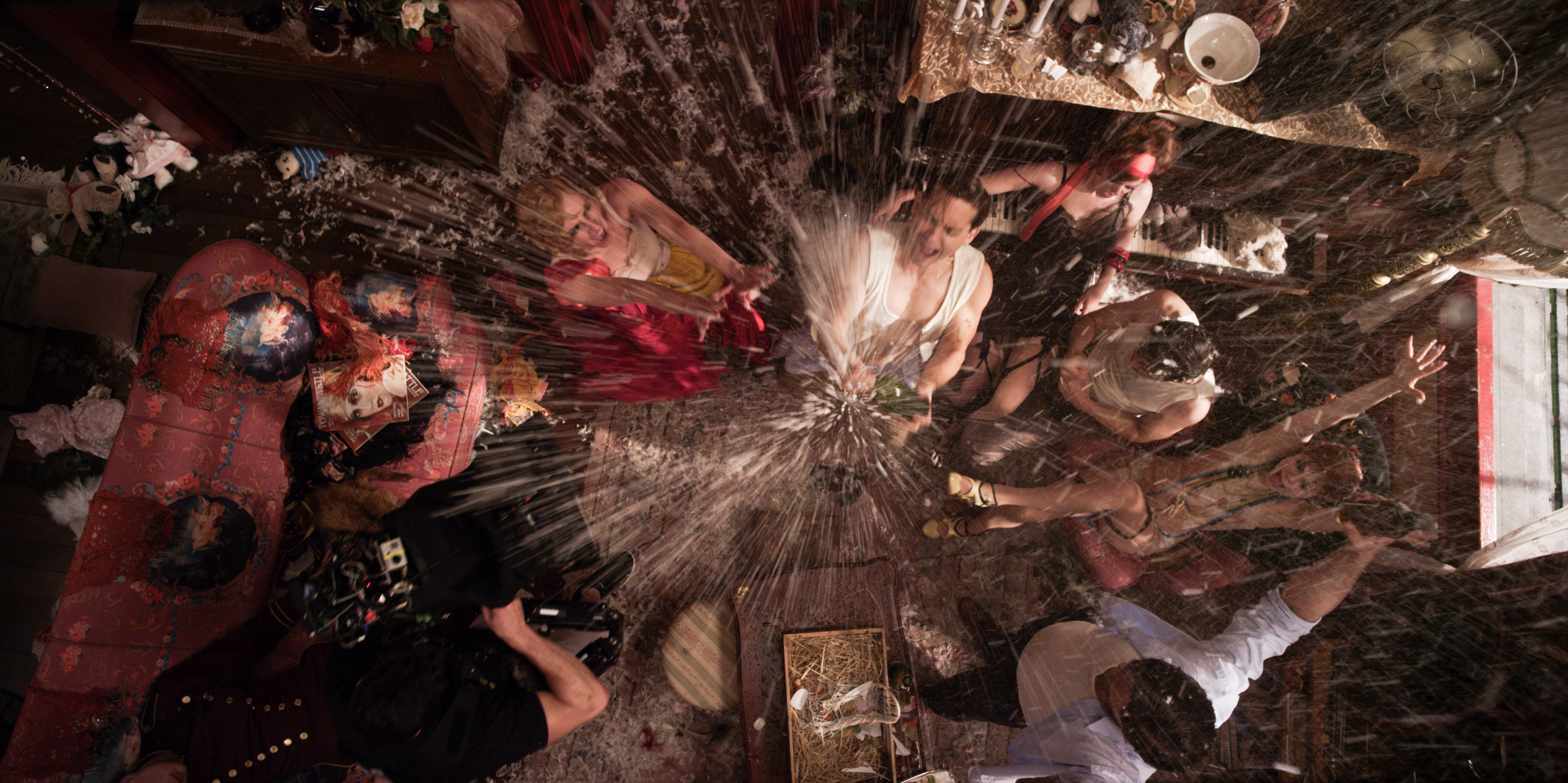

 Former Japanese national surfing champion Takuji Masuda documents the wild life and times of sugar scion Bunker Spreckels in the bumpy, oddly titled Bunker77, which is having its New York City premiere November 16 and 17 at the DOC NYC festival. Born in Los Angeles in 1949, Spreckels is described in the film by friends and relatives as “radical,” “original,” “unique,” “dangerous,” and “fun,” a blond beach bum and party lover who rode waves around the world with his specially made short boards. “That was his international persona: the hunter, the surfer, the playboy, the jet-setter, the martial artist, all in one,” skateboard legend Tony Alva says of his friend and mentor. Spreckels’s grandfather, Adolph B. Spreckels, ran the Spreckels Sugar Company and, with his wife, Alma, helped develop the cities of San Francisco and San Diego. After Spreckels’s parents, Adolph B. Spreckels II and former actress Kay Williams, divorced, his mother married Clark Gable, who helped raise Bunker and his sister, Joan, for five years. Bunker always did things his own way, but his life spiraled out of control once he turned twenty-one and gained access to his multimillion-dollar trust fund, caught up in a storm of drugs, alcohol and women. He tried to become a rock star and a screen idol while skateboarding and surfing in California, Hawai’i, Australia, and South Africa. His story is told by such surfing legends as Laird Hamilton, Vinny Bryan, Bill Hamilton, Rory Russell, Nat Young, Herbie Fletcher, Spyder Wills, and Wayne Bartholomew; childhood friends Curtis Allen (son of cowboy movie star Rex Allen) and Ira Opper; Surfer magazine photographer Art Brewer, associate editor Kurt Ledterman, chief editor Drew Kampion, and publisher Steve Pezman; longtime girlfriend Ellie Silva; and journalist C. R. Steyck III, whose extensive interview with Spreckels near the end of his life is sprinkled throughout the documentary. Masuda also includes home movies, photographs, relevant clips from Gable films, and scenes from 2005’s Lords of Dogtown, in which Johnny Knoxville plays Topper Burks, who is based on Spreckels, and 1961’s Blue Hawaii, in which Elvis Presley plays a character eerily similar to Bunker. “You can definitely have too much fun with too much money,” Bartholomew says, while Steyck adds, “He was a dangerous man, mainly dangerous to himself.”