Chiron (Alex Hibbert) looks out at a hard future in Barry Jenkins’s powerful MOONLIGHT
MOONLIGHT (Barry Jenkins, 2016)
Film Society of Lincoln Center, Walter Reade Theater
165 West 65th St. at Amsterdam Ave.
Thursday, January 5, 6:30
Series runs January 4-9
212-875-5601
www.filmlinc.org
moonlight-movie.com
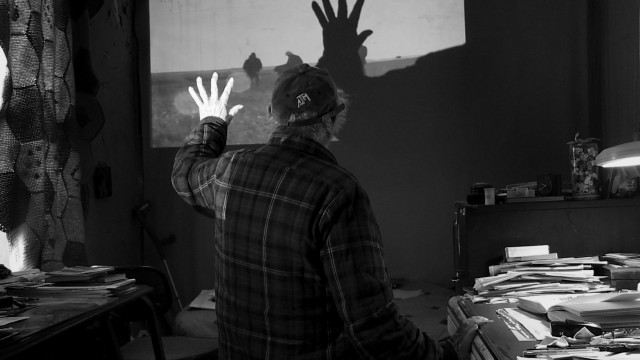
 The Film Society of Lincoln Center is paying tribute to one of the best films of the year, Barry Jenkins’s Moonlight, with the six-day series “Illuminating Moonlight,” running January 4-9 and consisting of screenings of the L.A.-based writer-director’s 2008 debut, Medicine for Melancholy, starring Wyatt Cenac and Tracey Heggins, which Jenkins will introduce; his follow-up, Moonlight, which will be followed by a Q&A with Jenkins; and six diverse works that directly influenced Jenkins in making Moonlight: Carlos Reygadas’s Silent Light, Hou Hsiao-hsien’s Three Times, Charles Burnett’s Killer of Sheep, Wong Kar-wai’s Happy Together, Nagisa Ôshima’s Gohatto, and Claire Denis’s Beau Travail. In Moonlight, Jenkins tells the powerful and moving story of Chiron, a shy, troubled boy growing up in Liberty City, Florida, in three chapters as Chiron goes from a young boy (Little, played by Alex Hibbert) to a teenager (Chiron, played by Ashton Sanders) to a twenty-seven-year-old man (Black, played by Trevante Rhodes). The semiautobiographical film is based on playwright and actor Tarell Alvin McCraney’s In Moonlight Black Boys Look Blue and Jenkins’s own experiences; both men are from Liberty City but did not know each other there. In the first section, Little is chased by bullies and runs into an abandoned building, where he is found by Juan (Mahershala Ali), a drug dealer who brings him home to his girlfriend, Teresa (Janelle Monáe). They become a kind of surrogate family, as Little’s mother, Paula (Naomie Harris), is a crack addict who will do just about anything for her next score. Little also finds solace in his friendship with Kevin (Jaden Piner, later played by Jharrel Jerome and André Holland). In the second chapter, Chiron is taunted and bullied by Terrel (Patrick Decile) while trying to come to terms with his sexual orientation. In the third section, the passage of time reveals how much has changed, although the film turns overly melodramatic at the end. Taking its inspiration from the source material, Moonlight is beautifully photographed by James Laxton, who has previously shot Medicine for Melancholy and Jenkins’s 2003 shorts, My Josephine and Little Brown Boy, and 2011 “Remigration” episode of Futurestates, bathing the film in lush blues. Jenkins’s subtly paced style is accompanied by a gorgeous classical-inspired score by Nicholas Britell (The Big Short). Moonlight is anchored by superb performances by Emmy nominee Ali (House of Cards, Hidden Figures) as the cool and caring Juan; Harris (Mandela: Long Walk to Freedom, 28 Days Later) as the drug-addicted Paula, who has lost control of her life; Monáe (Hidden Figures, The Electric Lady) as the sweet and understanding Teresa; and Sanders (The Retrieval) as the in-between Chiron, who feels overwhelmed by all the maelstrom swirling around him.
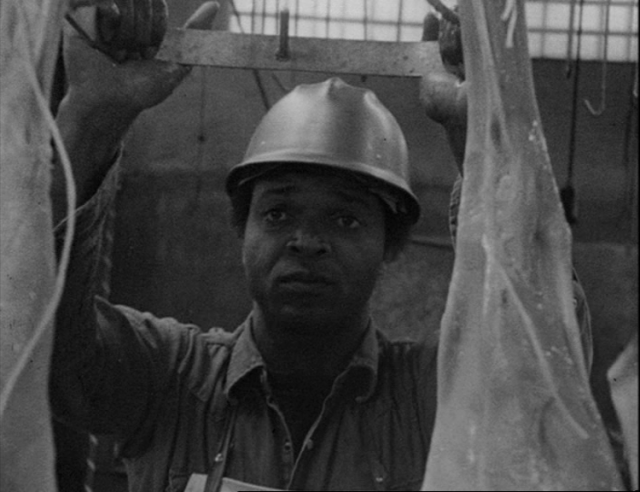
Charles Burnett’s KILLER OF SHEEP examines black life in postwar America
KILLER OF SHEEP (Charles Burnett, 1977)
Wednesday, January 4, 7:00
Sunday, January 8, 8:45
www.filmlinc.org
www.killerofsheep.com
In 2007, Milestone Films restored and released Charles Burnett’s low-budget feature-length debut, Killer of Sheep, with the original soundtrack intact; the film had not been available on VHS or DVD for decades because of music rights problems that were finally cleared. (The soundtrack includes such seminal black artists as Etta James, Dinah Washington, Little Walter, and Paul Robeson.) Shot on weekends for less than $10,000, Killer of Sheep took four years to put together and another four years to get noticed, when it won the FIPRESCI Prize at the 1981 Berlin Film Festival. Reminiscent of the work of Jean Renoir and the Italian neo-Realists, the film tells a simple story about a family just trying to get by, struggling to survive in their tough Watts neighborhood in the mid-1970s. The slice-of-life scenes are sometimes very funny, sometimes scary, but always poignant, as Stan (Henry Gayle Sanders) trudges to his dirty job in a slaughterhouse in order to provide for his wife (Kaycee Moore) and children (Jack Drummond and Angela Burnett). Every day he is faced with new choices, from participating in a murder to buying a used car engine, but he takes it all in stride. The motley cast of characters, including Charles Bracy and Eugene Cherry, is primarily made up of nonprofessional actors with a limited range of talent, but that is all part of what makes it all feel so real. Killer of Sheep was added to the National Film Registry of the Library of Congress in 1989, the second year of the program, making it among the first fifty to be selected, in the same group as Rebel Without a Cause, The Godfather, Duck Soup, All About Eve, and It’s a Wonderful Life, which certainly puts its place in history in context. Killer of Sheep is screening January 4 and 8 in the “Illuminating Moonlight” series.

The beautifully minimalist SILENT LIGHT served as an influence on Barry Jenkins’s MOONLIGHT
SILENT LIGHT (STELLET LICHT) (Carlos Reygadas, 2007)
Thursday, January 5, 3:30
Sunday, January 8, 6:00
www.filmlinc.org
 Carlos Reygadas’s Silent Light is a gentle, deeply felt, gorgeously shot work of intense calm and beauty. The film opens with a stunning sunrise and ends with a glorious sunset; in between is scene after scene of sublime beauty and simplicity, as Reygadas uses natural sound and light, a cast of mostly nonprofessional actors, and no incidental music to tell his story, allowing it to proceed naturally. In a Mennonite farming community in northern Mexico where Plautdietsch is the primary language, Johan (Cornelio Wall Fehr) is torn between his wife, Esther (Miriam Toews), and his lover, Marianne (Maria Pankratz). While he loves Esther, he finds a physical and spiritual bond with Marianne that he does not feel with his wife and their large extended family. Although it pains Johan deeply to betray Esther, he is unable to decide between the two women, even after tragedy strikes. Every single shot of the spare, unusual film, which tied for the Jury Prize at the 2007 Cannes Film Festival (with Vincent Paronnaud and Marjane Satrapi’s Persepolis), is meticulously composed by Reygadas (Japon, Battle in Heaven) and cinematographer Alexis Zabe, as if a painting. Many of the scenes consist of long takes with little or no camera movement and sparse dialogue, evoking the work of Japanese minimalist master Yasujiro Ozu. The lack of music evokes the silence of the title, but the quiet, filled with space and meaning, is never empty. And the three leads — Fehr, who lives in Mexico; Toews, who is from Canada; and Pankratz, who was born in Kazakhstan and lives in Germany — are uniformly excellent in their very first film roles. Screening January 5 and 8 in the “Illuminating Moonlight” series, Silent Light is a mesmerizing, memorable, and very different kind of cinematic experience.

Chang Chen and Shu Qi fall in love in three different decades in Hou Hsiao-hsien’s THREE TIMES
THREE TIMES (Hou Hsiao-hsien, 2005)
Friday, January 6, 4:00
Sunday, January 8, 3:00
www.filmlinc.org
Hou Hsiao-hsien’s gorgeous Three Times is an evocative, poetic trilogy of tales about life and love in Taiwan, all starring the mesmerizing Shu Qi (Hou’s Millennium Mambo) and the stalwart Chang Chen (Wong Kar-wai’s 2046 and Happy Together). In A Time for Love, set in 1966 and featuring a repeated soft-rock soundtrack, Chen, about to leave for military service, meets May, a pool-hall girl, and promises to write to her even though they have only just met and barely said a word to each other. When he gets a furlough, he goes to the pool hall only to find that she’s on the move, so with Zen-like cool he tries to track her down. A Time for Freedom, a silent film with interstitial dialogue and period music, takes place in an elegant brothel in 1911, where Mr. Chang regularly visits a beautiful courtesan. But while she dreams of him buying out her contract and marrying her, he seems intent on helping out another couple instead. Hou concludes the trilogy with A Time for Youth, set in fast-paced modern-day Taipei, as Jing, an epileptic singer, and Zhen, a motorcycle-riding photographer, embark on a passionate, nearly wordless affair that has serious consequences for their significant others. Three Times is a rare treat for cineastes, a poetic, intelligent, though overly long study of relationships between men and women in a changing Taiwan over the last hundred years, focusing on character, time and place, and the art of filmmaking itself. Three Times is screening January 6 and 8 in the “Illuminating Moonlight” series.
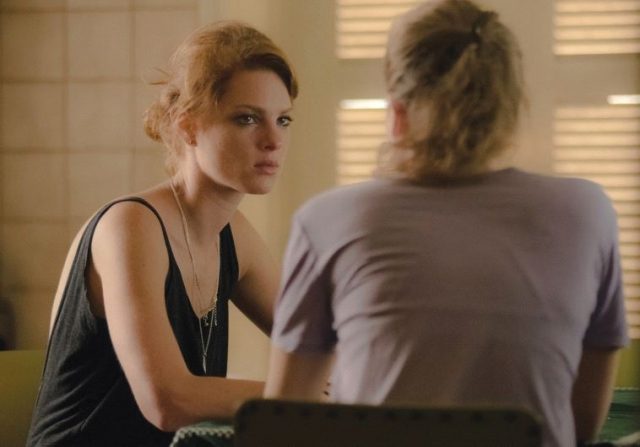
 The 2017 New York Jewish Film Festival opens with the tender, emotionally wrenching Moon in the 12th House, the debut feature by Dorit Hakim, who won the 1998 Silver Lion for Best Short Film for her eleven-minute Small Change. Hakim, a journalist and filmmaker who was born in Tel Aviv, lived for several years with her husband, Israeli hi-tech success Shlomo Kramer, in Silicon Valley, then moved back to her homeland. For her first full-length work, she reaches deep into her Israeli youth to tell the story of two sisters separated by tragedy when they were girls. Now adults, the vain Mira (Yuval Scharf) works in a glitzy Tel Aviv nightclub, where she does drugs and sleeps with her selfish, mean-spirited boss, Doron (Gal Toren). Her younger sister, twenty-one-year-old Lenny (Yaara Pelzig), has chosen to remain in the family home in the country, taking care of their ailing father (Avraham Horovitz), who is in an assisted living facility after a stroke. Lenny, who goes for a precious swim every day to temporarily escape her overwhelming responsibilities, is also watching her neighbor’s teenage son, Ben (Gefen Barkai), while his artist mother is away. Long estranged, the sisters are reunited when a desperate Mira suddenly shows up on Lenny’s doorstep, but as much as Mira might need her, Lenny is not yet ready to accept her back in her life. “It’s not as easy for me as it is for you,” Mira says, not understanding the sacrifices that Lenny has made, part of the reason why they are estranged.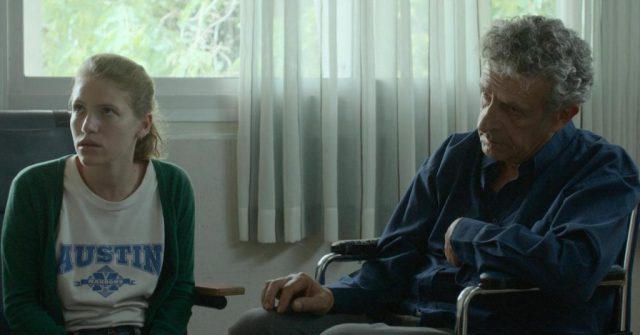

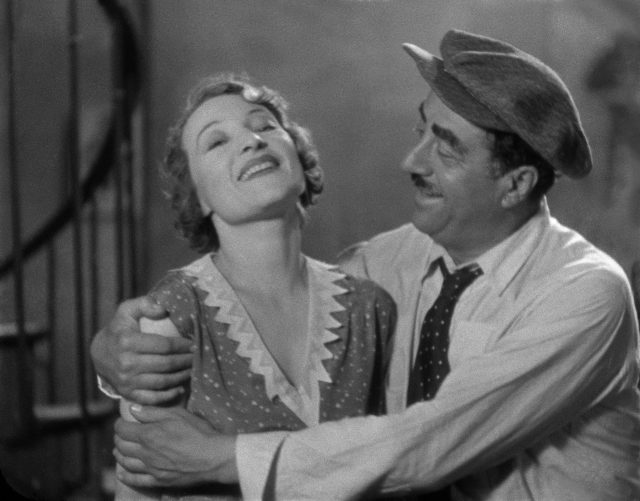
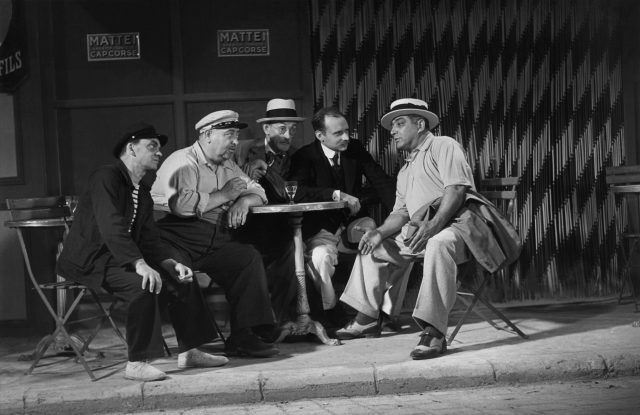
 One of the great trilogies in the history of cinema, Marcel Pagnol’s Marseille Trilogy will be playing at Film Forum January 4-12 in a new 4K restoration, including marathon viewings of Marius, Fanny, and César on January 7, 8, 11, and 12. French novelist, playwright, screenwriter, and director Pagnol penned all three scripts, the first two based on his stage plays, as he investigated love, honor, betrayal, friendship, religion, scandal, and social ritual among the petit bourgeois, the lower-middle-class citizens of the port town of Marseille. Shot on location, the three films, also known as the Fanny Trilogy, center on the big, boisterous César (Raimu in a marvelous comedic tour de force), who runs a local bar with his ne’er-do-well son, Marius (Pierre Fresnay). Marius is childhood friends with the sweet Fanny (Orane Demazis), who declares her love for him only after the rich, successful older merchant Honoré Panisse (Fernand Charpin) requests her hand in marriage. As Fanny’s mother, Honorine (Alida Rouffe), and aunt, Claudine (Milly Mathis), contemplate the potential match, Fanny tries to convince Marius to marry her instead, but he is hesitant, drawn instead to the sea despite his love for Fanny. Directed by Alexander Korda (Rembrandt, The Private Life of Henry VIII), Marius is a rollicking good romance with a surprising dash of naughtiness and featuring an outstanding group of minor characters, including Paul Dullac as Félix Escartefigue, Alexandre Mihalesco as Piquoiseau, Robert Vattier as Albert Brun, and Edouard Delmont as Dr. Félicien Venelle. The camaraderie among the characters is infectious — many of the actors previously played the same roles onstage — with César leading the way, a big, boisterous man whose bravura mix of insults and praise is as potent as the drinks in his bar.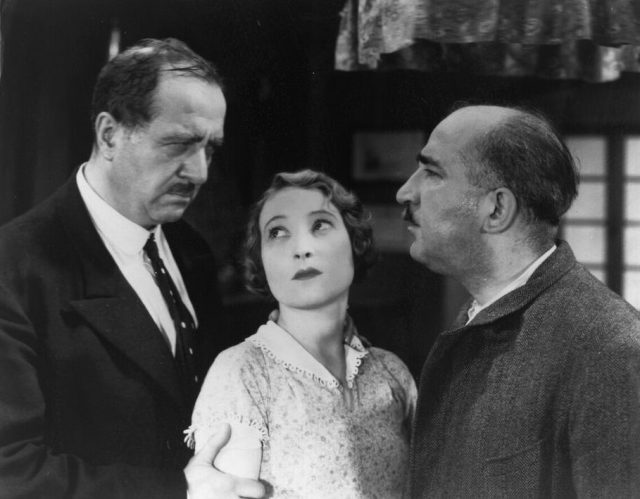
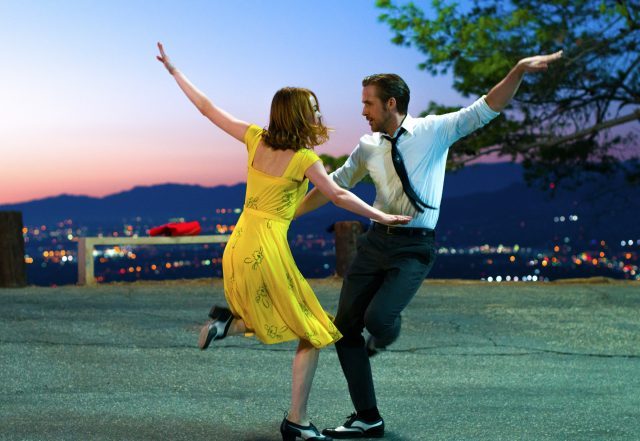
 Call it Blah Blah Bland. La La Land, writer-director Damien Chazelle’s follow-up to his Oscar-nominated Whiplash, is an overwrought tribute to the old-fashioned romance musical, a genre homage that lacks the energy and chemistry of the films that it directly evokes, including the Hollywood classics Singin’ in the Rain, Funny Face, and An American in Paris, Jacques Demy’s French favorites The Umbrellas of Cherbourg and The Young Girls of Rochefort, Paul Thomas Anderson’s Boogie Nights, and Chazelle’s own 2009 black-and-white indie musical,