this week in film and television

POETIC AND POLITICAL — THE CINEMA OF RABAH AMEUR-ZAÏMECHE: BACK HOME

BACK HOME

Kamel (Rabah Ameur-Zaïmeche) and Louisa (Meryem Serbah) are outsiders in their own village in BACK HOME

CINÉSALON: BACK HOME (BLED NUMBER ONE) (Rabah Ameur-Zaïmeche, 2006)
French Institute Alliance Française, Florence Gould Hall
55 East 59th St. between Madison & Park Aves.
Tuesday, November 29, $13, 4:00 & 7:30
Series continues Tuesdays through December 13
212-355-6100
www.fiaf.org

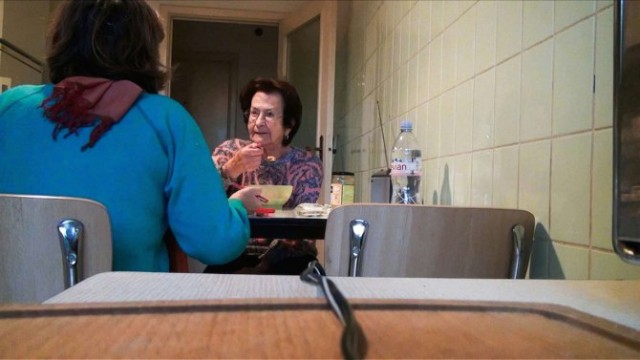
FIAF’s Cinésalon series “Poetic and Political: The Cinema of Rabah Ameur-Zaïmeche” continues November 29 with Ameur-Zaïmeche’s second feature, Bled Number One (Back Home), the follow-up and kind of prequel to Wesh Wesh and the second part of an unofficial trilogy that concludes with Adhen (Dernier Maquis). Kamel (Ameur-Zaïmeche) has returned home to his isolated village of Loulouj in northeast Algeria after having spent several years in France. Meanwhile, Louisa (Meryem Serbah) has left her husband, Ahmed (Ramzy Bedia), but her parents (Meriem Ameur-Zaïmeche and Larkdari Ameur-Zaïmeche) and brother (Soheb Ameur-Zaïmeche) insist she go back to him, saying she is bringing shame on the family. Both Kamel and Louisa feel like outsiders in their own village, which is balancing precipitously between the past and the future. The desperados, a group of young men who are spreading fundamentalist Muslim views, is battling with the patriots, the longtime members of the community, threatening violence on anyone who doesn’t follow the letter of the Koran. During Zerda, the pre-Islamic ritual of slaughtering and serving a bull in which the women are kept separate from the men, Kamel, in his ever-present orange hat, decides to be with the women instead, and the men, feeling shunned, remind him over and over that he is not to eat with them. The treatment of women in this patriarchal society is a central focus of the film. Louisa wants to break free of the chains that bind her, but she takes a bigger risk every time she strays from accepted, outdated convention. And the more Kamel proves to be his own man, the more the other men want to be rid of him. In fact, the patriots closely watch the town border, refusing entry to anyone they don’t want inside.

The film, which was written by Rabah Ameur-Zaïmeche and Louise Thermes, is photographed in a documentary style, with long shots both in time and distance; often what is being said among the characters can’t be heard and is not translated into English, as it is more for setting a realistic pace and a naturalistic flow. The muted, faded greens and blues of the village residences stand in stark contrast to the lush green mountainside and bright blue sky. The few times there is music, it turns out that it is being played live by Rodolphe Burger by the sea; at one point he sings William Blake’s “The Little Vagabond,” about God and the Devil. Bled Number One (“bled” in Algerian means “field” or “terrain”) is a subtle, poetic film laden with sociopolitical undertones, a melancholic yet beautiful work from an auteur who deserves a bigger audience. “To write Bled Number One, I didn’t return at all to Algeria to capture something about today’s youth there. I wrote this story based on my holiday memories,” Ameur-Zaïmeche has said. “But it is also because I felt that things hadn’t really changed, that time passes differently there. You have the time to reflect and be, faced with the elements. . . . A film is a gesture, a burst, a job, an enterprise, an action. An action in life, a pure lesson of life. It is here that we grasp something alive. For it is necessary to remain alive, no matter what else happens.” Bursting with life, Bled Number One is screening at FIAF on November 29 at 4:00 and 7:30; the later show will be followed by a Q&A with ArteEast executive director Jaime-Faye Bean, and both shows will end with a wine and beer reception. “Poetic and Political: The Cinema of Rabah Ameur-Zaïmeche” continues December 6 with Smugglers’ Songs before concluding December 13 with Story of Judas.

EVOLUTION

EVOLUTION

Young Nicolas (Max Brebant) finds much more than he expected under the water in Lucile Hadzihalilović’s EVOLUTION

IFC MIDNIGHT: EVOLUTION (Lucile Hadzihalilović, 2015)
IFC Center
323 Sixth Ave. at West Third St.
Opens Friday, November 25
212-924-777
www.ifcfilms.com

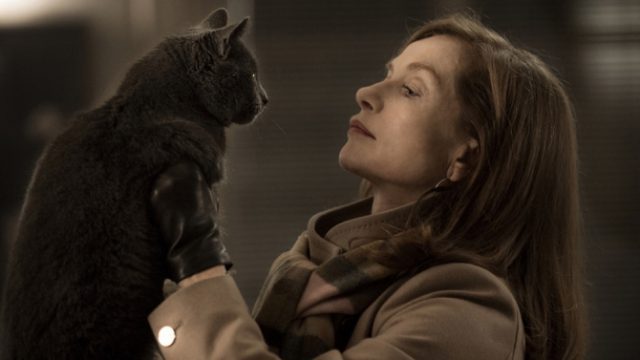
Lucile Hadzihalilović’s Evolution is a gentle and seductive, expertly made French horror film, a creepy twist on the feminist revenge thriller. Max Brebant stars as Nicolas, a clever ten-year-old boy who lives in a remote seaside village with his mother (Julie-Marie Parmentier). One day while swimming deep in the ocean, he sees a dead boy at the bottom of a coral reef, a red starfish on his chest. His mother insists he is just imagining things, but Nicolas suspects something strange is going on. “Why am I sick?” he asks as his mother gives him his usual medicine. “Because your body is changing,” she replies. We soon find out how much when he and his friends, Frank (Nissim Renard), Victor (Mathieu Goldfeld), and Lucas (Pablo-Noé Étienne), are suddenly taken to an eerie hospital run by nearly silent nurses. What goes on there evokes elements of The X-Files, Stand by Me, Rosemary’s Baby, and The Stepford Wives but is wholly original. Only nurse Stella (Roxane Duran) offers him the slightest bit of humanity, and the slightest bit of hope.

EVOLUTION

Nicolas (Max Brebant) is tended to by Stella (Roxane Duran) as his mother (Julie-Marie Parmentier) looks on in EVOLUTION

Directed by Hadžihalilović and cowritten with Alante Kavaite, Evolution is a dark journey into the waters of the subconscious, constructed around the innate fears of childbirth and adolescence. Manuel Dacosse’s gorgeous cinematography — the lighting throughout is breathtaking — is bathed in various shades of green, from underwater shots to the hospital walls, with splashes of red; one particularly memorable visual occurs when Nicolas, in a red bathing suit, runs across the rocky green landscape back to his house to tell his mother what he has seen in the sea. The film, sensuously edited by Nassim Gordji-Tehrani, moves at a slow, tense pace, with sparse dialogue. In only her second feature film, the follow-up to 2004’s Innocence — she has also made three shorts since 1996 — Hadžihalilović displays a mastery of cinematic technique, the narrative unfolding little by little while the mysterious mood remains steady, anchored by Zacarías M. de la Riva’s haunting score. “The water can make you imagine all sorts of things,” his mother tells Nicolas, but he is determined to discover the truth about what is going on. The water has made Hadžihalilović imagine the unimaginable amid a completely realistic setting, drawing the characters and viewers ever further into the depths. Winner of numerous awards at multiple film festivals, Evolution is both shocking and tender, psychologically gripping and utterly mesmerizing.

PUSHING THE ENVELOPE — A DECADE OF DOCUMENTARY AT THE CINEMA EYE HONORS: DETROPIA

DETROPIA

Performance artists find their muse in downtrodden Detroit in Oscar-nominated documentary

SCREENING + LIVE EVENT: DETROPIA (Rachel Grady & Heidi Ewing, 2012)
Museum of the Moving Image
35th Ave. at 36th St., Astoria
Sunday, November 27, $12, 4:30
Series runs through December 23
718-777-6800
www.movingimage.us
www.detropiathefilm.com

In his 1994 autobiography, Hard Stuff, former Detroit mayor Coleman Young wrote, “In the evolutionary urban order, Detroit today has always been your town tomorrow.” That’s precisely the warning that permeates Detropia, the latest documentary by director-producers Rachel Grady and Heidi Ewing, who have previously teamed up on such films as The Boys of Baraka, the Oscar-nominated Jesus Camp, and the Peabody-winning 12th & Delaware. Detroit native Ewing and former private investigator Grady examine the current sad state of the once-proud city, which has seen its population plummet, unemployment skyrocket, and its infrastructure being torn away piece by piece. At one point, Mayor Dave Bing, an NBA Hall of Famer who played for the Pistons, talks about downsizing the city as a whole — but not wanting to use that exact word when revealing the plan to the people. Grady and Ewing, along with cinematographers Tony Hardmon and Craig Atkinson (who also served as a producer), follow around such fascinating characters as UAW local 22 president George McGregor, who speaks with union members and retirees and describes in detail the loss of jobs and plants; Crystal Starr, a young video blogger giving her take on the city’s myriad problems; and Tommy Stevens, a former schoolteacher who now runs the popular Raven Lounge and wonders, at an auto show, how Detroit can possibly keep up with China, especially regarding the electric car known as the Volt. In one particularly poignant scene, a group of men tear down an old Cadillac repair shop, saving the metal to resell and burning the rest to keep warm.

The film regularly cuts back to performances at the Detroit Opera House, which is struggling to stay alive, desperate to bring culture to what is quickly becoming a ghost town visited by tourists interested in gawking at the immense decay. Even a performance of Gilbert & Sullivan’s Mikado slyly references the fall of the automobile industry. The soundtrack mixes hip-hop from the Detroit-based Blair French, better known as Dial.81, along with old-time R&B and songs from experimental band Victoire, providing unique sounds to the extraordinary visuals. It’s hard not to watch the film and see Detroit as a microcosm for America, which is trying to pull itself out of a deep, dark recession that won’t seem to go away. Nominated for an Academy Award for Best Documentary Feature, Detropia is screening November 27 at 4:30 as part of the Museum of the Moving Image series “Pushing the Envelope: A Decade of Documentary at the Cinema Eye Honors,” followed by a Q&A with Grady and Ewing; the series, which celebrates the upcoming tenth annual Cinema Eye Honors awards, continues through December 23 with such other past Cinema Eye nominees and winners as Alma Har’el’s Bombay Beach, Jeff Malmberg’s Marwencol, Lucien Castaing-Taylor and Véréna Paravel’s Leviathan, and the director’s cut of Joshua Oppenheimer’s The Act of Killing. The nominees for Outstanding Achievement in Nonfiction Feature Filmmaking for the 2017 Cinema Eye Honors are Cameraperson, Fire at Sea, I Am Not Your Negro, OJ: Made in America, and Weiner; the winners will be announced at the Museum of the Moving Image on January 11.

BRESSON: AU HASARD BALTHAZAR

AU HASARD BALTHAZAR

The tender love between a young girl (Anne Wiazemsky) and a donkey lies at the heart of Robert Bresson’s AU HASARD BALTHAZAR

AU HASARD BALTHAZAR (Robert Bresson, 1966)
Metrograph
7 Ludlow St. between Canal & Hester Sts.
November 23-29
Series runs November 23 – December 2
212-660-0312
metrograph.com

Robert Bresson’s heartbreaking 1966 masterpiece, Au hasard Balthazar, is an unforgettable tale of the life and times of a most unusual yet completely ordinary donkey. As the opening credits roll, we hear writer and pianist Jean-Joël Barbier performing Franz Schubert’s Sonata No. 20, interrupted by the braying of a donkey and concluding with the sound of bells ringing. In a small rural community in France, a donkey has been born. Young Jacques and his sister baptize him and name him Balthazar, after one of the three Magi who presented the infant Jesus with gifts. Jacques and his neighbor, Marie, adore the donkey, treating him not only as their friend but their surrogate child, believing they are destined to marry. But they are torn apart by a land dispute between their fathers, and when they become teenagers, although the upstanding Jacques (Walter Green) still desires Marie (Anne Wiazemsky), she shamefully gives herself to Gérard (François Lafarge), the sinister leader of a local gang of bike-riding juvenile delinquents. Gérard abuses Marie as well as Balthazar, who soon sets off on a journey inspired by Fyodor Dostoyevsky’s The Idiot and the Stations of the Cross, going from owner to owner in a series of vignettes that also represent the seven deadly sins. His big, dark eyes appearing to understand what is happening to him, Balthazar encounters lust, gluttony, greed, sloth, wrath, envy, and pride but soldiers on, loved by Marie, who becomes ever-more helpless, unable and unwilling to take control of her destiny, much to the disappointment of her parents (Philippe Asselin and Nathalie Joyaut). Her sad fate seems predetermined, as does that of her beloved Balthazar, who literally and figuratively bears the heavy weight of the sins of all around him.

“Everyone who sees this film will be absolutely astonished because this film is really the world in an hour and a half,” Jean-Luc Godard famously said about Au hasard Balthazar, and that gets right to the heart of the film. (Godard went on to cast Wiazemsky in several of his movies; the two were married from 1967 to 1979.) Written and directed by Bresson (Pickpocket, Diary of a Country Priest), beautifully edited by Raymond Lamy, stunningly photographed in black-and-white by Ghislain Cloquet, and featuring primarily nonprofessional actors, Au hasard Balthazar is about young love, sacrifice, honor, family, life and death — and the very essence of humanity, most evidently seen in the form of an amazing animal. The film is rife with biblical overtones, but it is not merely citing dogma, nor is it a direct parable, instead exploring the contradictions inherent in religion. Marie is part Mother Mary, part Mary Magdalene, but mostly just a deeply troubled girl. One night Gérard and his gang beat Balthazar as Marie watches, saying nothing; the next morning, she looks up in church as he sings a Latin hymn that is bookended by the ringing of Balthazar’s bells and the chiming of the church bells.

Metrograph will host week-long fiftieth-anniversary presentation of extraordinary AU HASARD BALTHAZAR

Metrograph will host week-long fiftieth-anniversary presentation of extraordinary AU HASARD BALTHAZAR

The Book of Proverbs explains that “idle hands are the devil’s workshop,” and Bresson expands on this concept by continually focusing on hands. Sitting on a bench in the dark, Marie puts her left hand over her heart, then slowly moves it onto the bench, where another hand emerges from the shadows to gently touch hers. She runs away, but Bresson’s camera still follows her hand as it closes and then opens a door. Later, as Gérard prepares to set Balthazar’s tail on fire, a car passes by, and the camera centers on Gérard’s hands, fidgeting nervously as he worries about being caught. When the drunkard Arnold (Jean-Claude Guilbert) is questioned by the police about a murder, Bresson zooms in on three men’s hands as Arnold gives his papers to the captain (Jacques Sorbets), who gives them to an associate, who then asks for Arnold’s hands so he can take his fingerprints, as if the hands themselves are guilty, stained with sin. “Holding on to me, too?” Arnold says. And when Balthazar performs a trick at a circus, his front hooves become the primary objects of attention. Screening November 23-29 at Metrograph in celebration of its fiftieth anniversary and kicking off a ten-day, seven-film Bresson festival, Au hasard Balthazar is filled with such glorious moments, layers of meaning attached to every sound and image, a staggering cinematic achievement that amply deserves its status as one of the greatest films ever made. The Metrograph series continues through December 2 with Lancelot du Lac, Les anges du péché, Pickpocket, Les Dames du Bois de Boulogne, A Man Escaped, and The Devil, Probably; Bresson died in 1999 at the age of ninety-eight, having directed a mere thirteen films (and one short) in a legendary forty-year career.

TAKESHI “BEAT” KITANO: DOLLS / ZATOICHI: THE BLIND SWORDSMAN

Matsumoto (Hidetoshi Nishijima) and Sawako (Miho Kanno) are literally tied to each other in Takeshi Kitano’s DOLLS

DOLLS (DORUZU) (Takeshi Kitano, 2002) / ZATOICHI: THE BLIND SWORDSMAN
Metrograph
7 Ludlow St. between Canal & Hester Sts.
Dolls: Thursday, November 24, 4:30 & 9:00
Zatoichi: Friday, November 25, 4:00 & 9:00
Series runs through November 25
212-660-0312
metrograph.com

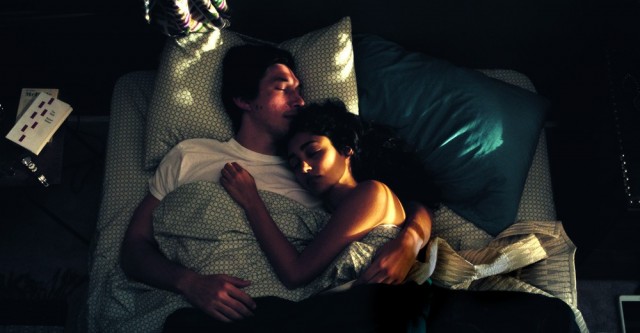
Hardboiled action director and comic Takeshi Kitano, who is best known for such violent films as Violent Cop, Sonatine, and Boiling Point, has also made family dramas and romances as well (Kikujiro, A Scene at the Sea), and Dolls might be his most emotional, introspective picture. Dolls opens with a Bunraku puppet theater excerpt from Monzaemon Chikamatsu’s The Courier for Hell before delving into the dark story of Matsumoto (Hidetoshi Nishijima) and Sawako (Miho Kanno). Matsumoto dumps Sawako so he can marry the boss’s daughter, but when Sawako tries to kill herself and ends up in a mental hospital, Mastumoto decides to take care of the speechless, frightened shell of a woman she has become. He leads her through the seasons, tied to her by a red cord, a pair of bound beggars. Two subplots, which we’re not sure were absolutely necessary, also deal with love and loss, obsession and desire. Joe Hisaishi’s music is gorgeous, as is Katsumi Yanagijima’s cinematography. Kitano, who wrote, directed, and edited Dolls, mixes in sensational colors to balance out black-and-white tuxedos or long patches of snow: You’ll be mesmerized by the red rope, a purple-and-black butterfly, Sawako’s pink child’s toy, a glowing blue bridge, Matsumoto’s bright yellow car, a green public phone, a blue drink, twirling pinwheels, a shockingly blue umbrella, a park filled with cherry blossoms, and Yohji Yamamoto’s sparkling costumes. The film is bleak, slow-paced, and heart-tuggingly pure, a rewarding experience that will stay with you for a long time.

Takeshi Kitano wrote, coedited, directed, and stars in update of Zatoichi legend

Takeshi Kitano wrote, coedited, directed, and stars in update of Zatoichi legend

Meanwhile, in the following year’s Zatoichi: The Blind Swordsman, Kitano took on the Zatoichi legend that was a Japanese favorite from 1962 to 1989 (starring Shintaro Katsu), updating the story of the blind swordsman, gambler, and masseuse magnificently, adding a lot of blood while staying true to the heart of this classic tale. (Zatoichi is also referenced in Kitano’s 1995 Getting Any?) Beat Takeshi, the name Kitano uses as an actor, stars as the unlikely platinum blonde superhero who shuffles across the countryside battling the bad guys and rescuing damsels in distress. The film also features Tadanobu Asano as Hattori Gennosuke, Michiyo Okusu as O-ume, and Yui Natsukawa as O-shino. This was the first period film of Kitano’s career, and one in which he combined all the elements of his previous work to create an unforgettable masterpiece, a thrilling, beautifully shot (by Katsumi Yanagishima), and wonderfully realized cinematic achievement that suffers only at the very end with a silly coda that is just way too out of place. Dolls is screening on Thanksgiving Day and Zatoichi on November 25 in the Metrograph series “Takeshi ‘Beat’ Kitano,” which continues through Friday with Hana-Bi, Sonatine, Boiling Point, and Kikujiro.

NITEHAWK MIDNITE SCREENINGS: BLOOD FEAST

BLOOD FEAST

Herschell Gordon Lewis’s hunger-inducing BLOOD FEAST is considered first splatter film

BLOOD FEAST (Herschell Gordon Lewis, 1963)
Nitehawk Cinema
136 Metropolitan Ave. between Berry St. & Wythe Ave.
Friday, November 25, and Saturday, November 26, 12:20 am
718-384-3980
www.nitehawkcinema.com

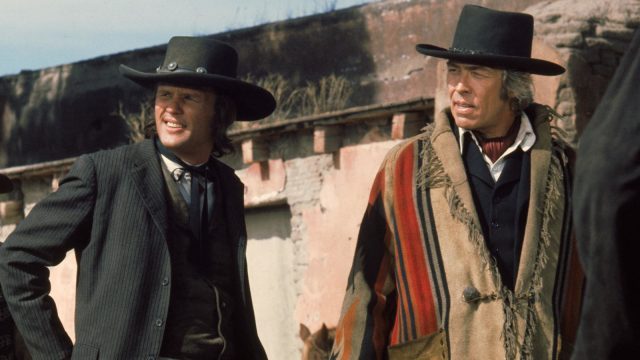
We have a bone to pick with Nitehawk Cinema. One of the Brooklyn movie house’s signature series is “Film Feast,” in which they invite chefs to serve specially created meals for specific films, inspired by what’s happening onscreen; for example, on December 13, Richard Donner’s Scrooged, starring Bill Murray, will be shown with a gourmet menu that includes courses named “The Night the Reindeer Died” and “Buy Me a Goose.” So what is Blood Feast, chopped liver? How could this cult classic, widely considered the first splatter horror movie ever made, not make it into the “Film Feast” series? On November 25 and 26 just past midnight, Nitehawk is presenting a 35mm print of Herschell Gordon Lewis’s low-budget, somewhat tongue-in-cheek (or, as you’ll see, tongue-out-of-cheek) gorefest, which stars Lewis regular Mal Arnold (Scum of the Earth!, the nudie musical Goldilocks and the Three Bares) as Fuad Ramses, the limping owner of an “exotic” food store and catering business. Oh, he’s also a homicidal maniac. When the high-falutin’ Mrs. Dorothy Fremont (Lyn Bolton) asks him to cater a party she is throwing for her daughter, Suzette (Connie Mason of Lewis’s 2000 Maniacs), Ramses, who has been killing and cutting up women, sees it as the opportunity he’s been waiting for, to serve an Egyptian feast for the first time in five thousand years in order to bring the goddess Ishtar, Mother of the Veiled Darkness, back to life. (Yes, Ishtar; we’re not kidding.) Meanwhile, Miami detective Pete Thornton (longtime character actor and writer William Kerwin) and the dimwitted police captain (Scott H. Hall) are on the case — well, sort of, as they’re not exactly the brightest bulbs when it comes to putting two and two together. Nor is Suzette, who offers up this lulu: “I was reading about all those murders, and it sort of takes all the joy out of everything.”

blood-feast-poster

Blood Feast might have historical significance in the slasher genre, but it’s a terrible movie, with embarrassingly bad acting, wooden dialogue by screenwriter (Allison) Louise Downe (Lewis’s She-Devils on Wheels, The Gruesome Twosome, and others), convoluted plot twists, and dense-headed camerawork by Lewis (who also composed the creepy score and is the voice on the radio), who died this past September at the age of ninety after having made approximately three dozen films, including The Gore Gore Girls, Color Me Blood Red, and, in 2002 after a thirty-year hiatus, Blood Feast 2: All U Can Eat, with J. P. Delahoussaye as Fuad Ramses III and John Waters as a reverend. Which brings us back to Nitehawk’s “Film Feast” series and its monstrous decision not to have Blood Feast be an obvious part of it. Hey, so what’s a little cannibalism among friends? “Nitehawk Midnite Screenings” continues in December with such other thrillers as Bob Clark’s Black Christmas, Nicolas Pesce’s The Eyes of My Mother, and Freddie Francis’s 1972 Tales from the Crypt.

BAM NEXT WAVE FESTIVAL: THE TREE OF LIFE WITH LIVE MUSIC

Wordless Music Orchestra will perform new score to Terence Malicks THE TREE OF LIFE at BAM

Wordless Music Orchestra will perform new score to Terence Malick’s THE TREE OF LIFE at BAM

THE TREE OF LIFE (Terrence Malick, 2005)
BAMcinématek, Howard Gilman Opera House
30 Lafayette Ave. between Ashland Pl. & St. Felix St.
November 18-19, $35-$85, 7:30
718-636-4100
www.bam.org/thetreeoflife
www.twowaysthroughlife.com

Iconoclastic writer-director Terrence Malick had made only five feature films in his forty-plus-year career when The Tree of Life came out in 2011, and it might very well be his best. And now you can see it like never before, as the BAM Next Wave Festival presents it in the Howard Gilman Opera House with a live score performed by more than one hundred singers and musicians from New York City’s Wordless Music Orchestra playing works by Mahler, Berlioz, Brahms, Górecki, Mozart, Tavener, Smetana, Couperin, and others, conducted by Ryan McAdams and featuring Robert Fleitz on piano and sopranos Charles Love and Jennifer Zetlan. Following Badlands (1973), Days of Heaven (1978), The Thin Red Line (1998), and The New World (2005), The Tree of Life is an epic masterpiece of massive proportions, a stirring visual journey into the beginning of the universe, the end of the world, and beyond. The unconventional nonlinear narrative essentially tells the story of a middle-class Texas family having a difficult time coming to grips with the death of one of their sons in the military. Malick cuts between long flashbacks of Mr. and Mrs. O’Brien (Brad Pitt and Jessica Chastain) in the 1950s and 1960s, as they meet, marry, and raise their three boys, to the present, when Jack (Sean Penn), their eldest, now a successful architect, is still searching for answers. The sets by production designer Jack Fisk transport viewers from midcentury suburbia to the modern-day big city and a heavenly beach, all gorgeously shot by cinematographer Emmanuel Lubezki. Every frame is so beautiful, it’s as if they filmed the movie only at sunrise and sunset, the Golden Hour, when the light is at its most pure. The Tree of Life is about God and not God, about faith and belief, about evolution and creationism, about religion and the scientific world. The film opens with a quote from the Book of Job: “Where were you when I laid the earth’s foundation . . . while the morning stars sang together and all the sons of God shouted for joy?” Early on, Mrs. O’Brien says in voice-over, “The nuns taught us there are two ways through life: The way of nature, and the way of grace. You have to choose which one to follow.” Malick leaves those questions open, displaying the miracles of life and death and everything in between as perhaps the only response.

Jessica Chastain, Hunter McCracken, and Brad Pitt star in Terrence Malick’s epic masterpiece, THE TREE OF LIFE

With the help of Douglas Trumbull, the special effects legend behind 2001: A Space Odyssey, Blade Runner, and Close Encounters of the Third Kind — and who hadn’t been involved in a Hollywood film in some thirty years — Malick travels through time and space, using almost no CGI. Instead, he employs images from the Hubble telescope along with Thomas Wilfred’s flickering “Opus 161” art installation, which evokes a kind of eternal flame that appears in between the film’s various sections. Malick rolls the Big Bang, dinosaurs, and the planets into this inner and outer head trip of a movie that will leave you breathless with anticipation at where he is going to take you next — and where he goes is never where expected, originally accompanied by Alexandre Desplat’s ethereal orchestral score, which has been completely replaced for these screenings. But perhaps more than anything else, The Tree of Life, which won the Palme d’Or at the 2011 Cannes Film Festival and was nominated for three Oscars (for Best Picture, Best Director, and Best Cinematography), is about the act of creation, from the creation of the universe and the world to the miracle of procreation (and the creation of cinema itself). Mr. O’Brien is an inventor who continually seeks out patents but always wanted to be a musician; he plays the organ in church, but his dream of creating his own symphony has long been dashed. And Jack is an architect, a man who creates and builds large structures but is unable to get his own life in order. In creating The Tree of Life, Malick has torn down convention, coming up with something fresh and new, something that combines powerful human emotions with visual wizardry, a multimedia poem about life and death, the alpha and the omega. And now you can hear it in a different way as well as this special performance makes its U.S. premiere at BAM’s grand opera house.