this week in film and television

TRIBECA FILM FESTIVAL INTERNATIONAL NARRATIVE COMPETITION: HOLY AIR

HOLY AIR

Shady Srour wrote, directed, and stars in HOLY AIR

HOLY AIR (Shady Srour, 2017)
Friday, April 28, Regal Cinemas Battery Park 11, 6:15
Sunday, April 30, Regal Cinemas Battery Park 13, 2:45
www.facebook.com/holyairfilm
tribecafilm.com

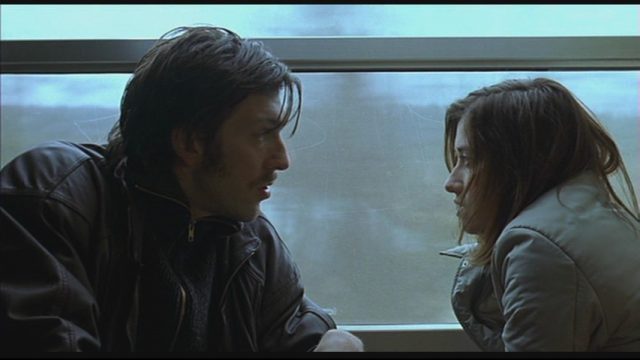
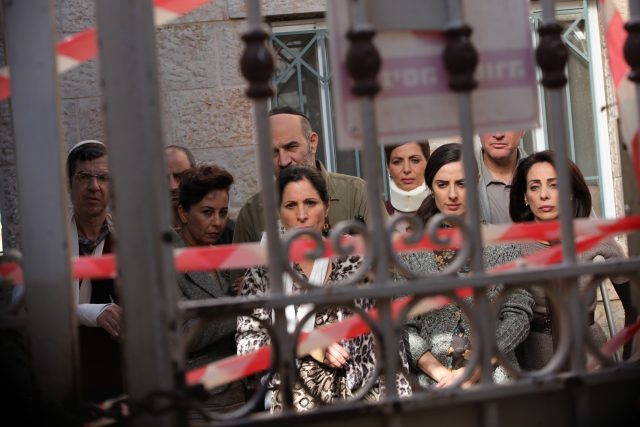
The opening scene of Shady Srour’s Holy Air, making its world premiere at the Tribeca Film Festival, is utterly charming, as married couple Adam (Srour), a businessman, and Lamia (Laëtitia Eïdo), the head of the Sexuality Center, are stuck in ridiculously heavy traffic. Lamia decides to use the extra time to take a pregnancy test, urinating right there in the car. That is shortly followed by one of the film’s most splendid images, of Adam in the bathtub, his heavily bearded face above the back edge, a glass of alcohol at the ready as the camera stays still. Unfortunately, the film is shaky the rest of the way, too repetitive and fussy with subplots that don’t feel natural. Whereas Lamia is pregnant, Adam’s father is a tough old guy, fighting cancer. Adam’s partnership with his friend Mahmoud isn’t going well, so, soon after encountering a priest singing the holy praises of Mount Precipice, Adam decides to bottle the air on the mountain and sell it as a tourist souvenir. The film takes on the Christian faith, capitalism, road rage, local gangsters, and growing old, but it works best when it focuses on Adam and Lamia together; just about everything else is overly sentimental, too goofy, or just plain nonsensical, which is too bad, because Srour (Sense of Need) and Lamia (Cleopatra in The Destiny of Rome) make for a lovable couple, caught up in the travails of modern-day Nazareth.

THE INCIDENT WITH DIRECTOR LARRY PEERCE IN PERSON

Tony Musante terrorizes Bea Bridges and others aboard a New York City subway train in THE INCIDENT

Joe Ferrone (Tony Musante) terrorizes Pfc. Felix Teflinger (Beau Bridges) and others aboard a New York City subway train in THE INCIDENT

THE INCIDENT (Larry Peerce, 1967)
Film Forum
209 West Houston St.
Sunday, November 3, $7, 11:00 am
212-727-8110
filmforum.org

One of the ultimate nightmare scenarios of 1960s New York City, Larry Peerce’s gritty black-and-white The Incident takes viewers deep down into the subway as two thugs terrorize a group of helpless passengers. Joe Ferrante (Tony Musante) and Artie Connors (Martin Sheen, in his first movie role) are out for kicks, so after getting some out on the streets, they head underground, where they find a wide-ranging collection of twentieth-century Americans to torture, including Arnold and Joan Robinson (Brock Peters and Ruby Dee), Bill and Helen Wilks (Ed McMahon and Diana Van der Vlis), Sam and Bertha Beckerman (Jack Gilford and Thelma Ritter, in her last role), Douglas McCann (Gary Merrill), Muriel and Harry Purvis (Jan Sterling and Mike Kellin), Alice Keenan (Donna Mills), soldiers Felix Teflinger and Phillip Carmatti (Beau Bridges and Robert Bannard), and others, each representing various aspects of contemporary culture and society, all with their own personal problems that come to the surface as the harrowing ride continues. It’s a brutal, claustrophobic, highly theatrical film that captures the fear that haunted the city in the 1960s and well into the ’70s, with an all-star cast tackling such subjects as racism, teen sex, alcoholism, homosexuality, war, and the state of the American family. A DCP restoration of the rarely shown drama, some of which was filmed in the actual subway system against the MTA’s warnings, is screening April 26 at Film Forum, with the Bronx-born Peerce, who made such other films as A Separate Peace, Two-Minute Warning, The Bell Jar, and Goodbye, Columbus, on hand to discuss the work.

THE PENGUIN COUNTERS

THE PENGUIN COUNTERS

Ron Naveen counts penguins amid glorious surroundings in THE PENGUIN COUNTERS

THE PENGUIN COUNTERS (Peter Getzels & Harriet Gordon, 2016)
Cinema Village
22 East 12th St. between University Pl. & Fifth Ave.
Opens Friday, April 21
212-529-6799
www.cinemavillage.com
www.penguincountersmovie.com

Peter Getzels and Harriet Gordon’s The Penguin Counters arrives at Cinema Village just in time for World Penguin Day on April 25, which celebrates the cute and cuddly black-and-white (and often yellow) aquatic birds. However, the tuxedoed animals are facing a major challenge, as climate change threatens their very existence. The film follows Ron Naveen and his small team — Thomas Mueller of Frankfurt’s Biodiversity and Climate Research Center, research ecologist Steve Forrest, Stony Brook assistant professor Heather Lynch, and PhD candidates Mike Polito and Paula Casanovas — as they go from Argentina to Deception Island, tracking three varieties of penguins and following in the footsteps of British explorer Sir Ernest Shackleton, who led a famously treacherous journey to the Antarctic in the first decade of the nineteenth century aboard the aptly named Discovery. In a bit of serendipitous luck, on a cruise ship he’s essentially hitchhiking on, Naveen meets Angie Butler, the biographer of Shackleton’s right-hand man, Frank Wild, who is transporting Wild’s ashes to South Georgia so they can be buried next to Shackleton’s remains, and Naveen joins her on her mission. Naveen, the founder and president of Oceanites, is gathering information for the Antarctic Site Inventory project, which has been detailing the plight of oceanic birds and the ecosystem for more than twenty years. “We’re not explorers, climbers, or athletes,” Naveen explains in a message about the film. “The weather we face is grueling. The terrain is hostile, and we’re only kitted out with golf-ball-sized tally-whackers and waterproof spiral notebooks. But our data has been instrumental in the formation of policies among polar scientists and the fifty member nations of the Antarctic Treaty Organization.”

THE PENGUIN COUNTERS

Documentary reveals effects climate change is having on the penguin population

“Penguins are my passion!” Naveen declares at the start of the film. “And why? Because penguins are indicators of ocean health, and they’re ultimately going to be sentinels of change.” Of course, penguins are also simply adorable, so the film is loaded with heartwarming shots of the flightless birds, as well as gorgeous panoramas of the Antarctic, lovingly photographed by Getzels and Erik Osterholm. And yes, there are scenes of his dedicated team counting nests in spectacular locations. A former government lawyer, Naveen’s cheerfulness about what he does is infectious, even in the face of dwindling numbers of penguins and the onslaught of climate change. But still, they’re just so darn cute. . . . After screening at film festivals all over the globe, The Penguin Counters opens April 21 at Cinema Village, with Getzels, Gordon, and Naveen participating in Q&As following the 7:15 shows April 21–26.

WELCOME TO METROGRAPH A TO Z: STREET OF SHAME

Desperate prostitutes fight over customers in powerful STREET OF SHAME (courtesy Janus Films)

STREET OF SHAME (AKASEN CHITAI) (Kenji Mizoguchi, 1956)
Metrograph
7 Ludlow St. between Canal & Hester Sts.
Saturday, April 22, 5:45
Monday, April 24, 3:15 & 9:15
212-660-0312
metrograph.com

Made the same year Japan passed a major anti-prostitution law, Kenji Mizoguchi’s final film, 1956’s Street of Shame, is a brutally honest depiction of the decidedly unglamorous life of a group of courtesans at a Tokyo brothel. “Yoshiwara has been here three hundred years,” the Mamasan (Sadako Sawamura) says early on to a police officer. “Does an unnecessary business last so long?” Originally titled Red-Light District, the black-and-white film features an outstanding cast of women playing desperate geisha with serious family and financial problems that lead them to the embarrassment of trying to physically force men off the dark, dank street and into their rooms. Hanae (Michiyo Kogure) has to deal with aging, a baby, and a suicidal husband, Yumeko (Aiko Mimasu) doesn’t want her son to know what she does to earn money to attempt to give him a decent life, Yorie (Hiroko Machida) thinks a husband in a faraway village will gain her longed-for freedom, Yasumi (Ayako Wakao) has become a loan shark to her coworkers, and young Mickey (Machiko Kyō) is quick to share her opinions about the other women but not so quick to catch on to the debasement she is lowering herself to. The protofeminist director of such previous works as Sisters of the Gion, Osaka Elegy, Women of the Night, and The Life of Oharu as well as the brilliant two-part samurai epic The 47 Ronin, Mizoguchi spent much of his career — which included more than seventy films in thirty-three years, up to his death in 1956 at the age of fifty-eight — making films about the exploitation of women, partly influenced by having seen his sister sold into prostitution by their father. It’s a shame that Street of Shame, one of Mizoguchi’s best, also turned out to be his last, but what a way to go. Street of Shame is screening April 22 and 24 in the ongoing “Welcome to Metrograph: A to Z” series, which continues in April with such other S films as Preston Sturges’s Sullivan’s Travels, Lowell Sherman’s She Done Him Wrong, and Lech Kowalski’s Story of a Junkie A.K.A. Gringo.

STEVE McQUEEN & ROBERT VAUGHN: THE MAGNIFICENT SEVEN / BULLITT

(photo by Jack Harris)

Steve McQueen and Robert Vaughn take a break during filming of THE MAGNIFICENT SEVEN (photo by Jack Harris)

BORDER CROSSINGS: THE MAGNIFICENT SEVEN (John Sturges, 1960)
IFC Center
323 Sixth Ave. at West Third St.
April 21-23, 11:00 am
212-924-7771
www.ifccenter.com

“He was a very special friend, and I’ll always miss his unique way of looking at life,” Robert Vaughn wrote of Steve McQueen in his 2008 memoir, A Fortunate Life. The longtime pals made three films together, the first being John Sturges’s classic Western, The Magnificent Seven. (They also each got their start in low-budget sci-fi cheese, McQueen in The Blob and Vaughn in Teenage Cave Man.) The film, a remake of Akira Kurosawa’s 1954 epic Seven Samurai, features Vaughn, fresh off an Oscar nomination for Best Supporting Actor in The Young Philadelphians, and McQueen, who was in the middle of his run as Josh Randall in the television series Wanted: Dead of Alive, playing two of seven sharpshooters hired by the men in a poor Mexican farming village where a group of bandits led by the evil Calvera (Eli Wallach) have been running roughshod. McQueen is Vin Tanner, a cool drifter, while Vaughn is traumatized Civil War sharpshooter Lee; the other five are Yul Brynner as leader Chris Adams, Brad Dexter as fortune hunter Harry Luck, James Coburn as knife slinger Britt, Charles Bronson as pro Bernardo O’Reilly, and Horst Buccholz as the fiery young Chico. Brynner and McQueen famously went after each other in a hotly contested battle of acting one-upmanship even as their characters work together to save the town. The magnificent film, which was shot on location in Mexico and established McQueen as a star, also boasts an unforgettably American score by Elmer Bernstein.

As part of their bonding process, the seven performers also played cards during breaks; one series of publicity photos shows Vaughn sitting next to McQueen as each wins a hand. In addition, in a 2015 interview with the Mirror, Vaughn detailed a visit he and McQueen made to a brothel that didn’t go quite as planned. (“They said, ‘How many girls would you like?’ And Steve said, ‘Seven. We are the Magnificent Seven and we want seven girls.’ Even though not all seven of us were there.”) A 35mm print of The Magnificent Seven is screening April 21-23 at eleven o’clock in the morning in the IFC Center series “Weekend Classics: Border Crossings,” which continues Friday, Saturday, and Sunday mornings through July 2 with such other cool flicks as Sam Peckinpah’s The Wild Bunch, Alejandro González Iñárritu’s Babel, and Tony Richardson’s The Border.

BULLITT

Chalmers (Robert Vaughn) has some sharp words for Bullitt (Steve McQueen) in BULLITT

WAVERLY MIDNIGHTS — ROAD RAGE: BULLITT (Peter Yates, 1968)
IFC Center
323 Sixth Ave. at West Third St.
April 21-22, 12:15 am
212-924-7771
www.ifccenter.com

New York City native Robert Vaughn, who passed away in November at the age of eighty-three, and good friend Steve McQueen, who was only fifty when he died in 1980, reunited onscreen in 1968 for the police-political thriller Bullitt. By then, each had starred in a television series — McQueen in Wanted: Dead or Alive, Vaughn as Napoleon Solo in the wildly successful, Emmy-nominated spy fave The Man from U.N.C.L.E. In Bullitt, McQueen virtually created the Hollywood antihero, playing a cool, calm cop who does things his way, often leaving a mess behind him; meanwhile, Vaughn began establishing himself as the manipulative high-class villain. In Bullitt, which was based on Robert L. Fish’s 1963 novel, Mute Witness, McQueen stars as San Francisco detective Lt. Frank Bullitt, a character inspired by real-life SF inspector Dave Toschi. Bullitt is personally selected by local politician Walter Chalmers (Vaughn) to protect an important witness, who is scheduled to testify against the Organization in forty hours. But things go awry, leading to murder and mayhem — and one of the all-time-great movie car chases — as Bullitt, distrustful of Chalmers, refuses to follow protocol. Shot on location by cinematographer William A. Fraker on the winding streets of San Francisco, the film, directed by Peter Yates and featuring a jazzy score by Lalo Schifrin, has quite a supporting cast, with Don Gordon and Carl Reindel as two members of Bullitt’s team, Simon Oakland as their boss, Norman Fell as a suspicious captain, Jacqueline Bisset as Bullitt’s designer girlfriend, Georg Stanford Brown as a doctor, Paul Genge and Bill Hickman as the hit men, Vic Tayback as the brother of the informant, and Robert Duvall as taxi driver.

Oh, and as far as the plot goes, just forget about it; it doesn’t make any sense. In his memoir, Vaughn noted that he only began to understand it as McQueen kept offering more money for him to be in the film. The two friends would go on to make one more movie together, the 1974 disaster epic The Towering Inferno, with McQueen as a fire chief and Vaughn as, well, a sleazy politician. A 35mm print of Bullitt is screening April 21 & 22 at 12:15 am in the IFC Center “Waverly Midnights” series “Road Rage,” which continues through June 24 with such other high-octane thrillers as William Friedkin’s The French Connection, George Miller’s Mad Max, and Peter Collinson’s The Italian Job.

CASABLANCABOX

(photo by Benjamin Heller)

CASABLANCABOX takes a unique view of the making of a Hollywood favorite (photo by Benjamin Heller)

HERE
145 Sixth Ave. at Dominick St.
Wednesday – Sunday through April 29, $30-$45
212-647-0202
www.here.org

Since 2008, creator, director, and designer Reid Farrington has been staging wildly inventive multimedia re-creations of movies using a unique combination of live action and original footage. His past presentations include The Passion Project, based on Carl Theodor Dreyer’s The Passion of Joan of Arc, Gin & “It,” which went behind the scenes of Alfred Hitchcock’s Rope, and A Christmas Carol, which brought together dozens of adaptations of the Charles Dickens classic. Farrington and his wife, Sara, have now turned their attention to the making of one of the greatest films in Hollywood history, Michael Curtiz’s Casablanca. In the 1942 movie, Humphrey Bogart stars as Rick Blaine, an American nightclub owner in Casablanca who encounters a former lover, Ilsa Lund (Ingrid Bergman), who is in town to meet with her husband, resistance fighter Victor Laszlo (Paul Henreid), seeking letters of transit that would allow them to escape the Nazis. Written by Sara Farrington and directed by Reid Farrington, who also designed the sets and the video, CasablancaBox takes the audience in front of and behind the camera, as the actors portray the characters in the film as well as the actors playing that character, and the film is “made” before our eyes. Thus, Roger Casey plays Bogart and Rick, Catherine Gowl plays Bergman and Ilsa, and Matt McGloin portrays Henreid and Laszlo. The proceedings are intricately choreographed by Laura K. Nicoll (who was Joan in The Passion Project), as actors carry flat wooden scrims of varying sizes on which clips from Casablanca are projected; behind them, the actors either mouth the parts, so film dialogue is heard, or they speak the lines, with the film sound turned off. (Travis Wright is the sound engineer, while the black-and-white lighting design is by Laura Mroczkowski.) The Farringtons use backstage discussions to lead into the final dialogue, particularly when Peter Lorre (Rob Hille), who plays the sleazy Ugarte, is worried when he is given new lines (“I won’t be fired. I’m the only actor in Hollywood who can make murderers into lovable little teddy bears,” he convinces himself) and when Henreid’s real life as an escapee of the Nazis affects his performance in several takes of a critical scene.

(photo by Benjamin Heller)

Light and shadow play a key role in Reid and Sara Farrington’s behind-the-scenes exploration of CASABLANCA (photo by Benjamin Heller)

Meanwhile, director Curtiz (Kevin R. Free) barks orders and gets a massage, a pair of Eastern European refugees (Gabriel Diego Hernandez and McGloin) argue about being extras and playing Nazis merely as background atmosphere, Bogart’s wife, actress Mayo Methot (Erin Treadway), stalks the set, and the four screenwriters — Lenore Coffee (Lynn Guerra), Philip Epstein (Adam Patterson), Howard Koch (Kyle Stockburger), and Julius Epstein (Jon Swain) — argue over key plot points. Trying to hold it all together is Irene (Stephanie Regina), who serves as a kind of stage manager as well as the announcer. (The real stage manager, Alex B. West, deserves kudos as well.) The show also tackles censorship issues, shares an anecdote about Errol Flynn and horses, and delves into how no one knew how the film was going to end. The cast also includes Zac Hoogendyk as Claude Rains and Captain Renault, Patterson as Conrad Veidt and Major Strasser, Stockburger as Sydney Greenstreet and Signor Ferrari, Toussaint Jeanlouis as Dooley Wilson and Sam, and Hoogendyk as Bergman’s husband, Peter Lindstrom, and her lover, Roberto Rosselini. Not all of the behind-the-scenes detail is completely factual, and a few scenes grow repetitive, but the Farringtons accomplish their stated goal to “tell the beautiful, chaotic, and sometimes accidental story of a work of artistic genius.” Inspired by the cinematic style of Robert Altman and what the Farringtons refer to as “theatricalizing the camera,” CasablancaBox is also surprisingly relevant, given the current refugee crisis and the spread of hate crimes around the world. But mostly it’s a lot of fun, a creative look at an American classic.

MAURIZIO CATTELAN: BE RIGHT BACK

MAURIZIO CATTELAN: BE RIGHT BACK explores career of controversial Italian artist and provocateur

MAURIZIO CATTELAN: BE RIGHT BACK explores career of controversial Italian artist and provocateur

MAURIZIO CATTELAN: BE RIGHT BACK (Maura Axelrod, 2016)
Quad Cinema
34 West 13th St. between Fifth & Sixth Aves.
Opens Friday, April 14
212-255-2243
www.quadcinema.com
www.mauriziocattelanfilm.com

Italian artist and prankster extraordinaire Maurizio Cattelan has built his wildly successful career out of controversy, provocation, and mystery, taking on the very art world that has made him a superstar. Documentarian Maura Axelrod includes the same elements in her vastly entertaining film, Maurizio Cattelan: Be Right Back. The title refers to both the beginning of Cattelan’s career, a Milan solo show in which he locked the gallery door and hung a sign on it that said “Torno Subito” (Be Right Back) as well as what might or might not be the end, as he announced his retirement following the brilliant 2011 retrospective at the Guggenheim, “All,” in which he hung all of his works from the Guggenheim ceiling, as if signaling their death. “His career is based on anecdotes and lies and imaginary stories,” Milan gallerist Massimo De Carlo says in the film. “Some people are suspicious that Maurizio is pulling the wool over their eyes and he is some kind of flamboyant artistic con man,” adds art historian Sarah Thornton. “I think he’s probably one of the greatest artists that we have today, but he could also be the worst. It’s gonna be one or the other; it’s not gonna fall in the middle,” cracks one of his collectors. Axelrod also speaks with former Guggenheim artistic director Nancy Spector, former Public Art Fund director Tom Eccles, Cattelan archive director Victoria Armutt, Guggenheim curator Katherine Brinson, gallerists Marian Goodman and Emmanuel Perrotin, art critics Calvin Tomkins and Dodie Kazanjian, and Cattelan’s sister, Giada, former fiancée Victoria Cabello, and current girlfriend Victoria Yee Howe. They share stories about Cattelan’s working methods and proclivities, delving into such pieces as “Daddy Daddy,” a facedown Pinocchio in a pool of water that was inspired by Cattelan’s childhood; “La Nona Ora” (The Ninth Hour), a lifelike sculpture of the pope knocked down by a meteorite; “Another Fucking Readymade,” in which he stole the inventory of another artist’s show and claimed them as his own; “Him,” a rendering of a kneeling child who turns out to be Adolf Hitler; and “L.O.V.E.” (Libertà, Odio, Vendetta, Eternità), a marble sculpture of a giant middle finger in Milan’s financial district. He even staged his own pseudo–Caribbean Biennial, featuring such artists as Wolfgang Tillmans, Elizabeth Peyton, Gabriel Orozco, Pipilotti Rist, Chris Ofili, and Mariko Mori gathered together on the island of St. Kitts. (The critics were not amused.)

holds one of the keys to the mystery that is Maurizio Cattelan

“Daddy Daddy” holds one of the keys to the mystery that is Maurizio Cattelan

Meanwhile, the artist speaks profusely on camera, sharing such insights as “I knew what was expected of me and I decided I was going to be something else” and “I’ve always been very good at faking things.” Indeed, about two-thirds of the way through the film, there is a fabulous twist that only art-world insiders are likely to have guessed, as Axelrod takes a page from Orson Welles’s magical F for Fake. Writer, producer, and director Axelrod incorporates home movies, family photographs, playful animation, and new and old footage to try to figure out just what makes Cattelan tick, what he’s really like, but she lets viewers in only so far, like his tiny elevator installation in which no one can fit. Among the many words used to describe the iconoclastic artist and his oeuvre are “tasteless,” “profound,” “funny,” “tragic,” “disrespectful,” “vulnerable,” and “uncanny beauty,” as people also point out that he is anxious, very demanding to live and work with, and, while seeing art as commodity, uses the vanity of collectors against themselves. Of course, all of those are true, in one way or another. His art can be as thrilling as it is offensive, as silly as it is prescient as he explores such themes as failure, alienation, mortality, and personal identity. “You need to go pretty far, otherwise the piece doesn’t exist,” he says. “You need to push your friends and enemies and collaborators further, and you have to be uncomfortable about it. The further you go, the more satisfaction is created by the level of discomfort in which all the participants were put.” The last section of the film details “All,” which a clearly uncomfortable Spector had her doubts about but insisted that “the risk had to be real,” worrying that it would cause the Guggenheim to collapse within itself but they had to proceed. And as far as Cattelan’s retirement is concerned, this past September he installed “America” at the Guggenheim, an eighteen-karat-gold fully functional toilet, the first new piece he has exhibited since “All.” Maurizio Cattelan: Be Right Back opens April 14 at the newly renovated Quad Cinema, with Axelrod participating in Q&As on April 14 (with Spector and New Museum artistic director Massimiliano Gioni) and April 15 at 7:45 and April 16 at 5:30.