this week in film and television

NYFF55: ROBERT MITCHUM RETROSPECTIVE

Robert Mitchum is subject of twenty-four-film retrospective at the New York Film Festival, honoring the centennial of his birth

Robert Mitchum is subject of twenty-four-film retrospective at the New York Film Festival, honoring the centennial of his birth

New York Film Festival
Film Society of Lincoln Center
October 2-14
www.filmlinc.org/nyff2017

Bridgeport-born actor Robert Mitchum was a man’s man and an actor’s actor, a devilishly handsome and hunky machine operator from a working-class family who turned to acting following a nervous breakdown in the early 1940s. He went on to appear in more than 125 films, from noir thrillers and military dramas to sweeping romances and Westerns, establishing himself as a rough, rugged tough guy who was almost always cool, calm, and collected, with a deceptive easygoing manner. Mitchum, who passed away in 1997 at the age of seventy-nine, was also a recording artist and a poet. The Film Society of Lincoln Center is honoring the centenary of Mitchum’s birth with a twenty-four-movie salute at the fifty-fifth annual New York Film Festival, beginning October 2 with The Friends of Eddie Coyle, Track of the Cat, and River of No Return and including The Story of G.I. Joe, for which Mitchum received his only Oscar nomination, for Best Supporting Actor. Below is a look at several of the films being shown at this special event.

Robert Mitchum and his oldest son, James, play brothers in Thunder Road

Robert Mitchum and his oldest son, James, play brothers in Thunder Road

THUNDER ROAD (Arthur Ripley, 1958)
Francesca Beale Theater
Wednesday, October 4, 3:30
www.filmlinc.org

The film that gave Bruce Springsteen the title for one of his greatest songs is not one of Robert Mitchum’s best, although it was one of his most personal. The story of moonshining families in the backwoods of Tennessee was cowritten and produced by Mitchum, who also wrote the theme song, “The Ballad of Thunder Road,” and his sixteen-year-old son, James, plays his brother, Robin, a part originally meant for Elvis Presley. Robert Mitchum is Lucas Doolin, a daring transporter of illegal whiskey. Robin soups up his cars, giving them extra juice and an escape hatch for the moonshine in case the treasury agents, led by the determined and dedicated Troy Barrett (Gene Barry), catch him. When gangster Carl Kogan (Jacques Aubuchon) decides to take over the local trade, the whiskey runners are caught in more jeopardy, from both sides of the law. Meanwhile, Luke is in love with singer Francie Wymore (Keely Smith) but is being chased by Roxanna Ledbetter (Sandra Knight), who fellow transporter Jed Moultrie (Mitchell Ryan) is sweet on. With its opening authoritative voiceover about taxation and “the wild and reckless men” who work in the moonshine trade, the movie makes its message clear; these transporters are not heroes, and they must pay for their crimes. Director Arthur Ripley, who specialized in short films and television episodes, cannot maintain the story even for its ninety minutes, and although Mitchum is strong and sturdy in his role, James and Smith are not up to the task. There are some fine driving scenes, but the film plays too much like government propaganda, although that didn’t stop it from becoming a drive-in favorite over the years.

Robert Ryan, Robert Mitchum, and Robert Young star in Oscar-nominated social noir, Crossfire

Robert Ryan, Robert Mitchum, and Robert Young star in Oscar-nominated social noir, Crossfire

CROSSFIRE (Edward Dmytryk, 1947)
Howard Gilman Theater
Friday, October 6, 3:30
www.filmlinc.org

Edward Dmytryk’s 1947 socially conscious noir classic, Crossfire, has one of the great opening scenes of the genre, a fight that begins in shadows, plunges into darkness as a lamp is knocked over, and finally, in a sliver of light as shadows dominate the screen, J. Roy Hunt’s camera focuses on a man lying on the floor, dead. The rest of the film traces what happened that night, from the discovery of the perpetrator to how to catch the killer. There’s a fascinating twist to the story involving bigotry and hatred that is timely and relevant, involving anti-Semitism; in fact, the film was adapted by John Paxton based on screenwriter and director Richard Brooks’s novel, The Brick Foxhole, in which the victim was gay, but that had to be changed because of the Hays Code. World War II is over, and a group of recently discharged soldiers are in Washington, DC, trying to redefine their purpose in the aftermath of four years of battle. A night of drinking ends in the death of Joseph Samuels (Sam Levene), and police investigator Finlay (Robert Young) is on the case, speaking with the calm and disciplined Sgt. Keeley (Robert Mitchum) and the defensive and shifty Montgomery (Robert Ryan). The initial evidence points to Corporal Arthur Mitchell (George Cooper), who can’t remember all of the details of the night of the murder. After leaving Samuels’s apartment — also there were Monty and soldier Floyd Bowers (Steve Brodie) — the drunk and confused “Mitch” met up with tough-talking taxi dancer Ginny (Gloria Grahame), but she wants to stay out of the investigation completely. While Keeley tries to get to the bottom of everything without the police, Captain Finlay is not about to let them handle this by themselves.

Crossfire came out in 1947, the same year another, more famous film about anti-Semitism, Gentleman’s Agreement, was released. Both were nominated for the Best Picture Oscar, which Gentleman’s Agreement won a mere two months before the establishment of the State of Israel. But whereas Elia Kazan’s film, about a journalist, played by Gregory Peck, posing as a Jew for a story, is a more intellectual movie about the inherent anti-Semitism in society, Dmytryk’s (The Caine Mutiny; Murder, My Sweet) film looks much deeper at hatred and the violence it can lead to, without becoming pedantic and preachy. An Oscar-nominated Ryan, Mitchum, and Young form a marvelous trio, each of the soldiers developing a unique relationship with the police captain; it’s one of Young’s (Father Knows Best; Marcus Welby, M.D.) best roles, particularly when, with his ever-present pipe, he slinks back in his chair at a nearly impossible angle. “This business about hating Jews comes in a lot of different sizes,” Finlay explains in words that still ring true today and could be about various ethnicities, races, sexual orientations, and religions. “There’s the ‘You can’t join our country club’ kind. The ‘You can’t live around here’ kind. The ‘You can’t work here’ kind. And because we stand for all these, we get Monty’s kind. He’s just one guy; we don’t get him very often, but he grows out of all the rest. You know we have a law against carrying a gun? We have that law because a gun is dangerous. Well, hate — Monty’s kind of hate — is like a gun. If you carry it around with you, it can go off. . . . Hating is always insane, always senseless.” Also nominated for Best Director, Best Supporting Actress (Grahame), and Best Adapted Screenplay and winner of Best Social Film at Cannes, Crossfire is a gripping, bold tale about hate, war, and violence and what can happen to soldiers once the official, approved fighting is over. At one point, Finlay asks Keeley if he’s ever killed anyone, and the sergeant responds, “Where you get medals for it.” The brutality of war is central to Crossfire, which illuminates a psychological form of what became known as PTSD while also staring in the face of illogical hate in the aftermath of the Holocaust.

Robert Mitchum gets caught up in some dangerous dichotomies in The Night of the Hunter

Robert Mitchum gets caught up in some dangerous dichotomies in The Night of the Hunter

THE NIGHT OF THE HUNTER (Charles Laughton, 1955)
Alice Tully Hall
Monday, October 9, 3:30
www.filmlinc.org

Robert Mitchum redefined himself in Charles Laughton’s lurid story of traveling preacher/con man/murderer Harry Powell, who has the word “love” tattooed on one set of knuckles and “hate” on the other. While in prison, Powell bunks with Ben Harper (Peter Graves), who got caught stealing $10,000 — but the only person who knows where the money is is Ben’s young son, John (Billy Chapin). When Preacher is released from jail, he shows up on the Harpers’ doorstep, ready to woo the widow Willa (Shelley Winters) — and get his hands on the money any way he can, including torturing John and his sister, Ruby (Gloria Castillo). Laughton’s only directorial effort is seriously flawed — the scenes in the beginning and end with Lillian Gish are wholly unnecessary and detract from the overall mood. Stanley Cortez’s cinematography is outstanding, featuring his unique use of shadows, an intense battle between light and dark (which plays off of several themes: old versus young, rich versus poor, good versus evil, men versus women), and some marvelous silhouettes. Based on Davis Grubb’s 1953 novel, the film has made its way onto many best-of lists, from scariest and most thrilling to all-time great and most beautiful.

(Robert Mitchum) has quite a tale to tell () in film noir classic

Jeff Bailey (Robert Mitchum) has quite a tale to tell Ann Miller (Virginia Huston) in film noir classic

OUT OF THE PAST (Jacques Tourneur, 1947)
Walter Reade Theater
Monday, October 9, 4:00
www.filmlinc.org

“You know, maybe I was wrong and luck is like love,” Jeff Bailey (Robert Mitchum) says in Out of the Past. “You have to go all the way to find it.” Bailey, previously known as Markham, is looking for luck and love in Jacques Tourneur’s film noir classic, considered one of the best of the genre, but he knows that it’s not going to come easy. Jeff is trying to escape his recent past by making a new life for himself in small-town Bridgeport, California (a nod to Mitchum’s real birthplace, Bridgeport, Connecticut), where he runs a gas station and is wooing Ann Miller (Virginia Huston), who is supposedly dating Jim (Richard Webb), the local policeman. But when Joe Stefanos (Paul Valentine) suddenly shows up, Jeff is thrown back into his sordid past when, as a private investigator, he got in too deep after being hired by New York gangster Whit Sterling (Kirk Douglas) to track down the kingpin’s girlfriend, Kathie Moffat (Jane Greer), who shot Whit and took off with forty grand. When Jeff finds her, he falls hard and fast and ultimately lies to Whit and Joe, Whit’s right-hand man, who never liked Jeff in the first place. To clean their slate, Whit forces Jeff to do one more job for him, involving lawyer Leonard Eels (Ken Niles), Eels’s secretary, Meta Carson (Rhonda Fleming), and, of course, Kathie. Jeff’s going to need a whole lot more than luck to get out of this one.

Adapted by Daniel Mainwaring from his 1946 novel, Build My Gallows High, Out of the Past is the quintessential noir, with shadowy cinematography by Nicholas Musuraca, moody music by Roy Webb, a bold antihero played by Mitchum, and Greer as one of the great femme fatales. Mitchum’s effortlessly cool and calm style, both onscreen and in his voiceover narration, shines through, a terrific counterpoint to Douglas’s wonderfully smarmy and sarcastic turn as the slick Sterling. Cigarettes play a major role in the film from the very start, when Joe flicks a match at Jeff’s young gas station employee (Dickie Moore, from The Little Rascals), a portent of things to come; from then on, the tension thickens as more and more butts are smoked, adding to the heavy atmosphere maintained by Tourneur, a longtime editor who also directed such films as Cat People and I Walked with a Zombie. “Look at all the angles,” Joe, seen from behind, tells Jeff, whose face is half in shadow, but he’s talking to the viewer as well. Out of the Past is screening on October 9 at 4:00 at the Walter Reade Theater and will be introduced by Mitchum’s son, Christopher, who has appeared in more than sixty films himself.

Robert Mitchum heads back to Japan in Sydney Pollacks The Yakuza

Robert Mitchum heads back to Japan in Sydney Pollack’s The Yakuza

THE YAKUZA (Sydney Pollack, 1975)
Francesca Beale Theater
Friday, October 13, 3:15
Festival runs through October 14
www.filmlinc.org

One of Hollywood’s first forays into the Japanese underworld has quite a pedigree — directed by Sydney Pollack (coming off his success with The Way We Were) and written by Robert Towne (who had just scribed Chinatown and Shampoo) and Paul Schrader (his first writing credit, to be followed by Taxi Driver). Robert Mitchum stars as Harry Kilmer, a WWII vet who returns to Japan thirty years later to help his friend George Tanner (Brian Family Affair Keith), whose daughter has been kidnapped. Kilmer thinks he can just walk in and walk out, but things quickly get complicated, and he ends up having to take care of some unfinished business involving the great Keiko Kishi (The Twilight Samurai). Kilmer and his trigger-happy young cohort, Dusty (Richard Logan’s Run Jordan), hole up at Oliver’s (Herb “Murray the Cop” Edelman), where they are joined by Tanaka (Ken Takakura) in their battle against Toshiro Tono (Eiji Hiroshima Mon Amour Okada) and Goro (James Flower Drum Song Shigeta) while searching for a man with a spider tattoo on his head. There are lots of shootouts and sword fights, discussions of honor and betrayal, and, in the grand Yakuza tradition, the ritual cutting off of the pinkie. Oh, and there’s Robert Mitchum, of course, a cinematic giant who towers above it all.

A VERY SORDID WEDDING

Sissy Hickey (Dale Dickey) and Latrelle Williamson (Bonnie Bedelia) fight for gay rights in A Very Sordid Wedding

Sissy Hickey (Dale Dickey) and Latrelle Williamson (Bonnie Bedelia) fight for LGBTQ rights in A Very Sordid Wedding

A VERY SORDID WEDDING (Del Shores, 2017)
SVA Theatre
333 West 23rd St. between Eighth & Ninth Aves.
Monday, October 2, $20, 8:00
212-924-7771
www.averysordidwedding.com
svatheatre.com

You don’t have to know anything about the Sordid Lives phenomenon to be tickled pink by the latest entry in the series, A Very Sordid Wedding. In 1996, Del Shores’s fourth play, Sordid Lives, debuted in Los Angeles, a very personal work about his coming out to his Southern Baptist family. He turned the play into a 2000 film with an all-star cast, including Bonnie Bedelia, Delta Burke, Beau Bridges, and Olivia Newton-John. That was followed in 2008 by a twelve-episode prequel series on Logo, with Caroline Rhea, Rue McLanahan, Jason Dottley, and a few others taking over some of the roles. And now comes A Very Sordid Wedding, a sequel set in 2015, right after same-sex marriage is made legal throughout the United States. But in Winters, Texas, the Supreme Being trumps the Supreme Court, so the new minister, Reverend Jimmy Ray Barnes (Levi Kreis), has decided to throw an “Anti-Equality Revival” to keep gay marriage out of the county. Latrelle Williamson (Bedelia), however, has had a change of heart since learning that her son, Ty (Kirk Geiger), is gay and in love with Kyle (T. Ashanti Mozelle), so she has decided to fight the church on this issue. Meanwhile, Latrelle’s long-estranged sibling, aging drag performer Brother Boy (Emmy winner Leslie Jordan), meets up with escaped serial killer Billy Joe Dobson (producer Emerson Collins); the divorced Noleta Nethercott (Rhea) strikes up a passionate affair with the hunky, hospitalized Hardy (Aleks Paunovic), making her ex-husband, G.W. (David Steen), jealous; Sissy Hickey (Dale Dickey) has read the Bible cover to cover; Latrelle’s ex-husband, Wilson (Michael MacRae), has settled down with the much younger Greta (Katherine Bailess); Jesus-loving convenience store owner Vera Lisso (Lorna Scott) has helped form a homosexual-hating group; and the saucy Juanita Bartlett (Sarah Hunley) continues to share whatever is in her crazy mind. Also back are Ann Walker as LaVonda Dupree, David Cowgill as Odell Owens, Newell Alexander as bar owner Wardell Owens, Rosemary Alexander as Dr. Eve, and Scott Presley as hairdresser Roger. Things come to a head when a memorial party for Latrelle’s mother (McLanahan) is scheduled to take place at the same time as the antigay service.

Sissy Hickey (Dale Dickey), Noleta Netercott (Caroline Rhea), and LaVonda Dupree (Ann Walker) can’t believe what they see in latest chapter of cult phenomenon

Sissy Hickey (Dale Dickey), Noleta Netercott (Caroline Rhea), and LaVonda Dupree (Ann Walker) can’t believe what they see in latest chapter of cult phenomenon

A kind of alternate version of Steel Magnolias without the weeping, A Very Sordid Wedding is charming and engaging from the get-go. Except for a treacly finale that is overly preachy, the film treats its timely subject matter with laugh-out-loud humor and a touch of elegance. Two-time Emmy nominee Bedelia (Heart Like a Wheel, Parenthood) is in fine form as the graceful Latrelle, who is the heart and soul of the film, a woman who is more complex than one might initially think as Shores (Southern Baptist Sissies, The Trials and Tribulations of a Trailer Trash Housewife) plays with stereotypes. Of course, she changes her mind about homosexuality and the LGBTQ community primarily because her son is gay, not because of any sudden empathy and compassion for all human beings, but at least she’s willing to stand up for what’s right. There’s plenty of wackiness to go around as well, with lots of lovable characters and some rather poignant moments about love and acceptance of all kinds. In advance of its October 17 release on DVD, Blu-ray, and iTunes, A Very Sordid Wedding is making its red carpet New York City premiere, presented by NewFest, on October 2 at 8:00 at the SVA Theatre and will be followed by a Q&A with Jordan, Rhea, Shores, Collins, Walker, and Blake McIver, who plays Peter in the film and sings “This Is Who We Are” on the soundtrack; there will also be a reception.

NYFF55: FACES PLACES

JR and Agnès Varda have a blast in the masterful Faces and Places

JR and Agnès Varda have a blast with people and animals in the masterful Faces and Places

FACES PLACES (VISAGES VILLAGES) (Agnès Varda & JR, 2017)
New York Film Festival, Film Society of Lincoln Center
Sunday, October 1, Alice Tully Hall, $25, 12:30
Monday, October 2, Francesca Beale Theater, $25, 8:30
Festival runs September 28 – October 14
212-875-5601
www.filmlinc.org
cohenmediagroup.tumblr.com

“We’ll have fun making a film,” legendary eighty-eight-year-old Belgian-born French auteur Agnès Varda tells thirty-three-year-old French photographer and street artist JR in Faces Places (Visages Villages), a masterful road movie that may very well be the most fun film you’ll see all year. The unlikely pair first met when Varda, who has made such classics as Cléo from 5 to 7, Vagabond, Jacquot de Nantes, and The Gleaners and I, accepted an invitation from JR, whose practice involves wheat-pasting giant black-and-white photos of men, women, and children on architectural structures, to visit his Paris studio. (JR brought his “Inside Out” art project to Times Square in 2013.) When Varda saw JR’s blow-up of a 1960 self-portrait Varda shot of herself standing in front of a Bellini painting in Venice, the two instantly hit it off and decided to make a film together, heading out in JR’s small photo-booth truck to team up with people in small towns throughout France, including coal miners, dockworkers, farmers, a church-bell ringer, and factory workers. The reactions of the villagers — shrewd, curious, flattered — to JR’s enormous wheat-pasted blow-ups of themselves on their neighborhood walls, barns, abandoned housing, containers, water towers, and other locations are fascinating. “JR is fulfilling my greatest desire. To meet new faces and photograph them, so they don’t fall down the holes of my memory,” Varda, who edited the film with Maxime Pozzi-Garcia, says. Varda and JR make a formidable duo, finding a childlike innocence in their collaboration that is simply captivating to watch.

Cinematic collaboration between Agnès Varda and JR results in stunning visions of humanity

Cinematic collaboration between Agnès Varda and JR results in stunning visions of humanity

Varda continually tries to get JR to remove his ever-present dark glasses, remembering how her friend and colleague Jean-Luc Godard once let her take pictures of him without glasses, but JR prefers to maintain his mystery, a man who photographs tens of thousands of people’s faces around the world while never fully showing his own. Varda, who relies on the “power of imagination,” even sets up an afternoon with Godard at his home in Switzerland, preparing by having JR roll her furiously through the same Louvre galleries the protagonists run through in Godard’s Band of Outsiders, but of course nothing with Godard ever goes quite as planned. “Chance has always been my best asset,” Varda proclaims in the film, and it is chance, and the willingness to enthusiastically embrace every moment of life, that helps give Faces Places its immeasurable charm. The film, which features a playful score by Matthieu Chedid (‑M-) and was executive produced by Varda’s daughter, Rosalie Varda-Demy, subtly tackles socioeconomic issues but is primarily a marvelous celebration of genuine humanity. Faces Places is screening at the New York Film Festival on October 1 at Alice Tully Hall and October 2 at the Francesca Beale Theater, with both shows followed by a Q&A with Varda and JR.

BROOKLYN MUSEUM FIRST SATURDAY: BEYOND BORDERS

Proof

Robert Longo, “Untitled (Dividing Time),” nylon and polyester poplin, hand appliqué, 2017 (courtesy of Creative Time’s “Pledges of Allegiance”)

Brooklyn Museum
200 Eastern Parkway at Washington St.
Saturday, October 7, free, 5:00 – 11:00
212-864-5400
www.brooklynmuseum.org

The Brooklyn Museum’s monthly free First Saturday program returns after its annual September Labor Day weekend break with “Beyond Borders,” an exploration of the immigrant crisis. There will be live performances by Locos por Juana, Batalá New York, and DJ Geko Jones with La Chiquita Brujita and DJ Big Nito; poetry with Cave Canem’s Darrel Alejandro Holnes and Jessica Lanay Moore; an immersive screening of Alejandro Jodorowsky’s mind-bending The Holy Mountain with live performances; a salsa party with lessons by Balmir Latin Dance Company; a hands-on workshop in which participants can make clay vessels; pop-up gallery talks with teen apprentices focusing on works that honor Latinx history; a curator tour of “Proof: Francisco Goya, Sergei Eisenstein, Robert Longo” led by Sara Softness; and a community talk with Movimiento Cosecha about immigrant rights. In addition, the galleries will be open late so you can check out “Arts of Korea,” “The Legacy of Lynching: Confronting Racial Terror in America,” “Infinite Blue,” “A Woman’s Afterlife: Gender Transformation in Ancient Egypt,” “The Dinner Party by Judy Chicago,” and more.

NYFF55: NEW YORK FILM FESTIVAL 2017

Richard Linklater’s Last Flag Flying opens the fifty-fifth New York Film Festival this week

Richard Linklater’s Last Flag Flying opens the fifty-fifth New York Film Festival this week

Film Society of Lincoln Center, Walter Reade Theater, Elinor Bunin Munroe Film Center, Bruno Walter Auditorium, Alice Tully Hall
West 65th St. between Broadway & Amsterdam Ave.
September 28 – October 14
212-875-5601
www.filmlinc.org/nyff2017

The New York Film Festival turns fifty-five this year, with another powerful lineup of shorts, features, documentaries, animation, and more from around the world, with Richard Linklater’s road movie, Last Flag Flying, kicking it all off on September 28. The centerpiece selection is Todd Haynes’s Wonderstruck, based on a YA novel by Brian Selznick, with Woody Allen’s Coney Island-set Wonder Wheel closing things out on October 14. Divided into Main Slate, Convergence, Projections, Talks, Retrospectives, Revivals, Shorts, and Spotlight on Documentary, this year’s lineup also features works by Kiyoshi Kurosawa, Arnaud Desplechin, Agnès Varda and JR, Greta Gerwig, Claire Denis, Noah Baumbach, Aki Kaurismäki, Agnieszka Holland, Claude Lanzmann, Rebecca Miller, Griffin Dunne, Abel Ferrara, and Hong Sang-soo, most of whom will be on hand for Q&As following select screenings. There’s also a twenty-four-film salute to Robert Mitchum celebrating the centennial of his birth; revivals of works by Jean Vigo, Jean-Luc Godard, Hou Hsiao-hsien, James Whale, Philippe Garrel, Jean Renoir, Jean-Pierre Melville, and others; experimental films by Xu Bing, Luke Fowler, Kevin Jerome Everson, Barbara Hammer, and more; immersive and interactive experiences; and panel discussions and dialogues. Below is a list of at least one highlight per day for which tickets are still available or the event is free; keep checking twi-ny for reviews and further information.

Thursday, September 28
Last Flag Flying (Richard Linklater, 2017), introduced by Richard Linklater, Bryan Cranston, Laurence Fishburne, J. Quinton Johnson, and Darryl Ponicsan, Alice Tully Hall, $100, 6:00

Friday, September 29
Convergence, Elinor Bunin Munroe Film Center, free, 3:00 – 6:00 (also 9/30 and 10/1, 12 noon – 6:00)

Saturday, September 30
On Cinema: With Richard Linklater, moderated by Kent Jones, Walter Reade Theater, $25, 6:00

Spoor (Agnieszka Holland, in cooperation with Kasia Adamik, 2017), followed by a Q&A with Agnieszka Holland and Kasia Adamik, Alice Tully Hall, $25, 9:00

Sunday, October 1
HBO Directors Dialogues: Lucrecia Martel, Howard Gilman Theater, free, 3:00

Film Comment Live: The Cinema of Experience, amphitheater, free, 7:00

Woody Allen’s Wonder Wheel closes the fifty-fifth New York Film Festival

Woody Allen’s Wonder Wheel closes the fifty-fifth New York Film Festival

Monday, October 2
HBO Directors Dialogues: Agnès Varda & JR, Francesca Beale Theater, free, 6:00

Zama (Lucrecia Martel, 2017), followed by a Q&A with Lucrecia Martel, Alice Tully Hall, $25, 6:00

Tuesday, October 3
L’Atalante (Jean Vigo, 1934), Howard Gilman Theater, $15, 3:45

Wednesday, October 4
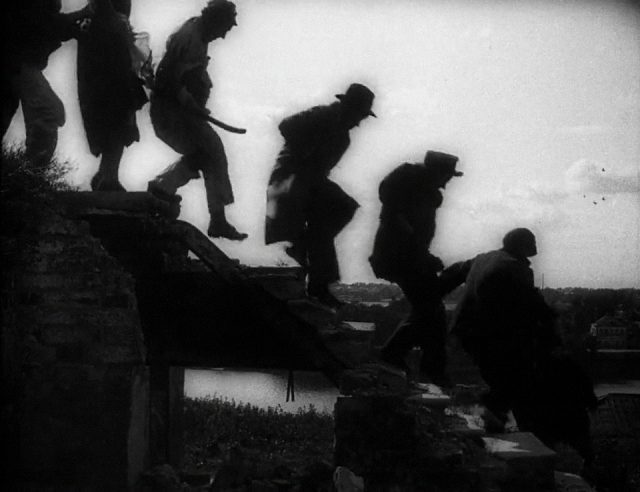
Film Comment Presents: A Gentle Creature (Sergei Loznitsa, 2017), Walter Reade Theater, $25, 6:00

Thursday, October 5
A Story from Chikamatsu (Kenji Mizoguchi, 1954), Francesca Beale Theater, $15, 3:30

Friday, October 6
Spielberg (Susan Lacy, 2017), introduced by Jessica Levin and Emma Pildes, Walter Reade Theater, $25, 8:45

Saturday, October 7
Claude Lanzmann’s Four Sisters: The Hippocratic Oath (Claude Lanzmann, 2017), introduced by Claude Lanzmann, Alice Tully Hall, $25, 1:00

Good Luck (Ben Russell, 2017), followed by a Q&A with Ben Russell, Francesca Beale Theater, $15, 6:15

Sunday, October 8
Projections Program 5: Urban Rhapsodies, followed by a Q&A with Ayo Akingbade, Fern Silva, Ephraim Asili, and Michael Robinson, Francesca Beale Theater, $15, 12 noon

Let the Sun Shine In (Claire Denis, 2017), followed by a Q&A with Claire Denis, Alice Tully Hall, $25, 3:30

Monday, October 9
HBO Directors Dialogues: Hong Sang-soo, amphitheater, free, 7:00

Tuesday, October 10
HBO Directors Dialogues: Philippe Garrel, amphitheater, free, 8:00

Wednesday, October 11
Master Class: Vittorio Storaro and Ed Lachman, moderated by Kent Jones, Walter Reade Theater, $25, 6:15

Thursday, October 12
Hallelujah the Hills (Adolfas Mekas, 1963), introduced by Jonas Mekas, Howard Gilman Theater, $15, 6:00

Lucía (Humberto Solás 1968), Howard Gilman Theater, $15, 8:00

Friday, October 13
Ismael’s Ghosts (Arnaud Desplechin, 2017), Director’s Cut, followed by a Q&A with Arnaud Desplechin, Alice Tully Hall, $25, 6:00

Saturday, October 14
Farewell, My Lovely (Dick Richards, 1975), introduced by Robert Mitchum’s daughter, Petrine Mitchum, Howard Gilman Theater, $15, 1:30

HONG KONG TRILOGY: PRESCHOOLED, PREOCCUPIED, PREPOSTEROUS

Christopher Doyle looks at three generations of men, women, and children in Hong Kong in trilogy

Christopher Doyle looks at three generations of Hong Kong men, women, and children in trilogy

HONG KONG TRILOGY: PRESCHOOLED, PREOCCUPIED, PREPOSTEROUS (Christopher Doyle, 2015)
Metrograph
7 Ludlow St. between Canal & Hester Sts.
Opens Friday, September 22
212-660-0312
metrograph.com

Master cinematographer Christopher Doyle, who has shot such beautiful films as Wong Kar-wai’s In the Mood for Love and Ashes of Time, Chen Kaige’s Temptress Moon, Pen-Ek Ratanaruang’s Last Life in the Universe, and Zhang Yimou’s Hero, once again displays his unique visual flair in Hong Kong Trilogy: Preschooled, Preoccupied, Preposterous, the third full-length work he has directed, after 1999’s Away with Words and 2008’s Izolator. The documentary, which he also photographed and contains some confusing fiction elements, is divided into three sections that examine the hopes and dreams of three generations of people living in Hong Kong, the Australia-born Doyle’s adopted hometown. The majority of the film, which was helped by a Kickstarter campaign that raised $125,000, features long shots of people, streets, buildings, and the waterfront in Hong Kong, with voice-over narration from the men, women, and children shown onscreen, who were interviewed separately. But the film suffers drastically whenever Doyle turns away from that method and has live dialogue and interaction, breaking the engaging premise he begins with. In the first section, “Preschooled,” we meet Pet Shop Boy, who chills with flamingos in a zoo; Ching Man, aka Red Cap Girl, who passes out religious pamphlets about multiple gods of numerous religions while refusing to be tempted by the Devil; Teacher Selene, who is getting tired of waiting around for Beat Box; Vodka Wong, who gets bullied until he fights back and appears to prefer his maid, Yan Yan, to his mother; and Egg Tart Angel, who hands out free egg custard tarts to anyone who looks sad and lonely.

Christopher Doyle on the set of Hong Kong Trilogy: Preschooled, Preoccupied, Preposterous

Christopher Doyle on the set of Hong Kong Trilogy: Preschooled, Preoccupied, Preposterous

The second part, “Preoccupied,” follows the 2014 Occupy movement in Hong Kong, focusing on the tent city known as Camp Democracy, where the term “Umbrella Movement” defined their use of umbrellas against tear gas and pepper spray. “Everything is predestined in life. A lot of things are decided when you’re born,” says Feng Shui Master Thierry, “but maybe the different people you meet and the different things you do will change the way fate manifests itself.” Architectural conservationist Shandong Zhang, who is always drawing, adds, “I think what makes a building or a space beautiful are its people.” The movement is so well organized that the tent city has its own mail system and organic farm to go with its Lennon Wall, where optimistic messages are posted inspired by John Lennon’s “Imagine.” And the final chapter, “Preposterous,” deals with a party tram where senior citizens meet for speed dating. When, in voiceover, they talk about their past relationships and discuss what they’re looking for now, the section is intriguing, but when the action becomes live, things fall apart, especially when the scene is clearly staged. Some characters show up in more than one part, which can be charming, like when it’s Red Cap Girl and Shandong Zhang, and not so charming, like when it’s Beat Box and Teacher Kevin. Doyle is attempting to highlight and preserve Hong Kong culture and heritage, particularly since the changes that have occurred since the 1997 reunification, but as the film goes on, it devolves into treacly sentimentality, political propaganda, and downright silliness (whenever the police arrive). Hong Kong Trilogy is a gorgeous film to watch, but the inconsistent narrative style ultimately lets it down.

TRIBECA TV FESTIVAL

Ben McKenzie and Robin Lord Taylor will be among the special guests for an inside look at Gotham at the inaugural Tribeca TV Festival

Ben McKenzie and Robin Lord Taylor will be among the special guests for an inside look at Gotham at the inaugural Tribeca TV Festival

Cinépolis Chelsea
260 West 23rd St at Eighth Ave.
September 22-24, $30
tribecafilm.com/TVfestival

The folks behind the massively successful Tribeca Film Festival, which launched in 2002 as a way to help rebuild Lower Manhattan following 9/11, are now turning their attention to the small screen. The inaugural Tribeca TV Festival takes place this weekend, with special inside looks at more than a dozen television shows in addition to other special events, celebrating this new golden age of the boob tube as cable and streaming services have led to more programs than ever, along with a tremendous rise in overall quality. Below is the schedule for Saturday and Sunday, featuring sneak peeks at upcoming episodes and conversations with members of the cast and crew; among the participants are Kyra Sedgwick, Paul Reiser, Maggie Q, Kal Penn, Debra Messing, Sean Hayes, Samira Wiley, Trevor Noah, and Megan Mullally. In addition, there are Virtual Reality Experiences with Mr. Robot, Snatch, and the 1969 moon landing, free with any festival ticket.

Saturday, September 23

Look But with Love, documentary VR series, fee with any festival ticket, 3:30

Gotham, with Ben McKenzie, Robin Lord Taylor, Jessica Lucas, Erin Richards, and executive producer Danny Cannon, $30, 4:00

Pillow Talk, with writer-director Mike Piscitelli, writer Rachael Taylor, and star Patrick J. Adams, $30, 5:00

A Conversation with Will & Grace, with cocreators/executive producers Max Mutchnick and David Koha and stars Debra Messing, Eric McCormack, Sean Hayes, and Megan Mullally, $30, 7:00

Liar, with creators Jack and Harry Williams and star Joanne Froggatt, $30, 7:45

Ryan Hansen Solves Crimes on Television, with Ryan Hansen, Samira Wiley, and series creator, writer, director, and executive producer Rawson Marshall Thurber and executive producer Beau Bauman, $30, 8:30

Sunday, September 24

Look But with Love, documentary VR series, fee with any festival ticket, 2:00

A Conversation with Trevor Noah & the Writers of The Daily Show, with Trevor Noah, Steve Bodow, Zhubin Parang, Michelle Wolf, and Joe Opio, $30, 2:30

Ten Days in the Valley, with executive producers Kyra Sedgwick, Marcy Ross, Sherry White, and Jill Littman and creator Tassie Cameron, $30, 3:00

Red Oaks, with Paul Reiser, Craig Roberts, Alexandra Turshen, Ennis Esmer, and creators Joe Gangemi and Gregory Jacobs, $30, 5:00

Designated Survivor, with Maggie Q, Kal Penn, and Italia Ricci, $30, 6:00

Queen Sugar, with Queen Sugar, Rutina Wesley, Dawn-Lyen Gardner, and Kofi Siriboe, $30, 7:15