“Ibis Mummy,” animal remains, linen, from the Ibis cemetery at Abydos, Egypt; excavated by the Egypt Exploration Fund. Late Period to Ptolemaic Period, 410–200 BCE (photo by Gavin Ashworth / Brooklyn Museum)
Brooklyn Museum
200 Eastern Parkway at Washington St.
Saturday, December 2, free, 5:00 – 11:00
212-864-5400 www.brooklynmuseum.org
The Brooklyn Museum honors World AIDS Day and looks at what’s to come in the African diaspora in its monthly free First Saturday program in December with “From Ancient Egypt to the Afrofuture.” There will be live music by Daví, Everyday People featuring DJ mOma and Jade de LaFleur, and Burnt Sugar the Arkestra Chamber, performing a Sun Ra tribute; a curator tour of “Soulful Creatures: Animal Mummies in Ancient Egypt” with Edward Bleiberg; an artist talk and tour of “Ahmed Mater: Mecca Journeys” with Ahmed Mater and Catherine Morris; a hands-on art workshop in which participants will create headdresses inspired by the museum’s ancient Egyptian collection; the scholar talk “Everything in the Future Is Black” with Makeba Lavan exploring the work of Wangechi Mutu, Octavia Butler, George Clinton, Janelle Monae, Erykah Badu, and others; teen pop-up gallery talks on Ancient Egyptian art; screenings of Terence Nance’s short films They Charge for the Sun, Swimming in Your Skin Again, and Univitellin, followed by a talkback with Nance; “Alternate Endings, Radical Beginnings” short films by Mykki Blanco, Cheryl Dunye and Ellen Spiro, Reina Gossett, Thomas Allen Harris, Kia Labeija, Tiona Nekkia McClodden, and Brontez Purnell, curated by Erin Christovale and Vivian Crockett and commissioned for Visual AIDS’ annual Day With(out) Art in honor of World AIDS Day; and a feminist book club discussing Angela Y. Davis’s “Working Women, Black Women, and the History of the Suffrage Movement,” hosted by Glory Edim of Well-Read Black Girl in conjunction with “Roots of ‘The Dinner Party’: History in the Making.” In addition, the galleries will be open late so you can check out “Roots of ‘The Dinner Party,’” “Soulful Creatures,” “Rodin at the Brooklyn Museum: The Body in Bronze,” “Proof: Francisco Goya, Sergei Eisenstein, Robert Longo,” “Arts of Asia and the Middle East,” “Infinite Blue,” “A Woman’s Afterlife: Gender Transformation in Ancient Egypt,” and more.
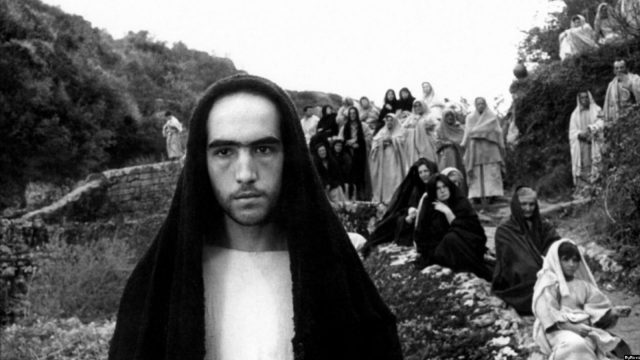
Film Society of Lincoln Center series highlights classic works featuring nonprofessional actors, including Pier Paolo Pasolini’s The Gospel According to St. Matthew
Film Society of Lincoln Center
Walter Reade Theater, 165 West 65th St. at Amsterdam Ave.
Francesca Beale Theater, 144 West 65th St. at Amsterdam Ave.
November 24 – December 10
212-875-5601 www.filmlinc.org
Ever since the invention of the motion picture, men and women have been trying to capture real life on film at twenty-four frames per second, not only in documentaries but in works of fiction. The more believable a situation or character feels, whether in a crime drama, sci-fi tale, Western, or romantic comedy, the more successful the movie often is. And now, in the age of social media and the YouTube star, the time is ripe for “The Non-Actor,” an ambitious twelve-day series at the Film Society of Lincoln Center consisting of more than forty films from around the world made between 1928 and 2013 featuring nonprofessional actors in lead or key roles. In addition to the below films, the series, running November 24 to December 10, includes such wide-ranging highlights as Ousmane Semebene’s Black Girl, Spencer Williams’s The Blood of Jesus, Lizzie Borden’s Born in Flames, Shirley Clarke’s The Cool World, Roberto Rossellini’s Germany Year Zero, Sergei Eisenstein’s October, and Robert Flaherty’s Louisiana Story. As the late Robin Williams famously said: “Reality . . . What a Concept.”
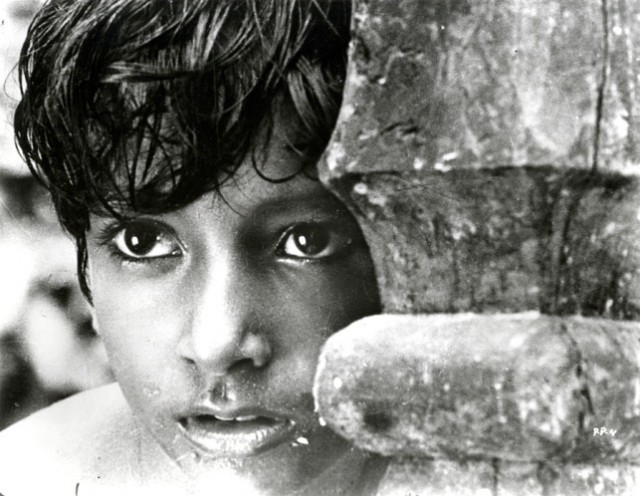
Apu (Subir Banerjee) watches life unfold in his small Indian village in Satyajit Ray’s Pather Panchali
PATHER PANCHALI (SONG OF THE LITTLE ROAD) (Satyajit Ray, 1955)
Friday, November 24, 1:30, and Sunday, November 26, 6:00 www.filmlinc.org
A groundbreaking work in the history of world cinema, Satyajit Ray’s Pather Panchali and its two sequels, Aparajito and Apur Sansar, have been meticulously restored by the Criterion Collection and the Academy Film Archive following a nitrate fire in 1993 — the year after Ray was awarded an honorary Oscar on his deathbed. Inspired by a meeting with Jean Renoir in Kolkata, where Renoir was shooting The River, and watching ninety-nine films in six months while working as a graphic designer for an advertising agency in London, Ray decided to make his first film, adapting Bibhutibhushan Banerjee’s 1929 novel, which he knew well; Ray had contributed illustrations to a later edition of the book. The film took nearly five years to make as Ray faced repeated financing problems, such delays as cattle eating flowers that were needed for an important scene, and a cast and crew primarily of nonprofessionals. Despite all those issues, Pather Panchali is a stunning masterpiece, a bittersweet and captivating tale of a rural family mired in poverty, struggling to survive in extremely hard times. In a small village, Sarbajaya (Karuna Banerjee) is raising her daughter, Durga (Runki Banerjee), a rambunctious teen, and son, Apu (Subir Banerjee), while her husband, dreamer Harihar (Kanu Banerjee), a wannabe playwright and poet, goes off for months at a time, trying to find work in the city. (The actors shared a common surname but were not related in real life.) Sarbajaya is also caring for their elderly cousin, “Auntie” Indir (retired theater actress Chunibala Devi), who walks very slowly, hunched over and with impossibly leathery skin. The family goes about its business from day to day, as the kids play with friends, figure out how they can get something from the sweets man, and hang out with Auntie, who offers a fresh perspective on life. Sarbajaya is embarrassed that she cannot pay back several rupees she owes her relatively wealthy neighbor, who owns an orchard from which Durga steals fruit. It’s a meager existence, but it avoids being completely dark and bleak because of Auntie’s sense of humor and Apu’s wide-eyed innocence. The film is told from his point of view — in fact, the first time we see him, he is lying down, covered, and one of his eyes pops open, dominating the screen. It’s a difficult, challenging life, but there’s always hope.
Durga (Runki Banerjee) offers Auntie (Chunibala Devi) a stolen treat in Pather Panchali
The episodic Pather Panchali was heavily influenced by Italian Neorealism while also evoking works by Ozu, Kurosawa, and Renoir, providing an alternative to the flashier, popular Bollywood style. First-time writer-director Ray and first-time cinematographer Subrata Mitra maintain a lyrical, poetic pace, accompanied by a traditional score by sitar legend Ravi Shankar. The film succeeds both as a cultural testament, lending insight into the poor of India, as well as a fully realized cinematic story; it won the country’s National Film Award for Best Feature Film while also earning Best Human Document honors at Cannes. Sarbajaya, Durga, Apu, and Auntie are almost always barefoot, wearing the same clothes, scraping the bottom of the pan with their fingers for that last grain of rice, but there’s an elegance and grace, an intoxicating honesty, to their simple, laborious daily lives. Ray would go on to make such other films as Teen Kanya, Jalsaghar, Ashani Sanket, Devi, and Agantuk, but he is most remembered for “The Apu Trilogy,” which looks absolutely gorgeous in the new 4K restorations, reaffirming its lofty place in the coming-of-age pantheon alongside François Truffaut’s Antoine Doinel series. Pather Panchali is being shown November 24 and 26 in the Film Society of Lincoln Center series “The Non-Actor.”
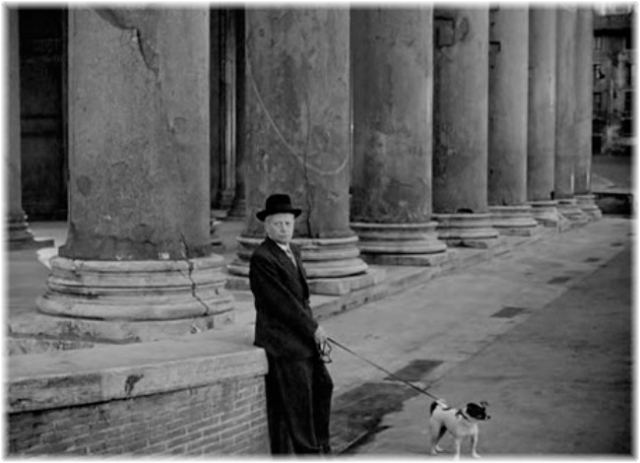
De Sica neorealist classic is the heartbreaking story of an elderly man and his faithful dog
UMBERTO D. (Vittorio De Sica, 1952)
Friday, November 24, 4:00, and Wednesday, November 29, 1:00 www.filmlinc.org
We don’t think we’ll ever stop crying. Vittorio De Sica’s neorealist masterpiece Umberto D. stars Carlo Battisti (a professor whom De Sica saw one day and thought would be perfect for the lead role; it would be Battisti’s only film) as Umberto Domenico Ferrari, an elderly former bureaucrat who is too proud to sacrifice his dignity in order to pay his mean-spirited landlady (Lina Gennari), who rents out his room by the hour while he’s out walking his beloved dog, Flag, and trying to find some way to get money and food. Umberto D. is befriended by the boardinghouse maid (Maria Pia Casilio), who is pregnant with the child of one of two servicemen, neither of whom wants to have anything to do with her. As Umberto D.’s options start running out, he considers desperate measures to free himself from his loneliness and poverty. His relationship with Flag is one of the most moving in cinema history. Don’t miss this remarkable achievement, which was lovingly restored last decade by eighty-six-year-old lighting specialist Vincenzo Verzini, known as Little Giotto. Umberto D. is screening November 24 and 29 at the Walter Reade Theater and will be preceded by Cesare Zavattini and Francesco Maselli’s half-hour Story of Caterina, from the omnibus Love in the City.
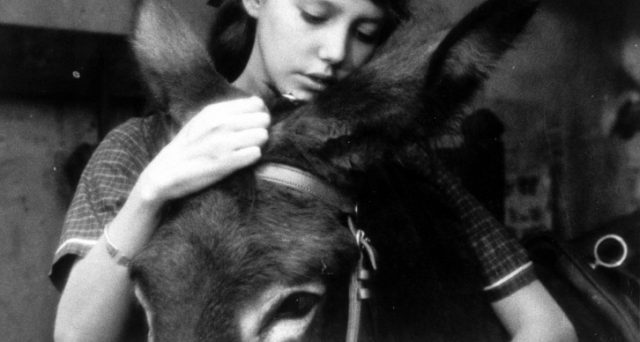
The tender love between a young girl (Anne Wiazemsky) and a donkey lies at the heart of Robert Bresson’s Au hasard Balthazar
AU HASARD BALTHAZAR (Robert Bresson, 1966)
Saturday, November 25, 4:00, and Tuesday, November 28, 4:00 www.filmlinc.org
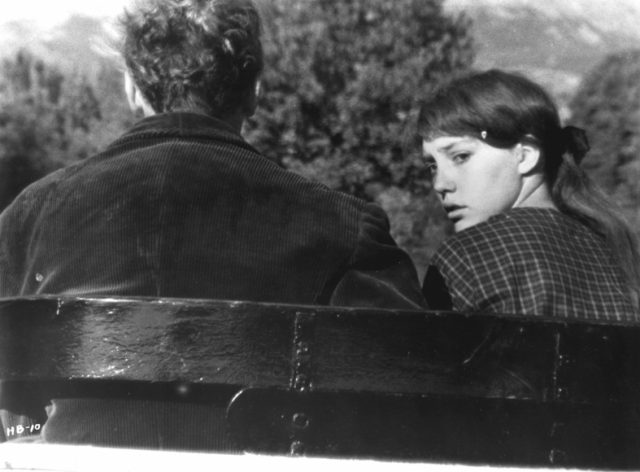
Robert Bresson’s heartbreaking 1966 masterpiece, Au hasard Balthazar, is an unforgettable tale of the life and times of a most unusual yet completely ordinary donkey. As the opening credits roll, we hear writer and pianist Jean-Joël Barbier performing Franz Schubert’s Sonata No. 20, interrupted by the braying of a donkey and concluding with the sound of bells ringing. In a small rural community in France, a donkey has been born. Young Jacques and his sister baptize him and name him Balthazar, after one of the three Magi who presented the infant Jesus with gifts. Jacques and his neighbor, Marie, adore the donkey, treating him not only as their friend but their surrogate child, believing they are destined to marry. But they are torn apart by a land dispute between their fathers, and when they become teenagers, although the upstanding Jacques (Walter Green) still desires Marie (Anne Wiazemsky), she shamefully gives herself to Gérard (François Lafarge), the sinister leader of a local gang of bike-riding juvenile delinquents. Gérard abuses Marie as well as Balthazar, who soon sets off on a journey inspired by Fyodor Dostoyevsky’s The Idiot and the Stations of the Cross, going from owner to owner in a series of vignettes that also represent the seven deadly sins. His big, dark eyes appearing to understand what is happening to him, Balthazar encounters lust, gluttony, greed, sloth, wrath, envy, and pride but soldiers on, loved by Marie, who becomes ever-more helpless, unable and unwilling to take control of her destiny, much to the disappointment of her parents (Philippe Asselin and Nathalie Joyaut). Her sad fate seems predetermined, as does that of her beloved Balthazar, who literally and figuratively bears the heavy weight of the sins of all around him.
“Everyone who sees this film will be absolutely astonished because this film is really the world in an hour and a half,” Jean-Luc Godard famously said about Au hasard Balthazar, and that gets right to the heart of the film. (Godard went on to cast Wiazemsky in several of his movies; the two were married from 1967 to 1979.) Written and directed by Bresson (Pickpocket, Diary of a Country Priest), beautifully edited by Raymond Lamy, stunningly photographed in black-and-white by Ghislain Cloquet, and featuring primarily nonprofessional actors, Au hasard Balthazar is about young love, sacrifice, honor, family, life and death — and the very essence of humanity, most evidently seen in the form of an amazing animal. The film is rife with biblical overtones, but it is not merely citing dogma, nor is it a direct parable, instead exploring the contradictions inherent in religion. Marie is part Mother Mary, part Mary Magdalene, but mostly just a deeply troubled girl. One night Gérard and his gang beat Balthazar as Marie watches, saying nothing; the next morning, she looks up in church as he sings a Latin hymn that is bookended by the ringing of Balthazar’s bells and the chiming of the church bells.
Metrograph will host week-long fiftieth-anniversary presentation of extraordinary Au hasard Balthazar
The Book of Proverbs explains that “idle hands are the devil’s workshop,” and Bresson expands on this concept by continually focusing on hands. Sitting on a bench in the dark, Marie puts her left hand over her heart, then slowly moves it onto the bench, where another hand emerges from the shadows to gently touch hers. She runs away, but Bresson’s camera still follows her hand as it closes and then opens a door. Later, as Gérard prepares to set Balthazar’s tail on fire, a car passes by, and the camera centers on Gérard’s hands, fidgeting nervously as he worries about being caught. When the drunkard Arnold (Jean-Claude Guilbert) is questioned by the police about a murder, Bresson zooms in on three men’s hands as Arnold gives his papers to the captain (Jacques Sorbets), who gives them to an associate, who then asks for Arnold’s hands so he can take his fingerprints, as if the hands themselves are guilty, stained with sin. “Holding on to me, too?” Arnold says. And when Balthazar performs a trick at a circus, his front hooves become the primary objects of attention. Screening at Lincoln Center on November 25 and 28, Au hasard Balthazar is filled with such glorious moments, layers of meaning attached to every sound and image, a staggering cinematic achievement that amply deserves its status as one of the greatest films ever made.
Having restored Charles Burnett’s Killer of Sheep and My Brother’s Wedding, Milestone, the UCLA Film & Television Archive, and preservationist Ross Lipman teamed up again to bring back Kent Mackenzie’s black-and-white slice-of-life tale The Exiles, which debuted at the 1961 Venice Film Festival and screened at the inaugural 1964 New York Film Festival before disappearing until its restoration, upon which it was selected for the 2008 Berlin International Film Festival. The Exiles follows a group of American Indians as they hang out on a long Friday night of partying and soul searching in the Bunker Hill section of Los Angeles, centering on Homer (Homer Nish) and Yvonne (Yvonne Williams), who are going to have a baby. After Yvonne makes dinner for Homer and his friends, the men drop her off at the movies by herself while they go out drinking and gambling and, in Tommy’s (Tommy Reynolds) case, looking for some female accompaniment. As the night goes on, Homer, Yvonne, and Tommy share their thoughts and dreams in voice-over monologues that came out of interviews Mackenzie conducted with them. In fact, the cast worked with the director in shaping the story and getting the details right, ensuring its authenticity and realism, giving The Exiles a cinéma vérité feel. Although the film suffers from a poorly synced soundtrack — it is too often too clear that the dialogue was dubbed in later and doesn’t match the movement of the actors’ mouths — it is still an engaging, important independent work (the initial budget was $539) about a subject rarely depicted onscreen with such honesty. Mackenzie, who followed up The Exiles with the documentaries The Teenage Revolution (1965) and Saturday Morning (1971) before his death in 1980 a the age of fifty, avoids sociopolitical remonstrations in favor of a sweet innocence behind which lies the difficulties of the plight of American Indians assimilating into U.S. society. The Exiles is screening November 29 and December 1 at the Francesca Beale Theater.
Irma (Kati Outinen) and M (Markku Peltola) face an uncertain future in Aki Kaurismäki’s The Man Without a Past
THE MAN WITHOUT A PAST (Aki Kaurismäki, 2002)
Film Forum
209 West Houston St.
Friday, November 24, 12:30, 2:30, 4:40, 7:00
Tuesday, November 28, 12:30, 4:50, 7:00
Series runs November 24-30 filmforum.org www.sonyclassics.com
In conjunctions with the December 1 opening of Finnish auteur Aki Kaurismäki’s latest work, The Other Side of Hope, which earned him the Silver Bear for Best Director at the Berlin International Film Festival, Film Forum is showing five of his previous tales, the four included here as well as his Paris-set La Vie de Bohème. Kaurismäki’s touching, funny, dark, and satiric The Man Without a Past deservedly won the 2002 Grand Jury Prize at Cannes. In the brutal opening, an unidentified character gets severely beaten and dies, then wakes up with amnesia. M (Markku Peltola) is soon taken in by a desperately poor family who lives in a shack they call a container. He meets Irma (Kati Outinen, in a small role that won her Best Actress at Cannes), and their potential romance is both sweet and absurd. Kaurismäki wrote, produced, and directed this splendid example of the offbeat nature of his work, which is always intelligent, challenging, and rewarding. It is screening at Film Forum on November 24 and 28.
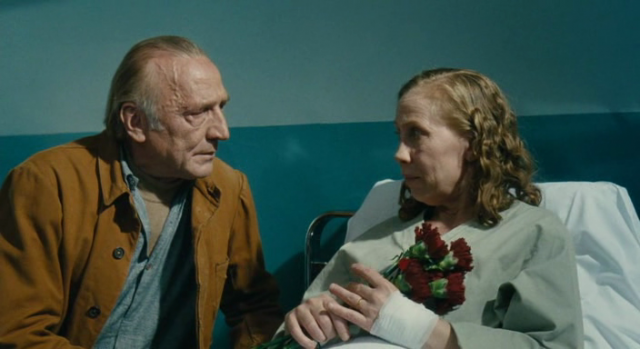
Marcel (André Wilms) and Arletty Marx (Kati Outinen) face life with a deadpan sense of humor in Aki Kaurismäki’s Le Havre
LE HAVRE (Aki Kaurismäki, 2011)
Saturday, November 25, 12:30, 2:30, 4:30, 8:45
Monday, November 27, 3:50
Thursday, November 30, 12:30, 2:30, 4:45, 7:00, 9:10 janusfilms.com/lehavre filmforum.org
For more than thirty years, Finnish auteur Aki Kaurismäki (Leningrad Cowboys Go America, Drifting Clouds) has been making existential deadpan black comedies that are often as funny as they are dark and depressing. Has there ever been a film as bleak as 1990’s The Match Factory Girl, in which a young woman (Kati Outinen) suffers malady after malady, tragedy after tragedy, embarrassment after embarrassment, her expression never changing? In his latest film, the thoroughly engaging Le Havre, Kaurismäki moves the setting to a small port town in France, where shoeshine man Marcel Marx (André Wilms), a self-described former Bohemian, worries about his seriously ill wife (Outinen) while trying to help a young African boy (Blondin Miguel), who was smuggled into the country illegally on board a container ship, steer clear of the police, especially intrepid detective Monet (Jean-Pierre Darroussin), who never says no to a snifter of Calvados. Adding elements of French gangster and WWII Resistance films with Godardian undercurrents — he even casts Jean-Pierre Léaud in a small but pivotal role — Kaurismäki wryly examines how individuals as well as governments deal with illegal immigrants, something that has taken on more importance than ever amid the growing international economic crisis and fears of terrorism. Through it all, Marcel remains steadfast and stalwart, quietly and humbly going about his business, deadpan every step of the way. Wouter Zoon’s set design runs the gamut from stark grays to bursts of color, while longtime Kaurismäki cinematographer Timo Salminen shoots scene after scene with a beautiful simplicity. Winner of a Fipresci critics award at Cannes and Finland’s official entry for the Best Foreign Language Film Oscar, Le Havre, the first of a proposed trilogy, is another marvelously unusual, charmingly offbeat tale from a master of the form. A selection of the 2011 New York Film Festival, Le Havre is screening at Film Forum on November 25 and 27.
Aki Kaurismäki concludes the Proletariat Trilogy with The Match Factory Girl
THE MATCH FACTORY GIRL (TULITIKKUTEHTAAN TYTTÖ) (Aki Kaurismäki, 1990)
Monday, November 27, 12:30, 5:50, 7:30 filmforum.org
Finnish director Aki Kaurismäki completes his conceptual Proletariat Trilogy with the bleakest, most deadpan of the three examinations of working-class life with the wickedly funny, blacker-than-black comedy The Match Factory Girl. The follow-up to 1986’s Shadows in Paradise and 1988’s Ariel, the finale tells the sad story of a poor young woman who just can’t seem to catch a break. Kaurismäki regular Kati Outinen stars as Iris, an assembly-line drone who makes way too much out of a rare one-night stand with the devastatingly disinterested Aarne (Vesa Vierikko), leading to all kinds of problems for her, both professionally and personally. Continuing the subtly dramatic color scheme of the previous two films, cinematographer Timo Salminen, set designer Risto Karhula, and Kaurismäki add sly bursts of blue and orange as things keep getting worse and worse for Iris, who, despite her name, doesn’t really see the world for what it is, instead living in a bizarre kind of fantasy until she decides to do something about it. The Match Factory Girl cemented Kaurismäki’s reputation as one of the most fascinating young international filmmakers, which he’s lived up to with such later favorites as Juha, Cannes Grand Prix winner The Man Without a Past, and Le Havre.The Match Factory Girl is screening November 27 at Film Forum.
Taisto Kasurinen (Turo Pajala) experiences tough times in Aki Kaurismäki’s Ariel
ARIEL (Aki Kaurismäki, 1988)
Monday, November 27, 2:10, 9:10 filmforum.org
More of a conceptual sequel to Shadows in Paradise than a continuing narrative, Ariel stars Turo Pajala as Taisto Kasurinen, a Finnish miner who has just lost his job because the mine has closed. Sitting at a diner with his father/coworker, Taisto barely flinches as the elder Kasurinen tells him that there is nothing for him here, gives him the keys to his white Cadillac convertible, and goes into the bathroom and shoots himself. Taisto, with ever-changing facial hair in the beginning, quickly gets mugged, his meager life savings stolen from him. He seeks day work on the docks and sort of starts dating single mother Irmeli Pihlaja (Susanna Haavisto), who has never met a job she couldn’t quit that day. Taisto soon finds himself in prison for a ridiculous reason — and one he doesn’t really fight, as he generally just sits back and lets things happen to him — and meets fellow inmate Mikkonen (Shadows in Paradise’s Matti Pellonpää), and the two decide it’s time to take action and break out. A very dark, very black comedy that mixes in elements of romance and noir, Ariel is an absurdist existential feast, following Taisto and his compatriots as they make their very strange way through a very bizarre world. Ariel is being shown November 27 at Film Forum with the third part of the Proletariat Trilogy, The Match Factory Girl.
Franco Citti stars as the title character in Pier Paolo Pasolin’s directorial debut, Accatone
ACCATTONE (THE SCROUNGER) (Pier Paolo Pasolini, 1961)
Quad Cinema
34 West 13th St. between Fifth & Sixth Aves.
Sunday, November 26, 5:50
Series runs November 22-30
212-255-2243 quadcinema.com
After collaborating on a number of works by such auteurs as Mauro Bolognini and Federico Fellini, poet and novelist Pier Paolo Pasolini made his directorial debut in 1961 with the gritty, not-quite-neo-realist Accattone (“scrounger” or “beggar”). Somewhat related to his books Ragazzi di vita and Una vita violenta, the film is set in the Roman borgate, where brash young Vittorio “Accattone” Cataldi (Franco Citti) survives by taking crazy bets — like swimming across a river known for swallowing up people’s lives — and working as a pimp. After a group of local men beat up his main money maker (Silvana Corsini), he meets the more naive Stella (Franca Pasut), whom he starts dating with an eye toward perhaps converting into a prostitute as well. Meanwhile, he tries to establish a relationship with his son, but his estranged wife and her family want nothing to do with him. Filmed in black-and-white by master cinematographer Tonino Delli Colli, Accattone is highlighted by a series of memorable shots, from Accattone’s gorgeous dive from a bridge to a close-up of his face covered in sand, many of which were inspired by Baroque art and set to music by Bach. Written with Sergio Citti and featuring an assistant director named Bernardo Bertolucci — whose father was a friend of Pasolini’s — the story delves into the dire poverty in the slums of Rome, made all the more real by Pasolini’s use of both professional and nonprofessional actors. “Because he did not have much knowledge of film-making, he invented cinema. It was as though I had the privilege of assisting, of witnessing the invention of cinema by Pasolini,” Bertolucci later said of his experience. Accattone is screening November 26 as part of the Quad series “Pictures from the Revolution: Bertolucci’s Italian Period,” which runs November 24-30 and includes such other films that Bertolucci worked on, either as writer or director or in another capacity, as The Grim Reaper, Luna, Partner, 1900, the omnibus Love and Anger, and Sergio Leone’s Once Upon a Time in the West.
Jean-Paul Trintignant tries to find his place in the world in Bernardo Bertolucci’s lush masterpiece, The Conformist
THE CONFORMIST (Bernardo Bertolucci, 1970)
Thursday, November 23, 1:00, 5:45
Saturday, November 25, 7:30
Wednesday, November 29, 9:20 quadcinema.com
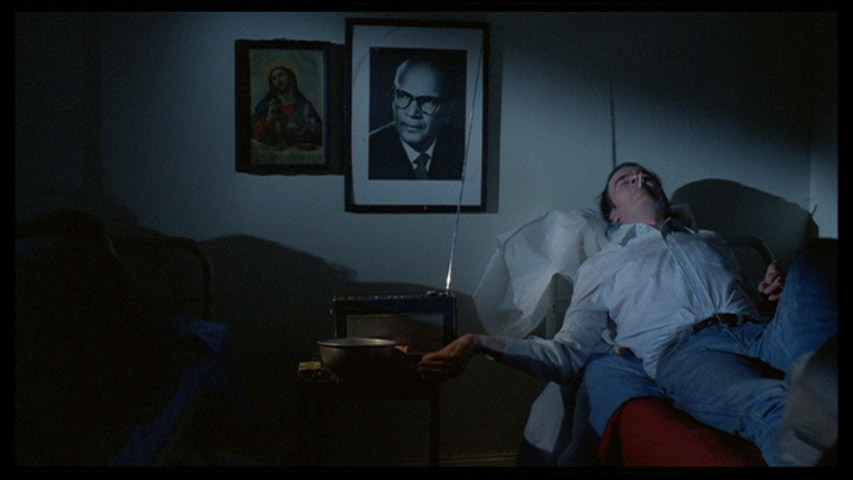
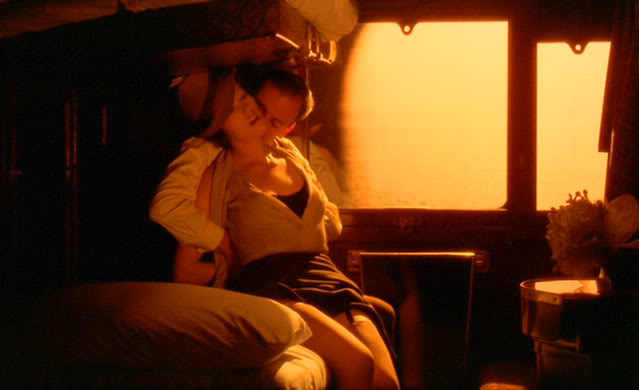
Based on the novel by Alberto Moravia, Bernardo Bertolucci’s gorgeous masterpiece, The Conformist, is a political thriller about paranoia, pedophilia, and trying to find one’s place in a changing world. Jean-Louis Trintignant (And God Created Woman, Z, My Night at Maud’s) stars as Marcello Clerici, a troubled man who suffered childhood traumas and is now attempting to join the fascist secret police. To prove his dedication to the movement, he is ordered to assassinate one of his former professors, the radical Luca Quadri (Enzo Tarascio), who is living in France. He falls for Quadri’s much younger wife, Anna (Dominique Sanda), who takes an intriguing liking to Clerici’s wife, Giulia (Stefania Sandrelli), while Manganiello (Gastone Moschin) keeps a close watch on him, making sure he will carry out his assignment. The Conformist, made just after The Spider’s Stragagem and followed by Last Tango in Paris, captures one man’s desperate need to belong, to become a part of Mussolini’s fascist society and feel normal at the expense of his real inner feelings and beliefs. An atheist, he goes to church to confess because Giulia demands it. A bureaucrat, he is not a cold-blooded killer, but he will murder a part of his past in order to be accepted by the fascists (as well as Bertolucci’s own past, as he makes a sly reference to his former mentor, Jean-Luc Godard, by using the French auteur’s phone number and address for Quadri’s). Production designer Ferdinando Scarfiotti and cinematographer Vittorio Storaro bathe the film in lush Art Deco colors as Bertolucci moves the story, told in flashbacks, through a series of set pieces that include an erotic dance by Anna and Giulia, a Kafkaesque visit to a government ministry, and a stunning use of black and white and light and shadow as Marcello and Giulia discuss their impending marriage. A multilayered psychological examination of a complex figure living in complex times, as much about the 1930s as the 1970s, as the youth of the Western world sought personal, political, and sexual freedom, The Conformist is screening at the Quad on November 23, 25, and 29.
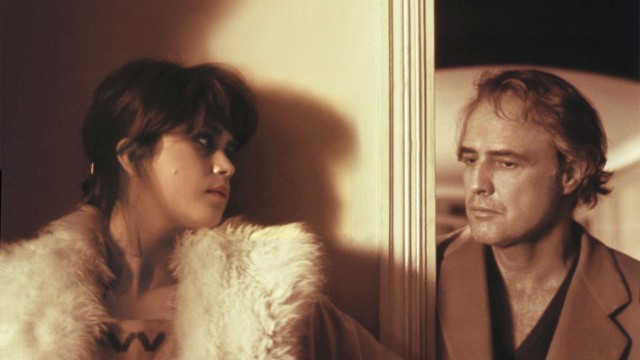
Marlon Brando and Maria Schneider star in Bernardo Bertolucci’s controversial Last Tango in Paris
LAST TANGO IN PARIS (ULTIMO TANGO A PARIGI) (Bernardo Bertolucci, 1972)
Thursday, November 23, 3:15, 8:00
Tuesday, November 28, 9:10 quadcinema.com
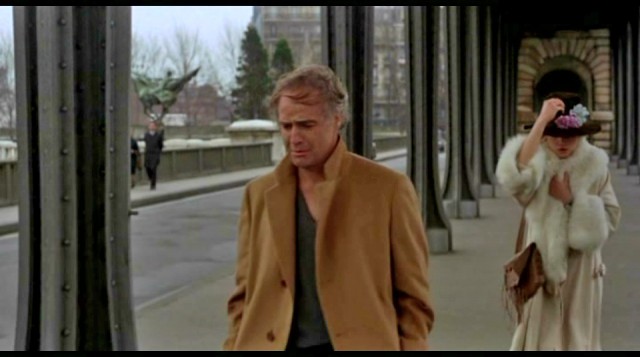
One of the most artistic films ever made about seduction, Bernardo Bertolucci’s X-rated Last Tango in Paris is also one of the most controversial. Written by Bertolucci with regular collaborator and editor Franco Arcalli and with French dialogue by Agnès Varda (Le Bonheur, Vagabond), the film opens with credits featuring jazzy romantic music by Argentine saxophonist Gato Barbieri and two colorful and dramatic paintings by Francis Bacon, “Double Portrait of Lucian Freud and Frank Auerbach” and “Study for a Portrait,” that set the stage for what is to follow. (Bacon was a major influence on the look and feel of the film, photographed by Vittorio Storaro.) Bertolucci then cuts to a haggard man (Marlon Brando) standing under the Pont de Bir-Hakeim in Paris, screaming out, “Fucking God!” His hair disheveled, he is wearing a long brown jacket and seems to be holding back tears. An adorable young woman (Maria Schneider) in a fashionable fluffy white coat and black hat with flowers passes by, stops and looks at him, then moves on. They meet again inside a large, sparsely furnished apartment at the end of Rue Jules Verne that they are each interested in renting. Both looking for something else in life, they quickly have sex and roll over on the floor, exhausted. For the next three days, they meet in the apartment for heated passion that the man, Paul, insists include nothing of the outside world — no references to names or places, no past, no present, no future; the young woman, Jeanne, agrees. Their sex goes from gentle and touching to brutal and animalistic; in fact, after one session, Bertolucci cuts to actual animals. The film is nothing if not subtle.
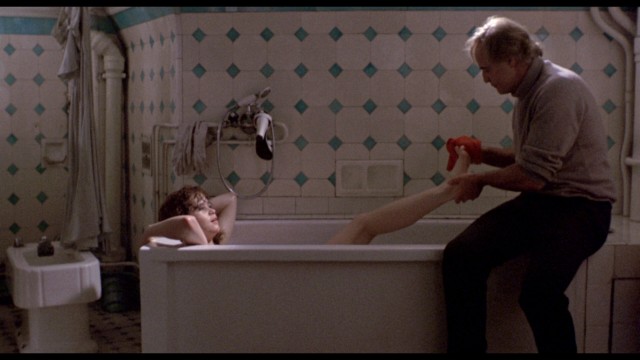
Jeanne (Maria Schneider) and Paul (Marlon Brando) share a private, sexual relationship in Last Tango in Paris
The lovers’ real lives are revealed in bits and pieces, as Paul tries to recover from his wife’s suicide and Jeanne deals with a fiancée, Thomas (Jean-Pierre Léaud), who has suddenly decided to make a film about them, without her permission, asking precisely the kind of questions that Paul never wants to talk about. When away from the apartment, Jeanne is shown primarily in the bright outdoors, flitting about fancifully and giving Thomas a hard time; in one of the only scenes in which she’s inside, Thomas makes a point of opening up several doors, preventing her from ever feeling trapped. Meanwhile, Paul is seen mostly in tight, dark spaces, especially right after having a fight with his dead wife’s mother. He walks into his hotel’s dark hallway, the only light coming from two of his neighbors as they open their doors just a bit to spy on him. Not saying anything, he pulls their doors shut as the screen goes from light to dark to light to dark again, and then Bertolucci cuts to Paul and Jeanne’s apartment door as she opens it, ushering in the brightness that always surrounds her. It’s a powerful moment that heightens the difference between the older, less hopeful man and the younger, eager woman. Inevitably, however, the safety of their private, primal relationship is threatened, and tragedy awaits.
Jeanne and Paul develop a complicated sexual relationship in controversial Bertolucci film
“I’ve tried to describe the impact of a film that has made the strongest impression on me in almost twenty years of reviewing. This is a movie people will be arguing about, I think, for as long as there are movies,” Pauline Kael wrote in the New Yorker on October 28, 1972, shortly before Last Tango closed the tenth New York Film Festival. “It is a movie you can’t get out of your system, and I think it will make some people very angry and disgust others. I don’t believe that there’s anyone whose feelings can be totally resolved about the sex scenes and the social attitudes in this film.” More than forty years later, the fetishistic Last Tango in Paris still has the ability to evoke those strong emotions. The sex scenes range from tender, as when Jeanne tells Paul they should try to climax without touching, to when Paul uses butter in an attack that was not scripted and about which Schneider told the Daily Mail in 2007, “I felt humiliated and to be honest, I felt a little raped, both by Marlon and by Bertolucci. After the scene, Marlon didn’t console me or apologise. Thankfully, there was just one take.” At the time of the shooting, Brando was forty-eight and Schneider nineteen; Last Tango was released between The Godfather and Missouri Breaks, in which Brando starred with Jack Nicholson, while Schneider would go on to make Michelangelo Antonioni’s The Passenger with Nicholson in 1975. Brando died in 2004 at the age of eighty, leaving behind a legacy of more than forty films. Schneider died in 2011 at the age of fifty-eight; she also appeared in more than forty films, but she was never able to escape the associations that followed her after her breakthrough performance in Last Tango, which featured extensive nudity, something she refused to do ever again. Even in 2014, Last Tango in Paris is both sexy and shocking, passionate and provocative, alluring and disturbing, all at the same time, a movie that, as Kael said, viewers won’t easily be able to get out of their system. Last Tango in Paris is screening at the Quad November 23 and 28.
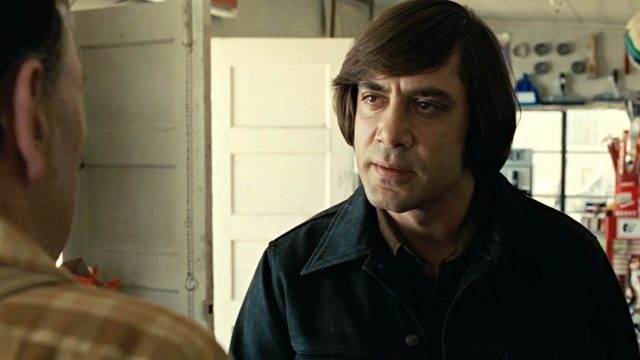
Javier Bardem stars as a mop-topped killer for the ages in No Country for Old Men
NO COUNTRY FOR OLD MEN (Joel & Ethan Coen, 2007)
MoMA Film, Museum of Modern Art
11 West 53rd St. between Fifth & Sixth Aves.
Wednesday, November 29, 1:30
Series runs November 15 – December 29 at 1:30
212-708-9400 www.moma.org
For more than thirty years, Joel and Ethan Coen have been capturing the American zeitgeist like no one else, penetrating deep into the psyche of the country as well as the history of cinema. MoMA is honoring the pair in their Modern Matinees series, screening fifteen of their films at 1:30 through December 29. Based on the novel by Cormac McCarthy, the Coen brothers’ No Country for Old Men is a gripping thriller dominated by the mesmerizing performance of Javier Bardem as Anton Chigurh, a psychopathic killer who believes in chance. When Llewelyn Moss (an outstanding Josh Brolin) accidentally stumbles upon the site of a drug deal gone terribly wrong, he walks away with a satchel of cash and the dream of making a better life for him and his wife (Kelly MacDonald). He also knows that there will be a lot of people looking for him — and the two million bucks he has absconded with. On his trail are the Mexican dealers who were ripped off, bounty hunter Carson Wells (Woody Harrelson), and the cool, calm Chigurh, who leaves a bloody path of violence in his wake. Meanwhile, Sheriff Bell (Tommy Lee Jones) philosophizes on the sorry state of the modern world as he follows the proceedings with an almost Zen-like precision. Though it struggles to reach its conclusion, No Country for Old Men is an intense noir Western, an epic meditation on chance in which the flip of a coin can be the difference between life and a horrible death. No Country for Old Men is screening at MoMA on November 29; the series features the below films as well as Fargo, Intolerable Cruelty, Blood Simple, Raising Arizona, Miller’s Crossing, Barton Fink, and The Hudsucker Proxy.
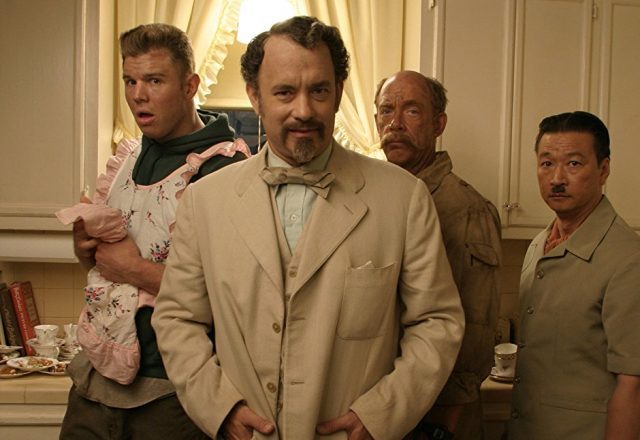
Tom Hanks, J. K. Simmmons et al. should have known better when remaking classic Ealing comedy
THE LADYKILLERS (Joel & Ethan Coen, 2004)
Friday, November 24, 1:30 www.moma.org
By far the worst film the Coen brothers have ever made, this remake of the classic 1955 Alexander Mackendrick caper comedy is a travesty from start to finish, an absolute embarrassment to all involved, including Tom Hanks, Irma P. Hall, Marlon Wayans, J. K. Simmons, Tzi Ma, Ryan Hurst, and Diane Delano. Did anyone actually watch this film before they released it? We barely smiled once and never laughed at this ridiculous story of a group of losers using a woman’s root cellar as home base to rob a riverboat casino. Besides not being the slightest bit funny, the movie is also racist, as every black actor in the film is playing a stereotype. We get the Coens, but we don’t get this. Was it meant to be ironic? Cynical? Slapstick? All we know is that it’s just plain awful. The Ladykillers is screening at MoMA November 24.
Larry Gopnik (Michael Stuhlbarg) is one serious man in underrated Coen brothers film
A SERIOUS MAN (Joel & Ethan Coen, 2009)
Thursday, November 30, and Thursday, December 28, 1:30 www.moma.org focusfeatures.com
The Coens take their unique brand of dry, black comedy to a whole new level with A Serious Man. Poor Larry Gopnik (a remarkably even-keeled Michael Stuhlbarg) just keeps getting dumped on: His wife, Judith (Sari Lennick), wants to leave him for, of all people, touchy-feely Sy Ableman (Fred Melamed); his brother, Arthur (Richard Kind), keeps hogging the bathroom so he can drain his cyst; his son, Danny (Aaron Wolf), won’t stop complaining that F-Troop isn’t coming in clearly and is constantly on the run from the school drug dealer (Jon Kaminsky Jr.); his daughter, Sarah (Jessica McManus), wants to get a nose job; one of his students (David Kang) has bribed him for a passing grade; his possible tenure appears to be in jeopardy; and he gets no help at all from a series of funnier and funnier rabbis. But Larry keeps on keepin’ on in the Jewish suburbs of Minnesota in 1967, trying to make a go of it as his woes pile higher and higher. Joel and Ethan Coen have crafted one of their best tales yet, nailing the look and feel of the era, from Hebrew school to Bar Mitzvah practice, from office jobs to parking lots, from the Columbia Record Club to transistor radios, from television antennas to the naked neighbor next door. The Coens get so many things right, you won’t mind the handful of mistakes in the film, and because it’s the Coens, who’s to say at least some of those errors weren’t intentional? A Serious Man is a seriously great film, made by a pair of seriously great filmmakers. And while you don’t have to be Jewish and from Minnesota to fall in love with it, it sure can’t hurt.
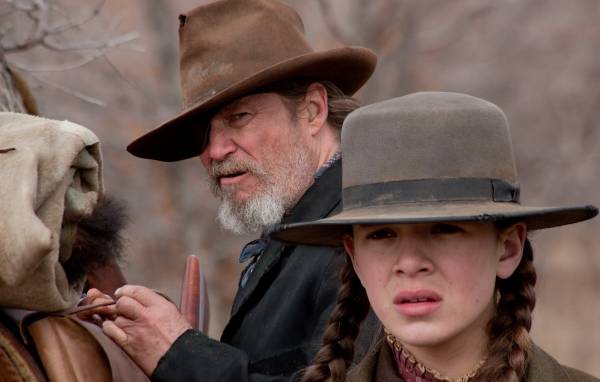
Jeff Bridges and Hailee Steinfeld star in Coen brothers remake of John Wayne classic
Since their 1984 debut feature, Blood Simple, Coen brothers Joel and Ethan have tackled numerous genres with dazzling originality, resulting in such fresh, unusual, and intelligent fare as Barton Fink (1991), Fargo (1996), The Big Lebowski (1998), No Country for Old Men (2007), and A Serious Man (2009). They’ve had some hiccups along the way, but their only true dud was also their only remake, 2004’s The Ladykillers, an unwatchable version of the 1955 Alec Guinness original. Now they’re revisiting the 1969 classic Western True Grit, which earned John Wayne his only Oscar and has held up poorly over the years. For the 2010 reboot, the Coens turned to Jeff Bridges to step into the Duke’s shoes as U.S. marshal Reuben J. “Rooster” Cogburn, an aging lawman with a thing for the bottle, as well as for killing. He’s hired by determined fourteen-year-old Mattie Ross (Hailee Steinfeld) to hunt down her father’s murderer, a man named Tom Chaney (Josh Brolin), who’s also being tracked by ever-faithful Texas Ranger La Boeuf (Matt Damon) for other crimes against humanity. Instead of merely remaking the previous film, which was directed by Henry Hathaway (Kiss of Death, Airport) and also starred musician Glen Campbell as La Boeuf and Kim Darby as Mattie, the Coens went back to Charles Portis’s 1968 novel, with the most important difference being the change in point of view; the new True Grit is told from Mattie’s perspective, including voice-over narration from the adult Mattie (Elizabeth Marvel), which breathes new life into the tired old horse. While Wayne played Cogburn with his tongue firmly in cheek, adding bits of silly comic relief, Bridges imbues the marshal with more seriousness and less hulking bravado as he continually — and more and more drunkenly — tells stories from his past. By going back to the book, the Coens also get to add more violence, especially near the end, as well as a coda about Mattie’s future. While the original featured a bombastic, overreaching score by Don Black, longtime Coen brothers composer Carter Burwell ratchets things down significantly, using the old hymn “Leaning on the Everlasting Arms” as his central musical theme. As much as the Coens want the new film to be viewed in its own right, there are still too many similarities to avoid comparisons with the original, but their True Grit, which was nominated for ten Oscars and won none, does turn out to be a better executed, less predictable, and more entertaining genre piece. True Grit is screening at MoMA on December 1 and 29.
Oscar Isaac has to see a man about a cat in the Coen brothers’ Inside Llewyn Davis
Over the years, Joel and Ethan Coen have created a slew of offbeat protagonists and antiheroes who trudge through surreal life experiences, from the McDunnoughs in Raising Arizona and Tom Reagan in Miller’s Crossing to the title character in Barton Fink and Anton Chigurth in No Country for Old Men. But they have come up with their most despicable — and most believable — main character in Inside Llewyn Davis. The previously little-known Oscar Isaac gives a career-defining performance as Llewyn Davis, a selfish wastrel who mistreats everyone he meets. A broke singer-songwriter in 1961 Greenwich Village whose former partner (voiced on record by Marcus Mumford) killed himself, Davis loses a mentor’s (Ethan Phillips) cat, curses out his agent (Jerry Grayson), impregnates a married friend (Carey Mulligan), makes fun of the husband’s (Justin Timberlake) new song, avoids visiting his ailing father (Stan Carp), insults a portly jazzman (John Goodman) — essentially, he meets every situation by insulting someone, then turning and walking away, without even the slightest hint of regret. And the beautiful thing is, the Coens aren’t about to offer him redemption. Inspired in part by the life of Dave Von Ronk and with sly references to such other musicians as Ramblin’ Jack Elliott, Tom Paxton, Dr. John, Doc Pomus, and Jim and Jean along with music impresario Bud Grossman and Gerde’s Folk City, Inside Llewyn Davis is a bitingly funny black comedy about a nasty man living in his own egocentric world, refusing to share any part of himself with anyone else, through his music or face-to-face, even though people keep giving him opportunity after opportunity. And the audience is in on it too, wanting him to succeed despite his myriad offenses. The soundtrack, overseen by T Bone Burnett, who previously worked with the Coens on O Brother, Where Art Thou? brings it all back home, with such highlights as Isaac’s performance of “Hang Me, Oh Hang Me,” Timberlake, Mulligan, and Stark Sands teaming up on “Five Hundred Miles,” and Timberlake, Davis, and Girls hunk Adam Driver all having fun with an updated version of “Please Mr. Kennedy.” Inside Llewyn Davis is being shown at MoMA on December 6.
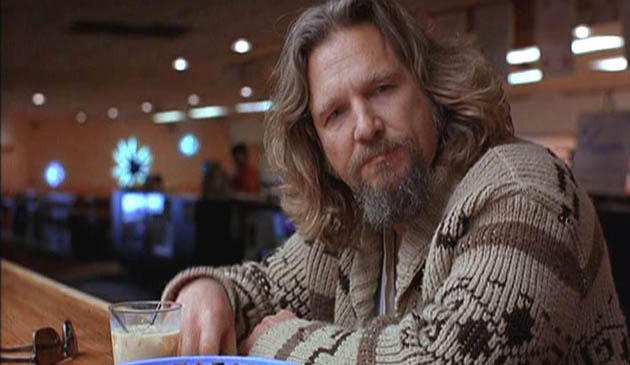
Jeff Bridges plays the ultimate stoner, the Dude, in Coen brothers cult classic
THE BIG LEBOWSKI (Joel & Ethan Coen, 1998)
Thursday, December 21, 1:30 www.moma.org
One of the ultimate cult classics and the best bowling movie ever, the Coen brothers’ The Big Lebowski has built up such a following since its 1998 release that fans now gather every year for Lebowski Fest, where they honor all things Dude, and with good reason. The Big Lebowski is an intricately weaved gem that is made up of set pieces that come together in magically insane ways. Jeff Bridges is awesome as the Dude, a laid-back cool cat who gets sucked into a noirish plot of jealousy, murder, money, mistaken identity, and messy carpets. Julianne Moore is excellent as free spirit Maude, Tara Reid struts her stuff as Bunny, and Peter Stormare, Flea, and Torsten Voges are a riot as a trio of nihilists. Also on hand are Philip Seymour Hoffman, David Huddleston, Aimee Mann, Jimmie Dale Gilmore, David Thewlis, Sam Elliott, Ben Gazzara, Jon Polito, and other crazy characters, but the film really belongs to the Dude and his fellow bowlers Jesus Quintana (John Turturro, who is so dirty he is completely cut out of the television version), Donny (Steve Buscemi), and Walter (John Goodman), who refuses to roll on Shabbos. And through it all, one thing always holds true: The Dude abides. The Big Lebowski is screening at MoMA on December 21.
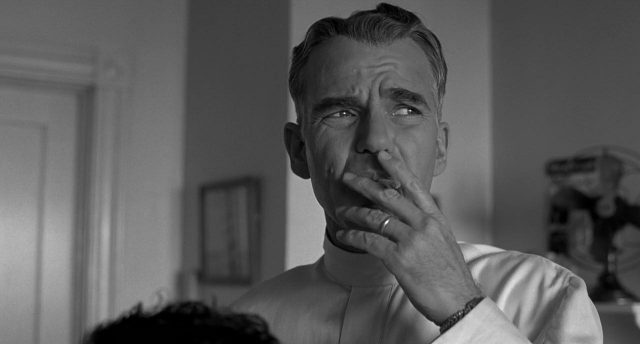
Billy Bob Thornton stars as the title character in the Coen brothers’ The Man Who Wasn’t There
THE MAN WHO WASN’T THERE (Joel Coen, 2001)
Wednesday, December 27, 1:30 www.moma.org
The first half of this Coen brothers movie is stupendous. Shot in color by Roger Deakins and processed in magnificent black and white to get a richer palette, the film tells the story of Ed Crane, Billy Bob Thornton’s best role yet, a barber with almost nothing to say — ever. When he does talk, he talks slow, slower than he walks. Even his voice-over narration is delivered in a slow monotone. For about forty-five minutes, the pace is fabulous, but then it begins wearing down as the plot goes all over the place. It feels like the Coens had a bunch of different film ideas and decided to throw them all into the last hour of this movie, which seems to go on and on and on and on, with at least four places where you’ll think it’s over. The laughs go away, and a creepy, unfriendly moodiness pervades. At least you can still keep track of the awesome wigs that many of the male characters wear, and for the Californians out there it might be fun guessing the shooting locations, because much of the film was not shot on studio sets. Locations include Musso and Frank’s, a Presbyterian church on Wilshire Blvd., an empty Bank of America branch in Los Angeles, an abandoned furniture store in Glendale, Bungalow Heaven and Castle Green in Pasadena, and the streets of Orange in Orange County. The rather remarkable cast also includes Frances McDormand, Michael Badalucco, Richard Jenkins, Scarlett Johansson, Jon Polito, Tony Shalhoub, and James Gandolfini. The Man Who Wasn’t There is screening December 27 at MoMA.
Ami Tomite stars in Sion Sono’s bizarre, beguiling, anarchistic Anti-Porno
ANTI-PORNO (ANCHI PORUNO) (アンチポルノ) (Sion Sono, 2016)
Metrograph
7 Ludlow St. between Canal & Hester Sts.
November 24-30
Two-film series runs November 20-30
212-660-0312 metrograph.com www.nikkatsu-romanporno.com
“I’m a virgin. A virgin, but a whore,” successful novelist, painter, and fashion designer Kyoko (Ami Tomite) says at the beginning of Sion Sono’s bizarre, deliciously candy-colored and anarchic Anti-Porno, screening November 24-30 in the Metrograph series “Return of the Roman Porno.” You never know what to expect from Siono, whose previous films include the wild and wacky Love & Peace, the wild and crazy Why Don’t You Play in Hell? and the strangely beautiful and touching Himizu.Anti-Porno is part of Nikkatsu’s Roman Porno Reboot Project, a celebration of the forty-fifth anniversary of the studio’s Japanese softcore films, which began in 1971 with Shōgorō Nishimura’s Apartment Wife: Affair in the Afternoon and continued through 1988 with Daisuke Gotō’s Bed Partner. In true Sono style, he honors the format by confusing fiction with reality, star characters with minor newbies, and the past with the present in ways that are as exhilarating as they are confounding.
Anti-Porno offers a candy-colored look at sex and power
The story takes place primarily in a spectacular apartment decked out in bright yellows, blues, and reds, with large-scale paintings and a lushly alluring open bathroom. Kyoko is a self-obsessed terror who abuses her dedicated assistant, Noriko (Mariko Tsutsui) — or is it the other way around? “I want to be a whore like you,” Noriko begs. There’s fetishism galore, plenty of nudity, a lizard trapped in a bottle, incest, an audience of girls in Sailor Moon outfits, sycophantic hangers-on, a mysterious sex film, and then a man yells, “Cut!” Soon you’re not sure who’s in charge, who’s the lead, and whether you’re watching a movie, a movie-within-a-movie, or a novel-within-a-movie-within-a-movie. “This isn’t my life!” Kyoko screams. Or is it? Sono, who also wrote the script, uses the porn format to question ideas of sexuality, misogyny, freedom, abuse, feminism, exploitation, dominance, art, power, and pornography itself, resulting in a rousing, er, climax. The gorgeous production design is by Takashi Matsuzuka, with striking cinematography by Maki Ito, raunchy costumes by Kazuhiro Sawataishi, and an inventive, wide-ranging score by Susumu Akizuki. Metrograph is also showing Akihiko Shiota’s Roman Porno Reboot, Wet Woman in the Wind, through November 23.
The opening scene of Shady Srour’s Holy Air, which had its world premiere at the Tribeca Film Festival and then was the closing night selection of the Other Israel Film Festival, is utterly charming, as married couple Adam (Srour), a businessman, and Lamia (Laëtitia Eïdo), the head of the Sexuality Center, are stuck in ridiculously heavy traffic. Lamia decides to use the extra time to take a pregnancy test, urinating right there in the car. That is shortly followed by one of the film’s most splendid images, of Adam in the bathtub, his heavily bearded face above the back edge, a glass of alcohol at the ready as the camera stays still. Unfortunately, the film is shaky the rest of the way, too repetitive and fussy with subplots that don’t feel natural. Whereas Lamia is pregnant, Adam’s father is a tough old guy, fighting cancer. Adam’s partnership with his friend Mahmoud isn’t going well, so, soon after encountering a priest singing the holy praises of Mount Precipice, Adam decides to bottle the air on the mountain and sell it as a tourist souvenir. The film takes on the Christian faith, capitalism, road rage, local gangsters, and growing old, but it works best when it focuses on Adam and Lamia together; just about everything else is overly sentimental, too goofy, or just plain nonsensical, which is too bad, because Srour (Sense of Need) and Lamia (Cleopatra in The Destiny of Rome) make for a lovable couple, caught up in the travails of modern-day Nazareth.

 A groundbreaking work in the history of world cinema, Satyajit Ray’s Pather Panchali and its two sequels, Aparajito and Apur Sansar, have been meticulously restored by the Criterion Collection and the Academy Film Archive following a nitrate fire in 1993 — the year after Ray was awarded an honorary Oscar on his deathbed. Inspired by a meeting with Jean Renoir in Kolkata, where Renoir was shooting The River, and watching ninety-nine films in six months while working as a graphic designer for an advertising agency in London, Ray decided to make his first film, adapting Bibhutibhushan Banerjee’s 1929 novel, which he knew well; Ray had contributed illustrations to a later edition of the book. The film took nearly five years to make as Ray faced repeated financing problems, such delays as cattle eating flowers that were needed for an important scene, and a cast and crew primarily of nonprofessionals. Despite all those issues, Pather Panchali is a stunning masterpiece, a bittersweet and captivating tale of a rural family mired in poverty, struggling to survive in extremely hard times. In a small village, Sarbajaya (Karuna Banerjee) is raising her daughter, Durga (Runki Banerjee), a rambunctious teen, and son, Apu (Subir Banerjee), while her husband, dreamer Harihar (Kanu Banerjee), a wannabe playwright and poet, goes off for months at a time, trying to find work in the city. (The actors shared a common surname but were not related in real life.) Sarbajaya is also caring for their elderly cousin, “Auntie” Indir (retired theater actress Chunibala Devi), who walks very slowly, hunched over and with impossibly leathery skin. The family goes about its business from day to day, as the kids play with friends, figure out how they can get something from the sweets man, and hang out with Auntie, who offers a fresh perspective on life. Sarbajaya is embarrassed that she cannot pay back several rupees she owes her relatively wealthy neighbor, who owns an orchard from which Durga steals fruit. It’s a meager existence, but it avoids being completely dark and bleak because of Auntie’s sense of humor and Apu’s wide-eyed innocence. The film is told from his point of view — in fact, the first time we see him, he is lying down, covered, and one of his eyes pops open, dominating the screen. It’s a difficult, challenging life, but there’s always hope.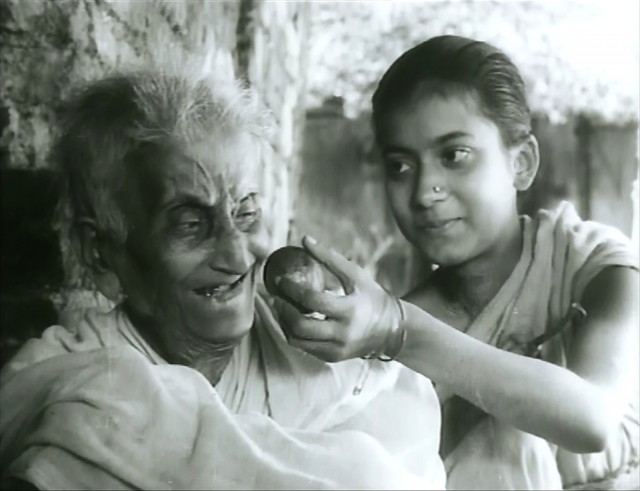
 Having restored Charles Burnett’s Killer of Sheep and My Brother’s Wedding, Milestone, the UCLA Film & Television Archive, and preservationist Ross Lipman teamed up again to bring back Kent Mackenzie’s black-and-white slice-of-life tale The Exiles, which debuted at the 1961 Venice Film Festival and screened at the inaugural 1964 New York Film Festival before disappearing until its restoration, upon which it was selected for the 2008 Berlin International Film Festival. The Exiles follows a group of American Indians as they hang out on a long Friday night of partying and soul searching in the Bunker Hill section of Los Angeles, centering on Homer (Homer Nish) and Yvonne (Yvonne Williams), who are going to have a baby. After Yvonne makes dinner for Homer and his friends, the men drop her off at the movies by herself while they go out drinking and gambling and, in Tommy’s (Tommy Reynolds) case, looking for some female accompaniment. As the night goes on, Homer, Yvonne, and Tommy share their thoughts and dreams in voice-over monologues that came out of interviews Mackenzie conducted with them. In fact, the cast worked with the director in shaping the story and getting the details right, ensuring its authenticity and realism, giving The Exiles a cinéma vérité feel. Although the film suffers from a poorly synced soundtrack — it is too often too clear that the dialogue was dubbed in later and doesn’t match the movement of the actors’ mouths — it is still an engaging, important independent work (the initial budget was $539) about a subject rarely depicted onscreen with such honesty. Mackenzie, who followed up The Exiles with the documentaries The Teenage Revolution (1965) and Saturday Morning (1971) before his death in 1980 a the age of fifty, avoids sociopolitical remonstrations in favor of a sweet innocence behind which lies the difficulties of the plight of American Indians assimilating into U.S. society. The Exiles is screening November 29 and December 1 at the Francesca Beale Theater.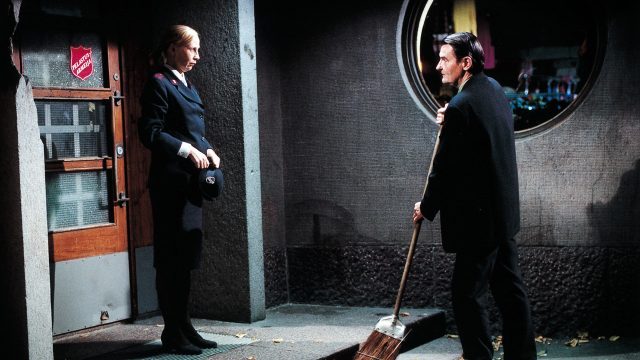
 For more than thirty years, Finnish auteur Aki Kaurismäki (Leningrad Cowboys Go America, Drifting Clouds) has been making existential deadpan black comedies that are often as funny as they are dark and depressing. Has there ever been a film as bleak as 1990’s The Match Factory Girl, in which a young woman (Kati Outinen) suffers malady after malady, tragedy after tragedy, embarrassment after embarrassment, her expression never changing? In his latest film, the thoroughly engaging Le Havre, Kaurismäki moves the setting to a small port town in France, where shoeshine man Marcel Marx (André Wilms), a self-described former Bohemian, worries about his seriously ill wife (Outinen) while trying to help a young African boy (Blondin Miguel), who was smuggled into the country illegally on board a container ship, steer clear of the police, especially intrepid detective Monet (Jean-Pierre Darroussin), who never says no to a snifter of Calvados. Adding elements of French gangster and WWII Resistance films with Godardian undercurrents — he even casts Jean-Pierre Léaud in a small but pivotal role — Kaurismäki wryly examines how individuals as well as governments deal with illegal immigrants, something that has taken on more importance than ever amid the growing international economic crisis and fears of terrorism. Through it all, Marcel remains steadfast and stalwart, quietly and humbly going about his business, deadpan every step of the way. Wouter Zoon’s set design runs the gamut from stark grays to bursts of color, while longtime Kaurismäki cinematographer Timo Salminen shoots scene after scene with a beautiful simplicity. Winner of a Fipresci critics award at Cannes and Finland’s official entry for the Best Foreign Language Film Oscar, Le Havre, the first of a proposed trilogy, is another marvelously unusual, charmingly offbeat tale from a master of the form. A selection of the 2011 New York Film Festival, Le Havre is screening at Film Forum on November 25 and 27.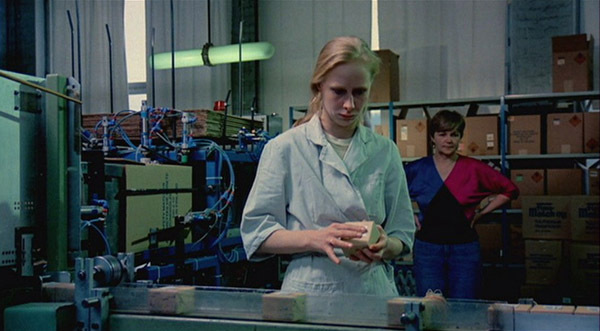

 By far the worst film the Coen brothers have ever made, this remake of the classic 1955 Alexander Mackendrick caper comedy is a travesty from start to finish, an absolute embarrassment to all involved, including Tom Hanks, Irma P. Hall, Marlon Wayans, J. K. Simmons, Tzi Ma, Ryan Hurst, and Diane Delano. Did anyone actually watch this film before they released it? We barely smiled once and never laughed at this ridiculous story of a group of losers using a woman’s root cellar as home base to rob a riverboat casino. Besides not being the slightest bit funny, the movie is also racist, as every black actor in the film is playing a stereotype. We get the Coens, but we don’t get this. Was it meant to be ironic? Cynical? Slapstick? All we know is that it’s just plain awful. The Ladykillers is screening at MoMA November 24.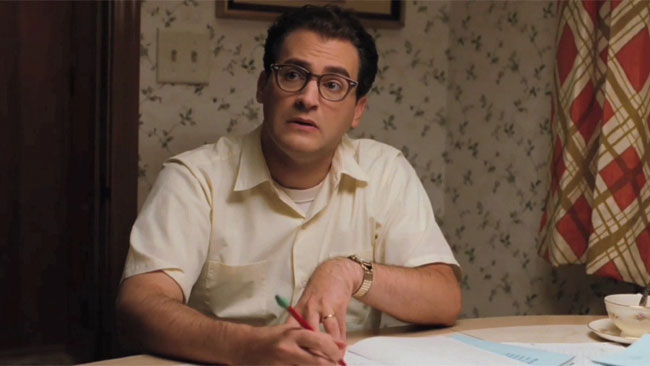

 The first half of this Coen brothers movie is stupendous. Shot in color by Roger Deakins and processed in magnificent black and white to get a richer palette, the film tells the story of Ed Crane, Billy Bob Thornton’s best role yet, a barber with almost nothing to say — ever. When he does talk, he talks slow, slower than he walks. Even his voice-over narration is delivered in a slow monotone. For about forty-five minutes, the pace is fabulous, but then it begins wearing down as the plot goes all over the place. It feels like the Coens had a bunch of different film ideas and decided to throw them all into the last hour of this movie, which seems to go on and on and on and on, with at least four places where you’ll think it’s over. The laughs go away, and a creepy, unfriendly moodiness pervades. At least you can still keep track of the awesome wigs that many of the male characters wear, and for the Californians out there it might be fun guessing the shooting locations, because much of the film was not shot on studio sets. Locations include Musso and Frank’s, a Presbyterian church on Wilshire Blvd., an empty Bank of America branch in Los Angeles, an abandoned furniture store in Glendale, Bungalow Heaven and Castle Green in Pasadena, and the streets of Orange in Orange County. The rather remarkable cast also includes Frances McDormand, Michael Badalucco, Richard Jenkins, Scarlett Johansson, Jon Polito, Tony Shalhoub, and James Gandolfini. The Man Who Wasn’t There is screening December 27 at MoMA.

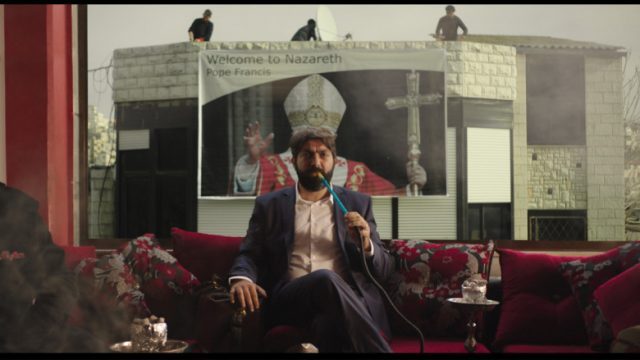
 The opening scene of Shady Srour’s Holy Air, which had its world premiere at the Tribeca Film Festival and then was the closing night selection of the Other Israel Film Festival, is utterly charming, as married couple Adam (Srour), a businessman, and Lamia (Laëtitia Eïdo), the head of the Sexuality Center, are stuck in ridiculously heavy traffic. Lamia decides to use the extra time to take a pregnancy test, urinating right there in the car. That is shortly followed by one of the film’s most splendid images, of Adam in the bathtub, his heavily bearded face above the back edge, a glass of alcohol at the ready as the camera stays still. Unfortunately, the film is shaky the rest of the way, too repetitive and fussy with subplots that don’t feel natural. Whereas Lamia is pregnant, Adam’s father is a tough old guy, fighting cancer. Adam’s partnership with his friend Mahmoud isn’t going well, so, soon after encountering a priest singing the holy praises of Mount Precipice, Adam decides to bottle the air on the mountain and sell it as a tourist souvenir. The film takes on the Christian faith, capitalism, road rage, local gangsters, and growing old, but it works best when it focuses on Adam and Lamia together; just about everything else is overly sentimental, too goofy, or just plain nonsensical, which is too bad, because Srour (Sense of Need) and Lamia (Cleopatra in The Destiny of Rome) make for a lovable couple, caught up in the travails of modern-day Nazareth.