this week in film and television

DJ SPOOKY: REBIRTH OF A NATION

DJ Spooky offers up a new spin on D. W. Griffith’s Birth of a Nation in Rebirth

DJ Spooky offers up a new spin on D. W. Griffith’s Birth of a Nation in Rebirth of a Nation

NYU Skirball Center for the Performing Arts
566 La Guardia Pl. between Third & Fourth Sts.
Saturday, November 4, $35, 7:30
212-945-2600
nyuskirball.org
www.rebirthofanation.com

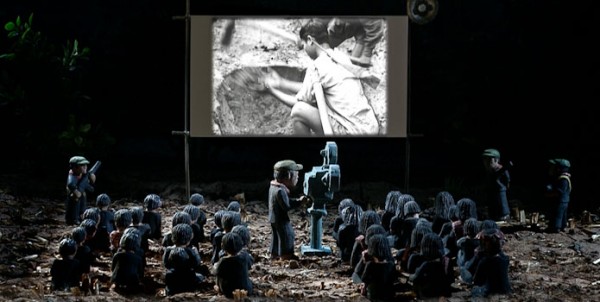
DJ Spooky That Subliminal Kid’s Rebirth of a Nation is a unique multimedia deconstruction and live remix of D. W. Griffith’s controversial 1915 silent film, Birth of a Nation, interweaving music, film, and art to create a wholly new work that the multidisciplinary artist keeps on tweaking. First performed in New York at the 2004 Lincoln Center Festival,
the show has toured around the world; we caught it back in 2007 at the Tribeca Film Festival, during the Bush administration, so it should be fascinating to see the state of the piece now when Spooky brings it to the Skirball Center on November 4, with America in the midst of a crisis over immigration, racism, white supremacy, historical statues, and other sociopolitical issues and the presidency has shifted from Barack Obama to Donald J. Trump. Spooky mixes both the Kronos Quartet’s trip-hop score and the visuals live, beginning with an overview of racism and an interview in which film pioneer Griffith discusses the importance of his so-called masterpiece. He then intercuts different scenes of the film, following the narrative, with Griffith’s original interstitial titles along with new ones credited to Paul D. Miller, DJ Spooky’s real name. He avoids being overly didactic and does not hit the audience over the head with Griffith’s unrelenting racism and support of the KKK, instead letting the film speak for itself. And it has a whole lot to say, as, of course, does DJ Spooky.

TRUE WEST: SAM SHEPARD ON FILM

Sam Shepard in Terrence Malick’s Days of Heaven

Sam Shepard gets involved in a complex love triangle in Terrence Malick’s Days of Heaven

DAYS OF HEAVEN (Terrence Malick, 1978)
BAMcinématek, BAM Rose Cinemas
30 Lafayette Ave. between Ashland Pl. & St. Felix St.
Friday, November 3, 4:30, 7:00, 9:30
Series runs November 3-9
718-636-4100
www.bam.org

BAMcinématek wishes Sam Shepard, who passed away in July at the age of seventy-three, a happy birthday with the ten-movie tribute “True West: Sam Shepard on Film,” running November 3-9. The Pulitzer Prize-winning, Oscar- and Emmy-nominated, Tony-winning actor, writer, director, and playwright was born Samuel Shepard Rogers IV in Illinois on November 5, 1943. His legacy includes such work as Steel Magnolias, Crimes of the Heart, Snow Falling on Cedars, and Black Hawk Down and such plays as Buried Child, Fool for Love, and Curse of the Starving Class. Ruggedly handsome and fiercely independent, Shepard leaves behind a vast legacy that ranged from the American West to Hollywood to downtown New York and beyond.

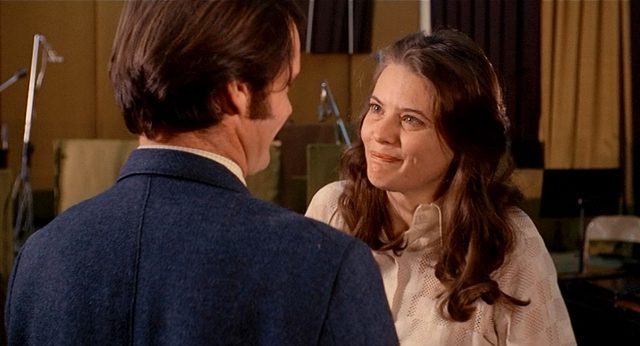
Justifiably recognized as one of the most beautiful films ever made, writer-director Terrence Malick’s sophomore effort, Days of Heaven, is a visually breathtaking tale of love, desperation, and survival in WWI-era America. After accidentally killing his boss (Stuart Margolin) in a Chicago steel mill, Bill (Richard Gere) immediately flees to the Texas Panhandle with his girlfriend, Abby (Brooke Adams), and his much younger sister, Linda (Linda Manz). Because they are unmarried, Bill and Abby pretend to be brother and sister — evoking the biblical story of Abraham introducing his wife Sarah as his sibling — and get a job working in the wheat fields owned by a reserved, possibly ill farmer (Sam Shepard) who is instantly smitten with Abby. Soon a complex love triangle develops in which money, class, and power play a key role. As beautiful as the main characters are — Gere and Shepard particularly are shot in ways that emphasize their tender but rugged good looks — they are outshone by the gorgeous landscapes and sunsets photographed by Nestor Almendros (who won an Oscar for Best Cinematography) and Haskell Wexler, as well as Jack Fisk’s stunning art direction, all of which were directly inspired by Edward Hopper’s “House by the Railroad” and Andrew Wyeth’s “Christina’s World,” among other paintings. Like Stanley Kubrick’s Barry Lyndon, freezing nearly any frame will produce an image that could hang in a museum.

DAYS OF HEAVEN

The award-winning Days of Heaven is one of the most beautiful-looking movies ever made

The soundtrack is epic as well, composed by Ennio Morricone along with songs by Leo Kottke and Doug Kershaw (who plays the fiddler). It took two years for Malick and editor Bill Weber to assemble the vast amount of footage they shot into a comprehensible story, helped by the late addition of Manz’s character’s voice-over narration, but the results were well worth all of the time and effort. Days of Heaven came five years after Malick’s breakthrough debut, Badlands, and it would be another twenty years before his next film, The Big Red One, then seven more until 2005’s The New World. Days of Heaven kicks off the BAMcinématek series “True West: Sam Shepard on Film,” which runs November 3-9 and includes such other Shepard films that he either wrote and/or appeared in as Philip Kaufman’s The Right Stuff, Robert Altman’s Fool for Love, and Graeme Clifford’s Frances.

PARIS, TEXAS

Harry Dean Stanton gives a staggering performance as a lost soul in Wim Wenders’s Paris, Texas, cowritten by Sam Shepard

PARIS, TEXAS (Wim Wenders, 1984)
Saturday, November 4, 2:00 & 7:45
www.bam.org

Winner of both the Palme d’Or and the Critics Prize at the 1984 Cannes Film Festival, Wim Wenders’s Paris, Texas is a stirring and provocative road movie about the dissolution of the American family and the death of the American dream. Written by Sam Shepard and adapted by L. M. Kit Carson, the two-and-a-half-hour film opens with a haggard man (Harry Dean Stanton) wandering through a vast, deserted landscape. A close-up of him in his red hat, seen against blue skies and white clouds, evokes the American flag. (Later shots show him looking up at a flag flapping in the breeze, as well as a graffiti depiction of the Statue of Liberty.) After he collapses in a bar in the middle of nowhere, he is soon discovered to be Travis Henderson, a husband and father who has been missing for four years. His brother, Walt (Dean Stockwell), a successful L.A. billboard designer, comes to take him home, but Travis, remaining silent, keeps walking away. He eventually reveals that he is trying to get to Paris, Texas, where he has purchased a plot of land in the desert, but he avoids discussing his past and why he walked out on his wife, Jane (Nastassja Kinski), and son, Hunter (Hunter Carson, the son of L. M. Kit Carson and Karen Black), who is being raised by Walt and his wife, Anne (Aurore Clément). An odd man who is afraid of flying (a genuine fear of Shepard’s), has a penchant for arranging shoes, and falls asleep at key moments, Travis sets out with Hunter to find Jane and make something out of his lost life.

PARIS, TEXAS

Travis (Harry Dean Stanton) and Hunter (Hunter Carson) bond while searching for Jane in Wim Wenders road movie

Longtime character actor Stanton (Repo Man, Wise Blood) is brilliant as Travis, his long, craggy face and sad, puppy-dog eyes conveying his troubled soul and buried emotions, his slow, careful gait awash in loneliness and desperation. The scenes between Travis and Jane are a master class in acting and storytelling; Stanton and Kinski (Tess, Cat People) will break your heart over and over again as they face the hardest of truths. Wenders and regular cinematographer Robby Müller use a one-way mirror to absolutely stunning effect in these scenes about what is hidden and what is revealed in a relationship. Wenders had previously made the Road Movie Trilogy of Alice in the Cities, The Wrong Move, and Kings of the Road, which also dealt with difficult family issues, but Paris, Texas takes things to another level. Ry Cooder’s gorgeous slide-guitar soundtrack is like a requiem for the American dream, now a wasteland of emptiness. (Cooder would later make Buena Vista Social Club with Wenders. Another interesting connection is that Wenders’s assistant director was Allison Anders, who would go on to write and direct the indie hit Gas Food Lodging.) A uniquely told family drama, Paris, Texas is rich with deft touches and subtle details, all encapsulated in the final shot. (Don’t miss what it says on that highway billboard.) Paris, Texas is screening November 4 at 2:00 and 7:45 in the BAMcinématek series “True West: Sam Shepard on Film.”

Sam Shepard

Sam Shepard wrote and stars in Wim Wenders underseen and underrated Don’t Come Knocking

DON’T COME KNOCKING (Wim Wenders, 2005)
Saturday, November 4, 5:00
www.bam.org
www.sonyclassics.com

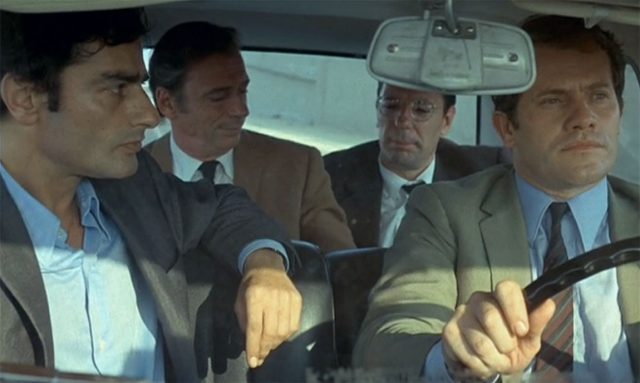
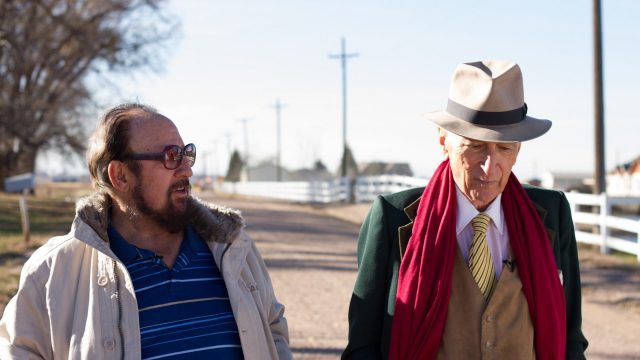
Reteaming with Sam Shepard for the first time since the indie classic Paris, Texas more than twenty years earlier, German director Wim Wenders continued his exploration of the American psyche with this dark comedy set in the wide-open prairie. The movie begins the way many Westerns end — with the hero riding away into the distance, but in this case it is the sunrise, not the sunset, signaling a new start. Shepard stars as Howard Spence, a former big-time movie star whose career has fallen apart in a whirlwind of drugs, alcohol, and women. After a wild night in his trailer, he takes off from the set of his latest film, being made in Moab, Utah (and directed by the great George Kennedy), and decides to disappear, first going home to Elko, Nevada, to see his mother (Eva Marie Saint), whom he hasn’t spoken to in thirty years, and then heading to Butte, Montana, to find an old love (Jessica Lange, Shepard’s real-life longtime partner at the time) — and perhaps some lasting meaning to his miserable, wasted life. Meanwhile, Sutter (Tim Roth), a detective who works for the bond company that financed the film, is after him, determined to bring him back to finish the picture. Gorgeously photographed by Franz Lustig (Wenders’s Land of Plenty, Palermo Shooting) and featuring a great soundtrack by T Bone Burnett, Don’t Come Knocking is a fascinating character study and a whole lot of fun. The excellent cast also includes Gabriel Mann, Sarah Polley, and Fairuza Balk as an offbeat trio representing the next generation. Don’t Come Knocking is screening November 4 at 5:00 in the BAMcinématek series “True West: Sam Shepard on Film.”

JULIANNE MOORE: A TRIBUTE

Dennis Quaid and Julianne Moore play a couple in crisis in Todd Haynes’s Far from Heaven

FAR FROM HEAVEN (Todd Haynes, 2002)
MoMA Film, Museum of Modern Art
11 West 53rd St. between Fifth & Sixth Aves.
Thursday, November 2, 7:30, and Saturday, November 4, 2:00, $12
Series runs November 2-12
212-708-9400
www.moma.org

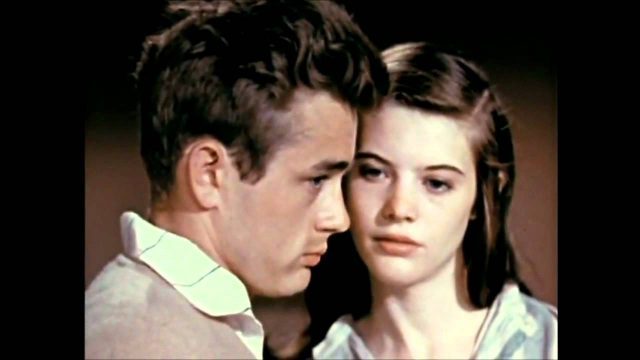
On November 13, Oscar-winning actress Julianne Moore will be honored at MoMA’s 2017 film benefit, and the museum is getting ready for the festivities with “Julianne Moore: A Tribute,” a six-film series running November 2-12. “Julianne Moore is a fearless champion of risk-taking cinema,” MoMA chief film curator Rajendra Roy said in a statement. “There appears to be no challenge she isn’t willing to tackle when it comes to upending expectations of what a ‘leading lady’ can or should do. She continues to inspire legions of actors around the world, and it is our honor to celebrate her phenomenal contributions to the art of film.” The festival kicks off November 2 with Todd Haynes’s wonderfully retro Far from Heaven, a film that would make Douglas Sirk and Thomas Mann proud. Oscar-nominated Moore is amazing as Cathy Whitaker, a 1950s housewife who thinks she has the perfect idyllic suburban life — until she discovers that her husband (Dennis Quaid) has a secret that dare not speak its name. Mr. & Mrs. Magnatech they are not after all. When she starts getting all chummy with the black gardener (Dennis Haysbert), people start talking, of course. Part Imitation of Life and All That Heaven Allows, part Death in Venice, and oh-so-original, Haynes’s awesome achievement — he earned an Academy Award nomination for Original Screenplay — will have you believing you’re watching a film made in the 1950s, propelled by Elmer Bernstein’s Oscar-nominated music, Edward Lachman’s Oscar-nominated photography, and Mark Friedberg’s terrific production design. Far from Heaven is being shown November 2 at 7:30 and November 4 at 2:00; the series also includes Paul Thomas Anderson’s Magnolia, Robert Altman’s Short Cuts, Lisa Cholodenko’s The Kids Are All Right, and Haynes’s Safe.

Annette Bening and Julianne Moore are both delicious in

Annette Bening and Julianne Moore are both delicious in Lisa Cholodenko’s The Kids Are All Right

THE KIDS ARE ALL RIGHT (Lisa Cholodenko, 2010)
Friday, November 3, 7:30, and Sunday, November 5, 2:00, $12
www.moma.org
www.focusfeatures.com

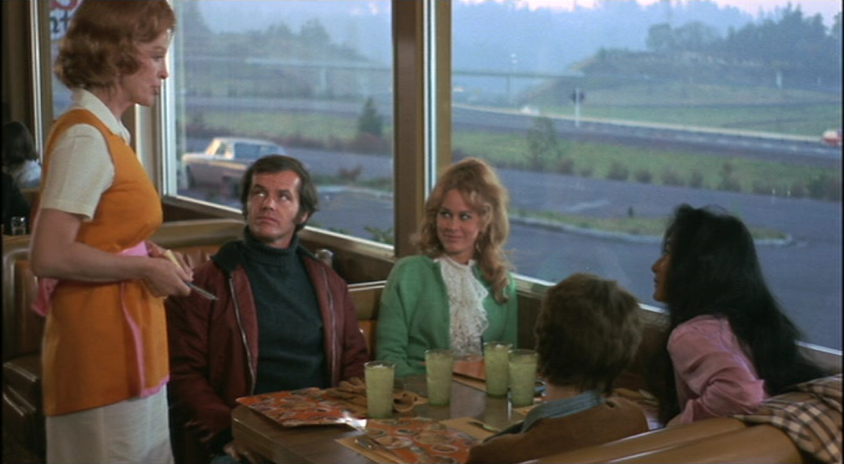
When half-siblings Joni (Mia Wasikowska) and Laser (Josh Hutcherson) decide to track down their anonymous sperm-donor father, their two moms, Jules (Julianne Moore) and Nic (Annette Bening), are justifiably concerned with how that might affect their close-knit family. And when the donor ends up being a motorcycle-riding, free-spirited hottie (Mark Ruffalo) who would like to become part of the kids’ lives, it doesn’t take long for some major dysfunction to set in. The third feature-length narrative written or cowritten and directed by Lisa Cholodenko, following 1998’s High Art and 2002’s Laurel Canyon (she directed 2004’s Cavedweller but did not write it), The Kids Are All Right is an intimate drama that explores deeply personal relationships with grace and intelligence — along with a neat little twist that resonates even more now that same-sex marriage is legal. Bening (American Beauty, The Grifters) is strong as the man of the house, overly determined to control and protect her family; Moore (Boogie Nights, Still Alice) is beguiling as the other mother, wanting to develop her own business as a landscape architect; and Australian breakout star Wasikowka (In Treatment, Alice in Wonderland), impresses yet again as the prodigal daughter preparing to go to college. (Moore and Wasikowka would later both appear in David Cronenberg’s sadly underrated Maps to the Stars.) Ruffalo (Foxcatcher, Spotlight), however, is too flat, and the film takes several missteps, including a final scene that is sadly predictable, detracting from an otherwise fresh and original story. The Kids Are All Right is screening November 3 at 7:30 and November 5 at 2:00 in the MoMA series “Julianne Moore: A Tribute.”

THE SACRIFICE

THE SACRIFICE

A man and his son plant a dead tree they hope will grow in Andrei Tarkovsky’s final film, The Sacrifice

THE SACRIFICE (OFFRET) (Andrei Tarkovsky, 1986)
Quad Cinema
34 West 13th St. between Fifth & Sixth Aves.
Opens Friday, October 27
212-255-2243
www.quadcinema.com

Andrei Tarkovsky’s final film, The Sacrifice, completed shortly before his death in 1986 of cancer at the age of fifty-four, serves as a glorious microcosm of his career, exploring art, faith, ritual, devotion, and humanity in uniquely cinematic ways. Made in Sweden, the film has many Bergmanesque qualities: Bergman’s longtime cinematographer, Sven Nykvist, shot the film; the production designer is Anna Asp, who won an Oscar for her work on Fanny and Alexander; Bergman’s son Daniel served as a camera assistant; and the star is Erland Josephson, who appeared in ten Bergman films as well as Tarkovsky’s previous feature, the Italy-set Nostalghia. Josephson plays Alexander, a retired professor and former actor living in the country with his wife, the cold Adelaide (Susan Fleetwood), his stepdaughter, Marta (Filippa Franzén), and young son, Little Man (Tommy Kjellqvist), who cannot speak after a recent throat operation. It is Alexander’s birthday, and the family doctor, Victor (Sven Wollter), has come to visit, along with the odd local postman, Otto (Allan Edwall), who explains, “I collect incidents. Things that are unexplainable but true.” Also on hand are the two maids, Maria (Guðrún Gísladóttir), who Otto believes is a witch, and Julia (Valérie Mairesse). Alexander states early on that he has no relationship with God, but when a nuclear holocaust threatens, he suddenly gets down on the floor and prays, offering to sacrifice whatever it takes in order for him to survive, leading to a chaotic conclusion that is part slapstick, part utter desperation.

THE SACRIFICE

Alexander (Bergman regular Erland Josephson) is seeking redemption in The Sacrifice

Although it has a more focused, direct narrative than most of Tarkovsky’s other works, The Sacrifice is far from a conventional story. Tarkovsky has written that it “is a parable. The significant events it contains can be interpreted in more than one way. . . . A great many producers eschew auteur films because they see cinema not as art but as a means of making money: the celluloid strip becomes a commodity. In that sense The Sacrifice is, amongst other things, a repudiation of commercial cinema. My film is not intended to support or refute particular ideas, or to make a case for this or that way of life. What I wanted was to pose questions and demonstrate problems that go to the very heart of our lives, and thus to bring the audience back to the dormant, parched sources of our existence. Pictures, visual images, are far better able to achieve that end than any words.” The film is filled with gorgeous visual images, beautiful shots of vast landscapes, of open doorways in stark interiors, of mirrors and windows, of Alexander and Little Man planting a dead tree by the edge of the ocean, and spoken language is often kept to a minimum, saved for philosophical discussions of God, Nietzsche, and home. Several scenes are filmed in long, continuous shots, lasting from six minutes to more than nine, heightening both the reality and the surrealism of the tale, which includes black-and-white memories, floating characters, and actors staring directly into the camera. Although Christianity plays a key role in the film — Tarkovsky considered himself a religious man, and the opening credits are shown over a close-up of Leonardo da Vinci’s “Adoration of the Magi” — the redemption that Alexander is after is a profoundly spiritual and, critically, a most human one as he searches for truth and hope amid potential annihilation. Winner of three awards at the Cannes Film Festival (among many other honors), The Sacrifice opens at the Quad on October 27 in a new 4K restoration made from the original camera negative.

CABARET CINEMA — SOUNDTRACK: THE YOUNG GIRLS OF ROCHEFORT

The Young Girls of Rochefort

Real-life sisters Catherine Deneuve and Françoise Dorléac play Gemini twins in Jacques Demy’s The Young Girls of Rochefort

THE YOUNG GIRLS OF ROCHEFORT (LES DEMOISELLES DE ROCHEFORT) (Jacques Demy, 1967)
Rubin Museum of Art
150 West 17th St. at Seventh Ave.
Friday, October 27, $10, 9:30
Series continues Friday nights through April 28
212-620-5000
rubinmuseum.org

When asked why he chose The Young Girls of Rochefort for the Rubin Museum Cabaret Cinema series “Soundtrack,” being held in conjunction with the exhibition “The World Is Sound,” movie executive Jack Lechner explained, “In addition to being the single biggest influence on Damien Chazelle’s La La Land, Jacques Demy’s The Young Girls of Rochefort is the sheerest expression of pure joy in the history of movies — a nonstop celebration of song, dance, and romantic idealism.” Demy’s 1967 pastel-colored romp is all that and more, a swirling, twirling two-hour-plus party of music, missed connections, and murder. In the port town of Rochefort, a fair has come to town, including hot-to-trot carnies Etienne (George Chakiris, with songs overdubbed by Romuald) and Bill (Grover Dale, José Bartel), who spend a lot of time hanging out at a café right next to the town square, owned by Yvonne Garnier (Danielle Darrieux, the only one who does her own singing), who has grown twin girls, dance instructor Delphine (Catherine Deneuve, Anne Germain) and piano teacher Solange (Françoise Dorléac, Claude Parent), as well as a young son, Booboo (Patrick Jeantet, Olivier Bonnet). Local gallery owner Guillaume Lancien (Jacques Riberolles, Jean Stout) is in love with Delphine, but she wants nothing to do with him. Music store owner Simon Dame (Michel Piccoli, Georges Blaness) is trying to arrange a meeting between Solange, who has written a symphony, with his very successful conservatory friend, Andy Miller (Gene Kelly, Donald Burke). Meanwhile, blond sailor and painter Maxence (Jacques Perrin, Jacques Revaux) has drawn a picture of his ideal woman — a dead ringer for Delphine — but circumstances keep preventing them from bumping into each other. Meanwhile, the perky Josette (Geneviève Thénier, Alice Gerald) serves such regulars as Dutrouz (Henri Crémieux) and Pépé (René Bazart) in the café. Over the course of one rather long weekend, characters fall in and out of love, uncover family secrets, and keep missing one another as they sing and dance as if it’s the most natural thing in the world. And who’s to argue with them.

The Young Girls of Rochefort

Sound is a key element in multiple ways in one of the grandest musicals ever made

Recently restored with the participation of Demy’s widow, fellow Nouvelle Vague master Agnès Varda, The Young Girls of Rochefort is a genuine treat for the eyes and ears. Deneuve and Dorléac are utterly delightful as the Gemini twins, wearing candy-colored dresses and dramatic hats (the glorious costumes are by Jacqueline Moreau and Marie-Claude Fouquet), everything gorgeously photographed by Ghislain Cloquet. (Sadly, Dorléac, Deneuve’s older sister in real life) died in a car accident a few months before the film was released; she was only twenty-five.) Demy wrote and directed the film, including penning the lyrics for Michel Legrand’s wide-ranging score, even giving an inside nod to the composer. While his previous film, 1964’s The Umbrellas of Cherbourg, featured every piece of dialogue being sung, The Young Girls of Rochefort mixes it up, much like the dancing, choreographed by Norman Maen; at any moment, some characters are dancing and others just sitting or walking, sometimes noticing each other with quick moves, and sometimes not, almost as if the worlds of fantasy and reality are side-by-side. Of course, this being Demy (Model Shop, Une chambre en ville), it’s not all sweetness and light. There’s a violent murderer on the loose, the military is marching through town, and Guillaume seems to be rather handy with a gun. “Trouble is everywhere,” Yvonne says. Several times Maxence notes that his return to Nantes, Demy’s own hometown, is “immi-Nantes,” and that goofy joke is one of the many sly elements that keeps the film sharp and edgy; the plot is built around everything being imminent to the point of intoxicating ridiculousness. In addition to also kvelling over abstract art (“Braque, Picasso, Klee, Miró, Matisse — that’s life!” Maxence declares), the film is surprisingly feminist. Delphine and Solange regularly add little quips, almost under their breath, refusing to be taken for floozies no matter how sexist and misogynist some of their suitors might be. And then, at the end, Demy literally and figuratively opens and closes one last door. The Young Girls of Rochefort is screening at the Rubin at 9:30 on October 27 and will be introduced by Lechner; “Soundtrack” continues Friday nights through December 15 with such other sound-specific films as Michael Powell and Emeric Pressburger’s I Know Where I’m Going, Gus Van Sant’s Elephant, and Lars von Trier’s Dancer in the Dark.

HANK AND JIM: 12 ANGRY MEN / MR. SMITH GOES TO WASHINGTON

Henry Fonda and Jimmy Stewart

The long friendship Henry Fonda and Jimmy Stewart is the focus of terrific three-week series at Film Forum

Film Forum
209 West Houston St.
October 27 – November 16
212-727-8110
filmforum.org

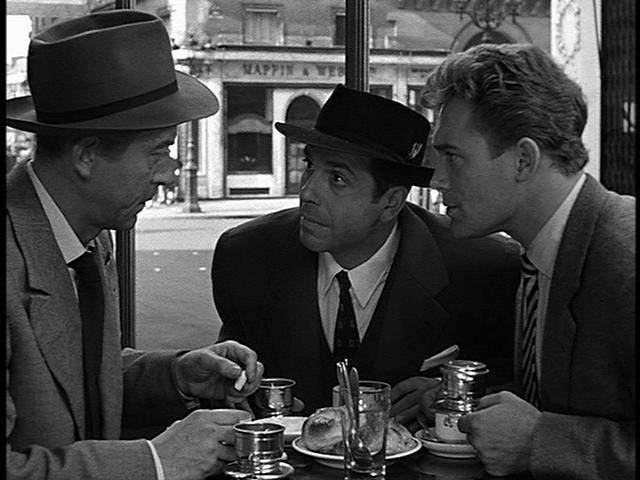
If only America were more like the long relationship between Nebraska-born Oscar winner Henry Jaynes Fonda and Pennsylvania-born Oscar winner James Maitland Stewart. Fonda, who served in the Navy during WWII and passed away in 1982 at the age of seventy-seven, was a liberal Democrat who was married five times; Stewart, who served in the Army during WWII and passed away in 1997 at the age of eighty-nine, was married to the same woman for forty-four years. Not only did Hank and Jim disagree on politics, which they early on decided never to talk about in each other’s company, but they also went head-to-head for the Best Actor Oscar in 1941, when Stewart (The Philadelphia Story) beat Fonda (The Grapes of Wrath). Still, they remained best buddies, which is documented in Scott Eyman’s new book, Hank and Jim: the Fifty-Year Friendship of Henry Fonda and James Stewart (October 24, Simon & Schuster, $29), a tome that serves as the inspiration behind the fab Film Forum series “Hank and Jim,” running October 27 through November 16, consisting of more than three dozen movies made by the two actors, who both experienced success on Broadway as well as in Hollywood. (The onetime roommates met while trying to establish their careers in New York City.) Eyman will be at Film Forum to introduce several screenings and sign copies of his book.

The series begins October 27 with an Alfred Hitchcock double feature, The Wrong Man, starring Fonda as a jazz musician accused of murder, and Rope, in which Stewart plays a professor invited to a dinner party with an unexpected guest. That is followed October 28 with Sidney Lumet’s 12 Angry Men and Frank Capra’s Mr. Smith Goes to Washington, in which Fonda and Stewart both portray men with consciences who care about fairness and the truth. Other double features with films made by each man include The Ox-Bow Incident and Broken Arrow, Call Northside 777 and The Boston Strangler, The Moon’s Our Home and Next Time We Love, and Destry Rides Again and Daisy Kenyon, in addition to double features with just one of them and individual screenings of some of their greatest solo films. Fonda and Stewart made only three movies in which they appeared together, On Our Merry Way, Vincent McEveety’s Firecreek, and Gene Kelly’s The Cheyenne Social Club, but, oddly, none of them is part of this festival, nor is How the West Was Won, which stars both of them but they are never in the same scene.

12 ANGRY MEN

Sidney Lumet’s 12 Angry Men explores the consciences and more of a dozen jurors deciding a murder case

12 ANGRY MEN (Sidney Lumet, 1957)
Film Forum
Saturday, October 28, 3:00, 7:30
www.filmforum.org

The fate of an eighteen-year-old boy charged with the murder of his father is at stake in Sidney Lumet’s first film, the gripping, genre-defining 12 Angry Men. After a series of establishing shots, a judge sends a dozen New Yorkers into the jurors room, where they need to come to a unanimous verdict that could lead to the execution of the teen. Over the course of about ninety minutes, an all-star cast examines and reexamines the case — and their own personal biases — as the heat increases, both literally and figuratively. At first, the nameless dozen men make small talk, trying to be friendly, but it’s not long before some of them are at others’ throats, primarily the gruff Lee J. Cobb, who has it in for the calm and thoughtful Henry Fonda, who is ready to stand alone if necessary for what he believes in. The other uniformly excellent actors playing a very specific cross-section of white, male America are John Fiedler, Martin Balsam, Robert Webber, E. G. Marshall, Jack Klugman, Edward Binns, Jack Warden, Ed Begley, Joseph Sweeney, and George Voskovec. “I tell you, we were lucky to get a murder case,” Webber tells Fonda, but he won’t feel the same as the tension reaches near-violent proportions. 12 Angry Men is a searing examination of the criminal justice system as well as basic human instincts, behavior, and common decency. The Philadelphia-born Lumet, whose parents were both in the Yiddish theater, is able to tell the story in cinematic ways despite its taking place mostly in one small, sweaty room, letting the intense acting drive the narrative; the director, who was nominated for an Oscar for the film, would go on to make such other classic New York City dramas as The Pawnbroker, The Anderson Tapes, Serpico, Dog Day Afternoon, and Prince of the City. Nominated for a Best Picture Oscar and winner of the Golden Bear at Berlin, 12 Angry Men, based on an original teleplay by Reginald Rose, is screening October 28 as part of a double feature with Frank Capra’s Mr. Smith Goes to Washington in the Film Forum series “Hank and Jim”; the 7:30 show will be introduced by Scott Eyman, author of Hank and Jim: the Fifty-Year Friendship of Henry Fonda and James Stewart, and followed by a book signing.

Jimmy Stewart takes filibustering to a whole new level in Mr. Smith Goes to Washington

MR. SMITH GOES TO WASHINGTON (Frank Capra, 1939)
Film Forum
Saturday, October 28, 12:30, 4:55
www.filmforum.org

We love Jimmy Stewart; we really do. Who doesn’t? But a few years ago we had the audacity to claim that Jim Parsons’s performance as Elwood P. Dowd in the 2012 Broadway revival of Harvey outshined that of Stewart in the treacly 1950 film, and now we’re here to tell you that another of his iconic films is nowhere near as great as you might remember, although it still has its place in the Hollywood canon. Nominated for eleven Academy Awards, Frank Capra’s Mr. Smith Goes to Washington caused quite a scandal in America’s capital when it was released in 1939, depicting a corrupt democracy that just might be saved by a filibustering junior senator from a small state whose most relevant experience is being head of the Boy Rangers. (The Boy Scouts would not allow their name to be used in the film.) Stewart plays the aptly named Jefferson Smith, a dreamer who believes in truth, justice, and the American way. “I wouldn’t give you two cents for all your fancy rules,” Smith says of the Senate, “if, behind them, they didn’t have a little bit of plain, ordinary, everyday kindness and a little looking out for the other fella, too.” He’s shocked — shocked! — to discover that his mentor, the immensely respected Sen. Joseph Harrison Paine (played by Claude Rains, who was similarly shocked that there was gambling at Rick’s in Casablanca), is not nearly as squeaky clean as he thought, involved in high-level corruption, manipulation, and pay-offs that nearly drains Smith of his dreams. Having recently celebrated its seventy-fifth anniversary, Mr. Smith Goes to Washington is still, unfortunately, rather relevant, as things haven’t changed all that much, but Capra’s dependence on over-the-top melodrama has worn thin. It’s a good film, but it’s no longer a great one. Just in time for election day, Mr. Smith Goes to Washington is screening October 28 as part of a double feature with Sidney Lumet’s 12 Angry Men in the Film Forum series “Hank and Jim”; the 4:55 show will be introduced by Scott Eyman, author of Hank and Jim: the Fifty-Year Friendship of Henry Fonda and James Stewart, and followed by a book signing.

SHAUN IRONS & LAUREN PETTY: WHY WHY ALWAYS

(photo by Paula Court)

Lemmy Caution (Jim Fletcher) and Natacha Von Braun (Elizabeth Carena) get caught up in mysterious intrigue in Why Why Always (photo by Paula Court)

Abrons Arts Center, Underground Theater
466 Grand St. at Pitt St.
Wednesday – Sunday through October 29, $25
212-352-3101
www.abronsartscenter.org
whywhyalways.automaticrelease.org

Jean-Luc Godard’s Alphaville meets the ASMR phenomenon in Shaun Irons and Lauren Petty’s multimedia futuristic sci-fi noir, Why Why Always, continuing at Abrons Arts Center’s Underground Theater through October 29. The prescient 1965 man vs. machine film starred Eddie Constantine as secret agent Lemmy Caution, who leaves the Outerlands and enters Alphaville posing as reporter Ivan Johnson in order to find out what happened to fellow agent Henry Dickson and to track down mysterious scientist Professor Von Braun. Irons and Petty reimagine the story using multiple monitors and cameras, live feeds and prerecorded scenes, overlapping dialogue, disembodied voices, mirrors and scrims, and more, in black-and-white and color. Longtime New York City Players member Jim Fletcher (Isolde, The Evening) stars as Caution, driving through darkness and moving through Alphaville in his trench coat, gun at the ready. Natacha (Elizabeth Carena), the professor’s daughter, is assigned to accompany him, making sure he doesn’t break any of Alpha 60’s rules, while a pair of seductresses (Laura Bartczak and Marion Spencer) hover around to take care of his more private needs. Wooster Group and Elevator Repair Service veteran Scott Shepherd (who currently can be seen in Measure for Measure at the Public) appears with Madeline Best on video, and Irons and Petty (Keep Your Electric Eye on Me, Standing By: Gatz Backstage) handle the technological aspects and live processing, including going onstage to reposition the cameras as necessary.

Meanwhile, Carena, Bartczak, and Spencer occasionally break out of character and engage in ASMR (Autonomous Sensory Meridian Response), slow, repetitive movements that have little to do with the plot but create both calm and stimulating atmospheres. Christina Campanella does the narration, with voiceovers by Olivier Conan and Irons, additional music by the Chocolate Factory’s Brian Rogers, costumes and props by Amy Mascena (clothing changes are made at front stage right, visible to some of the audience), complex sound design by Irons and Petty and implemented by Ian Douglas-Moore, and moody lighting courtesy of Jon Harper, referencing Raoul Coutard’s cinematography from the film. The production style of Why Why Always evokes such works as Reid and Sara Farrington’s Casablancabox and Big Dance Theater’s Comme Toujours Here I Stand, tech-heavy, complicated re-creations of Casablanca and Cléo from 5 to 7, respectively. What does it all mean? “That’s always how it is,” Caution says. “You never understand anything. And in the end, it kills you.” It won’t kill you, but it will keep you calmly stimulated and entertained throughout its ninety-minute running time.