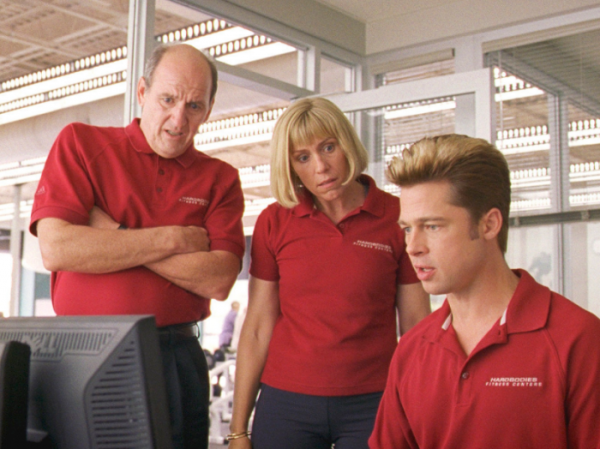
Richard Jenkins, Frances McDormand, and Brad Pitt star in the Coen brothers’ Burn After Reading
BURN AFTER READING (Joel & Ethan Coen, 2008)
Nitehawk Cinema
136 Metropolitan Ave. between Berry St. & Wythe Ave.
Monday, September 24, 7:00
718-384-3980 nitehawkcinema.com www.burnafterreading.com
After delighting audiences with such outstanding indie fare as Blood Simple (1984), Fargo (1996), and O Brother, Where Art Thou? (2000), brothers Joel and Ethan Coen hit a midcareer slump with the mediocre The Man Who Wasn’t There (2001), the much-maligned Intolerable Cruelty (2003), and the just plain awful remake of The Ladykillers (2004). It was three years before they released their next film, the Oscar-winning monster hit No Country for Old Men. In 2008 they toned things down again with the slight but entertaining Burn After Reading. John Malkovich is hysterical as Osborne Cox, an angry, bitter, foul-mouthed CIA agent who loses his job and decides to write a tell-all memoir, which bizarrely ends up in the hands of a pair of bumbling idiots, Chad Feldheimer (an extremely funny Brad Pitt) and Linda Litzke (Frances McDormand). Linda really wants to get a whole bunch of plastic surgery done, so she plans on squeezing a lot of money out of old Mr. Cox, who has no patience for anyone other than himself. Throw in a cold-as-ice wife (Tilda Swinton), a philandering G-man (George Clooney), a Russian ambassador named after Severn Darden’s character in The President’s Analyst, a stellar cast that also includes Richard Jenkins, J. K. Simmons, David Rasche, Elizabeth Marvel, and Dermot Mulroney, and some shocking violence and — well, we’ve told you too much already. Burn After Reading might not be grade-A Coen brothers, but it’s still a worthwhile endeavor from two of America’s most ingenious filmmakers. The movie, which asks the question “The Russians? Are you sure?,” is screening at Nitehawk on September 24 as part of the “Booze & Books” series and will be followed by a Q&A with Film Comment contributor and Harpers digital editor Violet Lucca and Adam Nayman, author of the new book The Coen Brothers: This Book Really Ties the Films Together. In addition, Nitehawk will be serving a special cocktail for the event, the Krapotkin.
John Landis’s Schlock will be shown at the Alamo Drafthouse in Brooklyn and Yonkers for Art House Theater Day
SCHLOCK (John Landis, 1973)
Alamo Drafthouse Downtown Brooklyn
445 Albee Square West
Sunday, September 23, 9:30
718-513-2547 drafthouse.com
We New Yorkers are spoiled with a plethora of art-house cinemas showing old favorites, undiscovered gems, American indies, foreign films, and just about anything else ever put on celluloid. Even so, the third annual Art House Theater Day, taking place at nearly one hundred venues around the country and in Canada, holds a neat surprise here in the city. On September 23, the Alamo Drafthouse theaters in downtown Brooklyn and Yonkers will be showing a new 4K restoration of Schlock, John Landis’s schlocky first film, a horror comedy shot in twelve days for a mere sixty grand when he was only twenty-one. “Hi, I’m John Landis, and you’re about to watch Schlock. I’m sorry,” the writer-director explains in the intro on the DVD. But he need not apologize, as Schlock is stupid fun. In a small town in the Southern California suburbs (Agoura), the so-called Banana Massacre has resulted in the brutal death of more than two hundred people so far, all found with banana peels in their vicinity. Weirdo detective Sgt. Wino (Saul Kahan, who also took the production stills) is on the case, sure that there will be more killings; he’s not exactly getting the best of help from his team of cops, which includes the klutzy Ivan and the hapless Officer Gillis (Richard Gillis).
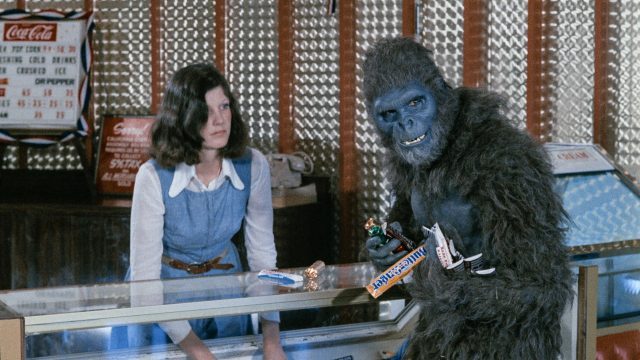
John Landis not only wrote and directed Schlock but plays the adventurous Schlockthropus
The story is being covered by smooth-talking local news anchor Joe Putzman (Eric Allison), a well-groomed gentleman who never misses an opportunity to hype upcoming programs on the station, most prominently the fake movie See You Next Wednesday. While much of the public is frightened, others are curious or think they are immune to the threat of violence, not the best choice made by a group of alliterative teens, Billy (Gene Fox), Betty (Susan Weiser), Bobby (assistant director Jonathan A. Flint), and Barbara (Amy Schireson), who really shouldn’t go near that hole. Scientific expert Professor Shlibovitz (E. G. Harty) believes the murderer might just be the missing link in the mammalian chain. And Mindy (Eliza Garrett, who played Brunella in Landis’s Animal House and has been married to Eric Roberts since 1992), a sweet and innocent young blind woman in love with Cal (Charles Villiers), becomes friends with the twenty-million-year-old Schlockthropus, thinking he is a big dog. While some scenes are just plain silly, others are smart and funny, in particular the vending machine episode.
Schlock is a giddy homage to the horror film and motion pictures themselves, with direct and indirect references to King Kong,The Blob,Godzilla,Frankenstein, and 2001: A Space Odyssey, along with a large dose of Woody Allen and even Rod Serling. It’s a hit-or-miss smorgasbord of goofy moments that serves as a forerunner to such later Landis flicks as Kentucky Fried Movie,The Blues Brothers,Trading Places.An American Werewolf in London, and Into the Night. The film was shot by Emmy-winning cinematographer Bob Collins, with cheesy music by David Gibson and editing by executive producer George Folsey Jr., who went on to cut many Landis movies (and Michael Jackson’s “Thriller” video) as well as Hostel and Hot Tub Time Machine. It’s also one of special effects guru and seven-time Oscar winner Rick Baker’s first films — and yes, that is none other than Landis himself in the ape suit, portraying Schlockthropus. “It’s bad, and appropriately named,” Landis says in a trailer for a post-Animal House rerelease of the film, apparently done without Landis’s approval and retitled The Banana Monster. A movie that could only be made by someone in love with movies, the restored Schlock is screening Sunday night at 9:30 at the Alamo Drafthouse in Brooklyn and at 10:00 in Yonkers; the Yonkers Alamo is also showing Jim Cummings’s SXSW Grand Jury winner Thunder Road, which is named after the Bruce Springsteen song, on Sunday at 4:30 as part of Art House Theater Day.
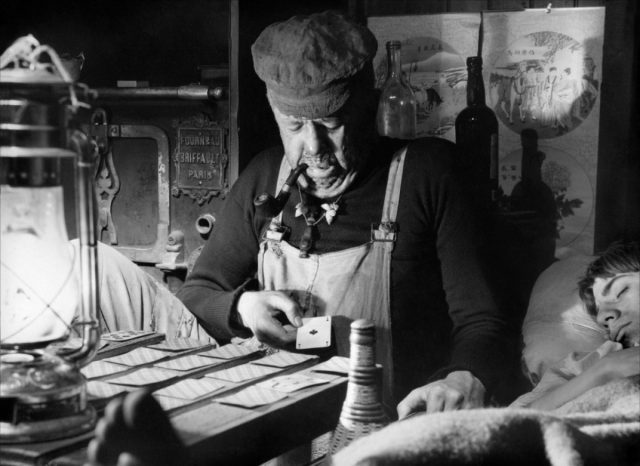
Michel Simon has loads of fun as a somewhat decrepit first mate in Jean Vigo’s classic L’Atalante
L’ATALANTE (Jean Vigo, 1934)
Film Forum
209 West Houston St.
September 21 – October 2
212-727-8110 filmforum.org
French auteur Jean Vigo made only three shorts and one feature before his death from tuberculosis and leukemia in 1934 at the age of twenty-nine, but his wide-ranging legacy continues. Film Forum pays tribute to his lasting influence on cinema with “The Complete Jean Vigo,” new 4K restorations of all of his works in addition to a new bonus. In Vigo’s fourth and final film, L’Atalante, his only feature, Swiss actor Michel Simon is spectacularly hilarious as an aging, somewhat decrepit first mate with a peculiar lust for life and cats. After barge captain Jean (Jean Dasté) and Juliette (Dita Parlo) get married in her small, tight-knit country town, they head for the big city of Paris on the long boat, L’Atalante, that he captains as his job. First mate Père Jules (Simon) and his young cabin boy (Louis Lefebvre) come along for the would-be honeymoon, attempting to make sure it’s a smooth ride, which of course it’s not. Juliette wants to enjoy the Parisian nightlife, Jean is a jealous, overprotective stick-in-the-mud, and Père Jules — well, Père Jules is downright unpredictable, pretty much all id, living life footloose and fancy free even if he doesn’t have much money or many true friends. When a love-struck bicycle-riding peddler (Gilles Margaritis) tries to woo Juliette, Jean grows angry, and an emotional and psychological battle ensues. But through it all, Père Jules just keeps on keepin’ on, never getting too concerned, confident that everything will work out in the end, because that’s what happens in life.
Film Forum honors Jean Vigo with 4K restorations of all four of his works, along with a bonus
The son of anarchist Miguel Almereyda, who chose his last name because it is an anagram of the French phrase for “there is shit,” Vigo had been labeled a subversive for his first film, the twenty-five-minute À propos de Nice, and his third, the forty-one-minute Zéro de conduite (Zero for Conduct), had been banned. So he went a little more conventional, at least for him, with L’Atalante, rewriting with Albert Riéra an original script by Jean Guinée. The film is an insightful tale of love and romance, of wealth and poverty, of hard social conditions, focusing on a wacky man who has experienced a lot in his life, even though he looks like a bum, reminiscent of Simon’s brilliant portrayal of Priape in Jean Renoir’s Boudu Saved from Drowning. Whether putting on a puppet show, displaying his tattoos, getting his fortune read, or walking around with cats on his shoulders, Père Jules is one of the most endearing and memorable characters in the history of cinema, a unique figure who surprises over and over again, and Simon’s portrayal is just amazing; it’s hard to believe that he was only thirty-nine when he made the picture.
The highly poetic film, featuring a lovely score by Maurice Jaubert, also echoes F. W. Murnau’s Sunrise: A Song of Two Humans, only from a comic, often slapstick angle. After shooting was completed, Vigo’s already failing health took a turn for the worse, and a battle ensued over final cut involving the producers and editor Louis Chavance and cinematographer Boris Kaufman (Dziga Vertov’s brother, who went on to shoot such American classics as On the Waterfront and 12 Angry Men). Vigo died only a few weeks after L’Atalante was released. Film Forum is showing the restored director’s cut of L’Atalante from September 21 to October 2, along with “Vigo x 3,” consisting of À propos de Nice, the short documentary Jean Taris, and the restored director’s cut of Zéro de conduite. In addition, on September 30, Film Forum is screening Tournage d’hiver (Winter Shooting), a 2017 compilation of rushes and outtakes from L’Atalante and Zéro de conduite, narrated by film critic and historian Bernard Eisenschitz, who oversaw the restoration of L’Atalante.
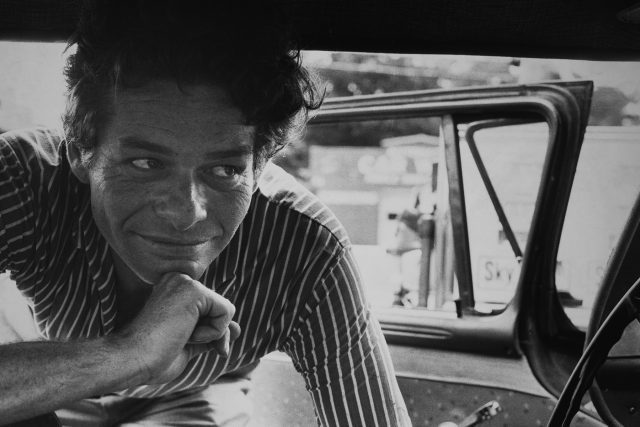
New documentary paints a fascinating portrait of street photographer Garry Winogrand (photo by Judy Teller)
GARRY WINOGRAND: ALL THINGS ARE PHOTOGRAPHABLE (Sasha Waters Freyer, 2018)
Film Forum
209 West Houston St.
Opens Wednesday, September 19
212-727-8110 www.winograndmovie.com filmforum.org
There’s an intrinsic challenge about making a documentary about a photographer: How to portray the artist’s work, silent, still pictures of a moment in time, in a medium based on sound and movement. In Garry Winogrand: All Things Are Photographable, producer, director, and editor Sasha Waters Freyer attacks that issue by delving deep into many of Winogrand’s photographs, lingering on them as friends, relatives, and colleagues rave about his glorious images. “Well, what is a photograph? I’ll tell you what a photograph is. It’s the illusion of a literal description of how a camera saw a piece of time in space,” Winogrand said in a 1975 lecture at the University of Texas Austin, later adding, “All it is is light on surface.” Of course, in Winogrand’s case, it is much more than that; the black-and-white pictures he took with his trusted Leica M4 inhale and exhale at the exciting pace of real life. “It’s this observation of human behavior, of human activity, human gesture, the relationships between people, whether they know each other or not, how we behave in the world,” curator Susan Kismaric says. Writer Geoff Dyer calls Winogrand’s work a “psychogestural ballet,” while photographer Matt Stuart looks at photo after photo, pointing out “the dance” in each one. “When things move, I get interested. I know that much,” Winogrand, who passed away in 1984 at the age of fifty-six, says in his gruff voice. “He had no ambition for fame or celebrity. He was totally obsessed and possessed by photography,” his good friend, photographer Tod Papageorge, says. “It was work work work work work.”
Freyer traces the life of “a city hick from the Bronx,” from his boyhood, when he had polio, through three marriages and three children, from his fear of nuclear war to his love of the female form, from the streets of New York City to California and Texas. She weaves in audio and video from lectures and interviews, filmed and taped conversations with photographer Jay Maisel, and photos and home movies of Winogrand and his family. Freyer speaks with photographers Thomas Roma, Jeffrey Henson Scales, Leo Rubinfien, Laurie Simmons, and Michael Ernest Sweet, curator Erin O’Toole, gallery owner Jeffrey Fraenkel (who compares Winogrand to Norman Mailer), Mad Men creator Matthew Weiner, historian and critic Shelley Rice, and two of Winogrand’s ex-wives, Adrienne Lubeau and Judy Teller. There are also extensive quotes from legendary MoMA photography curator John Szarkowski. The film explores several turning points in his career, both good and bad, including the “New Documents” show with Lee Friedlander and Diane Arbus; his seminal work in 1964; “The Animals,” a series shot at the Central Park Zoo, where he would go with his kids; his color work; Public Relations, in which he examined the role and effect of the mass media; and his controversial Women Are Beautiful book, which was labeled as sexist and misogynistic.
Influenced by such photographers as Robert Frank, Walker Evans, and Dan Weiner, Winogrand could not stop taking pictures. He took so many — the thought of his working in the digital age is both thrilling and frightening — that he didn’t even develop thousands of rolls, leaving behind a treasure trove of material that Roma explains was misinterpreted by critics. “I would like not to exist,” Winogrand said. It’s a good thing for the rest of us that he did, sharing his unique view of the world, incorporating the chaos of his personal life into his remarkable pictures. Garry Winogrand: All Things Are Photographable, which features original music by Winogrand’s son, Ethan, and animation by Kelly Gallagher, opens September 19 at Film Forum, with Freyer participating in Q&As following the 7:00 shows on September 19 and 21. In her director’s statement, the Brooklyn-born Freyer writes, “In looking at Winogrand in all his multidimensional human complexity, I take aim at the ‘bad dad’ and ‘bad husband’ tropes in artist biography, seeking to undermine these as sources of triumph or artistic necessity. Winogrand was an artist whose rise and fall — from the 1950s to the mid-1980s — in acclaim mirrors not only that of American power and credibility in the second half of the twentieth century but also a vision of American masculinity whose limitations, toxicity, and inheritance we still struggle, culturally, to comprehend. The film ultimately invites a deeper consideration of Winogrand not only as a ‘man of his time,’ in the words of MoMA photography curator Susan Kismaric, but also as a man struggling to define himself simultaneously as an artist and a parent (as so many of us do).”
Cult subway graffiti film Stations of the Elevated is part of hip-hop series at Film Forum
STATIONS OF THE ELEVATED (Manfred Kirchheimer, 1981)
Film Forum
209 West Houston St.
Thursday, September 20, 8:50
Series runs through October 20
212-727-8110 filmforum.org
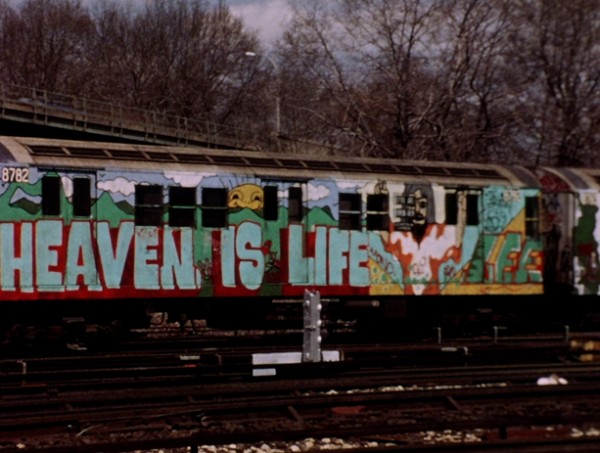
In October 2014, thirty-three years after screening at the New York Film Festival, Manfred Kirchheimer’s Stations of the Elevated finally got its official U.S. theatrical release, in a gorgeous restoration that was shown at BAMcinématek and will be presented this week at Film Forum. In 1977, Manfred Kirchheimer, whose family escaped Nazi Germany in 1936, went to the Bronx and filmed graffiti-covered subway cars at the train depot and rushing across the elevated tracks, kids playing in a burned-out housing project, and giant billboards advertising hamburgers, cigarettes, alcohol, and suntan lotion. Shot on 16mm reversal stock, Stations of the Elevated is more than just a captivating document of a bygone era; it is a deeply poetic socioeconomic journey into class, race, art, and freedom of expression, told without a single word of narration or onscreen text. Instead, producer, director, editor, and photographer Kirchheimer (Colossus on the River, Bridge High with Walter Hess) shifts from the natural sound of the environment to a superb jazz score by Charles Mingus while cutting between shots of trains covered in tags and illustrations (and such phrases as “Heaven Is Life,” “Invasion of the Earth,” “Never Die,” and “Earth Is Hell”) by such seminal figures as Blade, Daze, Lee, Pusher, Shadow, and Slave and views of colorful billboards filmed peeking through the geometric architecture of the elevated railways and set against bright blue skies. Most often, the camera focuses on the painted eyes in the ads, looking right back at the viewer as they dominate the scene, evoking the optician’s ad in that famous novel of American class, The Great Gatsby. (The concentration on the eyes also predicts how Madison Ave. was watching the graffiti movement, eventually coopting the imagery into mainstream advertising.) Through this dichotomy of meaning and execution, Kirchheimer reveals similarities in artistic styles and how the elements influenced each other; a particularly telling moment occurs when a man is shown hand painting a billboard who could have just as well been spray painting a subway car.
Kirchheimer remains outside during the course of the forty-five-minute documentary, never venturing into the tunnels, capturing the elevated train lines as if they’re just another part of New York City architecture, which of course they are. And it’s especially powerful because it was made at a time when the city was in the midst of a severe economic crisis and rampant crime epidemic, as Mayor Koch sought to eliminate the scourge of graffiti, while Kirchheimer celebrates its beauty (and New York-ness) in this glorious little film. Stations of the Elevated, which elevates the station of subway graffiti artistry with an entrancing calmness, is screening September 20 at 8:50 in the Film Forum series “Hip Hop on Film 1979-1986” and will be followed by a Q&A with Kirchheimer and a live graffiti presentation by David “CHINO” Villorente. The series continues through October 20 with such other hip hop gems as Beat Street, featuring DJ Jazzy Jay, Kool Herc, Grandmaster Melle Mel, and Rae Dawn Chong, and the genre classic Wild Style, with director Charlie Ahearn participating in a Q&A after the 8:15 show on September 27.
A group of women risk their freedom to watch a soccer match in Jafar Panahi’s Offside
OFFSIDE (Jafar Panahi, 2006)
MoMA Film, Museum of Modern Art
11 West 53rd St. between Fifth & Sixth Aves.
Tuesday, September 18, 7:00, and Sunday, September 30, 2:30, $12
Series runs September 16-30
212-708-9400 www.moma.org www.sonyclassics.com
For nearly thirty years, Iranian cinema has been an integral part of the international film world, with stellar works by such directors as Mohsen Makhmalbaf, Abbas Kiarostami, Asghar Farhadi, Bahman Farmanara, Jafar Panahi, and others. One thing many of these films have in common is cinematographer Mahmoud Kalari, who has shot some of the preeminent Iranian films, offering a new vision of the politically troubled country. MoMA is honoring the former photojournalist’s career, which includes more than five dozen feature films, with “The Eye of Iran: Cinematographer Mahmoud Kalari,” a series consisting of twelve of his major works, running September 16-30. On September 18 and 20, MoMA will be screening Panahi’s Offside, a brilliant look at gender disparity in modern-day Iran, filmed on location in and around Tehran’s Azadi Stadium with a talented cast of nonprofessional actors. Although it is illegal for girls to go to soccer games in Iran — because, among other reasons, the government does not think it’s appropriate for females to be in the company of screaming men who might be cursing and saying other nasty things — many try to get in, facing arrest if they get caught. Offside is set during an actual match between Iran and Bahrain; a win will put Iran in the 2006 World Cup. High up in the stadium, a small group of girls, dressed in various types of disguises, have been captured and are cordoned off, guarded closely by some soldiers who would rather be watching the match themselves or back home tending to their sheep. The girls, who can hear the crowd noise, beg for one of the men to narrate the game for them. Meanwhile, an old man is desperately trying to find his daughter to save her from some very real punishment that her brothers would dish out to her for shaming them by attempting to get into the stadium.
Despite its timely and poignant subject matter, Offside is a very funny film, with fine performances by Sima Mobarak Shahi, Shayesteh Irani, Ida Sadeghi, Golnaz Farmani, Mahnaz Zabihi, and Nazanin Sedighzadeh as the girls and M. Kheymeh Kabood as one of the soldiers. The film was selected for the 2006 New York Film Festival, but Panahi, who was supposed to attend the opening, experienced visa problems when trying to come to America and was later arrested by the Iranian government for his support of the opposition Green movement; he was sentenced to six years in prison and given a twenty-year ban on making new films, something he comments on ingeniously in 2012’s This Is Not a Film. “The Eye of Iran: Cinematographer Mahmoud Kalari” continues with such other Iranian films as Farhadi’s Oscar-winning A Separation, Kiarostami’s The Wind Will Carry Us, Makhmalbaf’s Gabbeh, and Kalari’s Cloud and the Rising Sun, his debut as a writer-director.
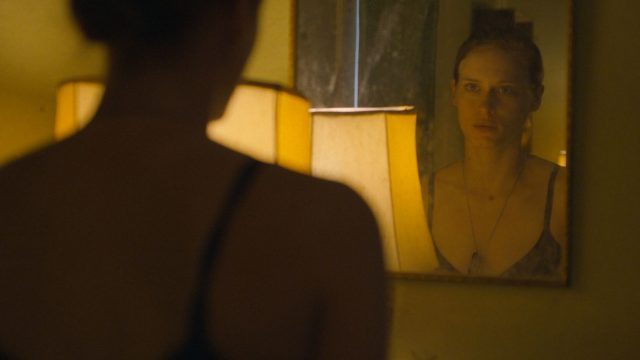
Fern Shreaves (Leven Rambin) takes a long, hard look at herself in Ramaa Mosley’s Lost Child
LOST CHILD (Ramaa Mosley, 2018)
Cinema Village
22 East 12th St. between University Pl. & Fifth Ave.
Opens Friday, September 14
212-529-6799 www.bgpics.com www.cinemavillage.com
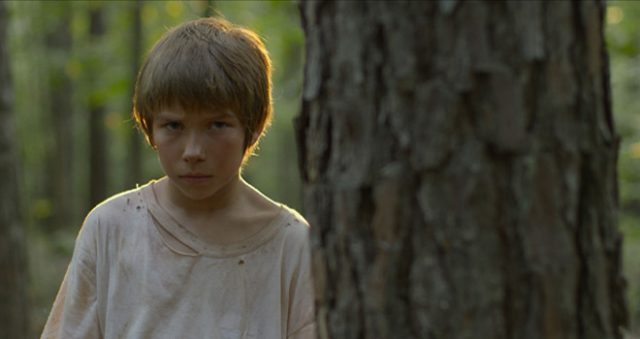
Louisiana-born, Los Angeles-based filmmaker Ramaa Mosley follows up her debut, the 2013 comedy The Brass Teapot, with the intense gothic thriller Lost Child. After serving two tours in the army, Fern Shreaves (Leven Rambin), upon the death of her father, returns to the dilapidated Ozarks home where she was raised. Suffering from PTSD — she insists she will never pick up a gun again — she has come back primarily to reconnect with her troubled, missing brother, Billy (Taylor John Smith). But instead she finds and takes in a mysterious young boy, Cecil (Landon Edwards), who appears to be living in the vast forest by her house. The polite ragamuffin child doesn’t say much about where he’s from, but when strange things start happening to Fern, Dr. Gill (Mark Ingalsbe) and dangerous forest-dwelling nut job Fig Karl (Kip Collins) warn her that Cecil is a tatterdemalion, a demonic figure literally sucking the life out of her. Fern becomes friendly with Mike Rivers (Jim Parrack), a sweet-natured bartender and child services worker who pooh-poohs the local folklore and thinks it best if Cecil continues to stay with her to avoid placement in foster care. But Fern is not used to making the right choices, either for herself or others, as events reach a fever pitch.
Landon Edwards makes a big impression in film debut, Lost Child
Mosley cowrote and produced the film with her Brass Teapot partner, Tim Macy, whose father lives in West Plains, Missouri, where Lost Child — originally titled Tatterdemalion — was shot, primarily with nonprofessional actors on an extremely low budget of $15,000. The film is beautifully photographed by Darin Moran, turning the forest into a character unto itself. Rambin, who played Glimmer in The Hunger Games and Athena Bezzerides on True Detective, gets deep into her role as Fern, who is desperately searching for some kind of family to hold on to, her eyes in almost constant motion. Arkansas native Edwards is exceptional as Cecil, reminiscent of Lucas Black in American Gothic, keeping viewers on edge as he harbors dark secrets. Named Best Narrative Feature at the 2018 Kansas City Film Festival, Lost Child — the title could describe several figures in the movie — evokes such works as Robert Mulligan’s The Other, Mervyn LeRoy’s The Bad Seed, Jodie Foster’s Nell, and François Truffaut’s The Wild Child while feeling wholly original. Mosley maintains a creepy, tense atmosphere every step of the way, investigating ideas of family and responsibility, enhanced by David Baron and Chris Maxwell’s subtle, revealing score and southern country-folk songs by Arkansas native Ashley McBryde. (The final song over the closing credits is sung by Rambin.) A twist on a familiar trope, Lost Child is fresh and contemporary while solidly connecting to our ancient human fears of the forest — and weird children.
 After delighting audiences with such outstanding indie fare as Blood Simple (1984), Fargo (1996), and O Brother, Where Art Thou? (2000), brothers Joel and Ethan Coen hit a midcareer slump with the mediocre The Man Who Wasn’t There (2001), the much-maligned Intolerable Cruelty (2003), and the just plain awful remake of The Ladykillers (2004). It was three years before they released their next film, the Oscar-winning monster hit No Country for Old Men. In 2008 they toned things down again with the slight but entertaining Burn After Reading. John Malkovich is hysterical as Osborne Cox, an angry, bitter, foul-mouthed CIA agent who loses his job and decides to write a tell-all memoir, which bizarrely ends up in the hands of a pair of bumbling idiots, Chad Feldheimer (an extremely funny Brad Pitt) and Linda Litzke (Frances McDormand). Linda really wants to get a whole bunch of plastic surgery done, so she plans on squeezing a lot of money out of old Mr. Cox, who has no patience for anyone other than himself. Throw in a cold-as-ice wife (Tilda Swinton), a philandering G-man (George Clooney), a Russian ambassador named after Severn Darden’s character in The President’s Analyst, a stellar cast that also includes Richard Jenkins, J. K. Simmons, David Rasche, Elizabeth Marvel, and Dermot Mulroney, and some shocking violence and — well, we’ve told you too much already. Burn After Reading might not be grade-A Coen brothers, but it’s still a worthwhile endeavor from two of America’s most ingenious filmmakers. The movie, which asks the question “The Russians? Are you sure?,” is screening at Nitehawk on September 24 as part of the “Booze & Books” series and will be followed by a Q&A with Film Comment contributor and Harpers digital editor Violet Lucca and Adam Nayman, author of the new book The Coen Brothers: This Book Really Ties the Films Together. In addition, Nitehawk will be serving a special cocktail for the event, the Krapotkin.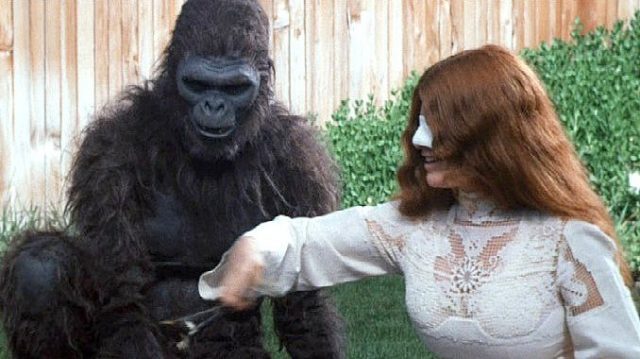
 French auteur Jean Vigo made only three shorts and one feature before his death from tuberculosis and leukemia in 1934 at the age of twenty-nine, but his wide-ranging legacy continues. Film Forum pays tribute to his lasting influence on cinema with “The Complete Jean Vigo,” new 4K restorations of all of his works in addition to a new bonus. In Vigo’s fourth and final film, L’Atalante, his only feature, Swiss actor Michel Simon is spectacularly hilarious as an aging, somewhat decrepit first mate with a peculiar lust for life and cats. After barge captain Jean (Jean Dasté) and Juliette (Dita Parlo) get married in her small, tight-knit country town, they head for the big city of Paris on the long boat, L’Atalante, that he captains as his job. First mate Père Jules (Simon) and his young cabin boy (Louis Lefebvre) come along for the would-be honeymoon, attempting to make sure it’s a smooth ride, which of course it’s not. Juliette wants to enjoy the Parisian nightlife, Jean is a jealous, overprotective stick-in-the-mud, and Père Jules — well, Père Jules is downright unpredictable, pretty much all id, living life footloose and fancy free even if he doesn’t have much money or many true friends. When a love-struck bicycle-riding peddler (Gilles Margaritis) tries to woo Juliette, Jean grows angry, and an emotional and psychological battle ensues. But through it all, Père Jules just keeps on keepin’ on, never getting too concerned, confident that everything will work out in the end, because that’s what happens in life.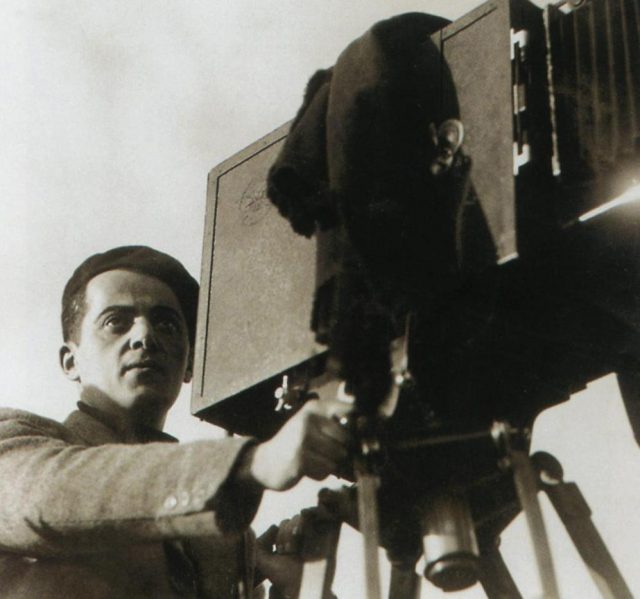
![New York, 1968 [laughing woman with ice cream] Photographs by Garry Winogrand, Collection Center for Creative Photography, The University of Arizona. © The Estate of Garry Winogrand, courtesy of Fraenkel Gallery, San Francisco.](https://twi-ny.com/wp-content/uploads/2018/09/garry-winogrand-2-e1537325349352.jpg)

 Louisiana-born, Los Angeles-based filmmaker Ramaa Mosley follows up her debut, the 2013 comedy The Brass Teapot, with the intense gothic thriller Lost Child. After serving two tours in the army, Fern Shreaves (Leven Rambin), upon the death of her father, returns to the dilapidated Ozarks home where she was raised. Suffering from PTSD — she insists she will never pick up a gun again — she has come back primarily to reconnect with her troubled, missing brother, Billy (Taylor John Smith). But instead she finds and takes in a mysterious young boy, Cecil (Landon Edwards), who appears to be living in the vast forest by her house. The polite ragamuffin child doesn’t say much about where he’s from, but when strange things start happening to Fern, Dr. Gill (Mark Ingalsbe) and dangerous forest-dwelling nut job Fig Karl (Kip Collins) warn her that Cecil is a tatterdemalion, a demonic figure literally sucking the life out of her. Fern becomes friendly with Mike Rivers (Jim Parrack), a sweet-natured bartender and child services worker who pooh-poohs the local folklore and thinks it best if Cecil continues to stay with her to avoid placement in foster care. But Fern is not used to making the right choices, either for herself or others, as events reach a fever pitch.