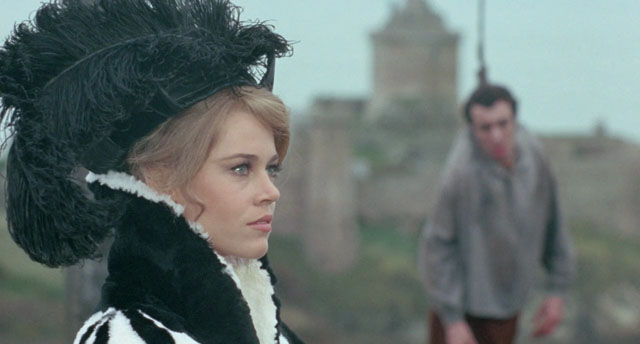
Jane Fonda plays a sexy countess in husband Roger Vadim’s Metzengerstein
SPIRITS OF THE DEAD (TRE PASSI NEL DELIRIO) (HISTOIRES EXTRAORDINAIRES) (Roger Vadim, Louis Malle, and Federico Fellini, 1968)
Quad Cinema
34 West 13th St. between Fifth & Sixth Aves.
Friday, September 14, 7:10; Friday, September 21, 7:00
Series runs September 14-27
212-255-2243
quadcinema.com
 The Quad gets right to the heart of the matter in the title of its new series, “Some Are Better than Others: The Curious Case of the Anthology Film.” Also known as an omnibus, anthology films are compilations of shorter works, often by master directors, on a specific theme. The Quad festival, running September 14-27, includes Aria, in which ten directors, among them Robert Altman, Jean-Luc Godard, Derek Jarman, Nicolas Roeg, and Ken Russell, make films inspired by opera pieces; the four-part 1945 British horror anthology Dead of Night; Lumière and Company, in which forty-one international filmmakers create fifty-two-second films using original equipment from the Lumière brothers; and Twilight Zone — The Movie, with Joe Dante, John Landis, George Miller, and Steven Spielberg revisiting classic episodes from the Rod Serling TV program. It is rare that all of the short films are of equal quality — hence, “Some are better than others” — and such is the case with the 1968 trilogy of Edgar Allan Poe stories, Spirits of the Dead.
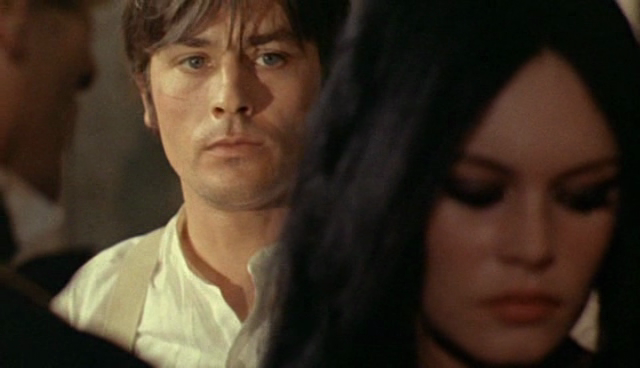
Alain Delon gets into a heated card game with Brigitte Bardot in Louis Malle’s William Wilson
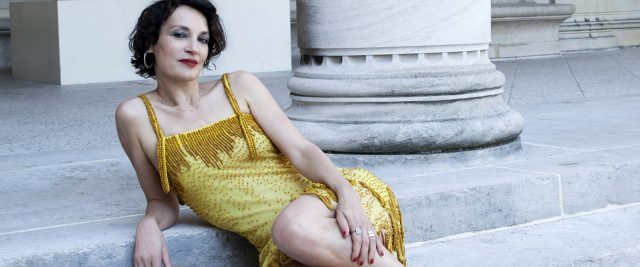
The film begins with Roger Vadim’s Metzengerstein, in which a lush and lavishly shot Jane Fonda, in spectacular outfits and hairstyles, plays Countess Frederique de Metzengerstein, who has inherited a massive estate and rules it without any inhibitions — yet her devilish debauchery doesn’t quite satisfy her. After an accidental meeting with her calm, easygoing cousin, Baron Wilhelm Berlifitzing, portrayed by her brother, Peter Fonda, she tries to end a long-running feud with his family, resulting in some extremely peculiar moments of lust for him and, later, his horse. Vadim was married to Fonda at the time, adding to the incestuous titillation and bestiality that run through the tale, which was based on Poe’s first published short story.
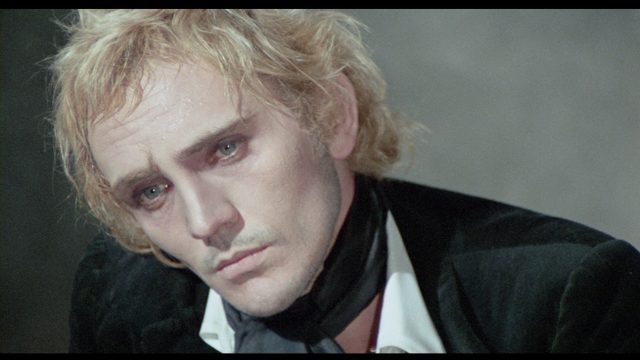
Terence Stamp is an alcoholic, fast-fading Shakespearean star in Toby Dammit
In Louis Malle’s William Wilson, Alain Delon is the title character, an elegant cad who has been followed since childhood by his doppelgänger, who determinedly, and very publicly, rights his wrongs. The film, which is told in flashback as Wilson confesses to a priest that he has killed a man, features a chilling card game with a black-haired, ultra-serious Brigitte Bardot. Malle was not happy with the film, which he took on just for the money; thus, he acquiesced to certain elements because he was told to do so, from casting to certain plot points, going against his instincts. The three-pack concludes with Federico Fellini’s fiercely unpredictable Toby Dammit, adapted by Fellini and Bernardino Zapponi from Poe’s “Never Bet the Devil Your Head: A Tale with a Moral.” Fellini evokes La Dolce Vita and 8½ as British actor Toby Dammit (Terence Stamp) is lured to Rome to make a movie in exchange for a Ferrari. Amid bizarre interview segments, an absurdist awards ceremony, and meetings with his overbearing producers, Toby is haunted by a girl with a white ball (Marina Yaru).
Originally advertised as “Edgar Allan Poe’s Ultimate Orgy!,” Spirits of the Dead, narrated by Poe icon Vincent Price, is choppily edited and wildly uneven. The filmmakers deal with fear, fire, eroticism, passion, obsession, power, ennui, and death more directly than they do in their full-length works, but things are also often more unclear. Still, this is a rare chance to see these three shorts together on the big screen. And beware of what Poe wrote in his 1827 poem “Spirits of the Dead”: Thy soul shall find itself alone / ’Mid dark thoughts of the grey tomb-stone; / Not one, of all the crowd, to pry / Into thine hour of secrecy. / Be silent in that solitude, / Which is not loneliness — for then / The spirits of the dead, who stood / In life before thee, are again / In death around thee, and their will / Shall overshadow thee; be still. / The night, though clear, shall frown, / And the stars shall not look down / From their high thrones in the Heaven / With light like hope to mortals given, / But their red orbs, without beam, / To thy weariness shall seem / As a burning and a fever / Which would cling to thee for ever.” Spirits of the Dead is screening at the Quad on September 14 at 7:10 and September 21 at 7:00. The series continues with such other anthologies as Boccaccio ’70 (De Sica, Monicelli, Fellini, Visconti), Far from Vietnam (Klein, Ivens, Lelouch, Varda, Godard, Marker, Resnais), New York Stories (Scorsese, Coppola, Allen), and Seven Women, Seven Sins (Akerman, Cohen, Export, Gavron, Gordon, Ottinger, Sander).
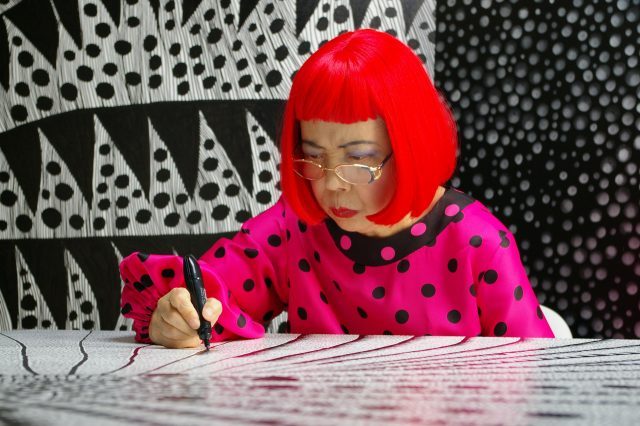
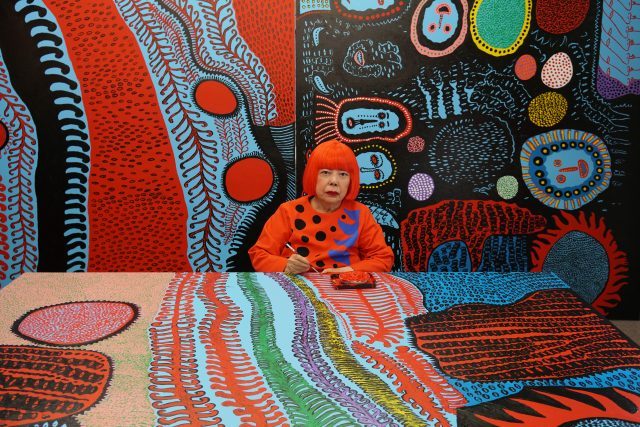
 I remember the buzz in the room back in July 2012 at the press preview for the “Yayoi Kusama” retrospective at the old Whitney. Even among all the jaded art critics, there was palpable excitement at the rumor that Kusama herself might be attending the event. Alas, it was not to be. But now everyone can feel like they’re in the same room as the iconoclastic Japanese artist when watching Heather Lenz’s infinitely entertaining documentary, Kusama: Infinity, opening September 7 at Film Forum. Over the course of her seven-decade career, Kusama has explored the concepts of infinity and eternity through painting, sculpture, performance art, film, and installation, highlighted by an obsession with endless circles and mirrored reflections. “I convert the energy of life into dots of the universe. And that energy along with love flies into the sky,” she explains. Traumatic childhood experiences deeply influenced her life and art; she began painting when she was eight years old in rural Matsumoto City, where her unhappy parents ran a wholesale seed business (and her mother would tear up her drawings). Now eighty-nine, she still works every day, going from the Seiwa Hospital for the Mentally Ill, where she has lived voluntarily since 1977, to her studio, which is filled with her captivating works-in-progress. Lenz zooms in for extreme close-ups of the artist surrounded by canvases, as if she is the biggest dot (or seed?) in her universe. “So much of Kusama’s art seeks to re-create that [childhood] experience in one form or another,” notes Alexandra Munroe, senior curator of Asian Art at the Guggenheim. “It is literally an experience of being lost into her physical environment, of losing her selfhood in this space that is moving rapidly, and expanding rapidly.”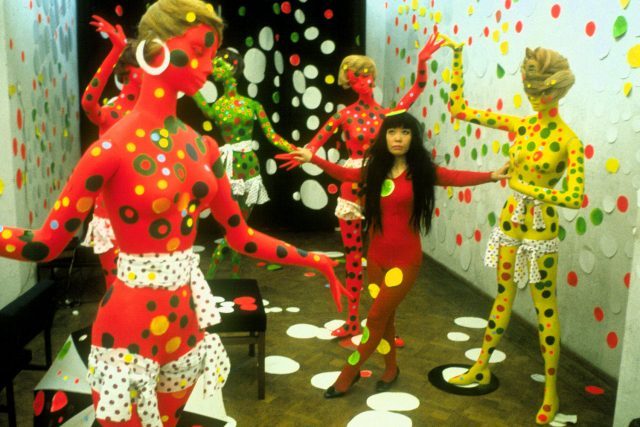
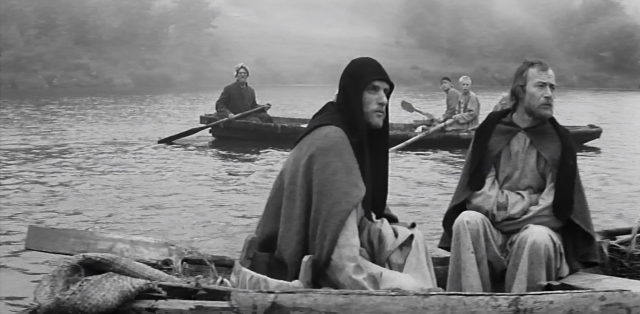
 In May 2017, the Film Society of Lincoln Center’s exclusive presentation of the Mosfilm 2K digital restoration of Andrei Tarkovsky’s 1979 sci-fi masterpiece,