this week in art

FIRST SATURDAYS: FIERCE, PHENOMENAL WOMEN

Rachel Kneebone, “The Descent,” porcelain, 2008 (© Rachel Kneebone; photo by Stephen White, courtesy White Cube)

Brooklyn Museum
200 Eastern Parkway at Washington St.
Saturday, March 3, free, 5:00 – 11:00 (some events require free tickets distributed in advance at the Visitor Center)
212-864-5400
www.brooklynmuseum.org

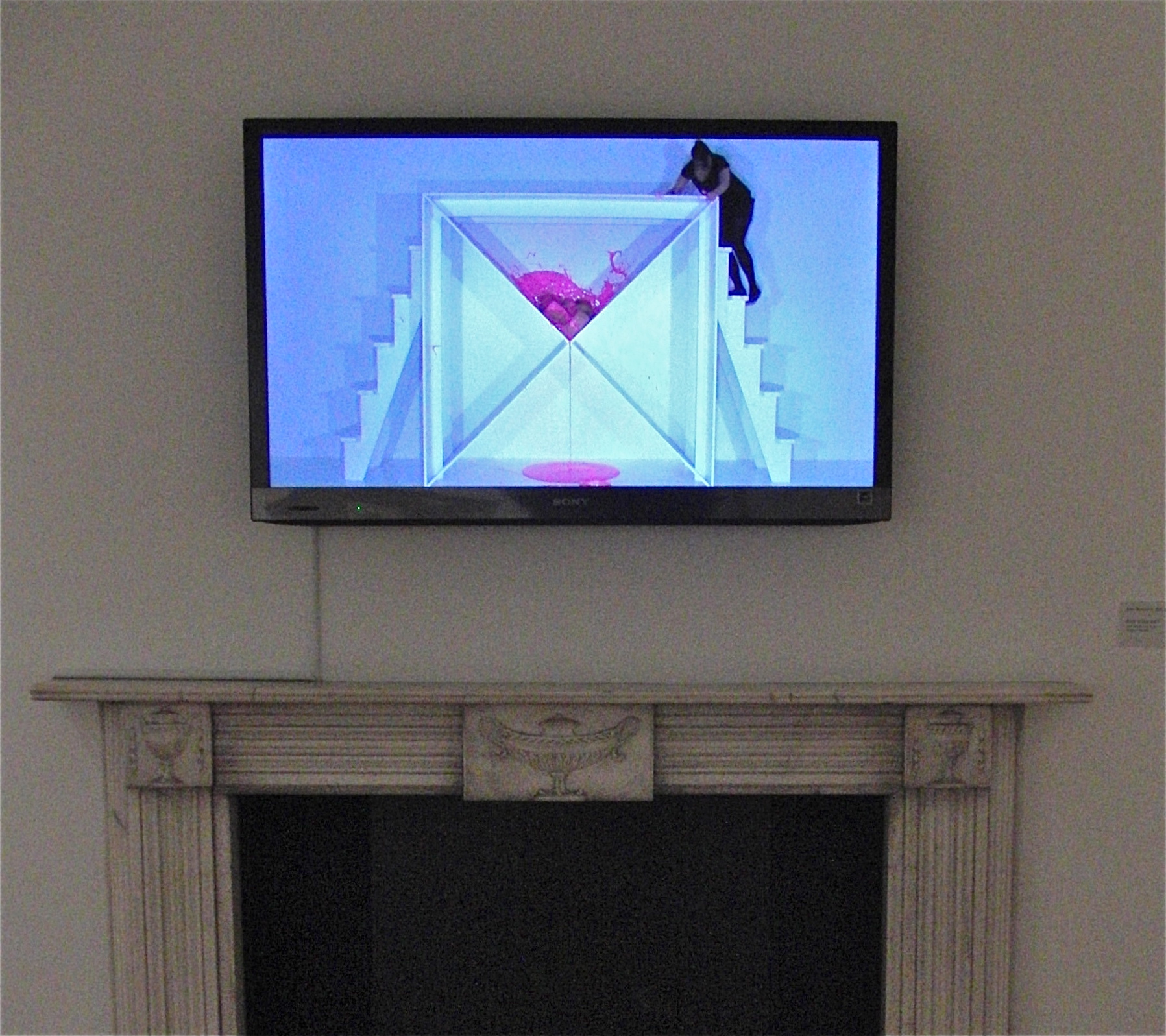
The Brooklyn Museum honors “Fierce, Phenomenal Women” in its March First Saturday programming with a series of events celebrating the second sex. The evening will feature live performances by Alakande! Spread Joy!, Making Friendz, Fredericks Brown, the Brooklyn Ballet, and Queen Godis, artist and curator talks with Mary Lucier, Kate Gilmore, and Catherine Morris, a book talk with author Sara Marcus, a presentation of “The Bad Feminist Readings,” a newspaper illustration workshop, a dance party hosted by DJs Reborn, Moni, Selly, and shErOck, and an action station where visitors can contribute to a community panel inspired by Judy Chicago’s “The Dinner Party.” In addition, the galleries will be open late, giving visitors plenty of opportunity to check out “Playing House,” “Rachel Kneebone: Regarding Rodin,” “Raw/Cooked: Shura Chernozatonskaya,” “Newspaper Fiction: The New York Journalism of Djuna Barnes, 1913–1919,” “Question Bridge: Black Males,” and “19th-Century Modern.”

WHITNEY BIENNIAL 2012: LIVE EVENTS

Dawn Kasper has moved into the Whitney and will present live performances May 23-25 (photo by twi-ny/mdr)

Whitney Museum of American Art
945 Madison Ave. at 75th St.
March 1 – May 27, $18 (pay-what-you-wish Fridays 6:00 – 9:00)
212-570-3600
www.whitney.org

The seventy-sixth Whitney Biennial opens today with an entire floor dedicated to live performance and performance-based installation. The premier events include a series of residencies beginning March 1-11 with Sarah Michelson’s “Devotion Study #1 — The American Dancer” and continuing March 14 – April 8 with a new multimedia piece by Michael Clark in collaboration with Charles Atlas. The specially commissioned works, which take place on the fourth floor in a white space with rows of folding chairs, require advance tickets for some performances while at other times are first come, first served with regular museum admission. Atlas will also screen several of his films April 11-15, participate in a conversation with biennial curators and Robert Swinston on April 12, and present the live audio-visual show “Atlas/Basinski” on April 20-21. The rock band the Red Krayola will perform ensemble music and a free-form freakout on April 13 and opera on April 14, while Richard Maxwell will hold open rehearsals for a new play April 25-29. Alicia Hall Moran and Jason Moran’s “BLEED” involves five days of live music May 9-13, while K8 Hardy will examine the state of fashion with a unique runway show on May 20. Buster Keaton fan Dawn Kasper has taken all of her possessions from her L.A. studio apartment and moved into the Whitney’s third floor, where she will be rearranging her cluttered space and hosting performances with friends May 23-25. From May 23 through June 3, Lutz Bacher, whose “Celestial Handbook” framed pages hang on walls throughout the museum, will be scattering hundreds of baseballs to redefine her space. Arika’s philosophical foray “A survey is a process of listening” invites audiences to share their thoughts May 2-6, while Yair Oelbaum and Kai Althoff will perform the play There we will be buried May 16-19. On Sundays and other select days, Georgia Sagri will create a book with the concept “Working the No Work.” And Tom Thayer’s third-floor installation will come to life May 20 and 27.

Laida Lertxunde will be at the Whitney April 1 to screen and discuss such works as A LAX RIDDLE UNIT

Curators Elisabeth Sussman, Jay Sanders, Thomas Beard, and Ed Halter have put together a wide-ranging film series that runs throughout the biennial, with programs dedicated to shorts and feature-length works by Luther Price, Michael Robinson, Jerome Hiler, Nathaniel Dorsky, Laida Lertxunde, Thom Andersen, Moyra Davey, Kelly Reichardt, Matt Porterfield, Wu Tsang, Kevin Jerome Everson, and Laura Poitras, all of whom will participate in individual conversations; films by the recently deceased George Kuchar and Mike Kelly will also be screened, as well as the very much alive Frederick Wiseman’s 2010 Boxing Gym. With all of these special programs, you should allow yourself plenty of time to experience this year’s biennial — or even set aside a few days, because there’s a whole lot to see and experience.

WEEGEE: MURDER IS MY BUSINESS / NAKED CITY

Weegee, “At an East Side Murder,” ca. 1943 (copyright Weegee/International Center of Photography

WEEGEE: MURDER IS MY BUSINESS
International Center of Photography
1133 Sixth Ave. at West 43rd St.
Tuesday – Sunday through September 2, $12 (pay-what-you-wish Fridays 5:00 – 8:00)
212-857-0000
www.icp.org

A true New York City original, Ukraine-born Usher “Arthur” Fellig, better known as Weegee, revolutionized the art of photojournalism during the 1930s and ’40s. A freelance photographer who used a police-band radio to often get to crime scenes before the NYPD, Weegee snapped black-and-white pictures of murder victims, fires, and other tragedies, capturing not only the dead bodies but interested bystanders as well as friends and family of the deceased. His emotion-packed photos, which appeared in daily newspapers and magazines, gave viewers the feeling that they were there at the scene, his use of flash illuminating his subjects in the foreground against a dark, gritty background. ICP chief curator Brian Wallis has gathered together more than one hundred photos for the exciting exhibition “Weegee: Murder Is My Business.” Named after a show Weegee held of his work at the Photo League in 1941 — which is re-created here, along with a room in his studio — “Murder Is My Business” features shots of dead bodies lying lonely on the street, chalk outlines, rubbernecking crowds, firemen going into burning buildings, and a policeman holding a pair of rescued kittens. Weegee also took photos of New York nightlife and street scenes, including a New Year’s Eve party at Sammy’s Bar, two smiling Bowery entertainers, a Santa Claus balloon being inflated for the Thanksgiving Day Parade, and huge crowds at Coney Island. There is also a fun series, “Weegee Procedural,” in which Weegee photographed himself being handcuffed, taken to a station house, posing for a mug shot, and ending up behind bars. ICP debunks the idea that Weegee got his name from a Ouija board because of his ability to magically appear at scenes before anyone else; according to the exhibit text, the name actually came from when he was a squeegee boy at a photo house. Arranged thematically, the photos offer a thrilling look at a New York gone by and will have visitors crowding around not unlike the people seen in much of Weegee’s work. (ICP will be hosting a series of “Weegee’s Night Walks” through Times Square, the Bowery, the Lower East Side, Chinatown, and Lower Manhattan from February 24 through March 30; registration is $75.)

Weegee, “Self Portrait,” vintage gelatin silver mounted to board, ca. 1945

WEEGEE: NAKED CITY
Stephen Kasher Gallery
521 West 23rd St. between Tenth & Eleventh Aves.
Through February 25, free, 11:00 am – 6:00 pm
212-966-3978
www.stevenkasher.com

In conjunction with “Weegee: Murder Is My Business,” Steven Kasher Gallery in Chelsea is presenting “Weegee: Naked City,” comprising more than 125 prints that reveal Weegee’s wide-ranging subject matter. In his 1945 tome, Naked City, Weegee wrote, “For the pictures in this book I was on the scene; sometimes drawn there by some power I can’t explain, and I caught the New Yorkers with their masks off . . . not afraid to Laugh, Cry, or make Love. What I felt I photographed, laughing and crying with them.” The exhibit does include a handful of photos that are also in the ICP show, and it does not have any accompanying text, but there is still lots to see: shots of a woman in tears at a Frank Sinatra concert, famous clown Emmett Kelly sadly waving his hat, children crammed into a tenement penthouse, advertising signs, Stanley Kubrick on the set of Dr. Strangelove, a close-up of a woman’s stockinged leg at the Bowery Savings Bank, a big dog in a Greenwich Village hangout, and several experimental self-portraits using multiple images. Together, they offer a fabulous adventure through the New York of old. “The people in these photographs are real,” Weegee went on to explain in Naked City. “To me a photograph is a page from life, and that being the case, it must be real.”

MOCCA THURSDAYS: AL JAFFEE AND THE MAD FOLD-IN COLLECTION

Museum of Comic and Cartoon Art
594 Broadway (Suite 401) between Houston & Prince Sts.
Thursday, February 23, $7, 7:00
212-254-3511
www.moccany.org

For more than forty-five years, nearly every issue of MAD magazine ended with a fold-in surprise by Al Jaffee, a full-page piece of art that became something completely different when readers brought the A and the B together and folded it in. In conjunction with the recent release of The MAD Fold-In Collection: 1964-2010 (Chronicle, September 2011, $125) — a deluxe four-volume hardcover set that includes a reproduction of every one of the 410 fold-ins Jaffee and the “usual gang of idiots” created, including a copy of the original unfolded page as well as a digital image of the folded result — the ninety-year-old Jaffee will be at the Museum of Comic and Cartoon Art on Thursday night at 7:00, participating in a panel discussion with MAD art director Sam Viviano, MAD writer Arie Kaplan, and illustrator Arnold Roth, moderated by Danny Fingeroth. This is a rare chance to meet a living legend in the industry, a highly influential illustrator who counts among his minions Stephen Colbert, Gary Larson, and many others. You should also check out MOCCA’s current exhibits, which include “Michael Uslan: The Boy Who Loved Batman,” “Bat-Manga: The Secret History of Batman in Japan,” “Artists of Batman,” and “The Art of Howl: A Collaboration between Eric Drooker and Allen Ginsberg.”

INSPIRATION ON THE STREETS WITH WOOSTER COLLECTIVE: EXIT THROUGH THE GIFT SHOP

Banksy reveals only so much of himself in new documentary

Banksy reveals only so much of himself in controversial documentary

EXIT THROUGH THE GIFT SHOP (Banksy, 2010)
JCC in Manhattan
334 Amsterdam Ave. at 76th St.
Tuesday, February 21, $11, 7:30
646-505-5708
www.jccmanhattan.org/film?page=cat-content&progid=25238
www.banksyfilm.com

In 1999, L.A.-based French shopkeeper and amateur videographer Thierry Guetta discovered that he was related to street artist Invader and began filming his cousin putting up his tile works. Guetta, who did not know much about art, soon found himself immersed in the underground graffiti scene. On adventures with such famed street artists as Shepard Fairey, Swoon, Ron English, and Borf, Guetta took thousands of hours of much-sought-after video. The amateur videographer was determined to meet Banksy, the anarchic satirist who has been confounding authorities around the world with his striking, politically sensitive works perpetrated right under their noses, from England to New Orleans to the West Bank. Guetta finally gets his wish and begins filming the seemingly unfilmable as Banksy, whose identity has been a source of controversy for more than a decade, allows Guetta to follow him on the streets and invites him into his studio. But as he states at the beginning of his brilliant documentary, Exit Through the Gift Shop, Banksy—who hides his face from the camera in new interviews and blurs it in older footage—turns the tables on Guetta, making him the subject of this wildly entertaining film.

Guetta is a hysterical character, a hairy man with a thick accent who plays the jester in Banksy’s insightful comedy of errors. Billed as “the world’s first Street Art disaster movie,” Exit, which is narrated by Welsh actor Rhys Ifans (Danny Deckchair) and features a soundtrack by Portishead’s Geoff Barrow sandwiched in between Richard Hawley’s declaratory “Tonight the Streets Are Ours,” is all the more exciting and intriguing because the audience doesn’t know what is actually true and what might be staged; although the film could be one hundred percent real and utterly authentic, significant parts of it could also be completely made up. Who’s to say that’s even Banksy underneath the black hood, talking about Guetta, who absurdly rechristens himself Mr. Brainwash? It could very well be Banksy’s F for Fake from start to finish. No matter. Exit Through the Gift Shop is riotously funny, regardless of how you feel about street art, Banksy, and especially the art market itself (as the title so wryly implies). Exit Through the Gift Shop is screening on February 21 at 7:30 at the JCC in Manhattan in conjunction with the exhibit: “Community Portrait: A Gabriel Specter Installation.”

SUPER SABADO: CARNAVAL!

Lila Downs will perform a free concert as part of Carnaval celebration at El Museu del Barrio

FREE THIRD SATURDAYS
El Museo del Barrio
1230 Fifth Ave. at 104th St.
Saturday, February 18, free, 11:00 am – 9:00 pm
212-831-7272
www.elmuseo.org

Fat Tuesday is next week, kicking off Mardi Gras celebrations all over the world. El Museo del Barrio will be holding a free Carnaval party on Saturday, featuring special events all day long. Mask-making workshops will take place 11:00 to 4:00 in Las Galerias and El Taller. From 12 noon to 3:00, you can dance to traditional music in the Black Box Theater, while from 1:00 to 4:00 you can don a jaguar mask made by artist Balam Soto and get your picture taken in the photo booth. Latin Grammy winner Lila Downs will perform a Carnegie Hall Neighborhood Concert at 4:00 in El Teatro, highlighting songs from her 2011 disc, Pecados y Milagros. Also at 4:00, Caridad de la Luz “La Bruja” will host a spoken-word workshop for teens in the Black Box. And at 7:00, a group of poets including Martín Espada, Jesús Papoleto Meléndez, Junot Díaz, Willie Perdomo, Mayda del Valle, and Emanuel Xavier will pay homage to writer, poet, and teacher Piri Thomas, who passed away in October at the age of eighty-three. In addition, there will be tours of the current exhibitions, “Testimonios: 100 Years of Popular Expression” and “Voces y Visiones: Gran Caribe.”

DOCUMENTARY IN BLOOM — TALKING LANDSCAPE: EARLY MEDIA WORK, 1974-1984

Andrea Callard’s TALKING LANDSCAPE looks back at her experimental work with Colab (photo courtesy of the artist and the Maysles Cinema)

TALKING LANDSCAPE: EARLY MEDIA WORK, 1974-1984 (Andrea Callard, 2012)
Maysles Institute
343 Malcolm X Blvd. between 127th & 128th Sts.
February 13-19, suggested donation $10, 7:30
212-582-6050
www.mayslesinstitute.org
www.andreacallard.blogspot.com

In the late 1970s, Andrea Callard helped found a collective of artists that would come to be known as Colab, or Collaborative Projects, Inc. Among her fellow officers in the group were Coleen Fitzgibbons, Tom Otterness, and Ulli Rimkus. “Through a juicy and conflicted multi-year period of identity and structural definition,” she explains on her website, “there was experimentation in and rich discussion of accessible content, political forces, technology, equity, corporate versus union models, and material resources.” From February 13 to 19, the Maysles Institute will look back at Callard’s career by presenting the world premiere of her first feature-length film, Talking Landscape: Early Media Work, 1974-1984, which examines all those things and more in its eighty minutes. More a greatest-hits package than a narrative nonfiction film, Talking Landscape consists of several of Callard’s low-budget, low-tech Super 8 shorts, narrated in her steady deadpan, beginning with 11 thru 12, in which Callard humorously discusses “inspiration, information, transportation, the National Geographic, the Yellow Pages, and taxi cabs” while standing at an ironing board, trying to hail a cab out on the street, and walking on her hands in the ocean. In Notes on Ailanthus, she details the history of the tree that “grows abundantly in all the empty spaces around New York.” In Sound Windows, she has fun with her apartment windows. In Walking Outside, she sings a blues song while walking through green fields. Talking Landscape also includes a trio of slide shows of site-specific installations Callard was involved in. Commuting from Point to Point combines images shot in Paris, Italy, and New York with phrases lifted from books; for example a shot of cigarettes put out in a bowl of dirt on a newspaper is accompanied by the words “only time gets lost,” while a photo of the Spanish Steps features the phrase “worn by millions of feet.” The Customs House is a document of the 1979 Creative Time group show “Custom and Culture 2,” held inside the dilapidated Customs House by Bowling Green, now home to the National Museum of the American Indian. And finally, The Times Square Show takes viewers on a tour of the seminal art show held in June 1980, which sought to investigate “the need to communicate in a larger world”; the Colab exhibition comprised works by Keith Haring, Lee Quinones, Jean-Michel Basquiat, Jenny Holzer, Kenny Scharf, John Ahearn, Kiki Smith, Otterness, Callard, and others held in the then-still-seedy neighborhood. Throughout the film, Callard displays a wry sense of humor in these brief experimental works that were part of a major shift in the New York City art scene. Talking Landscape is being screened as part of the Maysles Institute’s continuing “Documentary in Bloom” series, curated by Livia Bloom, who will moderate Q&As with Callard following the February 16 and 19 showings.