SAMSARA takes viewers on a fascinating journey around the world in 70mm
SAMSARA (Ron Fricke, 2011)
Symphony Space, Leonard Nimoy Thalia
2537 Broadway at 95th St.
Sunday, January 6, 13, 20, $12-$14, 8:00
212-864-5400
www.symphonyspace.org
www.barakasamsara.com
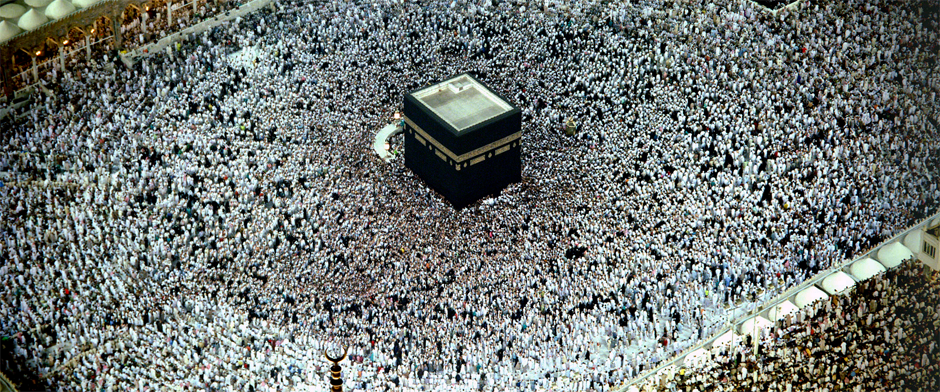
 Referring to the endless cycle of birth, death, and rebirth, Samsara is a visually stunning journey around the world, but one that will leave viewers wanting more. Director Ron Fricke and producer Mark Magidson, who previously teamed up on 1985’s Chronos and 1992’s Baraka, traveled to twenty-five countries on five continents over the course of four years, photographing famous landmarks, ancient and modern landscapes, old and new architecture, mountains, parks, oceans, cities, and many of the myriad peoples who populate the planet. Featuring an at-times overbearing score by Michael Stearns, Lisa Gerrard, and Marcello de Francisci and no narration or titles whatsoever to show what’s on the screen, Samsara can be breathtaking as well as confusing as the images roll by, shot in 70mm and projected digitally at 4K. Threads of narrative weave their way into the film, including sections on religion, war, poverty, and food production, exploring the Buddhist ideas of interconnection and impermanence, although the unfolding “story” appears most often to be somewhat random. And oddly, individuals regularly stare directly into the camera for uncomfortable periods of time, as if accusing the viewer of something that is not necessarily clear. Fricke and Magidson, who both edited the film, take the audience to such locations as Epupa Falls in Angola, Paraisopolis Favela in São Paulo, Mariesminde Poultry Farm in Denmark, Château de Versailles in France, Kanikwei Coffin Shop in Ghana, Thiksey Monastery in India, Kawah Ijen Sulfur Mine in Indonesia, Teatro Alla Scala in Italy, the Tsuchiya Shokai Doll Factory in Japan, Petra in Jordan, cliff dwellings in Mali, Mingun Temple in Myanmar, Mecca in Saudi Arabia, Cebu Provincial Detention Center in the Philippines, the demilitarized zone in South Korea, Cascade Go-Go Bar in Thailand, Cappadocia in Turkey, Burj Khalifa Tower in Dubai, the Kilauea volcano in Hawaii, the Ninth Ward in New Orleans, and Aadlen Bros. Auto Wrecking in Sun Valley, among so many other fascinating sites that reveal a wide expanse of what is going on in the world. Prisoners dance, cars whirr down elevated highways, chickens get slaughtered, tribes from Ethiopia and Namibia live off the land, poor children pick through garbage, a man stands next to his robot double, and a group of Buddhist monks make an exquisite sand painting. Yet as fascinating as Samsara can be, it still feels somewhat lacking, as if it could have been better in IMAX 3D (even if that wasn’t a logistical possibility), and the scarcity of detail supplied about the places visited is frustrating in today’s info-rich society. Samsara is screening January 6, 13, and 20 as part of Symphony Space’s ongoing Thalia Docs series.

 Lovingly restored five years ago by Janus Films in a new 35mm print, Albert Lamorisse’s The Red Balloon, which won the Palme d’Or at Cannes and an Oscar for Best Original Screenplay, tells the story of a young boy (Pascal Lamorisse, the director’s son) who makes friends with an extraordinary red balloon, which follows him through the streets of Belleville in Paris, waits for him while he is in school, and obeys his every command. But the neighborhood kids are afraid of this stranger and go on a mission to burst the young boy’s bubble. Lamorisse gives life and emotion to the balloon (more than twenty-five thousand were used in the making of the film) in a masterful use of simple special effects well before CGI and other modern technology. The Red Balloon, which also features the splendid music of Maurice Leroux and the fine photography of Edmond Séchan, is kicking off the new series “Film Forum Jr.” on January 6 along with Robert Cannon’s Oscar-winning 1950 animated short Gerald McBoing McBoing (followed by a Gerald McBoing McBoing sound-alike contest) and Claude Berri’s Oscar-winning live-action short Le Poulet. The new Film Forum series will be screening family-friendly movies at 11:00 on Sunday mornings; upcoming programs include Buster Keaton’s Sherlock Jr., Creature from the Black Lagoon in 3D, the Marx Brothers’ Horse Feathers, and the original Frankenstein and King Kong.
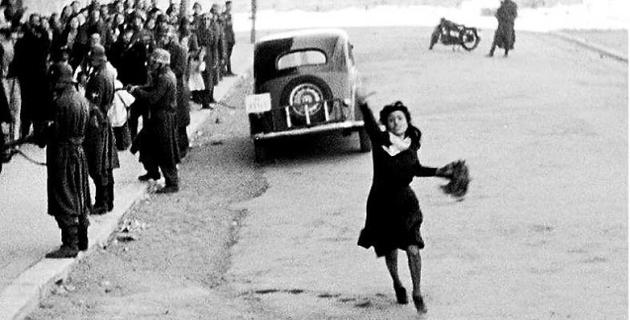
 One of six films to be awarded the Grand Prix at the inaugural Cannes Film Festival in 1946, Roberto Rossellini’s Rome Open City is an antiwar masterpiece, the first of three works that together form his War Trilogy, along with Paisan and Germany Year Zero. Begun in January 1945 with Italy still under German occupation, Rome Open City melds neorealism with melodrama in telling the story of a small, tight-knit community secretly battling the Nazis. The leader of the local Italian resistance is Giorgio Manfredi (Marcello Pagliero), an engineer sending messages and money through courier Don Pietro (Aldo Fabrizi), a priest who is generally left alone by the Nazis and the Italian police. Giorgio hides away in his friend Francesco’s (Francesco Grandjacquet) apartment as Francesco prepares to marry Pina (Anna Magnani), a pregnant widow raising a son, Marcello (Vito Annicchiarico), who is part of a gang of young kids also fighting in the resistance and causing a surprising amount of trouble. Meanwhile, Giorgio’s former flame, cabaret performer Marina Mari (Maria Michi), is cozying up to Ingrid (Giovanna Galletti), a suspicious woman with ties to the Nazis, who are led by the relentless Major Bergmann (Harry Feist). With events coming to a head, faith is questioned, and betrayals set in motion violence, torture, and killings that brutally characterize the many horrors of war. Written by Sergio Amidei and Federico Fellini, Rome Open City is a remarkable example of guerrilla filmmaking, with Rossellini and cinematographer Ubaldo Arata shooting on the streets of Rome using whatever dupe negatives they could get their hands on. The mix of professional and nonprofessional actors lends a stark reality to the proceedings. “Above all, the concept was to give an honest account, to show things as they were,” Rossellini explained in a 1963 intro to the film, a staggering achievement that seems to only get better with age. Rome Open City is screening January 4 at 7:00 as part of the Rubin Museum Cabaret Cinema series “Urban Landscapes,” held in conjunction with the exhibition “Radical Terrain: Modernist Art from India,” and will be introduced by David Bragdon of the city Parks Department. The brief series also includes Alain Resnais’s Last Year at Marienbad and Michelangelo Antonioni’s L’Eclisse and Red Desert later this month.