twi-ny recommended events

WRITER RESIDENCY AT PIANOS

Pianos
158 Ludlow St.
Tuesday, January 8 (10:00), 15 (8:00), 29 (8:00), $8
212-505-3733
www.pianosnyc.com
www.writertheband.com

Like Jeff the Brotherhood, in which brothers Jake and Jamin Orrall use drums and guitar to take off on sonic adventures that can go just about anywhere, Writer, consisting of siblings James and Andy Ralph, also has a knack for the anything-goes attitude. The California-born-and-raised duo recently moved to Brooklyn and released their debut album, Brotherface (3 Syllables, October 2012), twenty-eight minutes of outrageous psychedelic garage rock that is beautifully loud and raucous. Drummer James and lead singer and guitarist Andy, who sport the same “Brothers Ralph” tattoo, reference sounds from throughout rock history as they sit down for a “Family Dinner” (“Banging on the door / The cops are here now / The neighbors complained / Someone give them cops some cake”), consider heading south in “Barefoot Art” (“I was thinking about Mexico / and the dirty green lake at Campo / The fish were biting my legs and the sun my face / I just don’t want to go home”), and dive into the sea for “Miss Mermaid” (“Have you seen her underwater / Lungs are filling / Will she save me / Or just watch as I go down”). They slow things down considerably on “North Park Fairies,” which features the disc’s most unusual harmonies. The album concludes with a call for everyone to join them: “Oh yeah / Oh yeah / Oh yeah,” they repeat throughout “Dry Hands,” adding, “If you change your mind / we’ll be hanging out all night / blowing kisses to the planes / sharing bottles of champagne.” Writer, who recently toured with Os Mutantes, will be hanging out this month at Pianos, where they will be playing a three-show Tuesday-night residency beginning January 8 at 10:00 with Census, Cruisin’ USA, and DJ David McDaniel and continuing January 15 at 8:00 with the Spookfish, Shilpa Ray, Man Made Sun, and Cannibal Animal Machine and January 29 at 8:00 with Travis Trevisan, Phantasm, Man Made Sun, and Beats in the Attic.

FOCUS DANCE

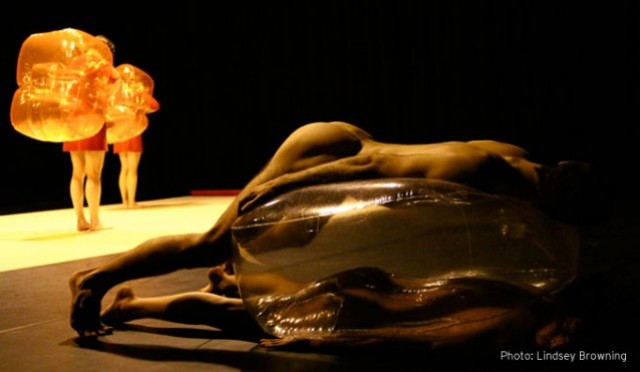
John Jasperse’s FORT BLOSSOM REVISITED is a highlight of the second annual Focus Dance at the Joyce

The Joyce Theater
175 Eighth Ave. at 19th St.
January 8-13, $10-$39
212-242-0800
www.focusdance.us
www.joyce.org

The second annual Focus Dance at the Joyce, presented by the Gotham Arts Exchange, features an exciting, wide-ranging collection of old and new works celebrating American-based companies. Held in conjunction with the annual APAP conference, this year’s lineup includes four programs by eight choreographers, featuring numerous outstanding pieces that dance fans might have recently missed. Program A, taking place January 8 at 7:30 and January 13 at 2:00, includes Jodi Melnick’s 2012 Solo, Deluxe Version and excerpts from Stephen Petronio’s in-progress Like Lazarus Did (LLD), 2012’s The Architecture of Loss, and 2011’s Underland. Program B, on January 9 at 7:30 and January 13 at 7:30, brings together Camille A. Brown’s Mr. TOL E. RAncE, City of Rain, and Been There, Done That and Brian Brooks Moving Company’s I’m Going to Explode, Descent, and Fall Falls. On January 10 and 12 at 8:00, Program C will consist of Rosie Herrera Dance Theater’s Various Stages of Drowning: A Cabaret and Doug Varone and Dancers’ Able to Leap Tall Buildings and Lux. And Program D, on January 11 at 8:00 and January 12 at 2:00, combines Eiko & Koma’s 1976 classic White Dance and the world premiere of their Flower Dance and John Jasperse’s Fort Blossom revisited.

THE CONTENDERS 2012: THE METAMORPHOSIS BY FRANZ KAFKA

The Quay Brothers adapt Franz Kafka’s THE METAMORPHOSIS as only they can

LIP-READING PUPPETS: THE CURATORS’ PRESCRIPTION FOR DECIPHERING THE QUAY BROTHERS: THE METAMORPHOSIS BY FRANZ KAFKA (The Quay Brothers, 2012)
MoMA Film, Museum of Modern Art
11 West 53rd St. between Fifth & Sixth Aves.
Monday, January 7, 4:30
Tickets: $12, in person only, may be applied to museum admission within thirty days, same-day screenings free with museum admission, available at Film and Media Desk beginning at 9:30 am
212-708-9400
www.moma.org

The magnificent Quay Brothers survey exhibition at MoMA, “Quay Brothers: On Deciphering the Pharmacist’s Prescription for Lip-Reading Puppets,” comes to a close today with the third and final screening of their latest masterpiece, a forty-minute adaptation of Franz Kafka’s seminal novella The Metamorphosis. In the 1970s, Philadelphia-born twins Stephen and Timothy Quay made a series of pencil drawings based on Kafka’s 1915 story about a traveling salesman named Gregor Samsa who wakes up one morning to find he has been transformed into a giant insect. In 1980, the Quays made the rarely shown six-minute short Ein Brudermord, inspired by the Kafka short story that translates as “A Fratricide.” So they jumped at the chance when Russian-born concert pianist Mikhail Rudy asked them to make a film set to a score he had put together featuring the music of Kafka’s fellow Czech artist, Leoŝ Janáček, as part of a special program for Paris’s Cité de la musique. “The images need to float independently from the music to allow one to better ‘see’ the music and ‘hear’ the moving image,” the twins wrote in a correspondence with Rudy. Black, white, and gray dominate the screen as Gregor’s parents, small puppets whose heads slightly bobble when they walk, have great difficulty dealing with their son’s new form. But Gregor’s sister, Greta, shows compassion for him, playing the violin and bringing him food; her humanity is emphasized in that she is portrayed by an actual living, breathing woman, not a puppet, a rarity in the Quays’ oeuvre. The only color comes from bloodred streaks on the insect Gregor and the pieces of apple his father throws at him. The music, performed live by Rudy — his piano was supposed to be onstage, melding with the visuals, but MoMA’s Roy and Niuta Titus Theater cannot accommodate that — includes Janáček’s Piano Sonata 1.X.1905, “On an Overgrown Path,” and “In the Mists,” adding haunting beauty to the heartbreaking story, which the Quays and Rudy infuse with powerful emotion. This North American premiere — the project has been performed only once before, at Cité de la musique last March — reveals the Quays to once again be unique and exceptional interpreters of classic literature and music, resulting in another film that dazzles the senses. The Metamorphosis by Franz Kafka is screening January 7 at 4:30 not only as part of MoMA’s “Lip-Reading Puppets: The Curators’ Prescription for Deciphering the Quay Brothers” but also in the annual series “The Contenders,” consisting of exemplary films the museum believes will stand the test of time; upcoming entries include Sally Potter’s Ginger and Rosa, Raoul Ruiz’s Night Across the Street, and Quentin Tarantino’s Django Unchained.

VIVE LA JEUNESSE! YOUNG FRENCH DIRECTORS: GOODBYE FIRST LOVE / SANS TAMBOUR NI TROMPETTE

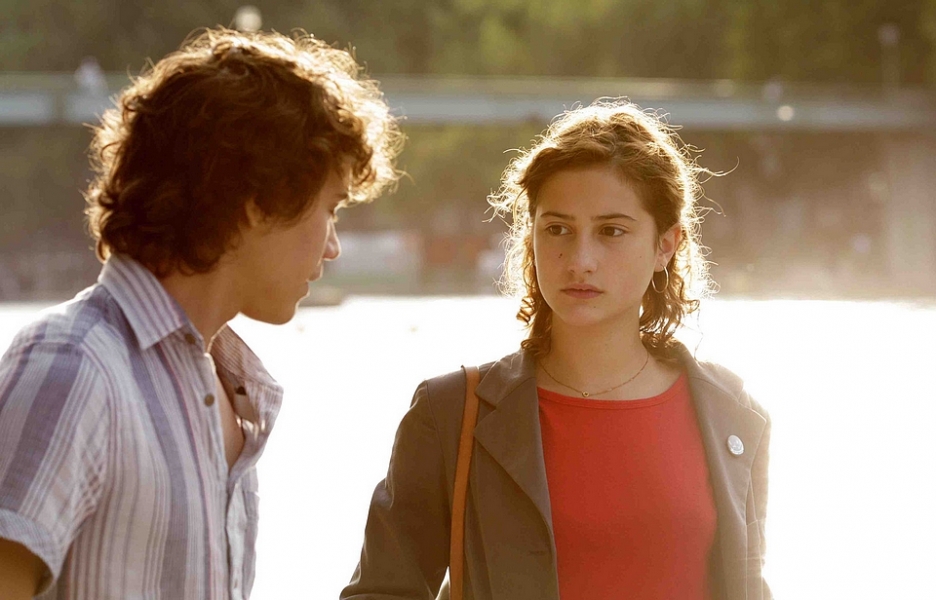
Sullivan (Sebastian Urzendowsky) and Camille (Lola Créton) experience the pleasure and pain of young romance in GOODBYE FIRST LOVE

CinémaTuesdays: GOODBYE FIRST LOVE (UN AMOUR DE JEUNESSE) (Mia Hansen-Løve, 2011)
French Institute Alliance Française, Florence Gould Hall
55 East 59th St. between Madison & Park Aves.
Tuesday, January 8, $10, 12:30, 4:00, 7:30
212-355-6160
www.fiaf.org
www.ifcfilms.com

French filmmaker Mia Hansen-Løve’s third film is an infuriating yet captivating tale that runs hot and cold. Goodbye First Love begins in Paris in 1999, as fifteen-year-old Camille (Lola Créton) frolics naked with Sullivan (Sebastian Urzendowsky), her slightly older boyfriend. While she professes her deep, undying lover for him, he refuses to declare his total dedication to her, instead preparing to leave her and France for a long sojourn through South America. When Camille goes home and starts sobbing, her mother (Valérie Bonneton), who is not a big fan of Sullivan’s, asks why. “I cry because I’m melancholic,” Camille answers, as only a fifteen-year-old character in a French film would. As the years pass, Camille grows into a fine young woman, studying architecture and dating a much older man (Magne-Håvard Brekke), but she can’t forget Sullivan, and when he eventually reenters her life, she has some hard choices to make. Créton (Bluebeard) evokes a young Isabelle Huppert as Camille, while Urzendowsky (The Way Back) is somewhat distant as the distant Sullivan. There is never any real passion between them; Hansen-Løve (All Is Forgiven, The Father of My Children) often skips over the more emotional, pivotal moments, instead concentrating on the after-effects and discussions. While that works at times, at others it feels as if something crucial was left out, and not necessarily with good reason. Still, Créton carries the film with her puppy-dog eyes, lithe body, and a graceful demeanor that will make you forgive her character’s increasingly frustrating decisions. Goodbye First Love is screening January 8 at Florence Gould Hall, kicking off FIAF’s January CinémaTuesdays series, “Vive la jeunesse! Young French Directors,” and will be accompanied by the U.S. premiere of Zoé Gabillet’s 2011 short film, Sans tambour ni trompette, with Gabillet on hand for a Q&A after the 7:30 show. The series continues with such other double features as Sophie Letourneur’s Le Marin masqué and Rebecca Zlotowski’s Belle Épine on January 15, Vincent Macaigne’s Ce qu’il restera de nous and Guillaume Brac’s Un monde sans femmes on January 22, and Gwendal Sartre’s Song Song and Bijan Anquetil’s La nuit remue on January 29.

WADE GUYTON OS / RICHARD ARTSCHWAGER!

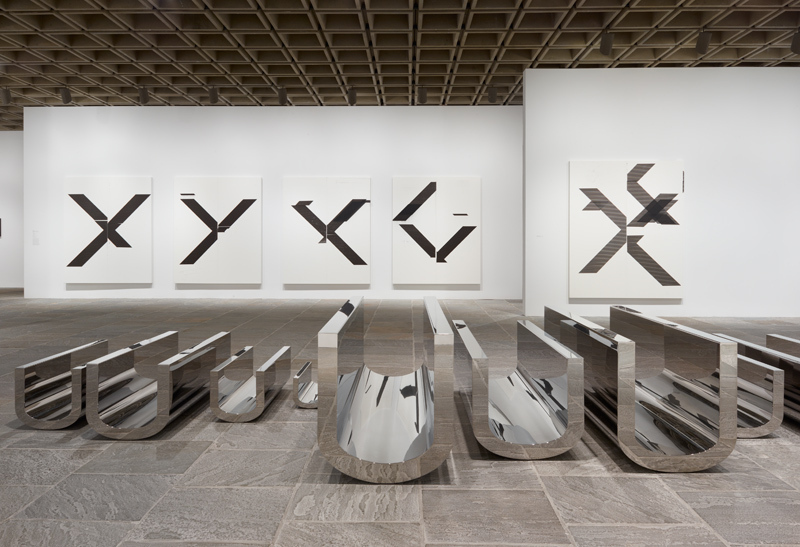
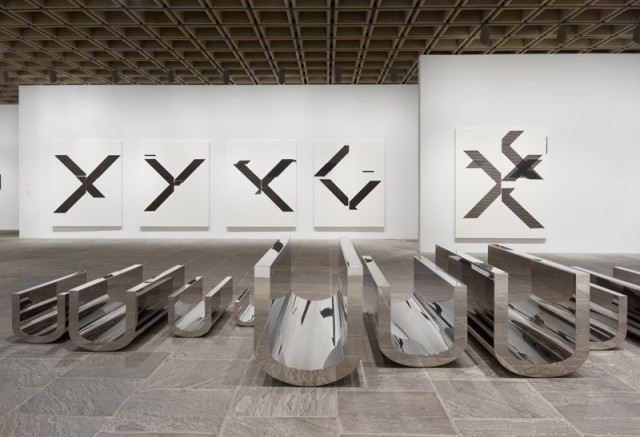
Wade Guyton’s reflective “U” sculptures are a highlight of midcareer survey at the Whitney (photograph by Ron Amstutz)

Whitney Museum of American Art
945 Madison Ave. at 75th St.
Wade Guyton OS through January 13
Richard Artschwager! through February 3
212-570-3600
www.whitney.org

The Whitney is currently home to a pair of splendid exhibitions by two New York City-based artists that relate surprising well to each other despite being, at initial glance, so very different. “Wade Guyton OS” is the first midcareer survey of forty-year-old Indiana native Wade Guyton, who worked with curator Scott Rothkopf to turn the third floor of the Whitney into a kind of three-dimensional personalized computer operating system, featuring more than eighty works, including new site-specific pieces created for the show. The bulk of Guyton’s oeuvre consists of paintings he first develops in Microsoft Word, then prints out on linen using a medium-size Epson UltraChrome inkjet printer. Much is left to chance, as he folds the large-scale linen pieces to fit into the printer, but the material gets caught in the machine, resulting in random rips, tears, streaks, and splotches. He often incorporates letters in his works, including a series of 2006 pieces in which multiple versions of the letter U hover in or over a raging fire, and a 2007 black-and-white series of mangled Xs. He has also used the letter U in a dazzling collection of U-shaped mirrored stainless-steel sculptures containing reflections of one another as well as of the Whitney’s ceiling and floor and the works hanging on the wall nearby, playing with reality and perception, what is real and what is not. Guyton overprints onto pages from books, referencing art history while displaying them in linoleum-lined vitrines meant to evoke the linoleum floor in the kitchen of his studio. In addition, Guyton often uses found objects in his work. “Untitled Action Sculpture (Five Enron Chairs)” comprises five side-by-side Marcel Breuer Cesca chairs that Guyton acquired on eBay. “Untitled Action Sculpture (Chair)” was fashioned from a broken tubular steel Cesca chair he found on the street in the East Village and twisted into a new form. The chairs take on added meaning since Breuer is the architect who designed the Whitney building, which the institution will soon be leaving to head to new digs downtown.
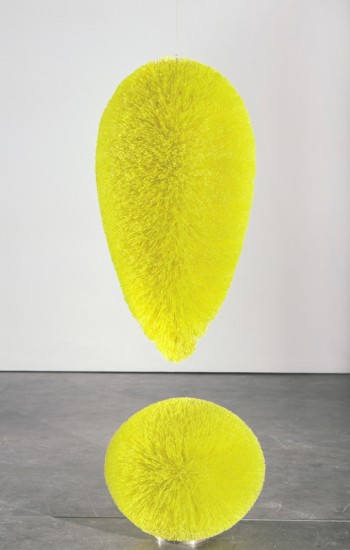
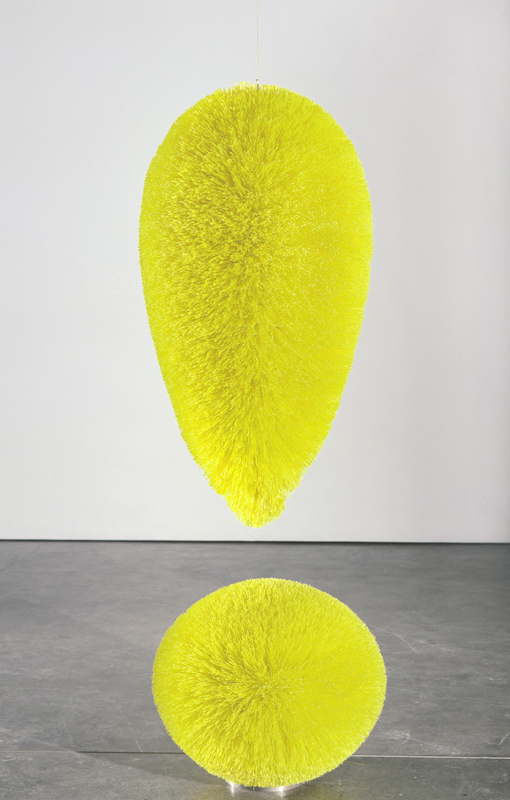
Richard Artschwager, “Exclamation Point (Chartreuse),” plastic bristles on a mahogany core painted with latex, 2008 (© Richard Artschwager / photo by Robert McKeever)

Born in Washington, DC, Artschwager was forty-two when he had his first solo exhibition, at Leo Castelli in 1965, seven years before Guyton was born. Now eighty-nine, Artschwager continues to amass a hard-to-categorize collection of painting, drawing, sculpture, and installation renowned for its use of offbeat materials. His gray paintings on Celotex have a texture that gives them a mysterious sculptural quality. Paintings such as “Plaque” and sculptures such as “Hair Sculpture — Shallow Recess Box” contain rubberized horsehair. And such pieces as “Door II” and “Bookcase III” are made of that classic suburban element, Formica. Guyton’s chairs might actually feel at home at several of Artschwager’s tables, including 1964’s “Description of Table,” composed of melamine laminate on plywood, and 1988’s “Double Dinner,” made of wood, Formica, paint, and rubberized hair that makes it look like it’s alive. In the 1970s, Artschwager concentrated particularly on household objects, compiling nearly one hundred paintings and sculptures of a door, a window, a table, a basket, a mirror, and a rug. Whereas Guyton uses pages from books and magazines in his work, Artschwager has created such pieces as “Bookends,” “Untitled (Book),” and the aforementioned “Bookcase III,” none of which reveals actual pages or covers. And while Guyton uses the letters X and U, Artschwager has fun with quotation marks and, most vibrantly, exclamation points, one of which is composed of plastic chartreuse bristles and dazzles the mind. (Of course, another exclamation point makes its way into the exhibition’s name.) Artschwager also leaves his mark with a series of “blps,” elongated black dots that can be found at various places in the Whitney as well as on and around the High Line, near the Whitney’s future home. While “Wade Guyton OS” and “Richard Artschwager!” are not meant to be a dual exhibition, seeing them together offers fascinating insight into the work of two major artists, several generations apart, who view the world in unique, and at times startlingly similar, ways.
56 UP

Jackie, Lynn, and Sue have been sharing their lives with the public since they were seven years old

56 UP (Michael Apted, 2013)
IFC Center
323 Sixth Ave. at West Third St.
Opens Friday, January 4
212-924-7771
www.ifccenter.com
www.firstrunfeatures.com

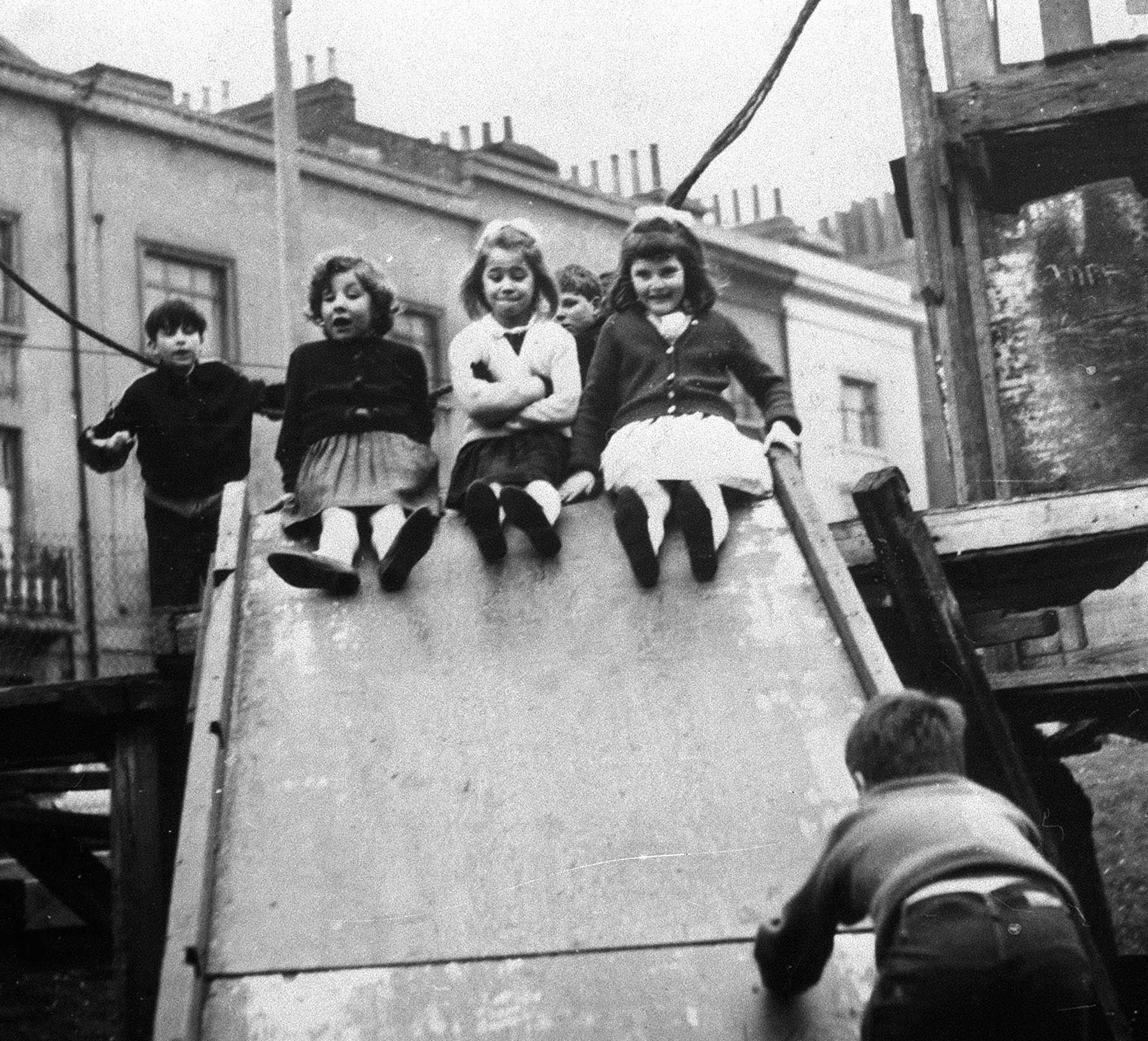
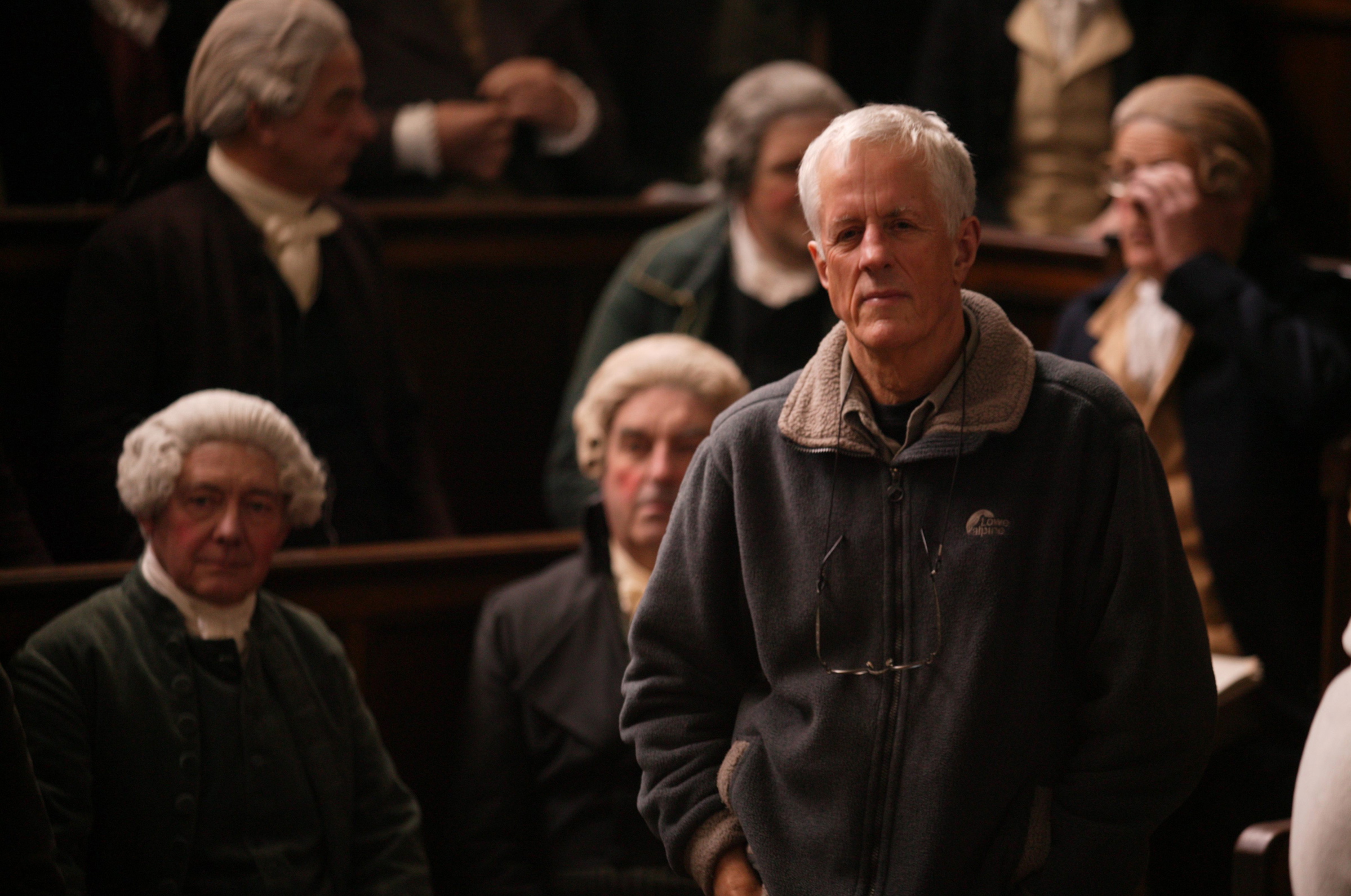
“The idea of looking at a bunch of people over time and how they evolve, that was a really nifty idea,” Nick says in 56 Up, the eighth film following a group of British men and women every seven years since they were seven in 1964. “It isn’t the picture really of the essence of Nick or Suzy. It’s a picture of everyman. It’s how a person — any person — how they change. It’s not an absolute accurate picture of me, but it’s a picture of somebody, and that’s the value of it.” Michael Apted, who was a researcher on the first film and has directed each one since, meets with thirteen of the original fourteen subjects (Charles has not participated since 21 Up), including Peter, who sat out the previous three films but reappears now in order to promote his band. Apted and editor Kim Horton masterfully blend old and new footage, focusing on one or two subjects at a time, interweaving clips from throughout the years as each person relates where they are today in their life. With age comes greater understanding of not only where they’ve been and what they’ve experienced but of the worth of the series itself, which has been both positive and negative for various individuals, some of whom have found themselves being publicly ridiculed in the media at times. Suzy playfully compares the series to a bad book that she can’t put down, a story she has to finish even though she hates it. The heart of the show has always been an examination of the class-based system in England — the Jesuit motto “Give me the child until he is seven and I will give you the man” has been used in the series since the beginning — and it is fascinating to see how the dreams of the wealthier, more privileged children ended up coming true while those of the poorer kids tended to disintegrate early on.

Director Michael Apted continues his groundbreaking examination of a group of British individuals in 56 UP

Apted, who has also directed such fiction movies as Coal Miner’s Daughter, Gorillas in the Mist, and the James Bond flick The World Is Not Enough, shapes 56 Up in such a way that it works whether the viewer has seen none, some, or all of the previous films, maintaining an involving pace that seems to just fly by despite the film’s 144-minute length. Although it doesn’t pretend to be a scientific study, 56 Up is a fascinating, judgment-free look at the evolution of a group of diverse people that will have viewers examining their own situations in similar ways, exploring their past, present, and future with new insight. Apted and subject Tony Walker will be at the IFC Center opening weekend, participating in Q&A sessions following the 3:55 and 7:00 screenings on January 5 and introducing the 10:00 show. Apted will be back on January 6 for a Q&A at the 3:55 screening and to introduce the 7:00 show.

CHARLES RAY

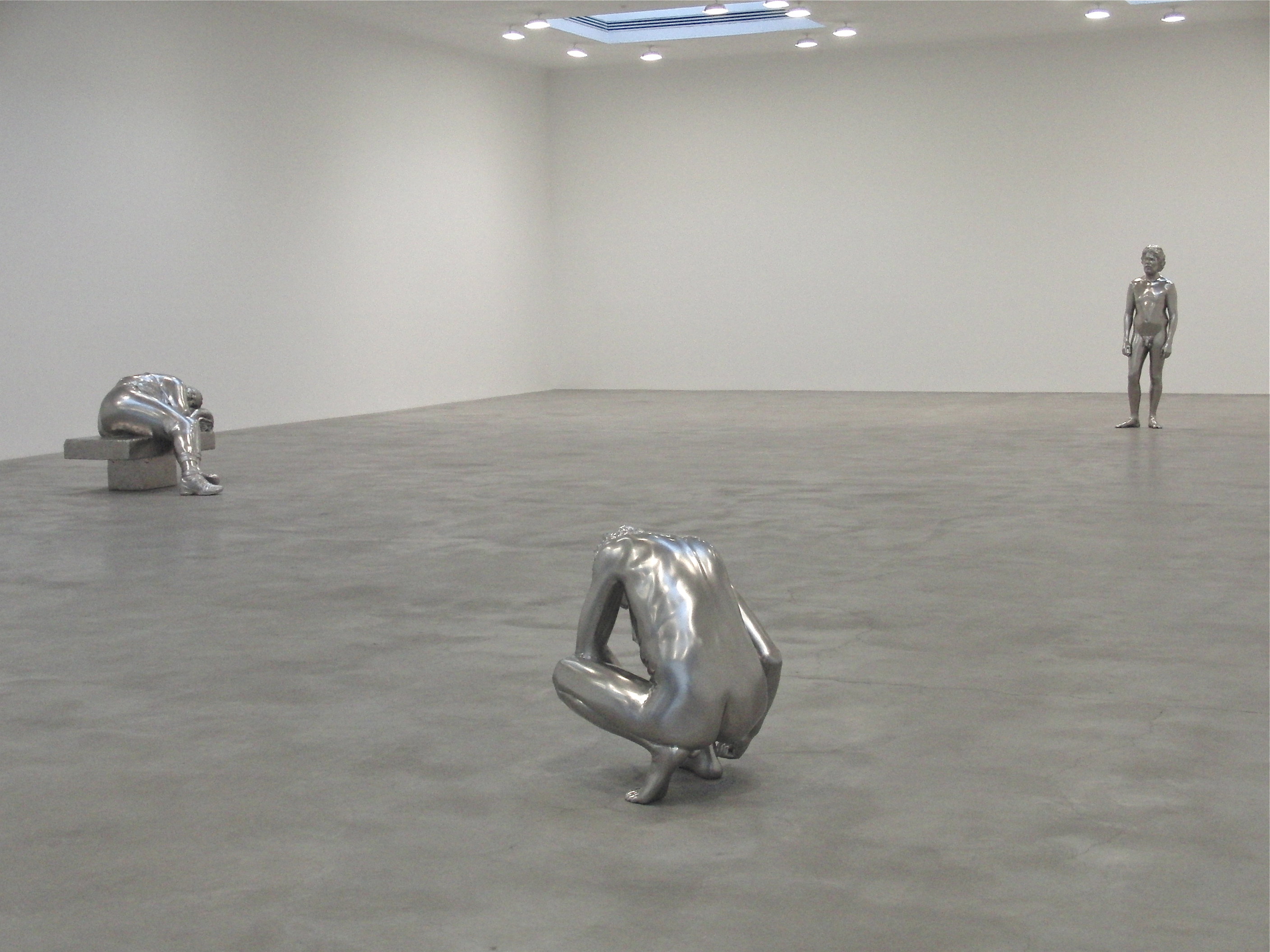
Charles Ray, “Sleeping Woman,” “Shoe Tie,” “Young Man,” solid stainless steel, 2012 (photo by twi-ny/mdr)

Matthew Marks
Tuesday – Saturday through January 12, free, 10:00 am – 6:00 pm
522 West 22nd St. between Tenth & Eleventh Aves.
212-243-0200
www.matthewmarks.com
charles ray slideshow

Los Angeles-based artist Charles Ray latest show in Matthew Marks’s vast 22nd St. space consists of a trio of new sculptures that create a sense of welcoming community. Set apart from one another, they still manage to feel together; despite being made of shiny silver machined solid stainless steel, they bring a warmth to the gallery. Upon first entering the large room, visitors encounter the 1,400-pound “Shoe Tie,” a depiction of Ray himself bent over on the floor, naked, tying an imaginary shoe on his bare right foot. Moving counterclockwise, to the far south is “Young Man,” a 1,500-pound bearded man looking straight ahead, standing naked and unashamed. To the east rests “Sleeping Woman,” a 6,000-pound fully dressed female on a small bench, the top half of her body scrunched together, her legs sticking out with her sneakered feet touching the ground. Although it doesn’t appear to be the most comfortable position, she seems to be sleeping sweetly. The detail on all three works is impressive, from the hair on their head to the expressions on their faces to the tips of their toes. Ray, who will turn sixty this year, has been incorporating the human body in his work since the early 1980s, from large-scale, professionally dressed women to a quartet of naked, same-sized parents and children holding hands (“Family Romance”) to white-painted aluminum figures (“Aluminum Girl,” “The New Beetle”) to mysterious installations that include live humans (“Leak,” “Shelf”). His current show at Matthew Marks adds a fresh, glittering perspective to a body of work so intrinsically linked to the human body.