
More than half a million people are expected at Chinese Lunar New Year parade (photo by twi-ny/mdr)
Sara D. Roosevelt Park and other locations
East Houston St. between Forsythe & Chrystie Sts.
February 9-23
www.betterchinatown.com
2012 lunar new year parade slideshow
The Year of the Black Water Snake slithers into the city beginning this weekend, with Chinese Lunar New Year celebrations galore. First up is the very loud New Year Firecracker Ceremony and Cultural Festival, taking place February 10 from 12 noon to 5:00 in and around Chinatown and Sara D. Roosevelt Park, with live music and dance, speeches by politicians, drum groups, lion, dragon, and unicorn dancers making their way through local businesses, and more than half a million rounds of firecrackers warding off evil spirits and welcoming in a prosperous new year. The fourteenth annual Chinatown Lunar New Year Parade and Festival will wind its way through Chinatown, Sara D. Roosevelt Park, and Columbus Park on February 17, with cultural booths in the park and a parade with floats, antique cars, special performers, and many others from China, Korea, Japan, Vietnam, Taiwan, Malaysia, Singapore, and other nations. The Flushing Lunar New Year Parade is scheduled for February 16 at 11:00. Throughout the two weeks, the Museum of Chinese in America will host special New Year walking tours (February 9-23). The Snake, the sixth sign of the zodiac, favors intuitiveness, attention to detail, introspection, stylishness, research, and investigation in order to be successful both professionally and personally. People born in the Year of the Snake (1929, 1941, 1953, 1965, 1977, 1989, 2001, 2013) are most compatible with the Ox and the Rooster and least compatible with the Tiger and the Pig. Much of the celebration of Lunar New Year is tied to eating specific delicacies; we got a list of some favorites courtesy of food expert Chu Chen-fan of the social/culinary website Food Culture in Taiwan. Gōng xǐ fā cái!

Buddha Jumps over the Wall is a traditional dish eaten during Lunar New Year celebrations
1. Hot pot (including Fó Tiào Qiáng — Buddha Jumps over the Wall): The indispensable star attraction main course at the dinner table when family members gather for the New Year, representing wealth and prestige.
2. Hot dish: Yearlong Plant (mustard greens) and bamboo shoots (dried shoots are okay) are used when stewing pork or diced chicken, representing “wealth and rank year after year.”
3. Turnip: The term in Taiwanese for “turnip” is almost a homonym for the phrase “good luck,” so eating turnips means that good fortune is at hand and things will go one’s way.
4. Whole chicken: The word for “chicken” in Taiwanese is a homonym for the word “family.” Therefore, serving chicken connotes a “family on the rise” and symbolizes good fortune. The chicken is usually boiled or smoked.
5. Chives: The first syllable of the word for “chives” in Mandarin Chinese is a homonym for “long” or “enduring”; hence, this dish symbolizes longevity and durability.
6. Fish balls, meatballs, shrimp balls: Any one of these expresses the idea of the entire family reunited; having all three, the “Three Grand Primordials,” connotes a robust and unstoppable luck.
7. Deep-fried chicken or pork: The sudden burst of energy that is released when meat is deep-fried brings good fortune for the entire household.
8. Stir-fry medley: Also known as the “As You Wish” dish, it symbolizes having everything one’s way.
9. Tofu: The word for tofu in Mandarin Chinese is a homonym for “everything being blessed”; thus, this dish symbolizes “the entire family being blessed.”
10. Composite stir-fry of three kinds of vegetables: This dish evokes the Chinese aphorism signifying “a fresh and auspicious start.”
11. Red-cooked silver carp: It is best to serve two fish to fully realize the significance of “a surplus year after year,” since the word for “fish” in Mandarin Chinese is a homonym for the word “surplus.” When the dish is placed on the table, the head and tail must not be eaten in order to signify that every venture “has a beginning and an end,” which is to say endeavors will be seen through to completion and not abandoned midway.
12. Fermented bean curd: The name of this dish is a virtual homonym in Mandarin Chinese for the words “happiness and wealth,” making it a good omen.
13. Glutinous rice cake: The name of this dish in Mandarin Chinese is a homonym for the words “to rise in rank year after year.”
14. Dumplings: The name of this dish in Mandarin Chinese is a homonym for the latter half of the Chinese aphorism “to see out the old and ring in the new”; thus, it signifies a new beginning to everything at the start of a new year. When the dumplings are boiled together with Chinese noodles, they are regarded as resembling “silver ingots threaded with strands of gold,” or “bottle gourds suspended by silver strands.” (The Mandarin Chinese word for “bottle gourd” is a virtual homonym for the words “happiness and wealth.”) Both visual similes connote financial success and fortune.
15. Taro soup: The name of this dish in Mandarin Chinese is a homonym for the words “to encounter the optimal outlook.” It acts as an excellent omen when eaten on the morning of the first day of the Lunar New Year.
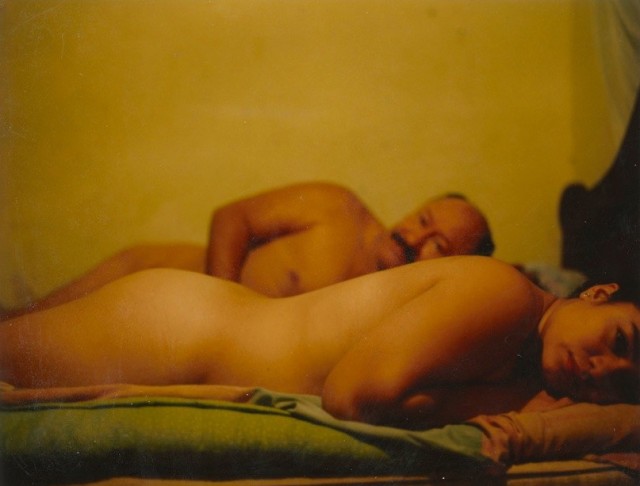
 Brazilian filmmaker Alejandro Landes’s minimalist Porfirio begins and ends with close-up shots of the title character, Porfirio Ramírez Aldana, taken slightly from below by cinematographer Thimios Bakatakis, focusing on the upper half of the man’s bare body, which is paralyzed from the waist done. Porfirio looks around as if he’s lost in a world that has let him down, and indeed it has. In the film, which opens theatrically at MoMA on February 8 for a one-week engagement, Porfirio plays himself, a Colombian father who was paralyzed by a policeman’s bullet and now lives a hard life selling minutes on his cell phone and needing the help of his eldest son, Lissin (played by his youngest son, Jarlisson Ramírez Reinoso), and neighbor/lover, Jasbleidy (real-life neighbor Yor Jasbleidy Santos Torres), just to get through every day. Landes uses natural light and sound and no score to add reality to the true story of a once-proud man now imprisoned in his wheelchair and getting the runaround from the state regarding compensation he feels he is owed. Landes (Cocalero) keeps the tale purposefully vague, never giving the details of the legal case or how and why Porfirio was shot, instead telling the story through Porfirio’s mesmerizing eyes, which are filled with a beguiling mixture of pain and mystery. “In one of the deepest moments of the film, Porfirio gazes out the window of his bedroom and, I dare say, we can peak into his very soul,” Landes, who spent five years with his subject, explains in the film’s production notes. “It was the second shot on the first day of the shoot. Although I think we captured many other fine moments, I must admit none matched a shining innocence I saw in his eyes that first day.” Landes was drawn to Porfirio’s story after reading about the extraordinary thing he did, which made him famous in South America and around the world, earning him the nickname the Air Pirate, but the director doesn’t delve into those details either. There’s no past or future for Porfirio, only the present for a compelling man desperate to regain his dignity. Landes will be at MoMA on opening night to participate in a discussion following the 7:00 screening of this small gem.
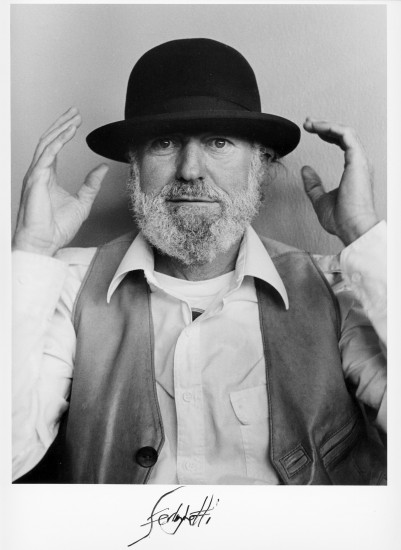
 “Poetry should be dissident, and subversive, and an agent for change,” poet, publisher, painter, activist, and military veteran Lawrence Ferlinghetti says in Ferlinghetti: A Rebirth of Wonder, a refreshing and revealing documentary about the author of A Coney Island of the Mind and owner of the famous

 Kirby Dick’s The Invisible War is one of the bravest, most explosive investigative documentaries you’re ever likely to see. Dick (This Film Is Not Yet Rated) busts open the military’s dirty little secret, revealing that episodes of horrific sexual abuse such as the Tailhook scandal are not an aberration but a prime example of a rape epidemic that seems to an accepted part of military culture. Dick speaks with many women and one man who share their incredible stories, describing in often graphic detail the sexual abuse they suffered, then faced further abuse when they reported what had happened. Their superiors, some of whom were the rapists themselves, either looked the other way, laughed off their allegations as no big deal, or threatened the victims’ careers. Dick includes remarkable Defense Department statistics — the government admits that approximately one out of every five female soldiers suffers sexual abuse and that there were nineteen thousand violent sex crimes in 2010 alone — even as such military officials as Dr. Kaye Whitley, Rear Admiral Anthony Kurta, and Brigadier General Mary Kay Hertog make absurd claims that they are satisfied with the way they are handling the alarming trend. The central figure in the film is Kori Cioca, a former member of the Coast Guard whose face was broken when she was raped by a superior and now keeps getting denied necessary medical services from the VA. Such courageous women as USAF Airman 1st Class Jessica Hinves, former Marine Officer Ariana Klay, USN veteran Trina McDonald, USMC Lieutenant Elle Helmer, USN Lieutenant Paula Coughlin, and even Special Agent Myla Haider of the Army Criminal Investigation Command also open up about the physical and psychological damage the abuse has left on their lives and careers. Inspired by Helen Benedict’s 2007 Salon.com article “The Private War of Women Soldiers,” Dick and producer Amy Ziering (The Memory Thief) have presented a searing indictment of an endemic military culture that has to come to an end, and fast. The Invisible War, which earned Dick and Ziering this year’s Nestor Almendros Award for courage in filmmaking at the Human Rights Watch Film Festival at Lincoln Center and has been nominated for a Best Documentary Academy Award, is screening February 10 at 12 noon as part of the third annual Athena Film Festival at Barnard College and will be followed by a Q&A with Dick and executive producers Maria Cuomo Cole and Regina Kulik Scully.