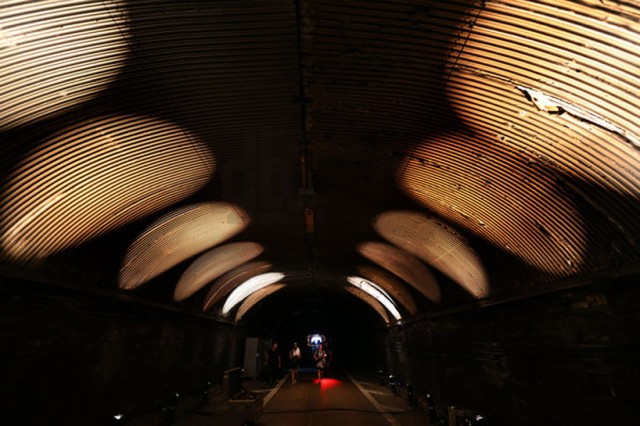
Rafael Lozano-Hemmer’s interactive “Voice Tunnel” is a highlight of this year’s free Summer Streets programming
Park Ave. & 72nd St. to Foley Square
Saturday, August 3, 10, 17, free, 7:00 am – 1:00 pm
www.nyc.gov
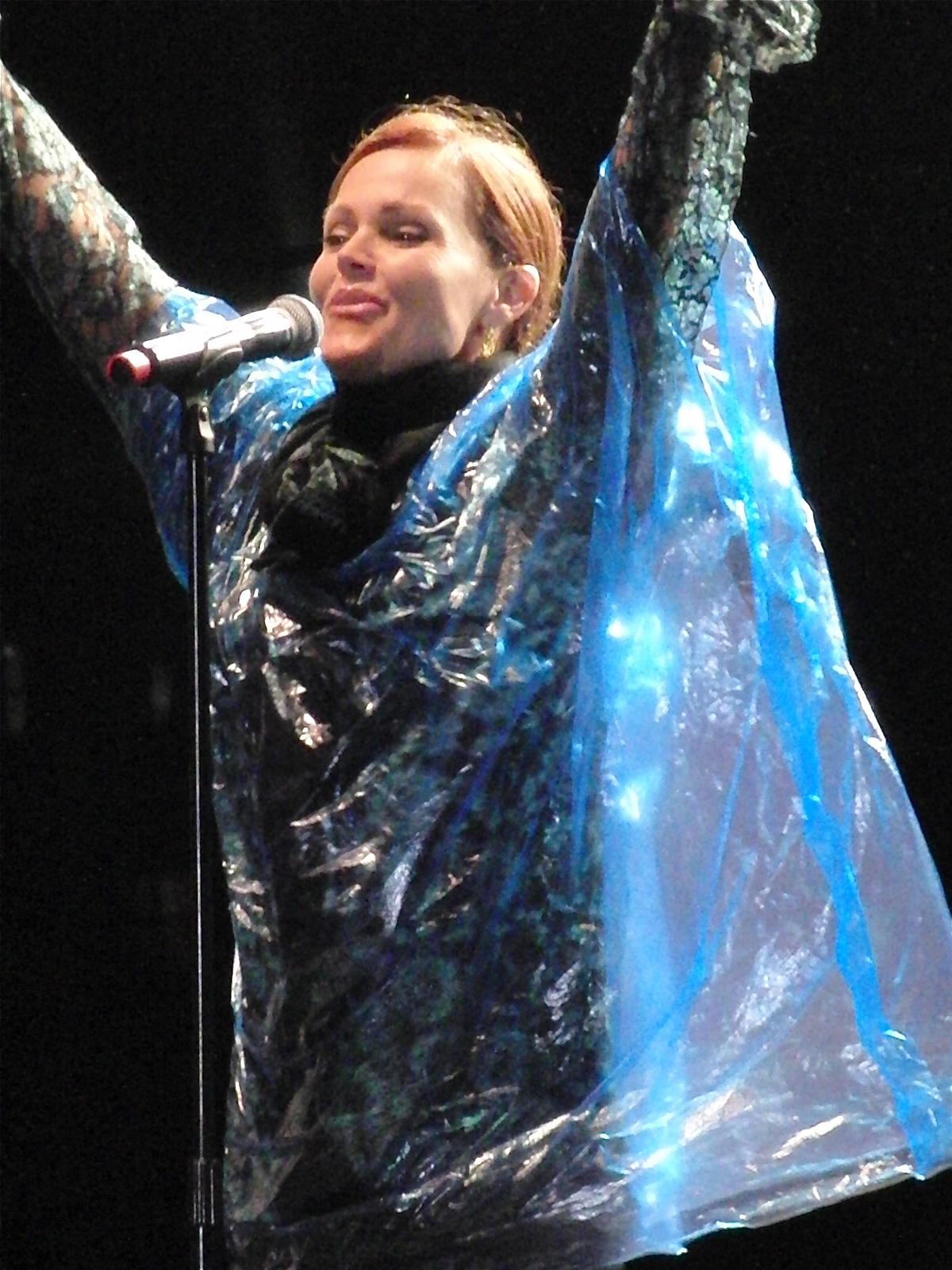
Good luck trying to find one of those blue Citi Bikes for the next three Saturday mornings, as Summer Streets returns for the fourth year. On August 3, 10, and 17 from 7:00 am to 1:00 pm, Park Ave. will be closed to vehicular traffic from 72nd St. to Foley Square and the Brooklyn Bridge, encouraging people to walk, run, jog, blade, skate, and bike down the famous thoroughfare, getting exercise and enjoying the great outdoors without car exhaust, speeding taxis, and slow-moving buses. There are five rest stops along the route (Uptown at 52nd St., Midtown at 25th, Astor Pl. at Lafayette St., SoHo at Spring & Lafayette, and Foley Square at Duane & Centre), where people can stop for some food and drink, live performances, restorative yoga and meditation, fitness classes, bicycle and parkour workshops, ziplining, rock-wall climbing, and other activities, all of which are free. In addition, there are four site-specific art installations, including Risa Puno’s “The Course of Emotions: a mini-golf experience” at the Uptown Rest Stop, Chat Travieso’s “CoolStop” water mister at Foley Square, Bundith Phunsombatlert’s “Art within One Mile” self-guided adventure consisting of eighty signs from Central Park to the Brooklyn Bridge, and Rafael Lozano-Hemmer’s “Voice Tunnel,” an interactive sound and light work that will allow pedestrians into the Park Ave. Tunnel for the first time ever. It’s quite a sight to see Park Ave. filled with only extremely happy men, women, children, and dogs; don’t miss it.

 The 2013 Human Rights Watch Film Festival came to a close this past June 23 with Jeremy Teicher’s heart-wrenching Tall as the Baobab Tree, an involving, powerful, yet gentle drama about a Senegalese family trapped by tradition in a modernizing world. Real-life sisters Dior and Oumoul Kâ star as Coumba and Debo, close siblings who live in the tiny rural village of Sinthiou Mbadane (where they actually are from). When their older brother, Silèye (Alpha Dia), falls out of a baobab tree and breaks his leg, their father (Mouhamed Diallo) doesn’t have enough money to pay for the necessary medical care so he instead sends Coumba out to do Silèye’s job of herding the cows and decides to sell off eleven-year-old Debo to suitors for marriage. Their mother (Mboural Dia) is unwilling to stand up to her husband, so Coumba hatches a plan in which her friend Amady (Cheikh Dia), who has a crush on her, will watch the herd for her secretly while she heads into the city and gets a job until she makes enough money to help Silèye heal and prevent Debo from having to marry so young. Unfortunately, not everything goes quite as planned. But through it all, no matter how difficult things get, all of the characters maintain their faith, praising peace and continually saying, “God is great.”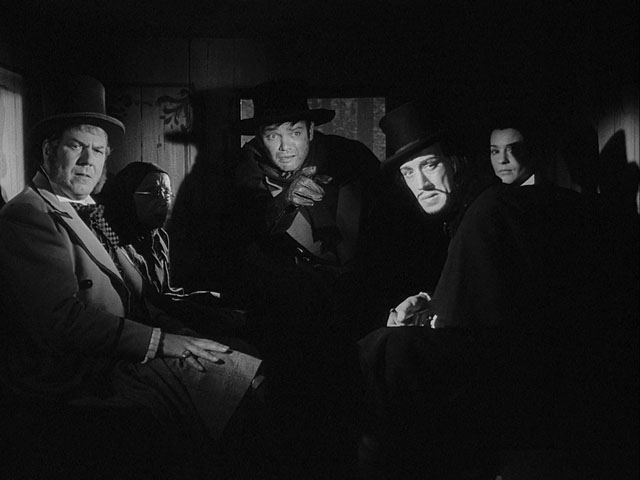
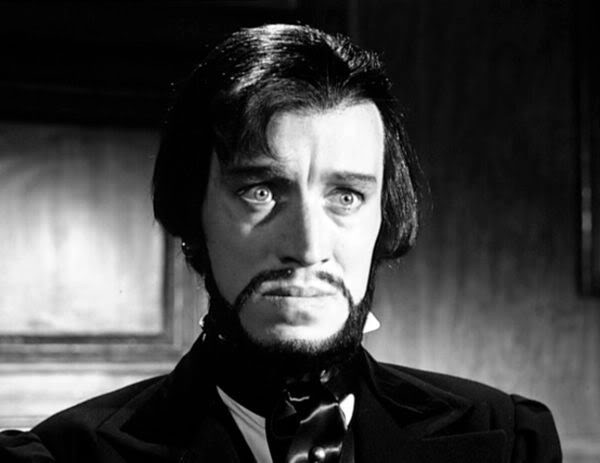
 Ingmar Bergman’s darkly comic 1958 film The Magician is one of the Swedish auteur’s lesser-known, underrated masterpieces, an intense yet funny, and fun, work about art, science, faith, death, and the power of the movies themselves. When Vogler’s Magnetic Health Theater comes to town, the local triumvirate of Dr. Vergérus (Gunnar Björnstrand), police commissioner Starbeck (Toivo Pawlo), and Consul Egerman (Erland Josephson) brings the traveling troupe in for questioning, forcing them to spend the night as guests in Egerman’s home. The three men seek to prove that mesmerist Albert Emanuel Vogler (Max von Sydow), his assistant, Mr. Aman (Ingrid Thulin), a witchy grandmother (Naima Wifstrand), and their promoter, Tubal (Åke Fridell), are a bunch of frauds. The interrogations delve into such Bergmanesque topics as science vs. reason, good vs. evil, life and death, and the existence of God. As various potions are dispensed to and tricks played on a staff that includes maid Sara (Bibi Andersson), cook Sofia Garp (Sif Ruud), and stableman Antonsson (Oscar Ljung) in addition to Starbeck’s wife (Ulla Sjöblom) and Egerman’s spouse (Gertrud Fridh), a series of romantic rendezvous take place, along with some genuine horror, leading to a thrillingly ambiguous ending.